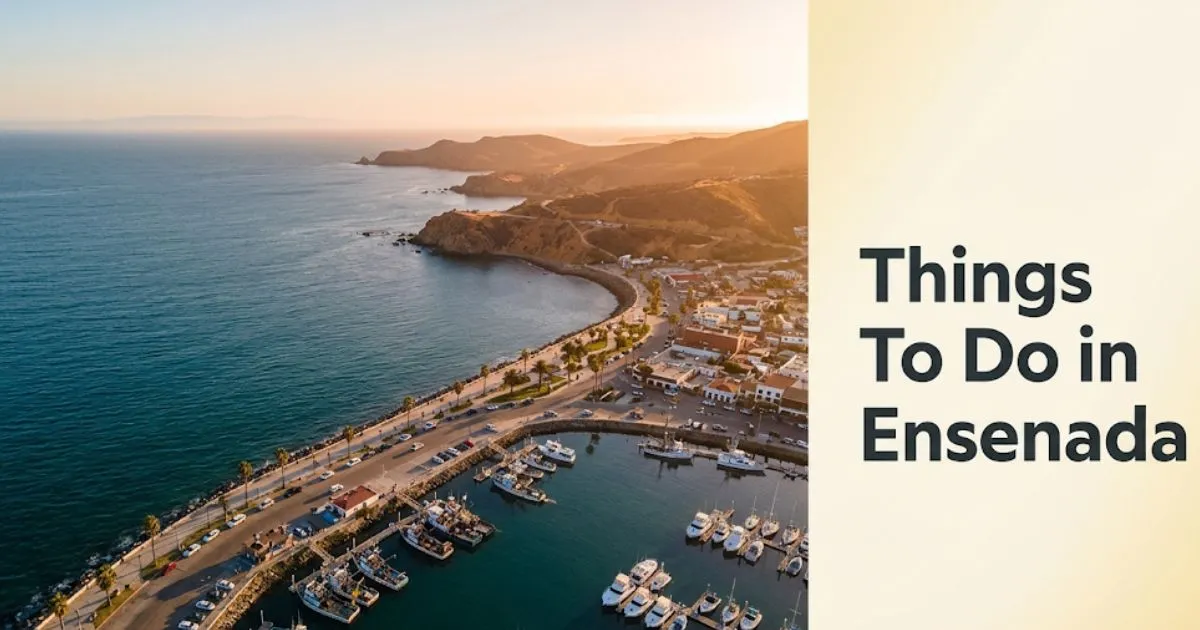
Things To Do in Ensenada Mexico: The 2026 Travel Guide

Ensenada packs more genuine destination range into a single Baja California port city than most travelers expect from a cruise stop. Things to do in Ensenada span world-class wine country, Pacific whale watching, one of Mexico’s most respected seafood taco cultures, and a craft beer scene that has drawn national attention.
The city sits roughly 80 miles south of San Diego on the shore of Bahía de Todos Santos. The Baja California Tourism Board identifies the Valle de Guadalupe wine region just 30 minutes outside the city as one of North America’s fastest-growing wine destinations.
This guide covers the full range: the iconic stops that genuinely earn their reputation, the tourist experiences that underdeliver, the practical logistics for getting here and getting around, and the traveler-specific guidance that competitor content consistently ignores.
Things To Do in Ensenada: What This City Actually Delivers
Ensenada’s best things to do split into two very different experiences within the same destination. The city center delivers seafood markets, cantinas, craft beer, and waterfront walking. Valle de Guadalupe, 30 minutes inland, delivers one of Mexico’s most concentrated restaurant and winery experiences.
Travelers who treat Ensenada as a single day’s activity and never leave the cruise pier district are doing themselves a disservice. The most interesting version of this city requires at least two days.
| Activity Type | Best For | Cost Range | Time Required |
|---|---|---|---|
| Valle de Guadalupe wine touring | Couples, food travelers | $25–$60 per person for tastings | Full day |
| La Bufadora blowhole | Families, cruise passengers | Low cost, transport extra | Half day |
| Malecón waterfront walk | All profiles | Free | 1–2 hours |
| Fish taco circuit | Budget travelers, solo travelers | Very affordable | 2 hours |
| Whale watching tour | Nature travelers, couples | $50–$90 per person estimated | Half day |
| Craft brewery exploration | Solo travelers, groups | Low to moderate per drink | 2–3 hours |
| Mercado Negro seafood market | Food travelers, all profiles | Free to browse, affordable to eat | 1–2 hours |
Insider Tip:
- The single biggest planning mistake is spending the entire visit within walking distance of the cruise pier
- Valle de Guadalupe requires a car or a guided tour from Ensenada; budget at least four hours for a meaningful visit
- Couples and food travelers should plan at minimum two nights to experience both the city and the wine country properly
Best Things To Do in Ensenada: The Honest Ranking
The best things to do in Ensenada, ranked by genuine destination value rather than tourist popularity, are: Valle de Guadalupe wine and restaurant touring, the Mercado Negro seafood circuit, whale watching from Bahía de Todos Santos, and the Malecón waterfront at golden hour.
La Bufadora is Ensenada’s most-visited attraction. It is also its most overrated. The blowhole itself is impressive, taking roughly 45 seconds of your attention. The tourist corridor of souvenir stalls leading to it consumes considerably more.
The honest assessment: La Bufadora is worth a half-day trip for cruise passengers or families with children. Experienced independent travelers with limited time should prioritize Valle de Guadalupe and the city’s food circuit instead.
Hussong’s Cantina gets significant tourist attention as the alleged birthplace of the margarita. The experience is loud, crowded on weekends, and genuinely historic. For one drink and the atmosphere, it’s worth a stop. For an evening out, Bar Andaluz on Avenida Ruiz offers a better cocktail in a room that locals actually use.
According to the Baja California Tourism Board, Ensenada receives over one million visitors annually. The majority arrive as cruise passengers with fewer than eight hours. Independent multi-day visitors access a fundamentally different and richer version of the city.
Ensenada Mexico Things To Do: A Local’s City Orientation
Ensenada’s tourist and local zones overlap more than in most Mexican port cities. Avenida López Mateos is the main tourist corridor: souvenirs, restaurants, and the primary pedestrian shopping street.
Avenida Ruiz, one block parallel, is where the city’s food and bar culture actually lives. The best taco spots, the local craft beer bars, and the less-tourist-oriented restaurants concentrate here.
The Zona Centro neighborhood covers both avenues and extends to the waterfront. It is walkable from the cruise pier in under 15 minutes.
Barrio La Playa, south of the center toward Estero Beach, is where Ensenada’s fishing and seafood identity originates. The Mercado Negro sits at its edge: a working fish market selling the morning’s Pacific catch.
Local alternative to Avenida López Mateos: Avenida Ruiz delivers the same geographic range in a more genuine setting. Street taco carts between Calle Segunda and Calle Sexta are where Ensenada residents actually eat.
Seniors and accessibility travelers will find the Malecón and main avenues largely flat and manageable. Note: Mercado Negro involves uneven concrete surfaces and fish market conditions that may challenge mobility aids.
Key Takeaway: Skip the souvenir corridor on Avenida López Mateos for lunch. Avenida Ruiz has better food, local pricing, and the actual character of the city.
Ensenada Waterfront and Malecón: Where the City Faces the Bay
Ensenada’s Malecón is a two-kilometer waterfront promenade along Bahía de Todos Santos. It is free to walk, genuinely scenic at sunset, and the most accessible major experience in the city.
The Malecón runs from the cruise pier north toward the marina. Fishing boats dock at its southern edge. The Centro Cultural Riviera, a former casino turned arts center, anchors the cultural zone at the northern end.
Couples find the Malecón best at golden hour, roughly an hour before sunset. The light on the bay is particularly good in October through January.
Budget travelers: this is a core free experience. Factor in an evening walk before dinner on Avenida Ruiz.
Families with young children will appreciate the flat, open space. The Malecón has no significant vehicle traffic hazard along the pedestrian zone.
Insider Tip:
- Centro Cultural Riviera hosts rotating art exhibitions. Admission runs nominal fees; verify current schedule directly before visiting
- The marina at the southern end of the Malecón has a small cluster of seafood kiosks serving clam tostadas: fresher and cheaper than the tourist corridor restaurants
- Solo travelers: the Malecón is well-populated and safe during daylight and early evening hours
La Bufadora Ensenada: The Blowhole Reality Check
La Bufadora is a marine geyser on the Punta Banda peninsula, approximately 18 miles south of Ensenada’s city center. When ocean swells drive into the sea cave, the resulting spout can reach 30 meters in height.
The experience itself takes seconds. The journey requires navigating a kilometer-long gauntlet of souvenir stalls between the parking area and the blowhole platform. Peak visit days fill the narrow path with cruise ship groups.
| Visitor Type | La Bufadora Honest Assessment |
|---|---|
| Cruise passengers (4–6 hrs total) | Worth the trip; it’s the most accessible major natural attraction |
| Families with children | Kids genuinely respond to the blowhole; allow 2–3 hours round trip |
| Independent travelers (2+ days) | Consider skipping; Valle de Guadalupe uses the same time better |
| Budget travelers | Transport to Punta Banda adds cost; factor in taxi or tour pricing |
| Couples | Romantic only at early morning before crowds; midday is congested |
Getting there requires either a guided tour from the cruise pier or a taxi from Ensenada’s city center. Driving yourself is straightforward via the Punta Banda road.
Best time to visit La Bufadora: arrive before 10 a.m. on any day. Swell activity affects the height of the spout; higher swells in winter months (December through February) produce the most dramatic displays.
Local alternative: Experienced visitors who want dramatic Pacific coastline without the souvenir corridor take the Punta Banda road past La Bufadora and continue to the quieter rocky points at the tip of the peninsula. The views are longer and entirely unpeopled.
Valle de Guadalupe Wine Tasting: Ensenada’s Most Underused Asset
Valle de Guadalupe is approximately 30 minutes northeast of Ensenada on Federal Highway 3. It is the most significant wine-producing region in Mexico and one of North America’s most concentrated winery-and-restaurant ecosystems.
Most Ensenada visitors never reach it. That is the single largest missed opportunity in Baja California travel.
Specific named wineries worth visiting in 2026:
- Bruma: Modern architecture, chef-driven restaurant, tastings typically by appointment
- Monte Xanic: One of the region’s founding premium producers; structured tours available
- L.A. Cetto: The valley’s largest producer; accessible without reservations on most days; good entry point for first-time visitors
- Adobe Guadalupe: Boutique winery with a hotel; notable for its Spanish-style estate and rose wines
- El Cielo: Winery and resort complex; multiple restaurants on property
Tasting fees range from approximately $10 to $40 per person depending on the producer and format. Verify current pricing directly before visiting.
Getting there without a car: Guided wine tours from Ensenada run regularly and include transportation, typically covering three to four wineries. These cost approximately $80 to $150 per person as of recent estimates. Confirm current pricing with tour operators directly.
The Fiestas de la Vendimia harvest festival, held each August in Valle de Guadalupe, is the valley’s peak cultural event. It draws significant crowds and requires advance reservations for restaurants and lodging. Booking six to eight weeks ahead is standard practice during festival weeks.
Couples are the primary profile this experience suits. Solo travelers and food-focused travelers find it equally rewarding. Families with young children face limited kid-friendly programming at most wineries.
Key Takeaway: L.A. Cetto is the most accessible Valle de Guadalupe starting point for first-timers; no appointment needed on most days and the scale of the operation makes it a useful orientation before hitting smaller boutique producers.
Ensenada Fish Tacos and Food Scene: What the City Actually Does Best
Ensenada’s fish taco is not a tourist creation. It is the originating source of the Baja-style fish taco form that spread across Southern California and eventually the entire US. The preparation is specific: beer-battered white fish (typically cod or halibut), fried and served in a corn tortilla with shredded cabbage, crema, salsa, and a squeeze of lime.
La Guerrerense on Avenida López Mateos is Ensenada’s most internationally recognized food cart. Chef Sabina Bandera’s seafood tostadas and ceviches have been recognized by multiple major food publications. A line during peak lunch hours is standard.
The Mercado Negro fish market is where locals source their seafood and where the city’s most honest ceviches are served. Small prepared-food counters inside the market sell clam tostadas, shrimp cocktails, and raw oysters at prices significantly below the tourist corridor.
The Ensenada food circuit for serious food travelers:
- Start at Mercado Negro for morning clam tostadas and oysters
- Walk Avenida Ruiz for the mid-morning taco cart circuit
- Stop at La Guerrerense for seafood tostadas (arrive before noon to beat the line)
- Afternoon: lunch reservation at a Valle de Guadalupe restaurant if the full wine country day is not planned
Budget travelers note: the fish taco circuit on Avenida Ruiz costs remarkably little. Two to three tacos with a drink at a street stand runs very affordable by any standard. Skip the sit-down tourist restaurants on Avenida López Mateos for lunch.
Abalone is a Baja California coastal specialty rarely available elsewhere in the US or Mexico. Some Ensenada restaurants serve farmed abalone legally. If you see it on a menu, its price reflects its rarity. This is not a budget item.
Ensenada Craft Beer Scene: Baja’s Brewing Culture
Ensenada is one of Mexico’s most developed craft beer cities. Cervecería Wendlandt, located near the Malecón, is the most recognized producer and the easiest starting point. Their taproom serves rotating small-batch styles alongside reliable core beers.
Cervecería Transpeninsular is the second major producer with a taproom presence. Both breweries reflect a genuine brewing culture influenced by the city’s proximity to California’s craft beer market and its own Pacific seafood culinary identity.
Craft beer and seafood pairing is the local combination that has caught national food media attention. A cold Wendlandt pale ale with a plate of ceviches at the Mercado Negro area represents Ensenada’s best low-key afternoon.
Solo travelers and groups find the taproom format ideal. The beer culture here is social and accessible without requiring a guide or reservation.
Budget travelers: this is genuinely affordable. Craft beers at Wendlandt run significantly below what comparable quality costs in San Diego. Sampling four or five styles costs less than a single US craft brewery pint at most bars.
Insider Tip:
- Ask staff at Wendlandt about seasonal and limited release beers not listed on the main board
- The Malecón-adjacent location makes a Wendlandt stop a natural end to a waterfront walk
- International craft beer travelers who track regional producers: Baja’s brewing scene has developed rapidly since 2015 and has not yet received the tourism industry attention it deserves
Ensenada Beaches and Outdoor Activities: The Honest Assessment
Ensenada is not a beach destination in the way Los Cabos or Puerto Vallarta are beach destinations. Pacific coast water temperatures here are cold by tropical standards, averaging approximately 60 to 65°F in summer. Swimming is possible but not warm.
The correct framing: Ensenada’s outdoor life is about coastal scenery, kayaking, surfing, and nature. It is not about laying on a white sand beach in warm water.
Specific outdoor options:
- Playa San Miguel, north of the city center, is Ensenada’s primary surf beach. Consistent swells, a local surf culture, and significantly fewer tourists than the waterfront area. Not appropriate for young children or casual swimmers.
- Estero Beach, south of the city near Punta Banda, is the family-friendliest option. Calmer water and a beachside resort. Day access to the beach area is possible without staying at the resort.
- Sea kayaking on Bahía de Todos Santos is available through local outfitters. Bahía de Todos Santos is a federally protected biosphere reserve. Paddling the bay provides close-up views of the coastline and is suitable for beginners.
Families with young children are best served by Estero Beach. Playa San Miguel serves surfers and experienced open-water swimmers. The Malecón waterfront is the best option for anyone who wants coastal scenery without the commitment of a beach day.
Seniors and accessibility travelers: the beach areas require uneven sand terrain. Estero Beach has the most developed access infrastructure.
Key Takeaway: Ensenada’s outdoor draw is coastal scenery and marine wildlife, not warm-water beach recreation. Adjust expectations accordingly before the trip.
Ensenada Whale Watching: The January-to-April Window
Gray whale watching off Ensenada is one of the Pacific coast’s most reliable marine wildlife experiences. The gray whale migration brings animals through Bahía de Todos Santos from approximately January through early April each year.
Whale watching tours depart from the Ensenada marina and the cruise pier area. Tours typically run two to three hours. Pricing ranges from approximately $50 to $90 per person based on operator and vessel size. Verify current pricing directly with operators before booking.
The peak activity window is February through mid-March. January is the earliest reliable sighting month. April catches the tail end of the migration with thinner crowds and competitive pricing.
Families with children respond well to this experience. The bay is generally calmer than open ocean, reducing seasickness risk compared to deep-sea tours. Couples find the February morning tours notably uncrowded compared to summer activity peaks.
Important practical note: Whale watching is weather and wildlife dependent. No operator can guarantee sightings. Reputable operators will offer rebooking options on days when whales are not encountered. Ask about their policy before booking.
Local alternative to tourist pier operators: Ensenada-based fishing charter captains often run informal whale watching add-ons during the migration window at lower prices than the organized tour operators. Asking at the marina rather than booking through a cruise excursion desk typically yields better rates.
Hussong’s Cantina and Ensenada Nightlife: The Avenida Ruiz Circuit
Hussong’s Cantina, founded in 1892 at Avenida Ruiz 113, is one of Mexico’s oldest continuously operating bars. It claims credit for inventing the margarita, a claim disputed but consistently celebrated.
The cantina is genuinely historic. The sawdust floor, the mariachi music, and the crowd that ranges from cruise passengers to longtime regulars give it an atmosphere no newer bar can manufacture.
For nightlife beyond Hussong’s, Avenida Ruiz is the corridor. The street runs several blocks through the Zona Centro and concentrates Ensenada’s bars, restaurants, and live music venues in a walkable strip.
Bar Andaluz, also on Avenida Ruiz, draws a more local crowd and serves better cocktails. It’s the right move after one drink at Hussong’s. For live music, check current programming at the small venues along the Ruiz corridor.
Solo travelers find Avenida Ruiz genuinely social and safe within the corridor. The street is well-lit and heavily populated on weekends. Stay within the corridor rather than wandering into unfamiliar streets late at night.
Couples seeking a quieter evening: the Valle de Guadalupe restaurant experience is a better romantic option than the Avenida Ruiz bar scene. Several winery restaurants offer evening service during peak seasons.
Note: Nightlife in Ensenada is notably less developed than in Tijuana. The city’s energy skews toward evening meals and early nights rather than late-night club culture.
Key Takeaway: Hussong’s earns one drink and the atmosphere. Bar Andaluz is where the evening should continue afterward. Both are on the same block of Avenida Ruiz.
Ensenada for Families: What Works and What to Skip
Ensenada works well for families with the right expectations. The La Bufadora blowhole, the Malecón waterfront, Estero Beach, and the Mercado Negro fish market all hold children’s interest and are logistically manageable.
What genuinely does not work for families with young children: Valle de Guadalupe wine country and the Avenida Ruiz nightlife circuit. Both are adult-oriented environments with limited appeal for children under 12.
Family-specific logistics:
- Stroller access is reasonable on the Malecón and Avenida López Mateos but challenging on Avenida Ruiz and inside Mercado Negro
- Kid menus are available at tourist-oriented restaurants on López Mateos; street food stands require ordering flexibility
- La Bufadora requires approximately 30 to 45 minutes driving each way from the city center; plan for the souvenir corridor to add 30 to 45 minutes per child’s interest level
- Estero Beach resort day passes allow beach access without an overnight stay; verify current availability before visiting
The fish taco experience is family-accessible and genuinely delicious for children who accept fried fish. The fresh ceviches and raw oysters at Mercado Negro are adult experiences.
Pediatric medical note: Ensenada has a functioning medical infrastructure for a city of its size. For serious medical needs, San Diego’s facilities are approximately 90 minutes away depending on border crossing wait times. Travel insurance is recommended for any international family trip.
Ensenada for Couples: The Romantic Weekend Framework
Ensenada’s best romantic experiences concentrate in two zones: Valle de Guadalupe wine country and the city’s waterfront at golden hour. Together they structure a genuinely strong couples weekend.
The strongest two-night couples itinerary:
Day 1:
- Morning: arrive and walk the Malecón before tourist activity peaks
- Midday: La Guerrerense tostadas and the fish taco circuit on Avenida Ruiz
- Afternoon: Cervecería Wendlandt taproom and the Mercado Negro fish market area
- Evening: dinner reservation on Avenida Ruiz; one drink at Hussong’s Cantina
Day 2:
- Morning: depart for Valle de Guadalupe by 10 a.m.
- Late morning: L.A. Cetto tour and tasting as the orientation stop
- Midday: lunch reservation at a boutique winery restaurant (Bruma, Monte Xanic, or El Cielo)
- Afternoon: one additional winery tasting before returning to Ensenada
- Evening: sunset from the Malecón; dinner at a marina-adjacent restaurant
Whale watching adds well to the couples experience from January through March. Book a morning tour on Day 1 before the Malecón walk.
The experience that sounds romantic but often underdelivers for couples: the La Bufadora trip on a cruise day weekend. The souvenir corridor crowds undermine the experience. Midweek visits or early morning arrival changes this significantly.
Punta Morro Hotel sits on the oceanfront north of the city center. It offers a quieter, more intimate setting than downtown hotels. For couples prioritizing atmosphere over location convenience, it is worth the extra few minutes of driving.
How To Get to Ensenada From San Diego
Getting from San Diego to Ensenada takes approximately 2.5 to 3.5 hours depending on border crossing wait times. The standard route crosses at San Ysidro and follows Federal Highway 1 (Carretera Transpeninsular) south through Tijuana, Rosarito, and La Misión before arriving in Ensenada.
The step-by-step approach:
- Check real-time border wait times at the US Customs and Border Protection website or the CBP One app before departure
- Decide your crossing point: San Ysidro for the most direct route; Otay Mesa for potentially shorter waits
- Drive south on Federal Highway 1 from Tijuana; the road is a divided highway to Ensenada and is straightforward to navigate
- Bring a valid US passport; a passport card works for land crossing
- Mexican auto insurance is required; your US policy does not cover you in Mexico. Purchase through a reputable provider before crossing. Daily rates are affordable.
- Carry a mix of US dollars and Mexican pesos; ATMs in Ensenada dispense pesos at generally fair rates
Returning to the US: Budget significant time for the San Ysidro northbound crossing on Sunday afternoons and on US and Mexican holiday weekends. Waits of 90 minutes to three hours are realistic during peak periods. SENTRI lane holders cross significantly faster.
Alternative to driving: Several shuttle and bus services run between San Diego and Ensenada. Confirm current schedules and pricing directly with operators. This eliminates the Mexican auto insurance and driving complexity but reduces flexibility for Valle de Guadalupe visits.
San Diego International Airport (SAN) is the nearest major US airport, approximately 30 miles from the San Ysidro crossing.
Key Takeaway: Buy Mexican auto insurance before you cross, not at the border. Online purchase is faster and typically cheaper than kiosk options at the crossing.
Ensenada Travel Tips and Safety: Practical Realities for 2026
Ensenada is generally considered one of Baja California’s lower-risk destinations for international visitors. The tourist zones around the Malecón, Avenida Ruiz, Avenida López Mateos, and Valle de Guadalupe function with a tourist-facing safety infrastructure absent in some other Baja cities.
The US Department of State maintains a Mexico travel advisory that applies to Baja California. Check the current advisory level directly at travel.state.gov before departure. Advisory levels change and should be verified within two weeks of any trip.
Safety and Practical Warnings for Ensenada
Ensenada’s primary safety considerations relate to road conditions, border crossing logistics, and the standard precautions appropriate for any international destination.
Key safety and practical facts every visitor should know:
- Stick to the established tourist zones after dark; Avenida Ruiz, the Malecón, and López Mateos are appropriate for evening activity
- Driving Highway 1 at night south of Ensenada toward remote Baja is not recommended for tourists unfamiliar with the road. The stretch from San Diego to Ensenada in daylight is straightforward.
- Carry Mexican pesos for street food, markets, and smaller vendors; some USD is accepted in tourist areas but at unfavorable exchange rates
- Tap water in Ensenada is not reliably safe for visitors without local adaptation; use bottled water consistently
- Travel insurance is strongly recommended for any international trip; verify your policy covers Mexico and includes medical evacuation
- Sun exposure is a real concern in summer; temperatures on the Punta Banda peninsula and at Valle de Guadalupe in July and August are significantly hotter than the coast
Contact the US Consulate in Tijuana for emergency consular assistance during your visit. Their number and current hours are available at mx.usembassy.gov.
Best time to visit Ensenada: Late September through November combines harvest festival season, mild temperatures between 65 and 78°F, and thinner tourist crowds. January through March adds gray whale migration. Avoid Mexican national holiday weekends if crowd sensitivity is a priority.
Frequently Asked Questions About Things To Do in Ensenada
What are the best things to do in Ensenada for a day trip?
The best things to do in Ensenada on a day trip are: walk the Malecón waterfront, eat fish tacos and seafood tostadas at La Guerrerense or on Avenida Ruiz, and visit La Bufadora if a half-day remains.
Day-trippers with a car should prioritize Valle de Guadalupe wine country over La Bufadora for the more genuinely distinctive Baja experience.
Cruise passengers with under six hours should stay within the Zona Centro walking radius: the Malecón, Mercado Negro, and the Avenida Ruiz taco and beer circuit cover the city’s best without requiring transport.
Is Ensenada safe for American tourists in 2026?
Ensenada is considered lower-risk than other Baja California border cities for tourists who stay within established visitor zones.
Check the current US Department of State travel advisory at travel.state.gov within two weeks of departure, as advisory levels can change.
Standard precautions apply: stay within the Malecón, Avenida Ruiz, and López Mateos corridors after dark; avoid unfamiliar streets at night; and keep valuables secured in tourist-heavy areas.
How do I get from San Diego to Ensenada?
Driving from San Diego to Ensenada takes approximately 2.5 to 3.5 hours depending on the San Ysidro border crossing wait time.
Take Federal Highway 1 south from the Tijuana crossing through Rosarito and La Misión; it is a divided highway and straightforward to navigate in daylight.
Mexican auto insurance is legally required and must be purchased separately from your US policy; buy it online before departure rather than at border kiosks.
What is the best time of year to visit Ensenada?
The best time to visit Ensenada is late September through November for harvest festival season, mild weather, and thinner crowds.
January through March is the secondary window: gray whale migration peaks, hotel rates are lower, and the city is significantly less crowded than summer.
Avoid Mexican holiday weekends in July and August; summer crowds are primarily domestic Mexican tourists during national holiday periods, which creates peak pricing and significant congestion at La Bufadora and the Malecón.
Do I need a passport to visit Ensenada?
Yes, a valid US passport book or passport card is required to enter Mexico and to re-enter the United States at the land border crossing.
A passport card is accepted for land crossings and is less expensive than a passport book, but it cannot be used for international air travel.
Apply or renew well in advance of your trip; US passport processing times vary and should be verified at travel.state.gov before booking.
Is Valle de Guadalupe worth visiting from Ensenada?
Valle de Guadalupe is the single most distinctive experience accessible from Ensenada and is worth the trip for any food or wine traveler.
It is approximately 30 minutes from the city center on Federal Highway 3 and hosts over 100 wineries alongside some of Mexico’s most recognized restaurants.
Visitors without a car should book a guided wine tour from Ensenada; these include transportation and typically cover three to four wineries in a half or full day.
Planning Your Ensenada Trip: The Practical Close
Ensenada rewards travelers who arrive with more than four hours. The city’s best experiences, specifically Valle de Guadalupe, the whale watching window, and the full Malecón-to-Mercado Negro food circuit, are not achievable in a single cruise port stop.
Book Valle de Guadalupe winery restaurants in advance, particularly during the August Fiestas de la Vendimia and on October weekends. Confirm all prices, hours, and current US State Department advisory levels directly before departure, as conditions and costs change regularly.
Your first practical step: purchase Mexican auto insurance online before crossing. It is the single logistical item that most first-time Ensenada visitors overlook. Everything else, including the fish tacos, the wine, and the bay at golden hour, is waiting for you on the other side.