16 Best Sedona Things To Do in 2026 (Honest Guide)

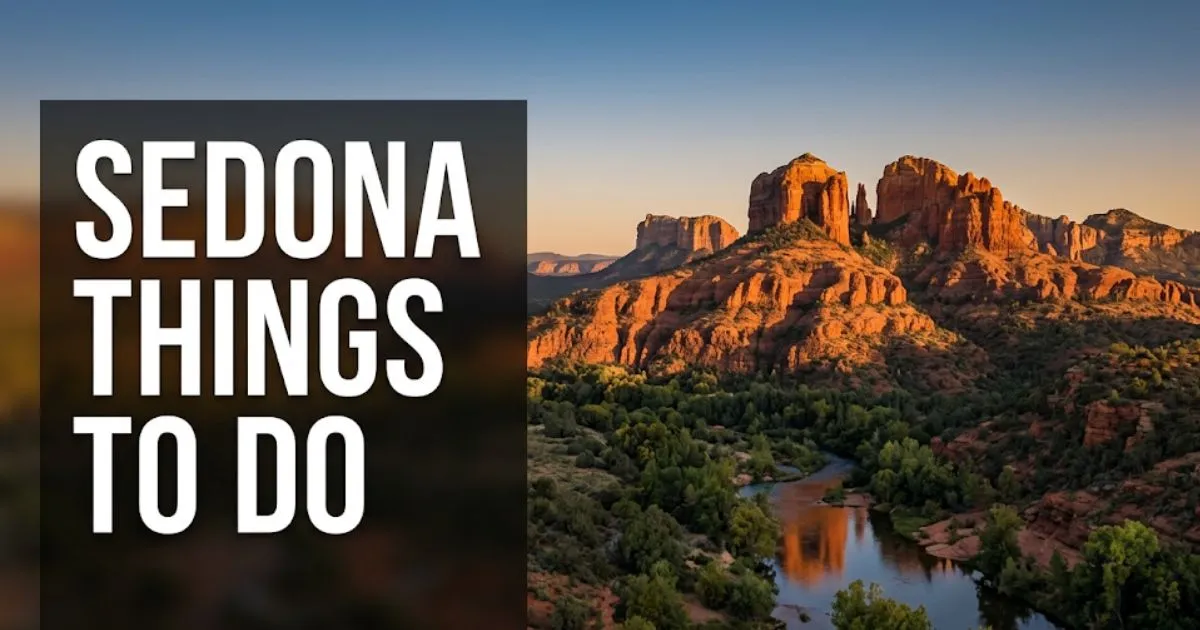
Sedona things to do range from world-class red rock hikes to spa retreats that rival anything in the American Southwest. The destination genuinely earns its reputation, but only if you know where to go beyond Uptown’s souvenir shops.
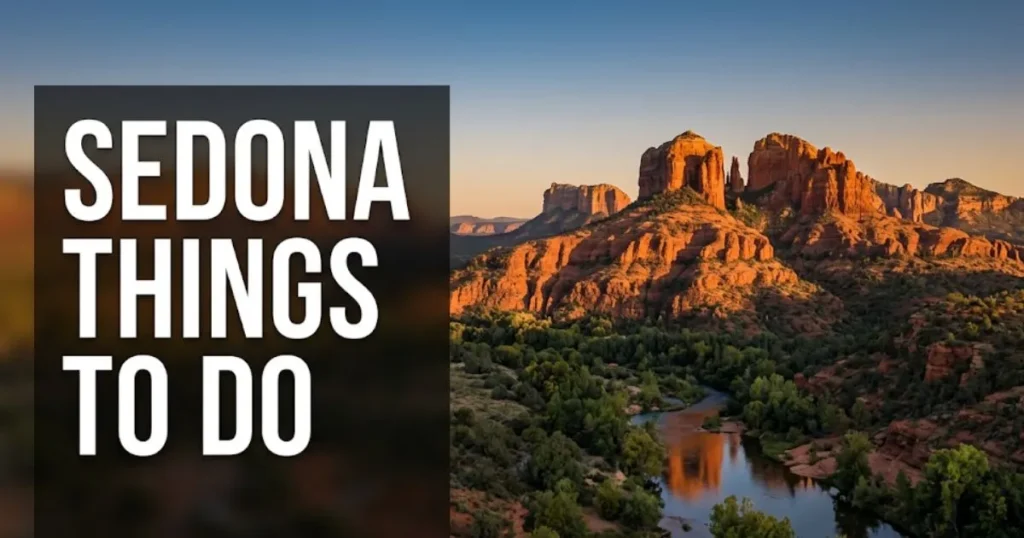
The red rock formations surrounding Sedona are classified within Coconino National Forest, one of America’s most visited national forests. The landscape is geologically distinct and visually unlike anywhere else in the continental United States.
This guide covers the best hikes, Jeep tours, vortex sites, restaurants, and wellness experiences. It also tells you what’s overrated, what requires advance booking, and what each traveler type should prioritize.
Sedona Things To Do: The Full Picture
Sedona offers one of the most concentrated collections of outdoor, wellness, and arts experiences in the American Southwest. The destination is not a theme park experience: it rewards preparation and punishes the unprepared.
Uptown Sedona, along SR-89A, is where most first-timers spend their first hours. It’s the most commercial part of town. The galleries, shops, and trolley tours are fine for orientation, but the real Sedona starts the moment you drive south on SR-179 toward the Village of Oak Creek.
The two main zones matter for planning. Uptown sits along SR-89A and accesses Oak Creek Canyon and the Airport Mesa vortex. The SR-179 corridor accesses Cathedral Rock, Bell Rock, Devil’s Bridge, and Tlaquepaque.
Budget travelers should know that most trailheads require a Red Rock Pass for parking. The pass is available at kiosks, select vendors, and online. Day hiking itself is free.
Insider Tip:
- Park once at the Tlaquepaque Arts area lot and walk or use the Sedona Trolley to minimize car moves on SR-179
- Arrive at trailheads before 8:00 AM during peak season to secure parking without stress
- Solo travelers will find Sedona extremely safe and navigable, though the lack of public transit makes a rental car non-negotiable
Best Hikes in Sedona
The best hikes in Sedona range from the accessible Bell Rock Pathway to the demanding Cathedral Rock summit, offering genuinely world-class red rock trail variety.
Devil’s Bridge Trail is Sedona’s most photographed hike. It leads to a natural sandstone arch spanning approximately 54 feet. The 4-mile round trip involves moderate scrambling and significant sun exposure.
Cathedral Rock is the harder, more rewarding alternative. The final approach requires hands-and-knees scrambling over steep slickrock. Experienced hikers who push past the false summit to the saddle get panoramic views that Devil’s Bridge crowds never see.
West Fork Trail (Call of the Canyon) is Sedona’s most underrated major trail. It follows Oak Creek through a red rock canyon, crossing the creek multiple times. The 6.9-mile round trip is shaded, cooler than exposed trails, and genuinely beautiful.
| Trail | Distance | Difficulty | Best For | Insider Note |
|---|---|---|---|---|
| Bell Rock Pathway | 3.6 mi RT | Easy | Families, seniors | Accessible base loop; scrambling optional |
| Devil’s Bridge | 4 mi RT | Moderate | Couples, solo hikers | Arrive before 8 AM to avoid photo line |
| Cathedral Rock | 1.5 mi RT | Strenuous | Experienced hikers | Short distance, steep scramble; not for families with young kids |
| West Fork Trail | 6.9 mi RT | Easy-Moderate | All profiles | Best shade; coolest option in summer |
| Soldier Pass Trail | 4.2 mi RT | Moderate | Couples, solo | Access to Devil’s Kitchen sinkhole; fewer crowds than Devil’s Bridge |
Seniors and accessibility travelers should focus on the Bell Rock Pathway. The packed gravel base loop is relatively flat and wheelchair-accessible for the first mile.
Spring (March through May) and October through November are ideal for most hikes. Summer hiking should begin before 7:00 AM and end before 10:00 AM on exposed trails.
Insider Tip:
- Soldier Pass Trail accesses the same red rock country as Devil’s Bridge with dramatically fewer visitors
- Bring a minimum of two liters of water per person for any trail over 3 miles
- The Coconino National Forest recommends downloading trail maps offline before heading out, as cell service disappears on most backcountry routes
Sedona Jeep Tours and Off-Road Experiences
Sedona’s Jeep tours offer the best access to terrain that standard vehicles and most hikers cannot reach, covering remote canyon and mesa routes in 90 minutes to 3 hours.
Pink Jeep Tours is the best-known operator. Their Broken Arrow Trail tour is the flagship experience, driving through the Chicken Point area with views unavailable from any hiking trail. They’ve operated in Sedona for decades and maintain a strong safety record.
A lesser-known alternative: Red Rock Jeep Tours runs smaller groups and offers more customizable route options. Experienced repeat visitors and locals frequently prefer them for a less scripted experience.
The Broken Arrow Trail tour is consistently the top-rated off-road route. It covers the Chapel of the Holy Cross area canyon and reaches vista points above the Village of Oak Creek. Cost for guided Jeep tours typically runs approximately $75 to $130 per adult depending on tour length and operator.
Families with children aged 5 and up generally enjoy Jeep tours more than any trail hike. The seated, guided format removes the physical demand while delivering genuine red rock immersion.
Couples should book the sunrise or sunset Jeep tours. The light quality on the red formations during golden hour makes the standard daytime tour look flat by comparison.
Book Jeep tours at least 2 to 3 weeks in advance during spring and fall peak seasons. Walk-in availability is unreliable from March through May.
Insider Tip:
- Ask specifically for a guide who focuses on geology, not just scenic stops. The best Pink Jeep guides explain how the Permian-era Supai Formation created the specific red coloring
- Seniors with back or joint sensitivities should request a slower pace or choose the shorter 90-minute tour option
Key Takeaway: Devil’s Bridge is beautiful but crowded by 9 AM daily in peak season. Soldier Pass Trail delivers comparable red rock drama with a fraction of the foot traffic.
Sedona Vortex Sites
Sedona’s four primary vortex sites are Airport Mesa, Cathedral Rock, Bell Rock, and Boynton Canyon, each associated with different energy types in Sedona’s spiritual tradition.
The vortex concept in Sedona refers to locations where the earth’s energy is said to be especially concentrated. Whether or not you subscribe to the metaphysical framing, these sites sit at genuinely dramatic viewpoints and are worth visiting on geographic merit alone.
Airport Mesa is the most accessible vortex. The overlook sits just above the Sedona Airport Road turnoff from SR-89A. Sunrise here is exceptional. It requires minimal hiking and delivers one of the best panoramic views in the entire region.
Boynton Canyon Vortex requires a 6-mile round trip hike through a red-walled canyon. It’s the least crowded of the four major vortex sites and the most geographically dramatic. The canyon walls change color throughout the day.
Guided vortex tours are available through multiple operators in Uptown Sedona, typically ranging from $50 to $95 per person for a 2-hour tour. The Sedona Chamber of Commerce and Tourism Bureau lists certified tour operators on their official platform.
Solo travelers often find Airport Mesa particularly meaningful for early morning reflection. The overlook is accessible before most commercial tours begin.
Skeptical travelers should visit Boynton Canyon purely for the hike. The spiritual framing is optional; the canyon is not.
Insider Tip:
- Skip the overcrowded Cathedral Rock vortex “spot” at the base. The actual elevated saddle position delivers both the energy experience and the view
- Airport Mesa has a formal overlook parking area that fills by 7:30 AM on weekends in season; arrive earlier or park below and walk up
Sedona Arts and Culture
Sedona’s arts scene centers on Tlaquepaque Arts and Shopping Village, a Spanish colonial-style complex on SR-179 housing galleries, studios, and artisan shops within a genuinely beautiful architectural setting.
Tlaquepaque (pronounced tla-ka-PA-kay) is not a mall dressed as a village. Several resident galleries represent working regional artists, and the courtyard architecture with its sycamore trees and fountains is legitimately worth time even without purchasing.
The Sedona Arts Center on Art Barn Road hosts rotating exhibitions by local and regional artists. Admission is typically free or by donation. It’s consistently overlooked by first-time visitors who concentrate on Tlaquepaque’s commercial galleries.
The Sedona Heritage Museum in Jordan Historical Park covers Verde Valley pioneer history with a level of specificity that distinguishes it from generic frontier exhibits. It’s small, uncrowded, and takes about 45 minutes.
For couples, the Tlaquepaque courtyard hosts live music events on Friday evenings in spring and fall. The setting is genuinely romantic and completely different from the daytime shopping crowd.
Families with children under 10 will find Tlaquepaque manageable for about an hour. The artisan complexity loses young children faster than expected.
Insider Tip:
- The Chapel of the Holy Cross, built into a red rock buttress on Chapel Road off SR-179, is one of the most architecturally significant spiritual sites in Arizona. It’s free to enter. Most Jeep tour lists mention it; few visitors actually stop and spend the 20 minutes inside it deserves
- Budget travelers: Tlaquepaque galleries are free to browse. The commercial galleries are worth 30 minutes even without buying
Best Restaurants in Sedona
The best restaurant in Sedona for a genuine local dining experience is Elote Cafe on SR-89A, which operates without reservations and regularly has a 90-minute wait by 6:00 PM.
Elote Cafe serves elevated Mexican regional cooking with a focus on Oaxacan and regional Arizona ingredients. The namesake corn dip has been cited by multiple national publications. Show up at 5:00 PM when doors open, or plan to wait.
Dahl and DiLuca Ristorante Italiano on SR-89A is the local’s choice for a genuinely romantic dinner. The interior is warm and intimate without the resort-hotel price escalation. Reservations are recommended and available.
Il Terrazzo at L’Auberge de Sedona is the premium option. It sits directly on Oak Creek with outdoor terrace dining. Dinner typically runs $80 to $130 per person before wine. The setting earns the price for a special occasion.
Budget travelers should eat lunch rather than dinner at Elote or Dahl and DiLuca where possible. Sedona lunch menus offer the same kitchen quality at lower price points.
Couples planning a dinner with the best ambiance in Sedona should prioritize Il Terrazzo for the creekside setting. Make reservations at least 2 to 3 weeks in advance during spring and fall.
Insider Tip:
- Coffeepot Restaurant on Coffeepot Drive is where locals eat breakfast. It’s not on most tourist lists, serves 100+ omelet varieties, and has a wait dramatically shorter than Uptown spots on weekend mornings
- The most common mistake: eating dinner in Uptown Sedona at the visible strip restaurants when Dahl and DiLuca and Elote are within a 5-minute drive with dramatically better quality
Key Takeaway: Book Elote Cafe by arriving at door-open time (5:00 PM). It’s the most honest value for the quality level in all of Sedona’s dining landscape.
Sedona Spas and Wellness
Mii amo at Enchantment Resort in Boynton Canyon is the premier spa destination in Sedona and consistently ranks among the top destination spas in the United States.
Mii amo operates as both a day spa and an all-inclusive destination spa retreat. Day spa access requires advance booking and is available to non-resort guests at a premium. Treatments typically range from approximately $150 to $400 depending on service and duration.
L’Auberge de Sedona offers a full-service spa on the creek with a more accessible price point than Mii amo for standard massage and body treatments. The outdoor treatment areas overlooking Oak Creek are genuinely exceptional.
For couples seeking a full wellness retreat, Enchantment Resort’s multi-day Mii amo packages deliver one of the most complete resort-and-spa immersions available in the American Southwest. Book 4 to 6 weeks in advance minimum for peak season.
Budget travelers can access Sedona’s wellness culture without a resort stay. Several independent massage and energy healing studios in the SR-89A corridor offer services from approximately $80 to $130 per hour.
Seniors visiting specifically for wellness should prioritize Mii amo for its accessibility infrastructure and the Boynton Canyon setting, which combines gentle walking access with immersive red rock views.
Insider Tip:
- The outdoor soaking pools at Enchantment are accessible to day spa guests. Arriving for a morning treatment and spending the afternoon at the pool dramatically extends the value of the visit
- According to Travel + Leisure, Mii amo has appeared on its World’s Best Spas list multiple times. The reputation is earned, not marketed
Things To Do in Sedona for Couples
Sedona is among the most genuinely romantic destinations in the American Southwest, with the red rock canyon setting, intimate dining, and spa culture creating a naturally couple-oriented experience.
The single best romantic experience in Sedona is the Airport Mesa sunset overlook. Arrive 45 minutes before sunset. Bring a blanket. The 360-degree view of the red formations turning amber and deep violet as the sun drops behind the western mesa is the defining Sedona moment.
A hot air balloon flight at sunrise is the most dramatic couples experience and requires the most advance planning. Operators including Northern Light Balloon Expeditions and Red Rock Balloon Adventures offer sunrise flights. Cost typically ranges from approximately $200 to $300 per person. Book 3 to 4 weeks in advance.
The creekside dinner at Il Terrazzo followed by a post-dinner walk along the Oak Creek path at L’Auberge is a complete romantic evening that combines Sedona’s best culinary and natural setting.
Couples who prefer low-key over curated should spend a morning at West Fork Trail. The creek crossings, canyon walls, and tree canopy create an intimate trail experience that Sedona’s more popular summit hikes don’t match.
Avoid Cathedral Rock as a “romantic” activity if either partner has no scrambling experience. The steep slickrock final approach creates anxiety, not intimacy.
Insider Tip:
- The Garland’s Oak Creek Lodge on SR-89A in Oak Creek Canyon offers a small, intimate lodge experience that feels nothing like Sedona’s resort corridor. Dinner is served family-style for guests. Couples who book a cabin here describe it as the most genuinely Sedona experience they had
Sedona Family Activities
Sedona works well for families with children aged 6 and older. Families with toddlers under 4 will find the terrain, heat, and trail difficulty genuinely limiting.
Slide Rock State Park on SR-89A in Oak Creek Canyon is the non-negotiable family activity. Natural water slides carved into red rock channel Oak Creek through a series of chutes and pools. Children 5 and older can navigate the slides independently.
Slide Rock typically charges an admission fee per vehicle (verify current rates before visiting). It reaches capacity and may close to new arrivals by mid-morning on summer weekends. Arrive at opening time.
The Bell Rock Pathway is the most genuinely family-friendly trail. The wide, packed-gravel loop around Bell Rock’s base is flat enough for older children and accessible for those with mobility aids. The view of Bell Rock and Courthouse Butte is one of Sedona’s best from ground level.
Pink Jeep Tours’ Broken Arrow Trail has a minimum age requirement (typically 5 or older depending on tour) and is the best way to give children a high-energy Sedona experience without the physical demand of advanced trails.
Families should avoid the West Fork Trail during Arizona monsoon season (July through September) due to creek flooding risk. Water levels can rise rapidly.
Insider Tip:
- The Sedona Trolley is an underused family tool. It covers two distinct routes through town and provides useful geographic orientation before committing to a full-day trailhead plan
- Families staying in the Village of Oak Creek (south of the main town on SR-179) find less traffic, more affordable accommodation, and direct trail access to Bell Rock and Cathedral Rock
Key Takeaway: Slide Rock State Park is the activity that works for every family member simultaneously. Arrive at opening time or plan to be turned away during peak summer weekends.
Sedona for Seniors and Accessibility
Sedona has more accessibility-appropriate experiences than its adventurous reputation suggests. Targeted planning makes it one of the more genuinely senior-friendly outdoor destinations in Arizona.
The Bell Rock Pathway base loop is the first recommendation for seniors and travelers with limited mobility. The surface is compacted gravel and relatively flat. The visual payoff is immediate: Bell Rock and Courthouse Butte are among Sedona’s most iconic formations.
The Sedona Trolley is wheelchair accessible and covers both its SR-89A Uptown route and the Chapel of the Holy Cross route. It’s the most practical way to see Sedona’s main corridor without walking distances that challenge mobility-impaired travelers.
Jeep tours through operators like Pink Jeep Tours are senior-friendly with some caveats. The Broken Arrow route involves significant bumping and jostling. Travelers with back, hip, or spine sensitivities should request the gentler Scenic Rim tour instead.
The Chapel of the Holy Cross is accessible by a short, paved walkway from the parking lot. The dramatic view and architecture reward a 15-minute visit. It’s rarely mentioned in senior-focused itineraries but is the most accessible iconic Sedona viewpoint.
Mii amo at Enchantment Resort has full ADA compliance and specifically offers therapeutic wellness treatments suited to older travelers. The flat terrain around the resort itself is walkable without significant elevation change.
Insider Tip:
- The Airport Mesa overlook is accessible by car. You drive up Airport Road, park at the designated lot, and walk less than 200 feet to a full panoramic view. This is the best effort-to-payoff ratio in Sedona for any traveler with limited mobility
- Heat management is critical for seniors. Plan all outdoor activities before 10:00 AM from May through September
Sedona Weekend Itinerary
A 2-day Sedona weekend itinerary works best when organized by geography, keeping morning activity in one zone and afternoon activity in the adjacent zone to minimize SR-179 traffic.
Day 1: SR-179 Corridor and Village of Oak Creek
- Arrive at the Cathedral Rock trailhead before 7:30 AM. Complete the hike (1.5 miles round trip, strenuous) before 9:30 AM to avoid heat and crowds.
- Drive north on SR-179 to Tlaquepaque Arts and Shopping Village. Spend 1 to 2 hours browsing galleries and having coffee.
- Lunch at Elote Cafe (arrive at 11:30 AM when the lunch window opens to avoid the dinner wait).
- Afternoon Jeep tour with Pink Jeep Tours on the Broken Arrow Trail. Depart at 2:00 PM to return before the heat peak.
- Sunset at the Airport Mesa overlook. Bring snacks. Stay for the full color sequence.
- Dinner at Dahl and DiLuca. Reserve in advance.
Day 2: Uptown, Oak Creek Canyon, and Vortex
- Early morning: hike or walk the Bell Rock Pathway base loop. Allow 90 minutes.
- Drive north on SR-89A to Slide Rock State Park (families with children should make this the Day 2 anchor activity). Arrive at opening time.
- Continue north through Oak Creek Canyon to the West Fork Trail parking area. Hike 3 to 4 miles in for the best canyon views. Return by 1:00 PM.
- Afternoon: Boynton Canyon drive and short vortex trail walk.
- Late afternoon: visit the Sedona Arts Center and walk through Uptown.
- Dinner at Il Terrazzo at L’Auberge de Sedona for the creekside experience.
Red Rock Pass and Sedona Parking
The Red Rock Pass is required for parking at most Coconino National Forest trailheads in the Sedona area. Arriving without one is the single most common logistical failure of first-time Sedona visitors.
Day passes and annual passes are available at trailhead kiosks, local outdoor retailers, and online through the Coconino National Forest Recreation.gov platform. Verify current pricing before visiting, as fees are subject to annual adjustment.
Certain Sedona-area trailheads have implemented timed-entry reservation systems, particularly Devil’s Bridge and a handful of other high-traffic access points during peak season. These systems require booking a specific arrival window in advance. Check the Coconino National Forest website directly for current 2026 timed-entry requirements before planning your trailhead schedule.
Parking in Uptown Sedona along SR-89A is limited. The main Uptown lot fills by 9:00 AM on spring and fall weekends. A practical workaround is to park at the Tlaquepaque lot on SR-179 and use the Sedona Trolley to reach Uptown.
SR-179 southbound from Cathedral Rock toward the Village of Oak Creek runs smoothly most mornings. The reverse direction (northbound SR-179 toward Uptown) experiences significant delays between 11:00 AM and 2:00 PM on peak days.
Insider Tip:
- The Sedona Shuttle (check current service status for 2026) has historically operated between the main parking area on SR-89A and high-traffic trailhead zones. Confirm current shuttle routes and schedules with the Sedona Chamber of Commerce before your visit
- Budget travelers: a single-day Red Rock Pass covers multiple trailhead stops on the same day. Plan your hike sequence to maximize one pass across multiple morning stops
Key Takeaway: Buy your Red Rock Pass online before arrival. Trailhead kiosks run out of day passes or experience technical issues on peak-season weekends. Don’t let a $7 pass cost you a morning of hiking.
Best Time To Visit Sedona
The best time to visit Sedona is mid-March through early May, and again from late September through November, when temperatures are moderate, trails are in optimal condition, and crowds are manageable.
Spring (March through mid-May) brings wildflower blooms along Oak Creek and ideal hiking temperatures in the 60s to mid-70s Fahrenheit at canyon elevation. Spring break weeks in late March drive significant crowd spikes and higher hotel rates.
Fall (October through November) is the local’s preferred season. Cottonwood trees in Oak Creek Canyon turn gold and amber. Hotel rates drop meaningfully after Labor Day. Trail crowds thin dramatically by mid-October.
Summer (June through August) is genuinely challenging. Temperatures reach 100°F to 105°F at canyon level by midday. The Arizona monsoon season (July through September) brings afternoon thunderstorms and flash flood risk in creek areas. Trails must be started before 7:00 AM and completed before 10:00 AM to be safe in peak summer.
Winter (December through February) is the hidden-value season. Rates are lowest. Crowds are smallest. Occasional snowfall on the red formations creates a visual that Sedona’s high-season visitors never see. Most trails remain hikeable on clear days. Some creek activities are limited by cold water temperatures.
According to the Arizona Office of Tourism, Sedona receives approximately 3 million visitors annually, with the highest concentration arriving in March, April, and October. Planning around these peak weeks reduces both logistical friction and cost.
Sedona Safety and Practical Warnings
The most serious risk for Sedona visitors is heat exhaustion combined with altitude exertion on exposed trails, particularly for travelers arriving from low-elevation cities who underestimate the physical demand at 4,350 feet.
Key safety and practical facts every visitor should know:
- Carry a minimum of 1 liter of water per person per hour of hiking on all exposed Sedona trails. Most emergency rescues in Coconino National Forest involve dehydration.
- Do not attempt Cathedral Rock, Devil’s Bridge, or Soldier Pass in summer after 9:30 AM without significant prior heat and altitude acclimation.
- Flash flood risk is real from July through September. Do not enter slot canyon areas or creek crossings if thunderstorms are visible anywhere in the sky.
- Rattlesnakes are present on rocky trails year-round. Stay on marked paths. Do not reach into rock crevices.
- Cell service is unreliable or absent on most backcountry trails beyond 1 mile from the trailhead. Download offline trail maps via AllTrails or Gaia GPS before leaving your vehicle.
- Sun exposure at elevation is intense. SPF 50 sunscreen, a hat, and UV-protective clothing are not optional.
- Trail scrambling on Cathedral Rock involves genuine exposure. Visitors with a fear of heights or without prior scrambling experience should stop at the base saddle, not push to the exposed edge.
The Coconino National Forest ranger station in Sedona is reachable for trail conditions and emergency guidance. In a wilderness emergency, call 911. Sedona has a hospital (Verde Valley Medical Center in nearby Cottonwood) approximately 15 miles from the town center.
Day Trips from Sedona
The best day trip from Sedona is the 30-mile drive to Jerome, Arizona, a former copper mining town built vertically into Cleopatra Hill at approximately 5,000 feet elevation on the edge of the Black Hills.
Jerome is not a tourist reconstruction. The tilted streets, slanting historic buildings, and genuine artist community make it feel earned rather than designed. The Jerome State Historic Park at the Douglas Mansion overlook provides the best historical context in about 45 minutes. The town’s small bar and restaurant strip along Main Street has the best lunch stops within a 45-minute drive of Sedona.
Montezuma Castle National Monument, 26 miles south on I-17, is one of the best-preserved cliff dwellings in North America. A Sinagua culture site from approximately 1100 to 1400 CE, it’s accessible via a short paved loop trail and typically takes about 90 minutes. Admission fees apply; verify current rates.
Flagstaff is 30 miles north on SR-89A and SR-89. It offers a genuine college-town energy completely unlike Sedona’s resort atmosphere. Route 66 history, craft breweries on San Francisco Street, and proximity to Walnut Canyon National Monument make it a worthwhile full-day alternative day trip.
The Grand Canyon South Rim is approximately 115 miles from Sedona via SR-89A to US-89. Allow 2.5 hours one way. It’s feasible as a very long day trip, but requires leaving Sedona by 6:30 AM.
Insider Tip:
- Jerome’s parking fills on weekend afternoons from 11:00 AM onward. Arrive before 10:30 AM or park in the lower lots and walk up
- The Verde Valley Wine Trail between Cornville and Cottonwood is 20 miles southwest of Sedona and offers 20+ tasting rooms in a working agricultural valley. It’s a legitimate half-day alternative for couples who want something different from trail hiking
Key Takeaway: Jerome is the most underused Sedona day trip. It takes 35 minutes to reach, costs nothing to walk, and delivers a completely different character from the resort-spa Sedona experience.
Frequently Asked Questions About Sedona
What are the best things to do in Sedona for first-time visitors?
First-time visitors to Sedona should prioritize the Cathedral Rock or Bell Rock hike, a guided Jeep tour on the Broken Arrow Trail, and an Airport Mesa sunset.
These three experiences cover Sedona’s core identities: red rock trail hiking, off-road canyon access, and the panoramic view that defines the destination’s visual reputation.
Add Tlaquepaque Arts and Shopping Village for an afternoon of arts browsing, and Elote Cafe for at least one genuinely excellent Sedona meal.
Do I need a permit or pass to hike in Sedona?
Hiking in Sedona requires a Red Rock Pass for parking at most Coconino National Forest trailheads.
The pass is not required for hiking itself but for leaving a vehicle at the trailhead parking area. Day passes and annual passes are sold at kiosks, local outdoor gear shops, and online.
Certain high-traffic trailheads including Devil’s Bridge may require a timed-entry reservation during peak season; verify the current 2026 system with Coconino National Forest before your visit.
How far is Sedona from Phoenix and how do I get there?
Sedona is approximately 115 miles north of Phoenix Sky Harbor International Airport, typically a 2-hour drive under normal traffic conditions.
The route follows I-17 north to SR-179 into Sedona. A rental car from Phoenix is effectively required, as there is no direct public transit service between Phoenix and Sedona.
An alternative is flying into Flagstaff Pulliam Airport (FLG, approximately 30 miles north of Sedona), which has limited service but eliminates the 2-hour drive for travelers whose schedules allow it.
What is the best time of year to visit Sedona?
The best time to visit Sedona is mid-March through early May and late September through November.
Both windows offer mild temperatures, passable trail conditions, and manageable crowd levels compared to the summer peak.
Summer (June through August) brings extreme heat exceeding 100°F at canyon level and is genuinely challenging on exposed trails. Winter is the lowest-rate, lowest-crowd season and surprisingly viable for hiking on clear days.
Are Sedona’s vortex sites worth visiting?
Sedona’s vortex sites are worth visiting on geographic merit regardless of personal beliefs about their metaphysical properties.
Airport Mesa, Cathedral Rock, Bell Rock, and Boynton Canyon are each positioned at dramatic viewpoints that would be compelling destinations without any spiritual framework.
Travelers specifically interested in the energy vortex tradition will find guided tours that provide cultural and spiritual context. Travelers who want purely scenic viewpoints will find the same locations satisfying on purely landscape terms.
Is Sedona good for families with young kids?
Sedona is well-suited for families with children aged 6 and older. Families with toddlers and children under 4 will find most signature experiences physically demanding or impractical.
The best family activities are Slide Rock State Park (creek swimming and natural water slides), the Bell Rock Pathway (flat, accessible trail loop), and a guided Jeep tour.
The primary challenge for families with very young children is that most of Sedona’s iconic hikes involve steep terrain, sun exposure, and scrambling sections that are unsafe for children who cannot walk independently on uneven ground.
Plan Your Sedona Trip With Confidence
Sedona rewards travelers who do three things: arrive at trailheads early, buy a Red Rock Pass in advance, and resist spending most of their time in Uptown.
Book your Jeep tour and any resort spa treatments first. These fill earliest and set the structure of your days. Trail hiking is self-directed and requires only pass and arrival timing.
Verify all entry fees, timed-entry requirements, and restaurant hours directly with each venue before departure. Prices and reservation systems in Sedona’s popular areas change seasonally, and 2026 conditions should be confirmed through the Sedona Chamber of Commerce and Tourism Bureau and Coconino National Forest official sources. The traveler who confirms their logistics before leaving home never wastes a morning on a fixable problem.