Best Things To Do in Colombia: Your 2026 Travel Guide

The best things to do in Colombia stretch from colonial Caribbean streets to cloud forest wax palms. No single South American country delivers this range of experience across a single two-week trip.
ProColombia, Colombia’s national tourism authority, reports that international tourist arrivals have grown substantially each year through the mid-2020s. The country’s combination of Andean cities, Caribbean coastline, Amazon access, and coffee culture is genuinely rare.
This guide covers Colombia’s top destinations and activities with specific named places, honest seasonal guidance, and practical logistics. It is built to help you plan an actual trip, not just inspire one.
Things To Do in Colombia: What Makes This Country Worth Your Trip
Colombia offers a travel variety that genuinely has no close parallel in the Western Hemisphere. In under two hours of domestic flying, you move from a 2,600-meter Andean capital to a Caribbean walled city to a coffee region UNESCO World Heritage landscape.
The country’s identity is built on contrast. Bogotá is an intellectually dense, culturally sophisticated city that rivals Buenos Aires for art and food. Medellín has rebuilt itself into one of South America’s most architecturally inventive urban environments.
Cartagena delivers the colonial Caribbean grandeur most travelers picture when they imagine “classic South America.” The Coffee Cultural Landscape, a UNESCO World Heritage Site in the Eje Cafetero region, is unlike any farming landscape most North American travelers have encountered.
The honest caveat: Colombia’s geography means travel between regions takes time. Flying between cities is the practical choice for most itineraries.
Insider Tip:
- Book domestic flights at least four to six weeks ahead in peak season (December through January, July).
- The Coffee Region is frequently skipped by first-timers. Repeat visitors consistently rate it the best part of the trip.
- Solo travelers will find Colombia’s hostel circuit, particularly in El Poblado and Usaquén, among the most socially engaged in South America.
Best Things To Do in Colombia: The Experiences That Define the Country
The best things to do in Colombia are not universally located in one city. They are distributed across four distinct regions, each requiring separate planning.
| Experience | Location | Best For | Cost Range (Approx.) | Time Required |
|---|---|---|---|---|
| Ciudad Perdida Trek | Sierra Nevada de Santa Marta | Active travelers, solo hikers | $400 to $600 USD total | 4 to 6 days |
| Coffee Farm Immersion | Salento / Eje Cafetero | Couples, food travelers, culture seekers | $30 to $80 USD per farm tour | Half to full day |
| Walled City Cartagena | Cartagena, Caribbean Coast | All profiles | Mostly free to explore | 2 to 3 days |
| Cocora Valley Hike | Salento, Quindío | Outdoor and nature travelers | Under $20 USD with transport | Full day |
| Medellín Cable Car Circuit | Medellín, Antioquia | Solo travelers, budget travelers | Under $5 USD | 2 to 4 hours |
| Guatapé and La Piedra | Near Medellín | Couples, day-trippers | $15 to $30 USD round trip | Full day |
| Tayrona National Park | Caribbean Coast | Nature and beach travelers | $25 to $40 USD entry (approx.) | 2 to 3 days |
| Museo del Oro | Bogotá, La Candelaria | History and culture travelers | Low admission, verify before visit | 2 hours |
Each of these experiences represents genuine Colombia. None of them is tourist infrastructure masquerading as authentic experience.
For families with children: The Guatapé day trip from Medellín and the Coffee Region farm tours work well for older children (ages 8 and up). Ciudad Perdida is not appropriate for children or adults with limited physical fitness.
Top Things To Do in Colombia by Region
The top things to do in Colombia divide naturally by geographic region. Planning your trip by region, rather than by city name alone, prevents the most common itinerary mistake: trying to see too many cities too quickly.
Andean Region (Bogotá, Medellín, Coffee Region): Colombia’s cultural, culinary, and architectural core. Bogotá sits at 2,600 meters. Medellín sits at 1,500 meters. Both require altitude consideration.
Caribbean Region (Cartagena, Tayrona, Santa Marta, Palomino): Hot and humid year-round. Best visited December through April during the dry season. Cartagena is the most polished destination. Tayrona National Park delivers the Caribbean coast’s wild, jungle-backed beaches.
Coffee Region (Salento, Filandia, Montenegro, Manizales): Centered in the departments of Quindío, Risaralda, and Caldas. The wax palm forests of the Cocora Valley are found nowhere else on Earth.
Amazon Region (Leticia): Accessible only by air. Best for wildlife-focused travelers who can dedicate at least four days.
According to ProColombia, the Eje Cafetero and the Caribbean coast together account for the highest traveler satisfaction ratings among international visitors.
For budget travelers: Medellín offers the best value for money of any Colombian city. The Metro and Metrocable are inexpensive. El Poblado has excellent hostels and strong street food culture.
Key Takeaway: Plan Colombia by region, not just by city name. Combining two regions in one trip is realistic. Attempting four regions in one week is how trips fall apart.
Fun Things To Do in Colombia Beyond the Tourist Trail
Fun things to do in Colombia extend well past the Walled City of Cartagena and the Botero Plaza. These experiences are what repeat visitors actually talk about when they come home.
La Piedra del Peñol in Guatapé requires climbing 740 steps carved into a monolithic granite rock. The view from the top looks over a reservoir dotted with colorful island villages.
Parque Explora in Medellín is one of the most engaging interactive science museums in South America, genuinely entertaining for adults. The adjacent Medellín Zoo houses Andean species most travelers have never seen.
The Usaquén Sunday flea market in northern Bogotá is the local alternative to the tourist-heavy Candelaria district. Local artisans, food stalls, and Bogotá’s design-forward creative community gather every Sunday.
For nightlife, Medellín’s Parque Lleras in El Poblado is the most internationally known. Locals, however, tend toward Laureles and Estadio neighborhoods for a less tourist-heavy bar experience.
For couples: A night out in Cartagena’s Getsemaní neighborhood, once considered rough but now one of the most creatively energetic neighborhoods in the country, delivers street art, outdoor dining, and cumbia music in a genuinely atmospheric setting.
Things To Do in Colombia for First-Time Visitors
First-time visitors to Colombia should prioritize two to three destinations rather than four or five. The country’s scale and inter-regional distances make ambitious itineraries exhausting rather than enriching.
A practical first-visit framework: Bogotá for two to three days, Medellín for two to three days, and the Coffee Region for two days delivers the country’s full Andean character. Adding Cartagena for two days gives coastal contrast.
To build this itinerary efficiently:
- Fly into Bogotá (BOG) and spend the first two days acclimatizing at altitude before heavy activity.
- Visit the Museo del Oro on day one. It houses the world’s largest collection of pre-Columbian gold artifacts.
- Explore La Candelaria on day two, then move to Usaquén for evening dining.
- Fly Bogotá to Medellín (approximately 45 minutes) on day three.
- Spend two full days in Medellín: the Metrocable circuit one day, Guatapé day trip the next.
- Take a short flight or bus from Medellín to Salento or the Coffee Region.
- Close the trip in Cartagena with two beach days, choosing Getsemaní over the Walled City for the more genuine local experience.
For seniors: Bogotá’s altitude is the primary concern. Plan for one rest day on arrival before full activity. The Gold Museum and Usaquén flea market involve minimal physical demand. Cobblestone streets throughout historic centers require sturdy footwear.
Things To Do in Bogotá, Colombia
Bogotá’s best experiences are concentrated in three distinct neighborhoods, each with a completely different character. La Candelaria, Usaquén, and Chapinero do not feel like the same city.
La Candelaria is the historic colonial center. The Museo del Oro on Calle 16 houses over 55,000 gold artifacts and is Colombia’s single most important museum. Admission is low; verify the current rate before visiting.
Usaquén, in northern Bogotá, is the antidote to La Candelaria’s tourist density. Its Sunday flea market draws local designers, antique dealers, and food vendors. The neighborhood’s restaurant row delivers some of the city’s best food outside the Michelin-radar fine dining zone.
Chapinero is Bogotá’s creative and LGBTQ-friendly neighborhood. Its café culture, independent bookstores, and vintage clothing market on Carrera 13 are what define Bogotá for residents rather than tourists.
The overrated Bogotá experience is the Monserrate funicular. The view is fine. The line during weekends is not worth the wait. Local alternative: take the TransMilenio to the Jardín Botánico José Celestino Mutis for the same Andean outdoor experience without the crowd.
According to the Instituto Distrital de Turismo de Bogotá, the city’s culinary scene has grown to include over 18,000 registered restaurants, making it one of the most dining-diverse capitals in South America.
For solo travelers: Bogotá’s La Macarena neighborhood, just north of La Candelaria, has concentrated its best independent restaurants and boutique cafés along Carrera 4. It is safe by day and early evening, very walkable, and locally oriented.
Things To Do in Medellín, Colombia
Medellín rewards travelers who move beyond El Poblado into the city’s working neighborhoods. The city’s transformation from its 1990s reputation to its current status as an urban innovation model is genuinely felt at street level.
The Metro de Medellín is the starting point for understanding the city spatially. Take Line K of the Metrocable from the Acevedo station up to the Parque Arví, an ecological reserve above the city. The cable car ride itself passes over neighborhoods that represent Medellín’s social housing transformation work.
Botero Plaza in the city center houses 23 sculptures by Fernando Botero, donated by the artist. The adjacent Museo de Antioquia charges modest admission and provides the deepest art context in the city.
The Casa de la Memoria in the Villa Nueva neighborhood is an honest, architecturally powerful museum about Colombia’s internal conflict. It is not a comfortable visit, but it is the most important one for understanding the country.
El Poblado is where most international travelers stay. It is safe, well-serviced, and restaurant-dense. Locals, however, tend to eat and socialize in Laureles and along Avenida El Poblado rather than Parque Lleras, which is increasingly tourist-facing.
For budget travelers: The Medellín Metro system covers most major destinations in the city for under $1 USD per trip. The Guatapé day trip, including bus transport and entry to La Piedra, costs approximately $20 to $35 USD total, making it one of the best-value full-day experiences in Colombia.
Key Takeaway: Take Medellín’s Line K Metrocable to Parque Arví on a weekday morning. You’ll see the city from above, enter an Andean cloudforest, and be back in El Poblado by noon.
Things To Do in Cartagena, Colombia
Cartagena’s Walled City (Ciudad Amurallada) is genuinely one of the best-preserved colonial urban environments in the Americas. Walk the full perimeter of the walls at sunset for the best unobstructed views of the Caribbean.
The honest assessment: the Walled City’s interior is increasingly expensive and tourist-heavy. Cartagena’s most authentic neighborhood is Getsemaní, just outside the walls. Its street murals, cumbia music spilling from doorways, and outdoor food scene at Plaza de la Trinidad deliver what the interior has gradually priced out.
The Castillo de San Felipe de Barajas, a 17th-century Spanish fortress overlooking the city, is one of the most architecturally impressive structures in all of Colombia. Admission runs approximately $10 to $20 USD; verify current rates before visiting.
The Rosario Islands (Islas del Rosario) are accessible by boat from Cartagena’s La Bodeguita pier. Day trip boats depart in the morning and return mid-afternoon. The water clarity rivals any Caribbean destination. Book a seat the day before during peak season.
For couples: Cartagena’s horse-drawn carriage rides through the Walled City are a genuine local tradition, not manufactured tourist theater. An evening ride during blue hour is the most atmospheric experience the city offers.
For budget travelers: Getsemaní has excellent budget accommodation and the cheapest quality food in Cartagena. Eating inside the Walled City costs roughly double the price of the identical meal three blocks outside the walls.
Things To Do in the Coffee Region of Colombia
The Coffee Cultural Landscape of Colombia is a UNESCO World Heritage Site. Its designation covers the departments of Caldas, Risaralda, and Quindío, where the country’s signature product is grown on steep hillside farms called fincas.
Salento is the Coffee Region’s most visited town. Its colorful main street, Calle Real, leads uphill to a viewpoint overlooking the Quindío River valley. The town itself is small, walkable in under an hour, and best used as a base for Cocora Valley hikes.
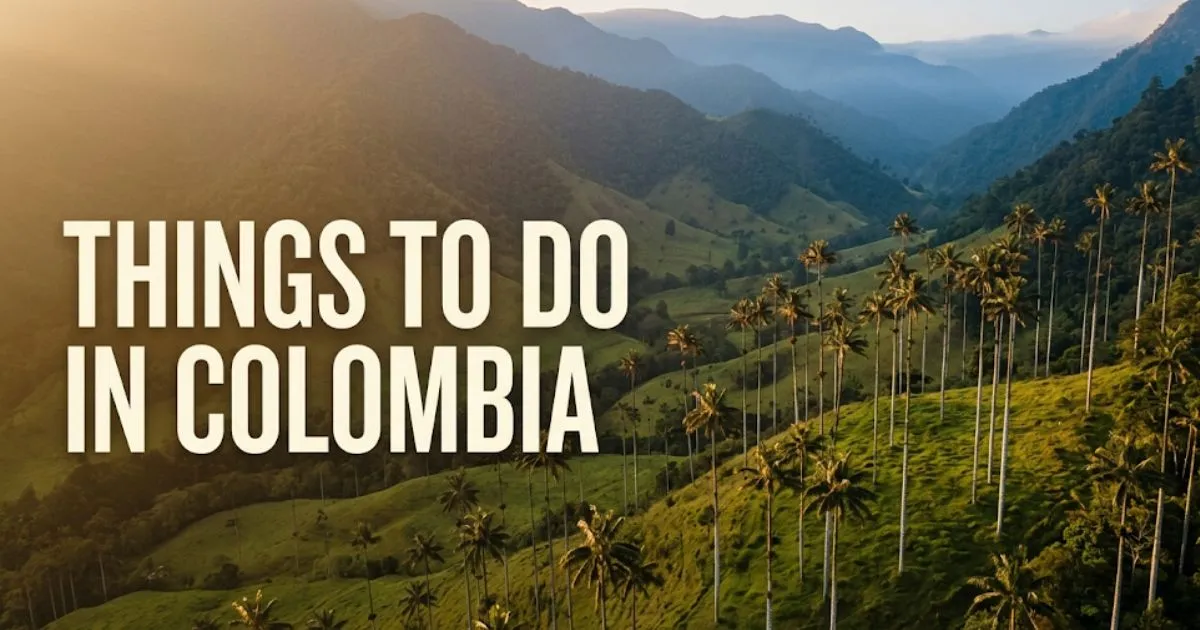
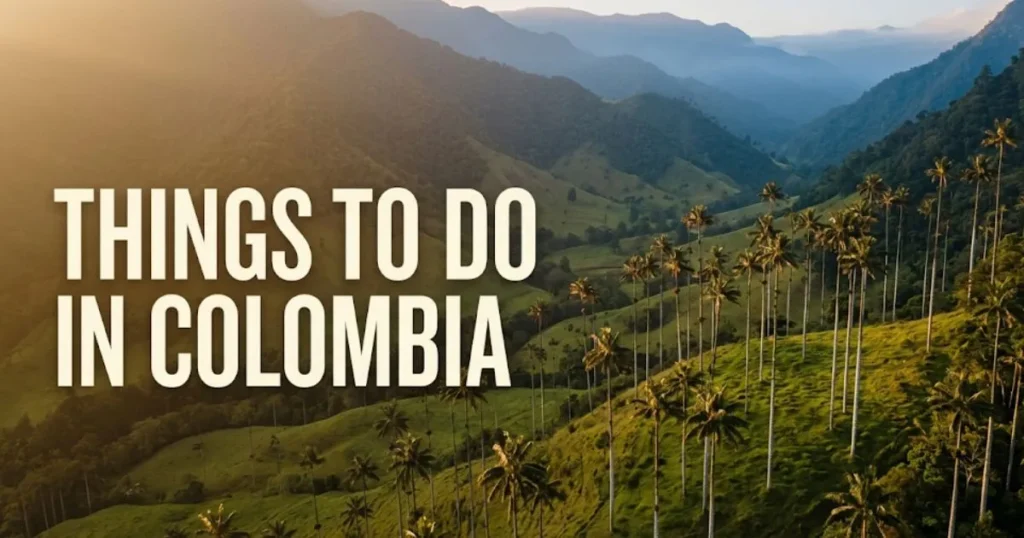
The Cocora Valley hike from Salento is the most visually distinctive single day’s walk in Colombia. Wax palm trees, Colombia’s national tree, grow up to 60 meters tall in a valley framed by Andean cloudforest. The standard loop trail takes four to five hours.
Coffee farm visits (finca tours) are available throughout the region. Finca El Ocaso near Salento is a well-run, English-friendly operation with transparent coffee processing demonstrations. Book ahead, especially November through January.
For couples: Staying at a working coffee finca for two nights is the Coffee Region experience that distinguishes an exceptional Colombia trip from an ordinary one. Expect to pay approximately $80 to $150 USD per night per person with meals and tours included; verify directly with properties.
For families: Cocora Valley is manageable for children aged 10 and older with basic hiking fitness. The valley trail includes some steep sections and river crossings; younger children will find it difficult.
Outdoor Adventures and Hiking in Colombia
Colombia’s outdoor activity range places it alongside Costa Rica and Peru as a top South American adventure destination. The variety across altitude zones is unmatched.
Ciudad Perdida Trek (Teyuna): Colombia’s most demanding and most rewarding multi-day hike. The trail to the ancient Tairona city covers approximately 44 kilometers round trip through jungle, crossing rivers multiple times. You must book with one of five authorized operators. Wiwa Tour, Magic Tour, and Turcol are among the licensed providers. Treks run four to six days and cost approximately $350 to $600 USD per person including guides, meals, and permits.
Tayrona National Park along the Caribbean coast requires a short hike through jungle to reach its beaches. Playa Cristal and Cabo San Juan del Guía are the park’s most photographed beaches. Entry fees apply; verify current rates with Parques Nacionales Naturales de Colombia.
Important: Tayrona closes periodically for ecological restoration. Closures typically fall in February and in September or October. Always check park status before booking travel around Tayrona.
For solo travelers: Ciudad Perdida groups form organically at licensed operator offices in Santa Marta. Solo travelers consistently report meeting strong travel companions on this trek.
For seniors and accessibility travelers: Neither Ciudad Perdida nor the jungle hike into Tayrona’s main beaches is physically accessible for travelers with limited mobility. The Rosario Islands and Cartagena’s Walled City offer the coast’s best accessibility.
Key Takeaway: Book Ciudad Perdida through a licensed operator only. Unlicensed guides operate illegally and the trek enters protected indigenous territory requiring official permission.
Colombia Culture, History, and Festivals
Colombia’s cultural calendar is dense and specific. Planning around a major festival transforms a good trip into a genuinely memorable one.
| Festival | Location | Timing (Approx.) | What It Is | Best For |
|---|---|---|---|---|
| Carnaval de Barranquilla | Barranquilla | February (4 days before Ash Wednesday) | UNESCO-recognized street carnival, second largest in the Americas | Solo travelers, cultural travelers |
| Feria de las Flores | Medellín | First week of August | Flower parade (Desfile de Silleteros), the city’s signature event | Couples, photography travelers |
| Hay Festival | Cartagena | Late January / Early February | International literature and ideas festival | Culture-focused travelers |
| Feria de Cali | Cali | December 25 through December 30 | Salsa dancing festival, the most important in the country | Music and dance travelers |
| Semana Santa | Popayán | Holy Week (March or April) | UNESCO-recognized Easter processions through colonial streets | History and religious culture travelers |
Verify 2026 dates directly with event organizers before booking travel around any festival. Dates shift by calendar year.
The most overrated cultural experience: the generic “salsa class for tourists” offered in Cartagena. Cali is Colombia’s actual salsa capital. A night at La Topa Tolondra or Tin Tin Deo in Cali delivers what the tourist class cannot approximate.
For budget travelers: The Feria de las Flores in Medellín has extensive free street events throughout the week. The Desfile de Silleteros itself is free to watch from the street; paid grandstand seating is available.
Colombia Food and Dining Guide
Colombian food is regional, specific, and genuinely underrepresented in North American food media. The national dish is bandeja paisa, an Antioquian platter of red beans, rice, ground meat, chicharrón, fried egg, plantain, and arepa.
In Bogotá, ajiaco is the defining local dish: a chicken and potato soup built from three varieties of Colombian potato with guasca herb. The best version in the city is a debate best settled by eating at La Puerta Falsa on Calle 11 in La Candelaria, open since 1816.
Pergamino Café has locations in both Medellín and Bogotá and sets the standard for Colombian specialty coffee served with the same precision as Tokyo-level specialty café culture. It is the appropriate correction to the airport Juan Valdez experience.
Cartagena’s food scene divides sharply by neighborhood. La Cocina de Pepina in Getsemaní is one of the most respected Afro-Caribbean Costeño cooking establishments in the city, serving posta cartagenera and coconut rice that reflect the region’s cultural identity more honestly than the Walled City’s upmarket tourist restaurants.
For budget travelers: Every Colombian city has a galería or central market. Bogotá’s Paloquemao market sells fresh tropical fruit, juices, and local breakfast food for a fraction of restaurant prices. Arrive before 10 a.m. for the best selection.
According to ProColombia, Colombian coffee exports have ranked among the world’s top five by volume for decades, but the specialty micro-lot coffees grown in the Eje Cafetero and served in Medellín’s Pergamino are a category the export market has only recently begun to recognize.
Day Trips and Beyond in Colombia
Colombia’s most rewarding day trips from major cities each require a full day and an early start. Half-day versions of any of these experiences sacrifice the best part.
From Bogotá:
- Salt Cathedral of Zipaquirá: Located 49 kilometers north of Bogotá in the town of Zipaquirá. A fully operational Catholic cathedral built inside a salt mine 180 meters underground. Admission runs approximately $20 to $30 USD; verify current pricing. Bus from Portal del Norte TransMilenio station takes approximately 45 minutes.
- Villa de Leyva: A colonial town in Boyacá whose central plaza is the largest in Colombia. Three hours from Bogotá by bus. Best visited on a weekend when the market is active. A genuine local alternative to Bogotá’s tourist-heavy La Candelaria.
From Medellín:
- Guatapé and La Piedra del Peñol: The lake town of Guatapé is one of Colombia’s most colorful towns. La Piedra del Peñol requires 740 steps and pays off with a view over a flooded reservoir valley. Bus from Medellín’s northern terminal takes approximately two hours.
- Santa Fé de Antioquia: A whitewashed colonial town 90 minutes from Medellín. Quieter than Guatapé. Better for travelers seeking a colonial atmosphere without a significant climb.
For seniors: The Salt Cathedral of Zipaquirá is the most accessible major day trip from any Colombian city. The underground environment is cool and paved. Limited walking distance required.
Key Takeaway: The Salt Cathedral of Zipaquirá genuinely earns every superlative written about it. Book a morning departure from Bogotá and you’ll be back in the city for dinner.
Best Time To Visit Colombia
The best time to visit Colombia is December through March for the Caribbean coast and January through March for Andean cities. Colombia’s geography creates multiple distinct climate zones with different peak windows.
| Region | Best Months | Rainy Season | Notes |
|---|---|---|---|
| Caribbean Coast (Cartagena, Santa Marta, Tayrona) | December to April | September to November | December through January: peak crowds and hotel prices |
| Andean Cities (Bogotá, Medellín) | January to March, July to August | April to May, October to November | Bogotá is cool year-round; bring layers |
| Coffee Region (Eje Cafetero) | December to February, June to August | March to May, September to November | Rain intensifies coffee farm atmosphere; some travelers prefer it |
| Amazon Region (Leticia) | June to September | December to May | Dry season allows river navigation; wet season floods create different wildlife patterns |
Cartagena is the exception: It receives visitors year-round and never fully enters a low season because cruise ship arrivals keep the Walled City busy through November.
For travelers seeking lower prices with acceptable weather: July and August offer the secondary dry season across Andean Colombia with meaningfully lower hotel rates than December through January.
For budget travelers: April and May are the lowest-price months for domestic flights and accommodations across most Colombian destinations. Rain is frequent but rarely constant.
How To Get Around Colombia
Getting around Colombia efficiently means choosing between domestic flights and long-distance buses based on your time available and budget.
Domestic Flights: The recommended choice for inter-regional travel. Bogotá (BOG) to Medellín (MDE): approximately 45 minutes. Bogotá to Cartagena (CTG): approximately 1 hour 15 minutes. Avianca and LATAM Colombia are the primary carriers. Viva Air ceased operations; verify current low-cost carrier options before booking. Book four to six weeks ahead in peak season.
Long-Distance Buses: Cost-effective and practical for shorter routes. Medellín to Salento: approximately 4 hours by direct bus. Bogotá to Villa de Leyva: approximately 3 hours. Long-haul overnight buses exist for Bogotá to Cartagena (approximately 18 hours) but flying is preferred for most travelers.
Within Cities:
- Bogotá: TransMilenio (BRT system) covers major corridors. Supplemented by Uber and ride-share apps.
- Medellín: Metro de Medellín plus Metrocable lines reach most destinations. Clean, safe, and inexpensive.
- Cartagena: Walking within the Walled City and Getsemaní. Taxis and ride-share for beach areas.
Never use unmarked taxis in any Colombian city. Use InDriver, Cabify, or the Uber app. This is the most important safety-adjacent practical instruction in Colombia travel.
For seniors: The Metro de Medellín is the most physically accessible transit system in Colombia, with elevators at most major stations. TransMilenio in Bogotá has accessibility infrastructure but station crowding can be challenging.
Colombia Travel Safety and Practical Tips
Colombia is significantly safer for tourists in 2026 than its historical reputation suggests. That said, specific practical awareness applies in every major city.
Key safety and practical facts every visitor should know:
- Altitude in Bogotá (2,600 meters): Plan one to two easy days on arrival. Symptoms include headache, shortness of breath, and fatigue. Avoid heavy alcohol consumption on day one.
- Pickpocket risk: La Candelaria in Bogotá and tourist-heavy corridors in Cartagena’s Walled City have concentrated pickpocket activity. Use a cross-body bag. Keep phones in front pockets.
- Scopolamine risk: Known locally as “burundanga,” this drug has been reported in bar areas in Bogotá and Medellín. Never accept drinks from strangers in nightlife settings. Use licensed bars with sealed bottles.
- Unmarked taxis: Do not enter unmarked taxis in any Colombian city. Use InDriver, Cabify, or Uber exclusively.
- City variation: Medellín and Cartagena are generally considered safer for tourist navigation than central Bogotá after dark. Bogotá’s southern districts are not tourist zones.
- Water: Tap water is not reliably safe for drinking throughout Colombia. Bottled water is inexpensive and universally available.
- Sun and heat: Cartagena averages 28 to 32 degrees Celsius year-round with high humidity. Sun exposure is intense. High-SPF sunscreen is essential.
Check the US State Department Colombia Travel Advisory at travel.state.gov before departure and register your trip with the Smart Traveler Enrollment Program (STEP). For emergencies in Colombia, the national emergency number is 123.
For solo travelers: Medellín’s El Poblado neighborhood is consistently rated the safest area for solo international travelers. Its hostel concentration, well-lit streets, and established tourist infrastructure make it a practical home base.
Frequently Asked Questions About Things To Do in Colombia
What are the best things to do in Colombia for first-time visitors?
The best first-time Colombia itinerary covers Bogotá’s Museo del Oro and La Candelaria, Medellín’s Metrocable circuit and Guatapé day trip, and the Cocora Valley hike from Salento.
Adding two days in Cartagena gives Caribbean coast contrast and completes a genuinely varied introduction to the country.
Seven to ten days is the minimum for covering this ground without feeling rushed at every stop.
Is Colombia safe for tourists in 2026?
Colombia’s major tourist destinations are significantly safer than the country’s historical reputation suggests.
Practical awareness is still required: use ride-share apps instead of unmarked taxis, exercise standard pickpocket vigilance in tourist-heavy zones, and avoid accepting drinks from strangers in nightlife areas.
Check the current US State Department Colombia Travel Advisory at travel.state.gov before departure, as regional conditions can change.
What is the best time of year to visit Colombia?
The best time to visit Colombia’s Caribbean coast is December through March. The best time to visit Andean cities like Bogotá and Medellín is January through March or July through August.
Colombia has two rainy seasons that vary by region. April through May and October through November bring the heaviest rainfall in most Andean areas.
Cartagena receives tourists year-round and never fully enters a low-crowd season.
How many days do you need in Colombia to see the highlights?
Ten to fourteen days is the realistic minimum for covering Bogotá, Medellín, the Coffee Region, and Cartagena without rushing.
Seven days forces you to choose between the Coffee Region and one major city, a trade-off most first-timers regret.
Repeat visitors consistently say fourteen days is the sweet spot that allows regional depth rather than just city-hopping.
How do you get around between cities in Colombia?
Domestic flights between Bogotá (BOG), Medellín (MDE), and Cartagena (CTG) are the practical choice for most travelers. Flight times run 45 minutes to 1 hour 15 minutes.
Avianca and LATAM Colombia are the primary domestic carriers. Book four to six weeks ahead in peak season.
Long-distance buses are a budget-viable option for shorter routes like Medellín to Salento, approximately four hours, but overnight bus travel across major regions costs significant time.
What should I not miss in Medellín, Colombia?
The Metrocable Line K to Parque Arví is Medellín’s most distinctive experience and genuinely cannot be replicated in any other city.
Guatapé and La Piedra del Peñol as a day trip, the Botero Plaza sculpture collection, and an evening in Laureles rather than El Poblado complete a Medellín experience that reflects the city honestly.
The Casa de la Memoria museum is the one visit most travelers skip and most repeat visitors wish they had included.
Plan Your Colombia Trip with These Final Priorities
Colombia in 2026 rewards travelers who resist the urge to rush and instead go deeper into fewer regions. Book your domestic flights early, four to six weeks ahead in peak season. Reserve the Ciudad Perdida trek and Coffee Region finca stays well in advance.
The single logistical step that makes the biggest difference: fly between cities rather than busing. The time you save allows an extra day in the Coffee Region, which is consistently what repeat visitors wish they had more of.
Prices, entry fees, park access windows, and domestic airline options change regularly in Colombia. Verify all logistics directly with ProColombia, Parques Nacionales Naturales de Colombia, and your specific accommodation and tour providers before departure.
Colombia is the kind of destination where the second trip is always better planned than the first. Start with this guide. Come back knowing exactly where you want to go deeper.