Best Things to Do in Waco, Texas: 2026 Visitor’s Guide

Waco, Texas packs far more into one city than most visitors expect when searching for things to do in Waco. Beyond the HGTV-famous silos, you will find the only excavated Columbian mammoth nursery herd site in the United States, a serious independent food and drink scene, and one of Texas’s best urban park systems.
The Waco Convention and Visitors Bureau credits the city’s growth as a travel destination to a combination of Magnolia-brand tourism and genuine historical and natural attractions that predate it by decades. Waco draws over three million visitors annually according to recent Visit Waco figures.
This guide covers the 16 best experiences in Waco for 2026, including honest assessments of what actually earns your time and what is better skipped. It is structured for day-trippers, weekend visitors, families, couples, and solo road-trippers.
Things to Do in Waco: What Makes This City Worth the Trip
Waco sits on I-35 between Dallas (90 miles north) and Austin (100 miles south), making it one of Texas’s most accessible mid-size cities for road trippers.
What makes it genuinely interesting is the layering of experiences. There is no other American city where you can walk through a genuine paleontological excavation site, tour a nationally significant Dr Pepper bottling plant museum, and end the evening at an independently owned craft distillery.
Visit Waco identifies the city’s core identity as the intersection of Texas history, Central Texas natural landscape, and a resurgent downtown cultural scene. That identity holds up in practice.
The city is not trying to be Austin or San Antonio. Waco has its own specific character, rooted in Baylor University culture, Brazos River geography, and the Heart of Texas region’s particular blend of small-town warmth and growing culinary ambition.
| Attraction Type | Best For | Cost Range | Time Required |
|---|---|---|---|
| Magnolia Market at the Silos | Fixer Upper fans, couples | Free entry, shopping varies | 1 to 2 hours |
| Waco Mammoth National Monument | All profiles, families | Approx. $8 to $10 per adult | 1.5 to 2 hours |
| Dr Pepper Museum | Families, history fans | Approx. $8 to $12 per adult | 1 to 1.5 hours |
| Cameron Park | Outdoor enthusiasts, families | Free | Half day |
| Texas Ranger Hall of Fame | History buffs, adults | Approx. $8 to $12 per adult | 1 to 2 hours |
| Cameron Park Zoo | Families with young children | Approx. $12 to $18 per adult | 2 to 3 hours |
| Balcones Distilling | Adults, couples | Approx. $15 to $25 for tour | 1 hour |
Waco Texas Things to Do: An Honest Overview of the City
Waco Texas things to do range from nationally significant natural history to surprisingly good craft cocktail bars, with almost everything clustered within a manageable 10-minute drive.
The city breaks into two primary zones. The Magnolia District runs along Webster Avenue and Fifth Street, anchored by Magnolia Market at the Silos. The downtown and Brazos River corridor along Austin Avenue and University Parks Drive holds the Suspension Bridge, the Dr Pepper Museum, the Texas Ranger Hall of Fame, and the city’s best independent restaurants.
Solo travelers will find Waco’s compact layout easy to navigate alone. The food scene along Austin Avenue supports solo dining without awkward table arrangements.
Seniors and accessibility travelers should note that most of Waco’s core attractions are flat and accessible. Cameron Park is the exception: its riverside trails involve significant elevation change and uneven terrain.
Budget travelers will appreciate that Waco’s most distinctive attraction, the Waco Mammoth National Monument, costs under $15 per person. Several top experiences, including the Suspension Bridge and Cameron Park, cost nothing.
The honest reality: Waco is not a 48-hour destination for travelers who move fast through attractions. It is a destination where slowing down, spending a proper morning at the Mammoth site, and eating two or three locally specific meals produces a genuinely satisfying trip.
Magnolia Market at the Silos
Magnolia Market at the Silos is Waco’s most visited attraction, located at 601 Webster Avenue, and it delivers a genuine experience for Fixer Upper fans, though it is fundamentally an outdoor retail destination.
The Silos themselves, two 120-foot grain silos converted into a lifestyle brand retail complex, create a genuinely photogenic backdrop. The surrounding green space includes food trucks, a lawn for picnics, and the Magnolia Seed and Supply garden store.
What competitors do not tell you: Magnolia Market is closed on Sundays. Weekend crowds, particularly Friday and Saturday during summer and holiday periods, can make the parking area on Fifth Street and the surrounding streets a significant frustration. Arrive before 10 AM or after 3 PM on busy days to reduce queue time.
The Magnolia Table restaurant, located separately at 2132 South Valley Mills Drive, requires advance reservations on most days and is a sit-down breakfast and brunch operation. It is not the same location as the Market. Plan for one, not both, unless you have booked a full morning.
Families with children find the lawn area engaging for young kids. The retail itself skews toward home goods and gifts that lose children’s interest quickly. Allow 45 to 90 minutes for a non-shopping-focused visit.
Couples who are Magnolia brand followers will find this a genuinely enjoyable experience. Couples with no prior connection to the Fixer Upper brand will find the visit pleasant but brief.
Insider Tip:
- The food trucks on the Silos lawn rotate seasonally; check Magnolia’s social channels for current vendors before planning a meal stop there.
- The Magnolia Seed and Supply store adjacent to the market carries quality garden and kitchen goods at prices that reflect the brand; the general merchandise inside the market itself runs at premium lifestyle-brand pricing.
- Budget travelers can enjoy the entire outdoor Silos experience, including the lawns and food trucks, without spending anything on retail.
Waco Mammoth National Monument
Waco Mammoth National Monument is the single most underrated attraction in Waco and arguably the most scientifically significant. It is the only site in the United States where a nursery herd of Columbian mammoths has been discovered and excavated in place.
The National Park Service manages this unit and offers ranger-led tours through the dig shelter, where actual fossils remain embedded in the original excavation matrix. Visitors walk through an active paleontological site, not a recreation. The experience takes approximately 90 minutes to two hours.
According to the National Park Service, the Waco Mammoth site contains the remains of at least 24 Columbian mammoths along with evidence of a camel, a giant tortoise, and a saber-toothed cat, all from a single flood event approximately 65,000 years ago.
Admission runs approximately $8 to $10 per adult as of recent years; children under 15 enter free. Advance timed-entry reservations are strongly recommended during spring break season (March), summer weekends, and fall holiday weekends. Book directly through the National Park Service reservation system at least one week ahead during peak periods.
Families with children will find this one of the best value experiences in Waco. Children as young as five engage genuinely with the fossils, especially with ranger narration. The trail to the dig shelter involves a moderate walk on a paved path, accessible for most mobility levels.
Seniors and accessibility travelers: The main dig shelter area is accessible. The surrounding trail loop has some uneven sections; verify current accessibility conditions with the site before visiting.
The honest assessment: No other attraction in Waco offers this level of genuine wonder per dollar. If you visit Waco and skip the Mammoth site, you have missed the city’s most irreplaceable experience.
Dr Pepper Museum Waco
The Dr Pepper Museum (officially the Free Enterprise Institute) at 300 South Fifth Street is one of the more genuinely charming small-city museums in Texas. It occupies the 1906 Artesian Manufacturing and Bottling Company building where the drink was commercially bottled.
The museum traces Dr Pepper’s origins to Waco in the 1880s and covers American soda fountain culture with specific historical artifacts, original bottling equipment, and a working soda fountain in the gift shop where visitors can order period-accurate specialty drinks.
Admission runs approximately $8 to $12 per adult as of recent years. The museum typically takes 60 to 90 minutes to move through at a comfortable pace. It is located downtown, one block from the Waco Suspension Bridge, making it a natural pairing on a downtown walking loop.
Families with children ages 8 and older get the most from the Dr Pepper Museum. Younger children enjoy the visuals but may not engage with the industrial history exhibits. The working soda fountain at the end is a genuine highlight for all ages.
Budget travelers: The Dr Pepper Museum is one of Waco’s best-value paid attractions. Combined with the free Suspension Bridge visit and a walk along the Brazos River promenade, it anchors a full downtown morning for under $15 per person.
Insider Tip:
- The gift shop soda fountain serves specialty Dr Pepper beverages including period recipes not found in standard retail. This is worth the stop even if you only have 20 minutes.
- The building itself is a legitimate example of early 20th-century industrial architecture. Architecture enthusiasts should note the restored facade details on the South Fifth Street exterior.
- Visit on a Tuesday through Thursday for the shortest wait times at the soda fountain.
Key Takeaway: Waco Mammoth National Monument, not Magnolia Market, is Waco’s most irreplaceable attraction. Book ranger-led tours in advance during peak seasons and build at least 90 minutes into your schedule.
Texas Ranger Hall of Fame and Museum
The Texas Ranger Hall of Fame and Museum at 100 Texas Ranger Trail is the official state repository for Texas Ranger history and is more substantive than most visitors expect from the name.
The collection covers six generations of Texas law enforcement history from the 1820s through modern Rangers, with genuine artifacts including firearms, badges, historical photographs, and documents. The Waco Convention and Visitors Bureau identifies this as one of the city’s top-rated cultural institutions, and the collection quality supports that designation.
Admission runs approximately $8 to $12 per adult as of recent years. The museum typically takes 90 minutes to two hours for visitors genuinely engaged with the material.
History buffs and adult travelers will find this a genuinely rewarding experience. The Western history coverage goes deeper than comparable attractions in larger Texas cities. The Ranger lineage from colonial-era frontier policing through contemporary law enforcement is covered with specific artifact documentation.
Families with children should consider ages honestly. Children 10 and older will likely find the firearm and artifact exhibits engaging. Younger children typically run through the space in 30 minutes or less.
| Visitor Profile | Engagement Level | Recommended Time | Best Season |
|---|---|---|---|
| History enthusiasts | High | 90 to 120 minutes | Year-round |
| Families (10+ years) | Moderate to High | 60 to 90 minutes | Spring, Fall |
| Families (under 10) | Low to Moderate | 30 to 45 minutes | Year-round |
| Couples | Moderate | 60 minutes | Year-round |
| Solo travelers | High | 90 minutes | Year-round |
Seasonal note: The museum is open year-round with reduced hours on some holidays. Summer heat makes the indoor setting particularly appealing as a mid-afternoon activity. Verify holiday hours directly before planning a visit during Thanksgiving or Christmas week.
Cameron Park Outdoor Activities
Cameron Park is a 416-acre city park along the Brazos River bluffs that consistently outperforms expectations for urban parks in Texas mid-size cities. It is free to enter, genuinely beautiful, and significantly underused by non-local visitors.
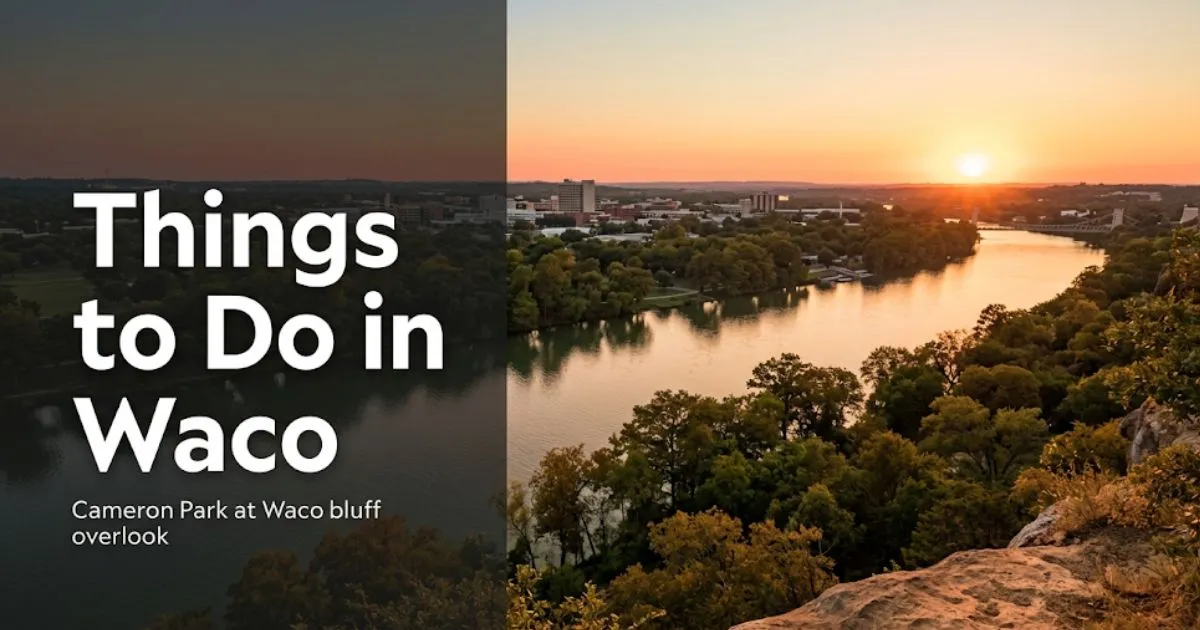
The park contains over 20 miles of trails ranging from paved riverside paths to technical singletrack along the bluffs above the Brazos River. The Lover’s Leap overlook offers one of the best natural viewpoints in Central Texas, a genuine cliff-edge perspective over the river bend.
Outdoor enthusiasts and experienced hikers will find the Cameron Park trail system comparable in scenery to state park experiences. The Cottonwood and Pecan Bottoms trails run through the river bottomland with genuine ecological diversity.
Families with young children should use the paved Brazos Riverwalk sections near the park’s eastern entrance. The bluff trails are not appropriate for strollers or young children without close supervision.
Seniors and accessibility travelers: The Brazos Riverwalk paved path is fully accessible. The bluff trails are not. The park’s Proctor Spring picnic area near the park’s main entrance on Herring Avenue is accessible and shaded.
Summer warning: Cameron Park trails expose hikers to significant direct sun during June through August. Bring at least two liters of water per person. Start before 8 AM or after 5 PM during heat advisories. Temperatures along the bluffs can exceed 100°F during peak summer afternoons.
The local alternative to the tourist overlook: Instead of crowding the Lover’s Leap platform, take the Pecan Bottoms trail down to the river level at dusk. The light on the water through the pecan canopy is one of the more genuinely beautiful experiences Waco offers, and you will rarely share it with other visitors.
Cameron Park Zoo
Cameron Park Zoo at 1701 North Fourth Street is a genuine regional zoo with 52 acres of naturalistic exhibits, and it consistently ranks as one of Central Texas’s best family destinations. It is not a minor municipal zoo; the collection includes African savanna, Brazos River country, and Asian forest habitats.
The zoo’s Brazos River Country section, featuring animals native to the Central Texas riparian ecosystem, is the most educationally distinctive part of the collection. Highlights include the orangutan habitat, the African elephant area, and the big cat exhibits.
Admission runs approximately $12 to $18 per adult and approximately $8 to $12 per child as of recent years. Allow two to three hours for a complete visit. Families with children should arrive early, as the morning hours before 11 AM offer the best animal activity levels, particularly in the large mammal habitats.
Budget travelers: The Cameron Park Zoo is reasonably priced for its quality, but consider that a family of four will spend $50 to $75 on admission alone. The attached gift shop is aggressively marketed to children at the exit. Set expectations before entering.
Seniors and accessibility travelers: The zoo paths are paved and generally accessible. Some areas involve inclines. Electric mobility scooters are available for rent; verify availability before visiting. The African savanna section involves the most significant terrain change.
Seasonal note: Summer visits mean higher animal activity in the morning and reduced activity during peak afternoon heat. Spring visits, particularly March through May, offer comfortable temperatures and active animals throughout the day.
Key Takeaway: Cameron Park is free, genuinely beautiful, and almost entirely overlooked by visitors focused on Magnolia Market. It deserves a dedicated two-hour morning, separate from the zoo visit.
Waco Downtown and Austin Avenue
Downtown Waco along Austin Avenue is the city’s most underrated visitor zone, where independent restaurants, craft breweries, and a restored early 20th-century commercial streetscape create a walkable urban experience that most travel guides ignore entirely.
The five-block stretch of Austin Avenue between Fourth and Ninth Streets contains the city’s densest concentration of independent businesses. Brotherwell Brewing at 323 South Eighth Street is the anchor of the craft beer scene, with a tap room that occupies a converted historic building and serves a rotating lineup of Texas-focused ales and lagers.
Balcones Distilling, founded in Waco in 2008, is one of the most critically recognized American single malt whisky producers in the country. Their distillery and tasting room operations offer tours and tastings for adults; check their current tour schedule directly, as capacity is limited and advance booking is recommended.
Spice Village at 4121 West Waco Drive and Homestead Craft Village offer antique and artisan retail for visitors who want shopping with more local character than the Magnolia Market brand ecosystem delivers.
Solo travelers will find downtown Waco’s walkable scale and bar-seat dining culture comfortable for independent exploration. Austin Avenue has genuine solo-dining culture at counter-service and bar-seating formats.
Couples who want a genuinely local Waco evening should anchor at Brotherwell Brewing, then walk to dinner on the same street. This is the version of Waco that repeat visitors and locals actually experience.
Seasonal note: Downtown Waco activates significantly during Baylor University home football game weekends from September through November. Restaurants fill quickly on game days. Plan accordingly or embrace the energy.
Waco Food and Dining Scene
Waco’s food scene has grown meaningfully in the past five years and is no longer solely defined by Magnolia Table’s brunch lines. The city now has a specific culinary identity rooted in Central Texas barbecue, Tex-Mex tradition, and a developing independent restaurant culture.
George’s Restaurant at 1925 Speight Avenue has been a Waco institution since 1930. It serves classic Texas diner food, including a consistently respected hamburger and chicken-fried steak. Lines form on weekend mornings; arrive before 10 AM or expect a wait.
Vitek’s BBQ at 1600 Speight Avenue is one of Waco’s most specific local food experiences. It invented the “gut pak,” a Waco-only creation: chopped barbecue served over Fritos corn chips with beans and onions, wrapped in butcher paper. This is not a nationally famous dish, but it is genuinely Waco’s own food contribution. Visit for lunch; they sell out by mid-afternoon most days.
Texas Monthly, which has covered Texas barbecue with more rigor than any other publication, has noted Vitek’s as a legitimate stop on the Central Texas barbecue trail. That is the relevant benchmark for quality.
Budget travelers: Both George’s and Vitek’s offer a genuinely satisfying meal for under $15 per person. This is among the best value-to-experience ratios in Waco.
Families with children: George’s diner format is ideal for families. Vitek’s gut pak is a shareable experience that most children over age 8 find memorable.
| Restaurant | Type | Price Range | Best For | Order |
|---|---|---|---|---|
| George’s | Texas diner | $ | Families, all profiles | Hamburger, chicken-fried steak |
| Vitek’s BBQ | Central Texas BBQ | $ | All, food explorers | Gut pak, brisket plate |
| Magnolia Table | American brunch | $$ | Couples, Magnolia fans | Seasonal brunch menu |
| Brotherwell Brewing | Craft beer, bar food | $ to $$ | Adults, couples | Rotating taps, kitchen menu |
Waco Arts Culture and History
Waco’s cultural identity reaches back to the 1850s and includes a specific strain of Texas architectural preservation that distinguishes its downtown from other I-35 corridor cities. The Waco Hippodrome at 724 Austin Avenue is a 1914 vaudeville theatre restored as a performance venue and event space.
Act Three Waco at 2102 Circle Road (formerly a significant Waco live music venue) continues to anchor the city’s independent music and entertainment scene. Check current programming schedules directly, as lineups change seasonally.
Baylor University at One Bear Place occupies a significant portion of Waco’s north-central geography. The campus is open to visitors and contains the Armstrong Browning Library, home to the world’s largest collection of materials relating to Victorian poets Robert and Elizabeth Barrett Browning, housed in a building with 62 stained glass windows.
The Armstrong Browning Library is free to visit. Most visitors to Waco do not know it exists. For travelers interested in Victorian literature, decorative arts, or architectural stained glass, it is one of the most specific and rewarding experiences the city offers.
Couples and solo travelers with literary or cultural interests will find the Armstrong Browning Library a genuine alternative to the Magnolia-brand tourism circuit.
Seniors and accessibility travelers: The Baylor campus is generally accessible by vehicle. The Armstrong Browning Library is a single-building experience on flat terrain.
Seasonal note: Baylor University’s campus is most accessible during summer months when student traffic is reduced. Fall semester brings football culture and energy that adds to the campus atmosphere but increases parking difficulty.
Key Takeaway: The Armstrong Browning Library on the Baylor University campus is free, genuinely beautiful, and visited by almost no tourists. It is one of the most specific and rewarding cultural experiences Waco offers.
Waco Suspension Bridge and Brazos River
The Waco Suspension Bridge spanning the Brazos River at Washington Avenue is one of the oldest suspension bridges in Texas, built in 1870, and it anchors one of the most pleasant free walking experiences in the city.
The bridge connects the downtown side of the Brazos to Doris Miller Riverside Park on the west bank. The walk across takes five minutes, but the views down the river corridor from mid-span are worth the stop. The bridge itself is a single-lane pedestrian crossing, no vehicles.
Doris Miller Riverside Park, on the west bank, offers picnic tables, river access points, and a general green space with good downstream views of the Brazos. It is an underused complement to the bridge walk and adds 30 minutes to the experience for travelers who want to sit by the water.
According to Visit Waco, the Suspension Bridge served as a primary crossing point for cattle drives moving through Central Texas in the 1870s and 1880s, making it historically significant within the Texas cattle trail network.
Families with children: The bridge walk is a 10-minute experience at most. Young children enjoy the mild swaying sensation of the suspension structure. Combine with a stop at the riverbank for a complete 30-minute experience.
Budget travelers: The Suspension Bridge costs nothing and combines naturally with the Dr Pepper Museum walk to create a free downtown morning with minimal backtracking.
Seasonal note: Spring and fall offer the most pleasant bridge walk conditions. Summer afternoons on the exposed bridge can be uncomfortably hot. Early morning or evening visits are strongly preferable from June through August.
Things to Do in Waco With Kids
Waco is genuinely strong family travel territory, with multiple age-appropriate attractions clustered within a short driving radius and almost all priced below comparable experiences in Austin or Dallas.
Best Waco activities for families with children:
- Cameron Park Zoo: Full morning activity for ages 3 and up. The naturalistic habitats engage children who have seen standard zoo setups before.
- Waco Mammoth National Monument: The ranger-led tour format works particularly well for curious children ages 6 and up. The word “mammoth” does most of the pre-trip excitement work.
- Dr Pepper Museum: The working soda fountain at the end is the genuine child-pleasing highlight. History engagement rises significantly for children 8 and older.
- Cameron Park: The paved Brazos Riverwalk is stroller and young-child accessible. The playgrounds near the park’s main entrance are well-maintained.
- Magnolia Market lawn: The open green space allows children to move freely while parents browse. Food truck options provide kid-friendly lunch options.
Age-specific guidance: Families with children under age 5 will get the most from Cameron Park Zoo and the Magnolia Market lawn. Children ages 6 to 12 unlock the full Waco itinerary. Teens may find the Waco Surf cable wake park the highest-engagement option.
Waco Surf at 6102 Steinbeck Bend Drive is a cable wakeboard park on Lake Waco that offers a genuinely unusual experience for older children and teens. Lessons are available for beginners; verify current session prices and booking requirements directly, as capacity is limited.
Practical note for families: Most of Waco’s attractions do not have dedicated parking. The Cameron Park Zoo has its own lot. Magnolia Market uses on-street and adjacent lot parking that fills by 10 AM on weekends.
Romantic Things to Do in Waco
Waco delivers a more genuinely romantic experience than its reputation suggests, particularly for couples willing to move beyond the Magnolia Market visit and explore the city’s Brazos River scenery and independent food and drink scene.
Best romantic experiences in Waco:
- Sunset at Lover’s Leap overlook in Cameron Park: The Brazos River bend view at dusk is the city’s most reliably atmospheric natural moment. Arrive 30 minutes before sunset and bring something to sit on.
- Balcones Distilling tour and tasting: An adult-focused 60-minute experience that functions naturally as a date afternoon. Book in advance; capacity is limited.
- Dinner at a downtown Austin Avenue restaurant: The independent restaurant density on Austin Avenue has grown significantly. Research current dinner options through current Visit Waco listings before departure, as Waco’s restaurant scene is actively evolving.
- Evening walk across the Waco Suspension Bridge: The bridge with downtown lights reflected in the Brazos is one of the city’s most genuinely photogenic moments. This costs nothing and takes 20 minutes.
- Brotherwell Brewing evening: The tap room atmosphere in the historic building is conducive to a two-hour conversation-focused evening. Less loud than a standard bar, more interesting than a chain restaurant.
Couples visiting for Magnolia: If the Magnolia brand is the primary draw, book Magnolia Table brunch in advance and treat it as a morning activity. Then redirect the afternoon and evening to the experiences above for a trip that feels like genuine Waco rather than a filmed TV set tour.
Seasonal note: Fall evenings in Waco from September through November are the most reliably comfortable for outdoor romantic experiences. Spring follows closely. Summer evenings cool slowly; plan outdoor elements for after 7 PM.
Key Takeaway: Sunset at Lover’s Leap in Cameron Park is Waco’s best free romantic experience and is visited almost exclusively by locals. Arrive 30 minutes before sunset and do not skip it.
Free Things to Do in Waco Texas
Waco’s free attraction lineup is genuinely strong, with several of the city’s most distinctive experiences costing nothing at all.
Complete list of free or no-cost Waco experiences:
- Cameron Park: All 416 acres, all trails, all overlooks, all picnic areas. Free to enter and park.
- Waco Suspension Bridge: Walking across costs nothing. The riverbank access on both sides is free.
- Armstrong Browning Library (Baylor University): One of the most overlooked free cultural experiences in Central Texas.
- Magnolia Market at the Silos: The outdoor grounds, lawn, and silos area itself are free to visit. Retail spending is entirely optional.
- Doris Miller Riverside Park: Free riverfront green space on the Brazos River west bank.
- Waco Hippodrome exterior and lobby: Open to visitors during business hours without a performance ticket.
- Baylor University campus walking tour: Self-guided, free, accessible during regular hours.
Budget travelers can build a full Waco day using only free attractions: morning walk through Cameron Park bluff trails, mid-morning bridge walk and riverfront time, afternoon Armstrong Browning Library visit, late afternoon Magnolia Market grounds, and an affordable dinner at George’s or Vitek’s.
According to the Waco Convention and Visitors Bureau, this combination of free and low-cost experiences makes Waco one of the most accessible mid-size Texas cities for budget-conscious travelers, with a full day of meaningful activity available for under $30 per person including a meal.
Families with children should note that Cameron Park playgrounds are free and well-maintained. This is a genuinely useful afternoon option for families whose children have hit their museum limit.
One Day in Waco Itinerary
A well-structured one day in Waco can cover the city’s most distinctive experiences without rushing, if you start early and prioritize the Mammoth National Monument.
One Day in Waco: Step-by-Step Itinerary
- 7:30 AM: Cameron Park trail walk. Start at the park entrance on Herring Avenue. Take the Lover’s Leap trail to the overlook for the Brazos River morning view. Allow 60 to 75 minutes. The morning light on the river through the bluff trees is the city’s best natural moment.
- 9:00 AM: Waco Mammoth National Monument. Book your ranger-led tour in advance. The site is at 6220 Steinbeck Bend Drive, approximately 10 minutes from Cameron Park. Allow 90 to 120 minutes. This is the irreplaceable experience in Waco.
- 11:30 AM: Dr Pepper Museum. Drive to 300 South Fifth Street downtown. The 90-minute visit positions you naturally for a downtown lunch. Order a specialty soda at the fountain before leaving.
- 1:00 PM: Lunch at Vitek’s BBQ. Walk or drive four blocks to 1600 Speight Avenue. Order the gut pak. This is the most Waco-specific meal you can eat. Arrive by 12:30 PM to avoid sell-outs.
- 2:30 PM: Waco Suspension Bridge and downtown walk. Walk the bridge, cross to Doris Miller Riverside Park, spend 30 minutes on the riverbank. Return across the bridge to Austin Avenue for a 30-minute independent retail and architecture walk.
- 4:00 PM: Magnolia Market at the Silos. Afternoon visits avoid the morning rush. Allow 60 to 90 minutes for the grounds, food trucks, and any retail. Closed Sundays; verify the current schedule before building this into a Sunday itinerary.
- 6:00 PM: Evening at Brotherwell Brewing. End the day at 323 South Eighth Street with Waco-brewed beer in a genuinely local setting. This is the version of Waco that non-tourist visitors actually experience.
Note for families: Swap step 5 for Cameron Park Zoo (open during afternoon hours). Combine the Mammoth site and the Zoo into the morning and afternoon, and end with Magnolia Market lawn time for children before dinner.
Safety and Practical Warnings for Waco, Texas
Waco is a low-risk travel destination overall, but specific practical warnings apply that most travel content ignores.
Key safety and practical facts every visitor should know:
- Summer heat is the primary physical risk. June through August temperatures regularly exceed 95°F to 105°F. Cameron Park trail hikes in afternoon heat carry genuine heat exhaustion risk. Carry water, start outdoor activities before 9 AM, and retreat indoors from 11 AM to 4 PM during heat advisories.
- Waco Mammoth National Monument tours require advance booking. Walk-up capacity is extremely limited during spring break, summer weekends, and holiday weekends. Book through the National Park Service reservation system.
- Magnolia Market is closed on Sundays. This is one of the most commonly reported planning mistakes among first-time visitors. Verify the current weekly schedule directly through Magnolia’s official channels before finalizing your trip dates.
- I-35 traffic through Waco can be severe. Construction and lane restrictions have historically made the I-35 Waco corridor one of the most congested stretches in Texas. Check Texas Department of Transportation real-time traffic updates before driving through, particularly on Friday afternoons and Sunday evenings.
- Balcones Distilling tours have limited capacity. Book at least one to two weeks in advance for weekend tour slots.
- Cameron Park bluff trails are not suitable for all fitness levels. The Lover’s Leap trail involves steep sections and uneven rock surfaces. Footwear with grip is essential.
The Waco Emergency Management office and McLennan County Emergency Management coordinate local emergency response. The nearest Level I Trauma Center to Waco is Baylor Scott and White Hillcrest Medical Center at 100 Hillcrest Medical Boulevard.
Frequently Asked Questions About Things to Do in Waco
Is Waco Texas worth visiting?
Waco is worth visiting, especially for road trippers on the I-35 corridor between Dallas and Austin.
The city’s combination of the Waco Mammoth National Monument, Cameron Park, a growing independent food scene, and the Magnolia brand experience creates a full one to two day itinerary with genuine substance.
Travelers expecting a nightlife hub or luxury resort destination will find it lacking, but those seeking interesting Texas history, natural beauty, and good barbecue will find it delivers clearly.
How long do you need in Waco?
One full day covers Waco’s highlights comfortably if you start early and prioritize well.
Two days allows a relaxed itinerary with time for Cameron Park, the Cameron Park Zoo, a Balcones Distilling tour, and a proper downtown evening without rushing.
Three days is too long for most first-time visitors unless you are adding day trips to Lake Whitney State Park or exploring the broader Heart of Texas region.
What is Waco Texas best known for?
Waco is currently best known nationally for Magnolia Market at the Silos, the lifestyle brand headquarters of HGTV’s Chip and Joanna Gaines.
Before the Magnolia era, Waco was most associated with the Dr Pepper beverage (invented here in the 1880s), Baylor University, and the Texas Ranger Hall of Fame.
The Waco Mammoth National Monument is arguably the city’s most scientifically significant attraction but remains underknown outside the travel community.
What is there to do in Waco besides Magnolia?
Waco offers the Waco Mammoth National Monument, Cameron Park’s 20-mile trail system, the Dr Pepper Museum, the Texas Ranger Hall of Fame, Cameron Park Zoo, Balcones Distilling, Brotherwell Brewing, and a genuine downtown restaurant corridor along Austin Avenue.
Most visitors who explore beyond the Magnolia district leave believing Waco is a more interesting city than its HGTV association suggests.
The Waco Suspension Bridge, Armstrong Browning Library at Baylor, and Vitek’s BBQ gut pak round out a fully specific Waco itinerary with no repeated experiences.
Is Magnolia Market in Waco free to visit?
The Magnolia Market at the Silos grounds are free to enter and walk through.
There is no admission charge to access the outdoor lawn, view the silos, visit the food trucks, or browse the surrounding gardens.
Shopping inside the Magnolia retail store and ordering from food vendors involves costs. Magnolia Table restaurant, at a separate location, requires a reservation and charges standard brunch prices.
What is the best time of year to visit Waco Texas?
The best time to visit Waco is March through May or September through November.
Spring brings mild temperatures in the 65 to 80°F range, comfortable conditions for Cameron Park hiking, and lower crowds than the summer peak.
Fall offers similar comfort levels with the addition of Baylor University football-season energy in the city, though game weekends increase restaurant demand significantly. Summer is the most popular season but the least comfortable for outdoor activities, with consistent heat exceeding 95°F.
Planning Your Waco Trip
Start your Waco planning with the Waco Mammoth National Monument reservation. This is the one element that requires advance action. Everything else in Waco can be managed flexibly, but the Mammoth site’s ranger-led tours fill during peak seasons.
Next, confirm Magnolia Market’s current closed-day schedule before locking your travel dates. Visiting on a Sunday, without knowing the market is closed, is the single most common planning frustration reported by first-time Waco visitors.
Travel conditions, admission prices, operating hours, and seasonal schedules in Waco change regularly. Verify all key logistics directly with venues and through the Waco Convention and Visitors Bureau’s official Visit Waco resources before departure. Waco rewards visitors who do a specific 30 minutes of pre-trip planning with a genuinely satisfying and specific Texas experience.