Niagara on the Lake Things to Do: The 2026 Guide

Niagara on the lake things to do span serious wine country, professional theatre, and one of Canada’s most intact 19th-century heritage districts. This compact Ontario town delivers more per square kilometer than almost any comparable destination in the region.
Destination Ontario identifies Niagara-on-the-Lake as one of the province’s most visited communities, drawing over 3 million visitors annually to a town of roughly 20,000 permanent residents. That ratio shapes everything about how and when you should visit.
This guide covers wineries, historic sites, outdoor routes, dining, romantic experiences, family considerations, and a practical one-day itinerary. You’ll also find honest seasonal intelligence and the local alternatives most visitors never discover.
Niagara on the Lake Things to Do: What This Destination Delivers
The top things to do in Niagara-on-the-Lake fall into four distinct categories: wine touring, cultural and heritage experiences, outdoor cycling and waterfront activities, and culinary exploration.
No other destination within two hours of Toronto combines these four categories at this concentration. The town’s geography is compact enough that a visitor can walk from a War of 1812 fort to a James Beard-caliber winery restaurant to a professional theatre in under 20 minutes.
That compactness is both its greatest asset and its biggest practical challenge. Peak season crowds compress an already small downtown into a genuinely uncomfortable experience.
The honest version: Niagara-on-the-Lake rewards visitors who plan around its strengths and visit outside the July-August peak. It frustrates visitors who expect Niagara Falls-style entertainment or budget-friendly options around every corner.
Insider Tip:
- Book Shaw Festival tickets and any winery restaurant reservations before you leave home, not the morning you arrive.
- Arrive at Fort George National Historic Site by 9:30 a.m. to experience the grounds before tour groups arrive.
- Couples benefit most from a midweek shoulder-season visit: same atmosphere, dramatically fewer crowds, lower accommodation rates.
What Niagara-on-the-Lake Is Known For
Niagara-on-the-Lake is best known as Canada’s most concentrated wine region, the home of the Shaw Festival professional theatre company, and the site of Fort George National Historic Site, a key landmark of the War of 1812.
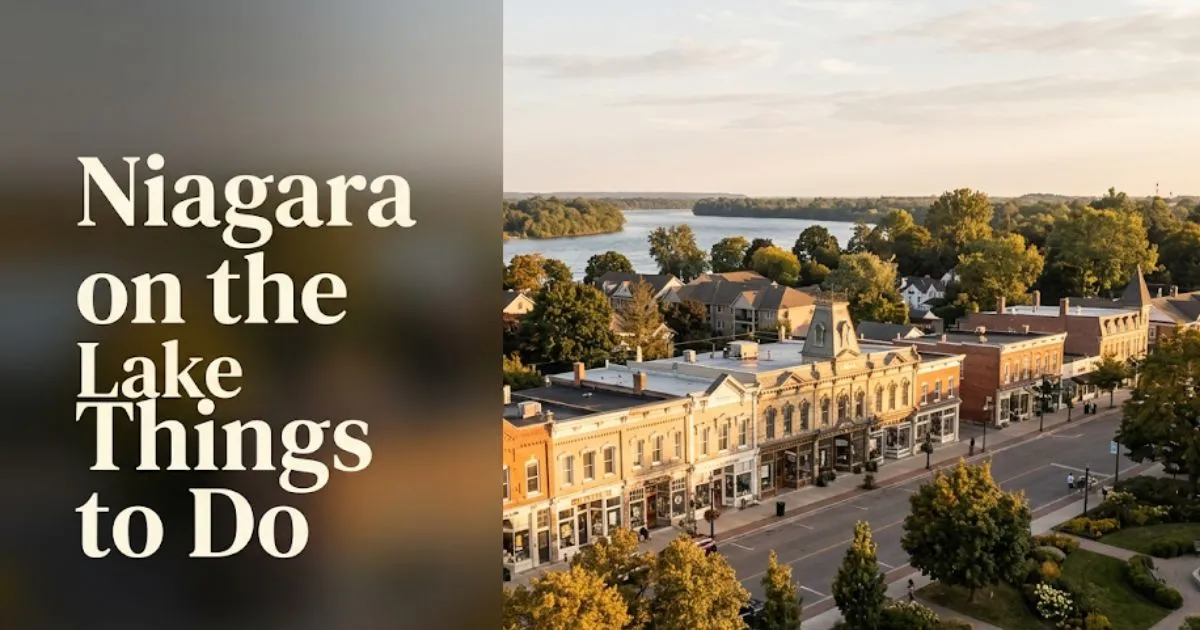
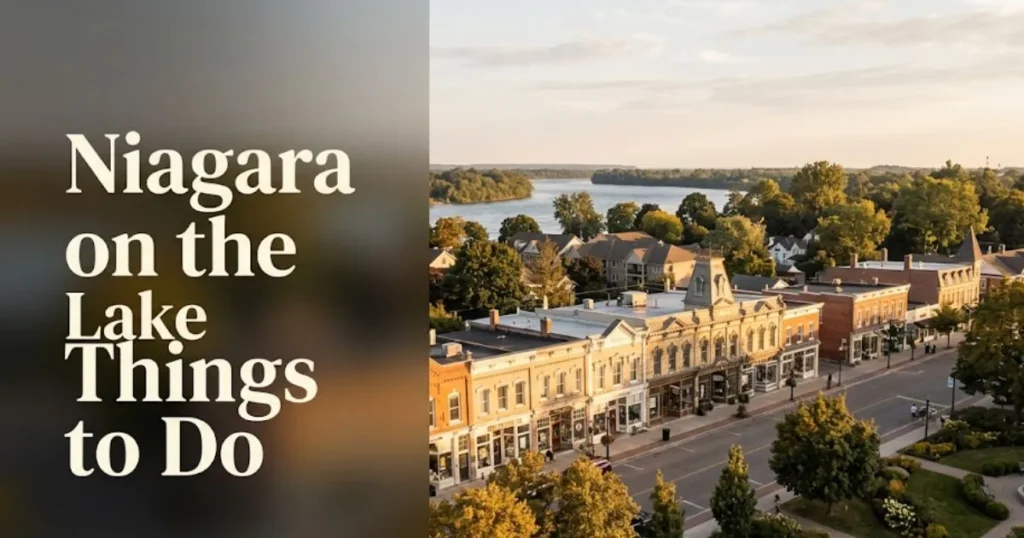
Beyond these three anchors, the town is known for its preserved 19th-century architecture on Queen Street in the Old Town district. The main commercial street looks genuinely different from most Ontario towns.
The Niagara Peninsula’s unique microclimate, moderated by Lake Ontario and the Niagara Escarpment, produces grapes that result in distinctive Rieslings, Cabernet Francs, and the Icewine that made this region internationally known.
According to Wine Country Ontario, the Niagara Peninsula appellation produces approximately 80 percent of all wine made in Ontario, with Niagara-on-the-Lake sitting at the heart of that production zone.
For solo travelers: The town’s walkable scale makes independent navigation easy. The social scene is quiet and adult-focused, not bar-driven. Wine bar seats at places like Trius Winery can accommodate solo visitors comfortably.
For budget travelers: Be aware upfront. This destination is not built for budget travel. Quality experiences are available at lower price points, but the destination’s identity is premium wine country.
Old Town Niagara-on-the-Lake
Old Town is the historic core of Niagara-on-the-Lake, centered on Queen Street from King Street to the waterfront. It contains the town’s highest concentration of heritage buildings, boutique retailers, and restaurants.
The Niagara Apothecary on Queen Street is a restored 1866 pharmacy that operates as a heritage museum. It is free to enter during operating hours and is one of the most genuinely interesting heritage stops in town, often overlooked in favor of the larger attractions.
The Niagara Historical Society Museum on Castlereagh Street houses artifacts from the town’s role in the War of 1812 and Upper Canada history. Admission runs in a low range by Canadian museum standards; verify current rates before visiting.
Old Town’s architecture is best experienced on foot via a self-guided heritage walk. The Niagara-on-the-Lake Chamber of Commerce distributes a walking map of heritage properties, available at their visitor center on King Street.
For seniors and accessibility travelers: Queen Street is flat and fully paved. Most heritage buildings in Old Town have step access that may challenge wheelchair users. The street itself is navigable, but interior access to some historic properties is limited.
Seasonal note: Old Town in peak summer becomes extremely crowded on weekend afternoons. A weekday morning visit before 11 a.m. gives a fundamentally different experience of the same streets.
Insider Tip:
- Walk down Ricardo Street toward the waterfront. This residential block has some of the finest preserved 19th-century homes in Ontario and no tourist foot traffic.
- The local alternative to the tourist-heavy Queen Street boutiques is Breakwater Books on King Street, a genuine independent bookshop with a strong Canadian history section.
Niagara on the Lake Wineries
The best wineries in Niagara-on-the-Lake concentrate along two routes: Lakeshore Road heading east from town, and Line 2 and surrounding roads further inland toward the Escarpment.
Inniskillin Wines on Line 3 is the estate that put Canadian Icewine on the international map, winning the Grand Prix d’Honneur at Vinexpo Bordeaux in 1991. Its tasting room and heritage barn are worth visiting for context, though the experience runs heavily touristic.
Ravine Vineyard Estate Winery on York Road near St. Davids is the local alternative that experienced wine travelers prefer. The estate is family-run, the restaurant uses produce from their own farm, and the tasting experience is far more intimate than the larger commercial estates.
| Winery | Style | Best For | Price Range (Tasting) | Insider Note |
|---|---|---|---|---|
| Inniskillin Wines | Large estate, iconic | Icewine history, first-timers | Moderate to high | Book in advance in summer |
| Peller Estates | Full-service, formal | Upscale dining with wine | High | Dinner reservation essential |
| Ravine Vineyard | Family farm estate | Intimate tasting, serious wine lovers | Moderate | Best estate restaurant in region |
| Reif Estate Winery | Mid-size, welcoming | Riesling and Cab Franc focus | Moderate | Art gallery on property |
| Stratus Vineyards | Architecture-forward | Modern wine enthusiasts | Moderate to high | Blends are the specialty here |
| Konzelmann Estate | Lakefront setting | Waterfront atmosphere, whites | Moderate | Least crowded of major estates |
| Two Sisters Vineyards | Dramatic design | Couples, special occasions | High | Benchmark Cabernet Franc |
For budget travelers: Several estates offer self-guided tastings at lower price points than formal seated experiences. Konzelmann Estate Winery on Lakeshore Road North offers lakefront views with some of the most accessible tasting fees in the region. Verify current pricing before visiting.
For couples: Two Sisters Vineyards on Concession 7 Road has a dramatically designed tasting room that genuinely earns its reputation as a romantic destination. The Cabernet Franc program is the reason serious wine travelers seek it out.
Practical warning: Do not drive between multiple wineries while tasting. This is the most common planning error visitors make. Rent a bicycle from Zoom Leisure Bikes in town, book an organized wine tour operator, or hire a driver for the afternoon.
Shaw Festival Niagara-on-the-Lake
The Shaw Festival is one of North America’s largest repertory theatre companies, performing from April through December annually at four venues in Niagara-on-the-Lake.
The Festival focuses on plays written during the era of George Bernard Shaw, roughly 1850 to 1950, alongside contemporary work. Productions span the Festival Theatre, the Court House Theatre, the Royal George Theatre, and the Jackie Maxwell Studio Theatre.
According to the Shaw Festival’s official programming, the company typically stages eight to twelve productions per season, running concurrently. A single weekend in Niagara-on-the-Lake can reasonably accommodate two to three performances.
Ticket prices range from accessible preview pricing to premium weekend rates. Booking at least four to six weeks in advance for Saturday performances is recommended; popular productions sell out significantly earlier.
For solo travelers: The Shaw Festival is genuinely solo-traveler-friendly. Single seats are available at most performances, and the pre-show and intermission atmosphere at the Festival Theatre lobby is naturally social.
For families with children: The Shaw Festival programs specific family-friendly productions each season, typically shorter in duration and pitched at younger audiences. Check the season program specifically for family designations before booking.
Seasonal note: The Festival runs from April through December, with peak scheduling in June, July, and August. Preview performances in April and May offer the best combination of ticket value and crowd levels.
Insider Tip:
- The Court House Theatre on Queen Street is the most intimate of the four venues. Any production staged there delivers a closer performance experience than the main Festival Theatre.
- Arrive 30 minutes early. The Festival Theatre’s lobby and grounds are genuinely attractive and worth the extra time before the performance begins.
Fort George National Historic Site
Fort George National Historic Site, managed by Parks Canada, is the most historically significant attraction in Niagara-on-the-Lake for travelers interested in Canadian and American military history.
The fort was a key British military installation during the War of 1812, captured by American forces in 1813 and recaptured by British and Canadian forces later that year. The reconstructed fortifications, period barracks, and costumed interpreter programs give the site more educational depth than a typical heritage property.
Admission fees are charged; Parks Canada Discovery Pass holders enter free. Verify current single-day admission rates directly with Parks Canada before visiting in 2026.
The site is open seasonally, with full programming typically running May through October. Winter access is limited; confirm hours directly with Parks Canada before planning an off-season visit.
For families with children: Fort George is one of the more genuinely engaging heritage sites for older children and teenagers. The musket-firing demonstrations and period cooking programs hold attention better than static museum exhibits. Children under a certain age enter free; verify the current Parks Canada age threshold before visiting.
For seniors and accessibility travelers: The fort grounds include uneven terrain, grass paths, and several low-doorway historic structures. Full wheelchair access throughout the site is not guaranteed. Contact Parks Canada directly to confirm current accessibility provisions before visiting.
Local alternative: Most visitors go directly to Fort George and miss Fort Mississauga, a smaller War of 1812 fortification at the mouth of the Niagara River near the town’s golf course. It is rarely crowded, access is free, and the views of Lake Ontario and the river mouth are among the best in town.
Key Takeaway: Book Shaw Festival tickets and winery restaurant reservations before arriving. Both sell out well ahead, especially on summer weekends.
Queen Street Niagara-on-the-Lake: Shopping and Dining
Queen Street in Old Town is the commercial spine of Niagara-on-the-Lake, running from King Street to the waterfront. It concentrates boutique shopping, heritage storefronts, and several of the town’s best restaurants within a walkable eight-block stretch.
The shopping skews toward specialty food retailers, wine accessories, Canadian-made gifts, and independent clothing boutiques. The largest concentration of fudge shops and tourist confection retailers is in the first two blocks nearest King Street.
Serious local shopping is found slightly further along Queen Street and on the side streets. Greaves Jams and Marmalades has operated from its Queen Street location since 1927 and sells preserves made from Niagara Peninsula fruit. It is a genuine local institution, not tourist infrastructure.
For budget travelers: Queen Street shopping is not budget travel territory. Window-shopping costs nothing, but expect premium pricing across retail and dining. The Niagara-on-the-Lake Farmers Market (covered in its own section) is the better budget option for local food purchases.
Practical logistics: Parking along Queen Street is metered and limited. Weekend afternoon parking can require a 20 to 30-minute search. The most reliable parking is in the municipal lots off Mississagua Street. Arriving before 10 a.m. on weekends resolves this entirely.
For couples: The evening atmosphere on Queen Street after 7 p.m. is significantly more pleasant than the midday peak. Fewer crowds, softer light, and a more relaxed pace make an evening stroll before or after dinner the ideal experience of the street.
Insider Tip:
- Walk one block parallel to Queen Street on Regent Street. Several excellent independent businesses operate here with far fewer tourists and no parking congestion.
Niagara on the Lake Cycling and Outdoor Activities
Cycling the Niagara Parkway is the single best outdoor activity in Niagara-on-the-Lake for fit visitors. The dedicated multi-use path runs along the Niagara River from the town toward Queenston and Niagara Falls.
The route to Queenston is approximately 14 kilometers of flat to gently rolling terrain, passing the Queenston Heights Park and its monument to General Isaac Brock, a key figure in the War of 1812. The full path to Niagara Falls runs approximately 24 kilometers and takes most casual cyclists two to three hours one way.
Zoom Leisure Bikes on Ricardo Street in Old Town rents bicycles by the hour and day. Electric assist bicycles are available for visitors who want the route without the physical demand. Verify current rental rates and availability for 2026 directly with the operator.
The Lakeshore Road route east of town passes through the heart of the wine country and connects several of the region’s smaller estates. This is the preferred cycling route for wine touring, covering six to eight kilometers of quiet road between multiple tasting rooms.
For seniors and accessibility travelers: The Niagara Parkway path is flat, paved, and well-maintained. Electric bicycle rentals make it accessible to a wider range of physical fitness levels. The section between Old Town and Queenston Heights is the most manageable for those seeking a shorter, low-demand ride.
For families with children: The flat Parkway path is well-suited to family cycling with older children. The section nearest to Old Town is gentle and safe. The full route to Niagara Falls is ambitious for children under 10.
Seasonal note: The Niagara Parkway cycling route is at its best from late April through October. Winter cycling is possible but not recommended given road conditions and reduced services along the route.
Niagara on the Lake Restaurants and Food Scene
The dining scene in Niagara-on-the-Lake is stronger than its size suggests. The concentration of wine estates with on-site restaurants, combined with the town’s heritage hospitality infrastructure, produces a culinary identity centered on Ontario seasonal ingredients paired with regional wine.
Ravine Vineyard Estate Winery’s restaurant on York Road is the single most consistently praised dining experience in the region among food-focused travelers. The menu changes with farm availability, the wine list is the estate’s own production, and the setting on the vineyard grounds is genuinely attractive in all three seasons it operates.
The Dining Room at Peller Estates on Highway 55 is the town’s most formally ambitious restaurant experience. The underground cave tasting room and wine-paired tasting menus run at a premium price level. Budget approximately $150 to $200 Canadian per person for the full wine-paired experience; verify current pricing before booking.
Treadwell Cuisine on Queen Street is the downtown alternative for serious dining without driving to a winery estate. It focuses on Ontario ingredients with a wine list weighted toward the Niagara region.
For budget travelers: The Balzac’s Coffee Roasters location in the Pillar and Post Inn courtyard is a genuinely good independent coffee operation. Budget meals in town are limited, but the Niagara Farmers Market (Saturdays) and several bakeries on Queen Street offer lower-cost food options.
For couples: Dinner at Ravine Vineyard on a weekday evening in September or October is the benchmark romantic dining experience in the entire Niagara region. Reserve well in advance.
Seasonal note: Several winery restaurants operate seasonally, typically May through October. Verify specific restaurant hours and seasonal closures before planning any dining reservation for 2026.
Key Takeaway: The best dining in the region is at winery estate restaurants, not on Queen Street. Ravine Vineyard’s farm-to-table menu is the local benchmark.
Niagara on the Lake Ghost Tours and Evening Experiences
Niagara-on-the-Lake Ghost Tours operates guided walking tours of Old Town’s heritage properties, narrating documented historical accounts of the town’s military and civilian past.
The tours typically run in the evening and cover a circuit of heritage properties, cemeteries, and historic buildings in Old Town. The content is grounded in documented War of 1812 history as much as folklore, which gives the tours more substance than generic “haunted city” experiences in larger markets.
Booking in advance is recommended, especially for summer and October weekend dates when tour groups fill quickly. Verify current tour times, departure locations, and pricing directly with the operator for 2026.
For couples: Evening ghost tours are a well-regarded couples activity in the town. The format is intimate, outdoors, and lasts approximately 90 minutes.
For families with children: The content covers genuine historical violence and military history. Families with children under 10 should consider whether the content is age-appropriate for their specific children before booking.
Local alternative: A self-guided evening walk along Ricardo Street and the waterfront end of Queen Street, combined with the visible exterior of the Niagara Apothecary by night, delivers atmospheric heritage experience without a structured tour cost. This suits travelers who prefer independent exploration.
Niagara on the Lake Farmers Market and Local Producers
The Niagara-on-the-Lake Farmers Market operates on Saturday mornings in Simcoe Park, typically from May through October. It is one of the most genuine local markets in the Niagara region, drawing Peninsula fruit growers, bakeries, cheese producers, and prepared food vendors.
The Niagara Peninsula’s growing conditions produce some of Canada’s best stone fruit, and the market in July and August reflects this. Peaches, nectarines, and plums from local orchards are available at prices significantly below the retail boutique stores on Queen Street.
The market is one of the more budget-friendly food experiences in town. A meal assembled from market vendors, peaches, local cheese, and fresh bread from one of the Peninsula’s artisan bakeries competes with any restaurant breakfast in town at a fraction of the cost.
For families with children: The farmers market is genuinely child-friendly. The outdoor Simcoe Park setting gives children room to move, vendors are approachable, and the overall atmosphere is low-pressure.
For budget travelers: The farmers market is the single best budget food experience in Niagara-on-the-Lake. This is where local families shop, not a curated tourist attraction.
Practical note: Arrive by 9 a.m. for the best selection. The most popular vendors, particularly local fruit farmers and artisan bread bakers, sell out before 11 a.m. on busy summer Saturdays. Verify the market’s 2026 operating schedule with the Niagara-on-the-Lake Chamber of Commerce before visiting.
Niagara on the Lake for Couples and Romantic Experiences
Niagara-on-the-Lake is among the most genuinely romantic short-break destinations in Ontario, and it earns that description through specific practical qualities rather than marketing language.
The combination of intimate winery estate settings, professional theatre, heritage inn accommodation, and a town scale that allows everything to be walked or cycled creates the conditions for a relationship-focused trip that few comparable destinations in the region match.
The Prince of Wales Hotel on Picton Street is the town’s most iconic accommodation property. The Victorian building dates to 1864 and has been a heritage inn for decades. Room rates run in the premium range; verify 2026 pricing directly. It is one street from Queen Street and within walking distance of all Old Town activity.
The Pillar and Post Inn on King Street operates as a full-service spa hotel. Couples who prioritize spa access alongside the wine country experience tend to rate this property above the Prince of Wales for overall trip quality.
| Experience | Best For | Timing | Price Range | Book Ahead? |
|---|---|---|---|---|
| Winery estate dinner (Ravine, Peller) | Couples, special occasions | May-Oct, weekday evening | High | Yes, 2-4 weeks |
| Shaw Festival performance | Couples, cultural travelers | April-December | Moderate to high | Yes, 4-6 weeks |
| Ghost tour evening walk | Couples, history lovers | Year-round | Low to moderate | Yes in summer |
| Heritage inn stay (Prince of Wales) | Couples, seniors | Year-round | Premium | Yes |
| Niagara Parkway sunset cycle | Couples, active travelers | May-October | Low (bike rental) | No |
For seniors: The Prince of Wales and Pillar and Post both have elevator access and room configurations suited to travelers who prefer ground-level or lift-accessible accommodation. Confirm specific room accessibility needs directly with the property before booking.
Key Takeaway: Couples who book a midweek stay in May, September, or October get the full romantic experience at significantly lower accommodation rates than peak summer.
Niagara on the Lake Family Activities
Niagara-on-the-Lake is an honest challenge for families with young children, and the best guide to this destination says so directly. The town’s primary identity is wine country and adult-focused cultural tourism.
That said, specific activities work well for families. Fort George National Historic Site is the strongest family-specific draw, particularly its costumed interpreter programs and musket demonstration events. Children who engage with history respond well to the site’s interactive approach.
The Niagara Parkway cycling route works well for families with children aged 8 and older. The flat, paved, car-separated path is safe, and the Queenston Heights section at the far end has a playground and picnic area within the park.
The Niagara-on-the-Lake Farmers Market on Saturday mornings is child-friendly in atmosphere and pace. It gives families a genuine local experience without requiring children to engage with wine tasting or theatre content.
What sounds good but underdelivers for children: Old Town’s Queen Street boutique shopping holds most children’s interest for roughly 15 minutes before the pace breaks down. Plan activities around Fort George and the Parkway first, and treat Queen Street as a brief transition between those anchors rather than a primary experience.
For families: Stay at a property with outdoor space. Several bed and breakfast properties on the edge of Old Town have garden areas that give children room to decompress between activities.
According to Parks Canada, Fort George offers specific youth and school programming throughout its operating season. For families visiting in summer, check Parks Canada’s programming calendar for family-specific events before arriving.
Niagara on the Lake Day Trip from Toronto
Niagara-on-the-Lake is approximately 130 kilometers southwest of Toronto, making it one of the most logical day trips from the city. Drive time via the QEW (Queen Elizabeth Way) runs 90 minutes to two hours depending on traffic and season.
Toronto to Niagara-on-the-Lake direct transit does not exist as a single-service route. Travelers using public transit can take GO Transit to Niagara Falls and then arrange onward transportation by taxi or rideshare. This adds significant travel time and is not recommended for a day-trip itinerary.
Driving is the dominant and most practical access method. Rent a car from Toronto if needed. Parking in Niagara-on-the-Lake’s municipal lots off Mississagua Street is the most reliable option once in town.
US-based travelers entering from the Buffalo side cross via the Queenston-Lewiston Bridge or the Rainbow Bridge at Niagara Falls. Border crossing wait times are variable. Check current Canadian Border Services Agency wait time data before departure. A valid passport is required for all US citizens entering Canada.
Practical logistics for day-trippers:
- Leave Toronto no later than 8:30 a.m. to arrive before Queen Street crowds build on weekends.
- Plan to leave Niagara-on-the-Lake no later than 4:30 p.m. to avoid the worst QEW return traffic into Toronto.
- Allow a minimum of six hours in town for a meaningful day-trip experience.
- A one-night stay converts the day-trip into a far richer experience, particularly for wine touring.
For budget travelers: A day trip from Toronto eliminates accommodation costs entirely. Gasoline, parking, and lunch remain the primary expenses. Winery tastings are the variable cost to manage.
Best Time to Visit Niagara-on-the-Lake
The best time to visit Niagara-on-the-Lake is May through early June or September through mid-October. Both periods deliver pleasant temperatures, reduced crowds, and the town’s best activity programming without the congestion of peak summer.
May and early June bring the opening of the Shaw Festival, the return of winery tasting rooms to full operation, and temperatures that make cycling the Niagara Parkway genuinely pleasant. Accommodation rates run 20 to 40 percent below the July-August peak in most properties.
September and October add the grape harvest season, the Niagara Wine Festival held in nearby St. Catharines with events across the wine region, and the most visually attractive driving and cycling conditions of the year as fall color develops along the Escarpment.
July and August bring peak crowds, peak prices, and Queen Street conditions that many repeat visitors describe as overcrowded to the point of reducing enjoyment. If summer is your only option, visit on weekdays and arrive early in the morning.
January is underrated by most visitors. The Icewine Festival runs in late January and offers an intimate event experience, estate dinners, and tasting sessions that are genuinely special without the summer chaos. Accommodation rates drop significantly. Some restaurants and smaller estates operate on reduced hours or close for winter; verify before planning a January trip.
Weather context: Summer temperatures in Niagara-on-the-Lake typically range from 22 to 30 degrees Celsius (72 to 86 Fahrenheit). Winters are cold with reliable snowfall from December through February. Spring and fall temperatures range from 8 to 18 degrees Celsius (46 to 64 Fahrenheit), ideal for outdoor activities.
Key Takeaway: September in Niagara-on-the-Lake is the destination at its best: harvest season, manageable crowds, comfortable weather, and the full Shaw Festival still running.
Niagara on the Lake One Day Itinerary
A single day in Niagara-on-the-Lake can cover the town’s core anchors without feeling rushed, provided you start early and sequence activities efficiently.
One-Day Niagara-on-the-Lake Itinerary:
- 8:30 a.m.: Arrive and park in the Mississagua Street municipal lot. Walk to the Niagara-on-the-Lake Farmers Market in Simcoe Park if visiting on a Saturday. Purchase breakfast from market vendors: local bread, fruit, and coffee.
- 9:30 a.m.: Fort George National Historic Site. Arrive before tour groups. Allow 90 minutes minimum, two hours if costumed interpreter programs are scheduled during your visit. Purchase Parks Canada entry at the gate or present your Discovery Pass.
- 11:30 a.m.: Niagara Apothecary and Old Town walk. Walk the heritage properties of Old Town with the Chamber of Commerce map. Enter the Niagara Apothecary on Queen Street (free, limited hours; verify before visiting). Continue down Ricardo Street toward the waterfront.
- 1:00 p.m.: Lunch. Treadwell Cuisine for a sit-down meal focused on Ontario ingredients, or a market-assembled lunch in Simcoe Park for budget travelers.
- 2:30 p.m.: Winery visit. Rent bicycles from Zoom Leisure Bikes on Ricardo Street and cycle the Lakeshore Road route to one or two estates. Konzelmann Estate Winery is the nearest major estate on this route. Ravine Vineyard on York Road is the better experience but requires a longer ride or a short drive.
- 5:00 p.m.: Return to Old Town. Walk Queen Street in the early evening for the least-crowded shopping and browsing experience of the day. Stop at Greaves Jams and Marmalades before 6 p.m.
- 7:00 p.m.: Evening options. Shaw Festival performance (requires advance booking), a ghost tour departure from Old Town, or dinner at one of the Queen Street restaurants.
For couples: Swap step 5 to Two Sisters Vineyards for a more romantic winery experience. Add a sunset walk along the Niagara Parkway waterfront between steps 6 and 7.
For families: Replace step 7 with an early return toward the Queenston Heights Park for a picnic area stop before the drive home. The lighthouse at the mouth of the Niagara River is a five-minute detour from the Parkway route worth adding.
Niagara on the Lake Free and Budget-Friendly Activities
Free and low-cost activities in Niagara-on-the-Lake are limited compared to many destinations, but several genuinely valuable experiences cost nothing.
Free activities and low-cost options:
- Niagara Parkway cycling or walking path: Free to use. Bicycle rental from Zoom Leisure Bikes is the only cost.
- Fort Mississauga: Free access. The small War of 1812 fortification at the mouth of the Niagara River is almost always uncrowded.
- Niagara Apothecary: Free entry during operating hours. Verify 2026 hours before visiting.
- Niagara Historical Society Museum: Low admission fee. One of the most content-rich heritage experiences per dollar in town.
- Self-guided Old Town heritage walk: Free. The Chamber of Commerce map is available at no cost from the King Street visitor center.
- Niagara Parkway waterfront: Free. The Lake Ontario shoreline at the north end of the Parkway offers views of the river mouth, the lighthouse, and across to Fort Niagara in New York State.
- Simcoe Park: Free public park. Used by locals for picnicking and outdoor relaxation, particularly in good weather.
- Queen Street window shopping: Free. Most boutique stores welcome browsers.
For budget travelers: A fully satisfying day in Niagara-on-the-Lake is achievable on a tight budget by centering activities around Fort Mississauga, the Parkway walk, the farmers market, and a self-guided heritage walk. Skip formal winery tasting rooms and winery estate restaurants; the free outdoor experiences are some of the best the town offers.
For solo budget travelers: The farmers market assembled lunch plus the Parkway walk creates a half-day of genuine local experience for under $20 Canadian. Combine this with a late afternoon visit to the Niagara Historical Society Museum for a full and inexpensive day.
Practical Tips for Visiting Niagara-on-the-Lake
The most common mistake visitors make in Niagara-on-the-Lake is attempting to drive between multiple wineries while tasting. Plan wine touring by bicycle, organized tour, or hired driver.
Practical logistics every visitor should know:
- Getting there: Drive via the QEW from Toronto (90 to 120 minutes) or via the Queenston-Lewiston Bridge from the US side (passport required for all US citizens entering Canada).
- Parking: Municipal lots off Mississagua Street are the most reliable. Queen Street metered parking fills completely by 11 a.m. on summer weekends.
- Getting around: The town is walkable within Old Town. A bicycle is the best tool for covering wineries and the Parkway efficiently.
- Currency: Canadian dollars are used throughout. Credit cards are accepted at all major venues. Some farmers market vendors prefer cash; carry some Canadian currency.
- Shaw Festival: Book well in advance. Popular Saturday performances sell out weeks ahead.
- Border crossing (US visitors): Check Canadian Border Services Agency wait times before departure from the US side. The Queenston-Lewiston Bridge typically has shorter waits than the Rainbow Bridge during peak summer weekends.
- Language: English is the primary language. French is Canada’s second official language; signage at Parks Canada sites is bilingual.
Safety and Practical Warnings for Niagara-on-the-Lake
The primary safety concern specific to Niagara-on-the-Lake is impaired driving following winery visits. The concentration of tasting rooms combined with the region’s car-dependent geography creates a genuine and specific risk.
Key safety and practical facts every visitor should know:
- Do not drive after multiple winery tastings. Plan the day around cycling, organized tours, or a designated non-tasting driver. This is not a general caution; it is the most specific and important practical safety point for this destination.
- Niagara Parkway cycling: The path is separated from vehicle traffic but shares road crossings at several points. Use caution at road intersections, particularly on busy summer weekends.
- Sun exposure on the Parkway: The cycling and walking route offers limited shade between Old Town and Queenston. Bring sunscreen and water for any Parkway activity in summer months.
- Winter road conditions: The Niagara Parkway can be icy and uneven from December through February. Check road conditions before cycling or driving the route in winter.
- Border crossing logistics (US visitors): Carrying valid identification and passport documentation is required at all times. A NEXUS card or Global Entry card can reduce crossing wait times significantly.
- Emergency services: Niagara-on-the-Lake is within the Niagara Region’s emergency services coverage. The nearest full-service hospital is in St. Catharines, approximately 20 kilometers from Old Town.
Contact Parks Canada directly for any specific accessibility or safety inquiries related to Fort George. Their visitor services staff can confirm current site conditions before your visit.
Key Takeaway: Wine touring by bicycle on Lakeshore Road is safer, more enjoyable, and more local than driving between estates. Zoom Leisure Bikes on Ricardo Street is your starting point.
Frequently Asked Questions About Niagara-on-the-Lake
What is Niagara-on-the-Lake best known for?
Niagara-on-the-Lake is best known for its wine country (particularly Icewine and Cabernet Franc), the Shaw Festival professional theatre company, and Fort George National Historic Site from the War of 1812.
The town also holds one of the most intact 19th-century heritage streetscapes in Canada, centered on Queen Street in Old Town.
These four elements — wine, theatre, military history, and heritage architecture — define what the destination genuinely offers visitors.
How long should I spend in Niagara-on-the-Lake?
One full day covers the core attractions: Fort George, Old Town, one or two winery visits, and a Queen Street walk.
Two nights allows for a Shaw Festival performance, a winery estate dinner, the Niagara Parkway cycling route, and a more relaxed experience of the town overall.
Day-trippers from Toronto can have a complete and satisfying visit; an overnight stay converts a good trip into a great one.
Is Niagara-on-the-Lake worth visiting if I’ve already been to Niagara Falls?
Yes. Niagara-on-the-Lake is an entirely different experience from Niagara Falls.
Where Niagara Falls is high-volume commercial tourism, Niagara-on-the-Lake is wine country, heritage architecture, and professional theatre at a significantly more refined scale.
They are 20 kilometers apart and can be combined in a single regional trip, but they serve different traveler interests and should be treated as separate destinations.
What is the best time of year to visit Niagara-on-the-Lake?
The best time to visit Niagara-on-the-Lake is May through early June or September through mid-October.
Both periods offer comfortable temperatures, manageable crowd levels, and the town’s full range of activities including the Shaw Festival and winery tasting room access.
July and August bring peak summer crowds that make Queen Street congested and accommodation prices their highest; the January Icewine Festival is an underrated alternative for travelers who can visit in winter.
Can I visit Niagara-on-the-Lake as a day trip from Toronto?
Yes. Niagara-on-the-Lake is approximately 130 kilometers from Toronto via the QEW, with a typical drive time of 90 minutes to two hours depending on traffic.
Driving is the practical access method; direct public transit from Toronto to Niagara-on-the-Lake requires a GO Transit connection to Niagara Falls and onward rideshare, adding significant time.
Leave Toronto by 8:30 a.m. on weekends to arrive before peak crowds build, and plan to depart by 4:30 p.m. to avoid return traffic into the city.
What are the free things to do in Niagara-on-the-Lake?
Free activities include walking the Niagara Parkway waterfront trail, visiting Fort Mississauga at the Niagara River mouth, browsing the Niagara Apothecary heritage museum (verify 2026 operating hours), and following the self-guided Old Town heritage walk with a map from the Chamber of Commerce.
The Niagara-on-the-Lake Farmers Market on Saturday mornings in Simcoe Park is free to enter, with low-cost local food purchases available from Ontario producers.
Simcoe Park itself is a free public space with waterfront access that locals use for picnicking throughout the warmer months.
Niagara-on-the-Lake in 2026 rewards the traveler who plans deliberately. Book Shaw Festival tickets and winery restaurant reservations before you leave home. Arrange wine touring by bicycle or organized tour rather than driving between estates.
Verify hours, admission fees, farmers market schedules, and border crossing times directly with official sources before your departure. Destination Ontario and the Niagara-on-the-Lake Chamber of Commerce are the most reliable current sources for 2026 operating information.
The traveler who arrives in May or September, parks once, cycles the Parkway, eats dinner at a winery estate, and catches a Shaw Festival performance leaves understanding exactly why this town has kept drawing visitors for two centuries. That experience is available to plan right now.