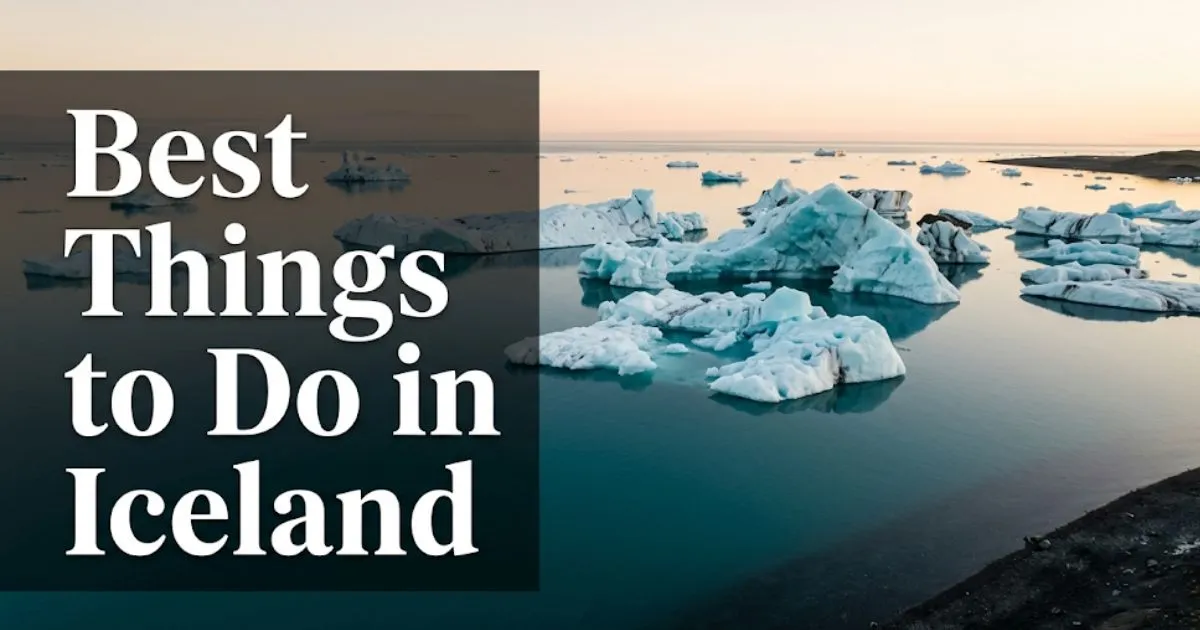
Best Things to Do in Iceland in 2026: The Complete Guide

The best things to do in Iceland span active volcanoes, ancient glaciers, geothermal pools, and a small capital city with a serious food scene. No other destination of Iceland’s size delivers this density of genuinely singular natural experiences.
Iceland receives over two million visitors annually, according to Visit Iceland, the country’s official tourism organization. The destination earns its global reputation honestly, but only if you plan before you arrive.
This guide covers every major Iceland experience in honest, specific detail. It distinguishes what different traveler types actually get out of each activity and identifies what requires advance booking months ahead.
Best Things to Do in Iceland: What Makes This Destination Different
The best things to do in Iceland cannot be replicated anywhere else on Earth. That is the actual starting point for understanding what makes this destination worth the considerable investment it requires.
Iceland sits on the Mid-Atlantic Ridge, the tectonic boundary between the North American and Eurasian plates. This geological reality means active volcanoes, geothermal vents, natural hot springs, and lava fields are not tourist novelties. They are the landscape itself.
Thingvellir National Park is one of only a handful of places on Earth where you can stand directly between two tectonic plates. The park is also Iceland’s oldest parliamentary site, where the Althing parliament met beginning in 930 AD.
The combination of geological drama, extreme seasonal light conditions, and a compact, modern capital makes Iceland genuinely unlike anywhere else a traveler can reach on a transatlantic flight. The honest qualifier is cost: Iceland is one of Europe’s most expensive destinations by most measures.
Couples find Iceland particularly rewarding. The combination of aurora viewing, geothermal bathing, and dramatic empty coastlines creates a setting that is difficult to find anywhere closer to home.
Families with young children face real challenges. Many of Iceland’s headline experiences involve long driving days, uneven volcanic terrain, and cold exposure that is demanding for small children.
According to Visit Iceland, the Southwest circuit covering Reykjavik, the Golden Circle, and the South Coast accounts for the majority of visitor time. Travelers who venture north or west find significantly fewer crowds and often more rewarding experiences.
| Activity Type | Best For | Season | Booking Required |
|---|---|---|---|
| Northern Lights viewing | Couples, solo travelers | Sep to Mar | Tour recommended |
| Glacier hiking | Adventure travelers | Year-round | Yes, weeks ahead |
| Blue Lagoon | All profiles | Year-round | Yes, weeks ahead |
| Puffin watching | Families, wildlife lovers | May to Aug | Yes |
| Highland hiking (Laugavegur) | Experienced hikers | Late June to Sep | Hut booking essential |
| Whale watching | All profiles | Apr to Oct best | Day-of possible |
| Snorkeling Silfra | Adventure travelers, non-swimmers with dry suit | Year-round | Yes, weeks ahead |
| Midnight sun | All profiles | Jun to Jul | No booking needed |
Insider Tip:
- Iceland’s famous sites are genuinely impressive. The less-famous alternatives (Reykjadalur instead of Blue Lagoon, Svartifoss instead of Skogafoss for solitude) deliver comparable experiences without the crowds.
- The standard South Coast drive from Reykjavik is best done spending two nights on the road, not as a single long day trip.
- Budget travelers should know that self-catering using Bonus or Kronan supermarkets cuts daily food costs significantly compared to restaurant dining for every meal.
Top Things to Do in Iceland for First-Time Visitors
First-time visitors to Iceland should prioritize three anchoring experiences: the Golden Circle, the South Coast waterfall route, and one glacier or ice cave experience.
These three form the essential backbone of any Iceland itinerary. Everything else, from the Westfjords to the Highland trails, builds productively from this foundation.
The Golden Circle is a roughly 300-kilometer circuit from Reykjavik covering Thingvellir National Park, the Geysir geothermal area (home to Strokkur, which erupts every 5 to 10 minutes), and Gullfoss, a two-tiered waterfall dropping into a canyon.
The South Coast route runs from Reykjavik east along Route 1, passing Seljalandsfoss (where you can walk behind the waterfall), Skogafoss, the black sand beaches at Reynisfjara, and continuing toward Jokulsarlon Glacier Lagoon.
Seniors and accessibility travelers should note that Seljalandsfoss involves uneven rocks and a slippery path. Skogafoss is more accessible. Reynisfjara’s black sand beach has strong, unpredictable waves: do not approach the water’s edge regardless of physical ability.
Glacier experiences range from structured guided walks on Vatnajokull (accessible from the parking area at Skaftafell) to more demanding multi-hour ice hiking tours. Guided tours are mandatory; no independent glacier access is permitted.
The first-timer mistake is treating these circuits as checkbox activities to rush through. Each site deserves one to two hours minimum. Budget three full days for the South Coast alone if you want to experience each stop without constant clock pressure.
Insider Tip:
- Start the Golden Circle by 8:00 AM to reach Thingvellir and Strokkur before tour buses arrive from Reykjavik at mid-morning.
- Reynisfjara has recorded multiple fatalities from rogue waves. The Icelandic Coastguard and local ranger signs warn visitors to stay at least 30 meters from the water. Follow this instruction without exception.
- Solo travelers find the Golden Circle straightforward to self-drive. The route is paved, well-signposted, and completable in a single day with an early start.
Things to Do in Reykjavik
Reykjavik is the world’s northernmost capital, home to approximately 130,000 people, and a genuinely worthwhile destination independent of Iceland’s natural attractions.
The city concentrates its most walkable areas around the old harbor, Laugavegur shopping street, and the neighborhood rising toward Hallgrimskirkja, the 74.5-meter concrete church that functions as the city’s most recognizable landmark. The elevator to the church tower costs a modest fee and provides the clearest aerial view of the city.
Harpa Concert Hall on the harbor’s edge is architecturally significant. The honeycomb glass facade was designed in collaboration with artist Olafur Eliasson. The building hosts the Iceland Symphony Orchestra and is free to enter the public lobby area.
The Grandi district, west of the old harbor, is where Reykjavik locals actually eat and spend time. Grandi Matholl is a food hall with rotating local vendors offering everything from Icelandic lamb soup to Korean-Icelandic fusion. This is not a tourist market. It is a working food hall that locals use for lunch.
The Settlement Exhibition on Adalstraeti houses a 10th-century Viking longhouse discovered beneath the modern city. Admission is charged; verify current pricing before visiting. The National Museum of Iceland provides the most complete cultural and historical context for the entire country.
Baejarins Beztu Pylsur on the harbor is the city’s most famous hot dog stand. It has served the same lamb-pork-beef hot dog since 1937. The line moves fast. Order it “with everything” (eina med ollu) for the full preparation including raw and fried onion, sweet mustard, remoulade, and ketchup.
Couples should walk Laugavegur in the evening when the street fills with locals. The area between the city center and Hallgrimskirkja has the strongest concentration of independent restaurants, wine bars, and design shops.
Budget travelers should note that Reykjavik’s bar scene is expensive even by European capital standards. Pre-purchasing the Reykjavik City Card provides free or discounted museum entry and unlimited city bus travel.
Golden Circle Iceland
The Golden Circle is Iceland’s most visited single-day driving circuit, and it earns its popularity for specific, concrete reasons.
Thingvellir National Park offers the only place on Earth where you can walk between the North American and Eurasian tectonic plates in open air. The rift valley itself is visually stark and historically profound. The park is a UNESCO World Heritage Site.
Strokkur geyser at the Geysir geothermal area erupts a column of boiling water 15 to 40 meters into the air every 5 to 10 minutes. The original Geysir, which gave the English word “geyser” its name, is largely dormant. Strokkur performs consistently.
Gullfoss is the most photographed waterfall in Iceland. Two tiers drop into a canyon carved by glacial meltwater. In summer, spray rainbows are visible from the viewing platform. In winter, partial ice formation changes the visual dramatically.
The full loop runs approximately 300 kilometers from Reykjavik and takes 6 to 8 hours when driven comfortably. Self-driving is straightforward: all roads on the Golden Circle route are paved and well-maintained.
Families with children find the Golden Circle one of the most accessible Iceland experiences. Strokkur’s regular eruptions genuinely hold children’s attention. The Gullfoss visitor center has facilities. Thingvellir has flat walking paths suitable for strollers.
The honest assessment: the Golden Circle is outstanding but heavily trafficked from 10:00 AM onward during summer months. Leave Reykjavik before 7:30 AM to experience Thingvellir in near-solitude.
Local alternative: After Gullfoss, continue northeast to Kjolur (the F35 highland road if you have a 4WD) rather than returning directly to Reykjavik. This extends the day but delivers dramatic highland scenery that almost no day-tour groups reach.
Key Takeaway: Leave Reykjavik before 8 AM for the Golden Circle; the difference in crowd levels between an early start and a mid-morning departure is extraordinary.
Northern Lights Iceland
The Northern Lights (aurora borealis) are visible in Iceland from approximately September through March, with peak activity typically occurring between October and February.
Aurora viewing requires three conditions simultaneously: darkness, clear skies, and sufficient solar activity. Iceland’s position near the Arctic Circle provides the darkness. The other two variables are unpredictable.
The Iceland Met Office (Vedur.is) publishes a free, regularly updated aurora forecast map and cloud cover overlay. Check it every evening from 9:00 PM onward. The forecast is site-specific and updates frequently.
Viewing from Reykjavik is possible on strong aurora nights but compromised by light pollution. Drive 20 to 30 minutes outside the city on clear nights toward Thingvellir or toward the Reykjanes Peninsula for darker skies.
Guided Northern Lights tours from Reykjavik range from bus-based excursions to small-group 4WD tours into the countryside. The advantage of a guided tour is that operators monitor forecasts and often include a rebooking guarantee if clouds obscure the aurora.
Couples typically find Northern Lights viewing one of Iceland’s most memorable experiences when conditions align. Patience and flexibility are essential: some nights deliver nothing, and some nights the entire sky moves.
Families with young children should be realistic. Aurora viewing requires staying out past midnight in cold, dark conditions. Children under eight rarely find the extended waiting worthwhile.
The honest note on Northern Lights: they appear on Iceland’s social media feed as sweeping curtains of emerald green. Reality is often subtler. Cameras with long exposures capture more green than the naked eye sees on moderate-activity nights. Strong KP-index nights (KP 4 and above) deliver the dramatic displays. Check the Vedur.is KP forecast nightly.
Insider Tip:
- Download the Vedur.is app before your trip. Set location notifications for your specific region of Iceland.
- On clear nights with a KP index of 3 or above, driving 15 minutes from any town delivers significantly better viewing than staying in populated areas.
- Solo travelers can join any shared Northern Lights tour from Reykjavik’s BSI terminal without advance booking during slow-season nights. Peak season (December and January) requires booking at least two weeks ahead.
Blue Lagoon Iceland Alternatives
The Blue Lagoon is Iceland’s most famous geothermal pool and one of the country’s most commercially developed tourism experiences. Entry costs have increased substantially in recent years and must be booked online in advance; walk-up entry is not available.
The Blue Lagoon delivers on its visual promise: the milky blue-green water against a lava field setting is genuinely striking. The silica mud treatments work. The overall experience is polished and efficient.
The honest assessment: the Blue Lagoon is expensive, crowded at peak hours, and essentially a luxury spa resort that happens to use geothermal water. It suits travelers who want a high-comfort, low-effort experience. It does not suit travelers seeking authentic geothermal culture.
Sky Lagoon, opened in 2021 on Reykjavik’s coast in the Karsnes Harbor area, is the city’s most credible alternative. The infinity-edge pool overlooks the North Atlantic. The seven-step ritual experience is genuinely well-designed. Pricing is lower than Blue Lagoon, though still significant. Book in advance; same-day availability is limited.
Reykjadalur Hot Spring River in the Hveragerdi valley requires a 3-kilometer hike each way through geothermal terrain. The reward is a free-flowing natural hot spring river where you can soak outdoors surrounded by steam vents and no admission fee. This is what geothermal bathing looked like before commercial development.
Myvatn Nature Baths in North Iceland provides a geothermal bathing experience similar in concept to Blue Lagoon but with smaller crowds, lower prices, and a dramatically different volcanic landscape setting in the Myvatn region.
Budget travelers should prioritize Reykjadalur for geothermal bathing. The hike is manageable, the experience is authentic, and the only cost is getting to Hveragerdi (about 45 minutes from Reykjavik by car).
Seniors and accessibility travelers should note that Reykjadalur requires a 3-kilometer hike on uneven volcanic path, which is demanding. Sky Lagoon and Blue Lagoon both have full accessibility infrastructure.
Key Takeaway: Book Blue Lagoon entry at least three to four weeks ahead in peak summer and winter holiday periods; same-day availability is essentially nonexistent.
Glacier Hiking Iceland
Glacier hiking in Iceland is one of the country’s most physically rewarding activities and one of the few that genuinely cannot be replicated elsewhere.
Vatnajokull is Europe’s largest glacier by volume. The accessible glacial tongues near Skaftafell in Vatnajokull National Park are the most commonly used for guided day hikes. Guided tours depart from the Skaftafell visitor center area throughout the year.
Tour operators including Glacier Guides and Arctic Adventures offer structured glacier walks ranging from two-hour introductory experiences to full-day technical ice climbing. All tours require the guide; independent glacier access is prohibited for safety reasons.
Gear is provided by tour operators: crampons, ice axes, and helmets are standard issue. Participants should bring waterproof outer layers, warm mid-layers, and gloves regardless of air temperature.
Winter glacier hikes (October through March) incorporate ice cave access, when the ice is stable enough for safe entry. These combination hike-plus-ice-cave tours require advance booking of four to six weeks minimum during peak winter season.
Solo travelers find glacier hikes straightforward as group experiences. Most tours operate with groups of 8 to 12 participants. It is one of the most socially easy activities in Iceland for travelers alone.
Families with children should verify minimum age requirements with specific operators before booking. Most reputable glacier tour companies set a minimum age of 8 to 10 years. Glacier surfaces are uneven and physically demanding.
The honest note: the glaciers visible from Iceland’s main roads look close. They are not. The walk from trailheads to active glacier surfaces typically takes 20 to 45 minutes before the actual hike begins. Allow a full half-day minimum for any glacier experience.
| Glacier Area | Access Point | Tour Duration | Best Season | Profile Fit |
|---|---|---|---|---|
| Skaftafell / Vatnajokull | Skaftafell Visitor Center | 2 to 6 hours | Year-round | Adults, older teens |
| Solheimajokull | Route 1, near Vik | 2 to 3 hours | Year-round | Adults, older teens |
| Langjokull | Near Gullfoss | 2 to 4 hours | Year-round | Adults, families 10+ |
| Falljokull | Near Skaftafell | 3 to 5 hours | Year-round | Adults |
Jokulsarlon Glacier Lagoon
Jokulsarlon Glacier Lagoon is Iceland’s largest and most visually dramatic glacial lake, located on the southeastern edge of Vatnajokull National Park near the town of Hofn.
Massive icebergs calve directly from the Breidamerkurjokull glacier into the lagoon. The ice ranges from pure white to deep aquamarine, stained by centuries of compressed sediment. Seals rest on floating ice chunks with remarkable indifference to observers.
Amphibious boat tours operate directly on the lagoon from approximately May through October. These 40-minute tours navigate between icebergs and provide a perspective that the shoreline cannot. Book these tours in advance during summer peak season.
Diamond Beach, a short walk from the lagoon parking area across Route 1, is where ice chunks drift onto a black volcanic sand beach. The visual contrast of clear ice on black sand is one of the most photographed natural compositions in Iceland.
The drive to Jokulsarlon from Reykjavik is approximately 370 kilometers along Route 1 (the Ring Road). Plan at least 4.5 to 5 hours driving time each way, not counting stops. This makes Jokulsarlon a poor choice as a single-day trip from Reykjavik.
Photographers should arrive at Jokulsarlon at dawn or during the golden hour before sunset. The lagoon faces west, making late afternoon light particularly strong. The blue ice photographs best under overcast skies rather than direct sun.
Budget travelers should note that the lagoon shoreline and Diamond Beach are entirely free. The boat tours represent the primary expenditure at this site.
Accessibility travelers will find the parking areas large and flat. Diamond Beach involves walking on sand, which is manageable but not paved. The shoreline viewing of the lagoon is fully accessible from the parking area.
Insider Tip:
- Stay overnight in Hofn rather than attempting a same-day return to Reykjavik. Hofn is known locally for the freshest Icelandic langoustine in the country, served at local restaurants at significantly lower prices than Reykjavik.
- The lagoon sees its most dramatic icebergs in late summer (August through September) when summer melting has calved the largest volumes of ice.
Key Takeaway: Jokulsarlon demands an overnight stay nearby; treating it as a day trip from Reykjavik means 10 hours of driving for 2 hours at the lagoon.
Snorkeling Silfra Fissure
Silfra Fissure in Thingvellir National Park is one of the only places on Earth where you can snorkel or dive in the crack between two tectonic plates. The visibility exceeds 100 meters.
The water temperature in Silfra is 2 to 4 degrees Celsius year-round. This is glacial meltwater filtered through lava rock for decades, arriving at Silfra with extraordinary clarity. The cold is the only significant challenge.
All participants wear full dry suits provided by tour operators. Inner layers of thermal clothing are required underneath. Minimum requirements typically include the ability to swim 200 meters unaided. Dry suit experience is not required.
Tour operators including Dive.is and Arctic Adventures run Silfra snorkeling and diving tours year-round from Thingvellir. Snorkeling tours last approximately two hours in the water. Scuba diving tours require certification.
Adventure travelers and non-divers who want to snorkel find Silfra completely accessible despite the cold water. The dry suits genuinely work. Most participants report the cold being far more manageable than expected.
Seniors and travelers with back or shoulder limitations should consult a physician before booking. The dry suit fitting is physically demanding, and the entry into the water requires specific movements that can be challenging with certain physical conditions.
Advance booking of two to four weeks is standard during summer peak season. Winter tours are often available with shorter lead times. Verify current availability with operators directly, as group sizes are small (typically 4 to 8 people per guide).
The honest note: Silfra does not suit travelers who are genuinely uncomfortable in cold water. The suits work, but the face is exposed to near-freezing water throughout. This is the physical reality, not something to soften.
Insider Tip:
- Wear your warmest base layers under the dry suit. Operators provide suits; you provide the insulation.
- Book the first tour slot of the day (typically 8:00 or 9:00 AM) to share the fissure with fewer groups.
- Couples consistently rate Silfra as Iceland’s most memorable shared experience when both partners are comfortable in cold water conditions.
Midnight Sun and Summer Activities Iceland
The midnight sun in Iceland runs from approximately mid-May through late July, when the sun does not fully set and daylight lasts 20 to 24 hours per day.
This is a genuine phenomenon, not a tourism marketing concept. At the summer solstice around June 21, the sun dips toward the horizon around midnight and rises again without ever achieving full darkness.
The midnight sun fundamentally changes how you experience Iceland in summer. Driving the Ring Road at 11:00 PM in full golden light is one of Iceland’s most distinctive travel experiences. Hiking trails are accessible at any hour.
Puffin colonies are active on sea cliffs from approximately late April through early August. The Westman Islands (Vestmannaeyjar) off the South Coast host one of the world’s largest Atlantic puffin colonies. Regular ferry service operates from Landeyjahofn. The puffins are visible from sea cliffs on the island of Heimaey without organized tours.
Summer also opens the F-roads, the unpaved highland tracks connecting interior Iceland. These routes require 4WD vehicles with high clearance. Crossing glacial rivers on some F-roads requires specific vehicle capability. Check road conditions at Road.is before any highland drive.
Families with children find summer Iceland significantly more accessible than winter. Longer daylight provides logistical flexibility. The challenge is that children need blackout curtains or eye masks to sleep in the continuous light.
Budget travelers should note that summer is peak season. Accommodation prices are at their highest from June through August. Booking accommodation three to six months in advance for popular South Coast stops is standard practice, not excessive caution.
The honest counterpoint: Iceland in summer has no Northern Lights. The country experiences almost zero darkness. Travelers primarily interested in aurora viewing should visit between September and March, accepting shorter daylight hours in exchange.
Westfjords and Snaefellsnes Peninsula
The Westfjords and Snaefellsnes Peninsula are the two Iceland regions that most experienced repeat visitors prioritize. Both remain significantly less visited than the Southwest circuit.
The Westfjords occupy Iceland’s northwestern arm, a deeply indented fjord landscape with some of the country’s most remote roads and wildlife. Latrabjarg Cliff at the far western tip is Europe’s largest seabird colony: razorbills, guillemots, and puffins nest in the rock face within arm’s reach of visitors. The drive to Latrabjarg takes approximately 3 to 4 hours from the Westfjords’ main town of Isafjordur.
Accommodation in the Westfjords is limited. Planning this region requires booking several months in advance for summer visits. The roads are partially unpaved; a standard 2WD car handles most Westfjords routes outside of winter conditions.
Snaefellsnes Peninsula sits two hours northwest of Reykjavik by car and contains its own national park centered on the Snaefellsjokull glacier and volcano. Jules Verne used Snaefellsjokull as the entrance to the interior of the Earth in “Journey to the Center of the Earth.”
Kirkjufell, the arrowhead-shaped mountain near Grundarfjordur, is the most photographed mountain in Iceland, frequently appearing in international travel media. The adjacent waterfall, Kirkjufellfoss, adds foreground interest for photographers.
Couples find Snaefellsnes particularly rewarding as a two-to-three day loop from Reykjavik. The peninsula delivers waterfall viewpoints, glacial coastal scenery, lava tube caves, and black sand beaches with almost none of the South Coast crowds.
According to Visit Iceland, the Westfjords receive a small fraction of Iceland’s total visitors despite containing some of the country’s most distinctive scenery. This is useful information for experienced travelers who want genuine remoteness.
Key Takeaway: The Snaefellsnes Peninsula is the single best day-or-overnight trip from Reykjavik for travelers who want to escape South Coast crowds without driving five-plus hours.
Whale Watching and Puffin Tours Iceland
Whale watching in Iceland operates primarily from Reykjavik’s Old Harbour and from Husavik in North Iceland, with the peak season running from April through October.
Husavik holds the strongest reputation among marine wildlife specialists as Iceland’s premier whale watching destination. The town sits on Skjalfandi Bay, where humpback, minke, and occasionally blue whales feed in productive Arctic waters. Husavik Whale Museum provides context before or after tours.
Reykjavik whale watching departs from the Old Harbour (Aenar Whale Watching and Elding Whale Watching are the primary operators) and offers 2 to 3-hour tours into Faxafloi Bay. Minke whales and harbour porpoises are the most consistent sightings. Humpbacks appear regularly in summer.
The honest note: no wildlife activity is guaranteed. Reputable operators offer rebooking guarantees if no whales appear, but this depends on operator policy and weather.
Puffin watching from Reykjavik operates primarily from the Old Harbour on short 1-hour boat trips to the small islands in Faxafloi Bay. The season runs from approximately late April through early August. These trips are casual and accessible to all fitness levels.
Families with children consistently rate Reykjavik puffin tours as one of Iceland’s most family-appropriate activities. The trips are short, departures are frequent, and puffin sightings from the boats are reliably close.
Budget travelers should compare prices between Reykjavik and Husavik operators before booking. Husavik tours typically include transportation costs from Akureyri or require a separate accommodation night in the north.
Seniors and accessibility travelers should confirm boat vessel type and boarding access with the specific operator before booking. Some vessels have easier access than others; operators vary on this.
| Port | Primary Species | Season | Trip Duration | Profile Fit |
|---|---|---|---|---|
| Reykjavik Old Harbour | Minke whale, porpoise, puffin | Apr to Oct | 2 to 3 hours | All profiles |
| Husavik, Skjalfandi Bay | Humpback, minke, blue whale | Apr to Oct | 3 hours | Adults, older families |
| Grundarfjordur (Snaefellsnes) | Orca, humpback | Jan to Apr | 3 hours | Adults |
Laugavegur and Highland Hiking Trails
The Laugavegur Trail is Iceland’s most celebrated multi-day hiking route, running approximately 55 kilometers from Landmannalaugar in the highlands to Thorsmork at the edge of the Markarfljot canyon system.
The trail takes 4 to 5 days at a moderate pace. It passes through rhyolite mountains stained orange, yellow, and green by mineral deposits; obsidian lava fields; geothermal hot spring areas; glacial river crossings; and black sand deserts.
Laugavegur hut system bookings open in January for the following summer season and sell out within hours. Ferdalag (the Icelandic Touring Association) manages the highland huts. Book the moment the booking window opens. This is not optional planning advice. It is the practical reality of the trail’s popularity.
Camping is permitted along the route with proper equipment. Camping permits must also be purchased in advance from Ferdalag.
Solo hikers find Laugavegur one of the best solo hiking experiences in Europe. The huts are social, the trail is well-marked, and solo travelers naturally form groups at huts.
Landmannalaugar itself is accessible as a day or overnight destination for non-hikers willing to drive the F-roads (requires 4WD). The area features natural hot spring pools, a campsite, and the start of color-rich day hikes into the rhyolite hills without committing to the full Laugavegur route.
Fimmvorduhals Trail connects Thorsmork to Skogar on the South Coast. It is a more demanding route crossing between two glaciers. It passes the eruption craters from the 2010 Eyjafjallajokull eruption.
Budget travelers should know that the huts, while not luxurious, are significantly cheaper than Iceland accommodation alternatives. The trail’s total cost once huts are booked is manageable even by Iceland’s expensive standards.
Insider Tip:
- The Laugavegur Trail runs west-to-east from Landmannalaugar to Thorsmork, but many experienced hikers walk it east-to-west to avoid the most common tourist direction and have more solitude at huts.
- Glacial river crossings on Laugavegur can be waist-deep after rainfall. Trekking poles are essential safety equipment, not optional comfort items.
Geothermal Hot Springs Beyond the Blue Lagoon
Iceland’s geothermal activity produces dozens of natural hot spring options well beyond the Blue Lagoon. The best alternatives are cheaper, less crowded, and more physically authentic.
Reykjadalur Hot Spring River begins with a 3-kilometer (each way) hike from the parking area in the Hveragerdi valley. The trail climbs through active geothermal terrain with steam vents and boiling ground. The river at the top flows at natural hot spring temperature, with specific marked zones indicating safe soaking areas. Entry is free.
Myvatn Nature Baths in North Iceland offers a commercial bathing experience comparable in concept to Blue Lagoon but with a dramatically different volcanic landscape setting and substantially lower admission fees. The baths overlook the Myvatn volcanic terrain. Allow two hours minimum.
Seljavallalaug, Iceland’s oldest swimming pool (built in 1923), sits in a valley near Vik and requires a 15-minute walk from the road. It is geothermally heated, free to enter, and open to the public. It has no changing facilities beyond a basic shelter. It regularly appears on experienced travelers’ Iceland shortlists precisely because it sees a fraction of Blue Lagoon’s traffic.
Hrunalaug, a small private hot spring near the Fludir village in the Hvita River area, is managed by a local farm. Entry requires a small fee paid at the farm. It holds four to six people comfortably and is the most intimate geothermal bathing experience in Southwest Iceland.
Budget travelers should start with Reykjadalur and Seljavallalaug. Both are free or very low cost and deliver a quality of experience that the commercial options charge heavily to approximate.
Couples consistently rate Hrunalaug as the most romantic geothermal experience in Iceland. Its small size and private farm management mean fewer visitors than any commercial alternative.
Key Takeaway: Reykjadalur hot spring river costs nothing and delivers a geothermal bathing experience that is more genuinely Icelandic than anything at the Blue Lagoon.
Iceland Travel Tips and Practical Logistics for 2026
The most important practical fact about Iceland for 2026 is that the country’s most popular experiences require advance booking, often weeks or months ahead.
Keflavik International Airport (KEF) is the main entry point, located approximately 50 kilometers southwest of Reykjavik. FlyBus transfers connect KEF to the BSI Bus Terminal in central Reykjavik in approximately 45 minutes. Rental car pickup is available directly at the airport.
A rental car is effectively mandatory for experiencing anything beyond Reykjavik. Public transportation outside the capital is extremely limited and does not reach most major natural sites efficiently.
4WD vehicles are legally required for F-roads. Driving a standard 2WD vehicle on an F-road violates your rental agreement and can result in voided insurance coverage. Check road status at Road.is daily during highland trips.
Driving distances are significant. The Ring Road (Route 1) circumnavigates Iceland’s entire coastline at approximately 1,332 kilometers. Travelers who plan to drive the full Ring Road should allow a minimum of 7 to 10 days and budget driving time as a significant portion of each day.
Accommodation on the South Coast books out 3 to 6 months ahead in summer. The towns of Vik, Kirkjubaejarklaustur, and Hofn have limited bed inventory. Book these well ahead.
Iceland uses the Icelandic Krona (ISK). Credit cards are accepted almost universally, including at remote gas stations. ATMs are available in all towns. There is no tipping culture in Iceland.
Safety essentials for Iceland:
- Check weather forecasts at Vedur.is every morning before driving
- Register your travel plans at Safetravel.is before highland or remote area trips
- Never drive off marked roads or tracks. Vegetation damage on Iceland’s fragile lava fields can take decades to recover
- Pack waterproof layers regardless of forecast. Iceland’s weather changes within the hour
- Gas stations are sparse in the Westfjords and East Iceland. Fill the tank whenever the opportunity appears
Seniors and accessibility travelers should note that Iceland’s major airports and Reykjavik hotels have full accessibility infrastructure. Natural sites vary enormously. Most glacier access points, highland areas, and waterfall viewpoints involve uneven volcanic or glacial terrain without wheelchair access.
Suggested Iceland Itinerary: How to Plan Your Trip
A 7-day Iceland itinerary should be structured around geography, not ambition. Trying to cover the entire Ring Road in a week means spending most of each day driving.
Suggested 7-Day First-Timer Iceland Itinerary:
Day 1: Arrival and Reykjavik
- Arrive at KEF, collect rental car, drive to Reykjavik (50 km).
- Walk Laugavegur shopping street from the city center up to Hallgrimskirkja.
- Take the elevator to the Hallgrimskirkja tower for aerial city views.
- Lunch at Grandi Matholl food hall in the Grandi district.
- Visit the Settlement Exhibition at Adalstraeti for historical context.
- Dinner in the city center. Early evening walk along the Old Harbour.
Day 2: Golden Circle
- Depart Reykjavik by 7:30 AM toward Thingvellir National Park.
- Walk the tectonic rift valley at Thingvellir for 1 to 1.5 hours.
- Drive to Geysir geothermal area. Watch Strokkur erupt multiple times.
- Drive to Gullfoss. Walk both lower and upper viewing platforms.
- Optional: extend to Hveragerdi for an afternoon soak at Reykjadalur hot spring river.
- Return to Reykjavik by early evening.
Day 3: South Coast, Part 1
- Depart Reykjavik east along Route 1. Stop at Seljalandsfoss (walk behind the falls).
- Continue to Skogafoss. Climb the staircase to the clifftop trail if physically appropriate.
- Drive to Reynisfjara black sand beach. Stay 30 meters from the water. Non-negotiable.
- Overnight in Vik or nearby guesthouses. Book months in advance for summer visits.
Day 4: South Coast, Part 2
- Continue east from Vik through the Skeidararsandur glacial plain.
- Stop at Skaftafell (Vatnajokull National Park) for a guided glacier walk. Pre-booked.
- Drive to Diamond Beach and Jokulsarlon Glacier Lagoon. Allow 2 hours.
- Overnight in Hofn. Dinner at a local restaurant: order the langoustine.
Day 5: East Iceland / Return West
- Optional: morning drive into the East Fjords for dramatic coastal scenery with minimal other visitors.
- Return west along Route 1. Stop at Fjadrargljufur Canyon near Kirkjubaejarklaustur.
- Overnight on South Coast or return to Reykjavik depending on remaining itinerary.
Day 6: Snaefellsnes Peninsula
- Depart Reykjavik northwest on Route 54 onto the Snaefellsnes Peninsula.
- Stop at Ytri Tunga beach for gray seal colony viewing (free, roadside).
- Continue to Arnarstapi coastal walk through basalt lava arches.
- Drive to Kirkjufell mountain near Grundarfjordur for photographs.
- Overnight in Grundarfjordur or Stykkisholmur.
Day 7: Return to Reykjavik and Departure
- Morning return drive to Reykjavik (approximately 2 hours from Grundarfjordur).
- Optional: Blue Lagoon or Sky Lagoon stop near Keflavik on the way to the airport. Pre-booking required.
- Allow 3 hours before departure for the airport. KEF security lines can be long during peak periods.
Note for travelers with 10 days: Use the extra three days to add North Iceland (Akureyri, Lake Myvatn, Husavik whale watching) via a flight from Reykjavik Domestic Airport or a full Ring Road extension.
Safety and Practical Warnings for Iceland
Iceland is one of the safest countries in the world for personal security. The practical safety risks are almost entirely environmental and weather-related.
Key safety and practical facts every visitor to Iceland should know:
- Never approach ocean waves on black sand beaches. Reynisfjara and other black sand beaches experience rogue waves without warning. Multiple fatalities have occurred here. Stand well back from the water.
- Check Vedur.is weather forecasts every morning. Iceland’s weather changes rapidly and dramatically. Yellow, orange, and red weather warnings mean postpone your planned activity.
- Register your travel plans at Safetravel.is before any remote area driving, highland F-road trips, or extended hiking.
- F-roads require 4WD. Driving a standard car on an F-road violates your rental agreement and can leave you stranded in genuinely remote terrain.
- River crossings on highland roads and trails require assessment. Water levels change with rainfall. If a crossing looks unsafe, turn back.
- Dress in waterproof layers regardless of morning sunshine. Hypothermia risk is real in Iceland’s wind and rain, even in summer months.
- Never drive off paved or marked gravel roads. Vegetation on Iceland’s lava fields is extremely fragile. Tire tracks can remain visible for 50 years or more. It is illegal and carries significant fines.
- Glacier surfaces are dangerous without guides. Crevasses are not always visible. No independent glacier access is permitted on managed glacier areas.
- Sunburn risk is significant on glacier surfaces. UV reflection from snow and ice amplifies sun exposure dramatically. Use high-SPF sunscreen on glacier tours.
The Icelandic Association for Search and Rescue (ICE-SAR) is the primary emergency response organization for wilderness incidents. The emergency number in Iceland is 112. Download the 112 Iceland app before departure; it enables GPS location sharing with emergency services.
Frequently Asked Questions About Things to Do in Iceland
What is the best time of year to visit Iceland?
The best time to visit Iceland depends on what you want to experience.
September through October offers a balance of aurora viewing possibility and manageable daylight. June through August provides the midnight sun, open F-roads, puffin season, and the best hiking conditions.
December through February has the longest aurora windows but very limited daylight (4 to 5 hours per day) and the highest storm risk.
Do I need to book the Blue Lagoon in advance?
Yes. The Blue Lagoon does not permit walk-up entry. All visits must be pre-booked online through the official Blue Lagoon website.
During peak summer months (June through August) and the Christmas and New Year holiday period, availability books out three to six weeks or more in advance.
Book your Blue Lagoon entry before confirming your flight dates if you are visiting in peak season.
How many days do I need in Iceland to see the highlights?
Seven days is a functional minimum for a first-time Iceland trip covering Reykjavik, the Golden Circle, the South Coast to Jokulsarlon, and Snaefellsnes Peninsula.
Ten days allows the addition of North Iceland (Akureyri, Husavik, Lake Myvatn) without rushed driving. Fewer than 5 days limits you to Reykjavik and the Golden Circle comfortably.
Can I see the Northern Lights in Iceland in summer?
No. The Northern Lights require darkness to be visible, and Iceland’s summer months (June through early August) experience near-continuous daylight.
The aurora borealis is visible in Iceland from approximately September through March. October, November, and February historically offer the best combination of aurora activity and weather clarity.
Is Iceland safe for solo female travelers?
Iceland is consistently ranked among the safest countries in the world for all travelers, including solo women.
The primary safety considerations in Iceland are environmental rather than personal security-related: weather, F-road conditions, ocean wave risk on black sand beaches, and glacier access rules.
Solo travelers of all profiles should still register their travel plans at Safetravel.is before remote area trips.
Do I need a 4WD car to drive around Iceland?
A standard 2WD car handles all paved roads in Iceland, including the Ring Road and the Golden Circle route. A 4WD vehicle is legally required only for F-roads (the unpaved highland interior routes).
If your itinerary includes Landmannalaugar, the Kjolur Route, or remote Westfjords roads, book a 4WD rental. Check current road status at Road.is before any highland driving.
Plan Your Iceland Trip with Confidence
Iceland delivers exactly what it promises when you arrive with genuine preparation. Book your glacier tour, Blue Lagoon entry, and South Coast accommodation before you finalize your flights.
The single logistical step that makes the biggest difference: reserve your car rental and first-night accommodation the same day you purchase your flights. Iceland’s most popular accommodation dates and vehicle categories disappear months before peak season.
Travel conditions, prices, venue hours, F-road opening dates, and booking availability change seasonally and annually. Verify all key logistics directly with the Iceland Met Office (Vedur.is), Visit Iceland, and individual venues before your departure date. The reader who confirms their bookings six to eight weeks ahead will have a fundamentally different and better Iceland trip than one who plans to figure it out on arrival.