Best Things to Do in Hood River, Oregon (2026 Guide)

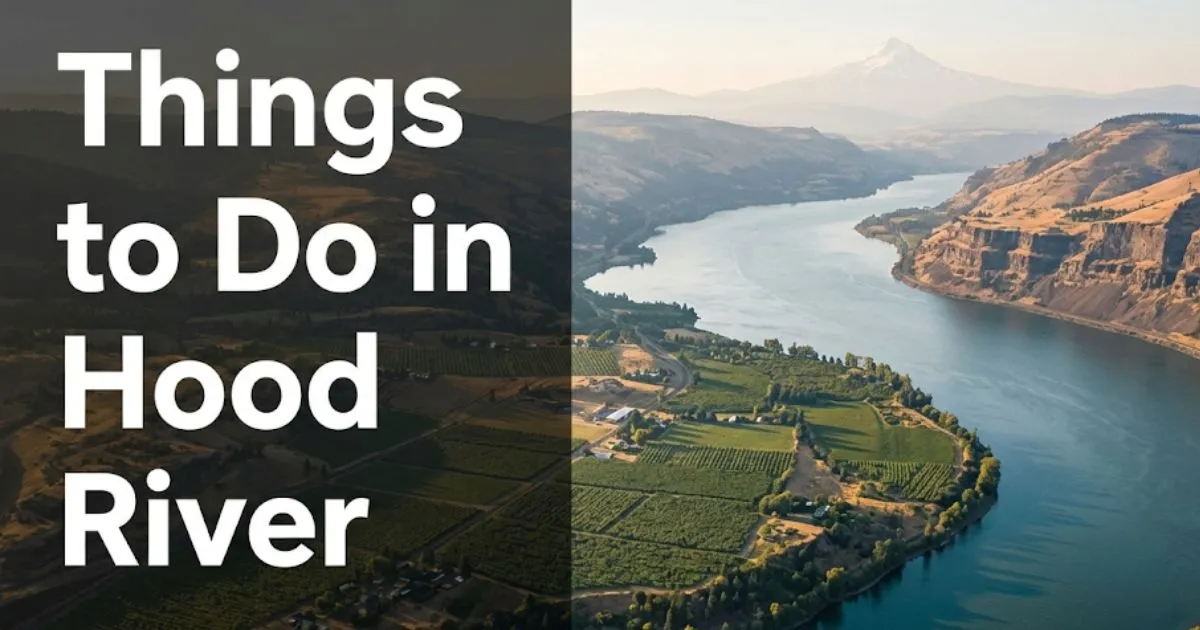
The things to do in Hood River, Oregon extend well beyond the postcard version of windsurfing on the Columbia River.
This small town of under 8,000 people sits at the intersection of the Columbia River Gorge, Mount Hood National Forest, and one of Oregon’s most productive orchard valleys.
This guide covers the outdoor adventures, local breweries, farm drives, waterfall hikes, and practical logistics you need to plan an actual trip.
Things to Do in Hood River
Hood River, Oregon rewards travelers who go beyond the waterfront and explore the valley, the gorge viewpoints, and the local food and drink scene.
The town itself is compact and walkable. Hood River’s downtown along Oak Street and Fifth Street holds a cluster of craft breweries, wine bars, farm-to-table restaurants, and independent shops within easy walking distance.
The Hood River Waterfront Park sits at the base of the hill below downtown. It gives direct access to the Columbia River and is the social center of the town’s outdoor culture.
Wind sports dominate the waterfront energy from June through September. Even non-participants can watch world-class kiteboarding from the park’s grassy banks.
The Columbia Gorge Discovery Center and Museum in nearby The Dalles, about 20 miles east, provides the cultural and geological context that makes the gorge’s landscape readable and meaningful.
According to the Hood River County Chamber of Commerce, the town draws visitors year-round with distinct seasonal identities: wind sports and hiking in summer, harvest and wine in fall, and quiet gorge views in winter.
| Experience Category | Best For | Cost Range | Time Needed |
|---|---|---|---|
| Downtown walkable exploration | All profiles | Free to moderate | 2 to 3 hours |
| Waterfront Park | Families, couples | Free | 1 to 2 hours |
| Columbia Gorge Discovery Center | Seniors, families | Approx. $10 to $18 adult | 2 to 3 hours |
| Fruit Loop driving route | Couples, families | Free to drive, farm costs vary | Half to full day |
| Windsurfing / kiteboarding | Active adults, solo | Lesson fees vary: approx. $100 to $200 | Half day |
Seniors and accessibility travelers will find Hood River’s downtown walkable but hilly. The transition from Fifth Street down to the waterfront involves a steep grade; some visitors use their car to move between the two zones.
Hood River, Oregon Outdoor Activities
Hood River, Oregon’s outdoor activities span river sports, mountain trails, cycling routes, and orchard valley roads within a 30-minute radius.
The town is genuinely small. Its outdoor reach is enormous.
Mount Hood National Forest begins less than 20 miles south of downtown. Columbia River Gorge National Scenic Area surrounds the town on both sides of the river.
Active travelers can structure an entire week around activities without repeating terrain. Road cyclists use the Historic Columbia River Highway for stunning east-west gorge riding.
Mountain bikers access trails above town via the Post Canyon trail network, which local riders at Dirty Fingers Bicycle Shop consider one of the best non-commercial trail systems in Oregon.
Budget travelers do well here. The waterfront, viewpoints, and valley drives are free. The primary costs are gear rental, food, and lodging.
| Activity | Best Traveler Profile | Cost Range | Physical Demand |
|---|---|---|---|
| Windsurfing lesson | Active adults | Approx. $100 to $200 | Moderate to high |
| Post Canyon mountain biking | Active adults, solo | Free trail, bike rental extra | High |
| Historic Columbia River Highway cycling | Couples, solo | Free trail | Moderate |
| Waterfront Park walking | All profiles | Free | Low |
| Tom McCall Nature Preserve hike | Active adults, couples | Free | Moderate |
Families with children should note that Post Canyon mountain biking and most gorge trail hikes are not suitable for young children. The Waterfront Park and the valley floor Fruit Loop drive are the most family-accessible outdoor options.
Hood River Windsurfing and Kiteboarding
Hood River’s windsurfing and kiteboarding scene is internationally recognized. The town’s position in the Columbia River Gorge creates a natural wind tunnel with consistent northwest winds from June through September.
The Event Site at the Hood River Marina is the primary launch and rigging area for both sports. On summer afternoons, the river surface looks like a fleet of colorful sails in organized chaos.
Beginners can access lessons through outfitters including Hood River Waterplay and Second Wind. Lesson packages typically run several hours and include board and gear; verify current pricing directly with outfitters.
The best wind conditions typically arrive in the early afternoon. Morning sessions are calmer and better suited for beginners.
Solo travelers who are experienced wind sports athletes find Hood River socially rich. The Event Site has a built-in community of international riders who gather and socialize between sessions.
Couples who do not windsurf can still enjoy the Event Site as spectators. The Marina area has food vendors and grassy space for watching.
Insider Tip:
- The Event Site fills its parking lot by noon on weekdays and 10 a.m. on weekends in July and August.
- Arrive early or use the Park and Ride at the bottom of town and walk in.
- Non-riders who want the full experience should time their visit for a Tuesday or Wednesday afternoon when crowds thin noticeably.
The Columbia River current is powerful. Non-swimmers and inexperienced water users should stay on shore. Do not attempt to swim across the river under any circumstances.
Key Takeaway: Hood River’s wind sports scene peaks June through September at the Event Site. Parking fills before noon in summer, so plan accordingly or park downtown and walk.
Columbia River Gorge from Hood River
Hood River sits at the eastern edge of the Columbia River Gorge National Scenic Area, making it the ideal base for exploring the gorge’s viewpoints, waterfalls, and scenic highways.
The gorge stretches roughly 80 miles from the Portland metro area westward. Hood River gives you the gorge without the Portland traffic pressure on the western end.
Rowena Crest Viewpoint and the adjacent Tom McCall Nature Preserve are 8 miles west of downtown via Interstate 84. The viewpoint sits at roughly 700 feet with panoramic views east and west along the river.
From the Washington side, the Columbia River Gorge Scenic Byway on SR-14 offers a less-crowded mirror experience of the Oregon side. Cross the Hood River Bridge (a toll crossing; carry small cash or a card) to access it.
Bonneville Dam Visitor Center sits about 45 miles west and includes free tours of the dam infrastructure and a fish ladder observation window. It is genuinely interesting for adults and children alike.
The Columbia Gorge Express shuttle from Portland’s Gateway Transit Center runs to Multnomah Falls and select gorge destinations. According to Travel Oregon, this shuttle is the recommended approach for Multnomah Falls visits from May through September, when driving and parking at the falls becomes extremely limited.
Seniors and accessibility travelers should note that Rowena Crest’s viewpoint parking area is accessible with limited walking required. Tom McCall Preserve’s trail itself is an unpaved moderate hike that is not wheelchair accessible.
Hood River Hiking Trails
The best hiking near Hood River ranges from easy valley-floor walks to strenuous gorge climbs with dramatic river views.
Tom McCall Nature Preserve is the most rewarding moderate hike directly accessible from Hood River. The 3-mile round-trip trail from the Rowena Crest parking area climbs through oak woodland and plateau meadow to open views of the gorge and distant volcanoes.
Spring is the prime season for Tom McCall. Wildflowers including balsamroot and lupine bloom across the preserve’s plateau from late March through May.
Syncline Loop Trail on the Washington side of the gorge above the town of Lyle (accessible via SR-14 after crossing the Hood River Bridge) is a 9-mile loop that experienced hikers rate among the best gorge hikes for sustained views with fewer crowds than Oregon-side trails.
Trail conditions in the gorge change seasonally and after storm events. Verify trail status with the USDA Forest Service Columbia River Gorge National Scenic Area before hiking, especially in winter or early spring.
The Indian Creek Trail above Hood River’s eastern neighborhood provides a local escape with forested creek scenery and easy access for downtown visitors without driving anywhere.
Budget travelers benefit from the fact that nearly all Hood River-area trails are free to access. Some parking areas have small day-use fees; check signage on arrival.
Insider Tip:
- Tom McCall Preserve parking at Rowena Crest fills before 9 a.m. on summer weekends.
- Arrive by 8 a.m. or time your visit for a weekday.
- The payoff for arriving early: the plateau views with no one else in frame.
Waterfall Hikes Near Hood River, Oregon
The closest waterfall concentration to Hood River lies 25 to 40 miles west along the Historic Columbia River Highway, with Multnomah Falls as the anchor.
Multnomah Falls drops 620 feet in two tiers and is the most-visited natural attraction in Oregon. That popularity has a practical consequence: advance timed-entry permits are required to drive to the falls from May through October as of recent seasons. Verify the current permit requirement with the USDA Forest Service or Recreation.gov before visiting, as permit systems and windows change annually.
The Columbia Gorge Express shuttle from Portland is the practical alternative to driving directly. It avoids the permit requirement for day visitors arriving from the Portland end.
Less crowded waterfall alternatives within 30 miles of Hood River include:
- Latourell Falls: 249-foot drop, accessible 0.2-mile walk from parking, dramatically fewer crowds than Multnomah.
- Metlako Falls (via Eagle Creek Trail): requires a 2-mile each-way hike from the Eagle Creek Trailhead; rewards experienced hikers with canyon views and swimming holes.
- Punchbowl Falls on the Eagle Creek Trail: 4 miles round trip from the trailhead; a natural pool setting that photographs like a film set.
Families with children do best at Latourell Falls. The short walk is manageable for children over age 5, and the falls are visible without technical trail navigation.
Couples willing to earn the view should hike Eagle Creek to Punchbowl Falls. It is more demanding but genuinely more rewarding and dramatically less crowded than Multnomah.
The Fruit Loop Hood River
The Hood River Fruit Loop is a 35-mile self-guided driving route through the Hood River Valley that passes orchards, farm stands, wineries, and lavender farms with Mount Hood as a backdrop.
The route is most rewarding in two specific windows: late March through May when cherry, pear, and apple trees bloom across the valley floor, and September through October during the apple and pear harvest.
Visiting in July or August is not wrong, but the visual payoff is significantly lower. Summer visitors see green orchards rather than dramatic blooms or harvest color.
Named stops genuinely worth the time:
- Gorge White House: Farm stand, flower farm, winery tasting room, and orchard all on one property on Highway 35. One of the most complete single stops on the route.
- Kiyokawa Family Orchards: A family-run operation in Parkdale offering U-pick apples and pears in fall. The variety selection is exceptional by Pacific Northwest standards.
- Panorama Point County Park: A free county viewpoint off the Fruit Loop route with a direct line-of-sight to Mount Hood’s north face across the orchard valley. One of the best unremarkable-looking parking lot viewpoints in the state.
Couples find the Fruit Loop drive genuinely romantic in bloom season and harvest season. The combination of farm scenery, tasting rooms, and mountain views creates a half-day experience that earns its reputation.
Families with children will enjoy U-pick operations in fall. Children over age 6 engage well with the picking experience; younger children lose interest quickly.
Key Takeaway: Visit the Fruit Loop in late April or October, not July. The bloom and harvest seasons transform the valley in ways that midsummer simply cannot match.
Hood River Breweries and Craft Beer
Hood River has a beer identity that exceeds the expectations set by its small population. Three breweries anchor a downtown craft beer scene that stands independently among Pacific Northwest brewing destinations.
Full Sail Brewing Company on Columbia Street is the largest and oldest, founded in 1987. The taproom has a deck directly above the Columbia River with gorge views that remain one of the best beer-drinking vantage points in Oregon.
Double Mountain Brewery on Fourth Street is the locals’ preference for the casual, high-volume, genuinely neighborhood feel. The wood-fired pizza is not an afterthought; it is legitimately good and fills the room with regulars on weekend evenings.
pFriem Family Brewers on Portway Avenue at the marina sits physically closest to the waterfront. The beer quality is arguably the most technically sophisticated of the three. The space is polished without feeling corporate.
Solo travelers will find all three taprooms easy to navigate alone. Counter seating and communal tables make solo visits natural rather than awkward.
Budget travelers can eat and drink well at Double Mountain for significantly less than a full dinner at Hood River’s higher-end restaurants.
Insider Tip:
- pFriem closes earlier than Full Sail and Double Mountain on some weekdays. Verify hours before building your evening around it.
- Double Mountain does not take reservations; arrive before 6 p.m. on summer weekends to avoid a wait.
- Full Sail’s river deck fills from the waterfront tourism crowd; Double Mountain’s interior feels more authentically local.
Hood River Wine Tasting
The Hood River Valley and the Columbia Gorge American Viticultural Area produce genuinely distinctive wines. The combination of volcanic soil, high-elevation diurnal temperature swings, and low rainfall creates conditions well-suited for aromatic whites and structured reds.
Pheasant Valley Winery on Pilotti Road is a certified organic estate winery on the Fruit Loop route. The estate-grown wines and the surrounding orchard setting make it one of the most complete winery visits in the valley.
Cathedral Ridge Winery on Post Canyon Drive focuses on Rhone and Burgundian varieties. Winemaker Michael Sebastiani produces wines that regularly earn regional recognition. The tasting room is less polished than some competitors, which keeps the focus on the wine itself.
Stave and Stone Winery in Hood River’s downtown area offers a walkable option for visitors who want wine tasting without driving the Fruit Loop. According to Travel Oregon, the Columbia Gorge AVA is one of seven Oregon American Viticultural Areas and is particularly noted for Pinot Gris, Riesling, and Syrah.
Couples visiting in fall harvest season should book Fruit Loop winery visits on weekday afternoons. Weekend tasting rooms in October fill quickly and can feel rushed.
Budget travelers should note that tasting fees at most Hood River-area wineries run approximately $10 to $25 per person, often applicable toward a bottle purchase. Budget accordingly.
Hood River Restaurants and Local Food
Hood River’s food scene punches well above its size. The combination of proximity to the valley’s farms, an educated outdoor recreation demographic, and competition from Portland restaurants 60 miles west has produced genuinely good eating across multiple price points.
Broder Øst on Cascade Avenue is a Scandinavian-influenced breakfast and lunch restaurant that is regularly cited as one of the best breakfast spots in the gorge. The æbleskiver, Danish spherical pancakes served with house-made jam, are the specific dish most repeat visitors return for.
Solstice Wood Fire Cafe on Oak Street serves wood-fired breakfast and dinner with a menu that changes around valley produce. It is the most direct expression of the farm-to-restaurant relationship that Hood River does well.
Ground on Oak Street is the best coffee stop in town. It functions as a social hub for locals on weekday mornings and is a useful first stop before driving the Fruit Loop.
The local alternative to Hood River’s restaurant scene, for travelers who want to eat extremely well without restaurant pricing, is the Hood River Saturday Market. The market runs from late spring through fall. Farm vendors, prepared food, and local bakers make it a legitimately good meal source rather than a tourist add-on.
Budget travelers should combine the Saturday Market, Double Mountain for lunch or dinner, and Ground for coffee. This covers the Hood River food experience for under $40 per person per day including a glass of beer.
Seniors will find Hood River’s downtown restaurant cluster walkable and accessible. Most dining rooms have ground-floor entry. Broder Øst has limited seating and a genuine wait on weekends; arrive at opening or accept the delay.
Key Takeaway: Broder Øst is the single most locally endorsed breakfast in Hood River. Arrive before 9 a.m. on weekends or plan for a real wait.
Things to Do in Hood River with Kids
Hood River works well for families with children over age 6. Younger children have fewer dedicated activity options, but several core experiences genuinely engage them.
Hood River Waterfront Park is the most reliable family activity in town. The park has open grass, river access, and a beach area suitable for supervised play. Children watch windsurfers and kiteboarders from a safe, contained shoreline environment.
Lost Lake Recreation Area about 25 miles southwest of Hood River is a family standout. The lake is calm, paddleboat and canoe rentals are available, a campground circles the lake, and Mount Hood reflects directly in the water on calm mornings.
The Bonneville Dam Visitor Center engages children effectively with the fish ladder observation window, where salmon and steelhead are visible during migration season (typically August through October for fall Chinook). Entry is free.
U-pick apple and pear operations at Kiyokawa Family Orchards in Parkdale work well for children age 6 and up in September and October. Younger children will need close supervision in the orchard environment.
Families should avoid scheduling Hood River hiking during midday in summer. Gorge temperatures above 95°F are common in July and August. Heat exposure on exposed trails is a genuine safety concern for children.
The Columbia Gorge Discovery Center in The Dalles (20 miles east) has interactive exhibits calibrated for children. Budget approximately 2 to 3 hours and carry water; the museum can be warm in summer.
Free Things to Do in Hood River
Hood River offers a genuinely substantial list of free activities. The gorge landscape and valley scenery are the raw material, and most of it costs nothing to access.
Free experiences worth prioritizing:
- Panorama Point County Park: Free parking and access to one of the best Mount Hood views in the valley. Located on the Fruit Loop route off Barrett Drive.
- Hood River Waterfront Park: Free public access to the Columbia River shore. Best in morning before wind sports crowds peak.
- Rowena Crest Viewpoint: Free parking area on the Historic Columbia River Highway with panoramic east-west gorge views.
- Tom McCall Nature Preserve trail: Free to hike; parking at Rowena Crest is the access point.
- Historic Columbia River Highway State Trail: Free to walk or cycle between segments.
- Hood River Saturday Market: Free to attend; spending is entirely optional and easy to control.
- Watching wind sports at the Event Site: The marina area is publicly accessible. Some of the best free entertainment in the gorge happens on any summer afternoon.
Budget travelers can spend a meaningful two-day weekend in Hood River spending money only on food, lodging, and a few farm stand purchases. The outdoor and viewpoint experiences are free across the board.
Seniors should note that Panorama Point and Rowena Crest are accessible with minimal walking from parking areas. Both are appropriate for travelers with limited mobility.
Unique Things to Do in Hood River
Hood River’s genuinely distinctive experiences separate it from generic Pacific Northwest outdoor destinations.
Cycling the Historic Columbia River Highway from Hood River westward is a specific Hood River experience that few other Oregon towns can replicate. The State Trail passes through tunnels built in the 1920s and delivers gorge views that cars cannot access on the reconstructed cycling-only segments.
Taking the Amtrak Empire Builder through the gorge is an underused experience. The train runs both directions through the gorge between Portland and points east. Booking a round-trip segment from Portland to Hood River gives a river-level perspective of the gorge that no road provides. The Hood River station is a small historic depot on the waterfront.
Crossing into Washington on the Hood River Bridge and driving SR-14 east or west is a counterintuitive move that most Oregon-based visitors skip entirely. The Washington side of the gorge is less developed, less crowded, and gives the Oregon cliffs a perspective unavailable from the Oregon side.
Kiteboarding lessons as a non-athlete is a specific Hood River experience. Several outfitters design two-hour introductory lessons for complete beginners with no water sports background. The experience is more about the physics and the gorge environment than athletic performance.
The Columbia Gorge Discovery Center and Museum in The Dalles is consistently underestimated. The gorge geology, Lewis and Clark narrative, and Columbia River salmon cultural history are presented at a level that engages adults genuinely interested in the landscape they are traveling through.
Key Takeaway: Crossing the Hood River Bridge to drive SR-14 on the Washington side costs almost nothing and gives you a gorge perspective that 90% of Oregon-side visitors never see.
Best Time to Visit Hood River, Oregon
The best time to visit Hood River, Oregon is September through October for most travelers. The harvest season combines Fruit Loop color, winery tasting room activity, comfortable temperatures in the 60s and 70s Fahrenheit, and dramatically thinner crowds than summer.
Late April through May is the second-best window. Spring wildflowers at Tom McCall Preserve bloom typically from late March through mid-May. The Fruit Loop’s cherry and pear orchards bloom in late March and early April. Temperatures are cool but manageable, and summer crowds have not yet arrived.
June through August is the most popular period and the most demanding to navigate. Wind sports conditions are at their seasonal peak, which makes the Event Site and waterfront area genuinely exciting. But downtown parking is consistently scarce on weekends, temperatures regularly exceed 90°F, gorge trail permits and shuttle capacity become relevant logistics, and lodging rates are at their highest.
Winter (November through February) is Hood River’s quiet season. Most Fruit Loop farms and tasting rooms operate reduced hours or close entirely. Gorge hiking trails may be icy or closed. The upside: hotel rates drop significantly, and the gorge scenery is dramatic on clear days.
| Month | Crowd Level | Temperature Range | Best Activity | Consideration |
|---|---|---|---|---|
| March to May | Low to moderate | 45 to 65°F | Wildflowers, orchard blooms, hiking | Rain is possible; trails can be muddy |
| June to August | High | 75 to 100°F | Wind sports, waterfront | Heat, crowds, parking, permit needs |
| September to October | Moderate | 55 to 75°F | Harvest, wine, Fruit Loop, hiking | Best all-around season |
| November to February | Low | 35 to 50°F | Gorge views, quiet exploration | Reduced farm and tasting room access |
Families with children get the best combination in late May or early October. School schedules naturally align with these shoulder periods in some cases.
Hood River Weekend Itinerary
A two-day Hood River weekend is the ideal trip length for first-time visitors. One day is enough for the gorge and waterfront. Two days adds the valley, a winery, and genuine recovery time.
Day 1: Gorge, Viewpoints, and Waterfront
- Start at Ground on Oak Street for coffee before the town fully wakes up. Leave by 8 a.m.
- Drive west on Interstate 84 to the Rowena Crest Viewpoint and hike the Tom McCall Nature Preserve trail. Arrive before 9 a.m. to secure parking.
- Return to Hood River and walk down to the Hood River Waterfront Park. Watch the wind sports scene build through the late morning.
- Lunch at Double Mountain Brewery on Fourth Street. Arrive before noon to beat the weekend crowd.
- Drive to the Washington side via the Hood River Bridge (toll). Drive SR-14 west toward the gorge cliffs for 10 to 15 miles and return.
- Afternoon at the Event Site marina area. Watch kiteboarding, walk the marina, and consider a late afternoon session at pFriem Family Brewers.
- Dinner at Solstice Wood Fire Cafe on Oak Street. Make a reservation for 7 p.m.
Day 2: Fruit Loop and Valley
- Breakfast at Broder Øst on Cascade Avenue. Arrive at opening to avoid the wait.
- Drive the Hood River Fruit Loop south on Highway 35. First stop: Panorama Point County Park for the Mount Hood view.
- Stop at Gorge White House for the farm stand and a walkable overview of what the valley produces.
- Continue to Kiyokawa Family Orchards in Parkdale (seasonal; confirm hours before visiting).
- Tasting room visit at Pheasant Valley Winery or Cathedral Ridge Winery. Book a weekend tasting slot in advance during fall.
- Return to Hood River via Highway 35 and close the loop on the west side of the valley.
- Late afternoon at the Hood River Saturday Market if visiting in season (late spring through fall).
- Dinner at Broder Øst (dinner menu differs from breakfast) or a return to Double Mountain.
Getting to and Around Hood River, Oregon
Hood River is 60 miles east of Portland via Interstate 84, a drive that typically takes 60 to 75 minutes in normal conditions.
Portland International Airport (PDX) is the primary gateway. No commercial air service operates to Hood River Airport. From PDX, rent a car; Hood River is not accessible by practical public transit without a car for most activities.
The Columbia Gorge Express shuttle operated by Oregon Department of Transportation runs from Portland’s Gateway Transit Center to Multnomah Falls and Vista House on the Historic Columbia River Highway. It does not run to Hood River. It is relevant for combining a Hood River car trip with a Multnomah Falls shuttle visit on the western gorge.
The Amtrak Empire Builder stops at Hood River’s waterfront station on its Chicago to Seattle/Portland route. It is a scenic option for travelers arriving from Portland Union Station, but schedule limitations make it a one-way or day-trip tool rather than a primary transport mode.
Getting around Hood River itself:
- Downtown and waterfront are walkable from each other with a steep hill in between.
- The Fruit Loop and gorge viewpoints require a car.
- Cycling is feasible for physically fit visitors on the Historic Columbia River Highway State Trail.
- Parking downtown is limited and fills by 11 a.m. on summer weekends. The best strategy is to park at the waterfront lot early and walk uphill to downtown, rather than hunting for street parking.
The Hood River Bridge toll is a cash or card transaction. Keep small bills available or confirm card acceptance before crossing.
Safety and Practical Warnings for Hood River, Oregon
Hood River’s outdoor environment creates specific safety situations that tourism content routinely understates.
Key safety and practical facts every visitor should know:
- Columbia River currents are dangerously strong. Do not swim in the Columbia River outside designated swim areas. Current strength is non-obvious from shore.
- Summer heat in the Columbia River Gorge regularly exceeds 95 to 100°F. Carry and drink water consistently. Avoid exposed hikes between 11 a.m. and 4 p.m. in July and August.
- Wildfire smoke affects air quality in August. Check Oregon DEQ air quality reports before scheduling outdoor activities in late summer.
- Trail conditions change seasonally. Columbia Gorge trails may be closed after winter storms or during fire season. Verify current status with the USDA Forest Service Columbia River Gorge National Scenic Area before hiking.
- Timed-entry permits may be required for Multnomah Falls driving access from May through October. Check Recreation.gov for the current season’s permit requirements and availability.
- The Hood River Bridge vehicle toll requires payment at the crossing. Come prepared.
- Cell service is limited on some Fruit Loop farm roads and upper valley areas. Download offline maps before driving the valley.
- Gorge wind conditions are powerful. Children and lightweight gear near the riverbank should be managed carefully on high-wind afternoons.
For trail emergencies, contact the USDA Forest Service Hood River Ranger District. For river emergencies, the United States Coast Guard Sector Columbia River oversees the Columbia River.
Frequently Asked Questions About Things to Do in Hood River, Oregon
What is Hood River, Oregon best known for?
Hood River is best known for world-class windsurfing and kiteboarding on the Columbia River, the Hood River Valley Fruit Loop orchard drive, and its position as a gateway to the Columbia River Gorge National Scenic Area.
The consistent northwest winds that funnel through the gorge make the Event Site at Hood River Marina one of the most technically demanding and internationally recognized wind sports venues in North America.
The town also holds a craft brewery scene anchored by Full Sail Brewing, Double Mountain, and pFriem Family Brewers, which draws Pacific Northwest food and drink travelers in addition to outdoor athletes.
How far is Hood River from Portland?
Hood River is approximately 60 miles east of Portland, Oregon via Interstate 84.
The drive typically takes 60 to 75 minutes in normal traffic conditions, though summer Friday evening westbound traffic on I-84 from Portland can extend that significantly.
Hood River functions effectively as a day trip from Portland, but two nights allows a more complete experience of the valley, gorge, and local food scene.
Is Hood River worth visiting in winter?
Hood River in winter is a quieter, more affordable, and genuinely scenic experience for travelers who are not coming specifically for wind sports or farm activities.
Most Fruit Loop farms and winery tasting rooms reduce hours or close from November through February; verify directly before planning a farm-focused winter visit.
The Columbia River Gorge scenery is dramatic in clear winter conditions, gorge hiking trails can be icy and require trail condition verification, and hotel rates drop considerably compared to summer peak pricing.
What is the Fruit Loop in Hood River?
The Hood River Fruit Loop is a 35-mile self-guided driving route through the Hood River Valley that passes apple and pear orchards, farm stands, wineries, lavender farms, and U-pick operations with Mount Hood visible as a backdrop.
The route is most visually rewarding during cherry and pear blossom season in late March through May and during the apple and pear harvest from September through October.
A Fruit Loop visit in midsummer misses both the bloom and harvest visual peaks and will find fewer U-pick opportunities and less dramatic orchard scenery.
Do I need a permit to hike in the Columbia River Gorge?
Timed-entry permits have been required to drive to Multnomah Falls from May through October in recent years; verify the current season’s permit requirements at Recreation.gov before your visit, as the system changes annually.
Most other Columbia River Gorge trails, including Tom McCall Nature Preserve and Syncline Loop, do not require advance hiking permits but may have limited parking that fills early on peak summer weekends.
The Columbia Gorge Express shuttle from Portland’s Gateway Transit Center eliminates the Multnomah Falls permit issue for visitors approaching from Portland, as the shuttle operates independently of the driving permit system.
What is the best area to stay in Hood River?
Staying in Hood River’s downtown or waterfront district puts you within walking distance of restaurants, breweries, and the Columbia River waterfront.
The waterfront area near the marina offers views and proximity to the Event Site for wind sports visitors; downtown Oak Street and Fifth Street area provides walkability to food and shops.
Travelers on tighter budgets may find better lodging rates in The Dalles (20 miles east), which also works as a base for gorge and valley exploration without Hood River’s premium waterfront pricing.
Plan Your Hood River Trip Now
Hood River’s formula is specific. The outdoor access, the valley scenery, the brewery quality, and the farm culture all come together in a way that rewards careful timing.
Book lodging in Hood River at least six to eight weeks ahead for summer visits; fall harvest weekend dates sell out faster than most travelers expect. September is the single month that aligns best conditions, manageable crowds, and harvest activity.
Travel conditions, permit requirements, farm hours, tasting room schedules, and seasonal shuttle operations change each year. Verify all logistics directly with venues and with the Hood River County Chamber of Commerce before departure.
The traveler who arrives in Hood River with a two-night window, a car, and a late September date on the calendar will find one of Oregon’s most satisfying small-town destinations fully delivering on its reputation.