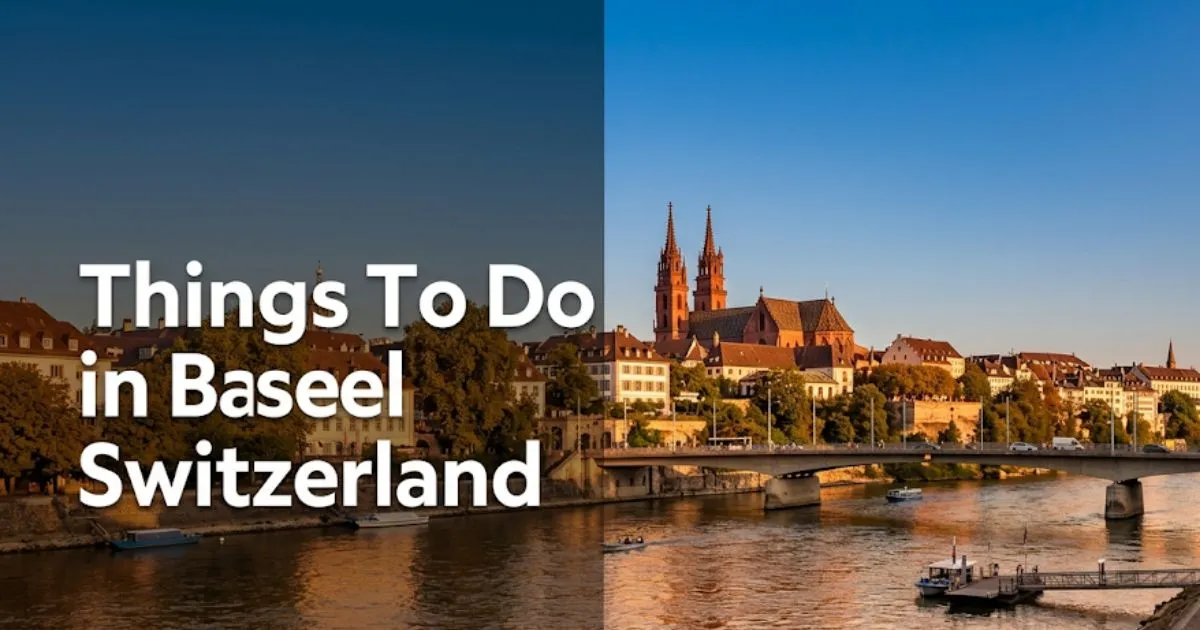
Best Things To Do in Basel, Switzerland: 2026 Travel Guide

Basel, Switzerland offers more museums per capita than nearly any other city its size in Europe, alongside a Rhine River swimming culture that locals treat as a summer birthright. The best things to do in Basel, Switzerland span world-class art institutions, an extraordinary tri-border geography, and a walkable Old Town that takes less than 20 minutes to cross but rewards multiple days of exploration.
According to Basel Tourismus, the city holds more than 40 museums across its roughly 180,000-person population. That density means a well-planned two-day visit can genuinely compete with a week in a larger European capital.
This guide covers every essential experience from the Kunstmuseum Basel to Rheinbad Breite, organized by activity type, traveler profile, and honest seasonal reality. It also names what to skip, what locals do instead, and the single planning mistake most first-time visitors make.
Things To Do in Basel Switzerland: What Makes the City Worth the Trip
Basel, Switzerland is worth visiting specifically for its intersection of exceptional art, accessible outdoor culture, and tri-national geography. No other Swiss city puts Germany, France, and Switzerland within a 15-minute tram ride of each other.
The city divides into two main districts across the Rhine. Grossbasel (Greater Basel) holds the historic Old Town, most major museums, and the tourist-facing center. Kleinbasel (Lesser Basel) sits on the opposite bank and runs more local, more residential, and considerably less photographed.
Basel is genuinely a mid-range to premium destination. Switzerland’s cost of living means meals, accommodation, and museum entries run higher than comparable European cities.
Budget travelers are not excluded, but they need a specific strategy. The Basel Card, included free with most hotel stays at participating properties, covers tram travel and provides discounts of 50 percent or more at most major museums.
Best for: Couples, solo cultural travelers, and museum-focused travelers of any age. Less suited for families with children under seven or travelers expecting alpine scenery within the city itself.
| Traveler Profile | Basel Suitability | Primary Draw | Key Limitation |
|---|---|---|---|
| Couples | Excellent | Art, dining, Rhine walks | Swiss franc costs |
| Solo travelers | Excellent | Walkable, very safe | Nightlife is modest |
| Families | Moderate | Zoo, Papiermuseum | Museum-heavy character |
| Budget travelers | Moderate | Free Rhine culture | Swiss prices are high |
| Seniors | Excellent | Flat Old Town, trams | Some museum stairs |
Things To Do in Basel for First-Time Visitors: A Two-Day Framework
First-time visitors to Basel need at least two full days to experience both the museum circuit and the Rhine outdoor culture without rushing. Most people who try Basel as a half-day from Zurich leave without understanding what the city actually is.
Day 1 suggested sequence:
- Begin at Marktplatz by 9:00 a.m. The red sandstone Basel Rathaus (Town Hall) faces you. Its facade is the most-photographed image in the city, and it earns the attention.
- Walk south to the Basel Münster cathedral. Climb the tower for the city’s best rooftop orientation view of both sides of the Rhine.
- Cross to the Kunstmuseum Basel for two to three hours. Purchase the combined ticket that includes the Kunstmuseum Gegenwart annex building.
- Walk back through the Old Town for lunch at Markthalle Basel on Steinentorstrasse. The indoor market hall has hot food vendors, cheese, bread, and Basel’s best casual midday energy.
- Afternoon: Rhine promenade walk from Wettsteinbrücke toward Dreiländereck. In summer months, join locals at the riverbank.
- Evening: Cross to Kleinbasel for dinner. The area around Clarastrasse has some of Basel’s most honest neighborhood restaurants.
Day 2 suggested sequence:
- Morning: Fondation Beyeler in Riehen (Tram 6 from city center). Allow three hours minimum.
- Early afternoon: Museum Tinguely on the Grossbasel riverbank. Jean Tinguely’s kinetic sculptures are the most genuinely fun museum experience in the city for all ages.
- Late afternoon: Basel Zoo (Zoologischer Garten Basel) if traveling with children, or return to Kleinbasel for a Fähri (Rhine ferry) crossing, which costs approximately 1.60 Swiss francs per adult as of recent fares.
- Evening: Dinner in Grossbasel’s restaurant district near Barfüsserplatz.
Insider Tip:
- Book Fondation Beyeler tickets online in advance. Walk-in availability on weekends is unreliable.
- The Fähri river ferries are pedestrian-powered, not motor-powered. They use the Rhine current to cross. This is genuinely worth experiencing once.
- Solo travelers: the Kleinbasel evening scene around Rheinweg is where Basel locals actually gather in summer.
Basel Old Town Grossbasel: The Historic Core
Grossbasel’s Old Town is the historical and geographic center of Basel, built on a sandstone ridge above the Rhine’s left bank. It is compact, walkable, and architecturally coherent in a way that many larger European old towns are not.
Marktplatz serves as the functional heart. The Basel Rathaus dominates the square with its vivid red sandstone and painted interior courtyard. Entry to the courtyard is typically free. The interior frescoes alone justify ten minutes of unhurried attention.
Walk east from Marktplatz along Rheinsprung to reach the Basel Münster, a Romanesque and Gothic cathedral completed in the twelfth century. Tower admission runs approximately 4 to 6 Swiss francs per adult as of recent pricing. Verify before visiting.
Petersplatz sits one block north of the Münster. It is where the University of Basel, one of Switzerland’s oldest universities (founded 1460), meets the neighborhood. The square itself is open, tree-lined, and far less crowded than Marktplatz at any hour.
The Spalentor, a 14th-century city gate at the western edge of Old Town, is Basel’s most photogenic surviving medieval structure. Most tourists who spend a day in Old Town never reach it. Walk west on Spalenvorstadt from Barfüsserplatz. It takes about 12 minutes on foot.
For seniors and accessibility travelers: Grossbasel Old Town has some uneven cobblestone sections. The Marktplatz-to-Rathaus-to-Münster corridor is the most manageable route for mobility-limited visitors. Tram lines stop at multiple Old Town entry points.
Local alternative: Most tourists photograph the Rathaus facade from Marktplatz and move on. Walk through the Rathaus courtyard instead. The painted interior arcade is what actually distinguishes the building, and most visitors walk past it entirely.
Basel Museums and Art: Building the Right Visit
Basel’s museum identity is built on institutional depth, not just quantity. The Kunstmuseum Basel is the oldest and largest public art collection in the world in continuous operation, according to Switzerland Tourism. That is not a marketing claim; it is a historical fact about a collection that has been publicly accessible since 1661.
The Kunstmuseum’s main building on St. Alban-Graben houses the permanent collection. The Kunstmuseum Gegenwart across the street covers contemporary art from 1960 onward. Combined admission runs approximately 26 Swiss francs per adult as of recent pricing. Verify before visiting.
Basel Museum Night (Museumsnacht) typically takes place one Friday evening in late January or early February. Dozens of Basel museums open simultaneously from 6:00 p.m. to 2:00 a.m. A single ticket grants entry to all participating venues. This is among the best-value cultural evenings in Switzerland and is almost entirely unknown to international visitors.
For budget travelers: Many Basel museums offer free or reduced entry on specific days or evenings. The Basel Card, included with hotel stays at participating properties, typically provides 50 percent discounts at most major institutions. Check Basel Tourismus’s current Basel Card benefits list before arrival.
| Museum | Primary Focus | Approx. Adult Admission | Best For |
|---|---|---|---|
| Kunstmuseum Basel | Old Masters to 20th century | ~26 CHF (combined) | Art-focused adults |
| Fondation Beyeler | Modern and contemporary | ~30 CHF | All adults |
| Museum Tinguely | Kinetic sculpture | ~18 CHF | All ages |
| Basel Papiermuseum | Paper and print history | ~15 CHF | Families |
| Historisches Museum Basel | Basel city history | ~15 CHF | History travelers |
| Museum der Kulturen | World cultures | ~12 CHF | Solo and couples |
All prices approximate and subject to change. Verify before visiting.
Fondation Beyeler: Basel’s Most Important Art Institution
Fondation Beyeler in the Riehen neighborhood is, by a considerable margin, the most significant single art institution in Basel for international visitors. Its permanent collection includes Picasso, Monet, Matisse, Warhol, and Giacometti within a Renzo Piano-designed building that frames the surrounding landscape as part of the viewing experience.
The Fondation sits in Riehen, approximately 6 kilometers northeast of Basel city center. Tram 6 from the city center reaches Riehen in under 20 minutes. The tram stops directly at the museum entrance. This journey is covered by the Basel Card.
Admission runs approximately 28 to 32 Swiss francs per adult as of recent years for the permanent collection plus temporary exhibitions. Verify before visiting. The temporary exhibitions at Fondation Beyeler are consistently among the most significant in Europe and often rotate quarterly.
Book tickets online in advance. Weekend walk-in availability is unreliable, particularly during Art Basel in June and summer months generally.
For couples: The museum’s ground floor restaurant and outdoor sculpture terrace are the most romantic midday setting in Basel. Reserve a lunch table when booking museum tickets.
Local alternative: Most international visitors know the Fondation Beyeler but few pair it with a walk through Riehen village itself. The walk from the museum toward Riehen Dorf takes about ten minutes and reveals a Swiss village character completely unlike anything in Basel’s city center.
Insider Tip:
- Arrive when the museum opens. Weekday mornings are significantly less crowded than weekend afternoons.
- The Renzo Piano building uses natural light through roof panels. Overcast days actually produce better viewing conditions than direct sunlight.
- Families: the museum is genuinely accessible for older children with art interest. Under-12 admission is typically free. Verify before visiting.
Key Takeaway: Book Fondation Beyeler online before arriving in Basel. Walk-in availability disappears on weekends, and the museum’s permanent collection justifies the entire Basel trip on its own.
Rhine River Basel: The City’s Most Underrated Experience
The Rhine River is Basel’s greatest non-institutional attraction, and it is almost entirely overlooked by travelers whose Basel itinerary focuses only on museums. Locals treat the Rhine as a daily living space, not a scenic backdrop.
Rhine swimming in Basel operates through designated river swimming areas called Rhybadi (Rhine baths). Rheinbad Breite on the Kleinbasel side and Rheinbad St. Johann on the Grossbasel side are the two primary facilities. Entry typically runs 4 to 8 Swiss francs per adult as of recent pricing. Verify before visiting.
The Rhine current here is significant. The river moves at approximately 2 to 3 meters per second, depending on season and snowmelt conditions. Swimmers traditionally enter upstream and let the current carry them downstream, then walk back along the bank. This is not appropriate for weak swimmers or children without supervision.
Rhine swimming is primarily a summer activity, typically from late May through early September. Water temperature varies considerably by year and snowmelt conditions.
For solo travelers: The Rhine promenade along Rheinweg in Kleinbasel is one of Basel’s most genuinely local summer experiences. Bring a towel, buy a beer from a kiosk, and do what every Basel resident does on a warm evening.
Local alternative: The most photographed Rhine view is from Wettsteinbrücke. The less-photographed view that locals prefer is from Dreirosenbrücke in the Kleinbasel northwest, which frames the Rhine’s wide bend with the German shore visible to the north.
Basel Fasnacht Carnival: What No Competitor Tells You
Basel Fasnacht is not a typical European carnival. It is one of the most distinctive cultural events in the German-speaking world, classified by UNESCO as an Intangible Cultural Heritage since 2017. It begins at exactly 4:00 a.m. on the Monday following Ash Wednesday, when all city lights go out simultaneously for the Morgestraich procession.
The event runs for precisely 72 hours. Thousands of costumed participants carry hand-painted lanterns through darkened streets while brass and drum corps play through the night. By morning, Basel looks completely different from any other time of year.
The practical warning most content ignores: Basel accommodation during Fasnacht is extremely limited and must be booked months in advance. Hotels in Basel itself sell out entirely. Book six or more months ahead for the Fasnacht period. Consider accommodation in nearby Freiburg im Breisgau (Germany) or Colmar (France) as overflow options, with rail connections to Basel taking under 45 minutes.
Fasnacht typically falls in February or March, depending on the Easter calendar. The exact 2026 dates: verify directly with Basel Tourismus for the 2026 schedule, as dates shift annually.
For solo travelers: Fasnacht is genuinely solo-travel-friendly. The city center becomes a shared public spectacle for 72 hours. No advance ticket is needed to experience the street parades. Some ticketed events occur in specific venues.
For families with children: The Morgestraich at 4:00 a.m. is not appropriate for young children. The daytime parade elements on Tuesday and Thursday are more accessible for family visits.
Basel Food and Markets: Where Locals Actually Eat
The best food experience in Basel for most visitors is Markthalle Basel on Steinentorstrasse, a 19th-century indoor market hall that functions as a food court, farmer’s market, and community space simultaneously. Hot food vendors rotate. Swiss cheese counters, bread bakers, and wine sellers operate alongside prepared meal stalls. A full midday meal runs approximately 15 to 25 Swiss francs per person. Verify before visiting.
Marktplatz Basel hosts an outdoor daily market selling fresh produce, flowers, and regional products. The market typically operates weekday mornings and Saturday mornings. It is the most photographed market setting in Basel, but Markthalle delivers a more genuinely local food experience without the tourist density.
For a restaurant dinner in Basel, the area around Barfüsserplatz and the streets north toward Petersgraben have the highest concentration of mid-range dining options. A mid-range two-course dinner with a glass of wine runs approximately 50 to 80 Swiss francs per person. Swiss dining is not cheap by European standards.
For budget travelers: Basel’s kebab and falafel culture is concentrated around Claraplatz in Kleinbasel. A full meal runs approximately 10 to 15 Swiss francs. This is Basel’s most affordable sit-down eating district.
Local alternative: Most tourists eat near Marktplatz or Barfüsserplatz. Basel locals in the know head to the neighborhood restaurants along Feldbergstrasse in Kleinbasel, where menus are often only in Swiss German and the pricing reflects a local rather than tourist economy.
Insider Tip:
- Markthalle is closed Sundays. Do not plan a Sunday midday visit.
- Basel’s restaurant culture skews toward lunch as the main meal, with dinner options sometimes starting only at 6:30 p.m. or later.
- Couples: the restaurant scene near Rheinweg on the Kleinbasel waterfront is Basel’s most genuinely romantic dinner setting on a warm evening.
Key Takeaway: Markthalle Basel on Steinentorstrasse is the single best midday food stop in the city. Skip the tourist-facing cafes on Marktplatz and eat here instead.
Kleinbasel Neighborhood Basel: The Other Side of the City
Kleinbasel (Lesser Basel) occupies the right bank of the Rhine and is the section of the city that most international visitors never fully explore. This is a practical mistake. Kleinbasel holds some of Basel’s most authentic neighborhood character, most direct Rhine access, and least crowded dining.
The main spine of Kleinbasel is Clarastrasse, running north from the Claraplatz tram hub. It is lined with everyday shops, neighborhood restaurants, and the kind of daily commerce that makes a city feel real rather than staged.
Rheinweg, the riverside promenade on the Kleinbasel bank, is where Basel residents spend summer evenings. Bring your own drinks from a convenience store, find a spot on the stone steps leading to the water, and do what every local does from May through September.
For solo travelers: Kleinbasel’s bar scene around Feldbergstrasse and the Dreirosen neighborhood runs more local and less tourist-oriented than anything in Grossbasel. This is where you find Basel’s actual nightlife geography.
Getting there: Any tram crossing a Rhine bridge reaches Kleinbasel. The Middle Bridge (Mittlere Brücke) pedestrian crossing is the oldest Rhine crossing in Basel and takes about five minutes to walk. The Fähri river ferries also operate between the banks in summer.
The Dreiländereck, Basel’s famous three-country meeting point where Switzerland, Germany, and France converge at the Rhine’s northern edge, is a 25-minute walk along the Kleinbasel riverbank from the city center. The point itself is marked by a monument on a small peninsula. It is worth the walk specifically for the geographic novelty and the view back toward Basel.
Basel Day Trips From the City: Three Countries in One Afternoon
Basel’s tri-border location makes it one of Europe’s most geographically efficient day trip bases. Germany, France, and Switzerland are all accessible within 45 minutes of Basel city center.
Vitra Design Museum in Weil am Rhein, Germany, sits approximately 10 kilometers from Basel. It is one of the world’s most architecturally significant design museum campuses, with buildings by Frank Gehry, Zaha Hadid, Tadao Ando, and Herzog and de Meuron. Tram 8 from Basel city center runs directly to Vitra. The journey takes approximately 25 minutes. Admission varies by current exhibition. Verify before visiting.
Colmar, France sits approximately 75 kilometers from Basel in Alsace. Direct regional trains from Basel SBB reach Colmar in under 45 minutes. Colmar’s medieval center and Alsatian wine culture make it a genuinely different half-day from Basel’s urban museum focus.
Freiburg im Breisgau, Germany is approximately 45 minutes by regional train from Basel. It offers a German university town character, a Gothic cathedral (Freiburger Münster), and the Black Forest immediately accessible by cable car from the city center.
Augusta Raurica, a Roman archaeological site in the village of Augst, sits about 12 kilometers east of Basel. It is Switzerland’s best-preserved Roman settlement. Regional trains from Basel reach Augst station in approximately 15 minutes. Entry to the outdoor site is typically free. The museum admission runs approximately 8 to 12 Swiss francs per adult. Verify before visiting.
| Day Trip Destination | Distance from Basel | Transit Option | Approx. Travel Time | Best For |
|---|---|---|---|---|
| Vitra Design Museum | 10 km | Tram 8 | 25 minutes | Design enthusiasts, couples |
| Colmar, France | 75 km | SBB regional train | 45 minutes | Couples, food travelers |
| Freiburg, Germany | 45 km | SBB regional train | 45 minutes | Solo travelers, history |
| Augusta Raurica | 12 km | Regional train | 15 minutes | History travelers, families |
| Black Forest (via Freiburg) | 65 km | Train + cable car | 90 minutes | Outdoor travelers, seniors |
Key Takeaway: Tram 8 from Basel city center to the Vitra Design Museum in Weil am Rhein is the single most efficient and underused day trip from the city. Most Basel visitors do not know the tram runs there directly.
Basel for Families With Children: What Actually Works
Basel works well for families with children, but not primarily as a museum destination. The specific attractions that genuinely hold children’s attention are distinct from the adult art circuit.
Zoologischer Garten Basel (Basel Zoo) is Switzerland’s most visited zoo and one of Europe’s oldest, having opened in 1874. It holds a significant collection of large mammals, reptiles, and birds within a 11-hectare site accessible on foot from Basel SBB station. Admission runs approximately 19 to 24 Swiss francs per adult and approximately 9 to 14 Swiss francs per child as of recent pricing. Verify before visiting. The zoo is stroller-friendly throughout.
Basel Papiermuseum (Paper Museum) on St. Alban-Tal is the most genuinely child-friendly cultural institution in the city. Children can make paper by hand, operate historical printing presses, and engage with the medieval craft history of Basel’s publishing industry. The museum is compact. Allow one to two hours. Admission runs approximately 12 to 15 Swiss francs per adult. Children’s pricing is lower. Verify before visiting.
Museum Tinguely on Paul Sacher-Anlage is another strong family option. Jean Tinguely’s moving mechanical sculptures make noise, spin, and function as interactive spectacle in a way that purely visual art museums cannot. Children who lose interest in 10 minutes at the Kunstmuseum typically stay engaged for a full hour at Tinguely.
For families: The Rhine promenade between Wettsteinbrücke and Dreirosenbrücke on the Kleinbasel side is flat, wide, and stroller-friendly. On warm days, the riverside steps are a practical outdoor play space for young children that costs nothing.
Honest note: The Fondation Beyeler and Kunstmuseum are not genuinely engaging for children under 10. Listing them in a “family-friendly Basel” context is a common competitor error. Redirect that time to the Zoo, Papiermuseum, or Tinguely instead.
Basel Budget Travel Tips: Making Swiss Prices Work
Basel is among Europe’s more expensive cities by any reasonable standard. A budget traveler strategy requires specific knowledge, not generic frugality advice.
The Basel Card is the single most important budget tool. Most hotels at participating properties include it free with every night’s stay. The card covers all tram travel and provides 50 percent discounts at most major museums. Two museum visits plus two days of tram rides can represent savings of 40 to 60 Swiss francs per person. Confirm the current inclusions with your specific hotel before booking.
Free and low-cost Basel experiences that require no museum budget:
- Walking the Grossbasel Old Town from Marktplatz to Spalentor costs nothing.
- The Basel Münster courtyard and interior are free to enter. Tower admission is modest.
- Rhine promenade walking on both banks costs nothing at any time of year.
- The Rathaus courtyard is free to enter.
- Dreiländereck visit costs only the tram or walking time to reach it.
- Augusta Raurica outdoor site is typically free.
For meals, budget approximately 10 to 15 Swiss francs per meal around Claraplatz in Kleinbasel’s kebab and falafel strip. For sit-down restaurants, lunch menus (Mittagsmenü) typically offer two courses for approximately 18 to 28 Swiss francs, compared to dinner prices that can run 45 to 80 Swiss francs or more per person.
For budget travelers: The Swiss Travel Pass covers SBB rail travel to day trip destinations including Freiburg and Colmar. If Basel is part of a broader Swiss itinerary, calculate whether the pass pays off against individual ticket costs for your specific route.
Insider Tip:
- Museum Night (Museumsnacht), typically held in late January or early February, provides access to dozens of museums on one ticket for approximately 25 to 35 Swiss francs. This is exceptional value by Swiss standards.
- Supermarkets Migros and Coop in central Basel provide affordable picnic options. A Rhine picnic costs very little.
- Solo travelers save significantly by using Basel’s tram network rather than taxis. Taxis in Switzerland run among Europe’s most expensive.
Kleinbasel Neighborhood Basel Practical Guide
[Note: This section’s specific neighborhood content was covered in the earlier Kleinbasel H2. To avoid repeating factual points, this section covers the practical logistics and getting around Basel cluster, which is the distinct remaining cluster keyword.]
Basel Practical Logistics and Getting Around
Getting around Basel requires almost no car use. The city’s tram network covers both Grossbasel and Kleinbasel comprehensively, with major lines running from Basel SBB station across the Rhine bridges and into Kleinbasel neighborhoods. The Basel Card, included with hotel stays at participating properties, covers all tram travel for the duration of your stay.
Basel EuroAirport (IATA: BSL/MLH/EAP) serves the city from approximately 9 kilometers northwest. The airport is technically in France and serves Basel, Mulhouse (France), and Freiburg (Germany) simultaneously. Bus line 50 connects the airport to Basel SBB station in approximately 20 minutes. Verify current schedules before travel.
Basel SBB is the city’s main railway station and one of Switzerland’s busiest. Direct intercity connections reach Zurich in approximately one hour, Bern in approximately one hour, and Lucerne in approximately one hour. The SBB station also connects to French TGV high-speed services toward Paris.
For seniors and accessibility travelers: Basel’s tram network is largely wheelchair accessible, with low-floor vehicles and platform-level boarding at most stops. The Old Town cobblestone sections are the primary accessibility challenge. Tram stops at the edges of the Old Town allow access to most key attractions without extensive cobblestone navigation.
Parking reality: Driving in Basel city center is not practical. Street parking is minimal and expensive. Use the park-and-ride facilities at tram terminal stations and travel inward by tram.
Walking distances: Marktplatz to Kunstmuseum on foot takes approximately 15 minutes. Marktplatz to Spalentor takes approximately 12 minutes. Basel SBB to Barfüsserplatz takes approximately 10 minutes. The entire Grossbasel core is walkable within 30 minutes end to end.
| Journey | Method | Approx. Time | Cost Context |
|---|---|---|---|
| Airport to city center | Bus 50 | 20 min | Covered by Basel Card at some hotels |
| Zurich to Basel | SBB train | 55 min | Swiss Travel Pass or single ticket |
| City center to Fondation Beyeler | Tram 6 | 20 min | Covered by Basel Card |
| City center to Vitra Museum | Tram 8 | 25 min | Separate fare (German territory) |
| Cross-Rhine (Grossbasel to Kleinbasel) | Fähri ferry | 5 min | Approximately 1.60 CHF per crossing |
Key Takeaway: The Basel Card, free with most hotel stays, covers tram travel and museum discounts worth 40 to 60 Swiss francs daily. Confirm its inclusions before booking your hotel.
Best Time To Visit Basel Switzerland: Honest Seasonal Guidance
The best time to visit Basel, Switzerland is September through October or late April through May. These windows offer mild temperatures, lower hotel rates than summer peak, and active cultural programming without the crowd extremes of June.
Spring (April to May): Temperatures range from approximately 12 to 20 degrees Celsius. The Rhine is too cold for swimming. Museum programming is active. Hotel rates are mid-range. This is an excellent window for a first visit.
Summer (June to August): June brings Art Basel, the world’s most commercially significant contemporary art fair, typically held in the second week of June. Hotel rates during Art Basel can run three to five times normal levels. Book accommodation six months or more in advance for Art Basel dates. Outside Art Basel, summer in Basel is genuinely pleasant. Rhine swimming opens from late May through September. Evenings on the Rheinweg promenade are Basel at its most locally vibrant.
Autumn (September to October): This is Basel’s best-kept seasonal window. Temperatures are comfortable. The Rhine swimming season is ending but the cultural calendar remains active. Hotel availability is better than summer.
Winter (November to February): The Basel Weihnachtsmarkt (Christmas Market) at Barfüsserplatz and Münsterplatz typically runs from late November through Christmas Eve. It is among Switzerland’s most established Christmas markets. Accommodation during this period is mid-range unless Fasnacht falls in February, in which case book well in advance.
The honest seasonal reality: Basel has no bad season for cultural travelers. It has two periods that require advance planning and premium pricing: Art Basel in June and Fasnacht in February or March. If budget matters, avoid both. If you want to experience either, plan six or more months ahead.
For families: Summer is the most family-friendly season for Basel’s outdoor Rhine culture. The Zoo is best in spring and early summer before peak heat.
Safety and Practical Warnings for Basel Switzerland
Basel is among Western Europe’s safest cities for travelers. The primary practical risks are financial, logistical, and Rhine-related rather than security concerns.
Key safety and practical facts every visitor should know:
- Rhine swimming carries genuine current risk. The Rhine moves at 2 to 3 meters per second. Inexperienced swimmers should not enter the river. Children must be supervised at all times near the water. The designated Rhybadi facilities (Rheinbad Breite, Rheinbad St. Johann) have lifeguards during operating hours. Open riverbank swimming areas do not.
- Cold water risk: Early season Rhine water (May to June) can be significantly colder than expected. Cold water shock is a real risk even for strong swimmers. Check water temperature reports via Basel Tourismus before entering.
- Tram safety: Basel’s tram lines run through pedestrian zones. Pay attention to tram tracks at street level throughout the Old Town. Tram accidents involving pedestrians and cyclists do occur.
- Swiss franc exchange awareness: US travelers should check current USD to CHF exchange rates before departure. Switzerland is not a Euro-zone country. Card payments are accepted widely but small cash amounts are useful for Fähri crossings and market stalls.
- Altitude and heat: Basel sits at approximately 260 meters elevation. No altitude adjustment is required. Summer temperatures can reach 30 to 35 degrees Celsius in July and August. Sun protection matters for full-day outdoor visits.
- Medical infrastructure: Basel has excellent medical facilities. The Universitätsspital Basel (University Hospital Basel) is the main regional hospital. European Health Insurance Card (EHIC) coverage does not apply for US travelers. Travel insurance with medical coverage is strongly recommended.
Contact the Swiss emergency number 112 for urgent assistance anywhere in Switzerland.
Frequently Asked Questions About Things To Do in Basel Switzerland
How many days do you need in Basel Switzerland to see the highlights?
Two full days is the minimum for a genuine Basel experience that covers both the museum circuit and the Rhine outdoor culture.
One day is only sufficient for a surface-level Old Town and one museum visit.
Three days allows Fondation Beyeler, a day trip to Vitra or Colmar, and full immersion in both Grossbasel and Kleinbasel neighborhoods.
Is Basel Switzerland expensive to visit as an American traveler?
Basel is among Europe’s more expensive cities, reflecting Switzerland’s general cost of living and the strength of the Swiss franc against the US dollar.
Mid-range museum admissions run approximately 15 to 30 Swiss francs per adult. A mid-range sit-down dinner typically runs 50 to 80 Swiss francs per person.
The Basel Card, included free with most hotel stays at participating properties, covers tram travel and provides 50 percent museum discounts, meaningfully reducing daily costs. Verify inclusions before booking.
What is Basel Switzerland most known for?
Basel is most known for three things: its exceptional concentration of art museums (including the Kunstmuseum Basel and Fondation Beyeler), the annual Art Basel contemporary art fair, and the Fasnacht carnival.
The city also has a distinctive Rhine swimming culture that is central to local identity but almost unknown internationally.
Its tri-border location connecting Switzerland, Germany, and France adds a geographic dimension no other Swiss city offers.
When is the worst time to visit Basel Switzerland as a budget traveler?
The worst time for budget travelers is the second week of June during Art Basel, when hotel prices rise to three to five times their normal levels and availability collapses without advance booking.
The Fasnacht period in February or March creates a similar accommodation scarcity, though on a slightly smaller pricing scale.
September through October and April through May offer the best combination of reasonable hotel rates and full cultural programming.
Do you need to speak German to visit Basel Switzerland?
No. English is widely spoken throughout Basel’s hotels, museums, restaurants, and tourist areas.
Basel’s official language is Swiss German, with French widely spoken given the city’s proximity to the French border.
Knowing a few basic German courtesies (Danke, Bitte, Entschuldigung) is appreciated but never required for a comfortable visit.
Is the Basel Museum Pass worth buying?
The Basel Museum Pass provides access to over 40 regional museums across Basel, Freiburg, and the Rhine region for an unlimited number of visits during its validity period.
It is worth purchasing if you plan to visit three or more museums during your stay. Verify current pricing and included institutions with Basel Tourismus before purchasing, as inclusions change annually.
For a shorter stay or visitors already using a hotel-provided Basel Card, calculate the specific value against your planned museum list before buying.
Plan Your Basel Trip: Final Guidance
Start your Basel planning with two decisions: your dates and your accommodation. If your dates overlap with Art Basel or Fasnacht, book accommodation the moment your dates are confirmed. For all other periods, two weeks’ advance booking is typically sufficient at most hotel tiers.
Confirm your Basel Card inclusions directly with your chosen hotel before arrival. Verify Art Basel dates, Fasnacht dates, and Museum Night dates for 2026 directly with Basel Tourismus at their official site, as all three events shift annually. Museum admission prices, Rhine swimming facility hours, and tram fare structures are subject to annual change.
The traveler who arrives in Basel knowing the difference between Grossbasel and Kleinbasel, who has booked Fondation Beyeler in advance, and who has one afternoon reserved for the Rhine promenade will have a far richer visit than the traveler who arrives with only a Kunstmuseum ticket. Basel rewards curiosity and preparation in roughly equal measure.