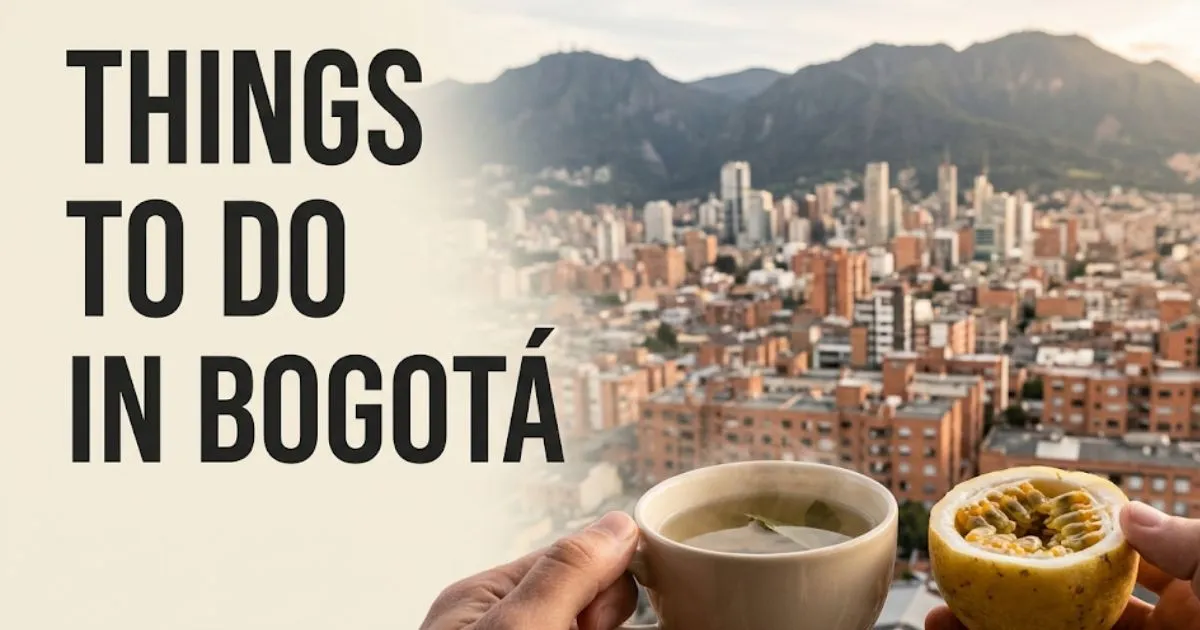
16 Best Things to Do in Bogotá in 2026

Bogotá is not a city that gently introduces itself. It slaps you with thin air, unpredictable rain, and a raw energy that is utterly captivating.
You came for postcard views but you will stay for the street-level culture. The city’s true pull is not a single monument but its eight-million-strong creative pulse.
This guide gives you 16 specific, practical things to do. It cuts through the tourism board gloss and tells you exactly what earns your limited time here.
things to do in bogota
A genuine Bogotá experience balances high-altitude views with ground-level immersion in markets, street art, and local neighborhoods.
The city defies the tropical Colombian stereotype. Bring a jacket and a layered plan for cold Andean afternoons and warm midday sun.
| Activity | Best For | Cost Range | Time Needed | Insider Note |
|---|---|---|---|---|
| Gold Museum | History buffs, solo travelers | $4-6 USD | 2.5 hours | Free entry Sundays |
| Monserrate | Couples, fit travelers | $5-12 USD | Half-day | Buy tickets online |
| Paloquemao Market | Foodies, photographers | $5-15 USD | 2 hours | Go before 10 AM |
| Candelaria Walk | First-timers, students | Free | 3 hours | Mondays are quiet |
best things to do in bogota
The best use of your time targets Bogotá’s three unmissable pillars: its pre-Columbian gold, its street art narrative, and its mountain-top perspective.
Museo del Oro holds the single most impressive artifact collection in the country. The Muisca raft, a gold sculpture of a coronation ritual, anchors the entire experience.
Allow three hours to move through the dark, dramatic galleries. The audio guide is worth the extra few dollars for historical context you will otherwise miss.
Solo travelers find this museum easy to navigate and deeply enriching. Families with young children will struggle as there are zero interactive exhibits for restless hands.
Visit on a weekday morning to avoid the thickest crowds. Sunday is free but the shoulder-to-shoulder experience can significantly dilute the wonder.
According to the Instituto Distrital de Turismo, this is the most-visited museum in the city. Local guides book the last slot of the day when tours have departed.
Insider Tip:
- Skip the overpriced museum cafe. Walk two blocks to Café de la Peña.
- This local spot serves a $4 corrientazo lunch.
- Perfect for budget travelers wanting authentic food.
top things to do in bogota
The top tier of Bogotá activities includes a graffiti-splashed walk, a food market that feeds the city, and a Sunday bike ride that transforms the city.
Bogotá Graffiti Tour reveals the political and social spine of the capital. The walls of La Candelaria are a running dialogue between artists and the state.
Book the free 2.5-hour walking tour for an expert, English-speaking guide. You pay only a tip based on what you thought it was worth.
This is the single best activity for solo travelers on a budget to grasp the city’s soul. Seniors should note the tour covers uneven cobblestone streets for nearly two miles.
Dry season (December to March) offers the best walking conditions. The murals pop brilliantly under the crisp, high-altitude light.
Key Takeaway: Acclimate for 24 hours before tackling Monserrate or you will be physically miserable.
bogota colombia things to do
Bogotá demands you look beyond its colonial core. The city’s best food and nightlife live in the neighborhoods where tourists rarely book hotels.
Andrés Carne de Res in Chía is a multi-story fever dream of a restaurant. It is an hour outside the city center but the only place serving this level of theatrical Colombian dining.
Expect to drop $40-$60 per person for steaks, cocktails, and the surreal decor. Make a reservation for the original Chía location, not the mall version.
Couples and groups seeking a wild, loud night will love it. This is a nightmare for introverts, young children, or anyone seeking a quiet, romantic dinner.
Friday and Saturday nights are pure chaos with multi-hour waits. Go for a late lunch on a Thursday to experience the space without the crushing crowds.
A local taxi driver will likely suggest a cheaper steakhouse. Resist. No other place in the world combines Colombian food, art, and dance like this chaotic institution.
Key Takeaway: Paloquemao Market beats any restaurant for a true taste of the city’s food culture.
la candelaria bogota
La Candelaria is the postcard you have seen but its beauty is a thin veneer over the most theft-prone streets in the city.
Plaza de Bolívar anchors the historic heart with monumental government buildings. The real action is watching Bogotá’s political life and pigeon vendors collide.
Walk Calle del Embudo (the narrow funnel street) to Chorro de Quevedo. This is the city’s founding spot, now lined with cheap chicha bars and students.
Budget travelers and backpackers flock here for the hostels. Seniors and anyone with mobility issues find the steep, slick cobblestones and high altitude genuinely punishing.
Visit between 9 AM and 4 PM when the streets are dense with police, pedestrians, and street vendors. After dark, the area empties sharply and phone snatching risk spikes dramatically.
Locals avoid the tourist-trap restaurants with barkers on the plaza. Walk 10 minutes north to the Teusaquillo border for student-priced, authentic Colombian lunch spots.
monserrate bogota
Monserrate is the white church suspended 3,152 meters above the city and it is the only unskippable tourist attraction in Bogotá.
You have three ways up: the funicular, the cable car, or the steep, paved walking trail. The trail is free but gated for safety after 1 PM on weekends.
Do not attempt the climb on your first day in Bogotá. Altitude sickness hits hardest during physical exertion and the 500-meter vertical gain is no casual stroll.
Solo and fit travelers find the morning hike a spiritual experience shared with hundreds of Rolos. Anyone with heart or lung conditions must take the mechanical options.
Weekday mornings offer a serene, misty peak with zero queues. Sundays are a crush of pilgrims and tourists that can steal the quiet reverence.
Go up by funicular and down by cable car for two distinct views. Locals pack a thermos of canelazo to sip at the summit cafes instead of paying $5 for a paper cup.
Insider Tip:
- Buy tickets on the official Monserrate website before you arrive.
- The afternoon line for the funicular can eat 90 minutes.
- Families should absolutely pre-book to avoid meltdowns.
museo del oro bogota
The Gold Museum displays more than 34,000 pre-Hispanic gold artifacts but the top-floor offering room is the only moment that truly matters.
You enter a dark circular chamber and the lights slowly reveal thousands of gold pieces. The effect mimics the shimmer of a sacred lake.
The museum sits on Parque Santander in the city center. The area is chaotic and pickpocketing is rampant on the streets immediately outside the security cordon.
This is an essential rainy-day activity for all traveler types. Young children may sprint through the dim rooms so keep a tight hold.
Free admission on Sundays brings crushing crowds that make reading the exhibits impossible. Pay the $4 entry on a Tuesday morning for a near-private experience.
A local historian will tell you the back half of the collection is the most revealing. Most tours only cover the front highlights and miss the deeper ethnographic context.
botero museum bogota
The Botero Museum is free and houses the world’s largest public collection of Fernando Botero’s voluptuous figures alongside works by Picasso and Monet.
The courtyard of this converted colonial mansion offers a quiet, green respite from the honking chaos of La Candelaria. It is the best free bathroom and rest stop in the historic center.
A full, unhurried walk-through takes 90 minutes. You can tackle it in 45 if you only glance at the non-Botero collection.
Budget travelers rank this as the city’s top free activity. Art lovers can spend three hours here and the benches are senior-friendly with easy single-level access.
Weekday mornings mean you share rooms with a handful of art students. Saturdays draw a thicker but still manageable crowd of families.
The restaurant across the street, El Gato Gris, is overpriced. Walk five blocks north for a cheap bowl of ajiaco at a local chain like La Puerta Falsa.
plaza de mercado paloquemao
Plaza de Mercado Paloquemao is where Bogotá’s chefs shop at dawn and where you should spend your hungriest morning.
The fruit stalls in the central pavilion sell Amazonian berries you have never seen. Most vendors offer samples of granadilla, lulo, and guanábana without any pressure to buy.
A massive bowl of caldo de costilla (rib broth) costs under $3. This is the traditional Bogotá hangover cure and the best breakfast you will eat in the city.
Foodies and adventurous eaters find this a top-three Bogotá experience. Picky eaters and germ-conscious travelers will struggle with the wet floors and offal-heavy butchers’ section.
Go between 7 and 10 AM when the produce is freshest and the flower hall in the back is a riot of color. The market closes by 4:30 PM.
Tour guides will bring you here on a food tour for $40. Download a fruit identification app, buy $10 of exotic samples yourself, and take an Uber for $5.
Key Takeaway: Paloquemao’s $3 soup will outclass any $30 hotel breakfast.
usaquen bogota
Usaquén was a separate colonial village before the city swallowed it and it still feels like an escape from Bogotá’s relentless intensity.
The Usaquén Flea Market on Sundays fills the main plaza with artisan jewelry, handmade mochila bags, and surprisingly high-quality street food stalls.
Couples love this neighborhood for its walkable, romantic cobblestone lanes lined with excellent mid-range restaurants. It is the safest-feeling, most charming date-night area in the north.
Families with young children will find more space to breathe here than anywhere else. Strollers work on the main plaza though side streets are hit or miss.
Sundays are the only day this area reaches full energy. Visiting on a Tuesday afternoon misses the entire point as the flea market tents and lively crowds are absent.
Skip the generic international chains that ring the plaza. Book a table at Abasto for farm-to-table Colombian food that locals actually recommend.
zipaquira salt cathedral
The Salt Cathedral of Zipaquirá is an underground Roman Catholic church carved inside a salt mine 200 meters below the earth.
It is a marvel of engineering and religious symbolism with glowing blue-lit crosses and cavernous halls. It is also a 90-minute drive north of Bogotá that eats half a day.
Buy the basic entry ticket. The audio guide is sufficient and the add-on experiences like the light show or brine spa museum feel like diluted time-fillers.
Seniors and accessibility travelers must note the route involves a long, dimly lit downhill walk with limited seating. The exit climb back to the surface is steep.
Weekdays see a trickle of visitors. Weekends and Colombian holidays turn the mine into a crowded, echoing chasm that loses all spiritual atmosphere.
Locals often skip the overpriced tour buses. They drive themselves and stop for the vastly superior almojábanas (cheese breads) at the roadside bakeries in Sopó on the way back.
Insider Tip:
- Pair Zipaquirá with a visit to Lake Guatavita.
- This crater lake inspired the El Dorado legend.
- The combined trip makes the long drive feel justified.
chapinero bogota
Chapinero is Bogotá’s most misunderstood neighborhood and its most exciting dining zone for travelers who want the real city.
The Zona G (Gourmet) is a 10-block concentration of the city’s most ambitious restaurants. Book El Chato or Leo weeks in advance for a seat.
Solo travelers who skip Chapinero miss the best bar scene. The speakeasy-style cocktail bars along Carrera 13 serve $8 drinks that match any city in the Americas.
This is not a pretty neighborhood in the colonial sense. Seniors and those seeking scenic charm will prefer Usaquén.
Chapinero is loud and traffic-choked during the day but transforms at night. The restaurants here operate on Bogotá time with 8:30 PM being the earliest respectable dinner hour.
Budget travelers should look for the corrientazo lunch spots on the side streets. The same neighborhood that charges $50 for dinner serves $4 lunches to the office crowd.
bogota graffiti tour
The Bogotá Graffiti Tour traces the evolution of street art from an illegal act of defiance to a government-sanctioned tourist attraction.
The walls of La Candelaria and the Distrito Grafiti showcase massive murals by artists like DJ Lu and Crisp. Each piece holds a specific political or social message.
The official tour runs on tips and meets at the Journalists’ Park Gabriel García Márquez at 10 AM. The guides are working street artists who connect the paint to the policy.
Photographers and solo travelers find this the single most Instagram-worthy and intellectually satisfying half-day in the city. The walking pace is slow with frequent stops.
Sunlight is essential for the murals to pop. Overcast afternoons wash out the colors so the morning tour is the only one worth booking.
Locals in the art scene argue the Distrito Grafiti has become a safe, sanctioned canvas. For rawer, more transient pieces, walk Calle 26 toward the university.
bogota day trips
Bogotá’s day trips reward you with one of South America’s oldest religious sites and the lake that launched the El Dorado myth.
Lake Guatavita is a quiet, emerald crater lake high in the paramo. It is the actual site where the Muisca chief covered himself in gold dust and offered treasures to the gods.
Pair the lake with the Salt Cathedral for a 9-hour cultural loop. The drive winds through rolling green hills filled with dairy farms and flower plantations.
History buffs and nature lovers love Guatavita. Families with young children face a steep, unpaved hiking trail with no railing around the lake’s edge.
Go during the dry season (December, January) when the path is firm. The experience is borderline dangerous on a rainy afternoon when the clay turns to slick mud.
Skip the tour bus. A private driver for the day costs $80-$100 and allows you to stop at the pottery shops in the town of Guatavita for locally made ceramics.
getting around bogota
Bogotá’s traffic is the worst in Latin America by hours lost and your choice of transport defines your trip as much as your choice of hotel.
TransMilenio is the dedicated-lane bus system that snakes across the city. It costs under $1 per ride and requires a rechargeable TuLlave card you buy at any station.
Do not use TransMilenio during peak crush (7-9 AM, 5-7 PM). The platforms are dangerously packed and phone theft is rampant.
Uber, DiDi, and Cabify are legal gray zones but the safest, cheapest way to get around. A 30-minute ride across the city costs under $10.
Solo travelers and budget backpackers rely on ride-shares and public buses. Families with children should exclusively use ride-shares for safety and ease.
Insider Tip:
- Download the TransMi App before you land.
- It gives real-time bus arrivals without requiring cell data.
- Your phone never has to leave your pocket.
Key Takeaway: A $10 Uber ride is Bogotá’s best safety and time investment.
bogota altitude sickness
Bogotá sits at 2,640 meters (8,660 feet) and altitude sickness hits travelers who have never felt symptoms anywhere else.
Your first symptom will be a dull headache and breathlessness on stairs. This is not your fitness level failing.
The only cure is 24 hours of rest, light food, no alcohol, and aggressive hydration. Coca tea at your hotel is a mild, traditional remedy that helps.
Seniors, smokers, and anyone with lung issues must consult a doctor before arrival. The low oxygen level here is a genuine medical consideration, not a minor inconvenience.
Altitude sickness does not discriminate by age or fitness. Marathon runners and yoga instructors get flattened by Monserrate on day one.
Book a hotel in Chapinero Alto or Usaquén not for the views but for neighborhoods slightly lower than the Candelaria rim. Acclimatize at a slightly lower elevation before climbing higher.
bogota safety tips
Bogotá in 2026 is safer than its media reputation but the property crime rate demands a hyper-vigilant travel style.
Phone snatching is the number one crime. A thief on a motorcycle will grab your phone from your hand while you take a photo on the street.
Never hold your phone loosely in La Candelaria after dark. Never place your phone on a restaurant table outdoors.
Solo travelers and anyone who looks visibly lost are the primary targets. Walk with purpose, use ride-share apps from inside restaurants, and keep your wallet in your front pocket.
Counterfeit currency circulates aggressively. Never accept change from street money changers and use only bank ATMs inside shopping malls or supermarkets.
The city is not a war zone. Thousands of travelers visit without incident by following one simple rule: treat your valuables like someone is watching.
things to do in bogota at night
Bogotá after dark splits into two worlds: a refined cocktail renaissance in the north and bohemian chaos in the center.
Chapinero’s Zona G and Quinta Camacho house high-end speakeasies. Huerta Coctelería serves gin-based drinks in a greenhouse setting that feels miles from the city’s grit.
The Zona Rosa and Zona T in the north are the dense, walkable bar districts. This is where Bogotá’s young professionals party and the crowds are thickest on Friday night.
Couples and groups find the north safe and navigable. Solo travelers should avoid wandering Zona Rosa’s side streets alone after 2 AM when the scene gets sloppy.
The cheap chicha bars of La Candelaria feel authentically wild but are genuinely sketchy after 10 PM. Go in a group or stick to the north.
Insider Tip:
- Skip the cover-charge clubs in Zona T.
- Find a rooftop bar like Mosquera Rooftop in Chapinero.
- You will get the city-lights view without the velvet-rope attitude.
Your 3-Day Bogotá Itinerary Framework
This itinerary respects altitude, neighborhoods, and your stomach. Adjust by swapping days based on your arrival.
Day 1: Acclimate and Absorb
- Morning: Sleep late. Your body needs the rest.
- Late Morning: Gentle walk through La Candelaria.
- Lunch: La Puerta Falsa for ajiaco.
- Afternoon: Botero Museum and Museo del Oro.
- Evening: Early, quiet dinner in Chapinero. No alcohol.
Day 2: Markets, Views, and Graffiti
- Early Morning: Paloquemao Market for breakfast soup.
- Late Morning: Bogotá Graffiti Tour.
- Lunch: Market snacks from Paloquemao.
- Afternoon: Monserrate via funicular.
- Evening: Reservation at a Zona G restaurant.
Day 3: Day Trip and Sunday Best
- If Sunday: Ciclovía bike ride across the city, then Usaquén Flea Market.
- If weekday: Day trip to Zipaquirá and Lake Guatavita.
- Evening: Cocktails at a Chapinero Alto rooftop bar.
Bogotá Neighborhoods at a Glance
| Neighborhood | Vibe | Best For | Safety Level | Average Cost |
|---|---|---|---|---|
| La Candelaria | Historic, gritty, student-filled | First-timers, budget travelers | Moderate (day), Low (night) | Low |
| Chapinero Alto | Hip, residential, LGTBQ+-friendly | Solo travelers, foodies | High | Mid-range |
| Zona G/Rosa | Polished, corporate, high-end | Couples, nightlife seekers | High | Premium |
| Usaquén | Colonial, quiet, charming | Families, seniors, couples | Very High | Mid-range to Premium |
| Teusaquillo | Bohemian, residential, artistic | Long-stay budget travelers | Moderate to High | Low to Mid-range |
Frequently Asked Questions About Bogotá
What is the number one thing to do in Bogotá?
Climbing or riding up to the summit of Monserrate is the defining Bogotá activity.
The view spans the entire city from a 3,152-meter peak.
You should only attempt the hike after a full day of altitude adjustment.
How many days are enough for Bogotá?
Three full days is the minimum to cover the historic center, a market, and a day trip.
Four to five days allows you to explore Chapinero’s food scene and see the Sunday flea market.
One or two days will feel rushed and you will likely miss the city’s true character.
Is Bogotá safe for tourists in 2026?
Bogotá is safe for tourists who practice strict urban crime prevention.
Phone snatching and pickpocketing are the real threats, especially in crowded areas and on public transport.
Violent crime against tourists who stay in recommended zones is statistically low.
What is the best way to deal with altitude sickness in Bogotá?
Rest aggressively for your first 24 hours and drink water constantly.
Avoid alcohol, heavy food, and any strenuous activity on day one.
Drink coca tea upon arrival and consider acetazolamide if you have a history of severe symptoms.
What is the best area to stay in Bogotá for a first-timer?
Chapinero Alto is the best base for its central location, food scene, and safety.
It offers a better price-to-experience ratio than the sterile northern financial district.
Avoid basing yourself entirely in La Candelaria if you plan to be out after dark.
Is Bogotá cheaper than Medellín?
Bogotá’s high-end dining and boutique hotels are more expensive than Medellín’s.
Street food, public transport, and local lunch spots are comparably cheap in both cities.
Bogotá offers a wider range between extreme budget and luxury experiences.
Bogotá will test you before it rewards you. The altitude and the grit are the price of admission to one of Latin America’s most culturally dense capitals.
Your first move is to book a hotel in Chapinero Alto and leave your first day entirely empty. Do this and you win.
Verify all opening hours and ticket prices directly on venue websites before you depart. Bogotá’s schedules shift with holidays and rain.
You came for the gold and the mountain but you will remember the fruit vendor at Paloquemao and the graffiti wall you stumbled on alone