Is It Safe to Travel to Cabo San Lucas in 2026?

Cabo San Lucas is safe to travel to for most tourists in 2026, with important conditions. The Tourist Corridor, Marina district, and Médano Beach operate with robust tourism infrastructure and consistent law enforcement presence.
The Los Cabos Tourism Board reported over 3 million international arrivals in recent years. That volume reflects a destination with functioning tourist-zone safety systems, not a warning to avoid it.
This guide covers zone-by-zone safety, the current U.S. advisory, beach hazards, health risks, and honest comparisons to Cancun, Tulum, Puerto Vallarta, and La Paz. Read it before booking.
Is It Safe to Travel to Cabo San Lucas in 2026?
Cabo San Lucas is safe for most tourists in 2026 who stay within established tourist zones and use pre-arranged transportation.
The Tourist Corridor, which runs 20 miles along Highway 1-D between Cabo San Lucas and San José del Cabo, is a federally managed tourism zone. It hosts the majority of Los Cabos resort development and receives consistent federal and municipal police presence.
Crime in Los Cabos affecting tourists is not at zero. Petty theft, timeshare solicitation scams, and opportunistic crime in the downtown bar district are the most common issues reported by visitors.
Violent crime in Los Cabos does occur, but it is statistically concentrated in areas away from tourist infrastructure. The U.S. State Department notes that cartel-related violence in Mexico overwhelmingly targets rival criminal organizations, not tourists.
Insider Tip:
- Stay in hotels located within the Tourist Corridor or on the Marina for the most consistently patrolled environment.
- Avoid walking to unfamiliar residential neighborhoods north of downtown Cabo without local guidance.
- Families and seniors will find the Tourist Corridor’s resort zone the lowest-friction, highest-security environment in the destination.
Cabo is not a destination where tourists should feel paralyzed by fear. It is a destination where standard situational awareness, combined with knowing which zones to prioritize, makes a measurable difference.
U.S. State Department Travel Advisory for Cabo San Lucas
The U.S. State Department’s current advisory for Mexico overall is Level 2: Exercise Increased Caution. Baja California Sur, the state where Cabo San Lucas is located, is one of Mexico’s lower-risk states under the advisory framework.
As of the most recent advisory review, Baja California Sur does not carry the heightened Level 3 or Level 4 designations applied to states like Colima, Guerrero, or Michoacán. This distinction is practically significant for travelers choosing between Mexican destinations.
According to the U.S. State Department Bureau of Consular Affairs, travelers should enroll in the Smart Traveler Enrollment Program (STEP) before international travel to receive real-time safety alerts at their destination.
Level 2 does not mean avoid. It means apply the same urban awareness you would in any major tourist city.
The distinction between state-level advisories matters. Ixtapa sits in Guerrero state, which carries a Level 4 “Do Not Travel” designation in some zones. Cabo sits in Baja California Sur with a straightforward Level 2.
Verify current advisory status on travel.state.gov before your departure date. Advisory levels can change between booking and travel.
| Mexican State | Advisory Level | Key Tourist Destination |
|---|---|---|
| Baja California Sur | Level 2 | Cabo San Lucas, La Paz |
| Quintana Roo | Level 2 | Cancun, Tulum, Playa del Carmen, Cozumel |
| Jalisco | Level 2 | Puerto Vallarta |
| Guerrero | Level 3/4 (partial zones) | Ixtapa (verify current level) |
Is Cabo San Lucas Safe for Tourists Overall?
Cabo San Lucas is safe for tourists who operate within its established resort and marina infrastructure. It is not uniformly safe across every neighborhood at every hour.
The honest assessment: Cabo is a mature resort destination. Its tourist economy depends on visitor confidence. Municipal and federal authorities invest meaningfully in tourist-zone security because visitor revenue is the primary economic engine of Los Cabos.
The Los Cabos Tourism Board actively coordinates with Baja California Sur state security forces on tourist-zone patrol. This institutional investment separates Cabo from less-developed tourist areas in Mexico.
The most frequently reported tourist safety issues are non-violent. Aggressive timeshare presentations near the Marina, overcharging by unlicensed taxi drivers, and petty theft on crowded beaches top the list.
Insider Tip:
- Timeshare solicitors operate heavily around the Marina boardwalk and near popular restaurant strips. A firm “no thank you” is sufficient. Walking away works.
- Keep valuables in hotel safes, not on the beach. Médano Beach in particular has reported theft from unattended bags.
- For solo travelers: the same awareness that keeps you safe in Miami Beach or Las Vegas applies here.
Key Takeaway: Cabo San Lucas is among Mexico’s safer resort zones for tourists. The Tourist Corridor and Marina receive consistent security investment. Downtown after midnight during peak season requires more caution.
Safest Areas to Stay in Cabo San Lucas
The safest areas to stay in Cabo San Lucas are the Tourist Corridor resort strip and the immediate Cabo San Lucas Marina vicinity.
The Tourist Corridor runs along Highway 1-D between Cabo San Lucas and San José del Cabo. It is home to the majority of large resort properties including the Hilton Los Cabos, Waldorf Astoria Los Cabos Pedromar, and One&Only Palmilla. Security within resort compounds is private and consistent.
Médano Beach, the primary swimming beach directly in Cabo San Lucas, sits adjacent to the Marina and is well-patrolled during daylight hours. Beach vendors operate openly here but are generally not aggressive.
The Pedregal neighborhood, on the hillside above downtown Cabo, is a high-end residential and boutique hotel zone with a gated-entry security checkpoint. It offers an elevated safety profile for travelers seeking a quieter experience.
Downtown Cabo San Lucas, specifically the area around Cárdenas Street and the club district, operates with more variability after 11 p.m. This zone suits confident adults comfortable in busy nightlife environments. It is not appropriate for families with children at late hours.
| Area | Safety Profile | Best For | Avoid After |
|---|---|---|---|
| Tourist Corridor | High | Families, couples, seniors | N/A |
| Cabo Marina district | High (daytime), Moderate (late night) | All profiles | 1 a.m. |
| Médano Beach | High (daytime) | Families, couples | Sunset (reduce valuables) |
| Pedregal | High | Couples, seniors | N/A |
| Downtown/Cárdenas | Moderate | Adults, nightlife-seekers | 1 a.m. for first-timers |
| Residential zones beyond tourist core | Lower | Not recommended for tourists | N/A |
Is San José del Cabo Safer Than Cabo San Lucas?
San José del Cabo is generally considered calmer and lower-risk than central Cabo San Lucas, with a smaller nightlife scene and a more residential character.
San José del Cabo’s historic center, built around the Misión San José del Cabo church and the surrounding art gallery district on Calle Obregón, draws a quieter traveler profile. There is no equivalent to Cabo’s downtown club district here.
The Thursday evening Art Walk in San José del Cabo, which runs through the gallery district, is a well-established community event. It operates in a safe, well-lit, and socially active public environment.
Families and seniors frequently find San José del Cabo’s pace more comfortable. The town has its own resort zone development along the coast, east of the historic center.
The local alternative to Cabo’s Marina tourist strip: San José del Cabo’s Playa Hotelera beach zone, which is significantly less crowded and equally well-serviced by resort properties.
Insider Tip:
- The San José del Cabo art district is an excellent day trip from Cabo San Lucas. Hire a registered taxi for the approximately 30-minute drive.
- San José del Cabo’s hotel zone is not walking distance from the historic center. Plan transportation between them.
- For budget travelers: San José del Cabo’s hotel options run generally cheaper than the Tourist Corridor resorts.
Is Cabo San Lucas Safe at Night?
Cabo San Lucas is moderately safe at night in the Marina and Médano Beach areas, and requires more caution in the downtown club district after midnight.
The Marina boardwalk restaurants remain active and well-populated until 10 or 11 p.m. on most nights. This environment is appropriate for couples, families, and solo travelers.
The Cárdenas Street and surrounding nightclub zone transforms significantly after midnight during spring break (March) and holiday weeks. Alcohol-fueled incidents, including tourist confrontations and theft from distracted visitors, spike during these periods.
According to travel safety reporting from Condé Nast Traveler, tourists in Mexican beach destinations face the highest risk of petty crime during late-night nightlife hours when awareness is reduced and crowds are dense.
- Travel in groups of two or more after midnight in the club district.
- Use pre-arranged transportation back to your hotel. Do not walk unfamiliar routes alone after midnight.
- Keep cash and cards minimal when going out at night. Use hotel safes.
Solo female travelers: The nightclub district carries genuine risk after midnight during peak seasons. The Marina restaurant zone in the early evening is a much more comfortable environment.
Key Takeaway: The Marina boardwalk at night is safe and lively for most travelers. The downtown club district after midnight during spring break demands the same vigilance you’d apply in Bourbon Street at 2 a.m.
Is Cabo San Lucas Safe for Solo Female Travelers?
Cabo San Lucas is reasonably safe for solo female travelers who use pre-arranged transport, stay in established tourist zones, and set clear boundaries around nightlife.
The Tourist Corridor resort environment is highly structured. Solo female travelers staying in these properties benefit from hotel security, poolside environments, and organized excursion bookings through resort concierge desks.
The Marina area and Médano Beach in daylight are comfortable solo female environments. Beach vendors exist but are not threatening. The issue emerges in the nightclub zone after midnight.
Insider Tip:
- Book organized day excursions through your hotel concierge rather than booking through street-level vendors. Reputable operators include snorkeling tours to Lover’s Beach and whale watching charters.
- Share your itinerary and hotel details with someone at home before every outing.
- Rideshare apps including Uber operate in Los Cabos. They provide a safer, app-tracked alternative to street taxis for solo female travelers returning from evening activities.
The reality: Solo female travelers navigate Cabo successfully every week of the year. The nightclub district late at night is a genuine risk zone. Every other part of the tourist infrastructure is manageable with standard urban precautions.
Profile note for budget travelers: Staying in hostels or lower-cost accommodation outside the tourist corridor reduces your security infrastructure. Factor that into your risk assessment.
Is Cabo San Lucas Safe for Families with Children?
Cabo San Lucas is well-suited for families with children who base themselves in the Tourist Corridor’s all-inclusive resort zone.
The all-inclusive resort model provides structured, gated environments where children can move freely between pools, beaches, and dining without parents needing to navigate unfamiliar streets. Properties like the Barceló Gran Faro Los Cabos and RIU Santa Fe are established family resort choices in the corridor.
Médano Beach is the most child-appropriate public beach in Cabo. The Sea of Cortez side is calm and shallow near shore, making it suitable for young children. Ocean-side water toys and kayak rentals operate here.
The Pacific side of the cape is emphatically not suitable for children’s swimming. Do not allow children to swim on the Pacific side under any circumstances. Ocean currents are powerful even when waves look gentle.
Downtown Cabo’s nightlife district is unsuitable for families with young children, particularly after 9 p.m. during peak season.
Insider Tip:
- Request an ocean-view room above the pool deck for additional supervision sight lines.
- Book airport transfers in advance through your hotel. The post-arrival period with children and luggage is when rushed decision-making creates unnecessary risk.
- The Puerto Los Cabos marina and golf development in San José del Cabo offers a family-appropriate alternative to the busier Cabo Marina, with calmer surroundings.
Key Takeaway: Families in Cabo’s all-inclusive Tourist Corridor zone are in a genuinely well-managed tourist environment. The Pacific ocean side is dangerous for swimming regardless of conditions; that is the single most important safety fact for families to internalize.
Is It Safe to Swim at Cabo San Lucas Beaches?
Swimming safety at Cabo San Lucas varies dramatically by beach location. Médano Beach is safe for swimming. The Pacific side is not.
Médano Beach, on the Sea of Cortez side of the cape, has calm water and is Cabo’s only easily accessible safe swimming beach in town. Water taxis operate from here to nearby snorkeling sites.
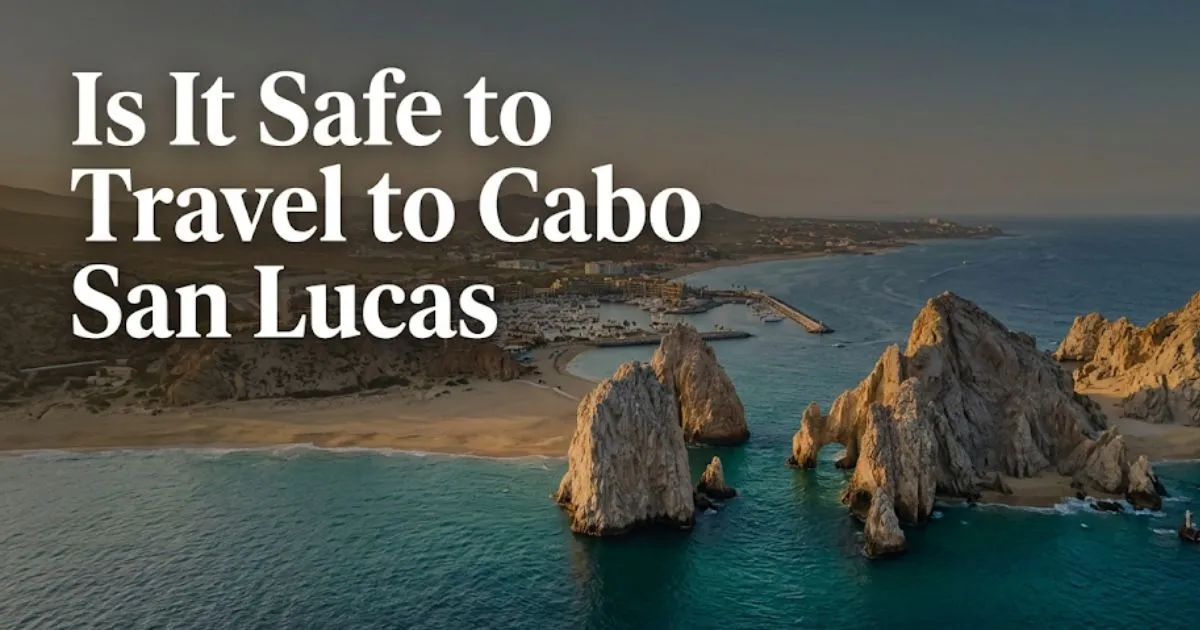
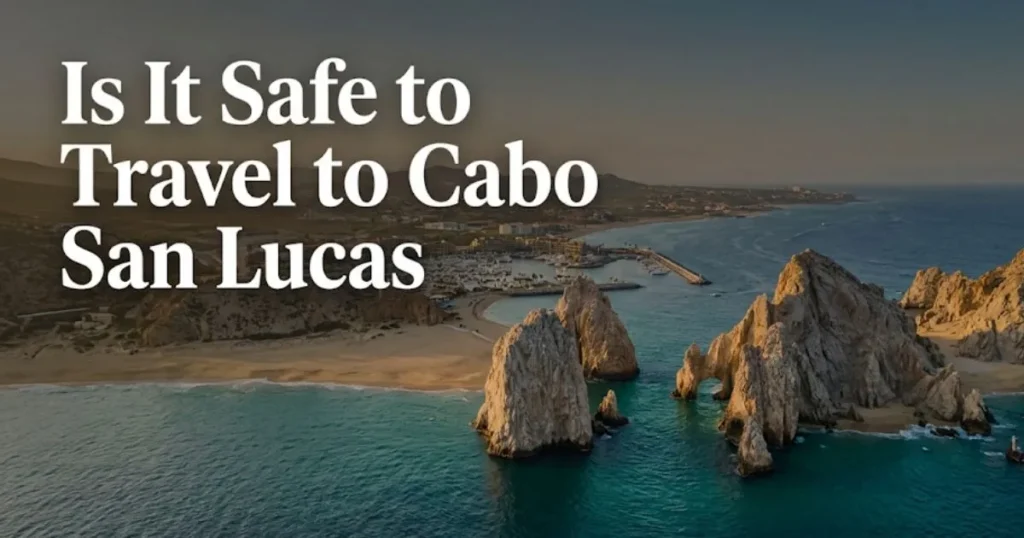
Lover’s Beach (Playa del Amor) is accessible only by water taxi from the Marina. It sits at the base of El Arco, the famous rock formation at Land’s End. The Sea of Cortez side of Lover’s Beach is generally calm for swimming. The Pacific-facing side, sometimes called “Divorce Beach” locally, has powerful rip currents and is explicitly dangerous.
According to the Los Cabos Tourism Board, the blue-flag certification at select Médano Beach zones indicates passing water quality and safety standards. Verify current certification status before your trip.
Rip current awareness is critical for Pacific-facing beaches throughout the Los Cabos area. A rip current can pull even strong swimmers into open water within seconds. If caught in one, swim parallel to shore rather than fighting it directly.
| Beach | Safe for Swimming? | Notes |
|---|---|---|
| Médano Beach (Sea of Cortez side) | Yes | Calm, shallow near shore, beach services available |
| Lover’s Beach (Sea of Cortez side) | Generally yes | Water taxi access only; confirm conditions on arrival |
| Lover’s Beach (Pacific side / Divorce Beach) | No | Dangerous rip currents; no swimming |
| Tourist Corridor resort beaches | Most yes | Varies by property; confirm with resort lifeguard |
| Open Pacific beaches outside resort zone | No without lifeguard | Strong currents throughout |
Medical Facilities and Health Safety in Cabo San Lucas
Cabo San Lucas has functioning medical facilities adequate for common travel health issues. For serious trauma or complex conditions, Hospital H+ Los Cabos in the Tourist Corridor is the destination’s most recommended private hospital for international travelers.
Hospital H+ Los Cabos has English-speaking staff and accepts international travel insurance. It handles emergency care, common illness, and standard surgical procedures. For situations requiring advanced specialty care, medical evacuation to the U.S. is the realistic option. This is exactly why travel insurance with medical evacuation coverage is not optional for Cabo travel.
Do not drink tap water in Cabo San Lucas. All reputable hotels provide purified bottled water. Use it for drinking and teeth brushing. Ice at established restaurants is generally purified. Street-cart food and beverages carry higher risk.
Sun and heat exposure is a serious health risk from June through September. Temperatures regularly exceed 95°F with high humidity. Heat exhaustion and sunburn requiring medical attention are among the most common tourist health incidents in this period.
- Purchase travel insurance with medical evacuation coverage before departure.
- Carry prescription medications in original labeled containers for Mexican customs.
- Bring reef-safe, high-SPF sunscreen. Local pharmacy options exist but selection is limited.
- Oral rehydration salts are worth carrying for heat and stomach illness prevention.
For seniors and travelers with pre-existing conditions: confirm that Hospital H+ Los Cabos can address your specific needs before travel. Your travel insurance provider can help verify coverage and facility adequacy.
Key Takeaway: Buy travel insurance with medical evacuation before leaving for Cabo. Hospital H+ Los Cabos handles standard emergencies well. For serious trauma or complex conditions, U.S.-level care means evacuation.
Transportation Safety in Cabo San Lucas
The safest transportation approach in Cabo San Lucas is pre-arranged airport transfers and registered SITIO taxis or Uber for in-town movement.
Los Cabos International Airport (SJD) arrival is the first transportation decision point. Unlicensed taxi solicitors operate in the arrivals area. The safest option is booking your hotel’s shuttle in advance or using the airport’s official licensed taxi kiosk inside the terminal. Do not accept rides from individuals approaching you in the parking structure.
SITIO taxis are Los Cabos’s registered taxi system. They use fixed zone-based fares. Ask your hotel concierge for current approximate fares before getting in. Negotiating fares before entering is standard practice. Unregistered street taxis exist; avoid them.
Uber operates in Los Cabos with variable reliability depending on the time of day and location. In the Tourist Corridor and Marina area, Uber is generally available. In more remote parts of the municipality, availability drops.
There is no public bus system serving the Tourist Corridor. The highway between Cabo San Lucas and San José del Cabo is not safe for pedestrian travel. Plan all inter-city movement by vehicle.
Insider Tip:
- The Angeles Verdes (Green Angels), Mexico’s federal highway patrol assistance service, patrols Highway 1 and can assist with vehicle breakdowns if you rent a car. Their number is worth saving before any road travel.
- Rental car driving in Mexico requires specific liability insurance purchased in Mexico. U.S. auto insurance and most credit card coverage does not apply. Verify before renting.
- For families: request a vehicle seat for children from your hotel transfer in advance. Do not assume one will be available at pickup.
Cabo San Lucas Hurricane Season and Weather Safety
Hurricane season in Cabo San Lucas runs from June through November, with the highest risk months being August through October.
Cabo’s history with tropical storms is real. Hurricane Odile in September 2014 made direct landfall near Los Cabos as a Category 3 storm, causing severe damage to resort infrastructure and stranding thousands of tourists. The destination has rebuilt fully since, but the meteorological risk of the Baja California tip during hurricane season has not changed.
According to the National Hurricane Center (NOAA), the Eastern Pacific basin generates multiple named storms annually. Baja California Sur sits in the path of storms that intensify in the Pacific warm water pools south of the peninsula.
Traveling to Cabo between August and October is not inherently reckless. Dozens of flights arrive weekly throughout this period. However, it requires acceptance of storm risk and preparation for potential trip disruption.
- Purchase travel insurance with trip interruption and cancellation coverage if traveling June through October.
- Monitor the National Hurricane Center (nhc.noaa.gov) actively during your travel window.
- Know your hotel’s hurricane evacuation plan before you need it.
- Book refundable room rates where possible during hurricane season months.
For families and seniors: the November through April window eliminates hurricane risk and brings the most comfortable temperatures. If schedule flexibility exists, this window is strongly preferable.
Key Takeaway: If your Cabo trip falls in August through October, buy trip interruption insurance and check nhc.noaa.gov starting two weeks before departure. Hurricane risk is real and has materially disrupted Los Cabos travel in the past.
How Does Cabo San Lucas Compare to Cancun and Tulum for Safety?
Cabo San Lucas and Cancun carry the same U.S. State Department Level 2 advisory and are broadly comparable in tourist-zone safety. Tulum requires more specific zone awareness.
Cancun’s Zona Hotelera (Hotel Zone) is a barrier island strip with a similar tourist-infrastructure security model to Cabo’s Tourist Corridor. Both destinations concentrate resort development in heavily managed zones separated from the broader city. Tulum’s tourist zone has expanded rapidly, and drug-related violence incidents near the Tulum Corridor have drawn attention in recent years.
According to Condé Nast Traveler’s destination safety reporting, Tulum’s rapid development has outpaced its security infrastructure in some zones. Cabo’s Tourist Corridor has a longer-established security framework.
| Destination | State Dept. Level | Tourist Zone Safety | Nightlife Risk | Ocean Swimming | Notes |
|---|---|---|---|---|---|
| Cabo San Lucas | Level 2 | High in corridor | Moderate late night | Médano safe; Pacific dangerous | Hurricane risk June-Oct |
| Cancun | Level 2 | High in Zona Hotelera | Moderate late night | Caribbean side generally calm | Spring break volume extreme |
| Tulum | Level 2 | Moderate; verify current zones | Moderate to higher | Generally calm | Verify current conditions |
| Playa del Carmen | Level 2 | Moderate to high on 5th Ave | Moderate | Caribbean, generally calm | Verify current zone specifics |
| Cozumel | Level 2 | High (island environment) | Lower risk | Excellent for diving | Isolated island dynamic |
| Puerto Vallarta | Level 2 | High in Zona Romántica and Marina | Moderate | Bay of Banderas, generally calm | Strong art/food scene alternative |
| La Paz | Level 2 | High | Low | Sea of Cortez, excellent | Quieter, more authentically Mexican |
The honest comparison: Cabo, Cancun, and Puerto Vallarta are the three most consistently well-managed tourist destination safety environments in Mexico for international travelers. Tulum and Playa del Carmen require more current-conditions verification.
Is Puerto Vallarta Safe to Travel to vs. Cabo?
Puerto Vallarta is safe to travel to and carries the same Level 2 U.S. State Department advisory as Cabo San Lucas. The two destinations suit different traveler priorities.
Puerto Vallarta’s Zona Romántica (Romantic Zone) and the Malecón boardwalk represent a more authentically Mexican urban environment than Cabo’s Tourist Corridor. The city has a functioning street grid, a walkable restaurant and gallery scene, and significantly more interaction between tourist and local life than the resort corridor model of Los Cabos.
For travelers who want a genuine Mexican city experience alongside beach access, Puerto Vallarta delivers more consistently. For travelers who want a more resort-contained, sea-sport-focused, and structured vacation environment, Cabo is the stronger choice.
Insider Tip:
- Puerto Vallarta’s Olas Altas neighborhood (south Romántica zone) offers excellent restaurant density at lower prices than Cabo’s Marina district.
- Puerto Vallarta’s Bay of Banderas provides calm, year-round swimming conditions. The Pacific exposure is more sheltered than Cabo’s southern tip.
- Seniors and mobility-limited travelers will find Puerto Vallarta’s Zona Romántica more walkable and accessible than Cabo’s terrain, which involves more beach and hillside navigation.
The local alternative pick: Puerto Vallarta’s El Pitillal neighborhood, a working-class Mexican district a short taxi ride from the Malecón, gives experienced travelers a genuinely local market and taco scene absent from the tourist strip.
Is It Safe to Travel to La Paz Mexico?
La Paz, the capital of Baja California Sur, is safe to travel to and is considered one of Mexico’s most genuinely low-risk tourist destinations for international visitors.
La Paz sits approximately 100 miles north of Cabo San Lucas on the Sea of Cortez coast. It carries the same Baja California Sur Level 2 designation as Cabo but operates with a fraction of the international tourist volume. It has a functioning city center, a walkable Malecón (waterfront promenade), and direct access to world-class marine experiences in the Sea of Cortez.
The Los Cabos Tourism Board and Baja California Sur tourism authorities jointly promote La Paz as a day-trip or extension destination from Cabo. Ferry service to Mazatlán and Topolobampo on the mainland operates from Pichilingue Ferry Terminal, north of the city center.
| Factor | Cabo San Lucas | La Paz |
|---|---|---|
| Tourist infrastructure | Extensive, resort-heavy | Moderate, city-based |
| Safety profile | High in corridor, variable downtown | Consistently high throughout |
| Nightlife | Active, can be intense | Relaxed and low-key |
| Marine experiences | Deep-sea fishing, snorkeling, whale watching | Sea lions, whale sharks, diving, kayaking |
| Authenticity | Resort-oriented | Genuinely Mexican city |
| Cost | Premium to mid-range | Mid-range to budget-friendly |
La Paz is the single best option for travelers who want genuine Baja California culture, world-class marine wildlife access (including swimming with whale sharks seasonally, from November through April), and a lower-pressure environment than Cabo. It is underused by U.S. travelers relative to its quality.
Key Takeaway: La Paz is a genuinely lower-pressure, more authentic, and equally safe Baja California alternative to Cabo San Lucas. The whale shark season in the Sea of Cortez, roughly November through April, is a legitimate world-class marine experience.
Practical Safety Tips Every Cabo San Lucas Visitor Needs
The single most practical step for safe travel to Cabo San Lucas is pre-arranging all transportation before arrival, starting with your airport transfer.
Everything else flows from that foundation. Visitors who arrive at SJD without a confirmed transfer are immediately vulnerable to unlicensed taxi solicitation in a moment of travel fatigue and unfamiliarity.
To set up your Cabo San Lucas visit for the lowest possible friction:
- Book your hotel airport transfer at the time of hotel reservation. Confirm pickup location in the terminal.
- Enroll in the U.S. State Department’s STEP program (Smart Traveler Enrollment Program) at travel.state.gov before departure.
- Save the address and phone number of Hospital H+ Los Cabos in your phone before you land.
- Save the U.S. Consulate emergency line for after-hours assistance: the Consulate General Monterrey covers Baja California Sur consular services.
- Purchase travel insurance with medical evacuation coverage before departure. This is not optional.
- Keep your hotel safe stocked with your passport (carry a photocopy instead), excess cash, and cards not needed for the day.
- Use reef-safe, high-SPF sunscreen from arrival. Tropical sun at 23 degrees north latitude is significantly more intense than at U.S. latitudes.
Additional safety fundamentals:
- Only use Médano Beach and Sea of Cortez-side beaches for swimming. Pacific-facing beaches carry rip current risk that does not change with conditions.
- Drink only purified bottled or filtered water throughout your stay.
- When booking excursions, use operators recommended by your hotel concierge rather than street-level vendors near the Marina.
For seniors: Request detailed accessibility information from your hotel before arrival. Médano Beach access involves sand terrain. The Tourist Corridor resort pools are generally accessible. Verify elevator availability in your specific accommodation.
Safety and Practical Warnings for Cabo San Lucas
Ocean currents on the Pacific side of Cabo’s cape are the single most serious physical safety risk for tourists, present year-round regardless of how calm conditions appear.
Key safety and practical facts every visitor should know:
- Never swim on the Pacific side of Land’s End. “Divorce Beach” adjacent to Lover’s Beach has strong rip currents that have caused tourist drowning incidents.
- Tap water is not safe to drink in Cabo San Lucas. Use purified bottled water for drinking and teeth brushing without exception.
- Pre-arrange all airport transfers. Do not accept rides from unlicensed drivers at SJD on arrival.
- Timeshare solicitors are aggressive near the Marina. They may offer “free tours” or “breakfast invitations.” These are sales presentations. Walking away is the only response needed.
- The nightclub district can be intense after midnight during spring break (March) and holiday weeks. Reduce valuables carried, travel in groups, and have your return transportation arranged before going out.
- Hurricane season runs June through November. August through October is peak risk. Buy trip insurance if traveling during this window.
- Heat illness is a genuine risk June through September. Stay hydrated with purified water, limit midday sun exposure, and recognize heat exhaustion symptoms (dizziness, nausea, cessation of sweating) as requiring immediate shade and hydration.
- Mexico’s emergency number is 911, the same as in the U.S. Tourist police in Los Cabos are accessible via your hotel front desk in the first instance.
The Angeles Verdes (Green Angels) highway patrol can assist with road breakdowns if you are driving. Their patrol covers major highways throughout Baja California Sur.
Frequently Asked Questions About Cabo San Lucas Safety
Is it safe to travel to Cabo San Lucas right now in 2026?
Yes, Cabo San Lucas is safe to travel to in 2026 for tourists who use the Tourist Corridor, Marina, and Médano Beach areas and pre-arrange transportation.
The destination receives millions of international visitors annually without incident.
Standard urban awareness, pre-arranged airport transfers, and avoiding the downtown nightclub area late at night during peak seasons are the most practical risk-reduction steps.
What is the U.S. State Department travel advisory level for Cabo San Lucas?
The U.S. State Department currently advises Level 2: Exercise Increased Caution for Mexico, including Baja California Sur where Cabo is located.
Baja California Sur does not carry the higher Level 3 or Level 4 designations applied to more at-risk Mexican states like Guerrero or Colima.
Verify the current advisory at travel.state.gov before your departure, as levels can change.
Is Cabo San Lucas safe for solo female travelers?
Cabo San Lucas is reasonably safe for solo female travelers in the Tourist Corridor, Marina boardwalk, and Médano Beach during daylight and early evening hours.
The downtown nightclub district after midnight during spring break and holiday peaks carries genuine risk.
Pre-arranged transportation via Uber or hotel-recommended taxis, excursions booked through hotel concierge, and avoiding isolated areas after midnight are the most effective risk-reduction practices.
What parts of Cabo San Lucas should tourists avoid?
Tourists should avoid residential neighborhoods beyond the tourist core, unlicensed taxi rides from any location, and the Pacific-facing beaches for swimming.
The downtown nightclub area after midnight during high season (March spring break and December through January holidays) warrants increased caution.
No specific street or neighborhood is universally off-limits; context and time of day matter more than location alone.
Is the water safe to drink in Cabo San Lucas?
No. Tap water in Cabo San Lucas is not safe to drink for international visitors.
Use purified bottled water for all drinking and teeth brushing throughout your stay.
Ice at established restaurants and resorts is generally made from purified water, but when in doubt about ice at street-level vendors, skip it.
How does Cabo San Lucas compare to Cancun for safety?
Cabo San Lucas and Cancun carry the same U.S. State Department Level 2 advisory and are broadly comparable in tourist-zone safety for international visitors.
Both destinations concentrate their resort infrastructure in heavily managed zones with consistent security presence.
Cancun’s hotel zone is longer-established and more resort-dense; Cabo’s Tourist Corridor is smaller in scale but similarly managed and patrol-consistent.
Plan Your Trip with Confidence
Cabo San Lucas delivers on its reputation as Mexico’s most commercially developed Pacific resort destination. It is not risk-free. No destination is. But the practical safety picture for tourists in the Tourist Corridor, Marina, and Médano Beach area is consistently manageable for travelers who apply standard urban travel awareness.
Book your airport transfer before landing. Pre-arrange at least your first night’s transportation. Know that Médano Beach is your swimming beach, and the Pacific side is not for swimming under any conditions.
Travel conditions, advisory levels, medical facility capabilities, and entry requirements change. Verify current U.S. State Department advisory status at travel.state.gov, check current health guidance at the CDC traveler health portal, and confirm key hotel and transportation logistics directly before departure. The traveler who does these three things before arrival will spend their entire Cabo trip focused on the marlin, the mezcal, and the view from El Arco instead of navigating preventable complications.