West Virginia Places to Visit: Top Destinations 2026

West Virginia places to visit range from a genuine national park at the bottom of a 1,000-foot gorge to a Swiss village in Randolph County that most Mid-Atlantic travelers have never heard of.
The state gained its 64th national park designation in 2020, when New River Gorge became America’s newest national park. That upgrade brought significantly more visitors and made advance planning essential.
This guide covers 17 specific destinations and experiences across the Mountain State. You will finish knowing exactly which places match your travel style, when to go, and what to book before you leave.
Best Places to Visit in West Virginia
The best places to visit in West Virginia include New River Gorge National Park, Harpers Ferry, Lewisburg, Blackwater Falls State Park, Seneca Rocks, and Snowshoe Mountain Resort.
These six destinations represent the state’s full range. You get a national park, a Civil War history site, a genuine arts town, two signature outdoor experiences, and a mountain resort.
According to the West Virginia Division of Tourism, the state hosts over 38 million visitors annually. That volume has made advance reservations essential at top destinations.
The state’s strongest selling point is price-to-experience ratio. You get Appalachian terrain on par with North Carolina’s Blue Ridge at significantly lower costs.
| Destination | Best For | Cost Tier | Peak Season | Insider Note |
|---|---|---|---|---|
| New River Gorge NP | Adventure travelers, couples | Low to mid | Summer, Fall | Canyon floor beats rim views |
| Harpers Ferry | History buffs, couples | Low | Spring, Fall | Skip Sunday crowds; go weekday |
| Lewisburg | Couples, culture seekers | Mid | Year-round | Carnegie Hall hosts major acts |
| Blackwater Falls | Families, photographers | Low | Fall, Summer | Lodge rooms book out months ahead |
| Seneca Rocks | Climbers, hikers | Free to low | Spring, Fall | Discovery Center is genuinely useful |
| Snowshoe Mountain | Winter sports, families | Mid to premium | Winter, Summer | Book lodging 60-plus days ahead |
| The Greenbrier | Luxury couples, celebrations | Premium | Year-round | Day spa access without room stay |
| Canaan Valley | Families, seniors | Low to mid | All four seasons | Least crowded in early May |
Most first-time visitors try to see too much in one trip. Choose two or three destinations based on your profile and go deeper rather than wider.
Families should prioritize Blackwater Falls and Canaan Valley. Solo adventure travelers belong at New River Gorge and Seneca Rocks. Couples get the most from Lewisburg paired with The Greenbrier or Harpers Ferry.
West Virginia Places to Visit by Traveler Type
The right West Virginia destination depends almost entirely on your traveler profile, not just on the state’s most-mentioned attractions.
Solo adventure travelers should anchor their trip at New River Gorge. The park has a strong social scene at outfitter basecamp areas, reliable trail difficulty ratings, and solo-friendly camping infrastructure at Grandview Campground.
Couples get the most atmospheric experience in Lewisburg or at Harpers Ferry. Both towns have walkable historic districts, good restaurants within the town center, and lodging options that feel genuinely intimate rather than resort-impersonal.
Families with children under age 10 should skip whitewater rafting trips and focus on Blackwater Falls State Park and Canaan Valley Resort State Park. Both have paved accessible paths, lodge restaurants, and age-appropriate nature programming.
Budget travelers can visit most of West Virginia’s top outdoor destinations for the cost of gas and a campsite. The America the Beautiful Annual Pass covers entry to both New River Gorge and Harpers Ferry National Historical Park.
Seniors and travelers with mobility considerations will find the most accessible experiences at Harpers Ferry’s lower town (flat terrain, paved paths), Blackwater Falls’ primary overlook boardwalk, and The Greenbrier’s resort grounds. Seneca Rocks and New River Gorge canyon trails involve significant elevation changes.
| Traveler Profile | Top Pick | Secondary Pick | Avoid |
|---|---|---|---|
| Solo adventure | New River Gorge | Seneca Rocks | The Greenbrier (not suited) |
| Couples | Lewisburg + Greenbrier | Harpers Ferry | Snowshoe in peak ski season |
| Families (young kids) | Blackwater Falls | Canaan Valley | Class IV-V rafting trips |
| Budget travelers | New River Gorge camping | Harpers Ferry | Snowshoe resort lodging |
| Seniors | Harpers Ferry lower town | Blackwater Falls overlook | Seneca Rocks summit trail |
New River Gorge National Park
New River Gorge National Park and Preserve is the single most important destination among all West Virginia places to visit, covering over 70,000 acres in Fayette County.
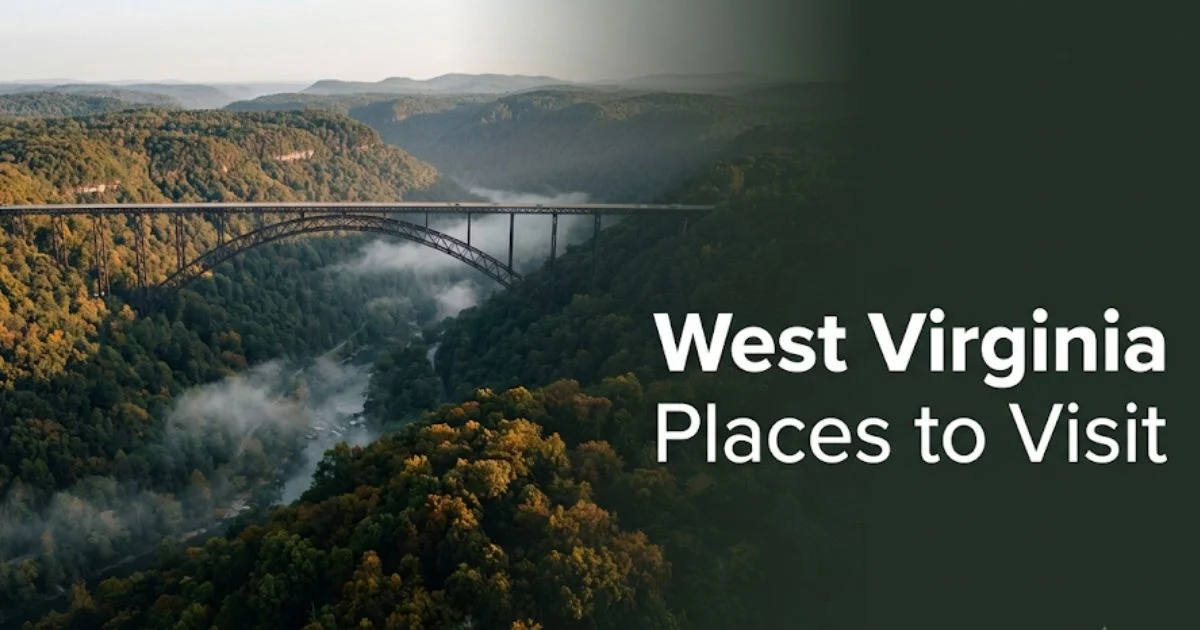
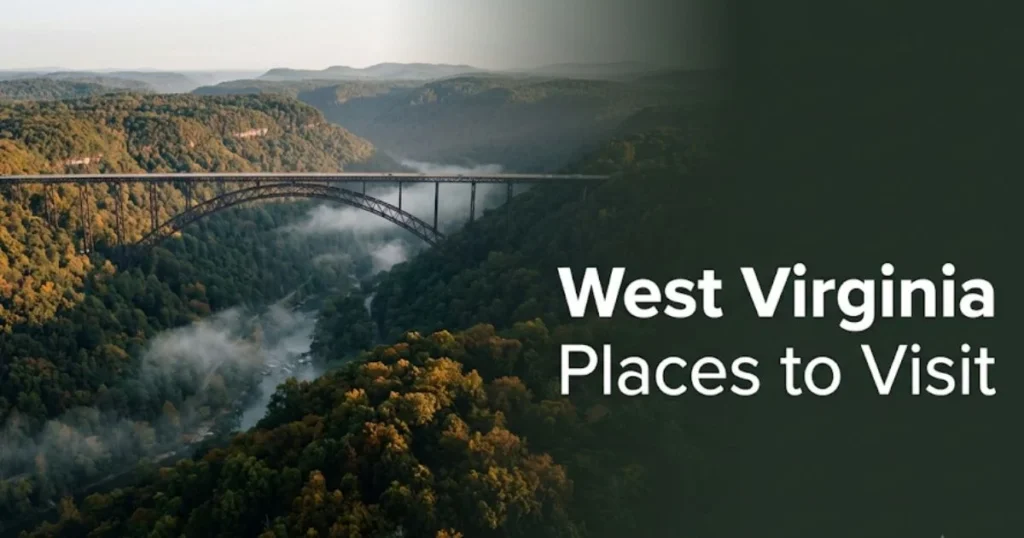
Most visitors make the mistake of only driving the rim. The real New River Gorge experience is on the canyon floor, where the river runs through Class III to Class V whitewater and the 3,030-foot steel arch bridge overhead creates one of the most dramatic visual perspectives in the eastern United States.
The park has four visitor centers: Canyon Rim, Grandview, Sandstone, and Thurmond. Canyon Rim Visitor Center, off US Route 19 near Fayetteville, is the most accessible starting point.
No timed-entry permit is currently required to enter the park, but campground reservations at Grandview Campground and Burnwood Campground require advance booking through Recreation.gov. Reserve at least 4 to 6 weeks ahead in summer and October.
Adventure travelers should budget a full day minimum per activity type. One day for a guided rafting trip (half-day or full-day), a separate day for the Long Point Trail (3.2 miles round-trip to the best unobstructed bridge view), and time for the Endless Wall Trail along the rim.
Families need to know that the popular Lower New section of the river (Class III) is appropriate for children ages 7 and up with most outfitters. The Upper New section is calmer and accepts younger children at some operators.
Insider Tip:
- The Fayetteville town square, a 5-minute drive from Canyon Rim, has better food options than any park concession. Try Cathedral Cafe and Bookstore for a genuine local meal.
- The Bridge Day festival, held every third Saturday in October, closes the bridge to vehicle traffic and allows rappelling and BASE jumping from the bridge deck. It is the single largest one-day festival in West Virginia. Book accommodation 2 to 3 months ahead for Bridge Day weekend.
- Budget travelers: The America the Beautiful Annual Pass, available for approximately $80 per vehicle per year, eliminates any entrance fee and pays for itself in 2 visits to fee-charging areas.
The local alternative to the packed Canyon Rim overlook is the Grandview area in the park’s northern section. Grandview has its own dramatic rim view, far fewer visitors, and the Turkey Spur Rock overlook trail (1.5 miles round-trip) with canyon views that rival anything on the main tourist circuit.
Harpers Ferry West Virginia
Harpers Ferry National Historical Park sits at the confluence of the Shenandoah and Potomac Rivers, where West Virginia, Virginia, and Maryland meet.
The town is one of the most genuinely layered historical destinations in the entire Mid-Atlantic region. It was the site of John Brown’s 1859 raid on the federal armory, a Civil War strategic flashpoint, and the location of one of the oldest Black colleges in the country at Storer College.
Most visitors walk the lower town’s historic district and leave. That covers about 30% of what the park actually offers.
The upper sections of the park connect to the Appalachian Trail and the C&O Canal Towpath. The Maryland Heights Trail (4.4 miles round-trip) climbs from the riverbank to a Civil War fortification with views directly down into the confluence below.
Couples find Harpers Ferry particularly well-suited to a weekend stay. The lower town has independent restaurants and a genuinely atmospheric quality at dusk when day-trippers leave.
Families should know that the lower town’s cobblestone streets and uneven historic footpaths are challenging with strollers. Older children who can walk independently will get much more from the experience.
Parking is limited in the lower town. The park’s Cavalier Heights parking area and shuttle system is the correct approach. Do not attempt to drive directly into the lower town on weekends.
Fall and spring are the best seasons. Summer humidity is considerable and crowds peak in July and August. Winter offers dramatic views of the bare tree lines over the confluence but reduced visitor center hours.
According to Harpers Ferry National Historical Park’s official site, the park receives over 400,000 visitors annually. The majority arrive on weekends between June and October.
The overrated choice here is the John Brown Wax Museum. Skip it. The park’s own museum in the lower town engine house area provides a more historically accurate and far better-interpreted account of the raid.
Key Takeaway: Book rafting and campgrounds at New River Gorge at least 4 to 6 weeks ahead. Harpers Ferry is best on a weekday when day-trippers haven’t arrived.
West Virginia Outdoor Adventures
West Virginia’s outdoor adventure portfolio is the broadest of any state its size east of the Mississippi River.
The state offers whitewater rafting from Class I to Class V, rock climbing at Seneca Rocks and New River Gorge, mountain biking on over 600 miles of dedicated trail, zip lining at multiple commercial operations, skiing and snowboarding at two major resorts, and hiking across more than two dozen state and national parks.
ACE Adventure Resort near Oak Hill and Adventures on the Gorge near Lansing are the two largest full-service outdoor adventure operators in the state. Both offer multi-day packages that bundle rafting, climbing, and lodging.
For mountain biking, the trails at Snowshoe Mountain and Canaan Valley Resort are the best-developed networks in the state. The Chestnut Trail System at Canaan Valley has over 30 miles of singletrack suited to intermediate riders.
Solo travelers should know that guided group trips are the norm at most WV adventure outfitters. You will join a group regardless of party size, which makes the experience genuinely social.
Seniors and travelers with physical limitations can still access meaningful adventure experiences. Zip line tours at operators like Opossum Creek Retreat have weight limits but few other physical restrictions, and float trips on the calmer Upper New River section require minimal physical fitness.
- Whitewater rafting: Reserve at least 2 to 4 weeks ahead in summer, 4 to 6 weeks for Gauley Season
- Rock climbing: Seneca Rocks has guided instruction through Seneca Rocks Climbing School; no permit needed for day use
- Mountain biking: Trail maps available through the West Virginia Division of Natural Resources
- Zip lining: Multiple commercial operations near Fayetteville and Belington require advance booking in summer
The honest note: zip lining in West Virginia is a genuine experience set over actual gorge terrain, not a manufactured tourist course. The aerial views from above the New River canyon are the real thing.
Seneca Rocks West Virginia
Seneca Rocks is a 900-foot-tall quartzite monolith rising from the Seneca Creek valley in Pendleton County, and it is the most dramatic natural geological formation east of the Mississippi River.
Most visitors photograph it from Route 33 and leave. That is the tourism board version of this experience.
The Seneca Rocks Discovery Center, operated by the US Forest Service, provides free trail maps and geological context that significantly improves the hiking experience. The summit trail (1.3 miles one-way, 875-foot elevation gain) reaches a wooden observation platform with views across the Potomac Highlands.
Plan 2 to 3 hours for the hike round-trip. The trail is rated strenuous. Hiking poles help considerably on the descent. Wear proper footwear; the quartzite surface is slippery after rain.
Rock climbers consider Seneca Rocks one of the finest trad climbing destinations in the eastern United States. The Seneca Rocks Climbing School offers instruction for beginners through advanced climbers and rents gear on-site. Reserve instruction sessions at least a week ahead in peak season.
Families with young children should treat Seneca Rocks as a viewpoint and picnic destination rather than a hiking goal. The steep elevation gain makes the summit trail inappropriate for children under age 8.
Spring (April through May) and fall (September through October) are the best seasons. Summer heat on the exposed quartzite is intense. Winter hiking is possible but ice on the trail surface creates genuine hazard.
Insider Tip:
- The Harper’s Old Country Store in Mouth of Seneca has operated for over a century. It stocks basic hiking provisions and local history context that no chain retailer can replicate.
- The drive along Route 33 between Elkins and Seneca Rocks (the Seneca Rocks Scenic Byway) rivals the summit view for overall experience quality.
Blackwater Falls State Park
Blackwater Falls State Park contains one of the most photographed waterfalls in the eastern United States, where the Blackwater River drops 62 feet over a series of sandstone ledges in Tucker County.
The amber color of the water comes from tannic acid released by fallen hemlock and red spruce needles upstream. It is one of the few places in the country where you can observe this natural phenomenon at scale.
Access to the main falls overlook is via a paved boardwalk with 216 steps to the canyon floor. The steps make this moderately physically demanding.
Seniors and visitors with mobility considerations should note that the main overlook platform at the top of the stairs provides a genuine, clear view of the falls without descending. An accessible path leads to this upper viewpoint.
The park’s Blackwater Falls Lodge is a state-owned facility with rooms, a restaurant, and conference space. It books out weeks to months ahead during fall foliage season and summer weekends. Reserve through the West Virginia State Parks reservation system at wvstateparks.com.
Fall is the peak season for a specific reason. The surrounding spruce-fir forest turns gold and red between late September and mid-October, framing the amber waterfall in layers of color that photographers plan entire trips around.
Families will find the park’s year-round programming genuinely good. The park offers cross-country ski and sled rental in winter, a swimming beach at Pendleton Lake in summer, and naturalist programs throughout the warmer months.
The local alternative to the main falls: Elakala Falls, a 15-minute walk from the main parking area, is a series of smaller cascades in a hemlock-draped slot canyon. Most visitors walk past the trailhead without stopping. It is a more intimate experience than the main falls and almost always less crowded.
Key Takeaway: Blackwater Falls Lodge books out during fall foliage season. Reserve your room by August at the latest for an October visit.
Lewisburg West Virginia
Lewisburg is the most genuinely underestimated town among all West Virginia places to visit, with a walkable historic district, a functioning arts scene anchored by Carnegie Hall, and restaurant quality that outpaces its profile in most travel guides.
The town’s Carnegie Hall is not a metaphor. It is an actual 1902 Carnegie-funded performing arts venue in the heart of downtown Lewisburg, hosting national touring acts, symphony performances, and film screenings year-round.
Lost World Caverns, located a mile and a half from downtown, is a legitimate geological attraction with guided tours through a cave system that houses one of the largest cave bacon formations in the eastern US.
Couples will find Lewisburg the best base for a romantic long weekend in the state. The mix of independent restaurants on Washington Street, the Carnegie Hall events calendar, and the proximity to The Greenbrier (12 miles away) gives the town a combination of authenticity and access to luxury that few Appalachian towns can match.
The food scene on Washington Street deserves honest credit. The Wild Bean is a consistent local coffee and lunch option. Ironhorse Tavern handles dinner with a menu sourced partially from regional producers. Both are actual local businesses, not franchise operations.
Budget travelers should know that Lewisburg’s downtown is entirely walkable and free to explore. The Carnegie Hall calendar includes free events alongside ticketed performances.
The town’s Greenbrier Valley Farmers Market, operating on Saturday mornings in season (spring through fall), is where local producers sell directly. It is a genuinely useful starting point for a picnic supply run before heading into the national forest.
The overrated experience in the Lewisburg area: The Greenbrier resort is extraordinary, but a two-night stay at full room rates is not the only way to experience it. Day spa access and the resort’s grounds tour are accessible at a fraction of the overnight cost. Verify current day-pass pricing directly with the resort before visiting.
Snowshoe Mountain West Virginia
Snowshoe Mountain Resort in Pocahontas County is the state’s largest ski and snowboard destination, operating at an elevation of 4,848 feet with 60-plus trails, multiple terrain parks, and a genuine mountain village atmosphere.
In 2026, Snowshoe is part of the Alterra Mountain Company’s portfolio, which means the Ikon Pass covers access. If you already hold an Ikon Pass for Western mountain skiing, West Virginia riding is included.
The resort operates year-round. Summer programming includes mountain biking on purpose-built downhill trails, a water park at the village base, and guided hiking. The mountain biking network is one of the best in the state.
Families will find Snowshoe’s infrastructure well-suited to multi-age groups. Ski school programming begins at age 4. The resort’s village base area has lodging, dining, and equipment rental within a short walk of each other.
Solo travelers and groups should know that lodging at the mountain base books out quickly for holiday weekends and peak winter weeks. Reserve at least 60 days ahead for Presidents’ Week (February), Martin Luther King Jr. weekend, and spring break windows.
Snow quality at Snowshoe is genuine but variable. The resort has strong snowmaking infrastructure. Natural snow accumulation averages 180 inches per season, but that varies year to year.
The honest limitation: Snowshoe’s village dining and apres-ski scene is serviceable, not spectacular. Serious diners will do better eating in Marlinton (28 miles away) or planning meals at a resort condo with kitchen facilities.
Insider Tip:
- The Soaring Eagle Zip Line at Snowshoe operates spring through fall and provides a clear aerial view of the Cheat Mountain valley. Book it separately from lift tickets.
- Midweek lodging rates in winter can run 30 to 40% below weekend rates. If your schedule is flexible, Tuesday through Thursday offers the same mountain with significantly less company.
Wheeling West Virginia Things to Do
Wheeling is the most historically layered city in West Virginia, sitting on a bend of the Ohio River near the Pennsylvania and Ohio borders.
The city was the state’s original capital and a major Civil War-era industrial center. That history is visible in the architecture of Centre Market, the state’s oldest continuously operating market building, and in the Wheeling Heritage Trail along the Ohio riverbank.
Oglebay Resort is Wheeling’s most significant attraction, a 1,700-acre municipal resort with a working farm, multiple golf courses, a glass museum, a zoo, and the Good Zoo at Oglebay, which is specifically well-suited to families with young children.
Families with children ages 3 to 10 should put Oglebay near the top of their northern West Virginia itinerary. The Good Zoo is legitimately engaging for young children, and the resort’s grounds are navigable with strollers.
The Wheeling Island Hotel and Racetrack Casino draws a specific crowd. It is a functioning casino and hotel with greyhound racing. This is not a family attraction, but it does add a nightlife dimension to the city that most other WV destinations cannot match.
The West Virginia Independence Hall (formerly the Custom House) is the single most historically significant building in Wheeling. It was where West Virginia voted to separate from Confederate Virginia in 1861. The museum is free to enter and requires about 45 minutes.
Budget travelers will find Wheeling’s Centre Market area walkable and free to explore. The covered market building houses local vendors selling food, art, and crafts. Parking in downtown Wheeling is generally easy and inexpensive compared to Mid-Atlantic city standards.
The scenic drive from Wheeling south on Route 2 along the Ohio River to New Martinsville takes approximately 90 minutes and passes through river towns that see almost no tourist traffic. This is the opposite of the standard tourist circuit.
Key Takeaway: Oglebay Resort in Wheeling is a legitimate full-day family destination. Book the Good Zoo and allow half a day minimum for the resort grounds.
Canaan Valley West Virginia
Canaan Valley (pronounced “kuh-NANE” by locals, not “KAY-nan”) sits at 3,200 feet in Tucker County, making it the highest valley of its size east of the Rocky Mountains.
The valley holds both a Canaan Valley Resort State Park and the Canaan Valley National Wildlife Refuge, which is the largest freshwater wetland complex in the southern Appalachians. That combination of state resort infrastructure and federal wildlife protection makes this one of the most ecologically distinctive places in the eastern US.
Canaan Valley Resort State Park offers year-round lodging, indoor pools, skiing and tubing in winter, mountain biking and hiking in summer, and the 18-hole Stonewall Jackson Golf Course. State park resort rates run considerably below comparable private resort pricing.
Wildlife viewing at the National Wildlife Refuge is a legitimate attraction in itself. White-tailed deer, black bears, beavers, and over 100 bird species use the valley. The Big Stonecoal Trail runs through refuge wetlands and is accessible to most fitness levels.
Seniors will find Canaan Valley more physically accessible than most West Virginia outdoor destinations. The valley floor terrain is relatively flat, and the refuge boardwalk sections are navigable without significant elevation change.
Families benefit from the resort’s bundled programming. The ski area has a dedicated learning area for beginners and a tubing hill that operates separately from the main ski area.
The summer experience in Canaan Valley is underrepresented in most travel guides. The valley runs 10 to 15 degrees cooler than the surrounding lowlands in July and August, making it a genuine escape from Mid-Atlantic summer heat.
Insider Tip:
- Early May in Canaan Valley is almost entirely tourist-free. The wildflower blooms across the wetland areas are at their most vivid, and lodging rates are at seasonal lows.
- The Blackwater Canyon Trail connects Canaan Valley to Blackwater Falls State Park via rail trail. The full trail is 10 miles one-way. Even a partial out-and-back walk rewards with canyon views.
Best Scenic Drives in West Virginia
The Highland Scenic Highway (West Virginia Route 150) is the single best scenic drive in the state, running 43 miles through the Monongahela National Forest at elevations between 3,400 and 4,500 feet.
This drive passes through open meadows, spruce-fir forest, and high bogs. In fall, the color contrast between the red spruce canopy and the deciduous hardwoods below is unlike anything on the Virginia Blue Ridge Parkway.
US Route 219 from Lewisburg north to Elkins (approximately 90 miles) follows the Greenbrier River valley through a sequence of towns that read like a West Virginia time capsule. This route passes through Marlinton, Hillsboro, and Durbin, each with local character that rewards slow travel.
Couples and photographers should time Route 219 drives for late September through mid-October. The Greenbrier River valley’s hardwood forests turn in a concentrated band of color that runs for miles in each direction from the roadside.
Corridor H (US Route 48) from Weston to Moorefield is the state’s most modern highway through mountain terrain. It is faster than Route 219 but less scenic. Use it for transport; use Route 219 for the experience.
Families should know that the Highland Scenic Highway has no gas stations and limited facilities for its full length. Fill up before entering and pack provisions.
The most common mistake on the Highland Scenic Highway: driving it in one direction only. The views shift completely depending on your direction of travel. If your schedule allows, drive it both ways on the same trip.
Safety note: Mountain road surfaces in West Virginia can deteriorate rapidly after winter freeze-thaw cycles. Check road conditions through the West Virginia Division of Highways before driving Route 150 or Route 219 in March or April.
According to the West Virginia Division of Tourism, the Highland Scenic Highway is officially designated as one of the state’s top driving experiences. The agency recommends a full day to drive it at a pace that allows stops at the Cranberry Glades boardwalk overlook.
West Virginia Whitewater Rafting
West Virginia whitewater rafting is centered on three rivers: the New River, the Gauley River, and the Cheat River, each offering a distinct difficulty range and experience type.
The Lower New River (Class III-IV) is the most visited section and suits intermediate rafters and beginners who want genuine rapids without extreme risk. The Upper Gauley River (Class IV-V) is one of the top 10 whitewater runs in North America by most outdoor publication assessments.
Gauley Season runs from early September through mid-October, when the Army Corps of Engineers releases water from Summersville Dam. This controlled release doubles the river’s volume and intensifies the rapids significantly. Gauley Season weekend trips require reservations at least 4 to 6 weeks ahead.
Solo travelers joining commercial trips will share rafts with other parties. Group dynamics are part of the experience. Most major outfitters run trips daily throughout the season and match mixed-party groups on the water.
Families with children should specifically ask about minimum age requirements when booking. Most outfitters set a minimum age of 7 to 12 depending on the river section. Verify before booking.
To book a West Virginia rafting trip correctly:
- Identify your experience level honestly (beginner, intermediate, advanced)
- Select a river section that matches that level (Upper New for beginners, Lower New for intermediate, Gauley for advanced)
- Choose a licensed outfitter: ACE Adventure Resort, Adventures on the Gorge, Cantrell Ultimate Rafting, or Rivers outfitters are all state-licensed operations
- Book at least 2 to 4 weeks ahead in summer; 4 to 6 weeks for Gauley Season
- Pack a wetsuit or ask the outfitter about rental wetsuits for trips before June and after September when water temperatures drop
The overrated option is booking through third-party deal sites that aggregate outfitter availability. You pay more, communication is slower, and trip customization is impossible. Book directly with the outfitter.
Key Takeaway: Gauley River trips require 4 to 6 weeks advance booking minimum. Book directly with a licensed outfitter, not through a deal aggregator.
Best Time to Visit West Virginia
The best time to visit West Virginia is late September through mid-October for fall foliage and outdoor activities, or late April through early June for spring whitewater rafting and uncrowded trails.
Fall delivers the state’s signature visual experience. The Allegheny Highland’s hardwood forests turn between September 25 and October 20 at most elevations, with peak color typically landing in the first two weeks of October at gorge and valley elevations.
Summer (July and August) is the busiest and most expensive period at New River Gorge, Snowshoe Mountain’s summer programming, and state park campgrounds. Expect higher lodging rates, campsite competition, and afternoon thunderstorms.
Families traveling during school summer break should make campground and lodge reservations through Recreation.gov and wvstateparks.com at least 6 to 8 weeks ahead for July and August dates.
Winter is genuinely worthwhile for Snowshoe Mountain and Canaan Valley Resort skiing, but large sections of the state’s outdoor experience (Seneca Rocks summit trail, Highland Scenic Highway in deep winter, some state park facilities) close or operate at reduced capacity.
| Season | Best For | Crowd Level | Notes |
|---|---|---|---|
| Spring (Apr-May) | Whitewater rafting, wildflowers | Low to moderate | Book Gauley trips early; trails can be muddy |
| Summer (Jun-Aug) | Families, full park access | High | Reserve campgrounds 6-8 weeks ahead |
| Fall (Sep-Oct) | Foliage, Bridge Day, rafting | Very high in October | October weekends book out 2-3 months ahead |
| Winter (Nov-Mar) | Skiing, quiet travel | Low to moderate | Some facilities close; road conditions variable |
The worst time to visit most outdoor West Virginia destinations is the third weekend of October, specifically, Bridge Day weekend at New River Gorge. It is spectacular but logistically challenging. Accommodation within 30 miles books out 2 months ahead. If you want the festival, plan and reserve early. If you want the gorge without the crowd, go any other October weekend.
West Virginia Road Trip Stops
A West Virginia road trip from the DC area can be structured in 3 days while hitting the state’s four strongest destinations.
The state’s geography runs roughly northeast to southwest, which means the most logical road trip follows that axis. Start in the Eastern Panhandle at Harpers Ferry, drive south through the Greenbrier Valley to Lewisburg, then west to New River Gorge.
3-Day West Virginia Weekend Road Trip Framework:
Day 1: Harpers Ferry and Eastern Panhandle
- Arrive at Harpers Ferry by mid-morning; use the Cavalier Heights parking area and shuttle to the lower town
- Walk the lower historic district (2 hours); visit the John Brown Fort and the park museum
- Drive the Maryland Heights Trail for the river confluence view (adds 2 to 3 hours, strenuous)
- Drive south on US Route 340 to US Route 522 south toward Charles Town for the night
Day 2: Lewisburg and the Greenbrier Valley
- Drive south on Interstate 64 to Lewisburg (approximately 2.5 hours from Charles Town)
- Walk Washington Street’s historic district; stop at Carnegie Hall for the events calendar
- Visit Lost World Caverns (allow 1 hour for the guided tour)
- Drive to The Greenbrier grounds for dinner or the spa experience if budget allows; otherwise dine on Washington Street in Lewisburg
- Stay in Lewisburg proper for the most affordable and authentic base
Day 3: New River Gorge
- Drive northwest from Lewisburg to New River Gorge National Park (approximately 45 minutes)
- Start at Canyon Rim Visitor Center on Route 19 for orientation and trail maps
- Hike the Long Point Trail (3.2 miles round-trip; the bridge view from the canyon rim)
- Drive down into the gorge via Fayette Station Road for the canyon floor perspective
- Stop at Fayetteville for a meal at Cathedral Cafe and Bookstore before heading home
Driving the reverse direction (New River Gorge to Harpers Ferry) works equally well. Neither direction has a significant logistical advantage.
Budget travelers can complete this 3-day road trip affordably. Gas, campsite fees at Grandview Campground, and free park entry with an America the Beautiful Pass keeps lodging costs minimal.
Fun Places to Visit in West Virginia for Families
The most genuinely fun places to visit in West Virginia for families are Blackwater Falls State Park, Canaan Valley Resort State Park, Oglebay Resort in Wheeling, and Babcock State Park.
These four offer the combination that families actually need: structured programming, age-appropriate activities, on-site lodging with dining, and enough variety to keep a multi-age group engaged for a full weekend.
Babcock State Park in Fayette County deserves specific mention. The Glade Creek Grist Mill is the most photographed structure in West Virginia, a working 1976 reconstruction of a 19th-century grist mill on a boulder-strewn creek. The mill operates in season and the surrounding park has fishing, hiking, and rental cabins.
Families with teenagers should prioritize New River Gorge’s adventure programming. The park has zip lining, via ferrata courses (a protected climbing route with fixed cables and iron rungs), and beginner rock climbing instruction through licensed outfitters. Most programs require a minimum age of 10 to 12.
The Cass Scenic Railroad in Pocahontas County runs restored geared steam locomotives up Cheat Mountain on tracks originally built for the timber industry. The round-trip excursion to the top takes 3 to 4 hours. Children under 12 find this experience genuinely engaging, not just historically educational.
Insider Tip:
- Blackwater Falls State Park’s sled hill operates in winter on a designated groomed slope near the lodge. Sled rental is available on-site. This is a family experience almost no national travel guide mentions.
- The park’s naturalist programs (typically free with park admission) include guided night hikes and star-gazing events. These are booked through the lodge and fill quickly on summer weekends.
- Seniors accompanying families will find the Glade Creek Grist Mill area at Babcock State Park accessible from the parking area via a relatively short flat path, making it one of the most multigenerational stops in the state.
Key Takeaway: Babcock State Park’s Glade Creek Grist Mill is a 20-minute drive from New River Gorge and works perfectly as a family add-on stop that most road trip itineraries miss.
West Virginia Budget Travel Tips
West Virginia is one of the most affordable outdoor travel destinations in the eastern United States, with most of its best experiences accessible for the cost of gas and a campground reservation.
The America the Beautiful Annual Pass (approximately $80 per vehicle, verify current pricing at nps.gov) covers entry to New River Gorge National Park and Preserve, Harpers Ferry National Historical Park, and Gauley River National Recreation Area. If you visit two of these in one trip, the pass pays for itself.
Free and low-cost West Virginia experiences by category:
- Hiking: All trails in Monongahela National Forest are free. Spruce Knob, Dolly Sods Wilderness, and Cranberry Glades require no permit and no fee.
- Waterfalls: Blackwater Falls and Lindy Point overlooks are free. The state park charges for camping and lodging, not day-use trail access.
- History: West Virginia Independence Hall in Wheeling and the grounds of Harpers Ferry’s lower town are free to access. Museum buildings inside the parks may have small fees; verify before visiting.
- Scenic drives: Highland Scenic Highway, Route 219, and Route 2 along the Ohio River cost nothing beyond gas.
- Local markets: Lewisburg Farmers Market, Wheeling’s Centre Market, and Elkins’ Saturday market are free to browse.
Budget travelers should focus lodging on three low-cost categories: dispersed camping in Monongahela National Forest (free with standard Leave No Trace protocols), developed state park campsites (typically $20 to $30 per night, verify current rates), and the state park lodge rooms at Blackwater Falls or Canaan Valley, which run significantly below comparable private lodge pricing.
The single biggest budget mistake in West Virginia: paying full walk-up price for gear rental at popular outfitter operations. Reserve gear alongside your activity booking to guarantee availability and avoid same-day premium pricing.
Safety and Practical Warnings for West Virginia Travel
Mountain terrain and remote wilderness conditions create genuine safety considerations for West Virginia visitors that other travel content routinely underemphasizes.
Key safety and practical facts every visitor should know:
- Cell service is limited or absent in much of Monongahela National Forest, Dolly Sods Wilderness, and backcountry sections of New River Gorge. Download offline maps via Google Maps or Gaia GPS before leaving your last reliable signal point.
- Black bears are present throughout the state’s forests. Store food in bear canisters or hang bags at least 10 feet high and 4 feet from the tree trunk. Never leave food in an unattended vehicle.
- Mountain roads deteriorate after winter freeze-thaw cycles. Route 150 (Highland Scenic Highway) and sections of Route 219 can have significant pothole damage in March and April. Check the West Virginia Division of Highways site before driving.
- Whitewater rafting hazard levels change with water releases. The Gauley River’s Class V difficulty is directly tied to Summersville Dam release schedules. Verify current release status with your outfitter before any Gauley River trip.
- Altitude at Spruce Knob (4,863 feet) and Dolly Sods (approximately 4,000 feet) can cause mild altitude adjustment symptoms for visitors from sea-level states. Hydrate and pace yourself on first-day hikes.
- Afternoon thunderstorms are common at high elevation in July and August. Start exposed summit hikes by 7 to 8 a.m. and descend before early afternoon.
- Seneca Rocks trail surfaces become extremely slippery when wet. Quartzite has almost no grip when rained on. Do not attempt the summit trail during or immediately after rain.
For National Park Service emergencies within New River Gorge, contact the park dispatch line. For general emergencies, dial 911, noting that cell service may require moving to higher ground for signal.
Frequently Asked Questions About West Virginia Places to Visit
What is the best place to visit in West Virginia for first-timers?
New River Gorge National Park is the single best starting point for first-time visitors to West Virginia.
The park offers hiking, whitewater rafting, rock climbing, and scenic drives within one destination, making it the most efficient way to experience the state’s outdoor character.
Pair it with an overnight in Fayetteville for dining and local context that the park itself cannot provide.
Is West Virginia worth visiting for a weekend trip?
West Virginia is genuinely worth a weekend trip from any city within a 5-hour drive, including Washington DC, Pittsburgh, Charlotte, and Columbus.
A focused 2-night trip can cover New River Gorge’s most significant experiences, including the Long Point Trail hike and a half-day rafting trip.
Travelers coming from farther should plan 3 to 4 nights to justify the drive and cover multiple destinations.
What is the best time of year to visit West Virginia?
The best time to visit West Virginia is late September through mid-October for fall foliage and outdoor activities combined.
Late April through early June is the second-best window, with peak whitewater rafting on the New and Gauley Rivers and trails that are largely uncrowded.
Avoid January and February for outdoor trips; most mountain facilities reduce hours or close, and road conditions on elevated routes can be hazardous.
Do you need a car to visit West Virginia?
Yes. A personal vehicle is essentially required for visiting West Virginia’s top destinations.
No practical public transit connects the state’s major outdoor destinations, and distances between attractions (Harpers Ferry to New River Gorge is approximately 2.5 hours by car) make car-free travel impractical.
Fly into Pittsburgh International (PIT), Dulles International (IAD), or Charleston Yeager Airport (CRW) and rent a vehicle for the duration of the trip.
Is New River Gorge National Park worth visiting?
New River Gorge National Park is genuinely worth visiting, ranking among the most undervisited national parks in the eastern United States relative to its quality.
The park covers 70,000-plus acres, contains Class III to Class V whitewater, hundreds of established rock climbing routes, and the longest single-span steel arch bridge in the Western Hemisphere.
The key mistake to avoid: spending all your time on the rim rather than descending to the canyon floor where the actual park character lives.
What are the most underrated places to visit in West Virginia?
Lewisburg is the state’s most underrated destination, with a functioning arts scene, walkable historic district, and restaurant quality that outpaces its reputation significantly.
Cass Scenic Railroad State Park and the Helvetia Swiss community in Randolph County are the state’s two most specific experiences that no major travel guide covers adequately.
The Grandview area of New River Gorge, in the park’s northern section, offers canyon rim views equal to the main tourist corridor with a fraction of the visitors.
Plan Your West Virginia Trip Now
West Virginia over-delivers for outdoor travelers, fall foliage chasers, and anyone seeking national park-caliber terrain at a cost well below what better-known parks charge.
The single most important logistical step is reservations. Book campgrounds through Recreation.gov, state park lodging through wvstateparks.com, and rafting outfitters directly with the licensed operator, not through a third-party aggregator.
Travel conditions, seasonal hours, pricing, and event schedules change year to year. Verify all key logistics directly with venues, the West Virginia Division of Tourism at wvtourism.com, and the National Park Service before departure. The traveler who plans specifically gets a dramatically better West Virginia experience than the one who arrives assuming things will work out.