Best Places to Visit in Seattle 2026: A Local’s Guide

Seattle rewards visitors who look beyond the downtown postcard attractions. The city’s real character lives in its distinct neighborhoods, on its ferries, and along its waterfront.
Pike Place Market is a genuine working market, not a museum. The Space Needle delivers on its views if you pick a clear day.
This guide gives you honest, specific Seattle intelligence. You will learn which attractions earn their reputation and which you can skip.
Places to Visit in Seattle
Pike Place Market, the Space Needle, and a Washington State Ferry ride are Seattle’s three non-negotiable experiences. They define the city’s character in ways no museum or tour can replicate.
These three attractions span Seattle’s core identity. The market shows the city’s working soul, the Space Needle puts its geography into perspective, and the ferry proves why locals center their lives around Puget Sound.
Other attractions add depth to your trip. But these three are where any smart Seattle itinerary begins and ends.
Key Takeaway: Start with these three experiences and build everything else around them. They anchor any Seattle trip.
Best Places to Visit in Seattle Washington
Seattle’s must-visit attractions cluster around downtown, Seattle Center, and the working waterfront. The three absolute essentials are Pike Place Market, the Space Needle with Chihuly Garden and Glass, and a Washington State Ferry ride to Bainbridge Island.
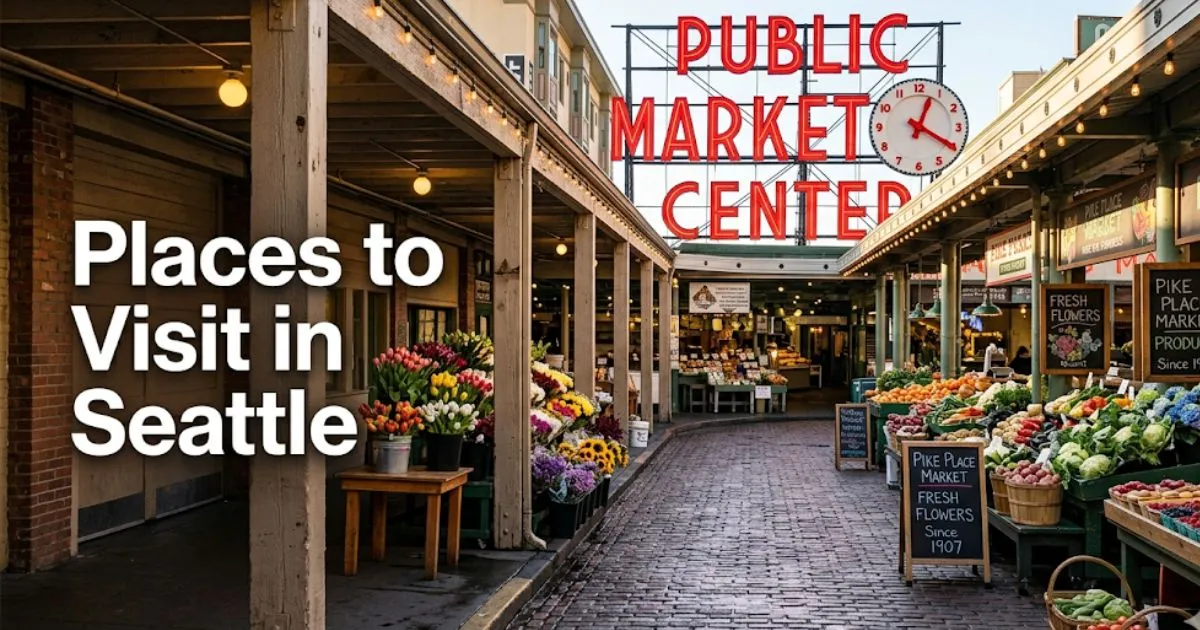
Pike Place Market spans nine acres across multiple levels on First Avenue. The main arcade houses produce vendors, flower stalls, and the famous fish-throwing crew at Pike Place Fish Market.
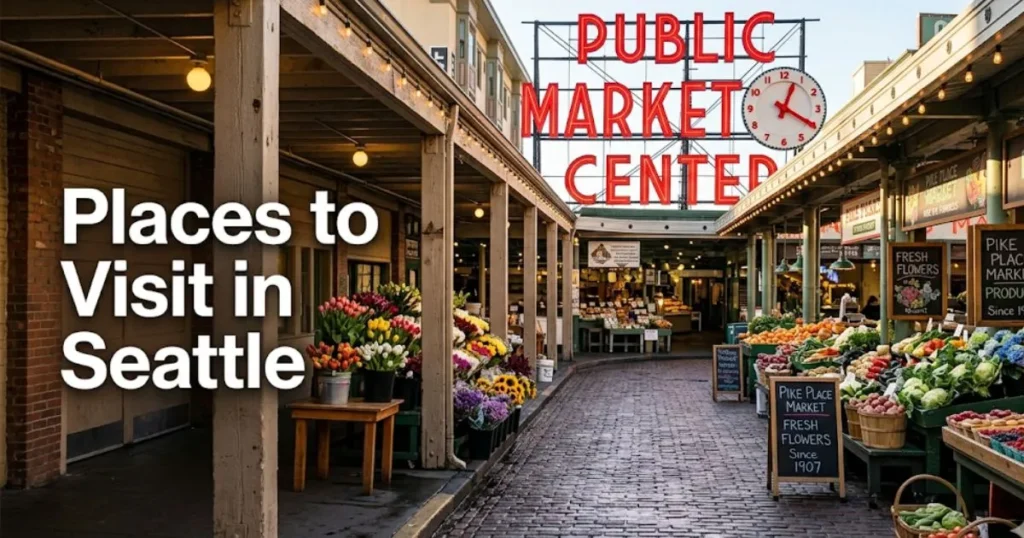
Budget at least three hours for the market. Morning visits before 10 a.m. deliver the authentic working-market experience without the crushing afternoon crowds.
Solo travelers and couples thrive here. Families with strollers will struggle on the market’s steep cobblestone ramps and crowded narrow corridors.
| Attraction | Best For | Time Needed | Insider Note |
|---|---|---|---|
| Pike Place Market | Food lovers, solo travelers | 3-4 hours | Go before 10 a.m. |
| Space Needle + Chihuly | First-timers, couples | 2-3 hours | Book clear-day tickets |
| Bainbridge Ferry | All travelers | 3-4 hours round trip | Walk-on is easiest |
Pike Place Market Guide
Pike Place Market is Seattle’s essential experience and a genuine working market since 1907. The market rewards visitors who explore beyond the main arcade’s fish-throwing spectacle.
Start at the Pike Place Fish Market for the famous fish toss. Then walk through the lower levels to discover DeLaurenti Food & Wine, Pike Brewing Company, and the Market Spice tea shop.
The Gum Wall in Post Alley draws crowds for photos. It is authentically weird but smells strongly of sugar on warm days.
Budget travelers can eat well at the market for under $15 per person. Piroshky Piroshky and Beecher’s Handmade Cheese offer generous samples and affordable takeaway options.
First-time visitors should join the market’s free guided tours offered by the Pike Place Market Preservation and Development Authority. They start at the information booth under the clock sign.
The original Starbucks at 1912 Pike Place is a tourist phenomenon with wait times regularly exceeding 45 minutes. Locals grab coffee at Ghost Alley Espresso tucked beneath the market instead.
Seattle Center and Space Needle
Seattle Center is the 74-acre cultural campus built for the 1962 World’s Fair. The Space Needle anchors the complex, but the surrounding attractions make this a half-day destination.
Book Space Needle tickets for early morning on a clear day. The 520-foot observation deck delivers panoramic views of Mount Rainier, Elliott Bay, and the Olympic Mountains that genuinely justify the approximately $35 to $45 admission.
Chihuly Garden and Glass sits directly beside the Space Needle. The glasshouse exhibit and outdoor garden display Dale Chihuly’s work in a setting that feels worth its admission cost even for visitors skeptical of glass art.
The Museum of Pop Culture, designed by Frank Gehry, houses exhibits on music history, science fiction, and gaming. The Sound Lab room where visitors play actual instruments is the most engaging section.
Seattle Center Monorail connects directly to Westlake Center downtown in about two minutes. This 1962-era transit relic runs every 10 minutes and costs around $3.50 per ride.
Solo travelers find Seattle Center easy to navigate. Families should budget for the Artists at Play playground and the International Fountain for children who lose interest in museums within 20 minutes.
Insider Tip: Skip the Space Needle’s rotating restaurant. Book a table at Toulouse Petit in Queen Anne afterward for better food at a lower price.
Seattle Waterfront Attractions
Seattle’s central waterfront runs from Pioneer Square north to the Olympic Sculpture Park. The redeveloped Alaskan Way features a new elevated promenade connecting the Seattle Aquarium to Pike Place Market.
The Seattle Aquarium on Pier 59 focuses on Pacific Northwest marine life. The Window on Washington Waters exhibit and the touch pools with local tidepool species make this the most worthwhile stop for families.
The Seattle Great Wheel on Pier 57 offers waterfront views from enclosed gondolas. The approximately $15 to $18 admission feels fair for the 12-minute rotation, especially at sunset.
Ivar’s Acres of Clams on Pier 54 has served fried seafood since 1938. The walk-up fish bar on the pier side offers the same quality at lower prices than the sit-down restaurant.
Couples should walk the waterfront at golden hour. The Olympic Mountain silhouette across Elliott Bay creates a genuinely romantic backdrop that costs nothing.
Budget travelers should note that waterfront dining runs expensive. Pack snacks from Pike Place Market and enjoy them on the public benches along the promenade instead.
Insider Tip: Skip the harbor tour boats. Ride the Bainbridge Island ferry as a walk-on passenger for the same water-level views at a fraction of the cost.
Cool Places to Visit in Seattle Neighborhoods
Seattle’s neighborhoods define the city far more than downtown ever will. The five essential neighborhoods for visitors are Capitol Hill, Ballard, Fremont, Pioneer Square, and the International District.
Capitol Hill is Seattle’s cultural and nightlife core. Volunteer Park houses the free Seattle Asian Art Museum and the Victorian conservatory. The streets along Broadway and Pike-Pine corridor hold the city’s densest collection of independent shops, bars, and music venues.
Ballard feels like a separate city annexed into Seattle. The Ballard Locks let you watch boats move between Lake Washington and Puget Sound while salmon run through the fish ladder in summer months.
Fremont embraces its weirdness with the Fremont Troll sculpture under the Aurora Bridge and the Sunday Fremont Market for vintage finds. This neighborhood works best for travelers who enjoy walking between coffee shops and public art.
Pioneer Square is Seattle’s oldest neighborhood with Richardsonian Romanesque architecture and an underground tour network beneath the sidewalks. The First Thursday art walk makes this area feel genuinely alive.
The International District delivers the city’s best dim sum, pho, and Asian grocery markets. Uwajimaya is the anchor store where locals shop for imported ingredients.
| Neighborhood | Best For | Transit Access | Vibe |
|---|---|---|---|
| Capitol Hill | Nightlife, LGBTQ+ travelers | Link Light Rail | Urban, youthful |
| Ballard | Foodies, families | Bus from downtown | Maritime, relaxed |
| Fremont | Quirky explorers | Bus from downtown | Artsy, playful |
| Pioneer Square | History buffs | Link Light Rail | Historic, gritty |
| International District | Food travelers | Link Light Rail | Authentic, dense |
Seattle Museums and Cultural Attractions
Seattle’s museum scene concentrates at Seattle Center and downtown. The Museum of Pop Culture, Seattle Art Museum, and the Chihuly Garden and Glass are the top three for first-time visitors.
The Seattle Art Museum downtown holds a strong collection of Pacific Northwest Indigenous art and rotating international exhibits. Budget around two hours for a thorough visit.
Museum of Pop Culture in Seattle Center covers music history with particular strength in Seattle’s grunge era. The Jimi Hendrix exhibit and the instrument lab where visitors play guitars, drums, and keyboards are the highlights.
The Wing Luke Museum in the International District is the only pan-Asian Pacific American museum in the country. The preserved historic hotel rooms upstairs offer a walking tour experience that feels genuinely intimate.
The Burke Museum on the University of Washington campus focuses on natural history and Pacific Northwest Indigenous culture. This museum works particularly well for families with school-age children.
Budget-conscious travelers should check museum free admission days. The Seattle Art Museum offers free first Thursdays, and the Burke Museum has monthly free admission windows.
Insider Tip: Skip the Museum of Flight unless you are an aviation enthusiast. The drive to Boeing Field takes time better spent exploring neighborhoods.
Key Takeaway: Visit two museums maximum on a short trip. The city is better experienced outdoors and in neighborhoods.
Seattle Outdoor Activities and Parks
Seattle’s outdoor spaces rival its indoor attractions. Discovery Park, Gas Works Park, and Kerry Park offer three distinctly different experiences that cost nothing to enter.
Discovery Park in Magnolia spans 534 acres on a bluff overlooking Puget Sound. The Loop Trail leads down to a lighthouse and beach with views of the Olympic Mountains across the water.
Gas Works Park on Lake Union repurposes a former gasification plant into public green space with the best skyline view in Seattle. Bring takeout food and sit on the kite hill for sunset.
Kerry Park on Queen Anne Hill delivers the postcard Seattle photograph. The tiny viewpoint park frames the Space Needle with Mount Rainier behind it on clear days.
Washington Park Arboretum stretches along Lake Washington with 230 acres of gardens and walking trails. The Japanese Garden within it charges a small admission but feels genuinely serene in spring.
Families with children find Gas Works Park and Green Lake Park most practical. Both offer playgrounds, open space, and easy walking paths.
Solo travelers and couples should prioritize Discovery Park for a half-day escape that feels far from the city despite being a 15-minute bus ride from downtown.
Insider Tip: Skip Kerry Park at midday. Arrive 30 minutes before sunset for golden light on the skyline and far smaller crowds.
Seattle Coffee and Food Experiences
Seattle’s coffee culture is genuine and obsessive. The Starbucks Reserve Roastery on Capitol Hill is the experiential flagship that justifies visiting even if you skip the original Pike Place store.
The Roastery offers coffee flights, barrel-aged cold brew, and a bakery from Princi that serves Italian pastries and pizza. Budget around $10 to $20 per person for a tasting experience.
Neighborhood coffee shops define Seattle’s daily rhythm. Elm Coffee Roasters in Pioneer Square, Milstead & Co. in Fremont, and Victrola Coffee Roasters on Capitol Hill represent the city’s independent coffee identity.
Seattle’s food scene runs deeper than seafood. The International District delivers dim sum at Jade Garden, Vietnamese pho at Pho Bac, and Japanese cuisine at Maneki, operating since 1904.
Teriyaki is Seattle’s unofficial dish. Toshi’s Teriyaki in Mill Creek started the phenomenon, but Sunny Teriyaki and I Love Teriyaki locations across the city serve the sweet-savory chicken that locals genuinely eat weekly.
Seafood travelers should prioritize Taylor Shellfish Farms for oysters, The Walrus and the Carpenter in Ballard for small plates, and the market stalls at Pike Place for Dungeness crab in season.
Budget travelers can eat well for under $20 per meal by focusing on teriyaki shops, pho restaurants, and Pike Place Market vendors rather than sit-down seafood restaurants.
Insider Tip: Skip the long line at the original Starbucks. Walk 10 minutes to the Starbucks Reserve Roastery for a far better experience.
Key Takeaway: Eat where locals eat on weeknights: teriyaki shops, pho restaurants, and neighborhood oyster bars.
Things to Do in Seattle for First Time Visitors
First-time visitors should prioritize Pike Place Market, the Space Needle observation deck on a clear day, and at least one Washington State Ferry ride. These three experiences deliver the city’s essential character.
Spend your first morning at Pike Place Market before crowds build. Walk the main arcade, grab a pastry from Piroshky Piroshky, and head to the lower levels to discover the craft stalls and Pike Brewing Company.
Afternoon belongs to Seattle Center. Combine the Space Needle with either Chihuly Garden and Glass or the Museum of Pop Culture, not both in one day.
Day two should explore Capitol Hill on foot. Start with coffee at Victrola, walk through Volunteer Park, browse Elliott Bay Book Company, and eat dinner at a Pike-Pine corridor restaurant.
The Bainbridge Island ferry as a walk-on passenger costs less than $10 round trip. The 35-minute crossing delivers Elliott Bay views and a walkable small town on the other side.
Insider Tip: Buy a Link Light Rail day pass for $6 to $8 and avoid rideshare costs between neighborhoods connected by the light rail line.
Seattle Rainy Day Activities
Seattle rain is mostly drizzle, not downpour, and locals rarely use umbrellas. The city’s indoor attractions handle wet weather well when you know which ones work in gray conditions.
Pike Place Market operates under covered arcades. The lower levels with craft vendors and the Gum Wall provide two hours of sheltered exploration.
The Seattle Art Museum, Museum of Pop Culture, and Wing Luke Museum all function identically in rain or sun. MoPOP’s indoor instrument lab and sci-fi exhibits engage kids on wet afternoons.
Starbucks Reserve Roastery offers warm coffee flights, fresh baking from Princi, and comfortable seating for a one to two-hour stop. The mezzanine level provides the best people-watching views.
Elliot Bay Book Company on Capitol Hill spans an entire block inside a former warehouse. The store’s cafe, reading nooks, and frequent author events make this a genuine rainy day refuge.
The Pacific Place mall downtown connects to the underground transit tunnel and offers chain shopping. Skip it unless you need a dry walking route between Pike Place Market and the convention center area.
Families with young children should head to the Seattle Children’s Museum at Seattle Center. The interactive exhibits work for ages 2 through 8 and provide a genuine multi-hour activity on wet days.
Key Takeaway: Rain changes nothing for Seattle’s best indoor attractions. The market, museums, and coffee spots operate year-round.
Places to Visit Around Seattle Day Trips
Three day trips from Seattle genuinely justify the travel time. Bainbridge Island works for a half-day, Snoqualmie Falls for a morning, and Mount Rainier National Park requires a full commitment.
Bainbridge Island is the easiest day trip. Walk onto the Washington State Ferry at Colman Dock, ride 35 minutes across Elliott Bay, and arrive in downtown Winslow with walkable shops, wine tasting rooms, and waterfront dining.
Snoqualmie Falls sits 30 minutes east of Seattle. The 268-foot waterfall has an upper observation deck with wheelchair access and a lower trail descending to the base. The Salish Lodge overlooks the falls for a splurge breakfast.
Mount Rainier National Park requires an early start and a full day. The drive to Paradise takes about 2.5 hours from downtown Seattle. The Paradise Inn and the wildflower meadows in late July and August make this the park’s most accessible highlight.
The park’s timed-entry permit system operates during peak summer months. Book permits in advance through the National Park Service reservation system.
Budget travelers should prioritize Bainbridge Island for a low-cost day trip. The ferry walk-on fare runs approximately $9 round trip.
Seniors and accessibility travelers find Snoqualmie Falls most manageable. The upper viewing platform requires no stairs or steep paths.
| Day Trip | Travel Time | Cost Range | Best For |
|---|---|---|---|
| Bainbridge Island | 35 min ferry | $9-40 | All travelers |
| Snoqualmie Falls | 30 min drive | $0-50 | Families, seniors |
| Mount Rainier | 2.5 hr drive | $30-100 | Hikers, photographers |
Seattle Neighborhoods Worth Exploring
Four Seattle neighborhoods deserve dedicated exploration time. Capitol Hill, Ballard, Fremont, and the International District each offer a complete half-day experience.
Capitol Hill runs on coffee, music, and independent retail. The Pike-Pine corridor from Melrose Avenue to 12th Avenue holds the densest concentration of interesting shops, bars, and restaurants in the Pacific Northwest.
Ballard mixes maritime industry with modern Seattle food culture. The Sunday Ballard Farmers Market on Ballard Avenue draws locals year-round. The Ballard Locks and adjacent botanical garden are free and genuinely interesting for all ages.
Fremont calls itself the Center of the Universe. The Fremont Troll, the Lenin statue, and the Sunday vintage market make this the city’s most whimsical neighborhood for walking exploration.
The International District delivers Seattle’s most culturally distinct neighborhood experience. The dim sum houses, Asian grocery stores, and the Wing Luke Museum create a dense, authentic exploration zone.
Solo travelers thrive in Capitol Hill. Its walkability, coffee density, and social bar scene suit independent exploration better than any other neighborhood.
Families should prioritize Ballard. The locks, Golden Gardens Park beach, and family-friendly breweries with outdoor seating work for all ages.
Key Takeaway: Pick two neighborhoods for a short trip. Capitol Hill and Ballard offer the most complete Seattle experiences.
Seattle Budget Friendly Attractions
Seattle is expensive, but its best experiences cost very little. The city’s parks, markets, and waterfront infrastructure deliver excellent value for budget-conscious travelers.
Discovery Park, Gas Works Park, and Kerry Park are completely free. Each offers views and experiences that would command admission fees in other cities.
The Washington State Ferry to Bainbridge Island costs under $10 as a walk-on passenger. You get a Puget Sound cruise, skyline views, and a walkable destination town for less than a museum ticket.
Pike Place Market charges no admission. You can spend hours browsing without spending a dollar, though the food vendors will test your resolve.
Fremont Sunday Market and the Ballard Farmers Market offer free browsing with local character. These are better uses of a Sunday morning than any paid downtown attraction.
The Seattle Public Library central branch downtown is an architectural landmark by Rem Koolhaas. The 10th-floor reading room offers views that rival some paid observation decks.
Budget travelers should use the Link Light Rail for airport transit and neighborhood connections. A day pass costs significantly less than one rideshare trip.
Insider Tip: The first Thursday of every month brings free admission to the Seattle Art Museum, Burke Museum, and several smaller museums across the city.
Seattle Nightlife and Evening Activities
Seattle’s nightlife concentrates on Capitol Hill, Belltown, and Ballard. Each neighborhood offers a different evening personality.
Capitol Hill is the city’s live music and LGBTQ+ nightlife hub. The Crocodile on First Avenue books touring indie acts, Neumos on Pike Street hosts mid-size shows, and Chop Suey delivers smaller, eclectic lineups.
Belltown runs along First and Second Avenues north of Pike Place Market. The neighborhood’s restaurant density makes it Seattle’s best dinner district. Shiro’s Sushi, The Pink Door, and Serious Pie anchor the dining scene.
Ballard transforms into a brewery district after dark. Stoup Brewing, Reuben’s Brews, and Peddler Brewing Company sit within walking distance of each other in the Ballard Brewery District.
The Pioneer Square First Thursday art walk draws crowds to galleries and the bars along First Avenue South. It works best for visitors who want a structured evening activity with built-in walking routes.
Solo travelers should prioritize Capitol Hill’s music venues. Most shows cost $15 to $30 and the venues are safe for single attendees.
Couples should book dinner in Belltown and walk to the Olympic Sculpture Park for sunset views over Elliott Bay.
Safety note: The Third Avenue transit corridor between Pike Street and Pine Street has concentrated safety concerns after 10 p.m. Use rideshare or walk via First or Second Avenue instead.
Seasonal Events and Festivals Seattle 2026
Seattle’s festival season runs May through September. The city compresses most of its major events into the reliably dry summer window.
Northwest Folklife Festival at Seattle Center over Memorial Day weekend draws performers and food vendors celebrating Pacific Northwest folk traditions. Admission is free with a suggested donation.
Seattle Pride in late June brings a massive parade and Capitol Hill street festival. Hotel rooms book months in advance for Pride weekend.
Seafair spans July and early August with hydroplane races on Lake Union, the Torchlight Parade downtown, and an air show featuring the Blue Angels. This is Seattle’s signature summer event series.
Bumbershoot returns to Seattle Center over Labor Day weekend as a music and arts festival. The 2026 lineup typically features national headliners alongside Pacific Northwest artists.
The Seattle International Film Festival runs May through June with screenings at multiple venues. Film-focused travelers should build their visit around SIFF for an insider cultural experience.
According to Visit Seattle, summer hotel rates run 30 to 50 percent higher than winter rates. Book four to six months ahead for July and August visits.
Winter visitors find lower prices but should expect rain and shortened daylight. The holiday season brings the Pike Place Market Magic in the Market event and the Seattle Center Winterfest with free ice skating and performances.
Key Takeaway: Visit between Memorial Day and Labor Day for the best weather and festival access. Book summer lodging six months ahead.
Safety and Practical Warnings for Seattle
Seattle is a safe city for tourists who use standard urban awareness. The specific risks involve neighborhood transitions, terrain, and weather preparation.
Key safety and practical facts every visitor should know:
- The Third Avenue corridor downtown between Pike Street and Pine Street has concentrated safety concerns after dark. Walk one block east or west to First or Fourth Avenue instead.
- Pioneer Square transitions quickly from historic charm to areas with visible homelessness and drug activity south of Yesler Way after dark. Use the Link Light Rail station entrance on James Street.
- Seattle’s hills create genuine physical demands. The walk from Pike Place Market to Capitol Hill climbs steeply up Pike Street. Mobility-limited visitors should use rideshare or the light rail to Capitol Hill Station.
- Rain creates slick conditions on Pike Place Market’s cobblestone ramps and Pioneer Square’s brick sidewalks. Wear shoes with reliable traction, especially November through March.
- Mount Rainier National Park requires advance planning for safety. Weather changes rapidly above 5,000 feet. Check road conditions through the National Park Service before departing. Tire chains are legally required in the vehicle during winter months.
- Cell service is unreliable in Mount Rainier’s Paradise and Sunrise areas. Download offline maps before leaving Seattle.
- The Washington State Ferries are safe but require attention to boarding announcements. Walk-on passengers board separately from vehicles. Pay attention to the return ferry schedule to avoid being stranded.
Frequently Asked Questions About Visiting Seattle
What is the number one place to visit in Seattle?
Pike Place Market is the number one place to visit in Seattle.
It is a genuine working public market since 1907 with food vendors, craft stalls, and the famous fish-throwing crew.
No other single attraction captures Seattle’s character as completely as this sprawling waterfront market.
How many days do you need to see Seattle?
Three full days cover Seattle’s essential experiences comfortably.
One day for Pike Place Market and downtown, one day for Seattle Center and a neighborhood, and one day for a ferry ride plus Capitol Hill exploration.
Add a fourth day if Mount Rainier National Park is part of your plan.
Is Seattle walkable for tourists?
Downtown, Belltown, and Capitol Hill are walkable for visitors with average fitness.
The hills between downtown and Capitol Hill are genuinely steep and challenge mobility-limited travelers.
The Link Light Rail connects downtown, Capitol Hill, the University District, and Sea-Tac Airport efficiently.
What month is best to visit Seattle?
July and August are the best months to visit Seattle.
These months deliver reliably dry weather, long daylight hours, and the city’s full festival calendar.
Hotel rates peak during this window and require booking four to six months in advance.
Is Pike Place Market worth visiting or just touristy?
Pike Place Market is genuinely worth visiting and operates as a real working market.
The tourist crowds concentrate on the main arcade and the original Starbucks, but the lower levels house local artisans and specialty food vendors that locals use daily.
Visit before 10 a.m. to experience the market as locals know it.
Do you need a car in Seattle as a tourist?
You do not need a car for downtown Seattle, Capitol Hill, or Ballard exploration.
The Link Light Rail from Sea-Tac Airport and between core neighborhoods handles most tourist transit needs efficiently.
Reserve a rental car only for day trips to Snoqualmie Falls or Mount Rainier National Park.
Seattle works best when you treat it as a collection of distinct neighborhoods rather than a downtown checklist. Pike Place Market, the Space Needle on a clear day, and a ferry ride across Puget Sound form the core that every visitor should experience. Beyond those three, the city reveals itself through Capitol Hill’s coffee shops, Ballard’s Sunday market, and the view from Gas Works Park at sunset.
Book your summer lodging as early as possible, especially for July and August dates. Verify Mount Rainier timed-entry permit requirements and ferry schedules before departure through official sources. The National Park Service and Washington State Ferries websites provide current 2026 operational information.
Seattle asks more of its visitors than cities that arrange their attractions in neat walking-distance clusters. The reward is a genuine understanding of how Pacific Northwest culture, geography, and daily life connect. Bring a rain jacket, skip the umbrella like locals do, and let the neighborhoods guide your trip.
Ferry schedules, museum hours, event dates, and admission prices shift from year to year. Check directly with Visit Seattle, individual venue websites, and the Washington State Department of Transportation for current 2026 information before your departure date.