16 Best Things to Do in Athens Greece in 2026

Athens rewards travelers who skip the tourist checklist and explore its neighborhoods like a local. The city’s best experiences are not all behind ticket counters.
Athens is the only European capital with a functioning ancient city center still woven into daily life. The Acropolis does not sit behind a rope in a sterile park.
This guide covers the ancient sites that earn their reputation and the neighborhoods where Athenians actually spend their evenings. You will find honest assessments of crowds, costs, and what to skip.
Best Time to Visit Athens Greece
The best time to visit Athens is April through mid-June and September through mid-October.
Temperatures stay between 65 and 80 degrees Fahrenheit during these months. The city’s outdoor dining terraces and rooftop bars are at their peak.
Summer months from mid-July through August bring punishing heat and maximum crowds. August 15 is a national holiday when many family-run tavernas close entirely.
Winter from November through March offers the lowest accommodation prices and almost no lines at archaeological sites. Rain is more frequent and some island ferry routes reduce schedules significantly.
Solo travelers will find spring and fall ideal for joining group food tours and meeting other travelers in Psiri’s bar scene. The social energy drops noticeably in winter.
Families with children should avoid July and August heat that makes archaeological sites uncomfortable and unsafe for young kids. The exposed marble at the Acropolis radiates intense heat by midday.
Budget travelers benefit most from November and March visits when hotels drop 30 to 50 percent below summer rates. The archaeological combo ticket still costs the same and sites are nearly empty.
Seniors and accessibility travelers should target April, May, or October. These months avoid extreme heat that complicates mobility on Athens’s steep, uneven marble streets.
| Season | Best For | Crowd Level | Hotel Cost |
|---|---|---|---|
| April to mid-June | All travelers | Moderate | Mid-range |
| Mid-July to August | Beach-focused visitors | Maximum | Highest |
| September to mid-October | Couples, solo travelers | Moderate to low | Mid-range |
| November to March | Budget travelers | Lowest | Lowest |
The most common mistake visitors make is underestimating late June heat. Temperatures can spike above 95 degrees Fahrenheit with no shade at archaeological sites.
What Is Athens Famous For
Athens is famous for being the birthplace of democracy and home to the Acropolis, one of the most significant archaeological sites in the world.
The city is also known for its walkable ancient neighborhoods where fifth-century BCE ruins sit next to tavernas and apartment buildings. No other European capital integrates antiquity into daily urban life this completely.
Modern Athens has earned recognition for its food culture, from street-side souvlaki stands to rooftop cocktail bars with Parthenon views. The city’s culinary reputation has grown sharply since 2018.
The National Garden provides a 38-acre green retreat in the city center. The Athens Riviera stretches along the Saronic Gulf coast offering beaches reachable by tram from Syntagma Square.
History-focused travelers come for the archaeological sites and museums that hold some of the Western world’s most studied artifacts. The concentration of ancient sites within walking distance is unmatched in Europe.
Food travelers discover that Athenian dining runs from €3 sesame koulouri bread rings at street carts to tasting-menu restaurants in converted industrial spaces in Psiri. The street food culture is accessible to every budget.
Travelers seeking a polished, manicured European capital experience may find Athens’s graffiti-covered streets and chaotic energy jarring. The city does not perform prettiness the way Paris or Vienna does.
Athens’s reputation as merely a stopover on the way to the islands sells it short. The city deserves a minimum of three full days and rewards travelers who stay longer.
Key Takeaway: Athens is not a one-day Acropolis stop. It is a layered, walking-intensive city where the best experiences require neighborhood time.
Acropolis and Parthenon Guide Athens
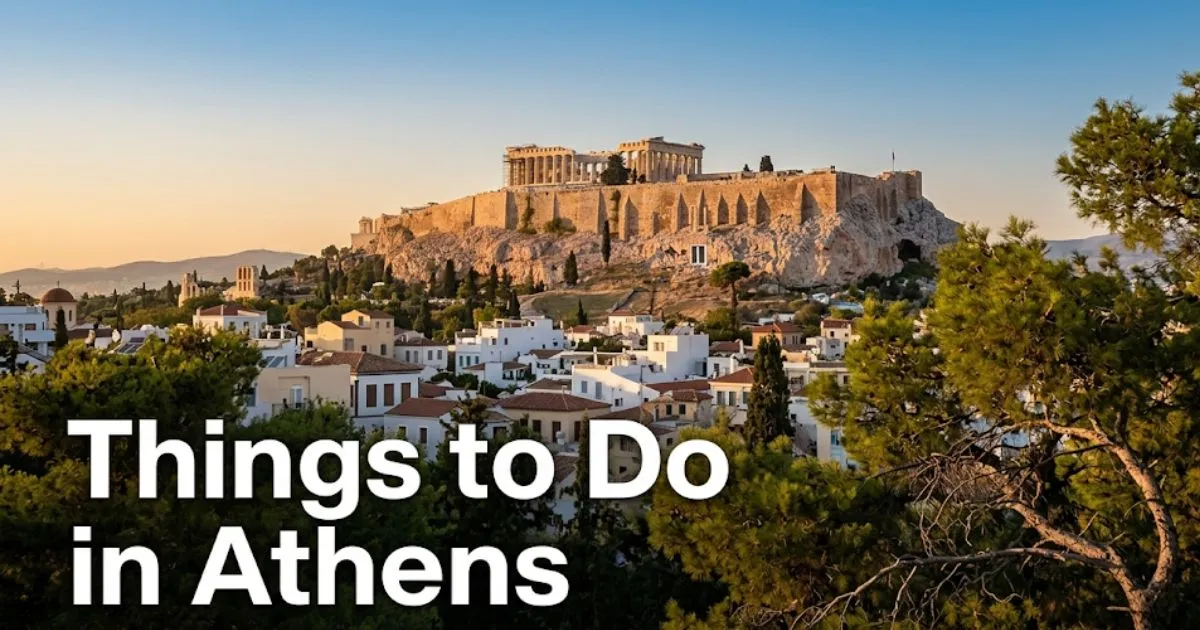
The Acropolis of Athens is the city’s defining monument, and the Parthenon at its summit remains the most important surviving structure of Classical Greece.
Timed-entry reservations are required from April through October in 2026. Book your slot at least two weeks ahead through the official Hellenic Ministry of Culture online portal.
The Acropolis site opens at 8:00 AM, and the first two entry slots of the day offer the smallest crowds and coolest temperatures. By 10:30 AM, the site fills substantially and the marble paving reflects intense heat.
Admission runs approximately €20 for a single-site ticket, or you can purchase the €30 archaeological combo ticket covering seven sites over five days. The combo ticket is the better value if you plan to visit more than two sites.
Solo travelers benefit from the early-morning strategy and can move through the site efficiently in about 90 minutes. The single-file climb up the Propylaea entrance moves faster with one person.
Families with children should know that the Acropolis involves steep, uneven marble steps with no railings in several sections. Strollers are not permitted and the site is genuinely difficult for children under six.
Seniors and accessibility travelers can use the elevator on the north side of the hill, installed for wheelchair access. Request it at the main entrance, and expect assistance from site staff.
The local alternative to the main Acropolis entrance is the southeast entrance near the Acropolis Museum on Dionysiou Areopagitou Street. This pedestrianized avenue provides a gentler approach with fewer tour groups.
According to the Hellenic Ministry of Culture and Sports, the Acropolis received over three million visitors in recent years, with July and August representing nearly 40 percent of annual visitation. Early entry is not a suggestion.
Acropolis Museum Athens Guide
The Acropolis Museum houses every artifact found on the Acropolis hill, displayed in a purpose-built gallery with direct sightlines to the Parthenon itself.
The top-floor Parthenon Gallery aligns precisely with the temple’s orientation, placing original sculptures and casts of the Elgin Marbles in their original architectural positions. Natural light illuminates the marble as it would have appeared on the temple.
Admission runs approximately €10 to €15 per adult, with reduced rates in winter months. The museum is typically open daily except major holidays, with extended evening hours on Fridays.
The museum’s glass floors reveal an active archaeological excavation of an ancient Athenian neighborhood directly beneath the building. This is a detail most visitors walk over without noticing.
Families with children will find this museum significantly more manageable than the Acropolis site itself. The building is fully wheelchair accessible with elevators and smooth flooring throughout.
Budget travelers should visit during the off-season when admission drops. The ground-floor gallery of the Archaic period is free to view from the exterior pedestrian walkway without entering.
The museum café on the second floor offers a Parthenon-view terrace that is considerably less crowded than rooftop bars in Monastiraki. The coffee is good and the view is unobstructed.
The most common error visitors make is visiting the Acropolis Museum after climbing the Acropolis hill in summer heat. Reverse this order.
Key Takeaway: Visit the museum first, ideally the afternoon before your Acropolis entry. You will understand what you are looking at.
Ancient Agora and Archaeological Sites Athens
The Ancient Agora of Athens was the commercial and political heart of the city for over 2,000 years, and it remains the best-preserved ancient marketplace in Greece.
The Temple of Hephaestus at the Agora’s western edge is the most intact ancient temple in the country. Its roof and columns survive nearly complete because it was converted into a Christian church centuries ago.
The Stoa of Attalos, reconstructed in the 1950s, now houses the Museum of the Ancient Agora. Its colonnade provides essential shade and displays artifacts including bronze voting tokens used in Athenian democracy.
Admission is included in the €30 archaeological combo ticket, or approximately €8 to €10 for a single-site entry. The Agora is typically open daily from early morning until late afternoon.
History-focused travelers should allocate two hours minimum. The site is large and the museum inside the Stoa contains genuinely significant objects including ostraka, the pottery shards used to vote politicians into exile.
Seniors and accessibility travelers will find the Agora easier to navigate than the Acropolis. The main paths are relatively level, though the ground is packed dirt and gravel in several sections.
The Temple of Olympian Zeus sits southeast of the Acropolis and requires approximately 30 minutes to visit. Only 15 of the original 104 columns remain standing, but their scale communicates the temple’s original ambition.
The Panathenaic Stadium, built entirely of marble, hosted the first modern Olympic Games in 1896. Entry runs approximately €10, and the audio tour includes the story of the stadium’s reconstruction.
The Roman Agora and its Tower of the Winds sit just north of the Acropolis. This smaller site takes 20 minutes, and the octagonal marble clocktower is one of Athens’s most photogenic ancient structures.
Local alternative: Skip the crowded Temple of Olympian Zeus midday and visit Filopappou Hill instead. The free hilltop park offers Acropolis views, shade from pine trees, and the ancient prison where Socrates was held.
| Site | Time Needed | Included in Combo Ticket | Best For |
|---|---|---|---|
| Ancient Agora | 2 hours | Yes | History depth |
| Temple of Olympian Zeus | 30 minutes | Yes | Quick photo stop |
| Roman Agora | 20 minutes | Yes | Tower of the Winds |
| Panathenaic Stadium | 45 minutes | No | Olympic history |
| Filopappou Hill | 1 hour | Free | Views, shade, quiet |
Plaka and Anafiotika Neighborhoods Athens
Plaka is Athens’s oldest continuously inhabited neighborhood, built on the northeastern slope of the Acropolis with narrow stair-streets and neoclassical houses.
The main commercial strip on Adrianou Street is packed with tourist tavernas and souvenir shops. It is worth walking through once and then leaving behind.
The real Plaka experience lives in the interior lanes: streets like Kyrristou, Lisiou, and Mnisikleous where the crowds thin and family-run kafeneia still serve Greek coffee to older residents. These streets are what visitors imagine Plaka to be.
Anafiotika is a tiny Cycladic-style quarter tucked above Plaka’s upper edge, built by stonemasons from the island of Anafi in the 19th century. Whitewashed houses with blue shutters and bougainvillea create a scene that feels transplanted from a Greek island.
Anafiotika has no shops, no tavernas, and no commercial infrastructure. It is a residential area where tourists should move quietly and respect that people live here.
Couples and romantic travelers should walk through Anafiotika at golden hour, roughly one hour before sunset. The light on the white walls and the Acropolis views from the upper paths are the most romantic setting in central Athens.
Families with children will find Plaka’s stair streets challenging with strollers. The neighborhood is not stroller-friendly, and young children tire quickly on the steep inclines.
Solo travelers can wander Plaka’s interior lanes safely at any hour. The area is well-lit and patrolled, though the commercial strip feels anonymous and overpriced.
The local alternative to Plaka’s tourist tavernas is the adjacent Koukaki neighborhood. Drakou Street in Koukaki has become the city’s most reliable dining corridor for both traditional and contemporary Greek food.
Monastiraki Flea Market and Psiri Nightlife
Monastiraki Square is the chaotic, vibrant junction where Athens’s ancient, Ottoman, and modern layers collide most visibly. The square’s view of the Acropolis framed above the Metro station is the city’s most photographed urban scene.
The Monastiraki Flea Market operates daily but expands significantly on Sundays. The permanent shops on Ifestou Street sell vintage furniture, vinyl records, military surplus, and leather goods.
The actual flea market section on Avissinias Square, near the antique shops, is where you will find genuine vintage items rather than mass-produced souvenirs. Go early Sunday morning for the best selection.
Budget travelers will find Monastiraki’s permanent shops more affordable than Plaka’s souvenir stores. Bargaining is accepted at the outdoor stalls but not inside the established shops on Ifestou Street.
Solo travelers should practice heightened pickpocket awareness in the Monastiraki area. The crowded conditions around the Metro station and flea market stalls attract opportunistic theft.
Psiri district sits directly north of Monastiraki and has transformed into Athens’s most dynamic nightlife and dining neighborhood. The area’s narrow streets fill with outdoor tables after dark.
Couples and romantic travelers should book dinner in Psiri around 9:00 PM when the neighborhood shifts from daytime commerce to candlelit evening energy. Iroon Square is the neighborhood’s social center.
The local alternative to Psiri’s increasingly tourist-oriented main streets is Koukaki’s evening scene. Veikou Street and Drakou Street offer the same quality of food with fewer out-of-town visitors.
Key Takeaway: Monastiraki is essential for one visit. Psiri and Koukaki are where you should spend your evenings.
Exarcheia and Alternative Athens
Exarcheia is Athens’s most politically charged, artistically active, and culturally distinct neighborhood, centered around Exarcheia Square.
The neighborhood’s street art is the city’s most concentrated and politically engaged. Murals, stencils, and wheat-paste works cover nearly every vertical surface, changing constantly as new work replaces old.
Exarcheia is home to the National Archaeological Museum’s northern edge, independent bookshops, anarchist collectives, and some of the city’s best casual tavernas. The area feels nothing like the tourist center less than one mile south.
Solo travelers drawn to counterculture, political history, and authentic urban atmosphere will find Exarcheia the most memorable part of Athens. The neighborhood rewards walking without a destination.
Budget travelers will find Exarcheia’s tavernas and cafés priced for students and locals. A full meal with wine runs approximately €10 to €15 per person, roughly half the cost of Plaka’s tourist establishments.
The neighborhood has a genuine edge. Police presence is heavier than in tourist districts, and protests occasionally close streets around Exarcheia Square. These are political expressions, not threats to visitors.
Families and seniors may find Exarcheia’s anarchist bookshops and graffiti-heavy aesthetic less appealing or comfortable. The neighborhood is safe but visually intense and can feel unwelcoming to those expecting a polished city experience.
The local alternative to guided street art tours in Exarcheia is simply walking the neighborhood independently. Start at the National Archaeological Museum, walk south on Bouboulinas Street, and turn toward Exarcheia Square.
This is Athens, the city’s official visitor guide, has begun including Exarcheia in its neighborhood recommendations, acknowledging the area’s cultural significance beyond its political reputation.
Athens Street Food and Central Market
Athens street food culture runs from breakfast koulouri sesame rings to late-night souvlaki wraps, and the quality-to-price ratio is among the best in Europe.
Kostas on Plateia Agias Irinis, a tiny souvlaki stand operating since the 1950s, serves what many Athenians consider the city’s best pork souvlaki. It closes by late afternoon, so go for lunch.
Hoocut on Plateia Agias Irinis offers a modern take on the gyros wrap with spiced lamb and tomato. The line moves fast and the courtyard seating is shared with several neighboring bars.
Varvakios Central Market on Athinas Street is Athens’s primary food market, housed in a 19th-century hall. The meat and fish halls are graphic and loud, with vendors shouting prices and cleavers working continuously.
The market’s surrounding streets host spice shops, olive vendors, and cheese sellers. Elixirion, a spice shop on Evripidou Street, sells herbs and Greek saffron at prices far below Plaka’s tourist packaging.
Budget travelers can assemble a full lunch from the market’s perimeter shops for under €5. Fresh bread, feta, olives, and tomatoes from a produce stand make a meal no restaurant can match at that price.
Families with children should be aware that the meat hall’s hanging carcasses and butcher activity are intense and may distress young children. The produce and spice streets are family-friendly.
Solo travelers can eat well at any hour. The central market area is busy from early morning through late afternoon, and the surrounding tavernas on Evripidou Street serve single diners without hesitation.
The local alternative to expensive food tours is a self-guided walk starting at Varvakios Market, continuing to Evripidou Street for spices and cheese, and ending at Kostas for souvlaki. Total cost: under €10.
Best Rooftop Bars and Tavernas in Athens
Athens rooftop bar culture is among the city’s signature experiences, pairing cocktails with direct Acropolis and Parthenon views after dark.
A for Athens on Monastiraki Square operates a rooftop bar with a head-on Acropolis view. Arrive before sunset to secure a seat, as the terrace fills by 7:00 PM in peak months.
Cou Cou in Psiri offers a more intimate rooftop experience with fewer tourists. The cocktail program is stronger, and the crowd is primarily local Athenians in their 20s and 30s.
The Clumsies, consistently ranked among the world’s best bars, sits in a converted townhouse near Psiri. Its interior rooms are more interesting than its rooftop, and the cocktail list changes seasonally.
Baba au Rum, also highly ranked, occupies a corner building near the central market. Its tropical-leaning cocktail program is distinctive in a city known for spritz-style drinks.
Taverna Saita in Pangrati serves traditional Greek dishes including excellent moussaka and baked gigantes beans. The restaurant occupies a quiet residential corner with zero tourists in sight.
Feyrouz on Karori Street near the central market serves Lebanese-Greek street food that draws a lunch line of locals daily. The lahmacun flatbreads are the menu’s standout.
Couples and romantic travelers should prioritize Cou Cou at sunset and a late dinner in Psiri’s Iroon Square. The combination of rooftop views and neighborhood dining creates Athens’s most romantic evening.
Budget travelers can enjoy rooftop views at A for Athens by ordering one drink and nursing it. The view costs nothing beyond the cocktail price.
Families with children will find tavernas with courtyard seating more practical than rooftop bars. Oineas in Psiri has a ground-floor courtyard that welcomes families.
According to The World’s 50 Best Bars, The Clumsies and Baba au Rum have both ranked in the top 50 globally in recent years, establishing Athens as a serious cocktail destination.
Mount Lycabettus and Athens Outdoor Spaces
Mount Lycabettus rises 277 meters above sea level at the city’s northeastern edge, offering the highest panoramic view of Athens and the Saronic Gulf.
The funicular railway ascends from Aristippou Street in Kolonaki and departs every 15 to 30 minutes. A round-trip ticket runs approximately €7 to €10. The alternative is a steep footpath that takes 30 to 45 minutes uphill.
The small Chapel of St. George at the summit is a whitewashed Cycladic-style church that looks across the entire Attica basin. Sunset from this vantage point is the most comprehensive view in Athens.
The National Garden provides 38 acres of shaded walking paths, duck ponds, a small zoo, and benches that feel essential after hours on exposed archaeological sites. The garden sits directly behind the Hellenic Parliament on Syntagma Square.
Filopappou Hill, southwest of the Acropolis, offers the best free Acropolis viewpoint in the city. The pine-shaded paths lead to the Monument of Filopappos, and the hill is never crowded the way Lycabettus can be at sunset.
Solo travelers should walk Filopappou Hill in the early morning. The paths are safe, the light is beautiful, and the Acropolis views with no one else around are among Athens’s best solitary experiences.
Seniors and accessibility travelers will find the Lycabettus funicular manageable. The National Garden’s flat, paved central paths are wheelchair accessible, though some side paths are gravel.
The local alternative to crowded sunset at Lycabettus is sunset from Anafiotika’s upper paths or the Areopagus Hill rock outcrop below the Acropolis entrance. Both are free and closer to the city center.
Key Takeaway: Filopappou Hill is free, uncrowded, and provides the best Acropolis photos you will take in Athens.
National Archaeological Museum and Athens Art Scene
The National Archaeological Museum houses the world’s most important collection of ancient Greek art, including the Antikythera Mechanism and the Mask of Agamemnon.
The museum’s sculpture collection, particularly the bronze statues recovered from shipwrecks, demonstrates technical sophistication that still astonishes art historians. The Artemision Bronze of Zeus or Poseidon is the collection’s centerpiece.
Admission runs approximately €10 to €15, and the museum is typically open daily except major holidays. The building is a grand 19th-century neoclassical structure located in the Exarcheia district’s northern edge.
The Benaki Museum on Vasilissis Sofias Avenue presents Greek art and material culture from prehistory through the 20th century in a converted neoclassical mansion. Its collection bridges the gap between ancient and modern Greece in a way the archaeological museums do not.
The Stavros Niarchos Foundation Cultural Center in the Kallithea district houses the National Library and National Opera in a massive modern park designed by Renzo Piano. The canal-side promenade draws Athenians for evening walks.
History-focused travelers should allocate three hours minimum for the National Archaeological Museum. The Antikythera Mechanism alone rewards the visit, and the bronze collection is unmatched globally.
Budget travelers can visit the National Archaeological Museum for reduced admission in winter months. The Stavros Niarchos Cultural Center’s grounds are free and open daily.
The local alternative to commercial gallery districts is Athens’s street art scene concentrated in Exarcheia and Psiri. The murals change monthly and constitute the city’s most accessible contemporary art experience.
Athens Riviera Beaches and Coastal Day Trips
The Athens Riviera stretches south from the city center along the Saronic Gulf coast, accessible by tram from Syntagma Square in roughly 45 to 60 minutes.
Vouliagmeni Beach is the most accessible organized beach, with sunbeds, umbrellas, and clear water. Entry runs approximately €10 to €15 on weekdays and more on weekends. The water stays warm through October.
Astir Beach in Vouliagmeni is the Riviera’s premium option, with high-end sunbed service, restaurants, and a resort atmosphere. Weekday sunbed rates run significantly lower than weekend rates.
Lake Vouliagmeni, a mineral-rich thermal lake next to the beach, maintains water temperatures around 75 degrees Fahrenheit year-round. The lake’s small garra rufa fish provide a natural foot exfoliation service.
Cape Sounion and its Temple of Poseidon sit at the Attica peninsula’s southern tip, roughly 90 minutes by car or organized bus from central Athens. The temple’s sunset views over the Aegean Sea are among Greece’s most celebrated.
Budget travelers should use the tram to reach free public beaches near the Voula and Vouliagmeni stops. Bring your own water and snacks, as beach concessions charge premium prices.
Families with children will find Vouliagmeni Beach’s gradual water depth and lifeguard presence the safest coastal option near Athens. The thermal lake is also suitable for children who can swim.
Couples and romantic travelers should book a late afternoon at Cape Sounion with dinner at a nearby seaside taverna. The temple at sunset followed by grilled fish on the coast is a definitive Athenian date.
The local alternative to organized beach clubs is the free public coves accessed from the Vouliagmeni tram stop’s coastal path. Walk south from the stop for 10 minutes to find rocky coves with no sunbed fees.
| Day Trip | Travel Time | Cost Level | Best For |
|---|---|---|---|
| Vouliagmeni Beach | 45 min tram | Moderate | Families, swimmers |
| Cape Sounion | 90 min bus/car | Moderate | Couples, sunset seekers |
| Aegina Island | 1 hour ferry | Budget | Island experience, pistachios |
| Delphi | 2.5 hours bus | Higher | History, archaeology |
Athens for Families with Children
Athens works for families with children, but it requires more planning than other European capitals because the city’s signature attractions are not designed with young children in mind.
The Acropolis is physically demanding for children under eight. The marble steps are steep and uneven, there are no guardrails in many sections, and summer heat on the exposed hilltop is genuinely dangerous for young children.
The Acropolis Museum is family-friendly and fully accessible. The ground-floor glass floors revealing ancient ruins beneath the building fascinate children, and the Parthenon Gallery’s open layout allows kids to move without the confined feeling of traditional museum rooms.
The National Garden is Athens’s best family space. The small zoo, duck ponds, playground, and shaded paths provide a break from archaeological touring that children genuinely need.
The Hellenic Children’s Museum in Plaka offers hands-on exhibits, and the Stavros Niarchos Foundation Cultural Center includes a large playground and water features that draw Athenian families on weekends.
Families with young children should stay in the Koukaki or Pangrati neighborhoods. Both are quieter than Monastiraki, have supermarkets and pharmacies nearby, and connect to the Acropolis by short walks or one Metro stop.
Families with teenagers will find the street food culture and Psiri’s evening scene engaging for older kids. The Monastiraki Flea Market is a better shopping experience for teens than Plaka’s souvenir stores.
The most common family planning error is attempting too many archaeological sites in one day. Limit ancient sites to one per morning, and alternate with the National Garden, a food stop, or tram to the beach.
The local alternative to crowded guided family tours is a self-paced morning at the Acropolis Museum followed by a picnic lunch in the National Garden. This costs very little and avoids the tour-group pace that exhausts children.
Athens on a Budget and Solo Travel
Athens is one of Western Europe’s most affordable capital cities for budget travelers and one of its most welcoming for solo travelers.
The archaeological combo ticket at €30 covers seven sites over five days and is the single best-value purchase in Athens tourism. Buy it at any included site and skip the Acropolis ticket line.
Street food keeps daily meal costs low. A koulouri sesame ring from a street cart costs under €1. A souvlaki wrap at Kostas or O Kostas runs approximately €3 to €4. A full taverna meal with wine costs €15 to €20 per person.
Solo travelers will find Athens’s café culture and taverna culture both solo-friendly. Dining alone is culturally unremarkable, and bars like The Clumsies have counter seating where solo drinkers can engage with bartenders.
Solo female travelers should exercise standard urban precautions in Monastiraki and Omonia after midnight. The Psiri and Koukaki neighborhoods are safer and more comfortable for solo evening walks.
Budget travelers should avoid Plaka’s main restaurant strip entirely. The same dishes cost 40 to 60 percent less in Exarcheia, Koukaki, or Pangrati, and the quality is often higher.
Free walking tours depart from Monastiraki Square daily and cover the city’s ancient and modern history. Tipping the guide is customary and keeps the experience budget-appropriate.
The local alternative to expensive organized tours is the Athens Culture Net website, which lists free and reduced-admission cultural events, gallery openings, and neighborhood festivals happening during your visit.
Key Takeaway: Athens is a €40-to-€60-per-day city for budget travelers who eat street food, walk everywhere, and use the combo ticket.
How Many Days in Athens and Getting Around
Three full days is the minimum time needed to experience Athens properly, and four to five days allows for a coastal day trip and deeper neighborhood exploration.
A three-day itinerary covers the Acropolis and Acropolis Museum on day one, the Ancient Agora, Plaka, and Anafiotika on day two, and the National Archaeological Museum, Exarcheia, and Psiri evening on day three.
Day 1: Acropolis Museum in the morning. Acropolis and Parthenon in the late afternoon heat-shaded hours. Dinner in Koukaki on Drakou Street.
Day 2: Ancient Agora in the morning. Plaka interior lanes and Anafiotika at midday. Monastiraki Flea Market in the afternoon. Rooftop drinks at sunset. Psiri taverna dinner.
Day 3: National Archaeological Museum in the morning. Exarcheia street art and lunch at a local taverna. Filopappou Hill for Acropolis sunset views. Final dinner at a Pangrati neighborhood taverna.
The Athens Metro is clean, modern, and connects the airport to Syntagma Square in 40 minutes. Line 3 runs from ATH to the city center, and a one-way ticket costs approximately €10.
Central Athens is highly walkable. The distance from Monastiraki to the Acropolis Museum is under 10 minutes. Syntagma to Plaka is five minutes. Most central neighborhoods connect on foot.
Seniors and accessibility travelers should use the Metro for longer trips and taxis for direct access to sites. Beat, the Greek ride-hailing app, is reliable and drivers are typically helpful with mobility assistance.
Solo travelers will find the Metro safe and efficient at all operating hours. The walkability of central Athens makes solo exploration easy, though Exarcheia late at night requires standard urban awareness.
The most common logistical error visitors make is renting a car in central Athens. Parking is nearly impossible, traffic is aggressive, and the Metro and walking cover everything you need.
| Neighborhood | Best For | Metro Station | Evening Vibe |
|---|---|---|---|
| Plaka | First-time visitors | Monastiraki, Acropoli | Quiet after 11 PM |
| Psiri | Nightlife, dining | Monastiraki | Busy until 2 AM |
| Koukaki | Food, local feel | Syngrou-Fix, Acropoli | Buzzing until midnight |
| Exarcheia | Alternative culture | Omonia | Taverna-late |
| Pangrati | Local residential | Evangelismos | Quiet, authentic |
| Kolonaki | Luxury shopping | Evangelismos | Upscale, early |
Safety and Practical Warnings for Athens
Athens is a safe city for tourists, but the most common risks are pickpocketing in crowded transit and tourist areas and heat-related illness during summer months.
Key safety and practical facts every visitor should know:
- Pickpocketing is concentrated on the Metro, particularly Line 3 from the airport and the Monastiraki to Syntagma corridor. Keep bags in front of your body in crowded cars.
- Summer heat at archaeological sites is dangerous. The Acropolis marble reflects intense heat, and heat exhaustion develops quickly. Carry water, wear sun protection, and avoid midday site visits from June through September.
- Marble paving throughout Plaka, Monastiraki, and archaeological sites becomes extremely slippery when wet. Wear shoes with grip, especially during winter rain or after cleaning.
- Demonstrations occasionally occur in Syntagma Square and Exarcheia. These are typically peaceful but can disrupt Metro service. Avoid large gatherings as a precaution.
- Taxis should always use the meter. Refuse any driver who offers a flat fare before starting the trip. Beat and Uber are safer alternatives.
In an emergency, dial 112 for the European emergency number, which connects to police, ambulance, and fire services in English.
Frequently Asked Questions About Athens
What is the best time of year to visit Athens?
The best time to visit Athens is April through mid-June and September through mid-October.
These months offer comfortable temperatures between 65 and 80 degrees Fahrenheit with manageable crowds at major sites.
Summer July and August bring extreme heat and peak tourism, while winter November through March offers the lowest prices and smallest crowds.
How many days do you need in Athens?
Three full days is the minimum needed to see Athens properly.
This allows one day for the Acropolis and its museum, one day for the Ancient Agora and Plaka neighborhood exploration, and one day for the National Archaeological Museum and neighborhoods.
Four to five days allows for a coastal day trip to the Athens Riviera or Cape Sounion.
Is Athens safe for tourists?
Athens is generally safe for tourists, with pickpocketing as the primary risk.
The Metro and crowded Monastiraki area require the most awareness, and the standard urban safety practices that apply in any major European city are sufficient here.
Solo female travelers should exercise the same nighttime precautions they would in any large city.
Is the Acropolis combo ticket worth it?
Yes, the €30 archaeological combo ticket is worth purchasing if you plan to visit more than two sites.
It covers seven sites over five days, including the Acropolis, Ancient Agora, Roman Agora, and Temple of Olympian Zeus.
Buy it at any included site other than the Acropolis to avoid the longest ticket lines.
Can you do a day trip to the Greek islands from Athens?
Yes, Aegina, Hydra, and Poros are reachable as day trips from Athens.
Aegina is the closest, with a one-hour ferry from Piraeus port and a charming waterfront town plus a well-preserved Temple of Aphaia.
The Athens Riviera coastal tram offers a beach day without a ferry, reaching organized beaches in under one hour from the city center.
Is Athens walkable or do you need public transport?
Central Athens is highly walkable, and most major sites sit within a 20-minute walking radius.
The Metro is useful for airport transfers and reaching the port, and the tram serves the coastal Riviera.
A car in central Athens is a liability due to parking scarcity, aggressive traffic, and pedestrianized zones.
Closing
Athens delivers its best experiences to travelers who treat it as a layered city to explore rather than a checklist of ruins to photograph. The archaeological sites are genuinely world-historical, but the neighborhoods between them are where the city reveals its character.
Book your Acropolis timed-entry slot first, and build the rest of your itinerary around that commitment. The early-morning entry window changes the entire experience from endurance test to genuinely moving encounter with ancient architecture.
Transportation, hours, prices, and entry requirements change, and you should verify key logistics directly with the Hellenic Ministry of Culture and your accommodation before departure. The city is not difficult to navigate once you understand that walking, the Metro, and the occasional taxi cover everything you need.