Best Things to Do in Boise Idaho: Complete 2026 Guide

The best things to do in Boise Idaho combine genuine outdoor access, a distinct Basque cultural heritage, and a downtown food scene that punches well above the city’s size.
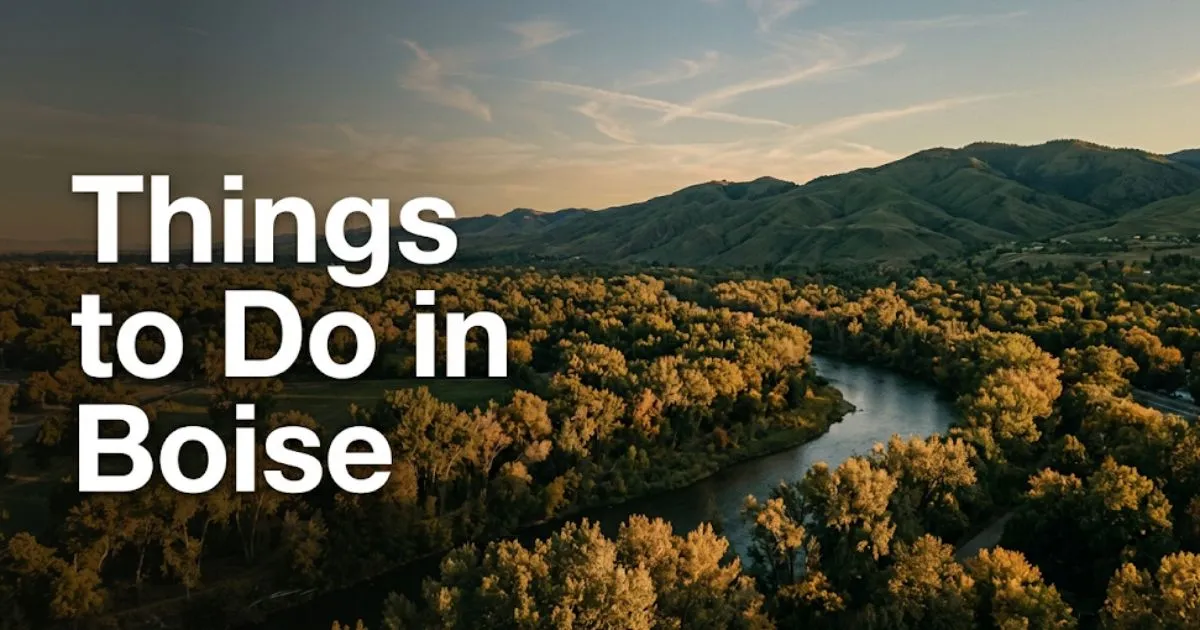
Boise sits at roughly 2,700 feet elevation in the Treasure Valley, with the Boise River running through its center and 190,000 acres of public land in the foothills immediately behind the city.
This guide covers 16 specific areas of the city, honest seasonal warnings, a weekend itinerary, day trip options, and profile-specific guidance for families, couples, solo travelers, seniors, and budget visitors.
Things to Do in Boise: What Makes the City Worth Your Trip
Boise earns its reputation as one of the American West’s most livable mid-size cities through a rare combination: direct trail access within minutes of downtown, a food scene grounded in local agriculture, and a Basque cultural community unlike anything else in the continental United States.
The city holds the largest Basque population outside the Basque Country of Spain and France. That community built the Basque Block on Grove Street into one of the most culturally specific and genuinely interesting streets in any American city.
Boise is also notably unhurried. It lacks the visitor congestion of Denver or Portland.
That makes it a better experience for travelers who want to explore without navigating crowds, overpriced parking, and overloaded weekend reservations at popular restaurants.
According to Visit Boise, the city’s convention and visitors bureau, Boise receives over four million visitors annually. Most concentrate in summer, which creates a seasonal imbalance this guide addresses directly.
The city’s most underrated quality is its walkability. Downtown, the North End, Hyde Park, and the Greenbelt connect easily on foot or by bike.
Best for: First-time Western US city visitors, outdoor-focused travelers, food-driven travelers, couples, and active families.
Genuine limitation: Travelers seeking a major coastal city experience or major international-caliber museum collections will find Boise’s scale modest.
| Experience Type | Best Traveler Profile | Cost Range | Time Needed | Insider Note |
|---|---|---|---|---|
| Boise River Greenbelt | All profiles | Free | 1 to 4 hours | Rent bikes at Wheels R Fun near Americana Blvd |
| Basque Block | Couples, solo, foodies | Free to $40 | 2 to 3 hours | Go Tuesday through Thursday to avoid weekend waits at Bar Gernika |
| Foothills Hiking | Outdoor enthusiasts | Free | 2 to 5 hours | Start before 8 AM in summer; trails are exposed |
| Old Idaho Penitentiary | History travelers, families | ~$8 to $12 adults | 1.5 to 2 hours | Evening ghost tours sell out; book in advance |
| Boise Farmers Market | Budget travelers, foodies | Free entry | 1 to 2 hours | Open Saturdays, April through late November |
Best Things to Do in Boise Idaho: The Non-Negotiable Experiences
The best things to do in Boise Idaho, for any traveler type, include the Boise River Greenbelt, the Basque Block, the Old Idaho Penitentiary, and at least one hike into the Boise Foothills.
These four experiences represent what is genuinely distinct about Boise. Skip them for generic tourist activities and you have visited a city that could be anywhere.
The Greenbelt is a 25-mile paved path along the Boise River, connecting parks, gardens, and neighborhoods from Lucky Peak to Eagle.
It functions as the city’s outdoor living room. Locals run, bike, walk dogs, and launch river floats from it daily.
Table Rock Trail offers the most rewarding single hike within city limits. The round trip runs approximately 3.5 miles with around 750 feet of elevation gain.
The payoff at the top is a panoramic view of the entire Treasure Valley. Carry at least one liter of water per person in all seasons.
The Old Idaho Penitentiary is the city’s most compelling historic site. It operated from 1872 to 1973 and the buildings are largely intact.
The Basque Block concentrates Boise’s most culturally specific experience into roughly one city block on Grove Street. It should be on every itinerary.
Insider Tip:
- Table Rock at sunrise is one of the best free experiences in Idaho; reach the trailhead by 6 AM in summer
- Bar Gernika on the Basque Block serves picon punch, a regional cocktail almost impossible to find elsewhere in the US
- For seniors and accessibility travelers, the Greenbelt is paved and flat; the foothills trails are not accessible for mobility aids
Boise River Greenbelt: The City’s Most Useful Outdoor Corridor
The Boise River Greenbelt is a 25-mile paved multi-use path connecting the city from east to west along the river, and it is the single most useful outdoor infrastructure in Boise for every traveler type.
Unlike most urban trail systems, the Greenbelt connects directly to parks, neighborhoods, botanical gardens, and river access points. It is not a scenic detour; it is a primary transportation and recreation corridor.
Barber Park, on the eastern end, is where most visitors start their river float. Tubes and rafts can be rented nearby, and the float typically ends at Americana Boulevard.
Budget roughly two to three hours for the float. Verify outfitter availability and pricing before visiting, as seasonal operations vary.
Families find the Greenbelt ideal for young children. The path is flat, stroller-accessible, and shaded along several stretches near Ann Morrison Park and Kathryn Albertson Park.
Seniors and accessibility travelers will find the paved surface accommodates wheelchairs and mobility aids through most of the central sections.
The Greenbelt’s peak crowding occurs on Saturday and Sunday mornings from late June through August. Weekday mornings offer a significantly quieter experience.
Couples visiting in fall find the Greenbelt most atmospheric. Cottonwood and ash trees turn gold from late September through October, and the crowds thin considerably.
Insider Tip:
- Kathryn Albertson Park, midway along the Greenbelt, is a genuine wildlife sanctuary; great blue herons, river otters, and wood ducks are regularly spotted
- Avoid the Barber Park float launch on peak summer Saturdays; the parking lot fills by 9 AM and wait times for tube rentals can exceed 90 minutes
- The western Greenbelt sections near Eagle Road are significantly less crowded than the central Boise stretch
Boise Neighborhoods Guide: Where to Actually Spend Your Time
Boise’s character is concentrated in four distinct neighborhoods: Downtown, the North End, Hyde Park, and the Bench. Each serves different visitor interests.
Downtown Boise holds the Basque Block, the Egyptian Theatre on Main Street, the Boise Farmers Market (Saturday mornings, Capitol Boulevard), and most of the city’s higher-end dining. It is the logical base for first-time visitors.
The North End is the city’s most architecturally interesting residential neighborhood. Craftsman bungalows line the streets between Harrison Boulevard and Camel’s Back Park.
It is genuinely beautiful to walk. Locals use it for morning coffee runs to Slow by Slow on 13th Street and access to the foothills trailheads near Camel’s Back Park.
Hyde Park, centered on North 13th Street, functions as Boise’s neighborhood commercial village. It is walkable, low-key, and less crowded than downtown.
The stretch includes independent coffee shops, bookstores, vintage clothing, and a weekend farmers market that feels more locally authentic than the downtown version.
The Bench is a working-class neighborhood south of downtown that few visitors discover. It holds some of the city’s best value dining, including Barbacoa on Overland Road for wood-fired Argentinian cooking.
Solo travelers find Hyde Park and the North End easy to navigate alone. Both are safe, well-lit, and full of independent businesses with a genuine neighborhood feel.
Budget travelers should base themselves near the Bench and Hyde Park. Hotel and Airbnb rates away from downtown run meaningfully lower with easy access to the same activities.
Key Takeaway: The North End and Hyde Park are where Boise actually lives. Downtown is where the tourist circuit runs. Combine both for the complete picture.
Outdoor Things to Do in Boise: Foothills, Trails, and River Recreation
Boise’s outdoor access is its most distinctive feature: more than 190,000 acres of public land in the Boise Foothills start literally at the city’s northern edge.
No comparable American city of Boise’s size offers this level of trail access within its boundaries. It is the correct frame for understanding what makes Boise different from other mid-size Western cities.
Table Rock Trail is the signature Boise hike. The 3.5-mile round trip gains roughly 750 feet, is manageable for moderately fit hikers, and delivers a full Treasure Valley panorama.
Trailhead access is on Warm Springs Avenue. Parking is limited and fills by 8 AM on weekend mornings in summer.
Camel’s Back Park trailhead in the North End connects to the extensive Ridge to Rivers Trail System. This network covers over 190 miles of trails across the foothills.
The Bureau of Land Management Boise District manages much of this land. Detailed trail maps are available through the Ridge to Rivers program.
Lucky Peak State Park, 10 miles east of downtown on State Highway 21, offers swimming beaches, boat launches, and picnicking along the reservoir. Summer weekends draw local families in large numbers.
Seniors and accessibility travelers should note that the foothills trails are natural surface, steep in sections, and not mobility-aid accessible. The Greenbelt and Lucky Peak’s lower beach areas offer better options.
Budget travelers will find all foothills trail access completely free. Lucky Peak charges a day-use fee; verify the current rate with Idaho State Parks and Recreation before visiting.
Families should plan foothills hikes for early morning in summer. Children overheat quickly on exposed trails above 90 degrees Fahrenheit.
Insider Tip:
- The Corrals Trailhead off Bogus Basin Road gives quicker access to high-elevation ridge trails than any downtown trailhead
- Cell service is unreliable above 3,500 feet in the foothills; download offline maps before hiking
- Rattlesnakes are present in the foothills from April through October; stay on marked trails and watch where you step near rocks and brush
Basque Block Boise: The Most Culturally Distinct Block in Idaho
The Basque Block on Grove Street in downtown Boise is the most culturally specific and genuinely interesting block in Idaho, anchored by a community that has maintained its language, food traditions, and social institutions for over a century.
Basque immigrants arrived in Idaho in the late 19th century as sheepherders and built what became the largest Basque diaspora community in the United States outside of a few Nevada ranching communities.
Bar Gernika at 202 South Capitol Boulevard is the essential stop. It has served picon punch and pintxos (Basque-style bar snacks) for decades.
The picon punch is a bittersweet aperitif cocktail made with Amer Picon, brandy, and grenadine. It is effectively impossible to find outside Basque communities.
The Basque Museum and Cultural Center at 611 Grove Street traces this immigration history with specific detail about Boise’s community. Admission runs nominally; verify the current rate before visiting.
Leku Ona at 117 South 6th Street serves more substantial Basque meals, including traditional lamb dishes and fish preparations. It is quieter than Bar Gernika and better for conversation.
Couples find the Basque Block ideal for an early evening. Start at Bar Gernika for a picon punch, move to the Basque Museum before it closes, then dinner at Leku Ona.
Solo travelers will find Bar Gernika’s bar seating comfortable for dining alone. The bartenders are knowledgeable and genuinely hospitable.
The Jaialdi festival, held in Boise every five years, draws tens of thousands of Basque descendants from across North America. Confirm the 2026 schedule with the Basque Museum directly; if it falls during your visit, book accommodations months in advance.
Insider Tip:
- The Basque Block is also home to a Basque fronton (jai alai court) and a community center where traditional dance and music events occur throughout the year; check the Basque Center calendar before your trip
- Arrive at Bar Gernika before 6 PM on weekends to avoid the longest waits
Old Idaho Penitentiary: Boise’s Most Compelling Historic Site
The Old Idaho Penitentiary is the single most compelling historic site in Boise, a still-largely-intact prison complex that operated from 1872 to 1973 and held some of the West’s most notorious criminals.
Unlike many “historic prison” tourist experiences that feel staged, the Old Idaho Pen still feels genuinely institutional. The cell blocks, execution chamber, and solitary confinement units are all accessible to visitors.
The site is located at 2445 Old Penitentiary Road, east of downtown. It is not walkable from the city center; a car or rideshare is necessary.
Admission for adults runs approximately $8 to $12 as of recent years; verify the current rate with the Idaho State Historical Society before visiting.
Evening ghost tours run on select nights and sell out reliably, particularly in October. Book these several weeks in advance through the Idaho State Historical Society.
Families with children should preview the site’s content before bringing young children. The execution chamber and solitary confinement exhibits are genuinely unsettling.
Children over 10 typically find the site fascinating. Kids under 8 may find it distressing.
History-focused travelers should budget 90 minutes to two hours. The self-guided tour covers approximately 30 acres of grounds.
The site is open seasonally; hours vary and some areas close in winter. Verify the current schedule directly before visiting.
Local alternative: Most visitors only see the prison itself. The adjacent Idaho Botanical Garden shares the same grounds and is worth adding to the same visit, particularly in summer when evening light garden events run on select weekends.
Insider Tip:
- The Penitentiary’s history includes Idaho’s suffrage movement, prison riots in 1952 and 1971, and the execution of Harry Orchard in 1954 — the guide who knows this history makes the visit significantly richer than the self-guided audio
- Park at the main lot on Old Penitentiary Road; GPS sometimes routes visitors to a residential street behind the complex
Julia Davis Park and Boise Arts: Culture in the Heart of the City
Julia Davis Park is Boise’s central cultural park, a 90-acre green space on the Boise River that holds the city’s primary art museum, a zoo, a history museum, a rose garden, and a bandshell within walking distance of each other.
It functions as Boise’s equivalent of a museum district, compressed into a single walkable park. No other location in the city delivers more cultural content per hour.
The Boise Art Museum (BAM) at 670 Julia Davis Drive is the city’s primary fine art institution. Its permanent collection focuses on American art with rotating exhibitions from national traveling shows.
Admission runs nominally; verify the current rate with BAM directly. The museum is closed on Mondays.
Zoo Boise shares the park and runs about 10 acres. It is genuinely enjoyable for families with children ages four through 12 but will feel small to visitors accustomed to major metropolitan zoos.
The Idaho Historical Museum is currently in a rebuilt facility near the park; verify its current operational status and location with the Idaho State Historical Society for 2026, as the museum underwent a major renovation in recent years.
The park’s rose garden peaks in June. Evening concerts at the bandshell run through summer; the Alive After Five outdoor concert series on Grove Street is the better outdoor music experience, but the park bandshell is free.
Seniors and accessibility travelers will find Julia Davis Park one of Boise’s most accessible destinations. Paths are paved, distances between sites are modest, and benches are frequent.
According to Visit Boise, Julia Davis Park hosts several of the city’s largest public events including the Boise Music Festival. Verify the 2026 events calendar before your trip.
Key Takeaway: Julia Davis Park is the most efficient single location in Boise for covering art, natural history, and green space in one morning, especially for families or travelers with limited days.
Boise Farmers Market and Food Scene: Where Locals Actually Eat
The Boise Farmers Market, held Saturday mornings on Capitol Boulevard from approximately April through late November, is the best single introduction to Boise’s food culture.
It is a genuine working farmers market, not a tourist food fair. Idaho agricultural producers bring direct-from-farm stone fruits, potatoes, lamb, honey, and specialty crops that define the region’s culinary identity.
The food scene beyond the market is built on this same agricultural identity. Boise’s best restaurants source locally and cook with restraint rather than trend-chasing.
Barbacoa on Overland Road is the most honest recommendation for travelers who want to understand Boise’s food quality. The wood-fired Argentine cooking here has earned a loyal local following for years.
Guru Donuts at multiple locations runs a small-batch donut operation that locals treat as a genuine food event, not a novelty. Seasonal flavors sell out by mid-morning on weekends.
Boise Fry Company serves hand-cut Idaho potato fries with dozens of dipping sauces. It is not fine dining but it is genuinely Boise: regional product, done well, without pretension.
The brewery scene is legitimate. Payette Brewing on North 14th Street and Woodland Empire Ale Craft on West Jefferson Street represent the anchor of a craft beer community that earned recognition in several national rankings. Verify current taproom hours before visiting.
Budget travelers can eat extremely well in Boise for $15 to $25 per person per meal at market stalls, food trucks on Capitol Boulevard, and casual neighborhood restaurants.
Couples seeking a higher-end dinner should look at Bittercreek Alehouse on Grove Street for reliable farm-to-table sourcing in a warm, unhurried atmosphere.
Insider Tip:
- The Boise Farmers Market vendor list includes several Basque producers selling traditional cured meats and cheeses that are nearly impossible to source outside Idaho; arrive before 10 AM for the best selection
- Tuesday through Thursday evenings offer the best restaurant experience downtown; Friday and Saturday dinner crowds at popular spots can mean 45-minute waits without reservations
Things to Do in Boise with Kids: What Genuinely Works for Families
The best things to do in Boise with kids are the Boise River Greenbelt float, Zoo Boise, the Discovery Center of Idaho, and the Boise Foothills trails done early in the morning.
These four experiences hold children’s attention, involve genuine physical engagement, and are logistically manageable for parents.
Zoo Boise in Julia Davis Park runs approximately 10 acres. For families with children ages four through 12, it delivers a focused, 90-minute experience without the exhaustion of a full-scale metropolitan zoo.
Admission runs nominally; verify the current rate with the City of Boise Parks and Recreation Department. Stroller-accessible throughout.
The Discovery Center of Idaho at 131 Myrtle Street is a hands-on science museum directly suited for children ages three through 14. It holds significantly more child engagement than the art museum for most kids.
Budget approximately two to three hours here. The space is not large but the interactive exhibits keep children genuinely occupied.
The Boise River float from Barber Park is the defining Boise family summer experience. Children need personal flotation devices; these are typically included with tube rentals.
Verify the minimum age and weight requirements with the outfitter before booking, as these rules vary and are enforced for safety.
Families should avoid planning Julia Davis Park visits on major summer weekend afternoons. Parking congestion and heat combine to make late-afternoon visits frustrating.
Roaring Springs Water Park in nearby Meridian (approximately 15 miles from downtown) provides a full-day family water park experience on genuinely hot summer days when Greenbelt hiking is inadvisable.
Seniors accompanying grandchildren will find Zoo Boise and the Discovery Center the most comfortable options: climate-controlled spaces, seating available, and modest walking distances.
Insider Tip:
- Pack a cooler and use Ann Morrison Park’s picnic areas after a morning on the Greenbelt; the park has shaded areas, a splash pad, and restrooms that make it a complete family half-day
- The Discovery Center of Idaho offers free admission on select dates; check the current schedule before visiting
Romantic Things to Do in Boise: Couples-Specific Experiences
Boise is a genuinely good couples destination because it combines walkable neighborhood exploration, a real food and drink scene, and outdoor settings that feel intimate rather than crowded.
The city lacks the tourist density that makes romantic experiences feel manufactured in larger markets.
Table Rock at sunrise is the most specifically romantic experience in Boise. The hike takes roughly 45 minutes from the Warm Springs Avenue trailhead, and the view at the top at dawn is the valley lit below open sky.
Carry headlamps for the approach in low light. The trail is well-marked but dark before sunrise.
The Basque Block at golden hour is ideal for couples. Start at Bar Gernika for a picon punch before the crowd arrives, walk the block, and move to dinner at Leku Ona.
This two-hour sequence covers one of the most culturally specific evenings available in any American mid-size city.
Boise’s hot springs deserve specific mention. Kirkham Hot Springs near Lowman, approximately 75 miles northeast of Boise on State Highway 21, offers undeveloped hot spring pools directly alongside a cold river.
The drive is scenic and the experience is uncrowded on weekdays. Bring towels and arrive before noon on weekends.
The Idaho Shakespeare Festival runs in summer at the outdoor amphitheater near the Boise River. Couples who bring a picnic and arrive early for the pre-show picnic area experience this as one of Boise’s most genuinely pleasant evenings.
Verify the 2026 season schedule with the Idaho Shakespeare Festival directly; performances typically run June through September.
The Sunnyslope wine region in the nearby Snake River Valley AVA is less than an hour from downtown. Several small wineries operate tasting rooms, and the agricultural setting makes for a low-key, unhurried afternoon.
Insider Tip:
- Book a Saturday evening Idaho Shakespeare performance two to three weeks in advance; lawn seats sell out for popular productions
- The drive on State Highway 21 toward Kirkham Hot Springs is genuinely beautiful in fall; combine hot springs with a stop at Kirkham Campground’s river access for a full day trip
Things to Do in Boise at Night: The Real Nightlife Picture
Boise’s nightlife is genuine but modest in scale. It suits travelers who want a real local bar scene, live music, and late-night food without the aggressive crowds of a major urban nightlife district.
It is not a late-night city by Las Vegas or Nashville standards. Last call at most bars is 2 AM. The energy is relaxed and local rather than performatively festive.
Neurolux Lounge at 111 North 11th Street is the city’s most significant live music venue for independent and touring acts. It books alternative, indie, electronic, and occasionally punk and metal shows.
The room is small, which means close stage proximity for any show. Tickets typically run $10 to $20; verify current show listings and ticket prices before visiting.
The Egyptian Theatre on Main Street books a range of film, music, and performance events in a beautifully restored 1927 movie palace. It is the most atmospheric venue in the city.
Check the current schedule on the Egyptian Theatre’s website before building your evening around it.
Alive After Five is a free outdoor concert series held Thursday evenings in summer at Eighth and Main downtown. It is the city’s most accessible nightlife entry point.
Locals show up with blankets and food trucks line the perimeter. It runs from approximately 5 PM to 8 PM.
Solo travelers will find Neurolux genuinely comfortable for solo attendance. The crowd is mixed-age and approachable; the bar is central and sociable.
Budget travelers should center their evenings on Alive After Five (free), happy hours at Payette Brewing’s taproom, and the bar seating at Bittercreek Alehouse, where the tap list is serious and the food holds up late.
Insider Tip:
- Treefort Music Festival in March transforms downtown Boise into one of the Pacific Northwest’s most interesting independent music events; it typically runs five days with 400-plus acts across 20-plus venues
- Book Treefort accommodations at least two months in advance; downtown hotels sell out completely during the festival
Key Takeaway: Treefort Music Festival in March is when Boise punches well above its weight as a music city. Plan around it if independent music matters to your trip.
Free Things to Do in Boise Idaho: Best No-Cost Experiences
The best free things to do in Boise Idaho include the Boise River Greenbelt, the Boise Foothills trails, the Alive After Five concert series, Camel’s Back Park, and the Basque Block (as a walking experience, separate from dining costs).
Boise is more generous with free public access than most comparable Western cities. The outdoor infrastructure alone justifies a trip without spending on admission fees.
Ridge to Rivers Trail System access is entirely free across all 190-plus miles of foothills trails. Parking at most trailheads is also free.
The system is managed jointly by the City of Boise, Ada County, and the Bureau of Land Management Boise District.
Ann Morrison Park and Kathryn Albertson Park along the Greenbelt are both free. Kathryn Albertson Park is a wildlife-focused natural sanctuary; the combination of free access and reliable wildlife sightings makes it one of Boise’s genuinely underused visitor experiences.
The Idaho State Capitol Building offers free self-guided tours during business hours. The interior architecture is impressive for a state capitol of Idaho’s size.
Boise Farmers Market entry is free. Spending is optional and easy to control.
Budget travelers can structure a full three-day Boise visit with minimal paid admission: free trails, free parks, free concert series, free capitol tour, free market access, and low-cost dining from market vendors and food trucks.
The main costs are accommodations, transportation, and food. Hotel rates in Boise typically run lower than Portland or Denver comparably situated hotels.
Seniors will find the free experiences among the most accessible. The Greenbelt, Ann Morrison Park, and the Capitol tour all involve manageable distances on paved surfaces.
Insider Tip:
- The Basque Museum on the Basque Block charges a nominal admission but the Block itself, including the fronton and the exterior architectural details, is free to walk and photograph
- Kathryn Albertson Park is one of the few urban wildlife sanctuaries in Idaho where wood ducks nest and river otters are regularly spotted; bring binoculars
Things to Do in Boise in Summer and Winter: Seasonal Reality
The best time to visit Boise is mid-September through October or May through mid-June. Summer is the most popular season and also the most genuinely demanding due to heat.
This is the honest seasonal picture that most Boise travel content omits.
Summer (June through August): Foothills temperatures regularly exceed 95 degrees Fahrenheit by 11 AM in July and August. Exposed trails above 3,000 feet are genuinely hazardous in midday hours for unprepared hikers.
The Boise River float, morning Greenbelt activity, and shaded park spaces remain enjoyable if you plan for early starts. Hotel rates peak in July and August.
Fall (September through October): This is Boise at its best for most traveler types. Temperatures drop into the 65 to 80 degree range during the day.
The Greenbelt’s cottonwoods turn gold, trail conditions are ideal, farmers market selections are at peak abundance, and crowds are thinner than summer. This is the window to prioritize.
Winter (November through February): Downtown Boise remains active and walkable. Bogus Basin Mountain Resort, 16 miles north of downtown, opens for skiing and snowshoeing typically from December through March.
Bogus Basin is a genuine, affordable local ski area rather than a resort-scale destination. Lift ticket prices run meaningfully lower than Sun Valley. Verify the 2026 season conditions and ticket prices with Bogus Basin directly.
Spring (March through May): The foothills are green and the temperatures are mild. Treefort Music Festival runs in March.
April and May offer the best hiking conditions of any season. The wildflower bloom on the foothills trails in April is one of Boise’s most genuinely appealing seasonal experiences.
Families with children visiting in summer should front-load outdoor activities before 9 AM and plan indoor or water-based activities for the 11 AM to 4 PM heat window.
Key Takeaway: Book your Boise trip for September or October if flexibility exists. The heat drops, the trails open fully, the Greenbelt turns gold, and hotel rates come down from summer peaks.
Day Trips from Boise: Bruneau Dunes, Snake River Canyon, and Beyond
The best day trips from Boise include Bruneau Dunes State Park, the Snake River Birds of Prey National Conservation Area, Shoshone Falls, and the hot springs corridor on State Highway 21 toward Lowman.
These destinations turn a Boise trip into a genuinely diverse Idaho experience without requiring additional accommodation.
Bruneau Dunes State Park sits approximately 65 miles south of Boise via US-51. It holds the largest single structured sand dune in North America, rising about 470 feet.
The park offers hiking on the dune, fishing in the small lakes at the base, and one of Idaho’s most accessible dark-sky observatories. Verify the observatory schedule with Idaho State Parks and Recreation before visiting.
Snake River Birds of Prey National Conservation Area lies about 35 miles south of Boise near Kuna. It protects the highest density nesting concentration of raptors in North America.
The best viewing window is March through June, when falcons, eagles, and hawks are actively nesting on the canyon walls above the Snake River. The Bureau of Land Management manages the area and provides trail access.
Shoshone Falls near Twin Falls is a 150-mile drive east on Interstate 84. The falls drop 212 feet, higher than Niagara Falls.
Spring snowmelt provides the highest water flow, typically April through June. Summer flow is reduced. Verify current conditions with the City of Twin Falls before making the drive specifically for the falls.
Couples should prioritize the Kirkham Hot Springs and Highway 21 corridor for a day trip. The route through the Boise National Forest is scenic, the hot springs are genuinely uncrowded on weekdays, and the Ponderosa pines create a dramatically different environment from the high desert of the Treasure Valley.
Budget travelers should note that all day trip destinations except Bruneau Dunes (state park day-use fee) involve minimal or no admission costs. The primary expense is fuel.
Insider Tip:
- Cell service along the Highway 21 corridor disappears within 30 miles of Boise; download offline maps and save the Idaho State Parks emergency contact before departing
- The Bruneau Dunes observatory programs are a significant experience for families with older children and couples; spaces are limited and fill quickly; call ahead to reserve
Boise Travel Guide: Logistics and Planning for 2026
Getting to and around Boise in 2026 is straightforward by regional standards, with the airport close to downtown, a walkable city center, and easy car rental access for foothills and day trip exploration.
Boise Airport (BOI) is located approximately 5 miles southwest of downtown. It serves direct flights from most major western US hubs including Seattle, Portland, San Francisco, Los Angeles, Denver, and Salt Lake City.
The drive from BOI to downtown runs approximately 10 to 15 minutes in normal traffic. Rideshare services operate from the airport. Car rental is available on-site.
Getting around downtown does not require a car. The city center, North End, Hyde Park, and the Greenbelt are all walkable or bikeable.
Valley Regional Transit (VRT) operates local bus service, but routes are limited and schedules are infrequent compared to larger city systems. A car is strongly recommended for foothills trailhead access, Julia Davis Park, the Old Idaho Penitentiary, and all day trips.
Downtown parking is available in several city-operated garages, primarily on 8th Street and Capitol Boulevard. Street parking exists but fills by mid-morning on weekends.
Budget approximately $5 to $10 for daily garage parking downtown; verify current rates with the City of Boise Parking Services.
Accommodation options concentrate in downtown Boise and near the Boise Airport. Mid-range hotels downtown run approximately $130 to $220 per night in peak summer season as of recent years; fall and winter rates drop considerably. Verify current rates directly with properties.
Suggested Weekend Itinerary:
Day 1: Boise Foundation
- Start at the Boise Farmers Market (Saturday morning) on Capitol Boulevard
- Walk the Basque Block; visit the Basque Museum; stop at Bar Gernika for a picon punch
- Afternoon: Julia Davis Park; Boise Art Museum and Zoo Boise
- Evening: Dinner at Barbacoa; drinks at Payette Brewing taproom
Day 2: Outdoors and Neighborhoods
- Early morning: Table Rock Trail (start by 7 AM in summer)
- Mid-morning: North End walk on Harrison Boulevard; coffee at Slow by Slow
- Late morning: Boise River Greenbelt walk or bike toward Ann Morrison Park
- Afternoon: Drive to Lucky Peak State Park for swimming or a picnic
- Evening: Neurolux for live music (check the current booking calendar)
Families should swap Day 2’s Table Rock hike for the Discovery Center of Idaho in the morning and the Barber Park river float in the afternoon.
Insider Tip:
- The Idaho Department of Commerce Office of Tourism Development publishes a free annual Idaho travel guide with current events, parks access information, and regional maps; request it before your trip
- Book accommodations at least three weeks in advance for summer weekends; two months in advance for Treefort Music Festival in March
Safety and Practical Warnings for Boise and the Surrounding Region
The primary safety concern for Boise visitors is summer heat on exposed foothills trails. Temperatures above 95 degrees Fahrenheit combined with low humidity and high elevation sun exposure create genuine dehydration and heat exhaustion risk for unprepared hikers.
Key safety and practical facts every visitor should know:
- Carry minimum one liter of water per person per hour of planned trail time in summer. Most foothills trailheads have no water sources on the route.
- Start all foothills hikes before 8 AM in July and August. Conditions deteriorate rapidly after 10 AM.
- Boise River current is deceptively strong near Barber Park. Children require personal flotation devices at all times in or near the water.
- Rattlesnakes are present in the foothills from April through October. Stay on marked trails. Watch carefully around rocks, fallen logs, and brush.
- Cell service is unreliable above 3,500 feet in the foothills and along the Highway 21 corridor. Download offline maps before departing for any trail or day trip destination.
- Sun protection is essential at 2,700 feet elevation. UV exposure in Boise is higher than most visitors anticipate. Apply SPF 30 or higher sunscreen before any outdoor activity.
- Parking at popular trailheads fills early on weekends. Table Rock trailhead on Warm Springs Avenue fills by 8 AM on summer Saturdays.
For trail emergencies in the foothills, the Ada County Sheriff’s Office Search and Rescue team is the primary response resource. For medical emergencies, St. Luke’s Boise Medical Center on Fort Street is the primary Level II trauma center.
Frequently Asked Questions About Things to Do in Boise
What is Boise Idaho best known for?
Boise is best known for outdoor trail access, its unique Basque cultural heritage, and a farm-to-table food scene rooted in Idaho agriculture.
The city holds the largest Basque population in the United States outside of a few Nevada communities, centered on the Basque Block on Grove Street.
Its Boise River Greenbelt and 190,000-acre foothills trail network give the city an outdoor recreation profile uncommon for a city its size.
How many days do you need in Boise?
Two full days cover Boise’s core experiences comfortably; three days allow for a day trip to Bruneau Dunes or the Snake River Birds of Prey area.
A one-day visit is possible but requires prioritizing: choose the Basque Block, Table Rock hike, and the Greenbelt as the three non-negotiable stops.
Four or more days make sense only if you are planning multiple day trips or attending a multi-day event like Treefort Music Festival.
Is Boise Idaho worth visiting?
Boise is worth visiting for travelers who prioritize outdoor access, regional food culture, and genuine neighborhood character over major urban cultural institutions.
It consistently delivers more than visitors expect, particularly those arriving from Portland or Denver who assume a smaller city means a less interesting one.
Travelers seeking major museum collections, coastal experiences, or an aggressive nightlife scene will find Boise modest by comparison.
What is the best time of year to visit Boise?
The best time to visit Boise is mid-September through October or May through mid-June.
Fall offers ideal trail conditions, fall foliage on the Greenbelt, peak farmers market abundance, and lower hotel rates than summer.
Spring brings green foothills, wildflower blooms, and the Treefort Music Festival in March, making it the best season for music-focused visitors.
Is Boise walkable for tourists?
Downtown Boise, the North End, Hyde Park, and the Boise River Greenbelt are all highly walkable and safely navigable on foot.
A car becomes necessary for foothills trailhead access, the Old Idaho Penitentiary, Lucky Peak State Park, and all day trips beyond the city.
The Valley Regional Transit bus network operates but is limited in frequency; plan on rideshare or a rental car for anything outside the central neighborhoods.
What should I not miss in Boise Idaho?
The Basque Block (including Bar Gernika and the Basque Museum), Table Rock Trail, and a morning at the Boise Farmers Market are the three experiences no Boise visitor should skip.
The Boise River Greenbelt is the fourth essential experience, either as a walk, bike ride, or summer river float from Barber Park.
For any visitor with one additional day, the drive to Bruneau Dunes State Park or the Snake River Birds of Prey National Conservation Area transforms the trip from a city visit into a genuinely diverse Idaho experience.
Boise rewards the traveler who goes in with a specific plan rather than a vague intention to wander. Book Table Rock and your Basque Block evening first. Then build around them.
The one logistical step that makes the biggest difference is having a car available from day one. Valley Regional Transit won’t get you to the foothills, the Penitentiary, Lucky Peak, or any day trip destination.
Travel information, admission prices, seasonal schedules, and event dates change. Verify all logistics directly with venues and with Visit Boise at visitboise.org before your departure. The city is worth getting right.