Best Things To Do in Florida Keys: Complete 2026 Guide

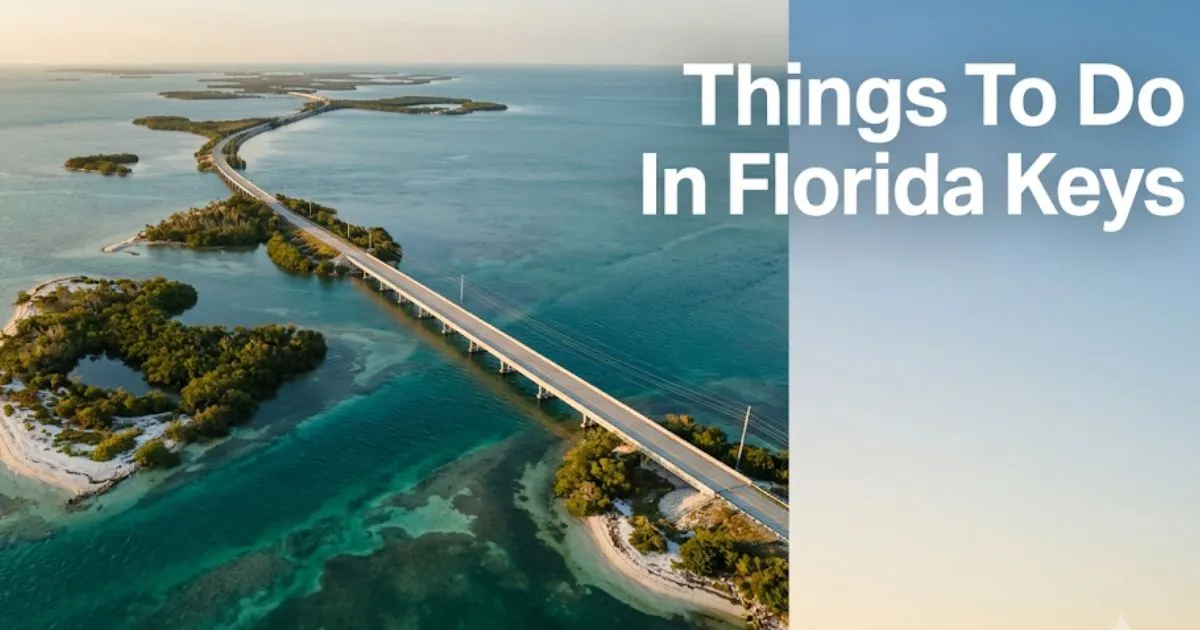
The Florida Keys offer 113 miles of reef diving, backcountry fishing, wildlife encounters, and island culture that no other US destination replicates.
The Florida Keys National Marine Sanctuary, one of the largest protected marine areas in the US, anchors nearly every outdoor activity along the chain.
This guide covers the full island chain by zone, with specific activities, honest crowd and cost assessments, and itinerary frameworks to help you plan an actual trip.
Things To Do in Florida Keys: What Makes This Chain Unique
The Florida Keys are not a single beach destination — they are a 113-mile island chain with five distinct travel zones, each built around a different activity identity.
Key Largo anchors the Upper Keys as the dive capital of the chain. Islamorada is the sport fishing capital of the world, by its own well-earned reputation. Marathon sits at the geographic center with state park access and a more local, less-touristed pace. Big Pine Key offers the chain’s most genuinely wild nature. Key West runs on culture, nightlife, and literary history.
Most visitors spend their entire trip in Key West. That is the single most common Keys planning mistake.
The chain runs southwest along US-1, the Overseas Highway, one of the most scenic drives in the US. Mile markers count down from Mile Marker 126 near Florida City to Mile Marker 0 in Key West.
According to the Florida Keys and Key West Tourism Council, the island chain welcomes approximately 4.5 million visitors annually. Most of that traffic concentrates in Key West, leaving the Upper and Middle Keys genuinely accessible even in high season.
Insider Tip:
- Navigate by mile markers, not town names. Locals give directions by MM (Mile Marker) number.
- MM 0 is Key West. MM 106 is Key Largo’s southern boundary.
- Families benefit most from understanding this geography before arrival, since the drive from Key Largo to Key West is over two hours without stops.
Best Things To Do in the Florida Keys by Zone
Understanding which zone matches your activity priorities determines whether your trip is excellent or disappointing.
| Zone | Mile Markers | Best For | Primary Draw | Crowd Level |
|---|---|---|---|---|
| Key Largo | MM 106 to MM 90 | Divers, snorkelers | John Pennekamp, reef access | Moderate |
| Islamorada | MM 90 to MM 73 | Anglers, foodies | Flats fishing, Robbie’s | Moderate |
| Marathon | MM 73 to MM 45 | Families, nature | Bahia Honda, Seven Mile Bridge | Low to Moderate |
| Big Pine Key | MM 45 to MM 30 | Wildlife, solitude | Key deer, Blue Hole | Low |
| Key West | MM 0 to MM 4 | Culture, nightlife | Mallory Square, Duval Street | High |
Couples seeking a romantic, quieter experience should base in Islamorada or Marathon rather than Key West.
Families with children get the most practical value from Marathon, where Bahia Honda State Park offers supervised beach access and the pace is gentler.
Budget travelers should note that Key West commands the highest accommodation prices on the chain. A 30-minute drive north to Stock Island or Marathon can cut lodging costs by 30 to 50 percent in high season.
Key Takeaway: Base yourself in Islamorada or Marathon for a quieter, more activity-rich experience. Key West is a destination, not a base camp.
Things To Do in Key Largo
Key Largo is the underwater capital of the Florida Keys, with the closest and most accessible reef diving on the entire chain.
John Pennekamp Coral Reef State Park is the primary draw. It was the first undersea park in the continental US and covers approximately 70 nautical square miles of reef, seagrass beds, and mangrove swamps. The famous Christ of the Abyss bronze statue sits at 25 feet of water and is reachable on guided snorkel tours.
Snorkel tours typically run approximately 2.5 to 3 hours. Admission to the park runs separately from tour costs. Verify current fees with the park directly before visiting.
Solo travelers find Key Largo highly practical. Most tour operators accommodate single bookings, and the dive community is social and welcoming.
The best reef conditions occur November through April, when water visibility regularly exceeds 60 feet. Summer water is warmer but visibility can drop after weather events.
Insider Tip:
- Skip the main Pennekamp beach on weekends in season. It fills before noon.
- Opt for the glass bottom boat tour if you are not a strong swimmer. It delivers genuine reef views without water entry.
- The African Queen canal boat, moored near the Key Largo Holiday Inn, is one of the few original movie props still operational in the US. Tours run seasonally — verify availability before planning around it.
Key activities in Key Largo:
- Snorkeling and scuba diving at John Pennekamp
- Kayaking through the North Sound Creek mangrove trail
- Sunset pontoon tours on Florida Bay
- Exploring the Florida Keys History and Discovery Center on US-1
Things To Do in Islamorada
Islamorada is where serious anglers come and where everyone else discovers they should have come here sooner.
Robbie’s of Islamorada (MM 77.5, Bayside) is the single most genuinely fun stop in the Upper Keys. For a modest fee, visitors feed a congregation of enormous tarpon from a wooden dock. The tarpon, some exceeding 100 pounds, launch out of the water to grab fish from your hand.
Robbie’s also operates kayak rentals, backcountry snorkel tours, and fishing charters from the same location. It is one of the few Keys attractions that genuinely delivers for every traveler type.
Couples should time a visit to Robbie’s for early morning, when the crowd is thinner and the light over Florida Bay is genuinely good.
Anne’s Beach (MM 73.5) is a free, shallow-water beach with a boardwalk through a tidal flat ecosystem. It is significantly less crowded than Bahia Honda and underused by first-time visitors.
Theater of the Sea (MM 84.5) offers dolphin, sea lion, and marine life encounters. Admission runs at a premium tier. It is not the same experience as wild dolphin interaction but suits families who want a structured educational encounter.
Islamorada restaurant culture centers on fresh local catch. Lazy Days Restaurant and Morada Bay Beach Cafe (MM 81 Bayside) both serve excellent grouper and yellowtail snapper in waterfront settings. Morada Bay’s full moon parties have been a local institution for years.
Insider Tip:
- Book fishing charters through local captains directly rather than through hotel concierges. The price is lower and the boats are the same.
- Islamorada’s bayside offers calmer water than the Atlantic side — better for beginners on kayaks and paddleboards.
Things To Do in Marathon, Florida Keys
Marathon is the geographic center of the Keys and the least tourist-oriented of the five main zones, which is precisely why it deserves more time than most itineraries give it.
The Seven Mile Bridge, stretching from Marathon to Little Duck Key, is one of the most photographed road structures in the US. Walking or cycling the old bridge parallel to the new one gives a different perspective entirely. Pelicans line the old bridge railings at close range.
Bahia Honda State Park (MM 36.8) holds what the National Park Service and most reef travel publications consistently rate among the best beaches in Florida. Calusa Beach on the Atlantic side and Sandspur Beach on the Bayside offer distinct experiences within the same park. Day-use capacity is limited; arrive before 9 a.m. on weekends in season or risk turning away at the gate.
Seniors and accessibility travelers note that Bahia Honda has paved paths to Sandspur Beach and accessible restroom facilities. The terrain at Calusa Beach is sandier and slightly less even.
The Turtle Hospital (MM 48.5) treats and rehabilitates injured sea turtles. Educational tours run daily at set times. Admission is charged. This is one of the genuinely legitimate wildlife education experiences on the chain, not a tourist entertainment facility.
Marathon’s Crane Point Museum and Nature Center (MM 50) preserves one of the largest tracts of wild land in the Keys. Its boardwalk trail through tropical hardwood hammock and indigenous heritage sites takes roughly 90 minutes to walk at a comfortable pace.
Budget travelers find Marathon more affordable than Key West on nearly every cost category: accommodation, dining, and activity fees.
Key Takeaway: Bahia Honda State Park is the most undervisited major attraction in the Florida Keys. Most first-timers skip it entirely on their way to Key West and regret it.
Things To Do in Big Pine Key
Big Pine Key is the wildest, most ecologically distinct zone in the Florida Keys, and it sees a fraction of the visitor traffic its natural significance deserves.
The Key deer, a miniature subspecies of the white-tailed deer standing roughly 26 inches at the shoulder, live almost exclusively on Big Pine Key and No Name Key. The National Key Deer Refuge protects approximately 84,000 acres across multiple Keys. Early morning drives through the refuge road network on Key Deer Boulevard offer reliable sightings.
Do not feed the Key deer. Feeding is a federal offense under the Endangered Species Act. The species was nearly extinct in the 1950s and its recovery is an active conservation effort.
The Blue Hole (Key Deer Boulevard, north of US-1) is a freshwater quarry-turned-wildlife pond where American alligators, Key deer, and wading birds gather around the same waterhole. It is free to visit, requires no reservation, and is one of the most unusual wildlife observation spots in Florida.
Solo travelers with an interest in natural history find Big Pine Key disproportionately rewarding. The pace is slow and the encounters are genuine.
Looe Key Reef, accessible by boat from Big Pine Key, is the least crowded major reef in the Keys. The coral formations here are in better condition than many shallower, more heavily trafficked reef sites closer to Key Largo.
No Name Pub (No Name Key, North Watson Boulevard) is exactly what it sounds like: a bar in the middle of nowhere covered wall-to-wall in dollar bills signed by visitors over decades. The pizza is good. The experience is irreplaceable on a Keys road trip.
Things To Do in Key West, Florida Keys
Key West is the southernmost city in the continental US and functions as the cultural, historic, and nightlife capital of the Florida Keys.
Mallory Square and the Sunset Celebration are the island’s most famous daily ritual. Starting approximately 90 minutes before sunset, street performers, artists, and vendors gather at the harbor’s edge as the crowd watches the sun drop into the Gulf. It is genuinely atmospheric and worth attending once.
Doing it twice is not necessary. Experienced visitors know it.
Duval Street is Key West’s famous main drag. It is entirely tourist-oriented. The bars, T-shirt shops, and restaurant chains that line it are not where locals eat or drink.
The Hemingway Home and Museum (907 Whitehead Street) is legitimately worth the admission. The house, where Ernest Hemingway wrote some of his most significant work, is well-preserved and the guided tour is specific and informative. The approximately 60 polydactyl cats that inhabit the property are descendants of Hemingway’s original cats.
The Key West Butterfly and Nature Conservatory (1316 Duval Street) houses live butterflies, tropical birds, and flowering plants in a glass-enclosed garden. Admission is charged. It is genuinely beautiful and suits all ages. Families with children under 10 find it particularly engaging.
African Cemetery at Higgs Beach is a free, historically significant memorial to approximately 294 Africans who died on Key West after being rescued from illegal slave ships in 1860. It is one of the most historically important sites in Florida and most tourists walk past it without knowing it exists.
For dining, avoid the Duval Street tourist circuit. Garbo’s Grill (William Street) is a food truck institution serving Korean-Mexican fusion. Blue Heaven (Petronia Street, Bahama Village) serves brunch under an outdoor banyan tree with roosters wandering the tables.
Florida Keys Snorkeling and Diving
The Florida Keys sit above the only living coral barrier reef in the continental US, making snorkeling and diving the defining water activity of the island chain.
The Florida Keys National Marine Sanctuary protects over 2,900 square miles of ocean waters. According to the National Park Service and NOAA, the sanctuary encompasses more than 6,000 species of marine life including over 40 coral species, roughly 500 fish species, and numerous sea turtle species.
Snorkel tours typically depart twice daily from most operators in Key Largo and Islamorada. Budget approximately $40 to $70 per person for a standard snorkel trip, not including equipment rental. Dive tours run higher.
Beginners and families should book guided snorkel tours rather than free-diving independently. Reef depth varies. Some areas are accessible from the surface at 3 to 5 feet of water. Others require confidence in deeper water.
Best conditions are November through April. Summer diving is warm and pleasant but afternoon thunderstorms can cancel afternoon departures with little warning.
Solo divers should be aware that most tour operators require a dive buddy or will pair you with another solo guest. Confirm the policy when booking.
Top snorkeling sites in the Florida Keys:
- Christ of the Abyss statue (John Pennekamp, Key Largo, 25 feet)
- Molasses Reef (Key Largo, shallow to 35 feet, excellent visibility)
- Cheeca Rocks (Islamorada, very shallow, ideal for beginners)
- Looe Key Reef (Big Pine Key, uncrowded, healthy coral)
- Sand Key Reef (Key West, accessible on half-day trips)
Key Takeaway: Book snorkel and dive tours at least two weeks ahead in high season. January through March tours often sell out 10 to 14 days in advance.
Florida Keys Fishing and Water Sports
Islamorada’s self-designation as the “Sport Fishing Capital of the World” is backed by genuine ecological reality, not tourism marketing.
The flats of Florida Bay and the Atlantic backcountry around the Keys hold some of the most productive fly fishing and light tackle fishing water in North America. Tarpon, bonefish, and permit constitute the “Grand Slam” of Keys flats fishing. Catching all three species in a single day is rare enough that it is a legitimate achievement in the angling community.
Offshore fishing for mahi-mahi, wahoo, tuna, and sailfish runs from numerous marinas along the chain. Half-day offshore trips typically run from approximately $80 to $150 per person on shared charters. Private charters are significantly higher.
Beginners should book a shared backcountry guided trip out of Islamorada or Marathon for their first Keys fishing experience. Guides provide all tackle and local knowledge.
Florida lobster mini-season typically falls in late July, drawing large crowds to the reef zones. If your trip overlaps, book accommodation well in advance and expect heavier boat traffic on snorkel sites.
Non-fishing water sports available across the chain:
- Kayaking through mangrove tunnels (rentals available in most zones)
- Paddleboarding on Florida Bay (calmer, less wind than the Atlantic side)
- Windsurfing and kiteboarding at Sombrero Beach, Marathon (consistent trade winds)
- Parasailing from Key West Harbor (multiple operators; advance booking advised)
- Sunset sailing on tall ships from Key West Bight Marina
Seniors and travelers with limited mobility find parasailing and sunset sailing the most physically accessible water experiences on the chain.
Florida Keys Wildlife and Nature
The Florida Keys host wildlife species found nowhere else on the continent, including two federally protected subspecies unique to the island chain.
The Key deer (Big Pine Key and No Name Key) and the Florida Keys mole skink are endemic to the chain. American crocodiles, an endangered species, inhabit the bay waters around Key Largo and Islamorada. Do not approach American crocodiles. They are wild animals in their natural habitat, not a managed attraction.
Manatees move through the Keys’ shallow bay waters year-round, with higher concentrations in the cooler months from October through March. Canoe and kayak tours near the mangrove edges in Marathon and Big Pine Key offer reliable manatee encounters without disturbing the animals.
Families with children should book a naturalist-led kayak tour rather than an unguided paddle if encountering wildlife is the goal. Guides know where animals are and how to approach without disruption.
Birding in the Florida Keys is exceptional. The chain sits on the Eastern Atlantic Flyway migration route. Spring migration, roughly April through May, brings warblers, raptors, and shorebirds through the hardwood hammock habitats of Big Pine Key and Cudjoe Key.
The Dagny Johnson Key Largo Hammock Botanical State Park (MM 106, North Key Largo) protects the largest tract of West Indian tropical hardwood hammock in the US. Trails are flat, paved, and accessible. The park sees relatively few visitors despite being adjacent to major dive operators.
Seniors and accessibility travelers find Dagny Johnson one of the most accessible natural areas in the Keys, with a paved loop trail and interpretive signage throughout.
Florida Keys Beaches and State Parks
The Florida Keys are not a classic beach destination. That is an important distinction for travelers arriving with Caribbean expectations.
The Atlantic shoreline is primarily composed of coral rubite, seagrass, and shallow reef flats rather than the white sand beach environment of the Caribbean or the Gulf Coast. The best sand beaches in the Keys are in state parks, not lining the Overseas Highway.
Bahia Honda State Park (MM 36.8) has the highest-quality natural sand beaches on the chain. Calusa Beach and Sandspur Beach are managed, clean, and backed by native vegetation. Snorkeling directly off Sandspur Beach reaches a shallow reef.
Anne’s Beach (MM 73.5, Islamorada) is a free, shallow-water tidal flat beach with a wooden boardwalk. It is excellent for children under 8 because the water depth is minimal and the warm, clear conditions make it feel like a wading pool.
Sombrero Beach (Marathon, MM 50) is a free municipal beach with parking, restrooms, picnic areas, and calm water. It is significantly less crowded than Bahia Honda on weekends.
Higgs Beach (Key West, Atlantic Boulevard) is Key West’s primary free public beach. Water quality is good. The beach is close to the African Cemetery historical site. White Street Pier at the eastern end is a local sunset gathering spot that feels nothing like Mallory Square.
State park day-use fees apply at Bahia Honda and John Pennekamp. Fees are modest but subject to change. Verify current rates with Florida State Parks before visiting.
Families with young children consistently report that Anne’s Beach and Sombrero Beach outperform the more famous Bahia Honda for ease of use, mainly because parking and entry are simpler.
Florida Keys Culture and History
Key West carries the cultural weight of the Florida Keys, but the history of the island chain runs deeper and stranger than any single city’s story.
Key West was the wealthiest city per capita in the US in the late 19th century, built on wrecking (salvaging ships that ran aground on the reef), sponging, and cigar manufacturing. That history is visible in the architecture of the Historic District (listed on the National Register of Historic Places). The district is walkable from Duval Street.
The Hemingway Home and Museum (907 Whitehead Street) is the most legitimate literary tourism experience in Florida. Hemingway lived there from 1931 to 1939, writing “A Farewell to Arms” and “For Whom the Bell Tolls” during that period.
The Key West Lighthouse and Keeper’s Quarters Museum (938 Whitehead Street) offers a 69-step climb to a panoramic view of the island. Admission is charged. It is one of the better-value attractions in Key West for the quality of the view and the historical context.
The Conch Republic is Key West’s tongue-in-cheek independent identity, born from a 1982 protest against a Border Patrol roadblock. The phrase appears on flags, menus, and merchandise throughout the island. It signals Key West’s genuine counterculture identity rather than manufactured tourism branding.
Couples exploring Key West’s culture on foot should walk the Bahama Village neighborhood (bounded by Petronia, Fort, Thomas, and Angela Streets). It is quieter than Duval Street, historically significant as Key West’s original Caribbean immigrant community, and home to Blue Heaven, the best brunch spot on the island.
Key Takeaway: The Florida Keys’ reef is the most important natural feature on the chain. But Key West’s Historic District is one of the most architecturally intact 19th-century American city streetscapes still accessible on foot.
Dry Tortugas National Park Day Trip
Dry Tortugas National Park is the most logistically demanding attraction in the Florida Keys and also the most spectacular.
Located approximately 70 miles west of Key West in the Gulf of Mexico, the park is accessible only by boat or seaplane. The centerpiece is Fort Jefferson, a 19th-century Civil War-era brick fortress covering most of Garden Key. It is the largest masonry structure in the Western Hemisphere.
The primary ferry operator is Yankee Freedom III, which departs Key West’s Historic Seaport nightly and arrives at the park after approximately two to 2.5 hours. The round trip plus time on the island is a full-day commitment. Ferry tickets are priced at a premium tier. Verify current rates and booking windows directly with Yankee Freedom III, as demand is high.
Book Dry Tortugas ferry tickets as early as possible. In high season, tickets sell out weeks to months in advance. This is the single most commonly botched logistics decision in Florida Keys trip planning.
The snorkeling immediately around Fort Jefferson is some of the clearest-water snorkeling accessible without a dive certification in the continental US. Visibility can exceed 100 feet. Gear rental is available on the ferry.
Solo travelers find the day trip highly manageable. The ferry is social, the island is small enough to explore without a guide, and the experience needs no companion to be fully satisfying.
Seniors should consider the seaplane option (operated by Key West Seaplane Adventures) if the two-hour boat crossing is a physical concern. The seaplane costs significantly more but dramatically shortens travel time each way.
To book and prepare for the Dry Tortugas day trip:
- Reserve ferry or seaplane tickets as early as possible, ideally 4 to 8 weeks ahead in high season.
- Pack food and extra water. No food service exists on the island.
- Bring snorkel gear or rent on the ferry for an additional fee.
- Wear reef-safe sunscreen. The park enforces this requirement.
- Check the park service’s current entry requirements directly, as camping and permits add additional logistics.
Florida Keys Itinerary for 3 to 5 Days
A well-structured Florida Keys itinerary moves from north to south along the Overseas Highway, spending one to two nights in the Upper Keys before pushing south rather than flying into Key West and staying put.
3-Day Florida Keys Itinerary:
Day 1: Key Largo and Islamorada
- Arrive Key Largo. Check into accommodation north of MM 100.
- Afternoon snorkel tour at John Pennekamp Coral Reef State Park.
- Drive south to Islamorada (MM 80s) for dinner at Morada Bay Beach Cafe.
- Feed the tarpon at Robbie’s of Islamorada if arriving before 5 p.m.
Day 2: Marathon and Big Pine Key
- Morning visit to Seven Mile Bridge at sunrise.
- Bahia Honda State Park: Calusa Beach swimming and snorkeling.
- Afternoon: Blue Hole and Key deer viewing on Big Pine Key.
- Dinner at No Name Pub, No Name Key.
Day 3: Key West
- Morning: Hemingway Home and Museum, then Key West Lighthouse.
- Lunch at Garbo’s Grill (William Street food truck).
- Afternoon: African Cemetery at Higgs Beach, then White Street Pier.
- Evening: Mallory Square Sunset Celebration. Then Blue Heaven or Bahama Village for dinner.
5-Day Extension:
Days 4 to 5 add: a Dry Tortugas day trip on Day 4 (full day, depart early from Key West), and a half-day of kayaking or paddleboarding on Day 5 before departure.
Families with young children should reverse the itinerary and spend more time in Marathon at Bahia Honda and Turtle Hospital before making the push to Key West on the final day. The 5-day version works better for families.
Florida Keys for Families, Couples, and Solo Travelers
The Florida Keys serve each traveler type well but in completely different zones of the chain.
Families with children get the most practical value from the Middle Keys. Bahia Honda State Park’s calm, shallow beach entry, Turtle Hospital in Marathon, and Crane Point Museum all engage children ages 5 and up without requiring water confidence or physical endurance. Key West’s bar-driven street culture is less suited for families with young children, though the Butterfly Conservatory and Hemingway’s cats are genuine kid-friendly exceptions.
Couples consistently find Islamorada and the backcountry kayaking routes of the Upper Keys most romantic. Sunset dinners at Morada Bay Beach Cafe on the water, private fishing charters at dawn in the backcountry flats, and a night at one of Islamorada’s boutique waterfront resorts deliver a genuinely intimate Keys experience that Key West’s crowded streets rarely match.
Solo travelers find Key Largo and Key West both practical. Key Largo’s dive community is inherently social. Key West’s bar and music scene on Greene Street (one block off Duval, noticeably more local) and at Hog’s Breath Saloon is easy to navigate alone. Hostels and budget guesthouses operate in Key West. Solo dining is comfortable at the island’s food trucks and counter-service spots.
Budget travelers should know the Florida Keys are not a budget-friendly destination in the conventional sense. However, free experiences include Anne’s Beach, Blue Hole, No Name Key wildlife viewing, White Street Pier in Key West, and the African Cemetery at Higgs Beach. Mid-range accommodation in Marathon or Big Pine Key can run 30 to 50 percent less than equivalent Key West lodging.
Seniors and accessibility travelers: Paved trails exist at Dagny Johnson Hammock State Park (Key Largo), Crane Point Museum (Marathon), and at Bahia Honda’s Sandspur Beach area. The Dry Tortugas seaplane option bypasses the two-hour ferry. Key West’s Old Town is flat and walkable for short distances, though heat management is critical from May through October.
Florida Keys Travel Tips and Practical Logistics
The most important logistical fact about the Florida Keys is this: you will need a car for every part of the chain except central Key West.
Renting a car in Miami or Fort Lauderdale is the standard approach. Avoid renting at Key West International Airport (EYW) — rates are typically higher and vehicle selection is limited. Driving the Overseas Highway itself takes approximately 2 hours and 15 minutes from Key Largo to Key West without stops. With stops, plan for a full day.
Traffic on US-1 in season (December through April) can be severe on weekend afternoons, particularly southbound Friday evenings and northbound Sunday afternoons. If your schedule is flexible, avoid those patterns.
Getting there by air: Miami International Airport (MIA) and Fort Lauderdale-Hollywood International Airport (FLL) are the standard arrival points for self-drive trips. Key West International Airport (EYW) serves direct flights from select East Coast cities but with smaller aircraft and fewer options.
Practical logistics every visitor should confirm before arriving:
- Dry Tortugas ferry: Reserve weeks to months ahead in high season. Non-negotiable.
- Bahia Honda State Park day-use: Can fill by mid-morning on weekends. Arrive early or call ahead.
- Dive and snorkel tours: Book at least 1 to 2 weeks ahead from December through March.
- Accommodation: The Keys have limited lodging inventory. Book 2 to 4 months ahead for high season.
- Cell service: Spotty between MM 20 and MM 10. Download offline maps before arrival.
- Fuel: Fill your tank in Homestead before crossing Card Sound Bridge or Florida City. Gas prices increase on the chain.
- Sun protection: UV index in the Florida Keys regularly exceeds 10 year-round. Sunscreen and protective clothing are essential on water activities.
Hurricane season runs June 1 through November 30. The peak risk window is August through October. Travel insurance is strongly recommended for any Keys trip planned during this period.
According to Visit Florida, the Keys’ most in-demand months are February through April. Booking accommodation and tours 2 to 4 months in advance for that window is not excessive — it is necessary.
Safety and Practical Warnings for the Florida Keys
The Florida Keys present specific safety considerations that standard tourism content rarely addresses directly.
Rip currents occur on Atlantic-facing beaches, including sections of Bahia Honda and Higgs Beach in Key West. Check surf conditions before swimming on the Atlantic side.
Key safety and practical facts every visitor should know:
- Sun exposure: The Florida Keys sit at 24 degrees north latitude. UV levels are extreme year-round. Reapply reef-safe sunscreen every 90 minutes on water activities.
- Marine life: Touching or standing on coral is illegal within the Florida Keys National Marine Sanctuary and causes permanent reef damage. Keep fins away from the reef bottom.
- Key deer interaction: Feeding Key deer is a federal offense. Do not approach or hand-feed them.
- American crocodile: Present in bay waters around Key Largo. Observe from a distance and do not approach.
- Boating and water safety: US Coast Guard life jacket requirements apply on all vessels. Confirm your tour operator’s safety equipment before departing.
- Medical facilities: Mariners Hospital in Tavernier (MM 91.5) serves the Upper Keys. Baptist Health Medical Center in Marathon (MM 54) serves the Middle Keys. For serious emergencies, Homestead and Miami are the nearest Level I trauma resources. Know your nearest facility before heading into remote areas.
- Hurricane preparedness: If a hurricane warning is issued, leave immediately via US-1. The Overseas Highway has only two lanes and evacuation traffic is extreme.
The US Coast Guard District 7 in Miami manages maritime safety for the Keys. For water emergencies, the Coast Guard emergency line is 305-415-6800.
Frequently Asked Questions About Florida Keys Things To Do
What are the best things to do in the Florida Keys for first-time visitors?
First-time visitors to the Florida Keys should prioritize snorkeling at John Pennekamp Coral Reef State Park, tarpon feeding at Robbie’s of Islamorada, a walk through Bahia Honda State Park, and the Sunset Celebration at Mallory Square in Key West.
Spread activities across at least three zones of the chain rather than spending all time in Key West.
A minimum of three nights across the island chain gives first-timers enough time to experience the reef, the wildlife, and the culture without feeling rushed.
How many days do you need in the Florida Keys?
Three days is the practical minimum for a Keys trip that covers more than Key West.
Five days allows time for Key Largo diving, Islamorada fishing and wildlife stops, Marathon’s state parks, Big Pine Key wildlife, Key West culture, and a Dry Tortugas day trip.
Travelers who want to experience the full chain at a relaxed pace should plan for six to seven nights.
What is the best time of year to visit the Florida Keys?
The best time to visit the Florida Keys is mid-December through April, when dry season conditions bring low humidity, temperatures in the low 70s Fahrenheit, and excellent water visibility for snorkeling and diving.
January through March is peak high season with the busiest crowds and highest accommodation rates.
May through June and November offer shoulder season value with reasonable weather, lower prices, and thinner crowds before and after the peak winter window.
Do you need a car to get around the Florida Keys?
A rental car is essential for any part of the Florida Keys except central Key West.
The Overseas Highway (US-1) is the only road connecting the island chain, and no meaningful public transit runs between Key Largo, Islamorada, Marathon, and Key West.
Key West itself is walkable in the Old Town area and has bicycle rentals and golf cart rentals for local transportation once you are on the island.
What is the best snorkeling spot in the Florida Keys?
The best snorkeling for beginners is Cheeca Rocks in Islamorada, which sits in very shallow water and offers excellent coral and fish diversity.
Molasses Reef in Key Largo is the best overall snorkeling site on the chain, with exceptional visibility, diverse marine life, and multiple depth zones from the surface to 35 feet.
Looe Key Reef near Big Pine Key is the least crowded major reef site and has some of the healthiest coral formations on the chain.
Is the Florida Keys worth visiting for non-divers?
Yes. The Florida Keys offer compelling experiences for travelers who never enter the water.
Key West’s historic architecture, Hemingway Home, Mallory Square sunsets, and Bahama Village culture are entirely land-based. Bahia Honda’s beaches, Big Pine Key’s Key deer, and the Seven Mile Bridge drive are full experiences without snorkeling.
The Dry Tortugas ferry includes lunch, and the fort and beach experience at Garden Key is rewarding even for visitors who skip the snorkeling.
Plan Your Florida Keys Trip for 2026
The Florida Keys reward travelers who treat the full island chain as a progression rather than a single destination. Book your snorkel or dive tour first — those fill fastest in high season.
Confirm Dry Tortugas ferry availability the moment your dates are set. Everything else on the chain is accessible with less advance planning, but those two logistics will determine the shape of your itinerary.
Travel conditions, park fees, ferry schedules, and business hours across the Keys change seasonally and year to year. Verify all key logistics directly with the Florida Keys and Key West Tourism Council and the National Park Service before departure. The traveler who researches these logistics 60 days out has a dramatically better trip than one who arrives and improvises.