14 Best Things to Do in Milan Italy in 2026

Milan is Italy’s design and fashion capital, not a Renaissance postcard. Its best experiences happen in neighborhoods, at aperitivo hour, and behind doors you book weeks ahead.
The Duomo and Last Supper are genuinely extraordinary. But the Navigli canals at sunset and Brera’s cobblestone streets are where the city actually lives.
This guide covers 14 specific things to do in Milan, organized by neighborhood and activity type. You will find honest crowd assessments, local alternatives, and the practical booking logistics most guides skip.
What Is Milan Famous For and Is It Worth Visiting
Milan is famous for the Duomo cathedral, Leonardo da Vinci’s Last Supper, and being Italy’s undisputed fashion and design capital.
According to YesMilano, the city hosts over 8 million visitors annually, yet most stay fewer than two nights.
The city earns its reputation for La Scala opera house and the Quadrilatero della Moda shopping district.
But what makes Milan genuinely worth visiting is its neighborhood character. Brera feels like a village tucked behind the tourist corridor. Isola pulses with independent shops and street art. The Navigli canals fill with locals at aperitivo hour in a ritual that defines Milanese social life. The city rewards travelers who book ahead and explore beyond Piazza del Duomo. It punishes those who treat it as a one-day checklist stop.
Families with young children should know Milan offers fewer dedicated kid attractions than Rome or Florence. Budget travelers will find Milan Italy’s most expensive city, though aperitivo culture creates an affordable evening meal strategy. Seniors and accessibility travelers need to plan carefully around cobblestone streets and metro stations without elevators. Solo travelers often find Milan’s aperitivo culture and walkable neighborhoods ideal for independent exploration. Couples get rooftop bars, canal-side dining, and one of Europe’s most romantic evening atmospheres.
The honest verdict is this. Milan suits travelers who love design, fashion, food culture, and sophisticated urban energy. It does not suit travelers seeking ancient ruins or a compact Renaissance city center. The Duomo-and-Leonardo-only visitor leaves having missed the actual city.
Key Takeaway: Milan rewards three full days minimum, advance bookings, and neighborhood wandering far beyond Piazza del Duomo.
Best Time to Visit Milan in 2026
The best time to visit Milan in 2026 is April through mid-June and September through mid-October for comfortable weather and outdoor living.
April brings Salone del Mobile and Fuorisalone, Milan’s massive design week, with exhibitions across the city. Hotel rates spike during this period.
September offers Milan Fashion Week and warm evenings along the Navigli canals without summer’s intensity. October delivers golden light on the Duomo’s marble facade and thinner crowds at major attractions. May and early June balance pleasant temperatures with manageable visitor numbers. The Duomo rooftop and Parco Sempione are at their seasonal peak during these months.
July and August bring genuine heat, humidity, and the annual Italian business closure period. Many independent restaurants and shops in Brera and Isola close from approximately August 10 through August 25. The Duomo rooftop becomes punishingly hot by midday. Budget travelers find August hotel rates lower than peak season. Families should know that summer heat makes midday sightseeing difficult for young children.
November through February delivers gray skies, colder temperatures, and earlier sunsets. The Navigli canal aperitivo scene shifts almost entirely indoors. Christmas markets appear in Piazza Duomo and around the city starting late November. December hotel rates spike for holiday travel. January and February offer the lowest accommodation prices of the year outside Design Week and Fashion Week periods.
| Season | Months | Crowd Level | Hotel Cost | Best For |
|---|---|---|---|---|
| Spring (excluding Design Week) | April to May | Moderate | High | All profiles except strict budget |
| Design Week | April 2026 (exact dates TBC) | Extreme | Premium only | Design professionals, not general tourists |
| Summer | June to August | High | Moderate | Couples, solo travelers, nightlife seekers |
| Autumn | September to October | Moderate | High | All profiles, best overall |
| Winter | November to February | Low (except holidays) | Low (except December) | Budget travelers, museum-goers |
| Fashion Weeks | February and September 2026 | High in fashion zones | Premium | Fashion industry, couples |
Key Takeaway: Target May or October 2026 for the best balance of weather, crowds, and hotel availability outside major events.
Milan Duomo Things to Do and Rooftop Experience
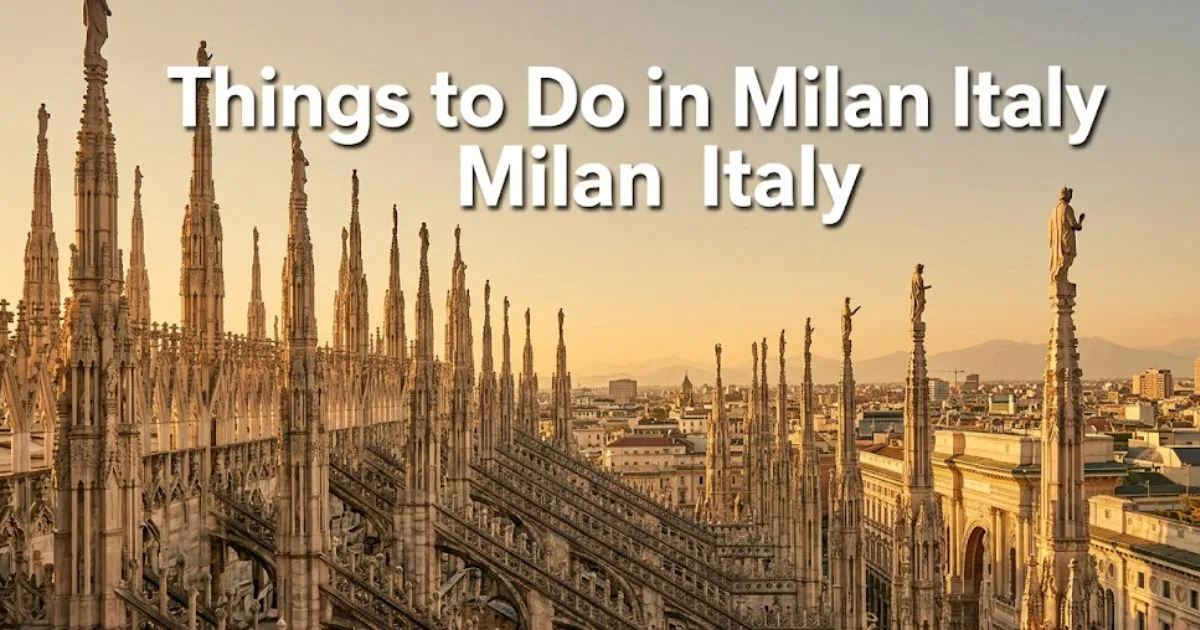
The Duomo di Milano is Italy’s largest cathedral and the single essential experience in the city, with its rooftop terraces offering the best views in Milan.
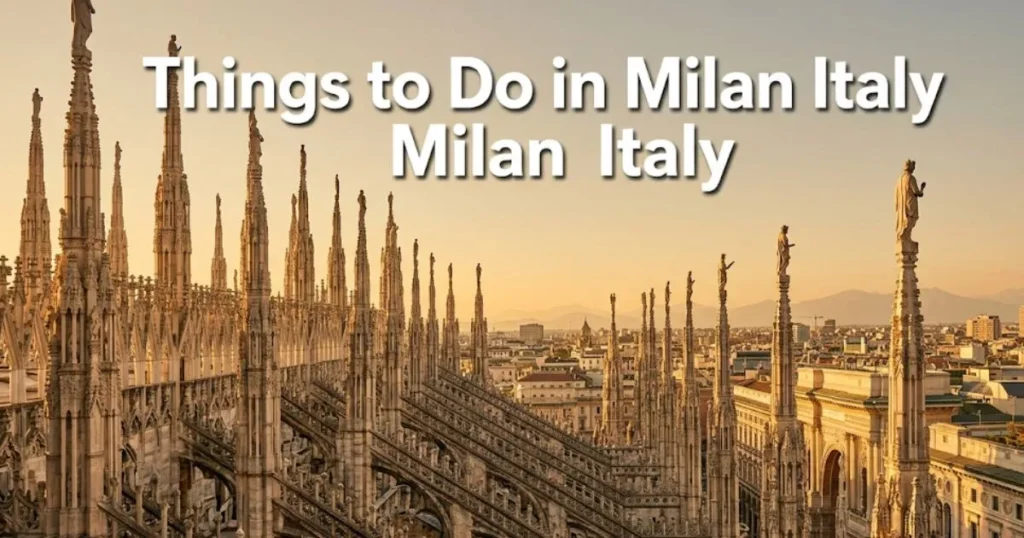
Climbing to the rooftop is the highlight, not the interior. The marble forest of spires and flying buttresses creates a surreal walking experience that photographs cannot capture.
There are two ways up. The stairs climb 250 narrow steps and cost approximately 10 to 15 euros for a combined rooftop and interior ticket. The elevator reaches the first terrace level and costs approximately 15 to 25 euros. Buy tickets through the Veneranda Fabbrica del Duomo official site. Book the first morning slot, typically 9 AM, to experience the rooftop before crowds fill the narrow walkways. Seniors and accessibility travelers should know the elevator only reaches the first terrace. Upper terrace access requires stairs with no elevator alternative. The rooftop’s marble surfaces become slippery when wet.
The cathedral interior is vast and architecturally significant but often disappoints visitors expecting Italian church opulence. Milan’s Duomo interior is more Gothic and austere than ornate. The stained glass windows are extraordinary. The rest can feel cavernous and dim compared to St. Peter’s or Florence’s Duomo. The archaeological area beneath the cathedral reveals earlier church foundations and a baptistery from the 4th century.
The Duomo complex includes the Duomo Museum, housed in the Palazzo Reale next door, which displays original statuary and the cathedral’s treasure. This museum is underrated and typically uncrowded even when the cathedral queue stretches across the piazza. The terraces of the museum offer a ground-level alternative for viewing cathedral spires up close.
Local Alternative: The Chiesa di San Maurizio al Monastero Maggiore, a 15-minute walk from the Duomo, delivers Milan’s most spectacular church interior at no cost. Its frescoed walls cover every surface, earning it the nickname the Sistine Chapel of Milan. It is never crowded and open Tuesday through Sunday typically.
| Experience | Cost Range | Time Needed | Best For | Accessibility |
|---|---|---|---|---|
| Duomo Rooftop (stairs) | 10 to 15 euros | 90 minutes | Active travelers, photographers | Not accessible |
| Duomo Rooftop (elevator) | 15 to 25 euros | 60 minutes | Most visitors | First terrace only |
| Cathedral Interior | Combined with rooftop | 30 minutes | Architecture fans | Accessible entrance on south side |
| Archaeological Area | Combined ticket | 30 minutes | History buffs | Limited accessibility |
| Duomo Museum | 5 to 10 euros | 60 minutes | Art and history lovers | Fully accessible |
| San Maurizio Church | Free | 30 minutes | Everyone | Accessible |
Key Takeaway: Buy Duomo rooftop tickets online for the first morning slot, and visit San Maurizio church instead of queueing for the cathedral interior alone.
Seeing the Last Supper in Milan Tickets and Tips
Leonardo da Vinci’s Cenacolo Vinciano, the Last Supper, hangs in the refectory of Santa Maria delle Grazie and requires advance booking weeks or months ahead.
The Museo del Cenacolo Vinciano releases tickets in blocks approximately two to three months ahead. Spots sell out within hours of release during peak season.
You enter with a timed reservation for exactly 15 minutes inside the refectory. That is the duration of the viewing period. The painting is fragile and climate-controlled. The viewing group is strictly limited. No photography with flash is allowed inside.
Book through the official museum website or authorized ticket partners. Third-party tour operators bundle Last Supper tickets with Duomo access, which can be the only way to secure a spot if official tickets are sold out. Expect tour bundle prices to run 50 to 100 euros or more. Official ticket prices are approximately 15 euros for adults. The difference reflects supply, not added value from the tour operator.
Same-day tickets do not exist in practice. Walk-up entry is not available. Call centers and concierge services sometimes access last-minute allocation, but this is unreliable.
Couples and solo travelers can attempt to book two individual tickets rather than a pair. Sometimes single seats remain available when paired seats show sold out. Families should book children’s tickets simultaneously since the group must enter together. Seniors should know the refectory is accessible but the 15-minute standing period may be tiring for those who need seating.
Local Alternative: The Pinacoteca di Brera holds several major Renaissance works including Raphael’s Marriage of the Virgin and Mantegna’s Lamentation of Christ. It is bookable same-day, rarely sells out, and delivers a more complete Renaissance art experience than a 15-minute Last Supper viewing.
According to the Museo del Cenacolo Vinciano official site, ticket release dates and booking windows are announced online and vary seasonally. Check the official site monthly if you are planning more than three months out.
Key Takeaway: Last Supper tickets sell out within hours of release two to three months ahead; book immediately upon release or pay premium tour bundle prices.
Best Neighborhoods to Explore in Milan
Milan’s neighborhoods are the actual city experience, far more than the Duomo-to-Galleria tourist corridor most visitors never leave.
Brera sits directly north of the Duomo and feels like a separate village. Via Fiori Chiari and Via Madonnina form the neighborhood’s heart with cobblestone streets, art galleries, and the Pinacoteca di Brera museum.
Navigli centers on the Naviglio Grande and Naviglio Pavese canals south of the center. The Darsena, the old port basin, anchors the neighborhood’s evening aperitivo scene. Via Corsico and Ripa di Porta Ticinese fill with locals at sunset. This is Milan’s most atmospheric evening district.
Isola sits north of Porta Garibaldi station and represents Milan’s contemporary identity. The Bosco Verticale towers rise above the neighborhood. Via Borsieri and Via Thaon di Revel hold independent bookshops, vintage clothing stores, and third-wave coffee bars. Isola feels like a neighborhood that belongs to residents first and visitors second.
Porta Nuova is Milan’s modern business district with gleaming towers and the Piazza Gae Aulenti pedestrian square. It impresses architecture enthusiasts but feels sterile compared to Brera and Isola.
Porta Romana offers a quieter residential experience south of the center. The Terme Milano thermal baths sit here alongside traditional trattorias serving cotoletta alla milanese. Couples seeking a less touristy dinner neighborhood prefer Porta Romana.
| Neighborhood | Character | Best For | Best Time | Tourist Level |
|---|---|---|---|---|
| Brera | Bohemian, historic, galleries | Couples, art lovers | Daytime to early evening | Moderate |
| Navigli | Canal-side, lively, aperitivo | Solo travelers, couples, nightlife | Late afternoon to night | High on weekends |
| Isola | Contemporary, local, independent | Design lovers, solo travelers | Daytime to evening | Low to moderate |
| Porta Nuova | Modern, corporate, architectural | Architecture fans | Daytime | Low |
| Porta Romana | Residential, traditional, quiet | Couples, food-focused travelers | Evening | Low |
Families should know Brera’s narrow streets challenge strollers but reward with gelato shops and piazza space. Seniors will find Navigli’s canal-side paths flat and walkable while Isola requires more walking between points of interest. Solo travelers often gravitate to Navigli for its social aperitivo scene.
Key Takeaway: Spend at least one full day each in Brera, Navigli, and Isola to experience the Milan that exists beyond the Duomo tourist corridor.
Art Museums and Cultural Attractions in Milan
Milan’s art museums range from the Renaissance masterpieces at the Pinacoteca di Brera to the contemporary installations at Fondazione Prada.
The Pinacoteca di Brera holds Milan’s finest painting collection inside a 17th-century palazzo in the Brera district.
The collection includes Raphael’s Marriage of the Virgin, Mantegna’s Lamentation of Christ, and Caravaggio’s Supper at Emmaus. The museum is bookable same-day and rarely sells out. Budget approximately two to three hours for a thorough visit. The courtyard cafe is one of the city’s most pleasant museum dining spots.
Museo del Novecento sits directly on Piazza del Duomo and houses Italy’s premier collection of 20th-century art. The gallery windows frame direct views of the Duomo’s spires, making the building itself part of the experience. Futurist works by Boccioni and Balla dominate the collection. This museum is consistently undercrowded despite its central location.
Fondazione Prada occupies a former gin distillery in southern Milan’s Largo Isarco area. The campus designed by Rem Koolhaas includes a gold-leaf tower and multiple exhibition spaces. Wes Anderson designed the bar, Bar Luce, inside. Contemporary art exhibitions rotate and contemporary art fans consider this Milan’s most significant institution. It requires a metro ride south of the center.
Teatro alla Scala is Milan’s legendary opera house. The Museo Teatrale alla Scala offers daytime museum access without performance tickets. The museum displays costumes, set designs, and Verdi memorabilia. Performance tickets for 2026 operas sell months ahead. The museum provides a satisfying alternative for visitors who cannot secure performance seats.
The Castello Sforzesco houses multiple civic museums inside a 15th-century fortress. The castle courtyards are free to enter and genuinely atmospheric. The interior museums, including Michelangelo’s unfinished Pietà Rondanini, feel uneven. The castle exterior and courtyards are worth visiting even if you skip the interior museums.
| Museum | Collection Focus | Time Needed | Cost Range | Booking Required |
|---|---|---|---|---|
| Pinacoteca di Brera | Renaissance masters | 2 to 3 hours | 15 to 20 euros | No, but online saves queueing |
| Museo del Novecento | 20th-century Italian | 1.5 to 2 hours | 10 to 15 euros | No |
| Fondazione Prada | Contemporary art | 2 to 3 hours | 15 to 20 euros | Recommended |
| La Scala Museum | Opera history | 1 hour | 10 to 15 euros | No |
| Castello Sforzesco museums | Multiple civic collections | 2 to 3 hours | 5 to 10 euros | No |
Key Takeaway: Prioritize Pinacoteca di Brera and Museo del Novecento for Milan’s best art experiences without the advance booking stress of the Last Supper.
Milan Food Guide Aperitivo and Traditional Dishes
Milan’s food identity runs from the aperitivo ritual to hearty traditional dishes like risotto alla milanese and cotoletta alla milanese.
Aperitivo is Milan’s defining food culture. Bars across the city serve a drink plus access to a buffet of snacks, small plates, and sometimes full appetizer spreads between approximately 6 PM and 9 PM.
The Navigli canal district along Naviglio Grande holds the highest concentration of aperitivo bars. Rita & Cocktails and Mag Cafè on Ripa di Porta Ticinese are long-standing local favorites. The Darsena area offers newer aperitivo spots with canal views. Brera’s aperitivo scene skews more upscale and less raucous than Navigli. Bar Jamaica on Via Brera is a historic institution that has hosted artists and writers for decades.
Traditional Milanese dishes center on saffron and slow-cooked meat. Risotto alla milanese gets its golden color and depth from saffron and bone marrow. Cotoletta alla milanese is a thick veal cutlet on the bone, fried in butter, and distinct from the thinner Wiener schnitzel. Ossobuco is braised veal shank served with gremolata. Cassoeula is a winter stew of pork and cabbage that rarely appears on tourist menus.
For traditional cooking, Trattoria Masuelli San Marco near Porta Romana serves multi-generational Milanese cuisine. Osteria dell’Acquabella on Via San Rocco offers classic risotto in a family-run setting. Both require reservations. Budget travelers should know that aperitivo effectively serves as dinner when the buffet is substantial. A 10 to 15 euro cocktail plus unlimited food access is Milan’s best dining value.
Mercato Centrale Milano inside the central station offers a modern food hall with regional Italian vendors under one roof. It works well for families who need variety and solo travelers who want to sample multiple dishes in one location. Eataly Milano Smeraldo near Porta Garibaldi serves the same concept with a more upscale environment.
| Dish | What It Is | Where to Try It | Cost Range |
|---|---|---|---|
| Risotto alla milanese | Saffron risotto | Osteria dell’Acquabella | 15 to 25 euros |
| Cotoletta alla milanese | Bone-in veal cutlet | Trattoria Masuelli San Marco | 20 to 30 euros |
| Ossobuco | Braised veal shank | Traditional trattorias | 18 to 28 euros |
| Aperitivo | Drink + buffet access | Navigli canal bars | 10 to 18 euros |
| Panettone | Holiday sweet bread | Pasticceria Marchesi | 8 to 15 euros |
Key Takeaway: Make aperitivo your evening meal strategy to experience Milan’s best food culture at half the price of a sit-down dinner.
Milan at Night Navigli Canal District and Evening Activities
Milan’s best nighttime experience is the Navigli canal district, where the Naviglio Grande fills with locals at aperitivo hour and stays lively past midnight.
The Darsena, the restored port basin, anchors the neighborhood’s evening activity. Restaurants and bars line the water.
The Colonne di San Lorenzo, ancient Roman columns opposite the Basilica of San Lorenzo, become a gathering point for young Milanese on weekend nights. The piazza fills with people sitting on the columns’ base, drinking from nearby bars, and socializing in the open air. This is Milan’s most organic evening social scene and costs nothing to join. Bring a drink from a nearby shop and sit among the columns to experience the city like a local.
Rooftop bars offer a more polished nighttime experience. La Rinascente department store on Piazza del Duomo has a rooftop bar with direct cathedral views. Terrazza Aperol on Piazza del Duomo serves overpriced cocktails with unbeatable Duomo positioning. Ceresio 7 atop the Dsquared2 headquarters near Porta Nuova offers a poolside terrace and more sophisticated atmosphere. Rooftop bars require smart-casual dress and typically do not accept reservations for drinks only.
Evening culture extends beyond drinking. The Teatro alla Scala opera season runs throughout the year with performances beginning at 8 PM. Gallery standing tickets cost approximately 10 to 20 euros when available. Book through the official La Scala box office.
Solo travelers find Navigli’s bar scene welcoming and easy to navigate alone. Couples gravitate toward rooftop bars and canal-side restaurant terraces. Families with teenagers can enjoy the Colonne di San Lorenzo atmosphere before it gets rowdy later in the evening. Seniors may prefer early evening aperitivo followed by an opera performance rather than the late-night canal scene.
Local Alternative: The Isola neighborhood at night offers a less touristy version of Navigli’s social scene. Frida on Via Pollaiuolo and Osteria La Brioschina on Via Thaon di Revel attract an almost entirely local crowd.
Key Takeaway: Start your evening at the Colonne di San Lorenzo with a shop-bought drink, then walk to Navigli for canal-side aperitivo as the sun sets.
Shopping in Milan From Luxury Fashion to Vintage Markets
Milan’s shopping identity splits between the Quadrilatero della Moda luxury district and the independent vintage and design shops scattered through Brera and Isola.
The Quadrilatero della Moda centers on Via Monte Napoleone, Via della Spiga, Via Sant’Andrea, and Via Manzoni.
This is one of the world’s most concentrated luxury shopping zones. Every major Italian and international fashion house operates a flagship here. Window shopping is free and architecturally interesting even for visitors with no intention of purchasing. The district sits a five-minute walk from the Duomo.
For accessible fashion, Corso Buenos Aires runs northeast from Porta Venezia and holds over 350 shops along a single straight avenue. High-street brands, Italian mid-range labels, and shoe stores dominate here. The street feels more like a real Milan shopping experience than the luxury quadrilateral. Corso Como near Porta Garibaldi mixes concept stores, design shops, and the famous 10 Corso Como complex combining fashion, art, dining, and a courtyard garden.
Vintage shopping in Milan is concentrated near the Porta Ticinese area along Corso di Porta Ticinese. Cavalli e Nastri on Via Gian Giacomo Mora offers curated vintage designer pieces. Bivio Milano on Via Lambro operates a buy-sell-trade model for contemporary second-hand fashion. The Mercatone dell’Antiquariato along the Naviglio Grande on the last Sunday of each month is Milan’s largest antique and vintage market. It stretches for nearly two kilometers along the canal.
Budget travelers should know that Milan’s shopping reputation exceeds its accessible reality. The luxury quadrilateral offers little below premium pricing. Corso Buenos Aires and vintage shopping provide the only true mid-range fashion options.
| Shopping Zone | What to Buy | Price Range | Best For |
|---|---|---|---|
| Quadrilatero della Moda | Luxury fashion, flagship stores | Premium | Window shopping, luxury buyers |
| Corso Buenos Aires | High-street fashion, shoes | Mid-range | Practical shoppers |
| Brera boutiques | Artisan jewelry, design objects | Mid-range to premium | Design lovers |
| Porta Ticinese vintage | Second-hand designer, vintage | Budget to mid-range | Vintage hunters, budget travelers |
| Naviglio antique market | Antiques, vintage furniture | Varies | Collectors, browsers |
Key Takeaway: Shop Corso Buenos Aires and Porta Ticinese vintage stores for actual purchases; walk the Quadrilatero della Moda for architectural window shopping only.
Outdoor Spaces Parks and Rooftop Views in Milan
Milan’s best outdoor space is Parco Sempione, the 95-acre park stretching between the Castello Sforzesco and the Arco della Pace.
The park offers lawns, walking paths, the Triennale di Milano design museum, and the Branca Tower observation deck with panoramic city views.
The Arco della Pace at the park’s northwestern edge anchors a lively piazza where locals gather on weekend afternoons. Nearby bars and gelato shops make this an ideal afternoon break from sightseeing. Families with children should know Parco Sempione has open green space, a small playground near the Castello Sforzesco entrance, and flat paved paths suitable for strollers.
Giardini Pubblici Indro Montanelli near Porta Venezia offers a quieter park experience. The gardens house Milan’s Natural History Museum and a small planetarium. The park feels more residential and less touristed than Parco Sempione. Seniors and visitors seeking a peaceful garden escape prefer these gardens over the busier Sempione.
Milan’s rooftop views extend beyond the Duomo. The Branca Tower in Parco Sempione rises 108 meters with an elevator to the observation platform. The Palazzo Lombardia skyscraper near Porta Nuova opens its 39th-floor observation deck to the public on select Sundays without charge. Fondazione Prada’s Torre offers gallery spaces and city views from southern Milan’s perspective.
The Bosco Verticale in the Isola neighborhood is Milan’s most photographed contemporary landmark. The two residential towers planted with over 900 trees and 20,000 plants represent a vertical forest concept. You cannot enter the residential towers, but the base area and surrounding Biblioteca degli Alberi park provide excellent ground-level viewing. The towers are most photogenic in spring and early summer when the vegetation is fullest.
Local Alternative: Skip the crowded Duomo rooftop for Terrazza Triennale at the Triennale di Milano museum. The terrace cafe overlooks Parco Sempione and offers skyline views without queues or entry fees.
| Outdoor Space | Activity | Cost | Best Time | Accessibility |
|---|---|---|---|---|
| Parco Sempione | Walking, picnicking, views | Free | Morning to sunset | Fully accessible |
| Branca Tower | Panoramic observation | 5 to 10 euros | Clear days | Elevator access |
| Giardini Pubblici | Quiet garden walks | Free | Morning to sunset | Accessible paths |
| Bosco Verticale viewing | Architecture photography | Free | Spring and summer | Ground level accessible |
| Terrazza Triennale | Rooftop cafe with park views | Drink price | Afternoon to sunset | Elevator access |
Key Takeaway: Combine Parco Sempione, Branca Tower, and Terrazza Triennale into a single outdoor afternoon away from Duomo crowds.
Best Day Trips From Milan Lake Como and Beyond
The best day trip from Milan is Lake Como, reached by Trenord train from Milano Centrale to Varenna or Como in approximately one hour.
Varenna is the recommended base for a one-day Lake Como visit.
The town is small, walkable, and directly on the train line. From Varenna, ferry services connect to Bellagio and Menaggio in 15 to 20 minutes. The mid-lake ferry route between Varenna, Bellagio, and Menaggio is the most scenic stretch of Lake Como and can be completed as a loop in a single day. Trains run approximately hourly from Milano Centrale. Buy tickets at the station or through the Trenord app.
Bergamo Città Alta, the medieval upper town, is reachable by train from Milano Centrale to Bergamo station in about 50 minutes. The funicular from the lower city climbs to the walled old town. Bergamo’s Piazza Vecchia, Basilica di Santa Maria Maggiore, and Venetian walls offer a complete Italian hill town experience closer and less crowded than Lake Como. This day trip works better for families since the train is shorter and the walkable old town is compact.
Certosa di Pavia, a Renaissance monastery complex, sits 30 minutes by train from Milano Centrale or Porta Garibaldi. The Carthusian monastery is one of northern Italy’s most elaborate religious complexes. It receives a fraction of Lake Como’s visitors. Combine it with a half-day in Pavia’s historic center for a quieter day trip.
Lake Garda is reachable by train to Desenzano del Garda in about 50 minutes. Lake Garda offers a more spread-out experience than Lake Como and suits travelers wanting lakeside walks and boat rides without Como’s crowds and pricing.
| Day Trip | Travel Time | Best For | Cost Range | Crowd Level |
|---|---|---|---|---|
| Lake Como (Varenna) | 60 minutes by train | Couples, photographers | 15 to 20 euros round trip | High |
| Bergamo Città Alta | 50 minutes by train | Families, solo travelers | 10 to 15 euros round trip | Moderate |
| Certosa di Pavia | 30 minutes by train | History lovers, solitude seekers | 8 to 12 euros round trip | Low |
| Lake Garda (Desenzano) | 50 minutes by train | Couples, families | 15 to 20 euros round trip | Moderate |
Key Takeaway: Choose Bergamo over Lake Como if you want a compact, walkable hill town with better value and fewer tourists.
Getting Around Milan Transport and Logistics Guide
Milan’s public transport system, operated by ATM Milano, covers four metro lines, an extensive tram network, and city buses.
The metro is the most efficient way to navigate the city. Line M1 (red) connects the Duomo, Cadorna, and Porta Venezia.
Line M3 (yellow) runs from the central station through the Duomo to Porta Romana. Line M2 (green) serves Porta Garibaldi and Navigli. Line M5 (purple) connects Porta Garibaldi, Isola, and the San Siro stadium area.
Contactless payment directly at metro turnstiles is now accepted. Tap your credit card or phone at the yellow reader without purchasing a separate ticket. Single journeys cost approximately 2 euros. A 24-hour pass runs approximately 7 to 8 euros and covers unlimited metro, tram, and bus travel. The Milano Card from YesMilano bundles transport access with attraction discounts and may be worth evaluating for multi-day stays.
Trams are Milan’s most atmospheric transit option. The historic Tram 1 runs from Piazza Castello through the center on its way to the northern suburbs. Orange vintage cars from the 1920s and 1930s still operate on several lines. Riding a vintage tram through central Milan costs a standard transit ticket and offers a sightseeing experience for the price of a metro ride.
From Milano Malpensa Airport (MXP) , the Malpensa Express train connects to Milano Centrale and Milano Cadorna in approximately 50 minutes. Tickets cost approximately 13 euros. From Milano Linate Airport (LIN) , metro Line M4 now connects directly to the city center. Orio al Serio Airport (BGY) near Bergamo requires a bus transfer from Milano Centrale lasting approximately 60 minutes.
Walking is Milan’s best mode for neighborhood exploration. The Duomo to Brera is a 10-minute walk. Brera to Castello Sforzesco is 5 minutes. The Duomo to Navigli takes 25 to 30 minutes on foot. Milan’s historic center is compact and walkable when you are not crossing the entire city.
| Transport Mode | Best For | Cost Range | Note |
|---|---|---|---|
| Metro | Speed, longer distances | 2 euros per ride | Contactless payment accepted |
| Tram | Atmosphere, center routes | Included in metro ticket | Tram 1 is the scenic line |
| Walking | Neighborhood exploration | Free | Center is compact |
| Malpensa Express | Airport to city | 13 euros | 50 minutes |
| Taxi/ride-share | Late night, heavy luggage | 10 to 25 euros within center | More available than ride-share |
Key Takeaway: Use contactless payment at metro turnstiles, take Tram 1 for a cheap sightseeing ride, and walk between neighborhoods.
Milan Travel Budget How Much Things Cost
Milan is Italy’s most expensive city for travelers. Budget realistically for accommodation and dining.
Mid-range hotel rooms in central zones cost approximately 150 to 250 euros per night. Budget travelers should expect 80 to 120 euros for basic hotels or private hostel rooms.
Peak periods push these ranges higher. Design Week in April and Fashion Weeks in February and September can double accommodation costs. Book Milan hotels at least three months ahead for peak periods and two months ahead for standard travel dates.
Daily budgets by traveler profile work out roughly as follows. Budget travelers can manage on 80 to 120 euros per day including hostel accommodation, aperitivo meals, metro transport, and free attractions. Mid-range couples should budget 250 to 400 euros per day for a central hotel, two sit-down meals, attractions, and transport. Families of four need approximately 400 to 600 euros daily for two hotel rooms or a family suite, meals, and ticketed attractions.
Milan offers genuine free experiences. Parco Sempione, the Giardini Pubblici, the Duomo interior, the Castello Sforzesco courtyards, the Colonne di San Lorenzo, and neighborhood wandering cost nothing. Chiesa di San Maurizio al Monastero Maggiore delivers a world-class art experience free of charge. The Navigli canal atmosphere and Colonne di San Lorenzo evening scene are free.
The Milano Card’s value depends entirely on your itinerary. If you plan to visit the Duomo rooftop, the Pinacoteca di Brera, and the Museo del Novecento, plus use public transport extensively, the card may save 20 to 30 euros over individual tickets. For visitors focused on free attractions and neighborhood exploration, the card offers less value.
| Budget Level | Accommodation | Meals | Activities | Daily Total |
|---|---|---|---|---|
| Budget | 80 to 120 euros | Aperitivo, street food | Free attractions, one paid | 80 to 120 euros |
| Mid-range | 150 to 250 euros | One sit-down, one aperitivo | Two to three ticketed | 250 to 400 euros |
| Premium | 300+ euros | Fine dining | All ticketed, guided tours | 500+ euros |
| Family of 4 | 200 to 400 euros | Mix of casual and sit-down | Selective ticketed | 400 to 600 euros |
Key Takeaway: Make aperitivo your primary evening meal, use contactless metro payment, and prioritize free attractions to keep Milan affordable.
Milan Seasonal Events 2026 Design Week Fashion Week and Christmas
Milan’s 2026 event calendar is anchored by Salone del Mobile and Fuorisalone in April, Milan Fashion Week in February and September, and the Christmas markets from late November through December.
The Salone del Mobile, Milan’s international furniture fair, takes over the Fiera Milano exhibition center. The Fuorisalone is the citywide design festival accompanying the fair, with installations, exhibitions, and events across Brera, Isola, and Tortona districts.
Exact 2026 dates were not finalized at publication. The event typically occupies the second week of April. Hotel rooms citywide sell out months ahead. Walk-in restaurant availability nearly disappears. This is the single worst period of the year to visit Milan without advance bookings. Design professionals and industry attendees should book accommodation six months ahead.
Milan Fashion Week presents womenswear collections in February and September 2026. Menswear shows in January and June. The fashion week impact concentrates in the Quadrilatero della Moda zone and around show venues. Hotel rates spike less dramatically than during Design Week. The city feels energized with fashion industry presence.
Milan Christmas markets typically open the last week of November and run through December 24. The Oh Bej! Oh Bej! market around the Castello Sforzesco is Milan’s traditional Christmas market dating to the 16th century. The Piazza Duomo Christmas market is more tourist-oriented but offers convenient central location. Christmas lights and window displays along Via Monte Napoleone and the Galleria Vittorio Emanuele II are genuinely spectacular.
Summer 2026 brings outdoor cinema at AriAnteo venues, the Milano Summer Festival concerts, and the Estate Sforzesca program of performances in the castle courtyard. August remains the city’s quietest month with many independent businesses closed.
| Event | 2026 Timing | Impact on Visitors | Booking Lead Time |
|---|---|---|---|
| Salone del Mobile / Fuorisalone | April (exact dates TBC) | Extreme crowding, hotel sellout | 6 months for hotels |
| Fashion Week (women’s) | February and September 2026 | Moderate crowding in fashion zones | 3 months for hotels |
| Christmas markets | Late November to December 24 | Festive atmosphere, moderate crowding | 2 months for December hotels |
| Summer festivals | June to August | Lively outdoor programming | Minimal |
| August closures | August 10 to 25 approximately | Many independent businesses closed | N/A |
Key Takeaway: Avoid Design Week in April 2026 unless you are attending the event and have booked accommodation six months ahead.
Safety and Practical Warnings for Milan
Pickpocketing is the primary safety concern for visitors in Milan, concentrated around Piazza del Duomo, Milano Centrale station, and crowded metro cars.
Keep valuables in front pockets or zipped bags and avoid placing phones or wallets in back pockets on public transport.
The ZTL (Zona a Traffico Limitato) restricted driving zones in Milan’s center issue automatic fines to unauthorized vehicles. Rental cars with GPS routing into the center can trigger fines without the driver realizing they have entered a restricted zone. Do not drive into central Milan unless your accommodation confirms ZTL access and registration.
August closures affect independent restaurants, shops, and some services from approximately August 10 through August 25. Major attractions remain open but the city’s local character diminishes. Do not plan a food-focused Milan trip during this period.
The Duomo rooftop stairs are genuinely steep and narrow. The stairwell becomes a single-file passage with limited passing space. Claustrophobic travelers and visitors with mobility concerns should use the elevator option.
Counterfeit goods sold by street vendors around the Duomo and Galleria are illegal to purchase under Italian law. Tourists can face fines for buying counterfeit items.
For emergencies, dial 112, the European emergency number connecting to police, ambulance, and fire services. The Milan Tourist Police office near the Duomo offers English-speaking assistance.
Frequently Asked Questions About Milan
How many days do you need in Milan?
Three full days is the minimum to experience the Duomo, Last Supper, Brera and Navigli neighborhoods, and one major museum.
Four to five days allows a day trip to Lake Como or Bergamo and a more relaxed pace.
One day only covers the Duomo and a rushed Last Supper viewing while missing the city entirely.
What is the number one attraction in Milan?
The Duomo di Milano rooftop terrace is the number one attraction, offering the most distinctive Milan experience you cannot replicate elsewhere.
The marble spires and city views are genuinely extraordinary.
Book the first morning time slot through the Veneranda Fabbrica del Duomo official site.
Is Milan expensive for tourists?
Milan is Italy’s most expensive city, with mid-range hotels averaging 150 to 250 euros and sit-down dinners running 40 to 70 euros per person.
Budget travelers can use aperitivo as an evening meal strategy for 10 to 18 euros.
Free attractions like Parco Sempione, San Maurizio church, and neighborhood wandering reduce total costs.
Is Milan walkable for tourists?
Milan’s historic center is compact and walkable with most major attractions within a 20 to 30 minute walk of the Duomo.
The metro connects neighborhoods like Navigli and Isola efficiently for longer distances.
Cobblestone streets in Brera and narrow sidewalks in some areas challenge strollers and mobility devices.
What is the best month to visit Milan?
May and October offer the best balance of comfortable weather, manageable crowds, and full restaurant and cultural programming.
April brings Design Week crowds and premium hotel pricing.
August sees high heat and many independent business closures.
Is Milan better than Rome for a first-time Italy visitor?
Rome is better for first-time Italy visitors seeking ancient history, iconic monuments, and a more immediately grand experience.
Milan suits travelers more interested in design, fashion, food culture, and sophisticated urban energy.
The two cities complement each other rather than compete, and combining both in a single trip is logistically simple via high-speed train.
Your Milan Trip Starts With Three Decisions
Book your Duomo rooftop tickets and Last Supper reservation the moment your travel dates are firm. These two bookings determine everything else about your Milan itinerary.
Choose accommodation in Brera or near the Duomo for walkable access to most attractions. Navigli and Isola work better for return visitors who want neighborhood immersion over sightseeing proximity.
Finally, do not reduce Milan to a one-day stopover. Three full days minimum lets you experience the Duomo, the canals, the aperitivo culture, and a day trip to Bergamo or Lake Como. Travel conditions, opening hours, and event dates change. Verify Duomo rooftop access, Last Supper ticket availability, and 2026 Design Week and Fashion Week dates with official sources before departure. The Milan that rewards you exists beyond Piazza del Duomo. Plan your time to find it.