14 Top-Rated Things to Do in Georgetown, DC (2026)

Georgetown delivers the most concentrated dose of federal-era architecture in the nation’s capital. Its cobblestone streets hold two centuries of political intrigue.
This is where JFK courted Jackie and where a famous jazz club has operated since 1965. The neighborhood remains a powerful, walkable mix of history, money, and riverfront leisure.
We cover the famous M Street shopping corridor, two pristine historic estates, and the perfect waterfront afternoon. You will also learn why a Metro train never came here and how to build a perfect 1-day itinerary around that fact.
things to do in georgetown
The essential Georgetown experience is a curated blend of waterfront recreation, historic estate exploration, and high-end retail browsing. You can start with a morning paddle on the Potomac and end with a candlelit jazz set.
Most first-time visitors crowd onto M Street and call it a day. They miss the hushed private gardens and the hidden canals that define the neighborhood’s quiet southern and eastern edges.
Plan for a full day of walking. A 15-minute stroll separates the noisy shopping district from a silent towpath where the city feels miles away.
| Activity Category | Best For | Relative Cost | Time Needed |
|---|---|---|---|
| Historic Estates & Gardens | Couples, Seniors | $0-$25 | 2-3 hours |
| Waterfront Recreation | Families, Solo Travelers | $0-$30 | 1-2 hours |
| M Street Shopping | Shoppers, Couples | $$$ | 2-3 hours |
| Jazz & Dining | Couples, Solo Travelers | $$$ | 2-3 hours |
| University & Architecture | History Buffs, Families | Free | 1 hour |
Georgetown’s retail stretch is a pressure point. Visit the serene gardens at Dumbarton Oaks first thing in the morning before the commercial district fully wakes up.
Key Takeaway: Walking just two blocks off M Street reveals a silent, historic Georgetown most tourists never see.
things to do in georgetown dc
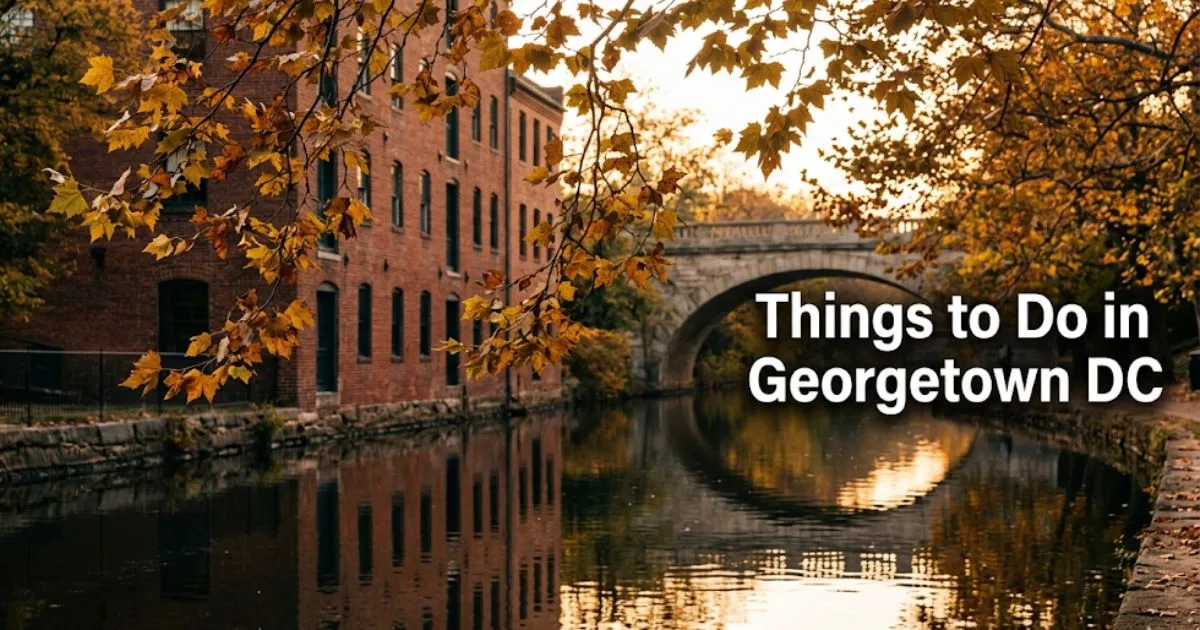
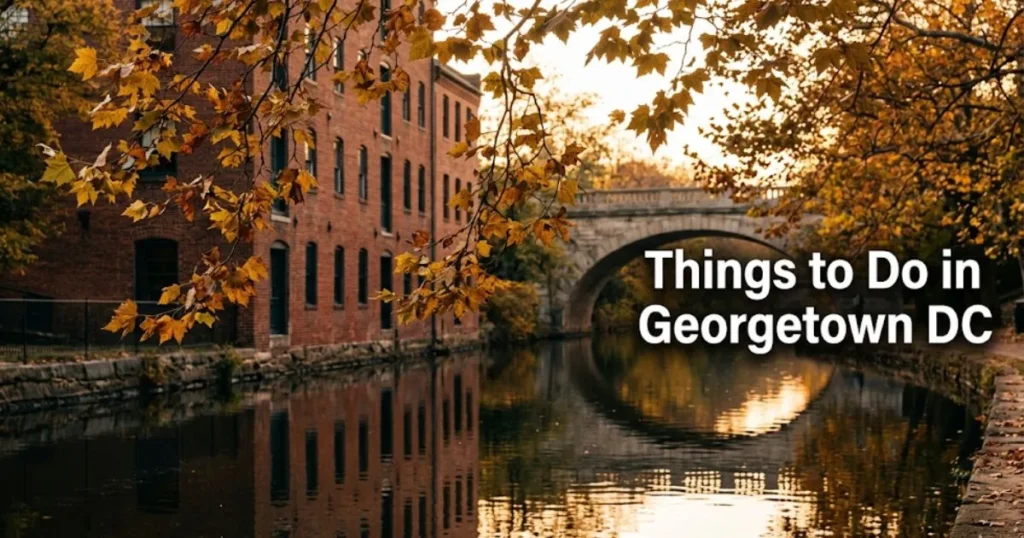
This neighborhood functions as a walkable open-air museum within the District of Columbia. The C&O Canal and the Old Stone House anchor the city’s oldest built landscape.
You are not visiting a single attraction. You are walking through a preserved 18th-century port town that predates the federal city itself.
This distinction matters for your schedule. The topography slopes steeply from Wisconsin Avenue down to the Potomac River, testing your stamina in summer humidity.
- Solo travelers will find the residential streets east of Wisconsin Avenue rewarding for silent, architectural wandering.
- Families with children should base their day on the open spaces of the Waterfront Park and the canal’s mule-drawn boat rides.
- Accessibility travelers need to note that historic brick sidewalks are unlevel and many storefronts have steps.
Navigation is intuitive if you use two fixed points. Use the smokestack at Wisconsin Avenue and the Key Bridge as your visual compass rose.
Key Takeaway: Treat the neighborhood as a single historic district to explore on foot, not a checklist of isolated attractions.
things to do in georgetown washington dc
The key to unlocking Georgetown is understanding its split personality. M Street is a high-energy commercial artery, while the canal and side streets are deeply residential and quiet.
This creates a perfect balance for a day trip. You can cycle through aggressive shopping energy and then decompress on a peaceful wooded trail within the same hour.
The canal is your lifeline for a quick mental reset. Descend the staircase next to Dean & DeLuca and the noise evaporates instantly.
Destination DC identifies the Georgetown Historic District as the city’s most intact pre-Revolutionary settlement. The spatial layout requires specific tactical planning to avoid backtracking.
| Neighborhood Zone | Vibe | Anchor Attraction |
|---|---|---|
| Lower M Street | High-energy, tourist-heavy | Old Stone House |
| Upper Wisconsin Ave | Bohemian, antique-shopper | Book Hill boutiques |
| The Canal & Towpath | Serene, nature-focused | C&O Canal Lock 3 |
| The Waterfront | Expansive, family-friendly | Washington Harbour |
The most common planning mistake is zigzagging between the waterfront and M Street. Complete all activities on the south side together before climbing back up the hill to Wisconsin Avenue.
Key Takeaway: Stay on the water side of M Street until you’re done with the river, then climb up to the shops once.
free things to do in georgetown dc
A fulfilling day in this neighborhood does not require spending a cent beyond transportation. A strategic mix of federal land and public trails makes Georgetown one of DC’s best luxury-on-a-budget destinations.
You can walk a national park, enter a colonial home, and explore a prestigious university campus without touching your wallet. The sensory experience of the cobblestone streets costs nothing.
Start at the Old Stone House at 3051 M Street. The National Park Service maintains this 1765 home as a free museum, offering a cool, quiet retreat from the retail chaos.
The C&O Canal National Historical Park is a free 184.5-mile-long linear oasis. The Georgetown section offers the most dramatic transition from urban density to forested solitude in the District.
- Visit the Exorcist Steps at 3600 Prospect Street, an iconic film location connecting M Street to the upper neighborhood.
- Walk the grounds of Georgetown University’s Healy Lawn, which offers an unrestricted view across the Potomac.
- Browse the modernist sculpture garden outside the Phillips Collection’s off-campus annex.
- Explore the Book Hill stretch of Wisconsin Avenue for gallery-like antique store window displays.
Families on a budget can pack a picnic for the sloping lawns of the Georgetown Waterfront Park. The people-watching and river traffic provide better entertainment than any paid attraction.
Key Takeaway: The C&O Canal towpath is a free entry point to a vast, serene federal park hidden in plain sight.
georgetown waterfront park and potomac river activities
The Georgetown Waterfront Park is a 10-acre engineered escape from the claustrophobia of the brick-lined streets above. It stretches along the Potomac with wide, spiraling walkways and generous built-in seating.
The river is the true theater here. You watch rowing shells slice the water, heavy barges push upstream, and jets descend into Reagan National Airport across the current.
The centerpiece of the active scene is the Washington Harbour complex. Its tiered plaza features a spectacular choreographed fountain that children charge through in summer.
You can rent a kayak or stand-up paddleboard at the Key Bridge Boathouse from approximately $20 to $30 per hour. A morning paddle toward the Kennedy Center reveals the city from an angle no tour bus can reach.
- Solo travelers: The riverfront is ideal for a self-contained day of activity, exercise, and dining, all within a quarter-mile radius.
- Families: The calm water of the channel is easy to navigate, but life vests are mandatory and provided.
- Seniors: The level, paved riverwalk is free of bricks and offers continuous benches with unobstructed views.
The boathouse operates seasonally, typically from May through October. Water levels and currents determine daily safety, so call ahead.
Avoid the riverbank trails after heavy rain. The Potomac’s currents are famously deceptive and the water is not suitable for swimming.
Key Takeaway: A kayak rental at Key Bridge Boathouse provides the single best panoramic view of the DC skyline.
georgetown m street shopping and historic architecture
M Street is a high-octane retail corridor built into the bones of a Federal-era port. Modern fashion chains occupy warehouses that once stored tobacco and cotton destined for Europe.
The architecture of the 3000 block is a masterclass in adaptive reuse. Look above the modern storefronts to see the original brick proportions, stone lintels, and surviving warehouse hoists still attached to upper windows.
This is a vertical shopping experience. You must look up to see the historic city that developers have meticulously preserved, or at least pastiched, at the skyline level.
The true architectural jewel is the Old Stone House, the oldest standing building in DC. Its raw granite walls and low ceilings feel genuinely anti-modern and transportive.
| Shopping Type | Location | Price Point | Atmosphere |
|---|---|---|---|
| International Chains | Lower M Street | Mid-to-High | Energetic, Crowded |
| Designer & High Fashion | Cady’s Alley | Premium | Discreet, Chic |
| Antiques & Art | Book Hill (Upper Wis.) | Variable | Bohemian, Quiet |
| Stylish Home Decor | Wisconsin Avenue | Premium | Curated, Sophisticated |
Couples will enjoy the hidden shopping alleys, particularly Cady’s Alley, a designer enclave where cobblestones and minimalist window displays create a European back-street atmosphere.
Key Takeaway: The intersection of Wisconsin Avenue and M Street was the tobacco inspection port of the 1790s. Every modern transaction sits atop this mercantile history.
historic estates and gardens in georgetown
Two historic estates bracket the eastern edge of Georgetown, and they could not be more different in personality. Dumbarton Oaks presents a Byzantine-level formality, while Tudor Place feels like a living family home.
Dumbarton Oaks is a serious scholarly institution. Its gardens are not a casual flower bed, but a series of defined outdoor rooms, each a distinct horticultural and architectural concept conceived by landscape designer Beatrix Farrand.
The Rose Garden is mathematically precise. The Pebble Garden feels like a mosaic floor whose roof blew off in a storm.
Tudor Place, by contrast, is the ancestral seat of the Peter family, step-grandchildren of George Washington. The mansion is filled with 18th- and 19th-century furnishings, including a documented Washington dinner service.
- Dumbarton Oaks: Timed entry tickets are often required for the gardens ($10-$15 range). The museum is free but has separate hours. Plan for at least 90 minutes of slow walking.
- Tudor Place: Guided interior tours cost approximately $15. The self-guided garden grounds are a cheaper, quiet alternative for those less interested in domestic artifacts.
Families with children should choose Tudor Place. The garden is more open and forgiving of movement, whereas Dumbarton Oaks has specific path rules and delicate surfaces.
The gardens are at their visual peak in late April to mid-May. Autumn delivers a brief but spectacular color window in the third week of October.
Key Takeaway: Dumbarton Oaks is the formal showpiece for horticulturalists; Tudor Place is the intimate, shabby-chic alternative that feels like a private garden party.
the c&o canal towpath and outdoor recreation
The C&O Canal National Historical Park begins its 184.5-mile run toward Cumberland, Maryland, right here in Georgetown. The first few miles are a dense, green corridor of astonishing quiet.
This is the most underused asset in the neighborhood. The moment you descend the staircase from Wisconsin Avenue, the traffic noise vanishes into a tunnel of sycamores and the slow-moving, opaque green water.
The National Park Service still operates a mule-drawn boat ride from the lockhouse near Thomas Jefferson Street. The barge departs on a set seasonal schedule, and a costumed ranger opens the 19th-century locks manually.
The crushed gravel towpath is the city’s premier cycling and jogging artery. Rent a Capital Bikeshare bike and ride two miles west to Fletcher’s Cove for an instant transition from urban to wild.
- Solo travelers: The path is safe during daylight, flat, and well-trafficked. It is excellent for a restorative hour of exercise.
- Families: The canal boat ride is a must; it lasts about an hour and explains a pre-industrial world in a way kids can touch and feel.
- Seniors: The flat, crushed gravel is navigable with a sturdy walker or wheelchair, though some sections may get muddy.
Beware of high-speed cyclists during commuter hours. Walk single file and listen for bells behind you.
Insider Tip: The lock keeper’s house at Lock 3 is a tiny stone structure that functions as a small interpretive museum. It is free and rarely crowded, even on weekends.
georgetown food and waterfront dining scene
Dining here spans a legendary Prohibition-era tavern, a global-caliber Italian seafood hall, and a cupcake rivalry so intense it defines a local identity. The waterfront commands the highest price-to-view ratio.
For a landmark meal, Fiola Mare at Washington Harbour is the definitive luxury seafood experience. The crudo bar, the tableside Dover sole service, and the Potomac views make it the top choice for celebratory couples.
The atmosphere is cinematic but genuine. Book a table on the terrace for sunset and expect to spend significantly more per person than the DC average.
Martin’s Tavern on Wisconsin Avenue occupies a different universe. Booth One, where JFK proposed to Jacqueline Bouvier, remains a pilgrimage site for political romantics.
The menu is classic American pub fare. The Georgetown Egg Roll is a greasy, savory local institution.
| Dining Experience | Venue | Best For | Price Level |
|---|---|---|---|
| Fine Dining | Fiola Mare | Romantic Couples | Premium ($$$$) |
| Historic Pub | Martin’s Tavern | History Lovers | Mid-Range ($$) |
| Oysters & Social | The Berliner | Solo Travelers | Mid-Range ($$) |
| Speakeasy Cocktails | The Alex | Couples, Nightlife | Premium ($$$) |
| The Sweet War | Baked & Wired | Families, Budget | Budget ($) |
The city’s famous cupcake duel pits Georgetown Cupcake against Baked & Wired. The former delivers a television-famous pink box and a queue that snakes down the block.
Baked & Wired, located on Thomas Jefferson Street, is the local’s choice. The cupcakes are taller, the cake is moister, the frosting is deeper, and the wait is usually shorter.
Key Takeaway: Skip the M Street line for Georgetown Cupcake and walk two blocks to Baked & Wired for a superior pastry and a shorter wait.
arts and cultural activities in georgetown
The neighborhood’s cultural scene is intimate and tinged with shadowy history. It offers experimental art, Masonic mysticism, and a Christmas music tradition that defines the DC jazz scene.
The most sacred cultural venue is Blues Alley in a converted 18th-century carriage house off Wisconsin Avenue. It has hosted Dizzy Gillespie, Sarah Vaughan, and a continuous stream of top-tier jazz since 1965.
A set here feels like stepping into 1960s Manhattan. The acoustics are warm, the brick walls sweat history, and the front-row tables are close enough to read the pianist’s set list.
The House of the Temple at 1733 16th Street NW is a nine-minute walk from Georgetown’s eastern edge. This headquarters of the Scottish Rite of Freemasonry is a faithful replica of the Mausoleum at Halicarnassus.
- Public tours are typically free and offered on select weekdays. You must check their schedule and arrive with a government-issued photo ID.
- The interior is a fever dream of dark marble, gilded Egyptian motifs, and a grand atrium that feels engineered for occult ritual.
- Solo travelers and couples with an interest in architecture or esoteric history will find this infinitely more rewarding than another boutique.
For contemporary art, look for Georgetown Glow, an annual winter public art installation of outdoor light sculptures. It transforms the canal and commercial streets into a twilight gallery in December.
Key Takeaway: A Tuesday night jazz set at Blues Alley is a richer cultural experience than any daytime monument tour in the city.
georgetown university and neighborhood landmarks
Georgetown University sits on a self-contained hilltop campus, its iconic Healy Hall spire a visible landmark from Rosslyn and the Potomac. The self-guided campus tour offers a startling view over the river.
Do not miss Dahlgren Chapel, a quiet, brick Romanesque structure tucked into the quadrangle. It is the oldest Catholic chapel on any American university campus and feels deeply removed from the noisy student center.
The campus is the neighborhood’s most dramatic elevation change. Walking up the steep pathways from M Street to the front gates is a serious cardiovascular event in July.
The Exorcist Steps connect M Street to Prospect Street. They are a necessary pilgrimage for any film fan, memorializing the 1973 fall of Father Karras in the classic horror film.
- Solo travelers: The steps are a great workout and an iconic photo op. Go early in the morning to avoid posing tourists.
- Families: The college campus is a safe, car-free zone for letting kids roam on Healy Lawn.
- Accessibility travelers: Avoid the steps. There is no ramp, and the 75-step climb is relentlessly steep.
Across the campus edge stands Holy Trinity Catholic Church, the oldest Catholic congregation in continuous operation in the District. Its parish cemetery holds graves from the early 1800s.
Insider Tip: The most peaceful spot on campus is the small, enclosed garden behind Old North, the university’s oldest surviving academic building.
georgetown dc parking, transportation, and getting around
Georgetown remains the largest Metro-free zone in central Washington, DC. This is not an oversight but a historical political compromise, and it will not change by 2026.
The nearest stations are Foggy Bottom-GWU on the Blue, Orange, and Silver Lines, and Rosslyn across the Key Bridge in Virginia. Both require a solid 15-minute to 20-minute walk to reach the M Street commercial core.
| Transit Method | Cost | Frequency | Best For |
|---|---|---|---|
| DC Circulator Bus | $1 | Every 10 min | Budget travelers |
| Metrobus (30 Series) | $2 | Varies | Direct routes from NW |
| Capital Bikeshare | ~$8/day | On-demand | Solo, active travelers |
| Rideshare (Uber/Lyft) | $15-$25 | On-demand | Couples, nightlife |
| Street Parking | $3-$5/hr | Hard to find | Short daytime visits |
Parking is a tactical nightmare. Historic street parking is metered, aggressively enforced, and often zoned for residential permits.
The DC Circulator is the budget solution. The bright red buses run a dedicated Georgetown-Union Station route that picks up at Foggy Bottom Metro and drops passengers directly on Wisconsin Avenue.
For drivers, the underground garage at Washington Harbour and the garage under the Georgetown Park mall are the least stressful options. Expect to pay premium rates that can exceed $20 for a four-hour stay.
Insider Tip: Park in Rosslyn, Virginia, for cheaper weekend rates and walk across the Key Bridge. The view of Georgetown from the bridge’s center span is itself a top-tier attraction.
seasonal events and nightlife in georgetown
Nightlife in Georgetown spills out of the waterfront, through the jazz alleyways, and into the high-end hotel bars. The character shifts dramatically with the academic and seasonal calendars.
The single best winter event is Georgetown Glow, an annual outdoor public art installation held each December. Curated light sculptures transform the canal, the waterfront, and the commercial alleys.
Summer belongs to the waterfront. The Washington Harbour plaza becomes a live concert venue on select evenings, with bands performing against the backdrop of the lit Key Bridge.
The bar scene is dominated by the college crowd on Thursdays and an older professional set on Fridays. The Tombs, a subterranean rowing-themed bar, is the quintessential Georgetown University haunt.
- Solo travelers should sit at the bar at The Berliner, a massive beer hall with communal tables and a curated German draft list.
- Couples should look for the unmarked door of The Alex, a tiny subterranean cocktail bar serving precise, spirit-forward drinks in a velvet-draped room.
- Families should leave the M Street corridor by 10 p.m., as the bar scene turns loud, rowdy, and overtly collegiate.
Spring delivers the cherry blossoms to the Dumbarton Oaks gardens and brings the rowing season to life. The Potomac fills with racing shells, adding a kinetic elegance to the waterfront view.
Key Takeaway: Georgetown’s December light-art festival and summer waterfront concerts define the neighborhood’s seasonal high points.
georgetown neighborhood guide and itinerary tips
Building the perfect Georgetown day requires strict sequencing to avoid a confusing tangle of backtracking up and down the steep hill. Start at the top of the hill and work your way down to the water.
A poorly planned itinerary leaves you exhausted from climbing stairs in the heat. A well-planned one lets gravity do the work and ends with a sunset cocktail at river level.
The Efficient 1-Day Itinerary:
- 9:00 AM: Arrive at Foggy Bottom Metro. Take the DC Circulator to the Wisconsin Avenue and R Street stop.
- 9:30 AM: Tour the Dumbarton Oaks gardens right as they open to experience them with minimal crowds.
- 11:00 AM: Walk north to Book Hill for window shopping at the antique stores and galleries.
- 12:00 PM: Stop at Baked & Wired for a coffee and a cupcake.
- 12:30 PM: Descend the Exorcist Steps on your way down to M Street.
- 1:00 PM: A brief historical stop at the Old Stone House, then lunch at Martin’s Tavern.
- 2:30 PM: Walk south to the C&O Canal. Walk the towpath toward the river.
- 3:30 PM: Cross under the Whitehurst Freeway to the Georgetown Waterfront Park.
- 4:30 PM: Kayak at Key Bridge Boathouse or simply relax on the grass.
- 7:00 PM: Dinner at The Berliner and a late set at Blues Alley.
This route minimizes uphill climbs, avoids the densest M Street crowds at peak times, and saves the relaxed river atmosphere for the end of the day when your feet are tired.