Things to Do in Durango, CO: The 2026 Local Guide Beyond the Train

Durango’s most famous attraction is a train ride, but the town itself is the real destination. First-time visitors often miss the local culture for the locomotive.
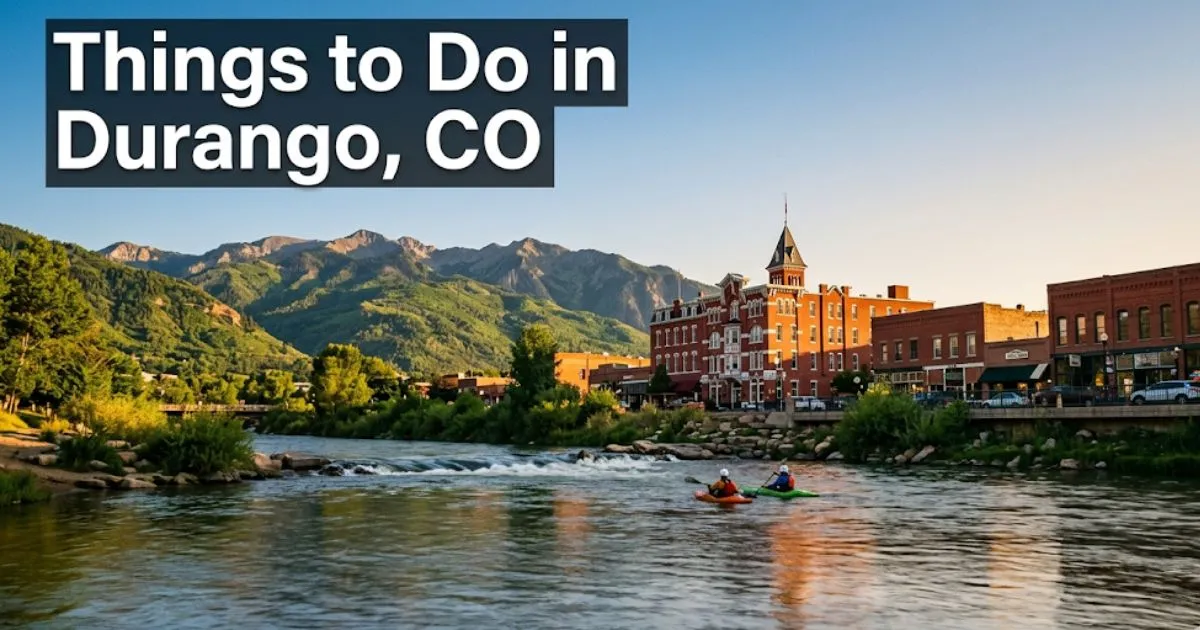
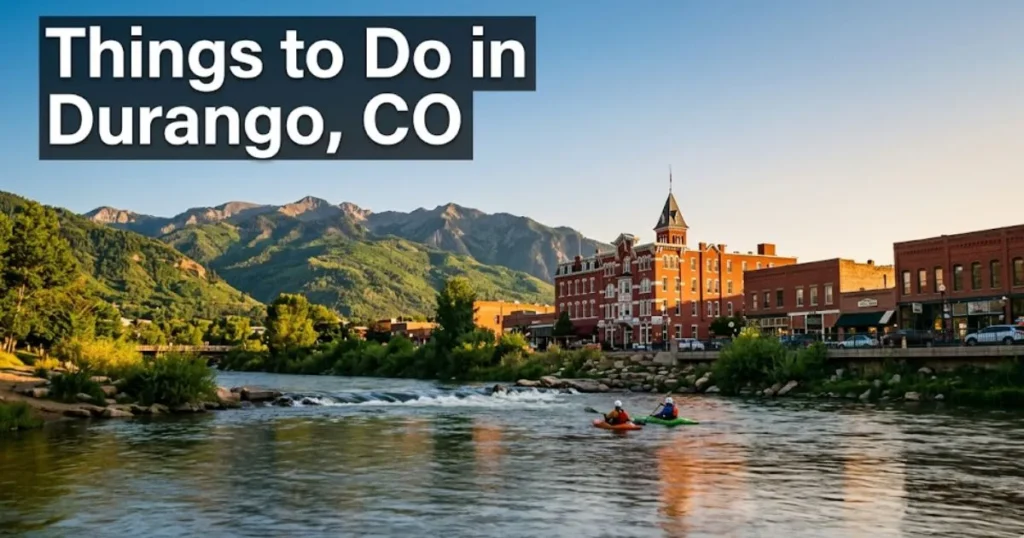
The Animas River runs right through downtown, shaping the city’s outdoor identity. Colorado tourism data shows Durango draws visitors year-round for its rare mix of Old West and adventure sports.
This guide covers what locals actually do here, from summer river culture to winter mountain solitude. It sorts the tourist traps from the genuine experiences for every type of traveler.
Durango Downtown and the Historic Main Avenue
Durango’s Main Avenue is a registered National Historic District with genuine Old West architecture. The buildings house independent shops and restaurants, not generic souvenir chains.
Start at the Durango & Silverton Narrow Gauge Railroad depot at the south end of Main Avenue. You can watch steam engines prepare for departure even if you skip the train ride.
Walking the full avenue takes about an hour at a relaxed pace. Street parking is metered, but the Durango Transit Center lot offers free all-day parking two blocks east.
Main Avenue suits every traveler profile differently. Solo travelers find the dense concentration of independent coffee shops and brew pubs easy to navigate without a car.
Families appreciate the wide sidewalks and the Durango Discovery Museum at the north end. The museum occupies a historic power plant building.
Budget travelers can enjoy Main Avenue entirely on foot without spending anything beyond food and coffee. The window-shopping and people-watching cost nothing.
October through May brings fewer crowds and more authentic local interaction. Summer months jampack the sidewalks with train passengers on tight schedules.
Locals avoid Main Avenue during the train’s midday boarding window. They shop and dine in the early morning or after 4 p.m. when the crowds thin significantly.
| Activity | Best For | Cost Range | Time Needed |
|---|---|---|---|
| Main Avenue walking tour | All profiles | Free | 1-2 hours |
| Railroad museum visit | Families, train enthusiasts | $10-15 | 1 hour |
| Independent boutique shopping | Couples, solo travelers | Variable | 1-2 hours |
Mesa Verde National Park Day Trip
Mesa Verde National Park sits just 35 miles west of Durango and demands at minimum a full day. The park preserves Ancestral Puebloan cliff dwellings dating back to 600 CE.
Cliff Palace and Balcony House require ranger-guided tour tickets purchased in advance through the National Park Service. Book these tours online 48 hours before your visit during peak season.
The park road stretches 21 miles from the entrance to the southernmost cliff dwellings. The full drive takes 90 minutes without stops due to winding mountain terrain.
Solo travelers and couples can navigate the park efficiently with an early start. Arrive at the entrance station by 7:30 a.m. to beat the tour bus arrivals.
Families with young children should know the cliff dwelling tours involve steep ladders and tight spaces. The Chapin Mesa Archeological Museum offers an excellent air-conditioned alternative with accessible exhibits.
Seniors and mobility-limited visitors find the museum and the Mesa Top Loop drive fully accessible. The six-mile Mesa Top Loop features paved pullouts at every major canyon overlook.
May through September offers full access to all tour routes. October through April reduces tour availability, and some roads close during winter storms.
According to the National Park Service, summer 2026 will maintain the timed-entry system for ranger-led cliff dwelling tours. Visit the park’s official website before departure.
The Chapin Mesa area holds the densest concentration of accessible sites. Locals skip the crowded Far View Visitor Center and head straight to the museum parking lot.
Durango & Silverton Narrow Gauge Railroad Experience
The Durango & Silverton Narrow Gauge Railroad is the most photographed attraction in Southwest Colorado. The 45-mile route follows the Animas River through canyons accessible only by train or foot.
The standard round trip to Silverton and back consumes an entire day from 8 a.m. to 6 p.m. A shorter Cascade Canyon round trip option runs from late May through early October.
Book tickets directly through the railroad’s official website at least two weeks ahead for summer dates. Open-air gondola cars offer the best views and the most coal smoke exposure.
Families with train-obsessed children find the experience worth every cent of the premium ticket price. The standard round trip runs approximately $100 to $160 per adult depending on car class.
Couples seeking romance should book the First Class Knight Sky car for evening departures. The 2026 summer schedule includes select sunset excursions with onboard dining.
Budget travelers can enjoy the train atmosphere without the full fare. Watch the morning departure from the depot platform or hike the Animas River Trail to wave at passing trains.
Seniors should choose enclosed car classes with cushioned seats and restroom access. The open-air cars expose riders to coal smoke for hours.
The fall color season from mid-September to early October sells out earliest. Winter offers the Polar Express-themed excursions that dominate December scheduling.
The railroad feels genuinely historic and well-operated. It also dominates Durango tourism to a degree that obscures the town’s other attractions.
Animas River Activities and Water Sports
The Animas River runs directly through downtown Durango and serves as the city’s summer recreation spine. Locals tube, kayak, raft, and fish the river from May through September.
The Animas River Trail is a paved 7-mile multi-use path paralleling the river through town. Walking this trail connects you to most downtown attractions without dealing with traffic.
Commercial rafting trips launch from multiple outfitters north of town on Highway 550. Mild Water Adventures and Durango Rafting Company offer half-day trips on the class I-III Lower Animas.
Families with children ages four and up can handle the lower section’s gentle rapids safely. The Upper Animas above Rockwood Box Canyon is class IV-V whitewater for experts only.
Solo travelers and couples find stand-up paddleboarding at Lake Nighthorse a calmer alternative to river rafting. The lake charges a day-use fee of about $10 per vehicle.
Budget travelers can tube the river for free with a personal inflatable tube. Put in at Santa Rita Park and float to the 9th Street Bridge take-out.
Mid-June through mid-July offers peak water flow from snowmelt. August brings lower, warmer water ideal for tubing and swimming.
Never enter the river after heavy rain when runoff increases debris and bacteria levels. The city water department posts real-time E. coli monitoring results online during summer.
Key Takeaway: The river is Durango’s real social center, not any single attraction. Learn to navigate by the river and you will navigate the town like a local.
Purgatory Resort Summer and Winter Activities
Purgatory Resort sits 25 miles north of Durango on Highway 550. The resort operates as a ski mountain in winter and an adventure park in summer.
Winter skiing runs from late November through mid-April across 1,600 acres of terrain. Purgatory’s lift tickets cost significantly less than Vail or Aspen resorts.
Families with beginner skiers find Purgatory more approachable than Colorado’s larger destination resorts. The mountain’s frontside terrain is overwhelmingly beginner and intermediate.
Expert skiers should head to the backside’s Legends Lift area for steep tree runs and mogul fields. These runs stay less crowded even during holiday weekends.
Summer operations include the Inferno Mountain Coaster, scenic chairlift rides, and downhill mountain biking. The mountain coaster runs approximately $25 per ride.
Couples enjoy the summer alpine slide and the Purgy’s Slopeside restaurant patio with mountain views. Sunset dinners here require reservations during July and August weekends.
Seniors can access scenic chairlift rides without skiing ability. The lift uploads wheelchair-accessible gondola cabins during summer operations only.
Budget skiers should target January and early February for the lowest lift ticket prices. Purchase tickets online 48 hours in advance for the best available rates.
The Durango Winter Sports Foundation reports Purgatory’s 2026 season will extend snowmaking coverage on intermediate runs. This improves early-season reliability significantly.
The Durango Food and Craft Beverage Scene
Durango’s food identity centers on craft beer, green chile dishes, and locally raised beef. The town supports more breweries per capita than almost any Colorado city outside Denver and Fort Collins.
Steamworks Brewing Company occupies a converted warehouse on East 2nd Avenue with a massive outdoor patio. Their green chile cheeseburger has anchored the menu since 1996.
Animas Brewing Company sits directly on the Animas River Trail for easy bike-in access. They brew a prickly pear wheat beer you will not find outside the Four Corners region.
Durango’s distillery scene starts at Honeyville north of town, where they produce whiskey, vodka, and flavored spirits from Colorado honey. Free tastings run daily.
For upscale dining, Ore House on East College Drive serves prime steaks in a 1906 historic building. Reservations are essential Friday and Saturday evenings year-round.
Solo travelers fit perfectly into Durango’s brewpub counter dining culture. Every brewery listed here seats solo diners at the bar without awkwardness.
Budget food travelers should target happy hours. Most breweries offer $4 to $6 pints and discounted appetizers from 3 p.m. to 6 p.m. on weekdays.
Families find Zia Taqueria on North Main Avenue the best kid-friendly meal in town. The cafeteria-style ordering eliminates wait times, and the portions satisfy all ages.
Ska Brewing south of town hosts live music and food trucks on summer weekends. Their parking lot parties draw more locals than tourists.
| Food Category | Local Pick | Best For | Average Spend |
|---|---|---|---|
| Brewpub | Steamworks Brewing | All profiles | $15-25/person |
| Tacos | Zia Taqueria | Families, budget | $10-15/person |
| Steakhouse | Ore House | Couples, seniors | $40-60/person |
| Pizza | Fired Up Pizzeria | Families, solo | $12-18/person |
Mesa Verde Country and Cortez Cultural Sites
The Cortez Cultural Center in nearby Cortez anchors the regional Native American arts and history programming. The center hosts Pueblo dance performances on summer evenings.
Crow Canyon Archaeological Center offers day programs for visitors interested in active archaeological research. Their excavation site tours book out weeks ahead during June and July.
The Canyons of the Ancients National Monument sits west of Cortez and contains over 6,000 recorded archaeological sites. This is the densest concentration of ancient structures in the United States.
Solo travelers and history enthusiasts find the Lowry Pueblo site particularly rewarding. It features a reconstructed great kiva you can enter and photograph without a ranger escort.
Families with children handle the Hovenweep National Monument trail system well. The two-mile loop at Little Ruin Canyon stays flat and shaded for early morning walks.
Budget travelers benefit from the Bureau of Land Management oversight of Canyons of the Ancients. No entry fees apply to most trailheads and pueblo sites.
Summer temperatures in Cortez regularly exceed 95 degrees Fahrenheit. Hike archaeological sites before 10 a.m. or after 4 p.m. from June through August.
Accessibility at Mesa Verde and Canyons of the Ancients remains limited. The visitor centers and museums accommodate wheelchairs, but trail access to most ruins requires walking on uneven surfaces.
Durango Arts, History, and Cultural Institutions
The Durango Arts Center on 2nd Avenue runs rotating gallery exhibitions and a year-round theater season. Their summer production schedule typically includes both contemporary plays and musicals.
The Powerhouse Science Center occupies a former coal-fired power plant on the Animas River. Interactive exhibits focus on energy, engineering, and regional geology.
The Center of Southwest Studies at Fort Lewis College holds the most complete regional archives of Four Corners history. Their museum-quality exhibits are free to enter Monday through Friday.
Solo travelers and couples find the Durango Film Festival in March a solid off-season draw. The festival screens independent films across three downtown venues within walking distance.
Families should know the Powerhouse includes a maker space with drop-in afternoon hours. Kids can build projects while parents explore the exhibits in the same building.
Seniors appreciate the college campus location of the Center of Southwest Studies with its ample parking and single-floor layout. The campus sits on a rim with panoramic views of the La Plata Mountains.
Budget travelers can fill an entire cultural day without paying admission beyond the Powerhouse. The Arts Center galleries and Southwest Studies exhibits are both free.
Winter cultural programming picks up when outdoor activity drops off. January through March offers the densest theater and lecture calendar of the year.
Key Takeaway: Durango’s cultural institutions punch above their weight for a town this size. The college and the railroad money built a serious arts infrastructure here.
Scenic Drives and Mountain Passes Around Durango
The San Juan Skyway is a 236-mile National Scenic Byway loop that includes Durango, Silverton, Ouray, and Telluride. The full loop demands a full day of driving with stops.
Highway 550 north of Durango to Silverton climbs over three 10,000-foot passes including Molas Pass and Coal Bank Pass. This road has no guardrails on some sections and demands confident driving.
The Million Dollar Highway segment between Silverton and Ouray is the most spectacular and the most exposed alpine driving in Colorado. Drivers uncomfortable with heights should take the clockwise route through Telluride instead.
Solo travelers and couples can complete the full San Juan Skyway loop in a long summer day. Start by 7 a.m. and budget 10 hours including photo stops in Silverton and lunch in Ouray.
Families should break this drive into two days with an overnight in Ouray or Telluride. The road time strains kids beyond the Silverton candy and souvenir stop.
Seniors should know the Million Dollar Highway requires full attention with no cruise control for miles. Alternate routes through Cortez and Dolores add 45 minutes but avoid the exposure entirely.
The La Plata Canyon drive west of Durango offers a gravel-road alternative with less traffic. High-clearance vehicles handle the upper sections best, but the lower canyon is passenger-car friendly.
Late September through early October delivers peak aspen color on all mountain drives. Afternoon thunderstorms in July and August reduce visibility on high passes after 2 p.m.
Winter Activities Beyond the Ski Resort
Durango’s winter identity extends beyond Purgatory Resort into Nordic skiing, snowshoeing, and hot springs culture. The quiet season from January through March offers solitude within an hour of town.
The Durango Nordic Center at Vallecito Reservoir maintains groomed cross-country ski trails on a donation basis. Their trail network covers 20 kilometers of beginner and intermediate terrain.
Molas Pass snowshoe trails north of town require no fees or permits from December through March. Park at the pass summit lot and trek into the Weminuche Wilderness boundary within a half-mile.
Trimble Hot Springs sits 10 minutes north of downtown and operates year-round. The natural mineral pools stay open until 10 p.m., and winter night soaking under mountain stars is the peak local experience here.
Solo travelers find the Nordic Center’s quiet trail system meditative and safe. The groomed loops stay within sight of the warming hut.
Couples should book a weekday evening soak at Durango Hot Springs Resort & Spa north of town. Their adults-only pool area stays quieter than Trimble’s family-friendly setup.
Families with young children can rent snowshoes and sleds at Pine Needle Mountaineering on Main Avenue. The shop staff advises on current snow conditions at no charge.
Budget travelers access the Molas Pass snowshoe trails for free. Rent gear in town for approximately $20 per day and pack your own lunch.
Avalanche danger exists in the San Juan backcountry from November through April. The Colorado Avalanche Information Center provides daily forecasts specific to the northern San Juan zone.
Silverton Day Trip and Mountain Town Culture
Silverton sits at 9,318 feet elevation at the end of the Durango train line and the top of Red Mountain Pass. The town’s population hovers around 600 year-round residents.
The entire town of Silverton is a National Historic Landmark District with dirt streets and false-front buildings. Blair Street’s restored brothels and saloons tell the town’s mining-era history.
Driving to Silverton takes 90 minutes from Durango via Highway 550 over two mountain passes. The drive itself is the reason most locals recommend taking your own vehicle instead of the train.
Solo travelers and couples find Silverton’s compact grid walkable in under two hours. The San Juan County Historical Society Museum inside the old jail is the single best stop for mining history.
Families should know Silverton’s high elevation affects children faster than adults. Schedule rest breaks and water stops, and watch for altitude sickness symptoms above 9,000 feet.
Budget travelers can picnic at Kendall Mountain Recreation Area with views of the peaks. The town’s handful of restaurants charge tourist prices during train arrival hours.
Silverton shuts down substantially from October through May when the passes close for winter storms. July and August bring the most reliable access and the densest midday crowds.
The Kendall Mountain Ski Area operates a single rope tow on weekends all winter. This is one of the last volunteer-run community ski hills in Colorado.
Key Takeaway: Drive yourself to Silverton and arrive before 10 a.m. or after 3 p.m. The train passenger window turns the town into a midday tourist zone.
Pagosa Springs Hot Springs and Day Trip
Pagosa Springs lies 60 miles east of Durango on Highway 160 and anchors around the Mother Spring, the world’s deepest geothermal aquifer. The town operates multiple soaking facilities from this single heat source.
The Springs Resort offers 25 mineral pools terraced above the San Juan River with varying temperatures. Day passes run approximately $50 to $70 per adult depending on the season.
The Overlook Hot Springs in downtown Pagosa occupies a historic building with rooftop tubs. Their rooftop soaking delivers views of the San Juan Mountains that no other hot spring in town matches.
Couples seeking a romantic half-day trip find Pagosa Springs ideal. Soak in the morning, walk the San Juan Riverwalk, and lunch at Riff Raff Brewing Company on the river.
Families handle The Springs Resort’s graduated pool temperatures better than the hotter, smaller rooftop tubs at Overlook. The resort’s main pool runs close to a standard swimming pool temperature.
Seniors and accessibility-focused travelers should know The Springs Resort offers elevator access to every terrace level. Water entries use graded steps with handrails at every pool.
Budget travelers can access the Hippy Dip hot spring pools along the San Juan River for free. These primitive rock pools sit on the river’s edge near the pedestrian bridge downtown.
Summer weekends crowd The Springs Resort with families from Texas and Oklahoma. Tuesday through Thursday mornings offer the quietest soaking windows.
Durango’s Seasonal Calendar and When to Visit
Durango operates on four distinct seasonal rhythms, and choosing the wrong one for your travel style can undermine an otherwise good trip. Summer delivers everything but crowds. Winter delivers solitude but limited services.
The peak summer window from mid-June through mid-August brings daily temperatures in the 80s and afternoon thunderstorms. The train runs full, the river runs full, and lodging prices run at their annual maximum.
The fall window from mid-September through mid-October is the local favorite season. Aspen colors peak around the third week of September, and tourist volume drops by half from August peaks.
The winter window from December through March serves skiers and solitude seekers. Purgatory Resort operations anchor the snow season, but the town itself quiets down significantly on weekdays.
The spring window from April through early June is Durango’s most unpredictable season. Snow lingers on high passes, the train operates on a limited schedule, and some restaurants close for seasonal maintenance.
Solo travelers should target fall and spring for the best blend of open businesses and manageable crowds. The shoulder seasons allow spontaneous booking without fighting summer capacity limits.
Families tied to school schedules face the summer peak or the winter holiday windows. Book summer lodging six months ahead for the best location and rate combination.
Seniors and heat-sensitive travelers should avoid July and August afternoons when direct sun exposure at 6,500 feet feels hotter than the thermometer suggests. Morning activity and afternoon rest is the smart pattern.
Budget travelers find the deepest lodging discounts in November and April. These transitional months carry some weather risk but slash hotel rates by 30 to 50 percent from summer highs.
| Season | Best For | Crowd Level | Lodging Cost | Key Limitation |
|---|---|---|---|---|
| Summer (Jun-Aug) | Families, river sports | Peak | Highest | Afternoon storms |
| Fall (Sep-Oct) | Couples, seniors, solo | Moderate | Moderate | Early snow possible |
| Winter (Dec-Mar) | Skiers, solitude | Low except holidays | Lowest | Limited services |
| Spring (Apr-May) | Budget, hiking | Low | Moderate-low | Snow closures |
Safety and Practical Warnings for Durango Visitors
Altitude sickness affects visitors arriving from sea level more than most Durango marketing materials acknowledge. The town sits at 6,512 feet, and any mountain drive takes you above 10,000 feet quickly.
Key safety and practical facts every visitor should know:
- Hydrate aggressively starting 24 hours before arrival. Altitude dehydration accelerates at 6,500 feet and causes headaches that mimic more serious altitude sickness.
- Allow 24 hours of light activity before attempting strenuous hikes or high-altitude drives. The most common medical callout in Durango involves visitors who flew in and hiked the same day.
- Monitor children and seniors for altitude symptoms that present as fatigue or irritability. These profiles often do not recognize their own symptoms.
- Never attempt the Million Dollar Highway in winter without four-wheel drive and snow tires. Colorado’s traction law applies, and rental car insurance often does not cover mountain-pass winter driving.
- Check the Colorado Department of Transportation website for pass conditions before any winter or spring mountain drive. Highway 550 closes entirely during heavy storms.
- Avoid entering the Animas River after heavy rain. Urban runoff spikes bacteria levels, and the current strengthens rapidly below the 9th Street whitewater park.
- Do not approach or feed wildlife anywhere in the Durango area. Bear activity increases in fall, and the city enforces trash container regulations with fines.
- Cell service vanishes on Highway 550 between Durango and Silverton. Download offline maps and inform someone of your route before departing.
- Sunburn at altitude happens in under 30 minutes regardless of temperature. Apply sunscreen before morning outdoor activities even on cloudy days.
In any emergency, dial 911. Mercy Hospital on Three Springs Boulevard is the region’s full-service medical facility with a 24-hour emergency department.
Frequently Asked Questions About Things to Do in Durango, CO
What is the number one thing to do in Durango?
The Durango & Silverton Narrow Gauge Railroad is the most famous attraction by visitor volume and national recognition.
However, locals consistently rank the Animas River Trail and river activities as the town’s true daily highlight.
Choose the train for a one-time bucket-list experience, or the river for how Durango actually lives.
How many days do you need in Durango, Colorado?
Three full days cover the downtown, one major attraction like the train or Mesa Verde, and a mountain activity.
A five-day trip adds a Silverton drive, a hot springs day in Pagosa, and a relaxed brewery-and-river afternoon.
The train consumes an entire day, so build your itinerary around that decision first.
Is Durango, CO worth visiting?
Durango is worth visiting for travelers who want an active mountain town without the Aspen price tag or the Vail polish.
It offers the best blend of Old West history, outdoor recreation, and craft food culture in Southwest Colorado.
Skip Durango if you want luxury shopping, fine dining density, or a resort town where everything is curated for tourists.
What is the best month to visit Durango?
September offers the best combination of warm days, cool nights, fall colors, and reduced crowds in Durango.
June and July deliver peak river flows and full train schedules but also peak lodging rates and tourist density.
January is the quietest month with the lowest rates, though some restaurants and attractions reduce hours.
What is Durango, Colorado best known for?
The Durango & Silverton Narrow Gauge Railroad is what Durango is best known for nationally.
Locally, the town is known for the Animas River recreation corridor and its independent brewery scene.
Mesa Verde National Park adds international archaeological significance to the area’s reputation.
Can you visit Mesa Verde and Durango in one day?
You can visit Mesa Verde from a Durango base in a single full day if you start by 7 a.m.
The park’s cliff dwelling tours require advance booking, and the drive to the southern ruins adds 90 minutes round-trip inside the park.
A one-day visit covers the museum, one ranger-led tour, and the Mesa Top Loop drive without feeling rushed.
Your Durango Trip Starts With This Decision
Decide first whether the train ride anchors your trip or not. Everything else organizes around that single choice.
Book train tickets and Mesa Verde cliff dwelling tours before booking lodging. These two experiences determine your available days for everything else this guide describes.
Verify current hours, fire restrictions, river conditions, and pass closures on the city and county official websites before departure. Mountain town logistics change with weather and season.
Durango rewards travelers who use it as a base for deeper exploration rather than a checklist destination. The town’s real value is what it opens up in every direction.