
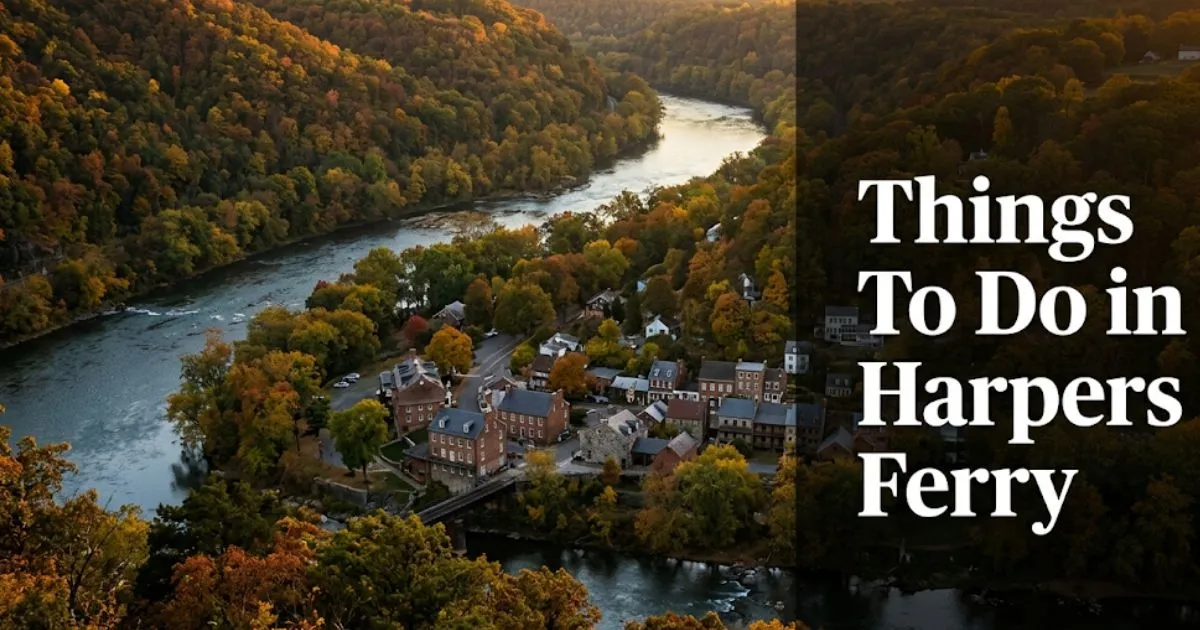
21 Best Things To Do in Harpers Ferry, WV (2026)

The best things to do in Harpers Ferry pack more layered experience into a few compact miles than almost any small town in the eastern United States.
This West Virginia river town sits where three states meet, where two rivers converge, and where some of the most consequential events in American history unfolded. The Harpers Ferry National Historical Park protects a walkable historic district, four major hiking trails, and a story that runs from industrial revolution to Civil War to the civil rights movement.
This guide covers specific activities by traveler type, honest crowd and seasonal reality, the parking situation nobody warns you about, a 2-day weekend itinerary, and the one hike that earns every step of the climb.
Things To Do in Harpers Ferry: The Essential Overview
Harpers Ferry offers two distinct destinations in one: a preserved Civil War-era historic district and a serious outdoor recreation hub.
The lower town historic district along Shenandoah Street and High Street holds the John Brown’s Fort, the armory ruins, and the Harper House. The ridge trails above deliver the views that make the hiking genuinely worth the effort.
Most first-time visitors spend their entire visit in the lower town. Experienced repeat visitors spend most of their time on the ridges and on the river.
The scale works in your favor. You can walk from the NPS visitor center to Jefferson Rock to the river access in under 20 minutes on flat ground.
Traveler Profile Note: Couples and solo travelers get the most from Harpers Ferry. Families with toddlers will find the lower town manageable but the signature hikes inaccessible with young children.
Insider Tip:
- Book the Maryland Heights Trail for morning, not afternoon. The exposed rocky switchbacks face west and become miserable in afternoon heat above 75°F.
- The NPS film shown at the Cavalier Heights Visitor Center runs about 20 minutes and provides critical historical context most visitors skip to their detriment.
- Budget travelers: the America the Beautiful Annual Pass pays for itself at Harpers Ferry on day one if you visit any other NPS site in the same year.
Harpers Ferry Things To Do for History Lovers
Harpers Ferry’s historical significance runs deeper than most US towns ten times its size.
John Brown’s 1859 raid on the federal armory here became one of the direct catalysts for the Civil War. The town changed hands between Union and Confederate forces at least eight times during the war.
The National Park Service preserves the historic district, the armory ruins, and multiple museum buildings along Shenandoah Street. Entry to the historic district museums is included with the park entrance fee.
The Storer College historic site within the park adds another layer. Founded after the Civil War to educate freed slaves, it later hosted the second meeting of the Niagara Movement, the forerunner to the NAACP.
| Historic Site | What It Covers | Time Needed | Best For |
|---|---|---|---|
| John Brown’s Fort | The raid site and abolitionist history | 30 to 45 min | History travelers |
| Storer College Site | Civil rights and post-war education history | 20 to 30 min | All travelers |
| Armory Ruins | Industrial and military history | 15 to 20 min | History travelers |
| Harper House | Oldest structure in town, domestic life exhibits | 20 to 30 min | Couples, history |
| Bolivar Heights | Civil War battlefield overlook | 30 to 45 min | All travelers |
Seasonal Note: NPS historic buildings operate on reduced hours from late fall through early spring. Verify current hours directly with Harpers Ferry National Historical Park before departure.
Local Alternative: Most visitors focus entirely on John Brown’s Fort. Experienced repeat visitors spend more time at the Lockwood House, which contextualizes the town’s role across multiple Civil War campaigns and draws far smaller crowds.
Harpers Ferry National Historical Park
Harpers Ferry National Historical Park is one of the most accessible NPS units in the eastern US, reachable by train from Washington DC and covering three states.
The park encompasses over 3,700 acres across West Virginia, Maryland, and Virginia. The entrance fee covers access to the historic district museums, the shuttle system during peak season, and all four ridge trails.
Admission runs approximately $10 to $20 per vehicle for a multi-day pass, as of recent years. The America the Beautiful Annual Pass covers entry and is worth purchasing if you plan to visit any other NPS site in 2026. Verify current rates at the official NPS site before your trip.
The Cavalier Heights Visitor Center is where you must begin your visit during peak season. Private vehicles are not permitted in lower town when the shuttle is operating, typically spring through fall weekends.
Traveler Profile Note: Budget travelers benefit significantly from the America the Beautiful Senior Pass (for travelers 62 and older), which provides lifetime access to all NPS sites at a one-time fee. Verify current pricing and terms at nps.gov.
Insider Tip:
- Arrive before 9:00 AM on peak fall weekends. The shuttle queue can run 45 minutes by 10:30 AM.
- Ask rangers at the visitor center about the current conditions on Maryland Heights Trail before committing to the full route.
- The park’s junior ranger program is one of the most substantive in the NPS Mid-Atlantic network, covering history, ecology, and the AT simultaneously.
Things To Do in Harpers Ferry West Virginia Outdoors
Harpers Ferry’s outdoor appeal rivals any National Recreation Area of similar size in the mid-Atlantic region.
The ridge system surrounding the town offers four distinct hiking routes with dramatically different character. River access for tubing and kayaking is within walking distance of the historic district. The C&O Canal towpath along the Maryland shore extends cycling opportunities for miles in both directions.
According to the West Virginia Division of Tourism, Harpers Ferry consistently ranks among the state’s top outdoor destinations for visitors from the DC metro corridor, specifically because of its multimodal outdoor access within a walkable footprint.
The outdoor experience here is unusually accessible. You don’t need a car to reach the trails from the lower town if you arrive by train.
| Outdoor Activity | Difficulty | Cost Range | Best Season | Best For |
|---|---|---|---|---|
| Maryland Heights Trail | Strenuous | Park fee only | Apr-Jun, Sep-Nov | Fit hikers, couples |
| Loudoun Heights Trail | Moderate-Strenuous | Park fee only | Apr-Jun, Sep-Nov | Experienced hikers |
| River tubing | Easy | ~$25-$55/person | Jun-Sep | Families, groups |
| C&O Canal cycling | Easy | Free (bring bike) | Apr-Oct | Couples, families |
| Bolivar Heights walking | Easy | Park fee only | Year-round | Seniors, families |
Traveler Profile Note: Seniors and travelers with mobility considerations have genuine outdoor options at Harpers Ferry. The lower town towpath section and the Bolivar Heights battlefield loop are relatively flat and paved in sections.
Hiking in Harpers Ferry
Harpers Ferry offers four distinct hiking routes ranging from a short ridge walk to a strenuous 4-mile elevation challenge.
The most rewarding hiking in Harpers Ferry rewards effort with specific payoffs: the overlook from Maryland Heights is one of the most photographed views in the eastern Appalachians, and it looks directly down the confluence of the Shenandoah and Potomac rivers.
The Loudoun Heights Trail on the Virginia side crosses the Shenandoah River via a footbridge and climbs the opposite ridge. It’s less trafficked than Maryland Heights and delivers comparable views from a different angle.
The Bolivar Heights Trail is the short, accessible option. It covers the Civil War earthworks above town with minimal elevation gain.
Insider Tip:
- The Maryland Heights Trail involves approximately 1,400 feet of elevation gain over roughly 4 miles round trip. Trekking poles make a genuine difference on the descent.
- Most visitors turn around at the stone fort ruins halfway up Maryland Heights. The actual overlook is above the ruins, requiring another 15 to 20 minutes of climbing.
- Bring more water than you think you need. There are no water sources on the ridge trails.
Traveler Profile Note: Families with children under 8 will find Maryland Heights and Loudoun Heights genuinely difficult. The Bolivar Heights trail is the appropriate family option, with historical markers throughout that hold children’s attention reasonably well.
Seasonal Note: Trails are passable year-round but can be icy and dangerous from December through February. Microspikes are advisable for winter visits.
Maryland Heights Trail Harpers Ferry
The Maryland Heights Trail is the single best hike in the Harpers Ferry area and one of the top ridge hikes in the entire mid-Atlantic region.
The trailhead begins on the Maryland side of the Potomac River, accessed by crossing the pedestrian railroad bridge from the lower town. The climb gains approximately 1,400 feet in roughly 2 miles.
The stone fort ruins at the overlook provide Civil War military context alongside the view. Union forces used this ridge to control the town below. Confederate General Stonewall Jackson captured the position in 1862 before the Battle of Antietam.
The full overlook view takes in the town, both rivers, the Virginia ridge of Loudoun Heights opposite, and on clear days the Blue Ridge mountains to the south. No competitor article mentions that this is a three-state view.
Practical logistics: No separate trail fee beyond the park entrance. Trailhead access requires crossing the Potomac on foot via the pedestrian bridge adjacent to the railroad bridge. Allow 3 to 4 hours for the round trip including overlook time.
Traveler Profile Note: Solo travelers should note that cell service is unreliable above the stone fort ruins. Download offline maps and let someone know your planned return time.
Local Alternative: The far less crowded approach is to start from the Chestnut Hill Road parking area on the Maryland side, which bypasses the lower town shuttle system entirely and gives you direct trailhead access by car.
Appalachian Trail Harpers Ferry
Harpers Ferry is one of the most significant towns on the entire Appalachian Trail, sitting at roughly the midpoint of the 2,190-mile route.
The Appalachian Trail Conservancy headquarters is located on Washington Street in Harpers Ferry. Through-hikers traditionally stop here to have their photo taken as an official midpoint milestone. The ATC office maintains a register of thru-hikers and is worth a brief visit for context even if you’re not a long-distance hiker.
The AT passes directly through the lower town and connects to the ridge system above. Day hikers can access a section of the AT that crosses the Potomac on the railroad pedestrian bridge before climbing the Maryland Heights ridge.
For most day visitors, the AT segment from the lower town to the top of Maryland Heights functions as the most satisfying day hike version of an iconic trail.
Practical logistics: No permit required for day hiking the AT through Harpers Ferry. The ATC headquarters is typically open during business hours on weekdays and limited Saturday hours. Verify current hours before visiting.
Traveler Profile Note: Serious hikers who want an overnight AT experience should note that dispersed camping in the NPS park requires a free backcountry permit. Verify current permit requirements at nps.gov.
Insider Tip:
- The ATC headquarters maintains a hiker log and photo archive going back decades. It’s a worthwhile 15-minute stop for anyone with genuine interest in the AT’s culture and community.
- Mid-May through mid-June is thru-hiker season at Harpers Ferry. The social energy in the lower town during this period is noticeably different and worth timing a visit around if you’re interested in trail culture.
Key Takeaway: Maryland Heights Trail, not John Brown’s Fort, is the single experience most likely to define your Harpers Ferry trip. Plan for it first, not last.
Harpers Ferry Tubing and River Activities
River tubing on the Shenandoah River is Harpers Ferry’s most popular warm-weather activity and one of the most enjoyable river experiences in the mid-Atlantic.
River Riders is the primary outfitter operating tubing trips on the Shenandoah River near Harpers Ferry. Pricing typically runs in the $25 to $55 per person range depending on trip length and package. Shenandoah River Outfitters operates a similar service from the Virginia side of the river. Verify current pricing and reservation requirements directly with each outfitter before your 2026 visit.
Both outfitters offer whitewater rafting and canoe rentals in addition to tubing. The Shenandoah’s lower sections near Harpers Ferry are class I to II, appropriate for families and first-time paddlers. The upper sections above Millville offer more technical whitewater for experienced kayakers.
River access is seasonal, typically operating from late May through September. Conditions vary significantly with rainfall. Check current river levels through the USGS water resources site before booking.
Traveler Profile Note: Families with children over 6 will find tubing the most crowd-pleasing activity in the Harpers Ferry portfolio. Most outfitters require children to meet a minimum weight threshold for safety. Verify age and weight requirements when booking.
Safety Warning: River conditions change rapidly after heavy rainfall. Do not tube or kayak on the Shenandoah during or immediately after significant rain events without checking current river gauge levels.
Local Alternative: Most tubing visitors launch from the main outfitter staging areas. Experienced paddlers who bring their own kayaks can access the river from the Millville access point on the West Virginia side, which delivers a quieter section with less outfitter traffic.
Harpers Ferry Ghost Tours
The Ghost Tour of Harpers Ferry is one of the most authentic evening experiences in the historic district and draws consistently strong reviews from both history travelers and general visitors.
Harpers Ferry has a documented history of paranormal lore rooted in genuine tragedy: multiple battlefield deaths, Civil War occupations, and industrial accidents at the armory. The evening walking tour covers the lower town historic district after dark, with guides who balance historical accuracy with atmospheric storytelling.
Tours typically depart from the lower town in the early evening and run approximately 90 minutes. Pricing typically runs in the $15 to $25 per adult range. Reservations are advisable on fall weekends when demand peaks sharply. Verify current scheduling and booking directly with the tour operator before your 2026 visit.
Traveler Profile Note: Couples find the ghost tour to be one of the better evening options in a town with limited nightlife. The tour is walkable, atmospheric, and provides historical depth that complements the daytime NPS experience.
Honest Assessment: The ghost tour is entertaining and historically grounded. It is not a haunted house experience. Visitors expecting theatrical scares will be disappointed. Visitors wanting an engaging evening history walk in a genuinely atmospheric setting will find it worthwhile.
Insider Tip:
- October bookings fill days in advance. Reserve your spot as soon as your visit dates are confirmed.
- The lower town after the tour concludes around 9:00 PM offers quiet access to Shenandoah Street and the river overlook with almost no crowds. It’s the best version of the lower town most visitors never experience.
Harpers Ferry Restaurants and Local Food
Harpers Ferry’s dining scene is modest in scale but specific in its strongest options, concentrated on Shenandoah Street and the adjacent lower town blocks.
The Anvil Restaurant on Washington Street is the town’s longest-running full-service restaurant and the most reliable choice for a sit-down meal. The menu covers American comfort food with regional touches. Expect a wait on peak weekends.
Secret Sandwich Society operates out of the lower town and has developed a strong following for its sandwiches and casual lunch format. It’s the best quick-service option for trail-hungry hikers returning from Maryland Heights.
For a broader dining selection, Shepherdstown, WV, 12 miles north on Route 480, has a more developed restaurant scene with several genuinely good options, including farm-to-table cooking that reflects the Eastern Panhandle’s agricultural character.
Traveler Profile Note: Budget travelers will find Harpers Ferry affordable. Most casual meals fall in the $10 to $20 per person range. A packed lunch from the hotel, however, is the practical choice for hikers, since trail access from restaurants requires crossing town during peak shuttle hours.
Honest Assessment: Harpers Ferry is not a food destination. The dining scene serves its purpose for visitors spending 1 to 2 days, but travelers who prioritize culinary experience should base themselves in Shepherdstown or Charles Town, 8 miles south on Route 340.
Insider Tip:
- The lower town fills completely at midday on peak weekends. Eat before noon or after 2:00 PM to avoid the full lunch crush.
- The small general store near the train station stocks trail snacks and drinks at reasonable prices, useful for self-provisioning before morning hikes.
Key Takeaway: Eat before 11:30 AM or after 2:00 PM in the lower town on any weekend between May and November. The midday hour is a genuine logistical problem.
Things To Do Near Harpers Ferry
Some of the best experiences in the Harpers Ferry region are within 30 miles of the lower town and reward the traveler who builds a day trip or overnight around multiple stops.
Antietam National Battlefield in Sharpsburg, Maryland, sits approximately 12 miles north of Harpers Ferry via Route 340. The bloodiest single day of the Civil War occurred here on September 17, 1862, the day after Confederate forces abandoned Harpers Ferry. Visiting both sites in sequence gives the Civil War narrative genuine coherence.
Shepherdstown, WV, 12 miles north, is a well-preserved college town on the Potomac with better dining options, a small independent bookstore, and the O’Hurley’s General Store, a locally beloved stop that has operated for decades.
The C&O Canal National Historical Park towpath begins at the Maryland side of the Harpers Ferry railroad bridge. Cyclists can ride the flat, crushed limestone surface northeast toward Sharpsburg and Antietam, covering approximately 12 miles one way.
Traveler Profile Note: Day-trippers from DC who want to combine Harpers Ferry with a second stop should choose Antietam for history focus or Shepherdstown for a more relaxed pace. Attempting both on the same day trip is feasible but rushed.
| Nearby Destination | Distance | Best For | Drive Time | Key Experience |
|---|---|---|---|---|
| Antietam National Battlefield | 12 miles | History travelers | 20 min | Civil War battlefield |
| Shepherdstown, WV | 12 miles | Couples, food | 20 min | College town, dining |
| Charles Town, WV | 8 miles | All travelers | 15 min | Dining, accommodations |
| Shenandoah National Park | 35 miles | Hikers, scenic drive | 45 min | Skyline Drive, waterfalls |
| Frederick, MD | 25 miles | All travelers | 35 min | Historic downtown, dining |
Harpers Ferry Day Trip From DC and Baltimore
Harpers Ferry is one of the most accessible National Historical Park destinations from Washington DC, reachable by train without a car.
The MARC Brunswick Line operates from Washington Union Station to Harpers Ferry station, with the Harpers Ferry train station sitting within walking distance of the lower town historic district. Travel time runs approximately 90 minutes. Service typically operates on weekdays with limited or no weekend service on this line. Verify current MARC schedules directly before your 2026 visit.
Amtrak’s Capitol Limited stops at Harpers Ferry en route between Washington DC and Chicago. This is the most reliable train option for weekend visitors. One-way fares vary significantly by booking time. Purchase tickets well in advance for weekend travel.
Driving from Washington DC takes approximately 75 to 90 minutes via I-270 North to Route 340 West, depending on DC beltway traffic. From Baltimore, the drive via I-70 West to Route 340 West runs approximately 90 minutes without traffic.
Traveler Profile Note: Solo travelers without cars benefit from the train access more than any other profile. The NPS shuttle from the Harpers Ferry train station to the visitor center connects seamlessly during operating season.
Insider Tip:
- Driving on fall foliage peak weekends between mid-October and early November should be planned with an early departure. Route 340 from Brunswick, MD, backs up significantly by 10:00 AM on these weekends.
- The train option eliminates the parking problem entirely and is the single best practical tip for Harpers Ferry first-timers from the DC metro area.
Best Time To Visit Harpers Ferry
The best time to visit Harpers Ferry is late September through early November for fall foliage, or April through early June for wildflowers and lighter crowds.
Fall foliage typically peaks in the Harpers Ferry area between mid-October and early November, though exact timing varies year to year with temperature patterns. The ridge views from Maryland Heights and Loudoun Heights during peak color are among the finest foliage overlooks in the mid-Atlantic, looking down on two rivers flanked by turning hardwoods.
Spring visits from April through early June offer wildflowers on the ridge trails, comfortable hiking temperatures, and significantly fewer visitors than summer or fall peak periods.
Summer (July to August) honest assessment: Avoid July and August if heat is a concern. Temperatures regularly exceed 90°F in the river gorge. The exposed rocky sections of Maryland Heights become genuinely dangerous in extreme heat. Crowds peak. Shuttle waits are longest. River tubing is enjoyable but the trail experience suffers significantly.
Winter (December to February): The historic district operates with reduced hours. Most outfitters are closed. Trails are passable for experienced winter hikers but the ice risk on the rocky Maryland Heights descent is real. Some travelers prefer the quiet.
| Season | Crowd Level | Temperature Range | Best Activity | Key Caution |
|---|---|---|---|---|
| Spring (Apr-Jun) | Low-Medium | 50s to 70s°F | Hiking, history | Verify NPS hours early season |
| Summer (Jul-Aug) | Very High | 85 to 95°F+ | River tubing | Extreme heat on trails |
| Fall (Sep-Nov) | High in Oct | 50s to 70s°F | All activities | Route 340 traffic peaks |
| Winter (Dec-Feb) | Very Low | 20s to 45°F | Historic district | Icy trails, reduced hours |
Traveler Profile Note: Seniors and travelers sensitive to heat should firmly avoid July and August. The spring window of April through early June is the most comfortable season for the full range of Harpers Ferry activities.
Key Takeaway: Mid-October through early November is peak fall foliage but also peak crowds and traffic. Book accommodations 6 to 8 weeks ahead for this window.
Harpers Ferry Parking and Getting Around
The most common and costly mistake Harpers Ferry first-time visitors make is driving directly to the lower town expecting to find parking.
During peak season, typically spring through fall weekends, private vehicle access to the lower town historic district is restricted. Visitors must park at the Cavalier Heights Visitor Center and take the NPS shuttle down to the historic district. The shuttle is included with park admission.
The Cavalier Heights parking lot fills quickly on busy weekends. Arrival before 9:00 AM is strongly advisable on any Saturday or Sunday from May through October. On peak fall foliage weekends, the lot can fill by 10:00 AM.
Arriving by train eliminates every parking problem entirely. The Harpers Ferry Amtrak/MARC station is a short walk from the lower town. During operating hours, the NPS shuttle also serves the train station.
Practical logistics for drivers:
- Check the NPS Harpers Ferry website for current shuttle operating dates before your visit.
- Arrive at Cavalier Heights before 9:00 AM on peak weekends.
- Allow 15 to 20 minutes for the shuttle to run its route to lower town.
- The shuttle runs frequently during peak hours, typically every 10 to 15 minutes.
- Return shuttles operate until the park’s posted closing time, which varies seasonally.
Traveler Profile Note: Families with strollers and heavy gear will find the shuttle manageable. The lower town streets are cobblestone in sections, which is challenging for standard strollers. A structured carrier or all-terrain stroller is advisable.
Safety Warning: Do not park on Route 340 or adjacent residential streets to avoid the shuttle. This is unsafe and subject to fines.
Harpers Ferry Weekend Itinerary
A 2-day weekend in Harpers Ferry covers the historic district, the best ridge hike, river access, and an evening ghost tour without feeling rushed.
Day 1: History, the Lower Town, and the Evening Ghost Tour
- Arrive at Cavalier Heights Visitor Center by 9:00 AM. Watch the NPS orientation film.
- Take the shuttle to lower town. Begin at John Brown’s Fort and the armory ruins on Shenandoah Street.
- Walk to Jefferson Rock via the stone steps adjacent to St. Peter’s Catholic Church. Allow 20 minutes for the climb and the view.
- Visit the Harper House and Storer College site. Allow 1 hour for both.
- Lunch at Secret Sandwich Society or a packed lunch at the river overlook.
- Afternoon: cross the pedestrian bridge to the C&O Canal towpath for a flat 2-mile walk along the Maryland shore.
- Return to lower town. Dinner at The Anvil Restaurant on Washington Street.
- Evening: Ghost Tour of Harpers Ferry departing from lower town (reserve in advance).
Day 2: Maryland Heights Trail and the River
- Early start. Trailhead for Maryland Heights Trail accessed via the pedestrian railroad bridge by 8:30 AM.
- Hike to the stone fort ruins overlook. Push to the upper overlook for the full three-state river view.
- Return to lower town by midday. Rest and hydrate.
- Afternoon: book a tubing float with River Riders or Shenandoah River Outfitters on the Shenandoah River.
- Evening: drive or shuttle to Shepherdstown for dinner at a fuller restaurant selection before departure.
Traveler Profile Note: Couples will find this 2-day structure well-paced. Families with young children should replace Day 2’s Maryland Heights hike with the Bolivar Heights Trail and extend river tubing time. Solo travelers can compress Day 2 by skipping the tubing and spending additional time at the Appalachian Trail Conservancy headquarters.
Is Harpers Ferry Worth Visiting?
Harpers Ferry is genuinely worth visiting for travelers who want history, outdoor access, and scenic payoff in a compact, walkable package.
The honest answer is that it delivers more per square mile than most comparable eastern US small towns. The combination of NPS-protected history, legitimate ridge hiking, and river access in a town you can cross on foot in 10 minutes is unusual at this scale.
It is not worth visiting for travelers seeking luxury hotel experiences, nightlife, or a beach-adjacent destination. Accommodation options are limited to B&Bs, small inns, and options in nearby Charles Town. The dining scene covers the practical needs of 1 to 2 day visitors without aspiring to be a culinary destination.
The overrated experience: Jefferson Rock itself is a short climb above town and the view is fine, but it is not the payoff most visitors expect from the dramatic photos circulated online. The view from the top of Maryland Heights overlook is dramatically superior and earns the effort.
The underrated experience: The Storer College historic site within the park grounds is consistently undervisited relative to its historical significance. The site connects Harpers Ferry’s history from abolitionism through the Civil War through the founding of the NAACP, and most visitors walk past it en route to the fort.
According to the West Virginia Division of Tourism, Harpers Ferry ranks among the state’s most visited destinations year over year, drawing a high proportion of repeat visitors from the DC, Baltimore, and Northern Virginia corridor, a reliable signal that the destination delivers on its first-time promise.
Traveler Profile Note: Day-trippers from DC and Baltimore get exceptional value from Harpers Ferry. Visitors building a multi-night West Virginia trip should pair Harpers Ferry with Shepherdstown and the Greenbrier Valley for a fuller state picture.
Safety and Practical Warnings for Harpers Ferry
Harpers Ferry’s combination of ridge trails, river access, and historic town creates specific safety considerations most first-time visitors don’t anticipate.
Key safety and practical facts every visitor should know:
- Maryland Heights Trail involves serious elevation on exposed rocky terrain. Wear trail shoes or hiking boots, not sandals or flat sneakers. The descent is where most injuries occur.
- Bring at least 2 liters of water per person for the Maryland Heights hike. There are no water sources on the trail above the river level.
- Cell service is unreliable in the river gorge and on the ridge above the stone fort ruins. Download offline trail maps before leaving the lower town area.
- Flash flooding is a documented risk in lower town Harpers Ferry during heavy rain events. The town sits at the confluence of two rivers in a gorge. Monitor weather forecasts and do not ignore flood advisories.
- River conditions on the Shenandoah change rapidly after rainfall. Contact outfitters directly on the day of a booked trip if significant rain has occurred within 48 hours.
- Winter trail conditions include genuine ice risk on the Maryland Heights descent from December through February. Microspikes or traction devices are advisable.
- The Route 340 approach during peak fall foliage weekends creates significant traffic. Plan for 30 to 45 additional minutes of drive time on October and early November Saturdays.
The primary NPS emergency contact is the Harpers Ferry National Historical Park ranger station, reachable through the main NPS park line. For medical emergencies, the nearest hospital with emergency services is Jefferson Medical Center in Ranson, WV, approximately 8 miles south on Route 340.
Key Takeaway: Download offline trail maps before leaving the lower town. Cell service disappears exactly where you most need navigation on Maryland Heights.
Frequently Asked Questions About Things To Do in Harpers Ferry
Is Harpers Ferry worth visiting for a day trip?
Harpers Ferry is one of the best day trip destinations in the eastern US for visitors coming from Washington DC, Baltimore, or Northern Virginia.
A full day covers the lower town historic district, Jefferson Rock, one ridge hike, and the river overlook without feeling rushed.
Arriving by Amtrak’s Capitol Limited train eliminates the parking challenge entirely and is the smartest logistical choice for DC-based visitors.
What is the best time of year to visit Harpers Ferry?
The best time to visit Harpers Ferry is mid-September through early November for fall foliage, or April through early June for spring wildflowers and smaller crowds.
Fall foliage from Maryland Heights overlook peaks typically between mid-October and early November, delivering one of the premier ridge views in the mid-Atlantic.
Avoid July and August if heat is a concern: the exposed trails reach dangerous temperatures and crowds peak across all attractions simultaneously.
How much does it cost to visit Harpers Ferry National Historical Park?
Harpers Ferry National Historical Park admission runs approximately $10 to $20 per vehicle for a multi-day pass, based on recent NPS fee schedules.
The America the Beautiful Annual Pass covers park entry and pays for itself if you visit any other NPS site in the same year.
Verify current fees directly at nps.gov before your 2026 visit, as NPS entrance fees are subject to annual review.
Can you get to Harpers Ferry without a car?
Yes. Amtrak’s Capitol Limited stops at Harpers Ferry station en route between Washington DC and Chicago, with the station walkable to the lower town historic district.
The MARC Brunswick Line also serves Harpers Ferry from Washington Union Station, though weekend service on this line is limited or absent. Verify current MARC schedules before your trip.
During peak season, the NPS shuttle from the train station connects to the Cavalier Heights Visitor Center and lower town at no additional charge beyond park admission.
What is the most challenging hike in Harpers Ferry?
The Maryland Heights Trail is the most demanding hike in the Harpers Ferry area, gaining approximately 1,400 feet of elevation over roughly 2 miles to the upper overlook.
The rocky, exposed terrain and sustained climbing make it a strenuous half-day commitment requiring proper footwear, at least 2 liters of water per person, and an early start to avoid afternoon heat.
Most visitors turn around at the stone fort ruins halfway up, missing the full upper overlook that delivers the three-state river view the trail is known for.
Are there things to do in Harpers Ferry in winter?
Yes, though the experience is significantly different from spring, summer, and fall visits.
The NPS historic buildings operate on reduced winter hours, river outfitters are closed, and the Maryland Heights Trail carries genuine ice risk from December through February.
Winter visitors who dress appropriately for cold temperatures find the lower town historic district quieter and more atmospheric than any other season, with short lines at all NPS museum buildings and a noticeably local character to the town.
Plan Your 2026 Harpers Ferry Trip With Confidence
Harpers Ferry rewards visitors who plan two specific things before they arrive: parking logistics and trail timing. Book your Maryland Heights hike for morning and solve your parking question before you leave home, either by taking the train or arriving at Cavalier Heights before 9:00 AM.
For fall foliage visits, book accommodations 6 to 8 weeks in advance and reserve your ghost tour the moment your dates are confirmed. The fall window is short and fills faster than most visitors expect.
Travel conditions, NPS entrance fees, shuttle schedules, outfitter pricing, and historic building hours are subject to change. Verify all key logistics directly with Harpers Ferry National Historical Park at nps.gov, the individual outfitters, and the Jefferson County Convention and Visitors Bureau before departure.
Start at the top of Maryland Heights. The view from that overlook earns everything the guidebooks say about Harpers Ferry being worth your time.