Things To Do in Mallorca: Top 2026 Activities & Guide

Mallorca offers far more than the beach resort reputation its name often triggers among US travelers. The island packs a UNESCO-protected mountain range, centuries-old villages, serious hiking, and an authentic food culture into 1,400 square miles of Mediterranean terrain.
The Mallorca Tourism Foundation reports the island welcomed over 14 million visitors annually in recent years. Most stuck to the same five beaches and one cathedral. This guide gives you what they missed.
This article covers specific named activities across beaches, hiking, culture, food, nightlife, and day trips. It also breaks down practical logistics and what genuinely changes by traveler type and season.
Things To Do in Mallorca: A Destination Overview
The best things to do in Mallorca span three distinct experiences: Mediterranean coastal life, mountain and interior exploration, and Palma’s historic urban culture.
Most first-time visitors spend 60 percent of their trip at beach clubs that could exist anywhere in southern Europe. The other 40 percent, meaning the Serra de Tramuntana hiking trails, the village of Deià, the wine cellars of Binissalem, and the centuries-old stone lanes of Pollença, is where Mallorca becomes genuinely irreplaceable.
The island’s northwest coast carries the most dramatic scenery. Its northeast corner stays quieter than marketing suggests.
Palma anchors the southwest corner. It functions as both the island’s capital and its most walkable urban destination.
Solo travelers find Mallorca manageable and safe. Palma’s old town has a developed social scene, and the island’s hostel infrastructure concentrates near Santa Catalina and the port area.
Families with young children are genuinely well-served. The calm Mediterranean coves and Alcúdia Bay’s shallow waters are among the most child-safe swimming environments in Europe.
| Activity Category | Best For | Cost Range | Time Needed | Insider Note |
|---|---|---|---|---|
| Palma Old Town walking | All profiles | Free to explore | Half day | Start at La Seu, walk west toward Santa Catalina |
| Serra de Tramuntana hiking | Active travelers, couples | Free trails, refugi fees vary | Full day | GR221 segments need advance refugi booking |
| Cove beach access | Couples, families | Free to low cost | Half to full day | Boat-access coves skip the parking nightmare |
| Wine tasting, Binissalem | Couples, food travelers | Approximately €15 to €35 per person | Half day | Bodegas Ribas is oldest winery on island |
| Boat trip to Sa Dragonera | Families, solo travelers | Approximately €25 to €45 per person | Full day | Book at least 2 days ahead in peak season |
| Palma nightlife, Santa Catalina | Solo travelers, couples | €5 to €15 per drink | Evening | Santa Catalina more local than Paseo Maritimo |
Top Things To Do in Mallorca: The Non-Negotiable Experiences
The five experiences that genuinely earn their reputation in Mallorca are Palma Cathedral (La Seu), the Serra de Tramuntana drive, a boat trip to an island or sea cave, at least one traditional Mallorcan meal, and a walk through either Deià or Valldemossa.
Everything else is optional based on your interests. These five are the island’s honest core.
Palma Cathedral requires advance booking for 2026 visits. The timed-entry system means walk-in access is often unavailable during peak months, and the building’s interior, with its extraordinary rose window and Gaudí-designed canopy, takes around 90 minutes to appreciate properly.
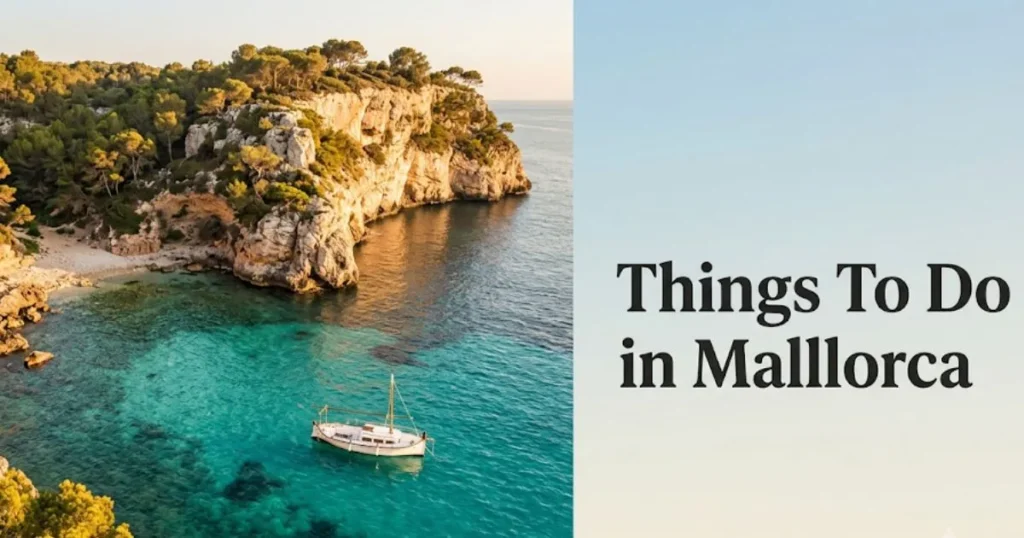
The Serra de Tramuntana drive on the MA-10 highway between Andratx and Pollença is genuinely one of the most dramatic coastal mountain roads in the western Mediterranean.
Experienced repeat visitors skip the tourist-bus version of this drive. They rent a car, leave Palma before 8:00 AM, stop at the Mirador de Ses Barques above Port de Sóller, and reach Cala de Sa Calobra before the crowds arrive by mid-morning.
Budget travelers note that the Serra de Tramuntana itself costs nothing to access. The expense is in the rental car, not admission fees.
According to the Mallorca Tourism Foundation, the Serra de Tramuntana was designated a UNESCO World Heritage Cultural Landscape in 2011, one of only a handful of cultural landscapes in Spain with this designation, recognizing its dry-stone terrace farming systems, water management, and mountain villages.
Insider Tip:
- Book Palma Cathedral tickets online at least one week before visiting in summer months
- The Sóller Electric Railway, running since 1912, gives non-drivers the Serra de Tramuntana experience without a car
- Senior travelers find the train option significantly easier than the MA-10 winding road
Mallorca Things To Do in Palma
Palma de Mallorca is a city that routinely surprises visitors expecting a generic Mediterranean port town. Its old town contains Arab baths from the 10th century, a Gothic royal palace, and a street-food market that locals use daily.
Bellver Castle stands on a forested hill 3 kilometers west of the city center. It is one of Europe’s rare circular Gothic castles, dating from the 14th century. Admission runs approximately €4 for adults as of recent years, though verify pricing before visiting.
The Mercat de l’Olivar on Plaça de l’Olivar is Palma’s central covered market. It sells Mallorcan cheese, sobrassada sausage, local olive oil, and fresh fish. It is where local Palma residents shop, not just tourists.
The Santa Catalina neighborhood, west of the old town, holds Palma’s most interesting independent restaurant scene. It is the opposite of the tourist-priced seafront dining along Paseo Marítimo.
Families with children find Palma Aquarium, located east of the city center near the marina, genuinely impressive. It houses a 3 million-liter shark tank that holds attention well beyond the usual 20-minute child interest window.
The Fundació Pilar i Joan Miró, the former studio and foundation of Joan Miró, sits in the Cala Major neighborhood west of Palma. It is consistently undervisited despite containing the artist’s actual working space and a significant permanent collection.
To get the most from a day in Palma:
- Arrive at Palma Cathedral at your booked timed-entry slot (pre-book online)
- Walk through Barri Gòtic toward Plaça Major, noting the Arab baths on Carrer de Can Serra
- Stop at Mercat de l’Olivar for a mid-morning coffee and local market browsing
- Walk west toward Santa Catalina for lunch at a neighborhood restaurant
- Spend the afternoon at Bellver Castle or Fundació Pilar i Joan Miró depending on interest
- Return to Santa Catalina for dinner, where reservations at peak season are advisable
Mallorca Beaches and Hidden Coves
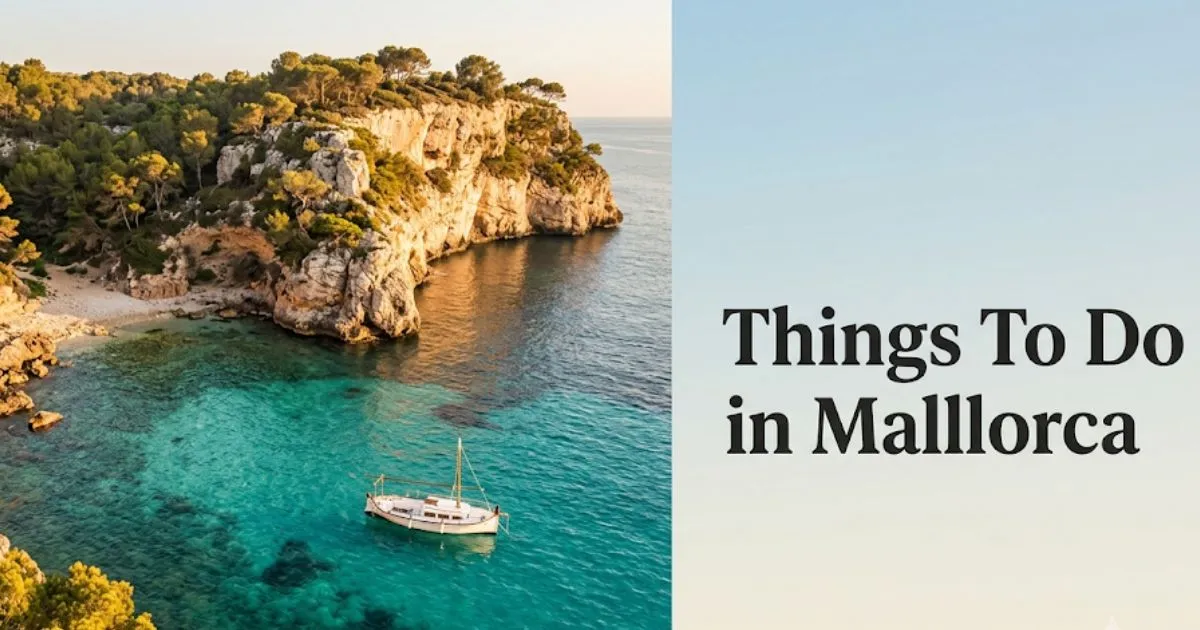
Mallorca’s best beach experiences are not at the developed resort beaches around Playa de Palma or Alcúdia’s main strand. They are at the island’s smaller coves, many of which require either a short hike or boat access.
Es Trenc on the southern coast is the island’s longest undeveloped beach, roughly 3 kilometers of fine white sand backed by dunes. It is one of the few long Mallorcan beaches without hotel development directly behind it. Parking fills completely by 10:00 AM in July and August.
Cala Mondragó, within the Parc Natural de Mondragó near Santanyí, offers two linked coves with crystal-clear shallow water. The park setting limits development. Families with young children find the calm, shallow water particularly well-suited for all ages.
Cala Deià requires a 15-minute walk down a stone path from the village of Deià. It is small, rocky, and attended mostly by people staying in Deià or Sóller. Its character is entirely different from the beach club coves.
Cala de Sa Calobra is the most dramatic cove on the island, reached via 14 kilometers of spectacular switchback road. The walking approach through the Torrent de Pareis gorge takes around 20 minutes each way. Arrive before 9:00 AM or after 4:00 PM to find it remotely manageable in summer.
Solo travelers wanting genuinely uncrowded coves should look at the northeastern coast around Cala Torta and Cala Mesquida near Artà, which see a fraction of the crowds despite comparable water clarity.
Insider Tip:
- Boat trips departing from Port de Sóller and Port d’Andratx access otherwise unreachable sea caves and coves
- The boat approach to Cala de Sa Calobra completely avoids the road traffic and parking disaster
- Couples looking for the quietest cove experience should target the Artà peninsula beaches in late September
Key Takeaway: Book Palma Cathedral timed entry at least a week ahead and plan any Serra de Tramuntana or popular cove visit for before 9:00 AM in summer.
Mallorca Hiking and Outdoor Activities
Mallorca’s hiking options in the Serra de Tramuntana range from accessible 90-minute valley walks to multi-day route segments that require serious preparation.
The GR221 (Dry Stone Route) runs approximately 150 kilometers across the Serra de Tramuntana from Port d’Andratx to Pollença. Hikers typically complete it in 8 to 10 days. Individual segments, particularly the Deià to Sóller section and the Lluc Monastery routes, work well as standalone day hikes.
The Torrent de Pareis canyon walk is widely considered one of the most dramatic hiking experiences in the Balearic Islands. The route descends from Escorca through a limestone canyon to Cala de Sa Calobra. It requires approximately 3 to 4 hours and involves some scrambling over boulders. Do not attempt after heavy rain due to flash flood risk.
The Puig de Massanella, at 1,365 meters, is the highest accessible peak in Mallorca. The ascent from the Lluc Monastery area takes approximately 4 to 5 hours round trip. Conditions are best from April through June and September through October.
Senior and accessibility travelers have genuinely good options in the lower Tramuntana. The Barranc de Biniaraix trail near Biniaraix village follows a well-maintained ancient stone path upward through orange terraces. It is mostly stepped stone and manageable for fit walkers with no technical scrambling required.
Cycling in Mallorca is a serious pursuit. The island attracts European professional cycling teams for winter training. Road cyclists should note that the MA-10 mountain road, while spectacular, carries significant traffic in summer. The quieter interior roads south of Sineu offer better cycling-to-traffic ratios.
According to TURESPAÑA (Spain’s national tourism board), the Balearic Islands have invested significantly in developing and waymarking the GR221 trail network, making it one of the best-documented long-distance hiking routes in Mediterranean Spain.
Insider Tip:
- Refugi (mountain hut) accommodation on the GR221 fills fast; book at least 2 to 3 months ahead for July and August
- The Deià to Sóller segment is the most scenic single-day hike on the island
- Active solo travelers find the refugi system naturally social; it is one of the best ways to meet other travelers in a non-bar context
Mallorca Water Sports and Boat Trips
Mallorca’s clearest water and most dramatic coastline are best accessed from the sea, and the island’s boat trip infrastructure is genuinely well-developed.
Day trips to Sa Dragonera, the uninhabited island nature reserve off Sant Elm village, depart regularly from Sant Elm. The reserve protects nesting colonies of Eleonora’s falcon and Cory’s shearwater. Boat access takes approximately 20 minutes each way.
Cabrera National Park, the archipelago south of the island’s main landmass, is Spain’s only national marine park. Day trip boats depart from Colònia de Sant Jordi. Visitor numbers to Cabrera are capped daily to protect the marine ecosystem; advance booking is essential and fills quickly in peak months.
Snorkeling conditions in Mallorca are among the best in the western Mediterranean. Cala Mondragó and the sea caves around the Dragonera island offer underwater visibility that routinely exceeds 20 meters in calm conditions.
Kayaking tours operate from Port de Sóller, Port d’Andratx, and Cala Figuera. The sea cave and cliff-base kayaking along the northwestern coast is a genuinely distinctive experience unavailable from land.
Families with children find the glass-bottom boat tours departing from Alcúdia and Port d’Andratx accessible for all ages and a reliable introduction to the underwater environment without requiring swimming ability.
Budget travelers should know that kayak and paddleboard rentals from many beaches cost approximately €10 to €20 per hour, making self-guided water exploration more affordable than organized boat trips.
Insider Tip:
- Catamaran day trips from Palma Marina to the southern coast typically include snorkeling stops at coves unreachable by road
- Early morning departures (before 9:00 AM) consistently offer calmer sea conditions on the north coast
- The Cap de Formentor boat trip from Port de Pollença is one of the best value water experiences on the island
Mallorca Villages Worth Visiting
The four Mallorcan villages that genuinely earn extended attention are Deià, Valldemossa, Pollença, and Cala Figuera. Each has a distinct character.
Deià sits on a terraced hillside between the mountains and the sea on the northwest coast. The village attracted artists and writers, most famously poet Robert Graves, through the 20th century. It remains small, expensive by Mallorcan standards, and uncommercially beautiful.
Valldemossa holds the Royal Carthusian Monastery, where composer Frédéric Chopin and writer George Sand spent the winter of 1838 to 1839. The monastery museum is genuinely interesting. The village around it is among the most photographed in Spain, which means summer mornings bring tour groups.
Pollença in the north sits inland from Port de Pollença. Its main claim is the 365-step Calvari staircase climbing to a hilltop chapel, worth the climb for the views across the Tramuntana foothills. The weekly Sunday market on Plaça Major is one of the island’s most authentic.
Cala Figuera, near Santanyí in the southeast, is a working fishing village built around a deep inlet. Fishing boats return to the harbor by mid-morning. The village has largely avoided the resort development that transformed nearby coastal towns.
Couples find Deià the most romantically atmospheric of all four. The village’s Hotel La Residencia sets the standard for luxury lodging in the Tramuntana. Even non-guests can visit its terrace for an afternoon drink.
Budget travelers should note that Deià dining runs significantly more expensive than the Mallorcan average. The weekly Pollença Sunday market offers artisan food products, local honey, and ceramics at realistic local prices.
Key Takeaway: Valldemossa is best visited before 10:00 AM or after 4:00 PM in summer; the midday tour group traffic makes the village unpleasant.
Mallorca Culture and History
Palma Cathedral, known locally as La Seu, is one of the most architecturally significant Gothic churches in Europe. Its nave is 44 meters high. Its Great Rose Window spans 12.5 meters in diameter. Gaudí worked on the interior between 1904 and 1914.
The Palma Old Town (Barri Gòtic) stretches across the city center in a walkable district of narrow limestone lanes, Renaissance merchant palaces, and small plazas. The Arab Baths on Carrer de Can Serra are among the best-preserved Moorish structures in Spain outside Andalusia.
Bellver Castle offers both the Gothic architecture and a surprisingly strong local history museum. The hilltop location delivers 360-degree views across Palma Bay. Most visitors spend 90 minutes here comfortably.
Capdepera Castle in the northeast is consistently overlooked by first-timers who concentrate on the western coast. The 14th-century fortification sits above the village of Capdepera and is significantly less visited than Bellver, making it a genuinely better experience for those who dislike crowds.
The Fundació Pilar i Joan Miró in Cala Major, west of Palma, includes Miró’s actual studio preserved as he left it, alongside a major permanent collection. Admission runs approximately €7 to €10 as of recent years; verify current pricing before visiting.
Senior travelers find Palma’s cultural circuit manageable in terms of physical demand. Bellver Castle requires a hill walk of approximately 20 minutes from the nearest parking. The old town’s cobblestones require sturdy footwear, and mobility aid users should verify specific access arrangements for each site before visiting.
Insider Tip:
- The Palma Old Town’s Can Vivot palace courtyard on Carrer Can Savellà is often open during daytime hours and costs nothing to enter
- The Capdepera Castle visit pairs naturally with a drive to the northeast coast’s Artà beach coves on the same day
- The Sóller Electric Railway Museum at the Palma terminus is free and gives historical context before boarding the train
Mallorca Food and Local Dining
Mallorcan food has a genuine identity, and it is not paella. The island’s core dishes, pa amb oli, sobrassada, frito mallorquí, and tumbet, reflect centuries of Mediterranean subsistence cooking that predates the tourist industry.
Pa amb oli (bread with oil) is the island’s fundamental meal: bread rubbed with tomato and olive oil, topped with local cold cuts and cheese. Every bar on the island serves it. The quality of the olive oil and the bread matters enormously. In Palma, Bar Flexas in Santa Catalina does a version that uses local oil from the Tramuntana olive groves.
Mercat de l’Olivar in Palma is the practical anchor for food-focused travelers. The covered market sells local cheeses, ensaïmada pastry, Mallorcan almonds, sobrassada, and fresh catch daily. It operates mornings, typically until around 2:00 PM, though hours vary by stall.
The Santa Catalina neighborhood in Palma is where the island’s most interesting restaurant scene is concentrated. It has largely replaced the waterfront dining strip as the preferred area for both locals and food-aware visitors.
Tumbet is the island’s vegetable stew of layered potatoes, aubergine, and peppers in tomato sauce, cooked in olive oil. It appears on traditional restaurant menus across the island and genuinely varies in quality. Look for it at rural finca restaurants, not tourist-area establishments.
Budget travelers can eat well in Mallorca without overspending. Menú del día (daily fixed-price lunch menus) at traditional bars and restaurants typically run €10 to €15 for three courses including a drink, and represent the best food value on the island.
According to the Consell de Mallorca, the island’s protected designation of origin products include Mallorcan olive oil, Mallorcan capers, and sobrassada de Mallorca, the last of which carries a specific EU protected geographical indication.
Mallorca Wine and the Binissalem Region
Binissalem, roughly 20 kilometers east of Palma in the central plain, is Mallorca’s primary wine-producing region and holds Spain’s only Balearic Islands-based Denominació d’Origen wine designation.
Bodegas Ribas, founded in 1711, is the oldest continuously operating winery on the island. It produces red wines primarily from the Manto Negro and Callet grape varieties, both native to Mallorca. Winery visits and tastings require advance booking; contact directly via their official website.
Bodegas Anima Negra near Felanitx in the east produces what wine writers have identified as Mallorca’s most internationally recognized wines. Their An and ÀN/2 labels use old-vine Callet and appear on wine lists in Palma’s better restaurants.
The Binissalem wine route is a half-day self-guided driving circuit through the central plain. The landscape is flat and entirely different from the dramatic Serra de Tramuntana scenery. It works best combined with a visit to a traditional market town like Sineu.
Couples find winery visits at Bodegas Ribas particularly atmospheric. The old stone cellar infrastructure and the estate’s setting on the Mallorcan plain make for a relaxed afternoon that contrasts well with beach or mountain activity days.
Budget travelers should note that winery tasting fees typically run approximately €15 to €35 per person and usually include several wines with local food pairings. This represents significantly better value than comparable wine experiences in France or Italy.
Insider Tip:
- The Sineu market, held every Wednesday, is the island’s most authentic weekly market and sits 10 minutes from the main Binissalem bodegas
- Mallorcan white wines, including those from the Prensal Blanc grape, are underrated relative to the reds and pair well with local fish dishes
- The September and October harvest period is the ideal time to visit; bodegas are actively working and often offer extended tastings
Key Takeaway: Bodegas Ribas requires advance booking; contact them at least two weeks ahead for visits during the September harvest season.
Mallorca Things To Do for Couples
Mallorca’s romantic credentials are strongest in three specific settings: the village of Deià, the boat trips along the northwestern coastline, and the evening culture of Palma’s old town.
A sunset catamaran trip departing from Palma Marina covers the bay and the silhouette of the Serra de Tramuntana at dusk. Several operators run these year-round, with most trips lasting approximately 2 to 3 hours. Prices typically run €50 to €85 per person; verify current rates and book 2 to 3 days ahead in peak season.
Deià functions as the island’s most inherently romantic village. The small stone lanes, the absence of cars in the upper village, the terrace dining views across the olive terraces toward the sea, and the general quiet make it unlike anywhere else on the island.
A private cooking class in Palma using Mallorcan market produce is a genuinely engaging couples’ activity. Several operators run half-day sessions based out of kitchen spaces in the Santa Catalina neighborhood. Costs typically run approximately €70 to €120 per person.
Dining at a Mallorcan finca restaurant (a converted rural farmhouse restaurant) in the interior is a couples’ experience that genuinely outperforms the standard restaurant format. The Es Verger restaurant above Alaró castle, accessible via a 45-minute mountain drive and short walk, serves roasted lamb that has attracted visitors for decades.
The most common mistake couples make in Mallorca is booking all-inclusive accommodation that removes them from the island’s food, village, and cultural experiences. Boutique rural hotels in Deià, Sóller, or the Tramuntana foothills deliver a fundamentally different trip quality.
Insider Tip:
- The Deià coastal path down to Cala Deià cove takes 15 minutes and offers a genuinely private swimming spot compared to accessible beaches
- Evening concerts at the Deià International Music Festival (typically June through August) are a genuinely special couples’ evening out; book tickets far in advance
- Palma’s Passeig del Born at 9:00 PM in shoulder season, with outdoor dining and minimal tourist crowds, is the city at its best
Mallorca Things To Do with Kids
Mallorca is among the most family-friendly Mediterranean destinations for US travelers, largely because the island’s calm-water coves and flat sandy shallow-entry beaches genuinely suit young children.
Alcúdia Bay on the north coast is the island’s best family beach zone. The bay is large, the water depth increases gradually, and the resort infrastructure around Port d’Alcúdia and Can Picafort includes extensive family-oriented hotels with direct beach access.
Palma Aquarium, on the eastern edge of Palma’s marina district, houses a 3 million-liter shark tunnel as its centerpiece. It consistently holds children’s attention for 2 to 3 hours. Admission typically runs approximately €22 to €28 per adult and less for children; verify current rates before visiting.
Glass-bottom boat trips departing from Alcúdia, Port d’Andratx, and Magaluf give children underwater visibility without requiring swimming. The marine life along the northeastern coast, including sea grass meadows and occasional sea turtles, generates genuine engagement from children aged 4 and up.
The Sóller Electric Railway is one of those experiences that works for both adults and children simultaneously. The 1912 wooden train climbs through the Tramuntana mountains from Palma to Sóller in approximately 55 minutes, then continues to Port de Sóller by vintage tram. Children find the vintage train format genuinely engaging.
Stroller and pram access in Palma’s old town is challenging. Barri Gòtic streets are cobblestoned and uneven. Families with infants should plan for carrying rather than rolling through the historic center.
Insider Tip:
- Alcúdia’s old walled town gives families a gentle introduction to Mallorcan history alongside the beach day
- The Hidropark waterpark in Port d’Alcúdia is the island’s best waterpark option for families with mixed age children
- Early morning cove access (before 9:00 AM) is the key to getting calm, uncrowded beach time with young children during July and August
Key Takeaway: Families combining beach and cultural activities should base themselves in Alcúdia or Port de Pollença for easiest access to both the bay beaches and the Tramuntana foothills.
Mallorca Nightlife and Evening Activities
Mallorca’s nightlife divides sharply between the Magaluf zone in the southwest, the Palma waterfront and old town, and a quieter evening culture in the northern resort towns. These are not interchangeable experiences.
Magaluf (officially Calvià) is the island’s concentrated party resort destination. It caters specifically to a younger, budget-oriented, high-volume nightlife crowd. The experience is entirely distinct from the rest of the island. Visitors seeking the rest of Mallorca’s culture and character are better based elsewhere.
Palma’s nightlife splits between the Paseo Marítimo waterfront clubs (international DJ circuit, higher entry fees, peak season crowds) and the Santa Catalina and La Llotja neighborhoods, where wine bars, craft cocktail rooms, and tapas restaurants with outdoor tables stay open late without the club atmosphere.
Bar Joan on Plaça de la Llotja in Palma’s old town is a genuinely local institution. It opens late, serves traditional Mallorcan spirits including Hierbas (the island’s herb liqueur), and attracts a mixed local and visitor crowd rather than a purely tourist one.
Evening activities beyond bars include flamenco performances in Palma (check venue listings; quality varies significantly), sunset viewpoints at Cap de Formentor (accessible by shuttle bus until approximately mid-evening in summer), and the Bellver Castle outdoor cinema that runs during summer months.
Solo travelers find Palma’s Santa Catalina neighborhood the most naturally social evening zone. Its density of small bars and restaurants, combined with outdoor table culture, makes meeting other travelers straightforward without requiring a club setting.
Senior travelers find the Mallorcan evening culture of long outdoor dinners starting at 9:00 PM or later a pleasant adjustment. The island’s safety standard in populated areas is high. The Palma waterfront and old town areas are well-lit and well-attended through late evening.
Mallorca Day Trips from Palma
Palma functions as a practical day-trip hub to essentially the entire island, given that the island’s furthest point is approximately 90 minutes by car from the capital.
The five most rewarding day trips from Palma in order of traveler satisfaction:
- Sóller and Port de Sóller via the Sóller Electric Railway. The train journey through the Tramuntana is the activity. Arrive in Sóller by mid-morning, walk the village, take the tram to Port de Sóller for lunch and a swim, return by late afternoon.
- Deià, Valldemossa, and the northwest coast drive. Leave Palma before 9:00 AM on the MA-10. Stop at Valldemossa early before tour groups arrive, continue to Deià, descend to Cala Deià, drive to Port de Sóller for lunch.
- Pollença and Cap de Formentor. Drive to Pollença for the Sunday market if timing aligns. Continue to Port de Pollença, then take the shuttle bus (operating approximately May through October) to Cap de Formentor lighthouse.
- The northeast coast: Artà, Capdepera, and Cala Torta. The archaeological site of Ses Païsses outside Artà is one of Mallorca’s most significant Bronze Age talayotic settlements. Capdepera Castle follows. Finish at Cala Torta beach for a genuinely uncrowded afternoon swim.
- Binissalem wine region and Sineu market. Best executed on a Wednesday when Sineu holds its weekly market. Combine with a winery visit at Bodegas Ribas in the afternoon.
Senior travelers and those preferring organized logistics will find the Sóller Electric Railway trip the most accessible day trip: it requires no driving and no navigation.
Budget travelers should note that the railway ticket typically runs approximately €22 to €28 per person return; verify current pricing before travel.
Best Time for Mallorca Things To Do
The best time to visit Mallorca for most travelers is May through early June or late September through October.
May delivers wildflower hiking in the Serra de Tramuntana, warm enough sea temperatures for swimming from mid-month, no school holiday crowds, and accommodation rates 20 to 40 percent below peak summer levels.
September and October bring the warmest sea temperatures of the year. The August crowds have dispersed. The Binissalem wine harvest is underway. The island’s beaches and villages return to something approaching their off-season character.
July and August present a genuinely different island experience from the one marketed in travel photography. Cap de Formentor road closes to private vehicles daily due to traffic volume. Popular cove parking fills by 8:30 AM. Palma’s old town reaches uncomfortable density between 11:00 AM and 4:00 PM. Temperatures regularly exceed 35°C (95°F).
November through February brings the cheapest accommodation rates. Some coastal restaurants close for the season. Hiking in the Tramuntana is excellent in clear winter weather but subject to rain and occasional closures after storms.
| Month | Crowd Level | Average Temp | Best Activities | Notes |
|---|---|---|---|---|
| April | Low to moderate | 16 to 20°C | Hiking, villages, culture | Some cove facilities not yet open |
| May | Moderate | 19 to 24°C | All activities | Best overall balance |
| June | Growing | 23 to 28°C | Beaches, nightlife, water sports | School holiday crowds begin late June |
| July | Peak | 28 to 36°C | Beach clubs, boat trips | Full peak pricing and crowds |
| August | Peak | 28 to 36°C | Same as July | Hottest and most crowded month |
| September | Declining | 25 to 30°C | All activities, wine harvest | Best sea temperature, fewer crowds |
| October | Low | 20 to 26°C | Hiking, culture, villages | Some coastal facilities closing |
| November | Very low | 14 to 18°C | Culture, hiking (careful) | Many hotels and restaurants close |
Key Takeaway: September is the single best month for first-time visitors who want warm swimming, manageable crowds, and full activity availability across the island.
Getting Around Mallorca Practical Guide
Renting a car is the single most practical decision for travelers wanting to explore Mallorca beyond Palma and the major resort towns. The island’s public bus network, operated by TIB (Transport de les Illes Balears), connects major towns adequately but cannot reach most beach coves, mountain viewpoints, or interior villages on a useful schedule.
PMI (Palma de Mallorca Airport) sits 8 kilometers east of the city center. Taxi to central Palma typically runs approximately €20 to €30; verify current regulated rates. Public bus Line 1 runs from the airport to Plaça d’Espanya in Palma and costs a fraction of taxi fare.
Car rental in Mallorca is straightforward and competitive. Book ahead for peak July and August travel, when rental inventory runs low and rates spike. A small automatic vehicle is the practical choice for Tramuntana mountain roads.
The MA-10 coastal mountain road demands full driver attention. Its switchbacks, narrowness, and drop-off views require driving at pace with traffic, not slower. Large camper vans and RVs are not appropriate for this road.
Drivers should note: Mallorca operates speed cameras at key approach roads to popular beaches and towns. Local speed limits are strictly enforced.
The Sóller Electric Railway (Ferrocarril de Sóller) provides the best public transport alternative for the Tramuntana. It departs from Plaça d’Espanya in Palma and runs multiple times daily. Advance booking during peak months is advisable.
Solo travelers using public buses can cover Palma, Alcúdia, Pollença, Sóller, and Valldemossa effectively. The island’s taxi app infrastructure (including services like Cabify) works reliably in Palma. Rural areas require a car.
Senior and accessibility travelers should request automatic transmission vehicles. Palma itself is manageable without a car, but the Tramuntana roads require confident manual transmission driving if a manual vehicle is rented by default.
Safety and Practical Warnings for Mallorca
Mallorca is a safe destination by European standards, but several specific risks genuinely affect travelers.
Sun and heat exposure is the most common cause of medical attention for tourists in July and August. Tramuntana hikes in full summer heat above 1,000 meters create genuine heat exhaustion risk. Carry minimum 2 liters of water per person for any mountain hike over 2 hours.
Key safety and practical facts every visitor should know:
- Never hike Torrent de Pareis after rain or with rain forecast. Flash flooding in narrow limestone canyons can be life-threatening. Check weather forecasts from Spain’s official AEMET meteorological service.
- Driving the MA-10 after dark is not advisable for unfamiliar drivers. The road has no guardrails at several cliff-edge sections.
- Petty theft targets beach bags at crowded tourist beaches. Do not leave valuables on beach towels unattended. This applies specifically to Playa de Palma, Magaluf beach, and the most popular coves in high season.
- Jellyfish presence is seasonal and unpredictable. Check local beach reports before swimming at any cove. Lifeguarded beaches post jellyfish flags.
- Cell service in the Serra de Tramuntana interior is unreliable. Download offline maps (Maps.me or Google Maps offline) before heading into the mountains.
- Water taxis and boat trips can be cancelled on short notice due to sea conditions. Build flexibility into boat-dependent day plans.
In a medical emergency in Spain, dial 112. The Palma Son Llàtzer Hospital and Hospital Universitari Son Espases handle serious medical situations. Travel insurance covering medical evacuation is advisable for all international travel.
Suggested 5-Day Mallorca Itinerary
Day 1: Palma
Morning at Palma Cathedral (pre-booked timed entry). Walk Barri Gòtic to Arab Baths. Midday at Mercat de l’Olivar. Afternoon at Bellver Castle. Evening dinner in Santa Catalina neighborhood.
Day 2: Serra de Tramuntana
Depart Palma by 8:00 AM on MA-10. Valldemossa (arrive before tour groups). Drive to Deià. Descend to Cala Deià for swimming. Continue to Port de Sóller for lunch. Return via interior road through Bunyola.
Day 3: North Coast and Formentor
Morning drive to Pollença. Walk Calvari staircase. Drive to Port de Pollença for lunch. Take Cap de Formentor shuttle bus (approximately May through October) to the lighthouse. Return to Alcúdia area for dinner.
Day 4: Northeast Coast
Artà talayotic site at Ses Païsses. Capdepera Castle. Drive to Cala Torta or Cala Mesquida for afternoon swimming (low crowds, excellent clarity). Dinner in Cala Figuera.
Day 5: South Coast and Wine Country
Morning at Es Trenc beach (arrive by 9:00 AM). Drive through Santanyí. Afternoon wine tasting at Binissalem. Evening return to Palma for final dinner in Santa Catalina.
Frequently Asked Questions About Things To Do in Mallorca
What are the best things to do in Mallorca for first-time visitors?
First-time visitors should prioritize Palma Cathedral, a Serra de Tramuntana mountain drive on the MA-10, at least one beach cove beyond the developed resort beaches, and a meal at a traditional Mallorcan finca restaurant.
The Sóller Electric Railway gives non-drivers the mountain scenery experience without requiring a rental car.
These five experiences together cover the island’s genuine identity rather than its resort infrastructure.
How many days do you need in Mallorca to see the highlights?
Five to seven days gives enough time to cover Palma, the Serra de Tramuntana, the northern coast, the southeast coves, and the interior villages without rushing.
A three-day visit can cover Palma and the northwest coast adequately but misses the northeast’s distinctly different character.
Ten days or more allows a relaxed pace with deeper exploration of the wine country, cycling, and GR221 hiking.
What is the best time of year to visit Mallorca?
The best time to visit Mallorca is May through early June or September through October for the ideal combination of weather, crowd levels, and full activity availability.
July and August are peak season: warm and sunny, but the most crowded and expensive months, with some roads closed to private vehicles due to traffic management.
April and November offer very low crowds and pleasant weather for culture and hiking, though some coastal facilities operate reduced hours or close entirely.
Do you need a car to get around Mallorca?
You do not need a car for a Palma-focused trip, but you will need one to explore the island’s coves, mountain villages, northeast coast, and interior wine country independently.
The TIB public bus network connects major towns, and the Sóller Electric Railway covers the Tramuntana corridor without driving.
For travelers wanting access to the island’s quieter beaches and villages on their own schedule, a rental car rented for 3 to 4 days of the trip is a practical compromise.
Is Mallorca good for families with young children?
Mallorca is genuinely excellent for families with young children, particularly for the calm-water beaches around Alcúdia Bay, the Sóller Electric Railway, and the glass-bottom boat trips accessible from multiple ports.
Palma Aquarium holds children’s attention for 2 to 3 hours and is a reliable rainy-day or non-beach option.
The main challenge for families is the cobblestone terrain of Palma’s old town, which is not stroller-friendly; plan to carry infants through the historic center.
What is the most overrated thing to do in Mallorca?
The most overrated experience in Mallorca is visiting Cap de Formentor by private car during July and August.
The road is closed to private vehicles during peak hours anyway, the shuttle bus is crowded, and the lighthouse itself, while photographically striking, delivers 20 minutes of scenery after 90 minutes of logistical effort.
The better version of the same experience is the Cap de Formentor boat trip from Port de Pollença, which arrives at the headland from the sea and includes stops at the clearest water on the northeast coast.
Plan Your Mallorca Trip for 2026
Mallorca’s best experiences require no more planning complexity than a good rental car, a pre-booked Palma Cathedral slot, and a willingness to be somewhere before 9:00 AM. That last point separates most good Mallorca trips from frustrating ones.
Book the Sóller Electric Railway and any Cabrera National Park day trip well ahead. Both fill quickly in peak months. Verify Cap de Formentor shuttle schedules and Palma Cathedral timed-entry requirements directly with official sources before departure, as operational details change seasonally.
Travel conditions, pricing, operating hours, and entry requirements in Mallorca are subject to change. Cross-check all logistics with the Mallorca Tourism Foundation (mallorca.es) and TURESPAÑA (spain.info) as part of your pre-trip planning. A trip planned for May or September in 2026 will be a meaningfully different experience from the same trip in August.