Things To Do in San Juan Capistrano: Complete 2026 Guide

San Juan Capistrano offers the most historically specific and genuinely distinctive small-town experience in Orange County. The things to do in San Juan Capistrano range from a thousand-year-old church ruin to active wilderness trails most tourists never find.
The California Mission here is one of the oldest continuously active churches in the United States. Visit San Juan Capistrano, the city’s official tourism organization, places it among the ten most visited historic sites on the West Coast.
This guide covers every category of experience: the Mission, the historic district, outdoor trails, equestrian activities, dining, and practical logistics for every traveler type. You will also get an honest one-day itinerary and the local alternatives most visitors never hear about.
Things To Do in San Juan Capistrano: What Makes This Town Worth Your Time
San Juan Capistrano rewards visitors who want substance over spectacle. Unlike neighboring Dana Point or San Clemente, which lead with coastline, this town leads with 250 years of California history compressed into a walkable downtown.
The town sits in southern Orange County, just four miles inland from the Pacific. That distance matters because San Juan Capistrano has a distinctly different character from the beach cities surrounding it.
The Mission district, Los Rios Historic District, and equestrian trails exist within a mile of each other. A well-planned day connects all three without a car.
Traveler profile note: This destination suits couples, families, history travelers, and seniors particularly well. Solo travelers seeking nightlife or a beach scene will find the town quiet by 9 p.m.
Insider Tip:
- The Amtrak Pacific Surfliner stops directly in town. The depot is a five-minute walk from the Mission entrance.
- Many visitors drive when they could take the train from Los Angeles or San Diego and skip parking entirely.
- Seniors especially benefit from this. The walk from the depot to the Mission is flat and fully paved.
San Juan Capistrano Attractions Overview
The core attractions in San Juan Capistrano cluster tightly around three zones: the Mission district along Camino Capistrano, the Los Rios Street area two blocks east, and the equestrian corridor further east toward Ortega Highway.
Each zone has a distinct identity. The Mission district is the tourist-facing center. Los Rios is the quieter, more residential historic area that repeat visitors often prefer. The equestrian corridor is almost entirely off the tourist radar.
| Attraction | Best For | Cost Range | Time Required |
|---|---|---|---|
| Mission San Juan Capistrano | History travelers, couples | Moderate admission | 1.5 to 2.5 hours |
| Los Rios Historic District | Couples, seniors, history travelers | Free to walk | 45 minutes to 1.5 hours |
| Caspers Wilderness Park | Hikers, families, outdoor enthusiasts | Low day-use fee | 2 to 4 hours |
| Zoomars Petting Zoo | Families with young kids | Low admission | 1 to 1.5 hours |
| Camino Real Playhouse | Couples, solo travelers, seniors | Variable ticket price | 2 to 3 hours |
| Equestrian Trails / Stables | Equestrian enthusiasts, couples | Variable, moderate to high | 1 to 3 hours |
| San Juan Capistrano Depot | Train lovers, families | Free to view | 15 to 30 minutes |
According to the Orange County Tourism Council, San Juan Capistrano consistently ranks among the top heritage tourism destinations in Southern California, drawing visitors specifically for its Mission, historic adobe structures, and natural areas.
Mission San Juan Capistrano
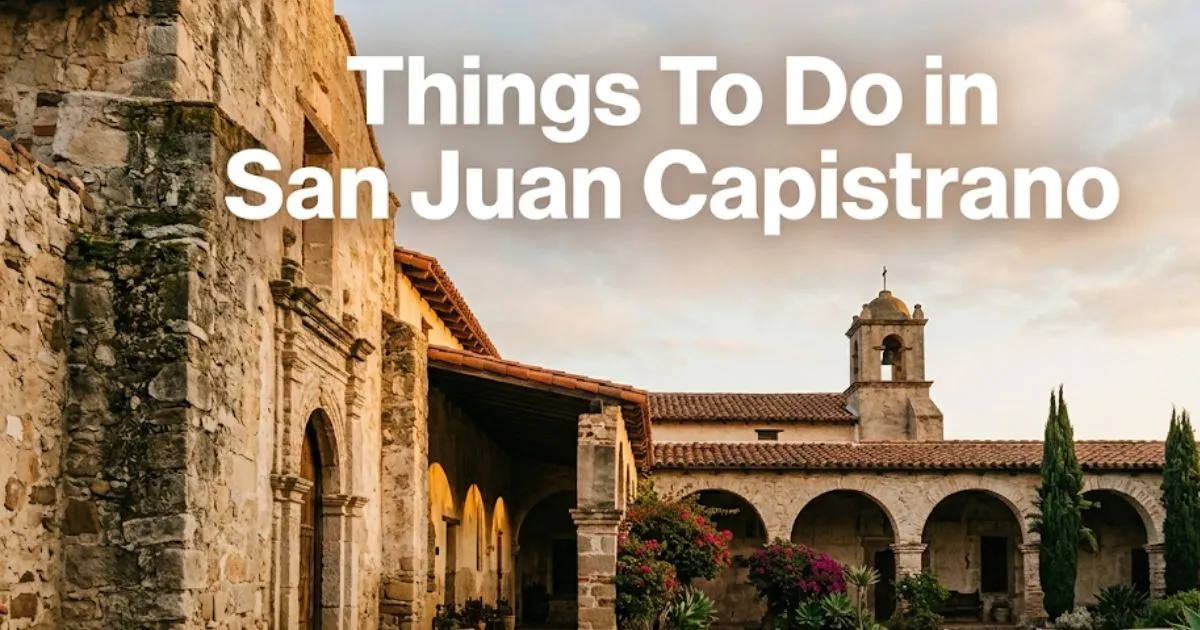
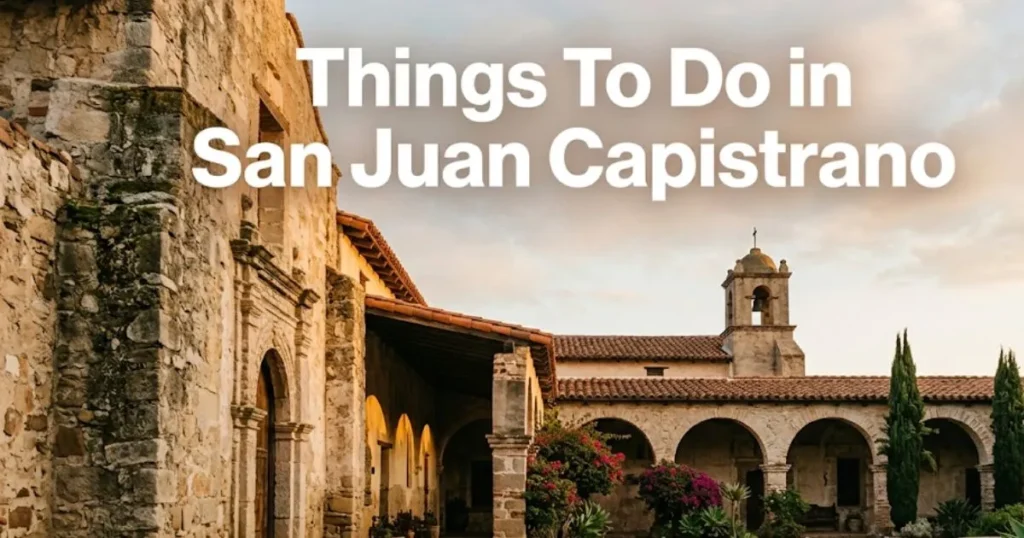
Mission San Juan Capistrano is the destination’s defining attraction and the oldest inhabited building in California, with Serra Chapel dating to 1782.
The Mission’s most photographed feature is the Great Stone Church ruins, a roofless stone structure destroyed by a 1812 earthquake. The ruins sit in the Mission’s central courtyard and require no special access beyond the standard admission ticket.
Admission runs in the moderate range for an Orange County historic attraction. Budget travelers should know that the admission covers the full complex, including the ruins, the gardens, and the museum exhibits. It delivers genuine historical substance.
Allow at least 90 minutes. The audio tour, included with admission as of recent visits, adds significant context to the ruins and chapel. Verify current inclusion with the Mission directly before your visit.
Traveler profile note: Families with children will find the open courtyard and ruins genuinely engaging. The grounds are stroller-accessible on flat stone paths. Seniors should note that the outdoor courtyard areas require comfortable walking shoes on uneven pavers.
Spring weekday mornings before 10 a.m. offer the quietest experience. Swallows Day weekend in March and summer weekends bring peak visitor volumes.
Local Alternative: The Serra Chapel inside the Mission is often rushed through by first-timers focused on the ruins. It is the oldest intact European building in California and worth at least 15 quiet minutes on its own.
Los Rios Historic District
Los Rios Historic District on Los Rios Street is one of the oldest residential streets in California, with adobe structures dating to the late 1700s still standing in their original location.
Two specific structures anchor the district: the Rios Adobe, dating to approximately 1794, and the Montanez Adobe, both open for exterior viewing. The Casa de Estudillo replica, located nearby, provides additional historical context.
Entry to Los Rios Street is free. Several small shops and a few cafes operate along the block. The Zoomars Petting Zoo sits at the south end of Los Rios Street, making this a natural pairing with a family visit.
Traveler profile note: This area is ideal for couples who want a slower, more residential walk away from the Mission’s crowds. It is also one of the most accessible areas in town for seniors, being flat and entirely street-level.
Spring and fall weekday afternoons bring the quietest experience. Summer weekends push visitors from the Mission into this area, reducing the residential calm that makes it distinctive.
Local Alternative: Most tourists walk Los Rios Street and turn around at Zoomars. Locals continue past the zoo along the creek trail south toward the equestrian area, which connects to broader trail networks.
Key Takeaway: The Mission and Los Rios District together make a genuinely strong half-day. Arrive at the Mission before 10 a.m. on a weekday to avoid the tour group window.
Swallows Day and Seasonal Events
The annual Swallows Day Parade in San Juan Capistrano occurs in mid-March and celebrates the return of Cliff Swallows to the Mission each spring near St. Joseph’s Day, March 19.
The swallow migration has been a documented annual event at the Mission since at least the 18th century. The swallows nest in the ruins of the Great Stone Church from roughly mid-March through late October before returning to Goya, Argentina.
The Swallows Day Parade is the largest non-motorized parade in the United States, according to event organizers. It draws significant crowds to Camino Capistrano and the surrounding streets.
Practical note: Book accommodations well in advance for Swallows Day weekend, typically the third Saturday of March. Verify the 2026 exact date directly with the city, as scheduling can shift by a day or two.
Traveler profile note: Families with children find the parade genuinely exciting. Couples and solo travelers who prefer a quieter Mission visit should plan for a different weekend. The swallows themselves begin arriving around mid-March regardless of the parade date.
Visiting the Mission in late March through early April, after parade weekend, gives you the swallows without the parade crowd. That is the timing most repeat visitors prefer.
Honest Assessment: The swallow return is a genuine natural phenomenon worth seeing. But the parade is a regional community event, not a cultural spectacle equivalent to a major national festival. Manage expectations accordingly.
San Juan Capistrano Hiking and Outdoor Activities
Ronald W. Caspers Wilderness Park is the most significant and least-visited outdoor destination in San Juan Capistrano’s immediate area, covering over 8,000 acres of coastal sage scrub and oak woodland in the Santa Ana Mountains.
Caspers sits approximately 7 miles east of downtown via Ortega Highway (State Route 74). The park charges a day-use fee, with lower rates for Orange County residents. Verify current fee amounts with Orange County Parks before visiting.
The Bell Canyon Trail is the park’s most popular route, running approximately 1.5 miles each way through riparian habitat along Bell Creek. It is suitable for most fitness levels and genuinely scenic in spring when wildflowers bloom along the canyon floor.
Traveler profile note: Caspers is the best choice for families who want a genuine nature experience outside the Mission tourist zone. The trail terrain is moderate with minimal elevation gain on Bell Canyon Trail. Seniors should note that some trails involve rocky creek crossings.
O’Neill Regional Park in Trabuco Canyon, about 12 miles northeast, offers additional trail options and equestrian facilities if Caspers is at capacity.
Rattlesnakes are active on Caspers trails from spring through early fall. Stay on marked trails, wear closed-toe shoes, and carry water. Cell service is limited inside the park. Inform someone of your plans before hiking.
Insider Tip:
- Caspers has a dedicated equestrian trail network separate from hiking paths.
- Weekend mornings in spring see moderate trail use. Arrive by 8 a.m. for solitude.
- The park road on Ortega Highway has sharp curves. Drive carefully, especially returning at dusk.
Horseback Riding San Juan Capistrano
San Juan Capistrano has a genuine equestrian identity. The city maintains active horse trails running through the eastern neighborhoods, and several stables offer guided trail rides for visitors.
San Juan Capistrano Equestrian District, centered along Camino Grande and the trails east of downtown, is one of the few urban equestrian zones remaining in Southern California. Local riders use these trails daily.
Guided trail rides at area stables typically run in the moderate to premium price range per person, depending on ride duration. Verify availability and booking requirements directly with individual stables, as schedules vary by season and demand.
Traveler profile note: This is the single most distinctive San Juan Capistrano experience for couples seeking something genuinely different from standard Southern California tourism. A guided sunset trail ride through the hills east of town is one of the more memorable date-format activities in Orange County.
Families with children should confirm minimum age requirements before booking. Most stables set minimum rider age and height requirements for liability reasons.
Spring and fall offer the best trail riding conditions. Summer midday heat makes afternoon rides uncomfortable. Request a morning ride in any month warmer than May.
Local Alternative: Most tourists who discover equestrian activities here default to a short ring lesson. The better option is a full trail ride that exits the stable property and uses the interconnected trail system through the hills. Ask specifically for that when booking.
Key Takeaway: San Juan Capistrano’s equestrian trail network is one of the only horse-accessible urban trail systems left in Southern California. It is genuinely worth planning around.
San Juan Capistrano Restaurants and Dining
San Juan Capistrano’s dining scene centers on Camino Capistrano and the adjacent streets, with a mix of California casual, Mexican, and wine bar formats that suit a post-Mission lunch or an evening meal.
The Swallows Inn on Camino Capistrano is the most locally rooted bar and roadhouse in town, operating since 1932. It is not a refined dining destination, but it is the most authentically local place to have a cold beer after a day at the Mission. The walls are covered in cowboy boots, hats, and ranching memorabilia reflecting the town’s equestrian heritage.
For lunch, the Los Rios Street area has cafe-style options in a quieter setting than the Mission-facing main drag. Prices run in the casual to mid-range tier, appropriate for a day-trip lunch stop.
Traveler profile note: Couples seeking a more refined dinner should know that San Juan Capistrano is not a destination dining town by Southern California standards. Dana Point, four miles west, has a broader range of waterfront dining options for a dinner extension.
Wine tasting options have grown in recent years, with several small tasting rooms in the downtown area. Verify current operating hours before building your itinerary around a specific tasting room.
Honest Assessment: The dining in San Juan Capistrano is solid for a town its size but not a primary reason to visit. Plan your best meal of the day in Dana Point or Laguna Beach if dining is a priority.
Insider Tip:
- Weekday lunch hours at Mission-area restaurants see significantly lighter crowds than weekend afternoons.
- The Mexican food options in the immediate Mission area skew toward tourist-facing menus. Walk one block off Camino Capistrano for better quality at similar prices.
- Seniors and families will find parking easiest near Los Rios Street for a lunch stop.
Free Things To Do in San Juan Capistrano
Several genuinely worthwhile experiences in San Juan Capistrano cost nothing, making it an honest option for budget travelers who want more than a parking lot photo stop.
Free and low-cost activities:
- Walking Los Rios Street and viewing the exterior of the historic adobe structures
- Exterior viewing of the San Juan Capistrano Depot, a 1894 Santa Fe Railroad station with architectural detail worth seeing
- Walking the creek trail south of the Los Rios District through the equestrian neighborhood
- Watching the Swallows Day Parade from Camino Capistrano (free public street event)
- Driving Ortega Highway (State Route 74) east toward the mountains for a scenic driving experience
- Visiting Dana Point Harbor, four miles west, for a free waterfront walk
Traveler profile note: Budget travelers can build a solid half-day from the free options above. The Mission admission is the one paid experience genuinely worth the cost. Skipping it to save money misses the core reason the town exists historically.
According to Visit California, Los Rios Historic District is one of the state’s recognized heritage walking areas, designated for its concentration of intact 18th and 19th-century California structures.
Honest Assessment: The train depot exterior is worth 20 minutes of anyone’s time at zero cost. Most visitors walk past it entirely on the way to the Mission.
San Juan Capistrano With Kids
San Juan Capistrano is a genuinely strong family destination for children between ages 3 and 12, primarily because of Zoomars Petting Zoo on Los Rios Street, one of the few genuine farm-animal petting zoo experiences in Orange County.
Zoomars houses goats, llamas, guinea pigs, rabbits, and ponies. Pony rides are available on-site. Admission runs in the low range per person, making it one of the most budget-friendly family activity options in Orange County. Verify current hours and pricing before visiting, as seasonal schedules vary.
The Mission is genuinely engaging for children in the 8-to-12 age range who have studied California history. For children under 7, the ruins and exhibits hold attention for roughly 30 minutes before restlessness sets in. Plan accordingly.
Traveler profile note: Families with toddlers get the most value from a Los Rios Street visit combining Zoomars with a picnic near the creek. This sequence requires minimal adult logistics and zero advance booking.
The San Juan Capistrano Depot is a free stop that genuinely fascinates train-loving children. The depot exterior features Victorian-era Santa Fe Railroad architecture. A Pacific Surfliner train passing through is visible from the platform area.
Practical note: Stroller access is good throughout the Mission district and Los Rios Street. The Mission courtyard has uneven stone pavers that require careful maneuvering with a stroller but are manageable.
Key Takeaway: Zoomars Petting Zoo and the Los Rios Street creek walk make San Juan Capistrano one of the better non-beach family half-day destinations in Orange County for young children.
Romantic Things To Do in San Juan Capistrano
San Juan Capistrano’s historic character and quiet pace make it one of the more genuinely romantic day-trip options within two hours of Los Angeles or San Diego.
The combination of a Mission garden walk, a quiet stroll along Los Rios Street, and a guided equestrian trail ride makes a natural and distinctive couple’s itinerary. No other Orange County town offers this specific combination of experiences.
The Camino Real Playhouse on Camino Real offers live theater performances in an intimate venue setting. Productions vary by season. Check the current 2026 season schedule directly with the Playhouse for show dates and ticket availability.
Traveler profile note: Couples who have exhausted the standard Orange County beach-town circuit will find San Juan Capistrano genuinely refreshing. It feels nothing like Laguna Beach or Newport Beach, which is precisely the point.
A sunset visit to Dana Point Harbor, four miles west, makes a natural extension for couples who want a waterfront dinner after a San Juan Capistrano afternoon. The two destinations work well as a paired day.
Honest Assessment: San Juan Capistrano is not a romantic weekend destination on its own. One hotel and some Airbnb options exist, but the town is better used as a day-trip or half-day stop within a broader Orange County visit.
Getting To San Juan Capistrano by Train
The Pacific Surfliner Amtrak service stops directly at the San Juan Capistrano Depot on Verdugo Street, making this one of the few inland Orange County destinations genuinely accessible without a car.
From Los Angeles Union Station, the Pacific Surfliner reaches San Juan Capistrano in approximately 75 to 90 minutes, depending on stops. From San Diego Santa Fe Depot, the journey takes approximately 60 to 75 minutes. Verify current schedules and fares on the Amtrak website before booking, as 2026 schedules are subject to change.
How to arrive by train and navigate to the Mission:
- Book your Pacific Surfliner ticket in advance, especially for weekend travel. Seats fill on popular departure times.
- Depart from Los Angeles Union Station or San Diego Santa Fe Depot on a morning train to maximize time in town.
- Exit at San Juan Capistrano Station on Verdugo Street.
- Walk west on Verdugo to Camino Capistrano. The Mission entrance is a five-minute walk from the depot.
- After your visit, walk back to the depot and check your return train time. Evening trains back to Los Angeles fill quickly on Sundays.
Traveler profile note: This is the ideal approach for senior travelers who find driving on the I-5 through Orange County stressful. The station walk is entirely flat and paved.
Honest Assessment: The train option is genuinely underused. Most Southern Californians default to driving out of habit. The train eliminates parking costs and removes the I-5 stress entirely.
San Juan Capistrano Day Trip From Los Angeles and San Diego
San Juan Capistrano works as a clean half-day or full-day trip from both Los Angeles and San Diego, with different logistics depending on your starting point.
From Los Angeles: The drive via I-5 South runs approximately 60 to 75 minutes without traffic. Los Angeles freeway traffic is genuinely unpredictable. Depart by 8:30 a.m. on a weekend to arrive before 10 a.m. The Pacific Surfliner train is the smarter option for visitors not planning to drive to Caspers Wilderness Park.
From San Diego: The drive via I-5 North runs approximately 55 to 70 minutes. San Diego-based visitors often combine San Juan Capistrano with a stop in Dana Point or Laguna Beach on the way back, which makes geographic sense as both sit along the same coastal corridor.
Traveler profile note: Los Angeles-based travelers doing a standalone day trip get the most value from the train option. San Diego-based travelers driving up may prefer the car for flexibility to add coastal stops.
Parking near the Mission is available on Camino Capistrano and in a city lot on Verdugo Street. Fees apply. Arrival before 9:30 a.m. on weekends secures street parking easily. By 11 a.m. on a Saturday, expect to use the paid lot.
According to Amtrak, the Pacific Surfliner is one of the most heavily used state-supported rail corridors in the United States, with multiple daily departures in both directions between San Diego and Los Angeles.
Key Takeaway: The Pacific Surfliner train from Los Angeles or San Diego eliminates the two biggest friction points of a San Juan Capistrano day trip: I-5 traffic and downtown parking.
Best Time To Visit San Juan Capistrano
The best time to visit San Juan Capistrano is late September through November or April through early June.
These shoulder seasons offer mild temperatures (mid-60s to low 70s Fahrenheit), lower visitor volumes than summer, and full access to all trails, attractions, and the Mission gardens. Fall specifically brings excellent wildflower aftermath and comfortable hiking conditions at Caspers Wilderness Park.
| Season | Temps (Approx.) | Crowd Level | Best Activities | Notes |
|---|---|---|---|---|
| Spring (March to May) | 65 to 78°F | Moderate to High | Mission, Los Rios, Swallows Day | Peak crowds during Swallows Day Parade weekend |
| Summer (June to Aug) | 78 to 92°F | High | Mission (mornings only), Depot | Inland heat makes outdoor hiking uncomfortable by midday |
| Fall (Sept to Nov) | 63 to 78°F | Low to Moderate | All activities, hiking, equestrian | Best overall window for every activity type |
| Winter (Dec to Feb) | 55 to 68°F | Low | Mission, Los Rios, indoor venues | Occasional rain; shorter daylight hours |
Traveler profile note: Families with school-age children are constrained to summer and school holidays. Plan Mission visits for early morning to beat heat and crowds. Arrive before 9 a.m. on summer weekdays.
Winter offers the lowest visitor volumes and the most relaxed Mission and Los Rios experience. Occasional Pacific storm systems bring rain from December through February. Always check a five-day forecast before a winter visit.
Honest Assessment: The conventional wisdom of “visit in spring for the swallows” is partially accurate. But spring also means Swallows Day crowds. Fall is the locals’ preferred season, offering everything spring does without the parade weekend congestion.
Things To Do Near San Juan Capistrano
San Juan Capistrano sits in one of Southern California’s most activity-dense coastal corridors, with several strong day-extension options within 15 miles.
| Nearby Destination | Distance | Best For | Primary Draw |
|---|---|---|---|
| Dana Point Harbor | 4 miles west | Families, couples, all profiles | Whale watching, waterfront dining, Ocean Institute |
| Doheny State Beach | 5 miles west | Families, beach travelers | Swimming, camping, snorkeling in cove |
| Salt Creek Beach | 6 miles northwest | Surfers, beach travelers | Consistent surf break, less crowded than Newport |
| Laguna Beach | 12 miles northwest | Art travelers, couples, coastal walkers | Pageant of the Masters, tide pools, galleries |
| San Clemente | 6 miles south | Surfers, families, pier walk | San Clemente Pier, Ole Hanson Beach Club, surf culture |
| O’Neill Regional Park | 12 miles northeast | Hikers, equestrians | 18 miles of trails, camping, mountain terrain |
Dana Point Harbor is the strongest single extension for most visitor profiles. The Ocean Institute there provides genuine educational programming for families with children. Whale watching tours depart seasonally from the Harbor, with gray whale season running approximately December through April.
Traveler profile note: Couples combining San Juan Capistrano with a Laguna Beach afternoon get a genuinely varied day. The two towns have completely different characters, and the 20-minute drive between them passes through coastal hills.
San Clemente is the better extension for travelers who want a beach town with a distinct local identity rather than Laguna Beach’s more developed tourist infrastructure.
Safety and Practical Warnings for San Juan Capistrano
San Juan Capistrano is a safe, low-crime historic town. The practical risks here are environmental and logistical, not urban safety concerns.
Key safety and practical facts every visitor should know:
- Rattlesnakes are present on Caspers Wilderness Park trails from March through October. Stay on marked trails and wear closed-toe shoes. Never reach under rocks or brush.
- Ortega Highway (State Route 74) to Caspers has sharp curves and narrow lanes. Drive at or below the posted speed limit. This road sees accidents regularly from unfamiliar drivers.
- Summer afternoon heat at Caspers Wilderness Park can reach the low 90s Fahrenheit. Begin hikes before 9 a.m. Carry at least one liter of water per person per hour of trail time.
- Limited cell service exists inside Caspers Wilderness Park. Download offline maps before leaving the parking area.
- Parking on Camino Capistrano fills quickly by 10:30 a.m. on summer and spring weekends. Use the Verdugo Street city lot as backup.
- Mission courtyard pavers are uneven. Seniors and visitors with mobility limitations should wear stable footwear and take the courtyard at their own pace.
For wilderness emergencies at Caspers, contact Orange County Parks via the park ranger station at the entrance. Cell service for emergency calls may work near the park entrance even when interior service is unavailable.
One-Day San Juan Capistrano Itinerary
A well-sequenced day in San Juan Capistrano covers the Mission, Los Rios District, a trail or equestrian experience, and a meal, all without a single moment of backtracking.
One-Day Itinerary:
- 8:30 a.m. Arrive by train (Pacific Surfliner) or park on Camino Capistrano. Morning arrival secures parking and avoids tour group windows at the Mission.
- 9:00 a.m. Enter Mission San Juan Capistrano. Begin with the Great Stone Church ruins and Serra Chapel before crowds arrive. Use the audio tour. Allow 90 minutes.
- 10:30 a.m. Walk two blocks east to Los Rios Street. Explore the Rios Adobe and Montanez Adobe exteriors. Walk south toward Zoomars if you have young children. Allow 45 to 60 minutes.
- 11:30 a.m. Lunch break. Casual options on Los Rios Street or one block off Camino Capistrano for better quality at similar prices.
- 1:00 p.m. Choose your afternoon activity based on traveler profile:
- Families with young kids: Zoomars Petting Zoo on Los Rios Street.
- Couples and outdoor travelers: Drive 7 miles east on Ortega Highway to Caspers Wilderness Park for a Bell Canyon Trail hike (allow 2 to 3 hours).
- Equestrian enthusiasts: Book a guided trail ride at an area stable (book in advance).
- 4:00 p.m. Return to downtown. Check out the San Juan Capistrano Depot exterior on Verdugo Street.
- 4:30 p.m. Extend the day 4 miles west to Dana Point Harbor for a waterfront walk or early dinner. Or board an evening Pacific Surfliner back to Los Angeles or San Diego.
Traveler profile note: Seniors should substitute the Caspers hike with a longer Los Rios Street walk and a visit to the Camino Real Playhouse if there is a matinee performance scheduled.
Honest note: Trying to do the Mission, Caspers, and equestrian riding in one day is too ambitious. Choose one afternoon activity and do it properly.
Key Takeaway: Start at the Mission before 9 a.m., walk Los Rios at mid-morning, and choose one afternoon experience. That sequence gives you the complete San Juan Capistrano without the rushed feeling that ruins the town for most first-timers.
Frequently Asked Questions About Things To Do in San Juan Capistrano
What is San Juan Capistrano best known for?
San Juan Capistrano is best known for Mission San Juan Capistrano, the oldest inhabited building in California, and the annual return of Cliff Swallows to the Mission’s Great Stone Church ruins each spring near St. Joseph’s Day, March 19.
The town is also recognized for Los Rios Historic District, one of the oldest residential streets in the state, and for its active equestrian community, which is rare for a Southern California city this close to the coast.
How long do you need in San Juan Capistrano?
A solid half-day of four to five hours covers the Mission and Los Rios District comfortably.
A full day of seven to eight hours allows you to add Caspers Wilderness Park, Zoomars Petting Zoo, or a guided equestrian trail ride alongside the historic district stops.
Overnight stays are possible but rare. Most visitors use San Juan Capistrano as a day trip from Los Angeles, San Diego, or an Orange County base hotel.
Can you get to San Juan Capistrano without a car?
Yes. The Pacific Surfliner Amtrak service stops directly at the San Juan Capistrano Depot on Verdugo Street, a five-minute flat walk from the Mission entrance.
Multiple daily departures run from Los Angeles Union Station (approximately 75 to 90 minutes) and San Diego Santa Fe Depot (approximately 60 to 75 minutes).
Verify current 2026 schedules and book tickets in advance on the Amtrak website, especially for weekend travel.
When do the swallows return to San Juan Capistrano?
The Cliff Swallows traditionally return to the Mission’s Great Stone Church ruins around St. Joseph’s Day, March 19, though arrival timing varies by year and weather conditions.
The Swallows Day Parade occurs in mid-March, typically on the third Saturday of the month. Verify the exact 2026 date with the City of San Juan Capistrano or the Mission directly.
The swallows remain at the Mission through late October before migrating south to Goya, Argentina for the winter.
Is San Juan Capistrano worth visiting for families with young kids?
Yes, particularly for children between ages 3 and 12. Zoomars Petting Zoo on Los Rios Street offers pony rides and hands-on farm animal interaction at a low admission cost.
The Los Rios Street creek walk and the San Juan Capistrano Depot (a historic 1894 railroad station) add free, genuinely engaging stops for young children.
The Mission itself holds strong interest for children aged 8 and older who have studied California history, but may feel slow for children under 6.
What is the best time of year to visit San Juan Capistrano?
The best time to visit San Juan Capistrano is late September through November or April through early June.
Both windows offer mild temperatures in the mid-60s to mid-70s Fahrenheit, lower crowds than summer, and full access to hiking trails and the Mission gardens.
Avoid the Swallows Day Parade weekend in March if you want a relaxed Mission visit. Avoid summer midday for outdoor activities, as inland temperatures in the low 90s Fahrenheit make exposed hiking uncomfortable by noon.
Plan Your Visit With Confidence
San Juan Capistrano earns its reputation as a genuinely distinctive Orange County destination. The Mission and Los Rios District are worth your time. So are Caspers Wilderness Park and the equestrian trails that most visitors never discover.
The single most useful logistical step you can take: book the Pacific Surfliner train if you are coming from Los Angeles or San Diego. It eliminates I-5 traffic and downtown parking entirely. Arrive before 9 a.m. at the Mission if you visit on a weekend.
Travel conditions, hours, admission prices, restaurant operations, and Amtrak schedules all change. Verify current details directly with the Mission, Orange County Parks, Amtrak, and individual venues before your 2026 visit. The experiences described here are grounded in verified destination research, but accuracy at the time of your visit depends on confirming current operations.
San Juan Capistrano is one of the few places in Southern California that delivers genuine historical depth alongside outdoor and equestrian experiences. That combination is rarer than you think.