Best Arizona Things to Do in 2026: The Complete Travel Guide

Arizona things to do in 2026 span some of the most dramatic terrain in North America. From the Grand Canyon’s rim to Sedona’s red rock canyons, to Tucson’s thriving arts scene, no single state delivers this range of distinct experiences.
Arizona’s Office of Tourism identifies the state as one of the top five US destinations for outdoor travel. The combination of five distinct geographic zones, four national parks, and 22 Native American tribal nations within one state is unmatched in the American West.
This guide covers specific named activities across Arizona’s major destinations, with honest seasonal guidance, cost context, and traveler-profile-specific recommendations. It gives you what you need to actually plan the trip.
Arizona Things to Do: What Makes This State Worth the Trip
Arizona things to do cover five genuinely distinct geographic and cultural zones within a single state. That range is rare, and it means Arizona rewards careful planning more than almost any comparable US destination.
The state divides broadly into the Sonoran Desert corridor anchored by Phoenix and Tucson, the Colorado Plateau canyon country centered on the Grand Canyon and Monument Valley, the Red Rock country of Sedona and Oak Creek Canyon, the high-elevation pine forests around Flagstaff, and the lower desert grasslands of southeastern Arizona including Bisbee and Tombstone.
Each zone has a different climate, a different character, and a different peak season. Treating Arizona as one monolithic destination is the single biggest planning mistake most first-time visitors make.
| Arizona Zone | Character | Best Season | Primary Appeal |
|---|---|---|---|
| Sonoran Desert (Phoenix/Tucson) | Urban desert, warm winters | Oct to Apr | Culture, botanic, city life |
| Grand Canyon/Colorado Plateau | Canyon wilderness | Mar to May, Sep to Oct | Hiking, geology, scale |
| Sedona/Oak Creek Canyon | Red rock landscape | Mar to May, Oct to Nov | Hiking, jeep tours, arts |
| Flagstaff/High Country | Mountain pines, elevation | Jun to Sep (summer escape) | Hiking, stargazing, cool temps |
| SE Arizona (Bisbee/Tombstone) | Historic border country | Oct to Apr | History, birding, wine |
Insider Tip:
- If you plan only one Arizona trip, base yourself in Sedona for the landscape quality and use it as a hub to reach the Grand Canyon South Rim (two hours north) and Flagstaff (45 minutes north).
- Phoenix makes a better starting or ending point logistically than a primary destination for non-urban travelers.
- For seniors and travelers with mobility considerations, Phoenix and Tucson’s flat terrain and abundant accessible attractions make a more practical base than Sedona’s steeper terrain.
Top Things to Do in Arizona: The Experiences That Earn Their Reputation
The top things to do in Arizona include the Grand Canyon South Rim, Antelope Canyon guided tours near Page, Horseshoe Bend overlook, Sedona’s red rock hikes, and the Arizona-Sonora Desert Museum in Tucson. Each of these genuinely delivers on its reputation, though each requires advance planning.
Antelope Canyon is the most frequently misunderstood. It is a slot canyon on Navajo Nation land. It requires a paid guided tour booked weeks or months in advance. The popular Upper Antelope Canyon is the most photographed; the slightly less visited Lower Antelope Canyon offers comparable formations and slightly shorter lines.
Horseshoe Bend is free to access and requires only a short 1.5-mile round-trip walk from the parking area near Page. It is one of Arizona’s genuinely spectacular free experiences.
The Grand Canyon South Rim is open year-round. Sunrise and sunset are the most dramatic times to visit. The Bright Angel Trail is the most accessible canyon hike, with water stations at designated points.
What is overrated: Grand Canyon helicopter tours are aggressively marketed and priced at several hundred dollars per person. The rim itself, on foot at dawn, delivers equivalent emotional impact at the cost of a National Park entry fee.
What experienced visitors prefer instead: The North Rim of the Grand Canyon is open May through mid-October and receives dramatically fewer visitors than the South Rim. The views are arguably more dramatic. It requires a longer drive but rewards the effort significantly.
Arizona Outdoor Adventures: Hiking, Canyons, and Desert Exploration
Arizona outdoor adventures are the primary reason most visitors come to the state. The hiking access ranges from flat, accessible desert trail loops to strenuous multi-day canyon descents.
The South Kaibab Trail at the Grand Canyon offers the most dramatic rim-to-canyon scenery on the South Rim. It lacks water stations, making it suitable for experienced hikers on cooler mornings only. Descend no further than Ooh Aah Point if you are not an experienced hiker with full water supply.
At Saguaro National Park outside Tucson, the Signal Hill petroglyphs trail is a 1.5-mile flat loop suitable for all fitness levels. The park has two distinct units: the Rincon Mountain District (east) and the Tucson Mountain District (west), each with its own trail network.
Sedona’s Bell Rock Trail is the most accessible red rock hike for first-timers. The trailhead sits at the Village of Oak Creek, approximately 5 miles south of Sedona proper. Bell Rock rises abruptly from the desert floor and can be approached from multiple levels of difficulty.
For families with children: The Desert Botanical Garden in Phoenix has paved, flat walking paths through Sonoran Desert plant collections. It is one of Arizona’s most genuinely child-friendly outdoor experiences. Hours and seasonal pricing vary; verify before visiting.
Safety note for outdoor travelers: Begin all desert hikes before 7 AM between May and September. Heat at midday in lower elevation desert areas can be life-threatening. Carry minimum one liter of water per hour of planned hiking. Flash flood risk in canyons is real during the July through September monsoon season.
Arizona National Parks to Visit: Beyond the Grand Canyon
Arizona national parks include four full national parks and more than a dozen national monuments. Most visitors see only the Grand Canyon. The others are equally worth the time.
Petrified Forest National Park sits in northeastern Arizona along Interstate 40. The park contains 225-million-year-old petrified wood scattered across high desert terrain. Entry fees apply; check the National Park Service website for current rates. The America the Beautiful Annual Pass covers entry to all four Arizona national parks and pays for itself after two park visits.
Saguaro National Park is the only national park dedicated to the iconic saguaro cactus. Its proximity to Tucson makes it one of the most accessible parks in the Southwest. Dawn light on the saguaro forests in the Tucson Mountain District is one of Arizona’s genuinely remarkable visual experiences.
Canyon de Chelly National Monument on the Navajo Nation near Chinle is an undervisited masterwork. The canyon walls rise 1,000 feet above the canyon floor. Most overlooks are free to access independently. A guided Navajo-led jeep or horseback tour is required to enter the canyon floor; book through Navajo-authorized operators well in advance.
For budget travelers: All four Arizona national parks offer free entry on select federal fee-free days annually. The National Park Service publishes those dates each January for the upcoming year; check VisitArizona.com and the NPS site for 2026 dates.
Key Takeaway: The America the Beautiful Annual Pass covers every Arizona national park and monument. Buy it before your first park entry and it immediately saves money.
Arizona Scenic Drives and Road Trips: The State’s Best Routes
Arizona scenic drives are among the most dramatic road trip routes in the continental US. No comparable state offers this density of canyon, desert, and mountain road scenery within driving distance.
The Apache Trail (State Route 88) east of Phoenix through the Superstition Mountains is one of North America’s great scenic drives. The dirt road section between Tortilla Flat and Roosevelt Lake is not suitable for all vehicles; check road conditions before departure, as sections may close seasonally.
Oak Creek Canyon (State Route 89A) between Flagstaff and Sedona descends through a lush riparian canyon that feels entirely unlike the surrounding desert. The Slide Rock State Park swimming area within Oak Creek Canyon is one of Arizona’s most popular summer stops. Parking fills by 9 AM on summer weekends.
The drive from Flagstaff to Monument Valley on US-160 and US-163 through the Navajo Nation takes approximately three hours. The final approach to Monument Valley Navajo Tribal Park on US-163, with the Mittens buttes rising from the horizon, is one of the most cinematic highway views in the United States.
For road trip travelers: Arizona’s highways have long stretches without gas stations, particularly on the Navajo Nation and in southeastern Arizona. Fill up at every opportunity. Cell service drops out frequently in canyon country. Download offline maps before leaving a major city.
| Scenic Drive | Distance | Road Type | Best Season | Key Stop |
|---|---|---|---|---|
| Oak Creek Canyon (89A) | 14 miles | Paved | Mar to Nov | Slide Rock State Park |
| Apache Trail (SR-88) | 40 miles | Paved + dirt | Oct to Apr | Tortilla Flat |
| US-163 to Monument Valley | 22 miles | Paved | Mar to Oct | Monument Valley overlook |
| Route 66 Seligman to Kingman | 86 miles | Paved | Year-round | Hackberry General Store |
Things to Do in Sedona Arizona: Red Rocks and What Locals Actually Prefer
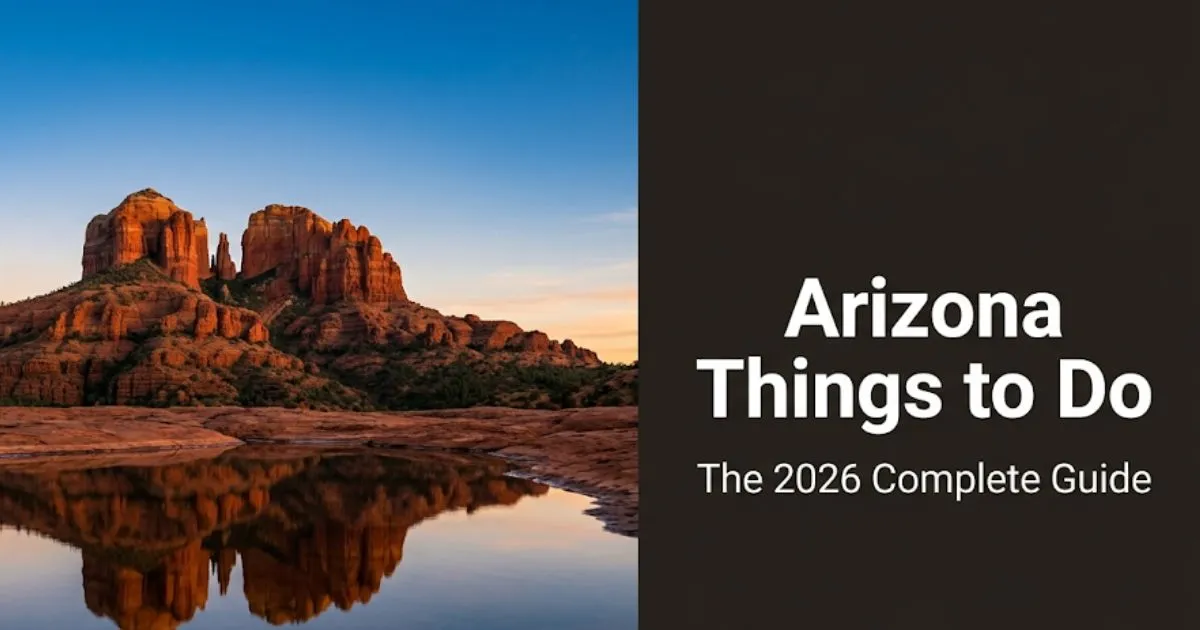
Sedona is the most visually distinctive small town in the American Southwest. The red sandstone formations surrounding the town create a landscape that genuinely earns superlatives.
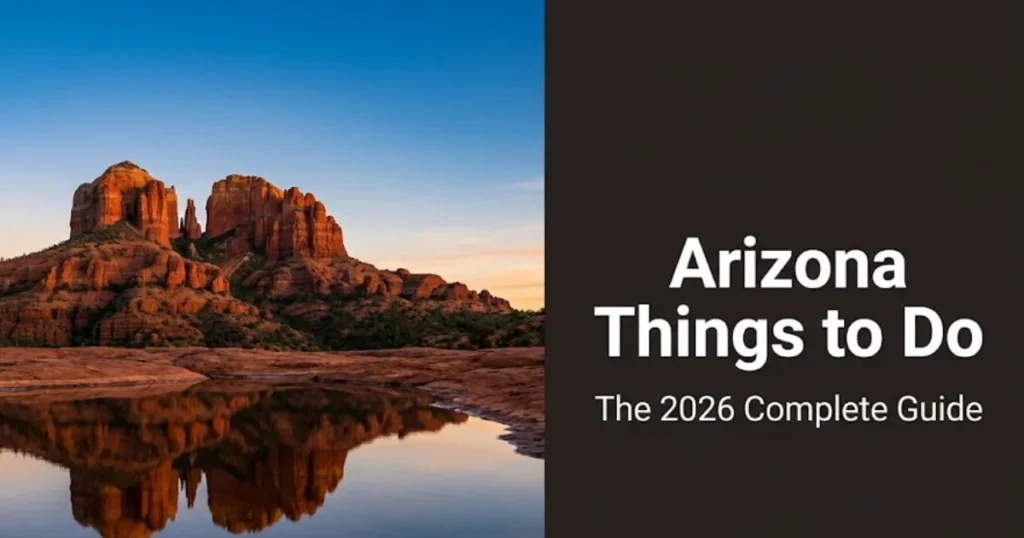
The most visited hiking trail in Sedona is the Cathedral Rock Trail, a 1.2-mile round trip to a saddle between the rock spires. It is steep and requires some basic scrambling. Sunrise here is photographically extraordinary. Parking at the Red Rock Crossing trailhead requires a Red Rock Pass or America the Beautiful Pass.
Tlaquepaque Arts and Shopping Village in Sedona is the town’s best cultural experience for non-hikers. It is an open-air arts village modeled on a Mexican hacienda, with genuine galleries, artisan crafts, and far less tourist-trap merchandise than the main Uptown Sedona strip. It sits along State Route 179, walkable from several mid-range hotels.
The Uptown Sedona strip on State Route 89A is aggressively commercial and best treated as a quick pass-through, not a destination.
For couples: A Sedona jeep tour through Broken Arrow Trail or the Submarine Rock area is one of Arizona’s best romantic outdoor experiences. Several operators run 90-minute to two-hour tours. Book at least two weeks ahead for spring and fall dates.
For solo travelers: The Sedona Arts Center on Art Barn Road hosts rotating exhibitions and is an excellent entry point into Sedona’s genuine arts community. Admission is typically free or low-cost; verify current status before visiting.
Sedona’s peak crowd season is March through May and October through November. Summer temperatures in Sedona run 10 to 15 degrees cooler than Phoenix but are still warm. Winter brings occasional snow on the red rocks, which is visually exceptional and draws photographers specifically.
Things to Do in Phoenix Arizona: The Desert Metropolis Done Right
Phoenix is a genuine metropolitan destination, not merely a transit hub to the Grand Canyon. Its outdoor and cultural offerings are stronger than its reputation suggests among first-time Arizona visitors.
The Desert Botanical Garden in Papago Park is one of the finest living desert plant collections in North America. It covers 140 acres and contains more than 50,000 plants. The Las Noches de las Luminarias event in December, with 8,000 luminarias lighting the garden paths, is one of Phoenix’s most distinctive seasonal experiences. Timed-entry tickets sell out; book in advance for the holiday season.
The Musical Instrument Museum (MIM) on East Mayo Boulevard in north Phoenix is consistently rated among the top museums in the United States by travel publications including Travel + Leisure. It contains instruments from 200 countries and uses audio and video technology to let visitors hear each instrument played in its cultural context. It is one of Phoenix’s most underused experiences by first-time visitors fixated on outdoor activities.
Heard Museum on North Central Avenue is the nation’s premier museum of Native American art and culture. Its collection spans historical and contemporary Native art. Budget two hours minimum for a meaningful visit.
For families with children: The Arizona Science Center in downtown Phoenix is one of the best hands-on science museums in the Southwest. It has a planetarium, IMAX theater, and interactive exhibits suitable for children ages 5 and up.
Phoenix’s summer heat between June and September is extreme, with temperatures regularly exceeding 110°F (43°C). Urban Phoenix is manageable in summer due to widespread air conditioning. Outdoor activities must be planned for dawn or dusk.
Key Takeaway: The Musical Instrument Museum in Phoenix consistently outperforms expectations for every traveler type. It is one of the most specific and rewarding museum experiences in the American Southwest.
Things to Do in Scottsdale Arizona: Desert Luxury and the Arts District
Scottsdale is Phoenix’s eastern neighbor and one of the most well-developed resort and arts destinations in the American West. It functions as a distinct destination from Phoenix despite geographic proximity.
Old Town Scottsdale is the city’s historic core, centered on Brown Avenue and Fifth Avenue. The area contains art galleries concentrated on what locals call the Scottsdale Arts District, with more than 80 galleries within walking distance. The Scottsdale ArtWalk takes place every Thursday evening and is one of the best free cultural events in Arizona.
The Scottsdale Museum of Contemporary Art (SMoCA) at Marshall Way presents rotating exhibitions of contemporary art and architecture. Admission runs in the low-to-mid single digits per adult; verify current pricing before visiting. Thursday evenings are free to the public.
Frank Lloyd Wright’s Taliesin West sits at the base of the McDowell Mountains in northeast Scottsdale. It is Wright’s winter home and studio. Tours run from under an hour to several hours depending on depth. Book in advance, especially for weekend visits.
For couples: A sunset cocktail at any of the McDowell Mountain Resort terraces with views toward the Sonoran Desert is one of Scottsdale’s most reliably romantic experiences. Resort day-pass pricing varies; call ahead to confirm access for non-guests.
For budget travelers: Old Town Scottsdale’s gallery district and the weekly ArtWalk are among Arizona’s most valuable free cultural experiences. Factor in the cost of parking, as street parking in Old Town is limited.
Things to Do in Tucson Arizona: The Underrated Arizona City
Tucson is the most consistently underrated city in Arizona. It combines the Sonoran Desert ecology of Saguaro National Park, one of the nation’s strongest regional food scenes, and a historic arts community that predates Scottsdale’s by decades.
Barrio Viejo is Tucson’s historic Mexican-American neighborhood, centered on the blocks around South Meyer Avenue and West 17th Street. Its painted adobes, locally owned restaurants, and independent galleries represent the most authentic urban experience in Arizona. The restaurant scene here, anchored by spots like El Charro Café on North Court Avenue (claimed as the oldest Mexican restaurant in the US in continuous family operation), connects Tucson’s culinary identity directly to its Sonoran border heritage.
The Arizona-Sonora Desert Museum west of Tucson on North Kinney Road is misnamed: it is equal parts living zoo, botanic garden, and natural history museum, all set within the actual Sonoran Desert. Entry runs in the mid-to-upper teens per adult as of recent years; verify current pricing. It is one of the most genuinely excellent nature experiences in the Southwest, consistently identified by Arizona Highways magazine as among the state’s top destinations.
Gates Pass on the western edge of Tucson provides a free overlook into the Tucson Mountain District of Saguaro National Park at sunset. It is one of Arizona’s best free experiences.
For senior travelers and accessibility travelers: Tucson is significantly more walkable in its historic core than Sedona or Flagstaff. The Arizona-Sonora Desert Museum has paved paths accessible for wheelchairs and mobility aids throughout most of the grounds.
Key Takeaway: Tucson’s Barrio Viejo and the Arizona-Sonora Desert Museum together make a full and exceptional single travel day. Most Arizona visitors skip both.
Arizona Native American Culture and History: Respectful Engagement
Arizona contains 22 federally recognized tribal nations, more than any other state except California. Engaging respectfully and thoughtfully with Native culture is one of the most distinctive experiences Arizona offers.
Monument Valley Navajo Tribal Park is the most iconic landscape on the Navajo Nation. The famous Mittens and Merrick Butte formations appear in more Western films than any other location in the American Southwest. Entry fees apply; a Navajo-guided tour into the Valley Drive area provides both cultural context and photography access not available from the visitor overlook alone.
Canyon de Chelly National Monument near Chinle allows visitors to view the canyon from free rim overlooks independently. The canyon floor requires a Navajo guide. Navajo Nation-authorized tour operators in Chinle can be booked for jeep, horseback, or walking tours. These experiences deliver something no national park ranger-led program can: direct narration from people whose ancestors lived in these canyon walls.
Montezuma Castle National Monument near Camp Verde preserves a 20-room cliff dwelling built by the Sinagua people approximately 900 years ago. It is one of the best-preserved cliff dwellings in North America. Entry fees apply; the America the Beautiful Pass covers admission.
For travelers interested in contemporary Native art: The Heard Museum in Phoenix presents the most complete collection of historical and contemporary Native American art in the country. Its annual World Championship Hoop Dance Contest in February is one of Arizona’s most distinctive cultural events; verify 2026 dates and ticketing with the Heard Museum directly.
Arizona Family Activities: What Actually Works With Kids
Arizona family activities range from genuinely excellent to overrated-for-children. Knowing the difference saves significant frustration.
What genuinely works for children:
- Desert Botanical Garden (Phoenix): Flat paths, giant cacti, seasonal butterfly exhibit
- Arizona Science Center (Phoenix): Hands-on STEM exhibits, planetarium, IMAX
- Arizona-Sonora Desert Museum (Tucson): Living animals, accessible trails, interactive learning
- Slide Rock State Park (Oak Creek Canyon): Natural rock water slide, seasonal swimming
- Bearizona Wildlife Park (Williams, near Grand Canyon): Drive-through wildlife refuge with bear, bison, wolves; children typically respond strongly
What sounds good for families but underdelivers with young children:
- Grand Canyon South Rim trail hikes: The dramatic scenery is wasted on children under 8 who cannot safely approach rim edges. The Rim Trail’s paved sections are accessible and safer for younger children.
- Antelope Canyon tours: Low lighting, narrow corridors, and guided-tour pacing frustrate most children under 10.
- Monument Valley driving: The scenery is spectacular, but a three-hour drive from anywhere with limited stops does not hold young children’s interest.
For families: Flagstaff makes an excellent family base in summer. At 6,900 feet elevation, summer temperatures in Flagstaff run 20 to 30 degrees cooler than Phoenix. The Lowell Observatory on Mars Hill Road in Flagstaff, where Pluto was discovered in 1930, offers public evening viewings and daytime tours appropriate for children ages 7 and up.
Free and Budget-Friendly Things to Do in Arizona
Free things to do in Arizona are plentiful and include some of the state’s most spectacular experiences. A well-planned Arizona trip can be genuinely affordable even before discounting accommodations.
Genuinely free Arizona experiences:
- Horseshoe Bend overlook (short walk from parking area near Page; parking fee applies)
- Gates Pass sunset overlook, Tucson
- Saguaro National Park scenic drives (no entry fee for vehicle-only access on some routes; verify current status with NPS)
- Scottsdale ArtWalk, every Thursday evening
- Grand Canyon South Rim Rim Trail (paved, accessible, no additional fee beyond park entry)
- Papago Park hiking trails, Phoenix (no entry fee)
- Barrio Viejo walking neighborhood, Tucson (free to walk; restaurant costs apply)
- Jerome historic town center walking (free to explore; attraction entry fees vary)
Budget-friendly paid experiences worth the cost:
- Saguaro National Park: Entry runs approximately $25 per vehicle as of recent years; covers both park units for seven days. Verify current rates with the National Park Service.
- Petrified Forest National Park: Similar vehicle entry fee range; covers multi-day access.
- Scottsdale Museum of Contemporary Art: Among Arizona’s most affordable museum admissions; Thursday evenings are free.
For budget travelers: The America the Beautiful Annual Pass at approximately $80 per vehicle covers entry to every Arizona national park and monument for a full year. It is the single most efficient budget purchase for multi-park Arizona travel.
Key Takeaway: Horseshoe Bend requires only a parking fee and a short walk. It is Arizona’s single greatest return on minimal effort and cost.
Arizona Stargazing and Desert Night Skies
Arizona stargazing is among the best in the contiguous United States. The state has more designated International Dark Sky Parks and Communities than any other state, and the combination of high elevation, low humidity, and minimal light pollution in rural areas creates exceptional viewing conditions.
Kitt Peak National Observatory, southwest of Tucson on the Tohono O’odham Nation, hosts public nighttime stargazing programs with professional telescopes. Advance reservations are required; programs typically book out weeks ahead during fall and spring. Transportation to the 6,875-foot summit takes approximately 50 minutes from Tucson.
Flagstaff was the world’s first International Dark Sky City, designated by the International Dark-Sky Association. The dark sky ordinance has been in effect for decades, meaning even within the city limits, the night sky is dramatically more visible than in Phoenix or Tucson.
For the best stargazing access without a guided program: The area around Petrified Forest National Park and the Painted Desert offers some of the darkest skies in the Southwest. The park opens for limited after-dark photography events; check the NPS site for 2026 programming.
For couples: A Kitt Peak public stargazing evening followed by a night at a Tucson resort spa is one of Arizona’s most distinctive romantic experiences. The combination is unusual and genuinely memorable.
For families: Lowell Observatory in Flagstaff is the most family-appropriate stargazing destination in Arizona. Its public viewing programs use a variety of telescope sizes and are explained accessibly for children and adults alike. Verify 2026 evening program schedules directly with Lowell Observatory before planning.
Best Time to Visit Arizona: Honest Seasonal Guidance
The best time to visit Arizona is October through April for most of the state. This is the practical truth, despite summer being peak tourism season at the Grand Canyon.
Spring (March through May) is Arizona’s finest season for outdoor travel. Temperatures in the desert are warm but not dangerous. Wildflower blooms appear in the Sonoran Desert between late February and early April depending on winter rainfall. Sedona, the Grand Canyon South Rim, and Tucson are all at their most enjoyable. This is also peak crowd season; book accommodation and canyon permits months in advance.
Fall (October through November) is the second-best window. Crowds thin significantly after Labor Day. Temperatures moderate across all elevations. The North Rim of the Grand Canyon closes mid-October; plan accordingly.
Winter (December through February) suits Phoenix and Tucson well. Both cities enjoy mild, sunny winters with daytime temperatures in the 60s and 70s Fahrenheit. This is peak snowbird season; hotel rates in the resort corridor rise accordingly. The North Rim is closed. Sedona can receive snow, which is visually striking but requires awareness of road conditions on State Route 89A through Oak Creek Canyon.
Summer (June through September) is genuinely problematic for outdoor activities in the desert. Phoenix regularly exceeds 110°F (43°C). The Grand Canyon’s inner canyon becomes dangerous for inexperienced hikers by mid-morning. The exception is Flagstaff and the White Mountains, where summer temperatures are 20 to 30 degrees cooler than Phoenix and outdoor activities remain fully viable.
According to the Arizona Office of Tourism, the state’s busiest travel periods are spring break (mid-March through early April) and holiday weekends. Book accommodation a minimum of 60 to 90 days ahead for these windows.
Arizona Things to Do for Couples: Romantic Experiences Worth Planning
Arizona things to do for couples include some of the Southwest’s most genuinely romantic experiences, from Sedona sunset hikes to private stargazing evenings near Tucson.
Sedona is the state’s strongest romantic destination. The combination of dramatic landscape, high-end resort spa culture, and walkable arts village character makes it uniquely suited to couples travel. A Sedona jeep tour through Broken Arrow Trail at sunset, followed by dinner at Mariposa Latin Inspired Grill on Airport Road (with unobstructed red rock views), is one of Arizona’s most reliably excellent couple evenings. Reserve Mariposa two to four weeks in advance for weekend dinners.
The Verde Valley Wine Trail between Cottonwood and Cornville, approximately 90 minutes from Phoenix and 30 minutes from Sedona, covers more than a dozen tasting rooms along Oak Creek and the Verde River. Arizona wine production is small but has developed genuine regional character, particularly in the Sonoita and Verde Valley areas. The trail is driveable in an afternoon; designate a driver or join a guided wine tour from Sedona.
For couples seeking a more urban romantic experience: Scottsdale’s Old Town Arts District on a Thursday ArtWalk evening, followed by a cocktail at the rooftop bar of a McDowell-facing resort hotel, is a well-priced romantic evening compared to Sedona resort rates.
What sounds romantic but underdelivers: Grand Canyon helicopter tours are frequently marketed as romantic experiences. At several hundred dollars per person for a 15 to 45-minute flight, the rim itself at dawn or sunset delivers comparable emotional impact for the cost of a park entry fee.
Arizona Travel Tips and Practical Logistics for 2026
Arizona travel logistics require specific planning that most travel guides understate. A rental car is not optional for most Arizona itineraries; it is essential.
Getting around Arizona:
- Fly into Phoenix Sky Harbor International Airport (PHX) for southern and central Arizona access.
- Fly into Tucson International Airport (TUS) for southeastern Arizona, the Arizona-Sonora Desert Museum, and Saguaro National Park.
- Fly into Flagstaff Pulliam Airport (FLG) for northern Arizona, the Grand Canyon South Rim, and Sedona. Note: FLG has limited direct flights and higher fares; Phoenix with a car rental is often more economical.
- Book a mid-size or larger vehicle for road trips involving unpaved roads. The Apache Trail and some Monument Valley access roads require high-clearance vehicles.
- Download offline maps before leaving any city. Cell service drops out across the Navajo Nation, in canyon areas, and on significant stretches of US-160 and US-163.
Practical logistics checklist:
- America the Beautiful Pass: Purchase before your first national park visit
- Antelope Canyon: Book guided tours 4 to 8 weeks ahead for spring and fall
- Havasupai Falls: Permit lottery opens in February for spring dates; plan a year ahead
- Grand Canyon timed-entry: Check the NPS website in early 2026 for any 2026 requirements
- Sedona Red Rock Pass: Required for most Sedona trailhead parking; available at parking areas
- Flagstaff hotel reservations: Book 60 to 90 days ahead for summer, the destination’s peak season
- Water: Carry minimum one liter per person for any outdoor activity; two liters per person for canyon hiking between May and September
For senior travelers and accessibility travelers: Phoenix Sky Harbor is fully accessible with extensive mobility aid infrastructure. The Grand Canyon South Rim Rim Trail is paved for approximately 13 miles and accessible for wheelchairs and mobility scooters. Shuttle service along the South Rim runs frequently and is free within the park. The Arizona-Sonora Desert Museum in Tucson is among the state’s most comprehensively accessible outdoor experiences.
Suggested 3-Day Arizona Itinerary Framework
This framework assumes a rental car and arrival at Phoenix Sky Harbor (PHX).
Day 1: Phoenix and Scottsdale
- Morning: Desert Botanical Garden in Papago Park (opens at 8 AM typically; arrive early in summer)
- Mid-morning: Heard Museum on North Central Avenue
- Lunch: Barrio Café on 16th Street in Phoenix (one of the city’s most respected Mexican kitchens; reserve ahead)
- Afternoon: Musical Instrument Museum
- Evening: Old Town Scottsdale ArtWalk (Thursdays) or rooftop sunset at a McDowell-facing resort bar
Day 2: Sedona and Oak Creek Canyon
- Early morning: Depart Phoenix by 7 AM
- Morning: Cathedral Rock Trail or Bell Rock Trail (complete before 10 AM in warm months)
- Late morning: Tlaquepaque Arts and Shopping Village
- Lunch: Coffeepot Restaurant on Coffeepot Drive in Sedona (local institution, not tourist-trap pricing)
- Afternoon: Jeep tour via local operator through Broken Arrow Trail
- Sunset: Airport Mesa overlook (short walk, free, among Arizona’s best sunset views)
- Dinner: Mariposa Latin Inspired Grill (reserve in advance)
Day 3: Drive to Grand Canyon South Rim
- Depart Sedona 7 AM via State Route 89A through Oak Creek Canyon to Flagstaff
- Continue north on US-180 to Grand Canyon South Rim Village
- Arrive by 10 AM; begin with a ranger-led program or Rim Trail walk
- Descend Bright Angel Trail to the first water station (3-mile round trip); return by noon in summer
- Lunch at Bright Angel Fountain or packed lunch on the rim
- Afternoon: Hermit Road shuttle for multiple rim viewpoints
- Sunset: Hopi Point or Mather Point on the East Rim for final light views
- Return to Flagstaff or continue to Page for Horseshoe Bend and Antelope Canyon the following morning
Safety and Practical Warnings for Arizona
Heat is the primary safety risk for Arizona travelers. The Arizona Department of Health records multiple heat-related deaths annually among visitors who underestimate midday temperatures on canyon trails.
Key safety and practical facts every visitor should know:
- Begin all desert and canyon hikes before 7 AM between May and September. Midday heat in lower elevations is genuinely dangerous.
- Carry minimum one liter of water per hour of hiking. The Grand Canyon’s inner canyon kills visitors every year who run out of water.
- Flash flood risk in slot canyons and washes is real during monsoon season (July through September). Never enter a slot canyon or narrow wash during a thunderstorm. Antelope Canyon tours are suspended during rain events; plan for potential cancellations.
- Cell service is unreliable or absent in canyon areas, Monument Valley, and the Apache Trail. Download offline maps and share your itinerary with a contact before departing for remote areas.
- Rattlesnakes are present on desert trails. Stay on marked trails, watch where you step and place your hands, and give any snake encountered significant space.
- Altitude adjustment: Flagstaff sits at 6,900 feet. Some visitors experience mild altitude-related symptoms (headaches, fatigue) on the first day. Drink extra water and pace yourself on arrival.
- Sun protection is not optional at any Arizona elevation. UV index across Arizona is consistently high year-round.
The National Park Service Grand Canyon emergency line and Arizona State Parks each maintain current safety advisories; check both before canyon trips.
Frequently Asked Questions About Arizona Things to Do
What are the best things to do in Arizona for first-time visitors?
First-time visitors to Arizona should prioritize the Grand Canyon South Rim, Sedona’s red rock hikes, and Antelope Canyon near Page.
The Desert Botanical Garden in Phoenix and the Arizona-Sonora Desert Museum near Tucson are the strongest urban natural history experiences in the state.
Booking Antelope Canyon tours and Grand Canyon lodging at least 60 to 90 days ahead is essential for spring and fall travel.
What is the best time of year to visit Arizona?
The best time to visit Arizona is October through April, with March through May being the peak sweet spot for outdoor activities statewide.
Summer temperatures in Phoenix and the lower desert regularly exceed 110°F (43°C), making outdoor activities genuinely dangerous between 10 AM and 5 PM.
The exception is Flagstaff and high-elevation northern Arizona, where summer temperatures are 20 to 30 degrees cooler and outdoor activities remain fully viable.
What can you do in Arizona besides the Grand Canyon?
Arizona has Sedona’s red rock hiking and jeep tours, Monument Valley Navajo Tribal Park, Antelope Canyon, Petrified Forest National Park, Canyon de Chelly, Saguaro National Park, and the Arizona-Sonora Desert Museum.
The Heard Museum in Phoenix is the nation’s premier Native American art institution, and Tucson’s Barrio Viejo neighborhood offers one of the Southwest’s most authentic border-culture urban experiences.
Horseshoe Bend near Page is free to visit and delivers a genuinely spectacular canyon view with minimal effort.
How many days do you need to see Arizona properly?
Seven to ten days is the minimum to cover Arizona’s major zones without rushing: two days in Phoenix and Scottsdale, two days in Sedona, one day in Flagstaff, two days at the Grand Canyon and Page area, and two days in Tucson.
A focused three-day trip can cover Phoenix, Sedona, and the Grand Canyon South Rim meaningfully if itinerary planning is tight and driving starts early each day.
A rental car is essential for all Arizona itinerary formats.
Is Arizona a good destination for families with kids?
Arizona is strong for families with children ages 8 and up who can handle moderate trail walking and heat management.
The Arizona Science Center in Phoenix, Desert Botanical Garden, Arizona-Sonora Desert Museum in Tucson, Slide Rock State Park in Oak Creek Canyon, and Bearizona Wildlife Park in Williams are the most reliably child-appropriate experiences in the state.
The Grand Canyon South Rim Rim Trail is paved, accessible, and suitable for children, but trail hikes below the rim are not recommended for children under 10 or those unable to maintain full hydration.
What are the best free things to do in Arizona?
Arizona’s best free experiences include the Horseshoe Bend overlook near Page (parking fee only), the Scottsdale ArtWalk every Thursday evening, the Gates Pass sunset overlook west of Tucson, and the Grand Canyon Rim Trail.
Papago Park hiking in Phoenix and Jerome’s historic town center are free to explore, as are the rim overlooks at Canyon de Chelly National Monument.
The America the Beautiful Annual Pass is not free, but at approximately $80 per vehicle it covers every Arizona national park and monument entry, making it the most cost-efficient single purchase for multi-park Arizona travel.
Plan Your Arizona Trip With Confidence
Arizona’s range is its greatest strength and its most common planning trap. The state requires zone-by-zone seasonal thinking, early hiking starts, a rental car, and advance booking for signature experiences.
Book Antelope Canyon tours and Grand Canyon accommodation 60 to 90 days ahead for spring and fall travel. Check the National Park Service site for any 2026 timed-entry requirements at the Grand Canyon before finalizing your itinerary.
Travel conditions, entry fees, hours, and permit systems change. Verify all logistics directly with the Arizona Office of Tourism (VisitArizona.com), the National Park Service, and individual attractions before departure. Arizona rewards the traveler who plans specifically; the payoff is some of North America’s most remarkable terrain, culture, and outdoor access