Best Things To Do in Oklahoma: 2026 OKC Travel Guide

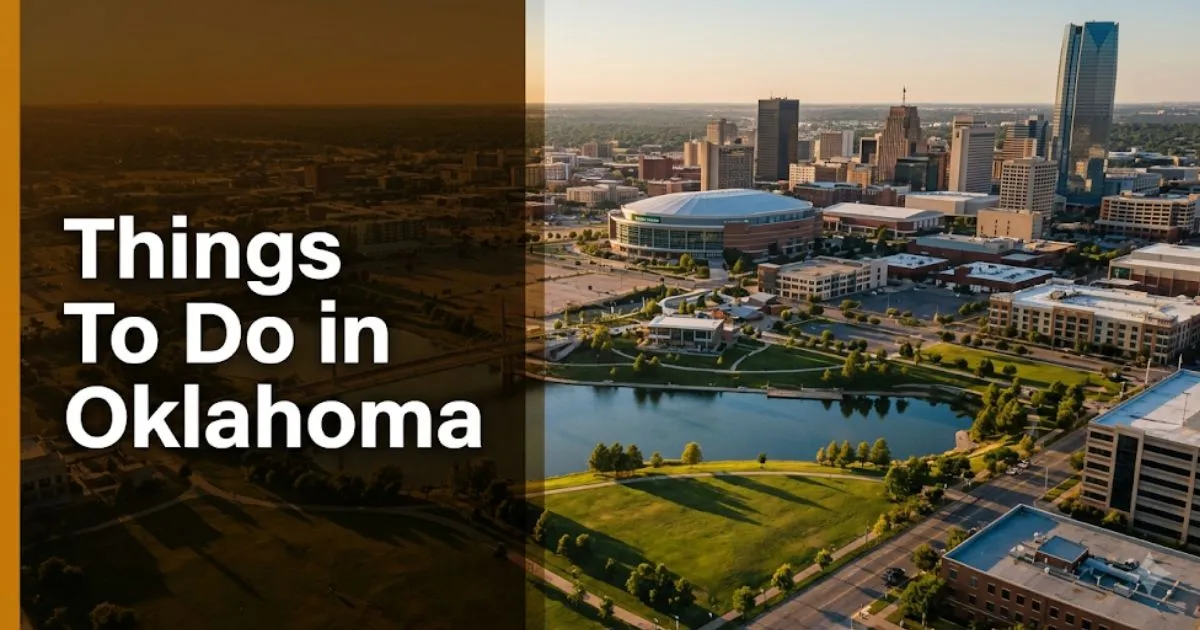
Oklahoma surprises nearly every first-time visitor, and the things to do in Oklahoma run far deeper than the state’s modest national reputation suggests. Oklahoma City combines genuine Western heritage, a serious arts scene, one of the country’s most significant memorial sites, and outstanding value for the cost.
The Visit OKC tourism organization reports that Oklahoma City welcomed over 25 million visitors in recent years, driven by its cultural anchors and expanding dining district. The city punches well above its weight for a metro of its size.
This guide covers the best activities in OKC and across the state. It includes neighborhood breakdowns, outdoor adventures, day trips, dining, and practical logistics for 2026 travel planning.
Things to Do in Oklahoma
Oklahoma offers one of the most diverse activity ranges of any south-central state, from prairie wilderness to serious urban culture.
The state divides naturally into four experience zones. Oklahoma City anchors the central plains. Tulsa drives the northeast with its Art Deco architecture and the Gathering Place riverside park. Eastern Oklahoma covers the Ouachita Mountains and green hill country. Western Oklahoma follows Route 66 and opens into high plains landscape.
Oklahoma Tourism and Recreation Department identifies the state’s top visitor draws as Native American cultural heritage, Western history, Route 66 road tripping, outdoor recreation, and the Oklahoma City National Memorial.
The state has 50 state parks. Most out-of-state travelers visit fewer than two.
Budget travelers will find Oklahoma exceptionally affordable. Hotel rates in Oklahoma City typically run lower than comparable cities like Kansas City, Denver, or Nashville.
Spring and fall are the optimal seasons statewide. Summer heat regularly reaches 100°F or above.
Insider Tip:
- Eastern Oklahoma’s Ouachita Mountains and Beavers Bend State Park receive a fraction of the visitors that Wichita Mountains do, despite comparable scenery
- Talimena National Scenic Byway in fall rivals New England leaf-peeping for color intensity, with virtually no crowds
- Seniors and travelers with mobility considerations will find the eastern Oklahoma hill country more physically accessible than the western high plains trails
Things to Do in Oklahoma City
Oklahoma City is the logical base for any Oklahoma trip, and it delivers far more than its tourism reputation historically suggested.
The city’s core visitor districts cluster within roughly five miles of downtown. Bricktown, the Paseo Arts District, Midtown, Film Row, and Western Avenue each offer a distinctly different character and activity set.
OKC is car-dependent. The EMBARK OKC streetcar connects Bricktown, downtown, Midtown, and Film Row, but does not reach outer attractions or day-trip destinations. A rental car from Will Rogers World Airport (OKC) is the practical standard.
Parking in central OKC is inexpensive compared to most US cities. Surface lots and garages near Bricktown and the Arts District typically cost a few dollars per hour.
The city is compact enough to cover its main districts in a solid two days. Three to four days allows for day trips and a more relaxed pace.
| District | Best For | Walking Access | Parking |
|---|---|---|---|
| Bricktown | First-timers, nightlife | High | Paid garages |
| Paseo Arts District | Art, local dining | Moderate | Free street |
| Midtown | Restaurants, bars | Moderate | Free street |
| Film Row | Cocktail bars, galleries | Moderate | Free street |
| Western Avenue | Boutiques, dining | Low | Free street |
| Deep Deuce | Jazz history, cocktails | Low | Free street |
Best Things to Do in Oklahoma City
The best things to do in Oklahoma City span genuine American history, world-class Native American art collections, excellent urban parks, and a dining scene far beyond what most travelers expect.
Oklahoma City National Memorial and Museum on Northwest Fifth Street is the single most significant site in the state. The outdoor symbolic memorial is free and open at all hours. The indoor museum has an admission fee (typically in the $15 to $17 per adult range; verify current pricing before visiting). Allow two to three hours.
The National Cowboy and Western Heritage Museum on Northeast 63rd Street houses one of the country’s most significant collections of Western American art and Native American artifacts. Admission runs approximately $15 to $18 per adult as of recent years. Plan two to three hours minimum.
Scissortail Park in the Wheeler District opened in 2019 and represents OKC’s best urban green space. Entry is free. The park connects to the Myriad Botanical Gardens and its Crystal Bridge Tropical Conservatory to the north.
Suggested 2-Day OKC Weekend Itinerary:
Day 1:
- Start at the Oklahoma City National Memorial. Arrive at 9 a.m. before crowds build.
- Walk to the Oklahoma City Museum of Art on Couch Drive (two blocks away).
- Lunch in Bricktown at The Jones Assembly on West Sheridan or along the canal.
- Afternoon: Bricktown Canal water taxi ride, then explore the district on foot.
- Evening: Drive to Western Avenue for dinner and the Midtown bar scene.
Day 2:
- National Cowboy and Western Heritage Museum: open by 9 a.m.
- Drive to Stockyards City for lunch at Cattlemen’s Steakhouse.
- Afternoon: Scissortail Park and Crystal Bridge Conservatory.
- Evening: Paseo Arts District for galleries, then dinner on NW 30th Street.
Couples will find the OKC Museum of Art’s evening events and the Myriad Botanical Gardens at dusk particularly well-suited to a romantic itinerary. Families should prioritize Scissortail Park and the Oklahoma City Zoo before midday.
Top Things to Do in Oklahoma
The top experiences in Oklahoma beyond Oklahoma City include destinations that genuinely earn their reputations and several that out-of-state visitors almost never reach.
Wichita Mountains Wildlife Refuge near Lawton, about 90 miles southwest of OKC, is managed by the U.S. Fish and Wildlife Service and is one of the oldest federal wildlife refuges in the country. Free-roaming bison, longhorn cattle, and elk share the granite-peak landscape. Entry is free. Camping is available. The summit of Mount Scott is accessible by paved road and delivers panoramic views without a strenuous hike.
Turner Falls Park in the Arbuckle Mountains near Davis is Oklahoma’s most-visited waterfall. Admission is charged per vehicle or per person (verify current pricing before visiting). It is genuinely worth the trip but extremely crowded on summer weekends. Visit on a weekday or in early fall for the best experience.
The Gathering Place in Tulsa is consistently cited by travel publications including Travel + Leisure as one of the country’s best public parks. It is free to enter. Allow three to four hours minimum.
Top statewide experiences by type:
- History: Oklahoma City National Memorial, Oklahoma History Center (free admission), Five Civilized Tribes Museum in Muskogee
- Nature: Wichita Mountains, Turner Falls, Beavers Bend State Park, Black Mesa
- Road Trip: Route 66 corridor, Talimena Scenic Byway
- Culture: Gathering Place Tulsa, Philbrook Museum of Art Tulsa, Paseo Arts District OKC
Budget travelers will find that the majority of Oklahoma’s headline experiences carry low or no admission costs. This is one of the most affordable states for domestic travel.
Key Takeaway: Book the Oklahoma City National Memorial Museum timed entry in advance on peak spring and summer weekends, as morning sessions fill early.
Unique Things to Do in OKC
Oklahoma City has several genuinely distinctive experiences that are either singular to the city or so rarely promoted that first-time visitors consistently miss them.
The American Banjo Museum on East Sheridan Avenue in Bricktown is the only museum in the world dedicated exclusively to the banjo’s history and evolution. Admission is low (verify current pricing). It is brief but specific, and it genuinely earns its singularity.
Stockyards City on Exchange Avenue is one of the last working livestock market districts in the United States that also functions as an active visitor area. The Monday and Tuesday livestock auctions at the Oklahoma National Stockyards are open to the public and are unlike anything most urban travelers have experienced. No admission is required to watch the auction.
The Paseo Arts District along NW 28th Street is OKC’s original arts neighborhood. Its Spanish Revival architecture, independent galleries, and monthly First Friday art walks give it a character no other OKC neighborhood matches.
Deep Deuce on NE Second Street was Oklahoma City’s historic Black jazz and entertainment district during the early 20th century. It is now a redeveloped neighborhood with cocktail bars and restaurants. The history is marked by several interpretive installations worth reading.
Insider Tip:
- The Oklahoma History Center on Lincoln Boulevard is often overlooked in favor of the National Memorial but covers Native American history with equal depth and seriousness
- The Wheeler Arcade in the Wheeler District hosts a Saturday morning market with genuinely local vendors
- Solo travelers will find Deep Deuce’s bar scene more local and less tourist-oriented than Bricktown at night
Things to Do Near Oklahoma City
The best things to do near Oklahoma City are within a 90-minute drive and include some of the state’s most distinctive natural and cultural experiences.
Wichita Mountains Wildlife Refuge (approximately 90 miles southwest via Interstate 44) is the closest major nature destination to OKC. It is free to enter. The drive itself is straightforward.
Norman, 20 miles south on Interstate 35, is the home of the University of Oklahoma and the Sam Noble Oklahoma Museum of Natural History, which houses one of the world’s largest dinosaur exhibits. Admission is charged on a sliding scale (verify current pricing). Norman’s Campus Corner district has good independent restaurants and is worth combining with a museum visit.
Edmond, 15 miles north on Interstate 35, is primarily residential but has a well-regarded stretch of restaurants and coffee shops along South Broadway.
Guthrie, 30 miles north on Interstate 35, is Oklahoma’s original territorial capital. The entire downtown is a National Historic Landmark with well-preserved Victorian architecture. It takes two to three hours to walk. Entry is free for the streets; some museums charge a small fee.
Families will find Norman’s Sam Noble Museum the strongest near-OKC option for children under 12, specifically for the dinosaur hall. Couples will find Guthrie’s Victorian downtown more suited to a relaxed weekend afternoon than Norman’s college-town energy.
Seniors and accessibility travelers: The Sam Noble Museum is fully wheelchair-accessible. Guthrie’s historic district has uneven brick sidewalks in some areas; plan accordingly.
Things to Do in Oklahoma for Adults
Oklahoma City’s adult-oriented activity scene includes craft cocktail bars, live music, casino entertainment, horse racing, and an NBA team that plays in a downtown arena.
The Oklahoma City Thunder plays at Paycom Center on West Reno Avenue. Ticket prices range from under $50 to several hundred dollars depending on opponent and seat section. Attending a Thunder game is one of OKC’s genuinely energetic downtown evening experiences. Check the 2026 schedule early; playoff games sell out.
Remington Park Racing Casino on Northeast 122nd Street combines horse racing with casino gaming. Live horse racing runs seasonally (verify 2026 dates directly). Admission to the track is typically low. The casino is open year-round.
The Film Row District on West Sheridan Avenue concentrates the city’s best cocktail bars within a few walkable blocks. Valkyrie, a speakeasy-style bar in this district, is consistently cited among OKC’s best cocktail programs. Hours vary; verify before visiting.
OKC’s craft beer scene centers on Oak + Ore in the Plaza District on North Pennsylvania Avenue. The tap list emphasizes Oklahoma and regional craft producers.
Solo travelers will find the Plaza District and Film Row bars easy to navigate alone. The social scenes at both are genuinely mixed local-and-visitor rather than tourist-dominated.
Key Takeaway: Oklahoma City Thunder games are the single best spontaneous evening activity for adult visitors; check same-week ticket availability on secondary markets for significant savings.
Best Neighborhoods in Oklahoma City
Oklahoma City’s best neighborhoods each offer a distinct character, and knowing the difference between them saves visitors from spending all their time in the most tourist-oriented but least representative part of the city.
Bricktown is the most visited neighborhood and the most tourist-oriented. The Bricktown Canal, entertainment venues, and chain restaurants line the district. It is genuinely photogenic and worth an afternoon. It is not where locals eat dinner on a Saturday night.
The Paseo Arts District on NW 28th Street is where OKC’s arts community actually lives. Monthly First Friday art walks draw a local crowd. Independent galleries and restaurants here are consistently better than their Bricktown equivalents.
Midtown along NW 10th Street is the city’s most restaurant-dense neighborhood. The quality of independent dining per block rivals any district in the city. It connects easily to the Film Row District to the south.
The Plaza District on North Pennsylvania Avenue is OKC’s design-forward retail and nightlife neighborhood. Its independently owned businesses reflect the city’s genuine local character more accurately than Bricktown.
| Neighborhood | Best For | Tourist Ratio | Key Street |
|---|---|---|---|
| Bricktown | First-timers, canal views | High | S Oklahoma Ave |
| Paseo Arts | Art lovers, gallery walks | Low | NW 28th St |
| Midtown | Dining, cocktails | Medium | NW 10th St |
| Film Row | Cocktail bars | Low-Medium | W Sheridan Ave |
| Plaza District | Local retail, beer | Low | N Pennsylvania Ave |
| Deep Deuce | History, cocktails | Low | NE 2nd St |
| Stockyards City | Western heritage | Medium | Exchange Ave |
Couples seeking OKC’s most romantic evening should center on the Paseo Arts District on a First Friday. Families are best served starting in Bricktown for its walkability and canal appeal before moving to Scissortail Park.
Oklahoma City Museums and Cultural Sites
Oklahoma City’s museum landscape is legitimately strong for a city its size, and the National Cowboy and Western Heritage Museum is one of the most underrated art and history museums in the United States.
The National Cowboy and Western Heritage Museum houses work by Frederic Remington and Charles Russell alongside one of the country’s most comprehensive Native American artifact collections. The Prosperity Junction exhibition recreates a turn-of-the-century Western town at full scale. Admission is approximately $15 to $18 per adult; verify current pricing before visiting.
The Oklahoma City National Memorial and Museum on Northwest Fifth Street is the most emotionally significant site in the state. The outdoor symbolic memorial with its 168 empty chairs is free and illuminated at night. The indoor museum requires a timed-entry ticket; book in advance for spring and summer visits.
The Oklahoma History Center on Lincoln Boulevard is managed by the Oklahoma Historical Society and covers Native American, pioneer, and 20th-century Oklahoma history with genuine depth. Admission is charged (verify current pricing). It is consistently overlooked by first-time visitors who prioritize the National Memorial.
The Oklahoma City Museum of Art on Couch Drive houses the world’s largest permanent collection of Dale Chihuly glass. Admission is approximately $10 to $15 per adult; verify current pricing.
Budget travelers: The Oklahoma History Center offers reduced or free admission on certain days; verify before visiting.
Seniors and accessibility travelers: All four major OKC museums are fully wheelchair-accessible with elevator access to all floors.
Key Takeaway: The Oklahoma History Center covers Native American and Oklahoma history with the same depth as the National Memorial covers the 1995 bombing; visit both to understand the full scope of the city.
Outdoor Things to Do in Oklahoma
Oklahoma’s outdoor activity options are dramatically underappreciated by out-of-state travelers, and the state’s geography spans prairie, granite mountains, dense hardwood forest, and clear spring-fed streams.
Wichita Mountains Wildlife Refuge near Lawton is the headline outdoor experience. The refuge covers approximately 59,000 acres managed by the U.S. Fish and Wildlife Service. Free-roaming bison herds number in the hundreds. Mount Scott’s summit road reaches 2,464 feet with panoramic views. Entry is free.
Black Mesa in the Oklahoma Panhandle is the state’s highest point at 4,973 feet. The round-trip hike to the summit is approximately 8.4 miles and is strenuous. Carry at least two liters of water per person. Plan this hike only between September and May. Summer temperatures in the panhandle regularly exceed 105°F.
Chickasaw National Recreation Area near Sulphur, managed by the National Park Service, is one of Oklahoma’s most accessible outdoor destinations. Natural mineral springs, swimming areas, hiking trails, and camping are all available. Entry fees apply (verify current NPS fee schedule before visiting).
Beavers Bend State Park near Broken Bow in southeastern Oklahoma is the state’s most scenic park by most measures. The Mountain Fork River runs through dense pine forest that looks more like Colorado than Oklahoma. Cabins and camping are available; book early for fall weekends.
Outdoor activity summary by season:
| Season | Best Outdoor Activity | Location | Notes |
|---|---|---|---|
| Spring (Mar-May) | Wildflower viewing, hiking | Wichita Mountains | Peak bison calving season |
| Summer (Jun-Aug) | Swimming, lake recreation | Chickasaw NRA, Lake Murray | Early morning start essential |
| Fall (Sep-Nov) | Leaf viewing, hiking | Beavers Bend, Talimena Byway | Peak season; book cabins early |
| Winter (Dec-Feb) | Birding, light hiking | Tallgrass Prairie, Ouachitas | Fewer crowds, mild days possible |
Things to Do in OKC at Night
OKC’s nightlife is concentrated in three districts, and knowing which one suits your evening determines whether you have an excellent local experience or a tourist-bar circuit.
Film Row on West Sheridan Avenue is the right choice for cocktail bars and a more sophisticated evening. Valkyrie is the benchmark bar in this district, known for its serious cocktail program and low-lit interior. The Pump Bar on NW 10th in Midtown draws a local crowd and has a patio culture unusual for a landlocked city.
Bricktown handles the loud, high-energy entertainment end. The Criterion concert venue on West Sheridan brings national touring acts regularly. The Bricktown district itself transitions from family-friendly afternoon to a louder bar scene after 9 p.m.
The Blue Door on North Youngs Boulevard is OKC’s most respected small music venue. It is intimate (under 200 capacity), all-ages, and books Americana, folk, and roots acts. Tickets typically run $15 to $30. It is the venue locals reference when asked where to see live music.
Live music also surfaces regularly at The Paramount OKC on NW 10th and at 89th Street Collective for punk and indie acts.
Solo travelers will find Midtown and the Plaza District easiest to navigate alone with natural social opportunities at bar seating. Couples should prioritize Film Row for a quieter, more intentional evening.
Verify current event schedules directly with each venue before visiting. Programming changes seasonally.
Family Things to Do in Oklahoma City
Oklahoma City works well for families with children of most ages, and several of its top family attractions are either free or low-cost.
Scissortail Park is the first recommendation for families. The park’s 70 acres include a splash pad, playgrounds, a paved loop trail, and event lawn. Entry is free. It connects to the Myriad Botanical Gardens and the Crystal Bridge Tropical Conservatory (admission charged; verify current pricing). A child can spend two to three hours in the Crystal Bridge alone.
The Oklahoma City Zoo and Botanical Garden on NE 50th Street is among the country’s largest zoos by acreage. Admission is charged (verify current pricing and 2026 rates). The children’s area, safari train, and great ape exhibit are the consistently highest-rated sections for families with children under 10.
Frontier City on I-35 north of downtown is a regional amusement park with coasters and water attractions. It suits families with children over 8 most naturally. Admission and ride access are bundled (verify current pricing).
For families with children interested in science and history, the Sam Noble Oklahoma Museum of Natural History in Norman is 20 miles south and houses one of the world’s largest mounted dinosaur skeletons. Admission is charged.
Families with children under 5: Scissortail Park and the Myriad Botanical Gardens Crystal Bridge deliver the most stroller-friendly, low-stimulation experience without overwhelming young children.
Families with children 8 to 14: The Oklahoma City Zoo in the morning followed by Frontier City in the afternoon is a full day that works well for this age group.
Key Takeaway: Scissortail Park is free, central, and genuinely excellent; it should anchor the first morning of any OKC family itinerary before paid attractions begin.
Oklahoma City Food and Dining
Oklahoma City’s dining scene in 2026 is one of its most underestimated assets, and the strongest restaurants cluster in Midtown and the Plaza District rather than in tourist-heavy Bricktown.
Cattlemen’s Steakhouse on Exchange Avenue in Stockyards City has been serving beef since 1910. The lamb fries (fried lamb testicles) are the local test of adventurousness. The steaks are reliably excellent. Budget approximately $30 to $60 per person for dinner. Lunch is more affordable. Arrive early or expect a wait on weekends.
The Oklahoma onion burger is the state’s most specific culinary contribution. Thin, smashed ground beef with caramelized onions griddle-pressed into the patty originated in Depression-era western Oklahoma. Sid’s Diner in El Reno (25 miles west of OKC on historic Route 66) is the most authentic version. Johnnie’s Charcoal Broiler on Western Avenue serves a strong OKC version.
Eischen’s Bar in Okarche (40 miles northwest of OKC) serves the most famous fried chicken in the state from a bar opened in 1896. The drive is worth it. Cash only; verify current hours before the trip.
The Midtown and Film Row districts concentrate the city’s best independent dining. Café do Brasil on NW 11th serves Brazilian-inspired brunch and lunch that locals consider among the best in the city.
Budget travelers: OKC’s taco trucks and Vietnamese restaurants along SW 59th Street in the international district offer excellent food at prices that make the rest of the country seem expensive by comparison.
Couples: The Press restaurant in the Film Row District and Empire Slice House in the Plaza District both have bar seating and intimate atmospheres suited to a date-night format.
Day Trips from Oklahoma City
The best day trips from Oklahoma City range from 45 minutes to two hours each way, and several are genuinely worth a full day rather than a rushed afternoon.
Wichita Mountains Wildlife Refuge (90 miles southwest, approximately 1.5 hours): The standard recommendation for a reason. Budget a full day. The scenic drive through the refuge, a hike to the summit of Quartz Mountain or the Elk Mountain Trail, and a stop at the bison viewing area easily fill six hours.
Guthrie (30 miles north, 30 minutes): Oklahoma’s first state capital. The entire Victorian downtown is a National Historic Landmark. Combine with a stop at the Scottish Rite Masonic Temple and the historic Stone Lion Inn for a half-day trip.
Turner Falls Park (80 miles south, approximately 1.25 hours): Oklahoma’s largest waterfall at 77 feet. The park is extremely crowded on summer weekends. Visit on a weekday or in September after Labor Day for a dramatically better experience. Admission is charged per vehicle or person (verify current pricing).
Norman (20 miles south, 25 minutes): Sam Noble Museum plus the Campus Corner restaurant district. This half-day trip works well as a cultural complement to OKC’s downtown museums.
| Day Trip Destination | Distance from OKC | Drive Time | Best For | Best Season |
|---|---|---|---|---|
| Wichita Mountains | 90 miles SW | 1.5 hours | Nature, wildlife | Spring, Fall |
| Guthrie | 30 miles N | 30 min | History, architecture | Spring, Fall, Winter |
| Turner Falls | 80 miles S | 1.25 hours | Waterfall, swimming | Weekday, Sept |
| Norman | 20 miles S | 25 min | Museum, dining | Year-round |
| Beavers Bend SP | 165 miles SE | 2.5 hours | Scenic nature, cabin | Fall |
| El Reno | 25 miles W | 30 min | Onion burgers, Rt 66 | Year-round |
Families should target Norman or Turner Falls. Couples will find Beavers Bend State Park the most scenic and private option, particularly in October.
Oklahoma Road Trip: Route 66 Stops
Oklahoma contains the longest continuous stretch of original Route 66 in the country, at approximately 400 miles from the Kansas border to the Texas border.
The state’s Route 66 corridor is not a greatest-hits loop of kitschy roadside stops. It is genuinely layered, moving through Depression-era small towns, Native American territory, Will Rogers country, and the edges of Oklahoma City’s urban sprawl.
Key stops along Oklahoma’s Route 66, west to east:
- Texola (near Texas border): One of the most photogenic ghost towns on the American road, with weathered storefronts and near-complete silence.
- Elk City: Home of the Oklahoma Route 66 Museum, which covers the highway’s history with genuine depth. Admission is charged (verify current pricing).
- Clinton: Route 66 Museum and the town’s original Western Trails Historical Museum.
- El Reno: Best Oklahoma onion burger at Sid’s Diner. Worth the stop on its own.
- Arcadia: The Arcadia Round Barn (built 1898) and Pops 66, a restaurant and soda ranch with over 700 bottled sodas and a 66-foot illuminated soda bottle visible from Interstate 35.
- Stroud: Rock Café, continuously operating since 1939, with original Route 66 road surface visible in the parking area.
- Sapulpa: Gateway to Tulsa. The historic downtown retains original Route 66 pavement in sections.
- Tulsa: The route runs through Tulsa’s historic Admiral Place and 11th Street corridor.
- Catoosa: The Blue Whale of Catoosa, a fiberglass sculpture in a pond, is one of the highway’s most genuinely strange and beloved landmarks.
Road trip travelers: The full Oklahoma Route 66 corridor takes two to three days done properly with stops. Driving it nonstop is possible but defeats the purpose.
Key Takeaway: Pops 66 in Arcadia is both a genuine Route 66 institution and a legitimately good roadside restaurant; it deserves more than a five-minute photo stop.
Practical Tips for Visiting Oklahoma City
The most common mistake visitors make in Oklahoma City is spending their entire trip in Bricktown and leaving without experiencing the neighborhoods, restaurants, and cultural sites that give the city its genuine character.
Getting there: Will Rogers World Airport (OKC) serves Oklahoma City. Direct flights connect OKC to most major US hubs including Dallas, Denver, Chicago, Los Angeles, and New York. Flight times are under two hours from Dallas and under three hours from most US coasts.
Getting around: Oklahoma City requires a car for all but the most centrally clustered activities. The EMBARK OKC streetcar connects Bricktown, downtown, Midtown, and Film Row but does not reach the National Cowboy Museum, Zoo, Scissortail Park, or any day-trip destination. Rideshare services are available but coverage in outer neighborhoods can be inconsistent.
When to visit: March through May and September through November are optimal. Summer (June through August) brings intense heat with temperatures regularly at or above 100°F. Plan all outdoor activities before 10 a.m. if visiting in summer.
Tornado awareness: Tornado season peaks from April through early June. The Oklahoma Department of Emergency Management recommends that all visitors identify shelter locations at their hotel or indoor destination upon arrival. The NOAA Weather Radio and local weather apps provide timely alert coverage.
Cost expectations: Oklahoma City is one of the most affordable major US cities for visitors. Mid-range hotels typically run below national average rates. Restaurant meals at solid independent restaurants range from $15 to $35 per person for dinner without alcohol.
Practical logistics checklist:
- Rent a car at OKC airport; public transit does not cover most attractions
- Book Oklahoma City National Memorial Museum tickets online in advance for spring and summer visits
- Verify Thunder game schedule at Paycom Center for 2026 home dates before booking
- Check tornado weather alerts from April through early June
- Confirm hours and pricing for all venues before departure, as schedules change seasonally
Seniors and accessibility travelers: Most downtown OKC attractions are ADA-accessible. Scissortail Park has paved, flat paths throughout. The Wichita Mountains Wildlife Refuge’s Mount Scott summit road is paved and accessible by vehicle without hiking.
Safety and Practical Warnings for Oklahoma City and Oklahoma
The primary safety consideration for Oklahoma visitors is severe weather, specifically tornadoes, which present a genuine risk during spring travel months.
Key safety and practical facts every visitor should know:
- Tornado season runs from approximately April through early June. Download a reliable local weather alert app before arrival. Identify your hotel’s shelter area on check-in day.
- Summer heat is a genuine health risk. Temperatures above 100°F are common June through August. Carry water for all outdoor activities. Avoid strenuous outdoor activity between 10 a.m. and 4 p.m.
- Wichita Mountains bison and longhorn cattle are wild animals. The U.S. Fish and Wildlife Service requires visitors to maintain a minimum 100-yard distance. Do not approach bison on foot under any circumstances.
- Black Mesa hiking requires serious preparation. The trail has no shade and can be dangerously hot even in spring. Carry at minimum two liters of water per person. Do not attempt in summer.
- Driving distances in western Oklahoma are deceptively long. Gas stations can be widely spaced on Route 66’s western sections. Fill the tank before leaving any town of meaningful size.
- Cell service is limited in the Wichita Mountains, Black Mesa area, and parts of eastern Oklahoma wilderness. Download offline maps before leaving the city.
For weather emergencies, the Oklahoma Department of Emergency Management maintains public alert resources, and the National Weather Service’s Norman, Oklahoma forecast office provides the most locally specific tornado and severe weather alerts for the OKC metro area.
Frequently Asked Questions About Things to Do in Oklahoma
What are the best things to do in Oklahoma City for first-time visitors?
The best first-timer itinerary in Oklahoma City includes the Oklahoma City National Memorial and Museum, the National Cowboy and Western Heritage Museum, Scissortail Park, and an evening in the Paseo Arts District or Midtown.
Book the National Memorial Museum timed-entry ticket in advance, particularly for spring visits.
Allow a full two days to cover these core experiences without feeling rushed.
Is Oklahoma City worth visiting in 2026?
Oklahoma City is worth visiting, particularly for travelers who value history, Western culture, outdoor recreation, and dining at prices well below comparable US cities.
The city’s cultural anchors, including the National Memorial and the National Cowboy Museum, are genuinely significant rather than manufactured tourist experiences.
Travelers who require walkable urban density or coastal geography will find OKC’s car-dependent layout and landlocked geography limiting.
What is Oklahoma City known for?
Oklahoma City is known for the 1995 Oklahoma City National Memorial, the National Cowboy and Western Heritage Museum, the NBA’s Oklahoma City Thunder, its Western and Native American heritage, and Bricktown’s entertainment district.
The city also holds national standing for its cattle industry history, centered in the Stockyards City district.
In recent years, its independent dining scene and arts districts have drawn increasing attention from regional and national travel publications.
When is the best time to visit Oklahoma?
The best time to visit Oklahoma is March through May for spring wildflowers, mild temperatures, and optimal outdoor conditions, or September through November for cooler weather and fall foliage in eastern Oklahoma.
Summer (June through August) brings temperatures that regularly exceed 100°F and makes outdoor activities difficult without very early morning timing.
Tornado risk peaks April through early June; all visitors should be weather-aware during this window.
How many days do you need in Oklahoma City?
Two full days covers Oklahoma City’s essential attractions at a reasonable pace.
Three to four days allows day trips to the Wichita Mountains, Guthrie, or Norman alongside the core city experiences.
A long weekend of four days is the optimal format for a first visit that includes both urban OKC and at least one natural attraction.
What unique things can you do in OKC that you can’t do anywhere else?
The American Banjo Museum in Bricktown is the only institution of its kind in the world.
The Monday and Tuesday public livestock auctions at the Oklahoma National Stockyards in Stockyards City are a working piece of American agricultural history that is open to observers at no charge.
The Oklahoma City National Memorial’s Survivor Tree, an American elm that survived the 1995 bombing, is both a specific historical artifact and an emotionally singular experience not replicated anywhere.
Closing
Start your Oklahoma City planning by booking the National Memorial Museum timed entry and the National Cowboy and Western Heritage Museum on the same day, since they anchor any serious first visit. Then build outward toward the Paseo Arts District, Midtown dining, and at least one day trip to the Wichita Mountains.
All prices, hours, event schedules, and entry requirements listed in this guide reflect general conditions and publicly available information as of early 2026. Verify all logistics directly with venue websites and the Visit OKC official tourism platform before departure, as conditions change seasonally.
Oklahoma will exceed your expectations. Plan the trip, verify the specifics, and go.