17 Best Things To Do in Bora Bora for 2026 Travelers

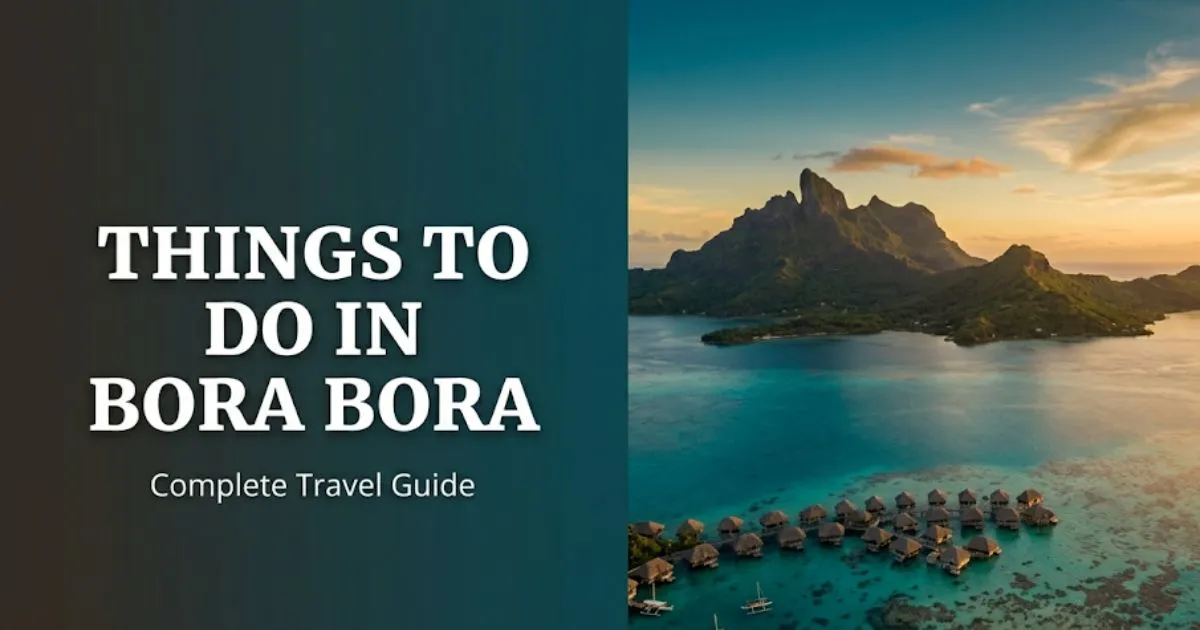
Things to do in Bora Bora range from snorkeling beside blacktip reef sharks in the world’s most celebrated lagoon to driving a 4WD truck through vanilla plantations above Vaitape village.
Tahiti Tourisme identifies Bora Bora’s lagoon as one of the most biodiverse coral reef ecosystems in the South Pacific, covering approximately 50 square kilometers of turquoise water inside a ring of protective reef.
This guide covers every major activity category for 2026 visitors. It also names what is genuinely overpriced, what experienced travelers do instead, and how to build a five-day itinerary that actually works.
Things to Do in Bora Bora: What Makes This Island Different
Bora Bora delivers a specific kind of travel experience that very few destinations on earth can match.
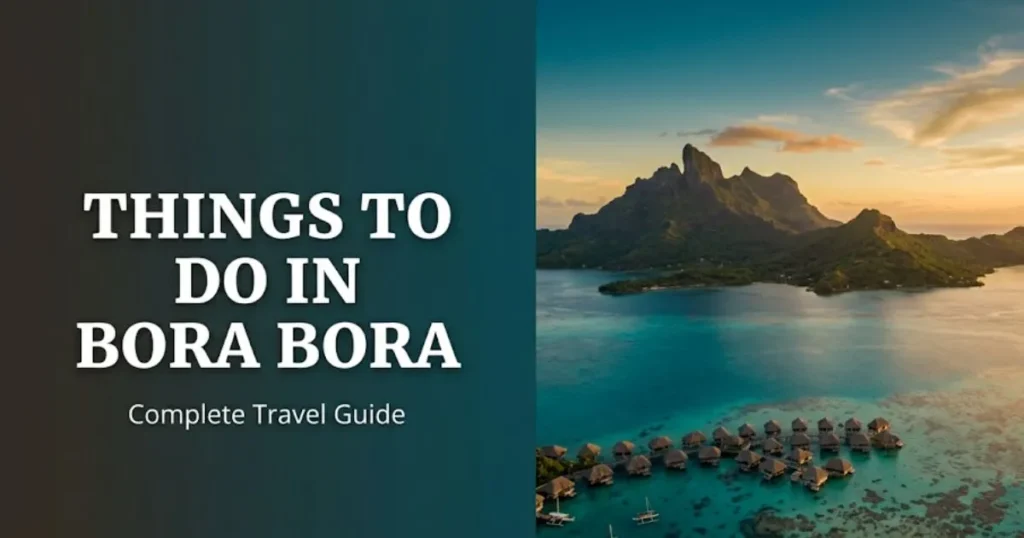
The island’s volcanic core, Mount Otemanu at 727 meters, rises from the center of a shallow lagoon ringed by motus, the low coral islets that host most of the island’s luxury resorts.
Every activity here is water-adjacent or water-based. That shapes the entire rhythm of a visit.
Couples and honeymooners will find Bora Bora genuinely lives up to its reputation for intimacy and natural drama. Solo travelers and families need to plan with more intention.
The island is not large. The main island’s perimeter road covers approximately 32 kilometers. You can circle it in under an hour by scooter.
Most of the famous overwater bungalow resorts sit on outer motus. Getting to the main island from those resorts requires a boat taxi, which typically runs 15 to 25 minutes each way.
Insider Tip:
- Book lagoon tours independently through operators in Vaitape rather than through your resort. Savings typically run 30 to 50 percent for identical experiences.
- Rent a bicycle or scooter for half a day to circle the main island on your own. It costs a fraction of a guided island tour.
- Budget travelers should consider a pension on the main island to eliminate daily boat taxi costs, which add up quickly.
Best Time to Visit Bora Bora
The best time to visit Bora Bora is May through October, which is the dry season across French Polynesia.
Lagoon visibility peaks during June, July, and August. Water temperatures remain warm, typically around 26 to 28 degrees Celsius. Rainfall is minimal.
July and August are the busiest months. Overwater bungalows at flagship resorts like the Four Seasons Resort Bora Bora and the St. Regis Bora Bora Resort book 6 to 12 months in advance during this window.
The Heiva Festival, French Polynesia’s major cultural celebration, runs through July. It includes traditional dance, canoe racing, and Maohi cultural performances in Vaitape.
November through April is the wet season. Rainfall increases, humidity rises, and lagoon conditions are occasionally rough.
The honest trade-off: wet season visitors pay significantly lower room rates, sometimes 40 to 60 percent below peak pricing. Snorkeling and diving are still excellent on calm days.
| Season | Months | Lagoon Conditions | Crowd Level | Relative Cost |
|---|---|---|---|---|
| Dry Season Peak | Jun–Aug | Excellent | High | Highest |
| Dry Season Shoulder | May, Sep–Oct | Very Good | Moderate | Moderate |
| Wet Season | Nov–Apr | Variable | Low | Lowest |
Families should target May or September. School holiday crowds are lower, prices are better, and conditions remain excellent.
Bora Bora Lagoon Tours and Snorkeling
The Bora Bora lagoon is the island’s defining experience, and a guided lagoon tour is the single most essential activity for any first-time visitor.
Lagoon tours typically run four to six hours. Most include multiple snorkel stops, a motu picnic, and encounters with marine life including lemon sharks, blacktip reef sharks, and stingrays.
Independent operators based at Farepiti Quay and the Vaitape Wharf offer identical itineraries to resort-branded tours. Prices typically run approximately $80 to $150 per person through independent operators.
Resort-booked lagoon tours for the same itinerary often run $150 to $250 per person.
Couples will find lagoon tours genuinely romantic, particularly those that include a motu picnic with fresh coconut and grilled fish. Families with older children (ages 8 and up) handle the boat and snorkel combination well.
The Coral Garden site near Motu Piti Aau is the most consistently recommended snorkel spot on independent operator tours. Visibility here regularly exceeds 20 meters during dry season.
Insider Tip:
- Ask operators specifically about the Coral Garden and the stingray feeding station at Anau village for the most marine-life-dense stops.
- Bring reef-safe sunscreen. French Polynesia enforces reef protection standards, and standard sunscreen brands are prohibited at many sites.
- Wear water shoes on the boat. Motu picnic stops involve walking on coral rubble and sand.
Key Takeaway: Book your lagoon tour directly through Vaitape Wharf operators for the same experience at 30 to 50 percent less than resort pricing.
Shark and Ray Snorkeling in Bora Bora
Snorkeling with lemon sharks and stingrays in Bora Bora’s shallow lagoon is one of the most genuinely extraordinary wildlife encounters in the South Pacific.
The experience takes place in water typically one to two meters deep. Lemon sharks average one to two meters in length. Blacktip reef sharks are smaller and more skittish.
Tour guides manage these encounters with established protocols. Swimmers enter the water calmly, do not touch the animals, and follow guide positioning instructions throughout.
Bora Bora Ecoguide and several Vaitape-based operators run dedicated shark and ray encounters. Sessions typically last 45 to 90 minutes.
Solo travelers handle this experience well. The group setting creates a built-in social dynamic that makes it one of the most sociable activities on the island.
Budget travelers should note that shark and ray snorkeling is almost always included in full-day lagoon tours. Booking it as a standalone excursion is rarely necessary.
The stingray feeding station near Anau village on the main island is accessible by boat and is often included as a stop on standard lagoon tours.
Lemon sharks at the main feeding site have been conditioned to associate boats with food. They approach confidently. First-time swimmers should prepare for close proximity.
Bora Bora Scuba Diving
Bora Bora scuba diving centers on the island’s outer reef passages, which funnel pelagic species into the lagoon on tidal flow.
Topdive Bora Bora and Bora Bora Diving Center are the island’s primary PADI-certified dive operations. Both operate from the main island and offer guided dives, refresher courses, and full certification programs.
Drift diving through Tapu Pass and Anau Pass on incoming tide produces encounters with hammerhead sharks, eagle rays, and schools of reef fish in strong current conditions. Intermediate to advanced certification is recommended.
Beginners can complete an introductory dive inside the lagoon in calmer, shallower conditions.
The best dive months are May through October. Visibility regularly exceeds 30 meters during dry season. Water temperature remains consistently warm year-round.
According to Tahiti Tourisme, Bora Bora’s outer reef hosts over 500 species of fish and extensive hard and soft coral formations. This makes it one of the most biodiverse diving environments in the region.
Families should note that most dive operators require minimum ages for certification dives. Verify age requirements directly with operators before booking for younger travelers.
| Dive Site | Depth | Best For | Condition Level |
|---|---|---|---|
| Tapu Pass | 15–30m | Advanced divers | Intermediate-Advanced |
| Anau Pass | 10–25m | Mixed groups | Intermediate |
| Lagoon Interior | 5–15m | Beginners | All levels |
| Outer Reef Wall | 20–40m | Experienced divers | Advanced |
Mount Otemanu Hike and Land Adventures
Mount Otemanu at 727 meters is Bora Bora’s volcanic peak and its most dramatic visual landmark. Reaching the true summit requires technical rock climbing on loose volcanic basalt. Most hiking experiences stop at a saddle point below the summit ridge.
The guided trail to the saddle takes approximately two to three hours each way from the trailhead near Vaitape. The route climbs through jungle and fern forest with increasing exposure.
Bora Bora Ecoguide and several local operators offer guided hikes with English-speaking naturalists who identify native plants and explain the island’s volcanic geology.
Unguided hiking is possible but not advisable. Trail markings are inconsistent. Guides know the safe route and carry emergency communication devices.
Seniors and travelers with mobility concerns should not attempt this hike. The trail involves steep, muddy sections with uneven footing and significant elevation gain.
Couples who enjoy physical challenges will find the saddle view the most dramatic vantage point over the lagoon available on foot.
Alternatively, Mount Pahia on the island’s eastern ridge offers a shorter but still rewarding hike with lagoon views. Local guides can combine both into a half-day ridge walk.
Insider Tip:
- Start any hiking activity before 8 a.m. The heat and humidity intensify sharply by mid-morning.
- Wear trail shoes with grip, not sandals. The volcanic rock and jungle mud are slippery after rain.
- Bring two liters of water minimum per person. There is no water source on the trail.
Key Takeaway: The Mount Otemanu saddle view, not the impossible summit, is the actual goal for 99 percent of visitors. Plan three to four hours round-trip with a local guide.
Bora Bora Jeep Safari and 4WD Island Tour
A Bora Bora Jeep safari covers the main island’s interior by 4WD vehicle, reaching viewpoints, vanilla plantations, and World War II American gun emplacements that no boat tour accesses.
Multiple Vaitape-based operators run half-day and full-day 4WD tours. Groups typically travel in open-top Land Rovers or Toyota Land Cruisers on unpaved ridge roads.
The ridge roads above Vaitape climb to panoramic viewpoints over the entire lagoon and the outer motus. On clear days, the vista stretches to Raiatea and Tahaa, the neighboring Society Islands.
A full island circuit by 4WD covers approximately 32 kilometers with multiple stops. Half-day tours run approximately three to four hours.
Families with older children handle Jeep safari tours well. The combination of wildlife spotting, vanilla sampling, and viewpoints holds attention for kids aged 8 and up.
Budget travelers should note that Jeep safaris run approximately $80 to $120 per person through independent operators. This is one of the island’s best value-to-experience ratios.
The WWII American gun batteries on the island’s eastern ridge are a genuinely underappreciated stop. The US military stationed heavy artillery here during WWII to protect the island’s strategic position. The concrete emplacements and original cannon barrels remain intact.
Most visitors skip the interior entirely. This is the single most significant oversight in a standard Bora Bora itinerary.
Matira Beach and the Best Beaches in Bora Bora
Matira Beach on the southern tip of the main island is the most consistently praised public beach in all of French Polynesia, and it is free to access for every visitor.
The beach stretches approximately one kilometer along Matira Point. The sand is fine white coral, the water is shallow and calm, and the Mount Otemanu backdrop makes it one of the most photographed natural settings in the Pacific.
Matira is one of the only genuinely public beaches in Bora Bora. Most of the island’s other white sand beaches are on private resort motus, accessible only to guests.
The beach is quietest before 9 a.m. and after 4 p.m. Midday brings resort excursion groups and day-trippers from Papeete.
Families will find Matira Beach the single best family-friendly spot on the island. The shallow water entry is gradual and calm. No boat is required to get here.
Budget travelers should base a significant portion of their beach time here rather than paying for motu day trips.
Insider Tip:
- Snack Matira, the casual beachside restaurant at the southern end of the beach, serves fresh poisson cru (Tahitian raw fish marinated in coconut milk) for approximately $10 to $18 per plate. It is one of the best meals on the island at any price point.
- Parking is available near the Matira area along the main road. Bicycles and scooters can be parked without issue.
- The beach is walkable from several pensions and mid-range guesthouses in the Matira area, which are substantially cheaper than motu resort rates.
Bora Bora Motu Picnic and Outer Island Experiences
A motu picnic excursion is the quintessential Bora Bora half-day experience, taking visitors by outboard boat to one of the outer coral islets for a beach lunch and snorkeling session.
Most full-day lagoon tours include a motu picnic component. Standalone motu picnic excursions are also bookable through Vaitape operators for smaller groups or private arrangements.
Private motu picnic tours for couples include grilled fresh fish, local fruit, fresh coconut, and sometimes champagne. These run approximately $150 to $300 per couple through private operators.
Group motu picnics on standard lagoon tour itineraries cost significantly less and deliver a similar beach experience with a more social atmosphere.
Couples and honeymooners will find the private motu picnic one of the most genuinely memorable experiences on the island. The isolation and the setting are real.
The inner lagoon motus closest to the main island are the most frequently visited. The outer reef motus near the barrier reef edge offer more dramatic ocean-facing scenery and stronger snorkeling.
Ask operators specifically for motu stops on the ocean-facing side of the reef for the best snorkel experience. Most standard tours stop at the calmer lagoon-facing sides, which is safer but less spectacular.
Key Takeaway: A private motu picnic is one of the best uses of a single afternoon in Bora Bora for couples, costing less than one hour of overwater bungalow time at a flagship resort.
Bora Bora Romantic Activities and Sunset Cruises
Bora Bora is the most consistently cited honeymoon destination in the South Pacific, and its sunset catamaran cruises genuinely earn that reputation.
Sunset catamaran sailings depart from Vaitape Wharf in the late afternoon, typically around 4:30 to 5 p.m., and sail around the lagoon as Mount Otemanu catches the golden light.
Several operators run sunset catamaran tours. Group tours run approximately $80 to $130 per person. Private charter sailings for two run significantly more, typically $300 to $600 for two hours.
Complimentary drinks (wine, rum punch, and non-alcoholic options) are standard on most sunset cruises.
Couples should consider private charter over group sailing. The intimacy difference is significant. A group of 20 people on a catamaran with rum punch is pleasant. A private sailboat with a captain, a bottle of Champagne, and no other passengers is something else entirely.
Solo travelers who join group sunset tours often find them genuinely social. The shared experience of watching the sun drop behind the outer reef while anchored in the lagoon creates an easy conversational atmosphere.
Beyond sailing, outrigger canoe tours at sunset offer a closer-to-the-water alternative. Several local operators run guided outrigger paddling at dusk from the main island shore.
| Romantic Activity | Price Range (Per Couple) | Duration | Best Profile |
|---|---|---|---|
| Group sunset catamaran | $160–$260 | 2–3 hours | Budget couples |
| Private sunset charter | $300–$600+ | 2 hours | Honeymooners |
| Private motu picnic | $200–$400 | 4–5 hours | All couples |
| Overwater dinner | $200–$400+ per person | 2–3 hours | Luxury couples |
| Outrigger canoe at dusk | $80–$150 | 1.5 hours | Active couples |
Overwater Bungalows in Bora Bora
Overwater bungalows in Bora Bora represent the island’s most iconic accommodation. They are also its most expensive and its most honestly assessed for whether the experience matches the price.
The flagship properties include the Four Seasons Resort Bora Bora, St. Regis Bora Bora Resort, Conrad Bora Bora Nui, and InterContinental Bora Bora Resort and Thalasso Spa. Rates at these properties typically run $800 to $3,000-plus per night for overwater villas.
The overwater experience delivers: a private deck over turquoise water, direct ladder access into the lagoon, and the kind of solitude that a private beach at a land-based resort cannot replicate.
What it does not always deliver: guaranteed coral beneath your bungalow (varies significantly by property and positioning), proximity to the main island (motu resorts require boat taxis for every excursion), and value for money relative to other world-class beach destinations.
According to Condé Nast Traveler, the Four Seasons Resort Bora Bora and the St. Regis Bora Bora consistently rank among the top overwater resort experiences globally. Both properties justify that assessment with their positioning over the lagoon’s clearest water sections.
Budget travelers should know that Pension Sunrise Bora Bora and several other pensions on the main island offer water-adjacent bungalows at approximately $150 to $300 per night. These are not overwater. But they provide lagoon access, local character, and a genuinely authentic experience of island life that $1,500-per-night resorts cannot offer.
Book overwater bungalows at flagship properties a minimum of 6 to 9 months in advance for July and August stays. Shoulder season (May, September, October) allows booking windows of 3 to 6 months.
Where to Eat in Bora Bora
The best meal in Bora Bora is almost certainly not inside a resort restaurant, where dinner for two regularly runs $300 to $500 with wine.
Bloody Mary’s in Povai Bay is the island’s most famous independent restaurant, a sand-floor outdoor dining institution that has hosted celebrities and regular travelers alike since 1979. Fresh grilled fish and lobster are the focus. Budget approximately $50 to $100 per person.
La Villa Mahana near Vaitape is a small, reservation-required restaurant widely considered the finest dining experience on the island. Chef Damiano Velilla runs a French-Polynesian tasting menu for approximately $120 to $200 per person. Book weeks in advance.
Snack Matira at Matira Beach serves poisson cru, grilled tuna, and fresh tropical fruit for $10 to $25 per plate. It is the clearest demonstration that Bora Bora’s best food is not always its most expensive.
Chez Rosine near Vaitape is a local snack bar (the French Polynesian term for casual roadside restaurant) where the clientele skews heavily local. Plates of poisson cru and Tahitian-style grilled meats run $8 to $18.
Budget travelers should plan at least three meals per day at snack bars along the main road. The food quality is excellent. The savings versus resort dining are substantial.
Couples celebrating a special occasion should make La Villa Mahana their one high-budget dining commitment. The intimacy and quality genuinely earn the price.
Key Takeaway: Eat at least one meal per day at a local snack bar. The food is excellent, the cost is a fraction of resort dining, and the experience is authentically local in a way no hotel restaurant can be.
Bora Bora Pearl Shopping and Cultural Experiences
Tahitian black pearls are French Polynesia’s most distinctive cultural product, and Bora Bora has multiple boutiques selling pearls across a wide quality and price range.
Robert Wan boutiques, the most recognized name in Tahitian pearls, operates in Vaitape and at several resort properties. High-quality Tahitian pearls typically run from a few hundred dollars to several thousand for premium specimens.
The Vaitape market area has smaller independent pearl dealers alongside fresh produce vendors, craft sellers, and local food stalls. Prices at independent sellers are negotiable.
Genuine Tahitian black pearls have a characteristic orient, a natural iridescence of green, pink, and blue overtones. Fake or lower-quality pearls lack this multi-tone sheen.
For cultural programming, Polynesian cultural demonstrations at certain resort properties include traditional dance, weaving, and outrigger canoe sessions. The InterContinental Bora Bora and the Le Meridien run structured cultural programs for guests.
Heiva Festival performances in July at Vaitape village include traditional Tahitian dance (Ori Tahiti), drumming, and canoe racing. Attendance is free and open to all visitors.
Couples shopping for pearls should research quality grading independently before visiting boutiques. The quality difference between pearl grades is significant, and understanding what drives price helps avoid both overpaying and buying low-quality stones at premium prices.
Budget travelers should treat pearl shopping as a browsing experience rather than a purchase commitment unless they have researched market pricing in advance.
Bora Bora Helicopter Tour
A Bora Bora helicopter tour provides the single most dramatic perspective of the island’s lagoon, reef, and volcanic peaks from above.
Helicopter tours over Bora Bora typically run 15 to 30 minutes. Longer routes extend to neighboring Raiatea and Tahaa. Cost typically runs approximately $250 to $600 per person depending on duration and operator.
Several operators run helicopter flights from a landing pad near the main island. Air Tahiti Nui and local charter operators maintain service. Verify availability and scheduling directly with operators before arrival, as helicopter tours are subject to weather cancellation.
The 20-minute flight over the lagoon, reef, and Mount Otemanu provides aerial photography conditions unmatched by any boat or land perspective.
The honest assessment: the helicopter tour is genuinely spectacular. It is also a 20-minute experience at a significant cost. The view from the Mount Otemanu saddle hike is nearly as dramatic and costs a fraction of the price.
Couples with budget flexibility should consider booking one helicopter flight as a single premium experience rather than multiple shorter flights.
Budget travelers should skip the helicopter tour and substitute the Jeep safari ridge-road viewpoints, which cost approximately $80 to $100 and deliver 80 percent of the visual impact.
Seniors who prefer to avoid the physical demands of hiking but want dramatic aerial views will find the helicopter the most accessible high-vantage option on the island.
Getting Around Bora Bora
Getting around Bora Bora requires understanding that the island has two distinct transportation zones: the main island and the outer motus.
On the main island, le truck (a modified truck with wooden bench seating in the bed) provides inexpensive public transportation along the main perimeter road. Fares typically run a few dollars per trip. Schedules are irregular, so verify timing locally.
Boat taxis connect the main island wharf at Vaitape to outer motu resorts. Most resorts run scheduled boat transfer services for guests. Independent travelers can hire private water taxis from Farepiti Quay.
Bicycle and scooter rental in Vaitape allows independent exploration of the main island’s 32-kilometer perimeter road. Bicycle rental typically runs approximately $15 to $25 per day. Scooter rental runs approximately $40 to $70 per day.
Seniors and travelers with mobility limitations should note that le truck involves climbing into and out of an open truck bed, which requires physical agility. Water taxis involve stepping between boat and dock over open water.
Families should coordinate with their accommodation in advance about boat transfer schedules. Missing a scheduled transfer can strand a family on a motu or the main island for hours.
Taxis in the conventional sense (metered vehicles for road transport) do exist on the main island but are expensive relative to scooter or bicycle rental for short distances.
Insider Tip:
- Rent a scooter for one full day and circle the main island independently. Stop at Matira Beach, the WWII gun emplacements, and Anau village.
- Allow extra time for all motu-based activities. Boat transfers add 30 to 60 minutes of transit to every activity from motu resorts.
Key Takeaway: Rent a scooter for at least one day on Bora Bora. The freedom to stop at any point along the perimeter road is worth more than any guided tour of the same route.
Bora Bora on a Budget
Bora Bora is an expensive destination. That said, it is not inaccessible to budget-conscious travelers who plan strategically.
Pension Sunrise Bora Bora, Chez Rosine Bora Bora guesthouse, and several other small family-run pensions on the main island offer rooms for approximately $100 to $250 per night. These provide lagoon access, local character, and proximity to Matira Beach.
Meals at snack bars along the main road cost $8 to $25 per plate. Eating two of three daily meals at snack bars versus resort restaurants saves $100 to $200 per day per person.
The lagoon itself is free to access from Matira Beach. Snorkeling equipment rental near Matira runs approximately $10 to $20 per day.
Le truck public transportation covers the main island for a few dollars per trip, eliminating the need for expensive taxis or resort transfer fees.
The single biggest budget mistake in Bora Bora: booking all activities through a resort desk. Every major activity is available at 30 to 50 percent lower cost through independent operators at Vaitape Wharf.
Budget travelers should be honest with themselves. Bora Bora is not a budget destination in the way that Bali or Vietnam is. A careful traveler can spend $150 to $300 per day all-in on accommodations, food, and a daily activity. That is the realistic floor, not a guarantee.
| Budget Category | Daily Cost Estimate | Notes |
|---|---|---|
| Accommodation (pension/guesthouse) | $100–$250/night | Main island only |
| Meals (snack bars + one restaurant) | $30–$60/day | Per person |
| Activities (independent operator) | $80–$150/day | Per person |
| Transport (scooter + boat taxi) | $40–$80/day | Per person |
| Realistic Budget Floor | $250–$540/day | Per couple total |
Bora Bora Itinerary for 5 Days
A five-day Bora Bora itinerary covers the island’s essential experiences without rushing any single category.
Day 1: Arrival and Main Island Orientation
- Fly Air Tahiti from Papeete (Faa’a International, PPT) to Bora Bora (BOB). Flight time runs approximately 50 minutes.
- Take boat transfer to accommodation. If staying on a motu, plan the boat transfer time into your arrival schedule.
- Rent a scooter or bicycle from Vaitape for afternoon use.
- Ride the perimeter road to Matira Beach. Swim, relax, and eat at Snack Matira.
- Return to accommodation for sunset from your deck or the Vaitape waterfront.
Day 2: Full-Day Lagoon Tour
- Book a full-day lagoon tour through an independent Vaitape Wharf operator in advance.
- Depart by outboard boat for the shark and ray snorkel station near Anau village.
- Continue to the Coral Garden near Motu Piti Aau for second snorkel stop.
- Motu picnic lunch on outer islet with fresh fish and coconut.
- Return to main island. Evening dinner at Bloody Mary’s in Povai Bay.
Day 3: Land and Adventure Day
- Early morning: guided hike toward the Mount Otemanu saddle with a local guide. Depart no later than 7 a.m.
- Midday: return to Vaitape and take a long lunch break during peak heat hours.
- Afternoon: book a Jeep safari for the interior ridge roads and WWII gun emplacements.
- Evening: sunset catamaran cruise departing from Vaitape Wharf.
Day 4: Diving, Culture, and Pearl Shopping
- Morning: scuba diving at Tapu Pass or Anau Pass with Topdive Bora Bora (intermediate to advanced) or introductory lagoon dive (beginners).
- Midday: Vaitape market and pearl boutique browsing.
- Afternoon: visit the Robert Wan boutique and independent pearl dealers for comparison shopping.
- Evening: dinner reservation at La Villa Mahana (book weeks in advance).
Day 5: Helicopter Tour and Departure Prep
- Morning: helicopter flight over the lagoon and Mount Otemanu (weather permitting).
- Midday: final swim at Matira Beach, light lunch at a local snack bar.
- Afternoon: boat transfer to Bora Bora Airport (Motu Mute) for return flight to Papeete.
- Note: allow 90 minutes minimum before Air Tahiti departure for boat transfer and check-in processing at BOB.
Safety and Practical Warnings for Bora Bora
Bora Bora is a physically safe destination for most travelers, but several specific risks require attention.
Key safety and practical facts every visitor should know:
- Sun exposure at equatorial latitude is severe. Apply high-SPF reef-safe sunscreen every 90 minutes on any water-based activity. UV index regularly reaches 11 or above at midday.
- Lagoon currents in reef passes can be strong during tidal exchange. Always snorkel or dive with a guide in pass locations. Do not swim alone in unfamiliar water.
- Coral cuts and abrasions are common on snorkel excursions. Wear water shoes or fins when entering the water near reef. Rinse any cut with fresh water and disinfect immediately, as tropical saltwater reef cuts infect faster than temperate-climate wounds.
- Boat taxi safety: Step carefully between boat and dock. Slippery surfaces, open water gaps, and moving boats in tidal chop require full attention during boarding and disembarking.
- Lemon and blacktip reef sharks on snorkel tours are conditioned to humans and generally docile. Follow guide instructions without exception. Do not touch, feed, or approach sharks independently.
- French Polynesia uses the CFP franc (XPF). Most resort and tourist-facing businesses accept credit cards. Local snack bars and market vendors frequently require cash. Carry XPF for local purchases.
- Cell service and Wi-Fi are inconsistent on outer motus and on remote hiking trails. Download offline maps before departure. Notify guides of your planned hiking time.
- Medical facilities on Bora Bora are limited. The island has a small medical center. Serious medical situations require evacuation to Papeete. Travel insurance with medical evacuation coverage is strongly recommended.
Bold safety instruction: For hiking, diving, or remote lagoon activities, always inform your accommodation of your itinerary and expected return time.
Frequently Asked Questions About Things to Do in Bora Bora
What are the best things to do in Bora Bora for first-time visitors?
The single best first-time experience in Bora Bora is a full-day lagoon tour with a shark and ray snorkel session, a Coral Garden stop, and a motu picnic lunch.
Book this through an independent operator at Vaitape Wharf for the best value.
Add an afternoon at Matira Beach and a sunset catamaran cruise for a complete first-day itinerary that covers the island’s defining experiences.
How many days do you need in Bora Bora to see everything?
Five to seven days is the ideal length for Bora Bora.
Five days covers the lagoon tour, a hiking experience, a Jeep safari, diving, dining, and cultural activities without rushing.
Shorter stays of three days are doable but require prioritizing water activities over land exploration.
Is Bora Bora worth visiting on a budget?
Bora Bora is accessible on a relative budget but is not a low-cost destination by any objective measure.
Staying at a pension on the main island, eating at local snack bars, booking activities independently, and using le truck for transportation reduces daily costs significantly.
A realistic budget floor runs approximately $250 to $350 per day for a couple, well below the $1,000-plus-per-day cost of a flagship overwater resort experience.
When is the best time to visit Bora Bora?
The best time to visit Bora Bora is May through October, which is the dry season.
June through August offers peak lagoon visibility and weather consistency but also peak prices and crowds.
May and September are the best shoulder-season months: weather remains excellent, prices soften, and overwater bungalows are more available on shorter booking lead times.
Is Bora Bora safe for solo travelers?
Bora Bora is safe for solo travelers, though it is not a destination built around solo travel culture.
The island lacks hostel infrastructure, solo-dining-friendly local bars, and the kind of backpacker social scene common in Southeast Asia.
Solo travelers who enjoy independent outdoor activity, are comfortable with premium accommodation costs, and prefer natural experiences over social nightlife will find Bora Bora rewarding.
Do you need to book Bora Bora activities in advance?
Yes: overwater bungalows at flagship resorts, dinner at La Villa Mahana, and Air Tahiti flights all require advance booking, often 3 to 12 months for peak season.
Most lagoon tours, Jeep safaris, and helicopter flights can be booked 1 to 4 weeks in advance during shoulder season.
For July and August travel specifically, treat every reservation as requiring maximum lead time. Undershooting on advance booking is the most common planning mistake among first-time Bora Bora visitors.
Planning Your 2026 Bora Bora Trip: Final Guidance
Bora Bora genuinely delivers what it promises. The lagoon is as extraordinary as every photograph suggests. The quiet, the natural drama, and the intimacy of the motu setting are real.
Book the lagoon tour first. Then figure out where to stay. The experience of being on that water is the reason to be in Bora Bora.
Verify entry requirements, Air Tahiti flight schedules, and resort or pension availability directly with Tahiti Tourisme and individual operators before departure. Pricing, availability, and logistics change. What is accurate in early 2026 may shift by your travel dates.
The reader who books independently, eats at local snack bars, rents a scooter for a day, and spends their highest-budget moment on a private motu picnic or an overwater dinner will leave with a richer experience than the reader who outsources everything to a resort desk