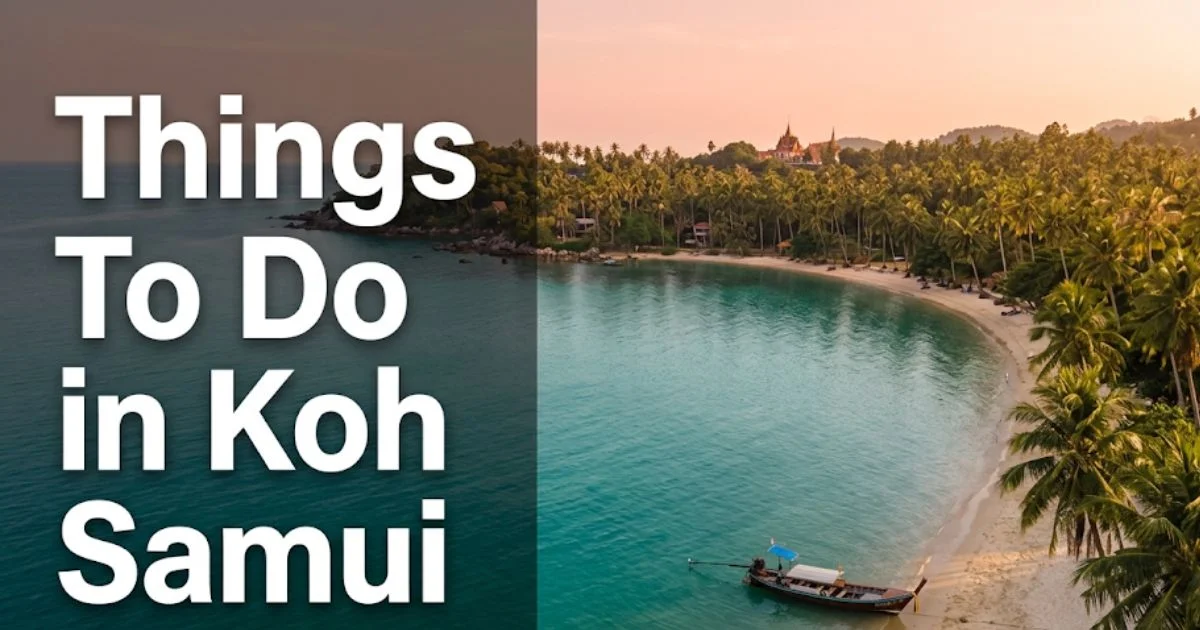
Things To Do in Koh Samui: The 2026 Insider Guide

Koh Samui packs more genuine variety into one Thai island than most travelers expect. The best things to do in Koh Samui range from quiet Buddhist temples to fast-moving marine park tours.
The Tourism Authority of Thailand identifies Koh Samui as one of Thailand’s top five international tourism destinations. Its Gulf of Thailand location gives it a longer dry season than the Andaman islands.
This guide covers the island’s best beaches, temples, food markets, day trips, and practical logistics. It also names what is genuinely overrated and where experienced repeat visitors go instead.
Things To Do in Koh Samui: What Makes This Island Worth Your Time
The best things to do in Koh Samui span three distinct categories: beach and water activities, Buddhist cultural sites, and Gulf of Thailand island-hopping tours.
Unlike Phuket, Koh Samui still has readable neighborhoods. Each beach zone has a different character.
Chaweng is the commercial center. Bophut is the quieter, more atmospheric alternative.
The island is roughly 247 square kilometers. You can reach most attractions within 30 to 45 minutes from any base.
Koh Samui also serves as a launch pad. Ang Thong National Marine Park, Koh Phangan, and Koh Tao are all accessible by day-trip ferry.
Insider Tip:
- First-time visitors default to Chaweng. Experienced repeat visitors consistently base themselves in Bophut or Maenam instead.
- The Ring Road (Route 4169) circles the island. Every major attraction sits directly on or within 10 minutes of it.
- Families and seniors should note: most major temple sites involve stairs and uneven terrain.
Best Things To Do in Koh Samui, Thailand: A Practical Overview
The single most useful framework for planning Koh Samui is dividing your time into three zones: north coast, east coast, and south coast.
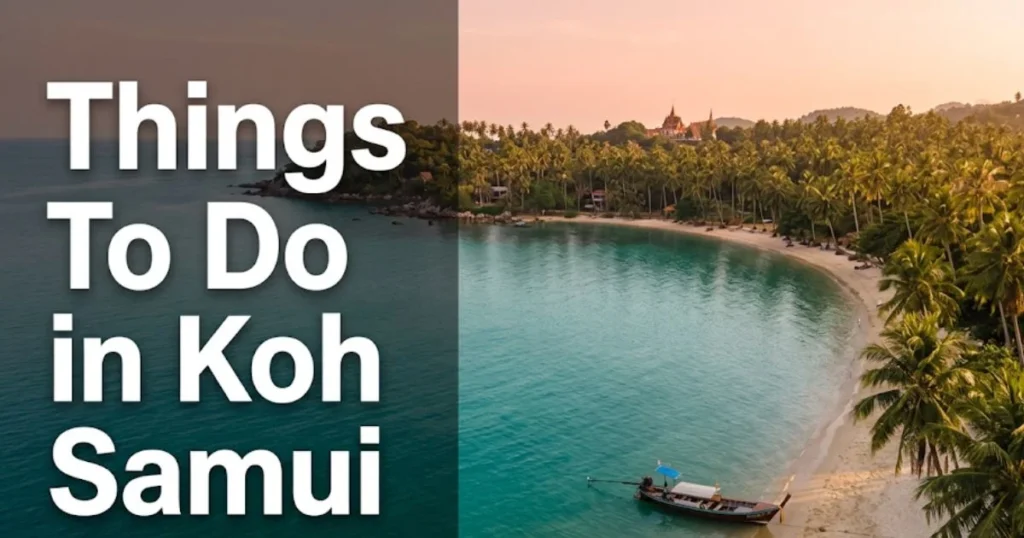
Each zone offers a distinct experience and distinct crowd levels.
| Zone | Character | Best For | Key Sites |
|---|---|---|---|
| North Coast | Calm, cultural, local | Couples, families, seniors | Bophut, Maenam, Big Buddha, Wat Plai Laem |
| East Coast | Busy, commercial, party-oriented | Solo travelers, nightlife | Chaweng, Lamai, Hin Ta and Hin Yai |
| South/West Coast | Quiet, local, scenic | Budget travelers, repeat visitors | Nathon, Silver Beach, Na Muang Waterfall |
The north coast consistently outperforms the east coast for quality of experience outside the water itself.
Bophut’s Friday Night Market beats Chaweng’s walking street for food quality and atmosphere.
For budget travelers: The west coast around Nathon is where local-priced food and transport are easiest to access.
Koh Samui Beaches: Which One Actually Suits You
Koh Samui’s best beach depends entirely on your traveler profile, not on which beach appears most in travel photographs.
Chaweng Beach is the island’s most photographed and most crowded stretch. It is lined with sunbed operators, jet ski vendors, and resort bars.
Maenam Beach on the north coast is the local alternative. It is longer, quieter, and significantly less commercialized.
Silver Beach (Ao Thong Takian), tucked between Chaweng and Lamai, is a smaller cove that experienced repeat visitors consistently rate above both larger neighbors.
Choeng Mon Beach on the northeast tip is the best choice for families. Calm water, shallower depth, and fewer vendors make it genuinely child-appropriate.
| Beach | Best For | Crowd Level | Water Conditions | Vibe |
|---|---|---|---|---|
| Chaweng | Solo travelers, nightlife | Very high | Good when calm | Commercial |
| Lamai | Young couples, party travelers | High | Good | Semi-commercial |
| Maenam | Couples, repeat visitors | Low to moderate | Excellent | Quiet, local |
| Choeng Mon | Families, seniors | Low | Very calm | Relaxed |
| Silver Beach | Couples, experienced visitors | Low | Calm | Secluded |
| Bophut | Couples, cultural travelers | Low | Moderate | Village atmosphere |
Seasonal note: During October and November, east-facing beaches including Chaweng can experience rough seas from the northeast monsoon. West-facing beaches near Nathon are calmer during this period. Verify sea conditions before booking water activities.
Koh Samui Temples and Culture: Beyond the Tourist Circuit
Wat Phra Yai, known as the Big Buddha, is Koh Samui’s most visited cultural site. The 12-meter golden Buddha sits on a small island connected to the north coast by a causeway.
Entry is free, though a dress code applies. Shoulders and knees must be covered. Sarongs are available at the entrance.
The more architecturally interesting temple is Wat Plai Laem, a five-minute drive east of Wat Phra Yai. It features an 18-armed statue of Guanyin (the goddess of mercy) surrounded by a lake.
Wat Plai Laem draws fewer visitors despite being more visually distinctive. It is free to enter and typically open daily, though hours vary. Verify before visiting.
For families: Both temples are accessible for children, though the crowds at Wat Phra Yai on weekends can make it difficult to navigate with young children and strollers.
Insider Tip:
- Visit Wat Phra Yai at dawn for near-empty conditions and better photography light.
- Wat Plai Laem has a small food vendor area selling fresh coconut drinks and local snacks.
- Solo travelers should note that temple areas are very safe and well-frequented by locals throughout the day.
Key Takeaway: Wat Plai Laem is the more rewarding temple visit on Koh Samui, and most first-time visitors skip it entirely in favor of the more famous Big Buddha.
Koh Samui Waterfalls and Nature: The Interior the Tourists Miss
Na Muang Waterfall is Koh Samui’s most accessible inland attraction. The island’s interior holds dense jungle that most beach-focused tourists never see.
Na Muang Waterfall 1 is the easier of the two tiers. A short, relatively flat trail leads to a 20-meter cascade into a natural pool.
Na Muang Waterfall 2 requires a steeper 1.5-kilometer trail uphill. The reward is a taller, less crowded fall with a swimming pool beneath it.
The entrance fee to the waterfall area is low by international standards. Bring cash in Thai baht, as card payment is not reliably available.
For seniors and accessibility travelers: Na Muang 1 is manageable for most fitness levels. Na Muang 2 involves a genuinely steep and sometimes muddy trail. Not recommended for travelers with knee or hip limitations.
The dry season months of December through April offer the best trail conditions. October and November bring heavy rain and very slippery paths.
Insider Tip:
- Na Muang is often combined with an elephant sanctuary visit. The Samui Elephant Haven is located nearby and operates ethical, no-ride encounters.
- Arrive before 10 a.m. to have the waterfall largely to yourself.
- The pool at Na Muang 1 is genuinely swimmable. Bring a swimsuit.
Koh Samui Water Sports and Snorkeling: What Is Worth Booking
Koh Samui’s best snorkeling is not directly off its main beaches. The clearest water and best marine life are accessed by boat from the island’s shores.
Koh Tan and Koh Mudsum, two small islands 10 minutes by longtail boat from the south coast, offer the island’s closest reliable snorkeling. Water visibility is typically good from December through April.
Organized snorkeling tours from Chaweng and Bophut typically include Koh Tan, Koh Mudsum, and a lunch stop. Prices run approximately 800 to 1,500 Thai baht per person as of recent seasons. Verify current pricing before booking.
Jet ski rental is the most commonly regretted activity on Koh Samui. Damage scams targeting tourists are widely documented and reported by the US Embassy Bangkok. Operators claim pre-existing damage was caused by renters and demand large cash payments.
For solo travelers: Group snorkeling tours are a legitimate way to meet other travelers and are significantly safer than independent water activities without local knowledge.
Scuba diving: Koh Samui is not the island’s best base for diving. Koh Tao, accessible by Lomprayah ferry in approximately two hours, is the recognized dive hub of the Gulf of Thailand and offers PADI certification courses at significantly lower cost than Koh Samui dive operators.
Ang Thong National Marine Park Day Trip
Ang Thong National Marine Park is the single best day trip from Koh Samui. The park covers 42 islands in the Gulf of Thailand and is administered by Thailand’s Department of National Parks.
Organized speedboat tours from Bophut or Nathon Pier reach Ang Thong in approximately 30 to 45 minutes. Full-day tours typically include kayaking through sea caves, snorkeling, a hike to a viewpoint, and lunch.
The park’s emerald saltwater lagoon, Thale Nai, sits inside Ko Mae Ko island. Reaching it requires a moderate 15-minute hike up steep stairs.
The National Parks Wildlife and Plant Conservation Department requires paid entry for foreign visitors to Ang Thong. Rates are tiered by nationality. Tour operators typically include this in the package price, but confirm before booking.
For families: The kayaking and snorkeling components are suitable for children approximately 6 and older. The steep stair climb to Thale Nai viewpoint is not recommended for very young children or seniors with limited mobility.
Booking timing: During peak season (December through February), Ang Thong tours sell out several days in advance. Book through your resort or a licensed tour operator at least 3 to 5 days ahead.
Insider Tip:
- Sunrise tours departing early morning offer calmer seas and smaller group sizes.
- Bring reef-safe sunscreen. The park enforces no regular sunscreen restrictions to protect coral.
- Motion sickness tablets are worth packing. The speedboat crossing can be rough in certain wind conditions.
Key Takeaway: Book Ang Thong Marine Park at least 3 to 5 days in advance during December through February. It sells out, and same-day booking is rarely possible at peak season.
Koh Samui Food Scene and Markets: Where Locals Actually Eat
Koh Samui’s best food is concentrated at its night markets, not its resort restaurants. The Fisherman’s Village Friday Night Market in Bophut is the island’s most recommended food market by repeat visitors.
The market runs along Bophut Beach Road from approximately 5 p.m. to 10 p.m. every Friday. Stalls sell grilled seafood, pad Thai, mango sticky rice, fresh coconut ice cream, and local satay.
Lamai Night Market operates several nights per week near the Lamai Beach roundabout. It draws more locals than tourists and prices food accordingly.
The Nathon Market on the west coast, open on weekend mornings, is the closest thing Koh Samui has to a genuine local produce and prepared-food market. Most tourists never visit.
For budget travelers: A full meal at Nathon Market or Lamai Night Market typically costs 60 to 150 baht per dish. Resort restaurant equivalents run three to five times higher.
For couples: Bophut village restaurants lining the waterfront serve freshly caught seafood at tables facing the water. It is the island’s most characterful dining setting. Reserve in advance for Friday evenings when the night market draws crowds.
Insider Tip:
- Avoid eating at Chaweng walking street restaurants. Prices are tourist-inflated and food quality is inconsistent.
- The best som tam (green papaya salad) on the island is at small roadside stalls, not resort buffets.
- Ask your guesthouse or local taxi driver where they eat. This is the single most reliable method for finding genuinely local-quality food.
Koh Samui Nightlife: Honest Assessment
Koh Samui’s nightlife scene centers on Chaweng Beach Road and is the island’s most overrated experience for travelers seeking authentic local culture. It is a strip of tourist bars, live music venues, and clubs oriented entirely toward foreign visitors.
Green Mango Club and Ark Bar are the two most-visited venues. Both are loud, professionally operated, and genuinely fun if a party atmosphere is what you are seeking.
For a qualitatively different evening, Bophut’s Fisherman’s Village strip offers seafood dinners, wine bars, and cocktail terraces without the volume or the vendor pressure of Chaweng.
Muay Thai events at the Chaweng Stadium and the stadium near Lamai are held multiple nights per week and run approximately 1,000 to 1,500 baht for a ringside seat. They are among the most genuinely Thai cultural experiences available at night on the island.
For solo travelers: Chaweng’s bar scene is social and easy to navigate alone. Be aware that drink spiking incidents have been reported in this district. The US Embassy Bangkok travel advisories for Thailand include specific warnings about this.
For couples: Bophut’s waterfront is the correct choice. Chaweng is genuinely not a romantic setting.
Key Takeaway: Muay Thai at the Chaweng or Lamai stadium is the island’s best evening cultural experience and the one most tourists skip in favor of the bar strip they could have found anywhere in Southeast Asia.
Koh Samui Elephant Sanctuary: The Right Way to Visit
Samui Elephant Haven is Koh Samui’s most recognized ethical elephant experience. The sanctuary operates a no-riding policy and focuses on observation, feeding, and bathing interactions.
Visits are typically half-day experiences. Prices run approximately 2,500 to 3,500 baht per adult as of recent seasons. Verify current pricing with the sanctuary directly before booking.
The sanctuary is located in the island’s interior hills, roughly 20 minutes from Chaweng by taxi. Most tour operators offer pickup and return.
Avoid any operator offering elephant riding on Koh Samui. The Tourism Authority of Thailand has been actively promoting welfare-positive elephant tourism. Any venue still offering riding as of 2026 has not been vetted for ethical standards.
For families: Children are welcome at Samui Elephant Haven. The experience is hands-on and genuinely engaging for children aged approximately 5 and older. Under-5s may find the size of the animals overwhelming.
For budget travelers: The sanctuary is one of the island’s higher-priced half-day activities. It is, however, more ethically sound and experientially richer than cheaper alternatives that have not adopted welfare-positive practices.
Koh Samui for Couples and Families: Profile-Specific Guidance
Koh Samui for couples works best when based in Bophut or Choeng Mon. Both areas offer calm water, characterful village streets, and waterfront dining without the commercial density of Chaweng.
Romantic activities include longtail boat sunset tours departing from Bophut Pier, couples’ Thai massage at beachside spas in Maenam, and private speedboat charters to Silver Beach.
For families with children: Choeng Mon Beach is the island’s safest and most family-appropriate beach. Shallow, calm water and low vendor pressure make it reliably manageable for young children.
Family-friendly day activities include Ang Thong by speedboat tour (for children approximately 6 and older), Na Muang Waterfall 1 (accessible for most children), and elephant sanctuary visits at Samui Elephant Haven.
For seniors: The north coast accommodation zone around Maenam and Bophut offers flatter terrain than the hillside resorts inland near Chaweng. Road quality varies across the island. Confirm accessibility with your specific property before booking.
Honest note for couples: The island’s luxury villa sector is genuinely outstanding. Pool villas with private gardens in the north coast hills offer a qualitatively different experience from standard resort rooms and are worth comparing on price. At certain seasons, villa rates are competitive with mid-range hotel pricing.
Koh Samui Itinerary: A Practical 2-Day Framework
A two-day framework covers Koh Samui’s core experiences without rushing. Extend each day for a more relaxed pace.
Day 1: North Coast Culture and Beach
- Morning: Visit Wat Plai Laem first (quieter, more atmospheric). Walk the causeway and exterior grounds.
- Mid-morning: Walk 5 minutes to Wat Phra Yai. Dress code applies. Allow 30 to 45 minutes.
- Late morning: Drive to Maenam Beach for a 2-hour swim and rest. Rent a sunbed from a beach vendor.
- Lunch: Eat at a local restaurant on Maenam Beach Road. Budget 100 to 200 baht per dish.
- Afternoon: Drive to Bophut Fisherman’s Village for a walking exploration of the village streets.
- Evening: If it is a Friday, stay for the Fisherman’s Village Friday Night Market. Otherwise, choose a waterfront restaurant for sunset dinner.
Day 2: Interior, Waterfall, and Marine Park
- Early morning: Depart by 7 a.m. for Ang Thong National Marine Park tour. Book the previous day.
- Full day: Tour includes kayaking, snorkeling, Thale Nai lagoon hike, and lunch. Return by 5 p.m.
- Evening: Rest at your accommodation. Optional Muay Thai bout at Chaweng Stadium if energy permits.
Profile notes: Families can replace Day 2’s Ang Thong tour with Na Muang Waterfall (morning) and Choeng Mon Beach (afternoon) for a less demanding itinerary. Seniors should consider a third day to allow for a gentler pace.
Getting Around Koh Samui: Transport Logistics Explained
Getting around Koh Samui requires planning, because the island has no official metered taxi system for most journeys. Songthaews (shared pickup trucks with bench seating) are the main budget transport option.
Songthaews run along the Ring Road (Route 4169) on regular circuits. Fares typically run 30 to 100 baht depending on distance. Negotiate before boarding for routes that deviate from the main road.
Private taxis are available from most hotels and via apps including Grab Thailand. Rates are higher than Songthaews but more predictable. Always confirm the price before departing.
Scooter rental is popular and costs approximately 200 to 350 baht per day at most rental shops. The Ring Road carries significant traffic volume and has sections with limited shoulder space. Inexperienced riders should use taxis instead.
For families: Private taxis or rental cars are the correct option. Car rental is available from Koh Samui Airport and select rental operators, though the island’s driving standards and road conditions differ from US norms.
For budget travelers: The Songthaew network covers the Ring Road reliably. For off-Ring-Road destinations including waterfalls and temples, you will need either a scooter or a negotiated private taxi.
Insider Tip:
- The Ring Road is a single-lane road in several sections near the west coast. Allow more time than map apps estimate.
- Airport taxis from Koh Samui Airport (USM) are significantly more expensive than Songthaews. Arrange pickup through your accommodation when possible.
- Grab Thailand works on the island and generally offers more transparent pricing than street-hailed taxis.
Key Takeaway: Download the Grab Thailand app before arriving in Koh Samui. It removes fare negotiation from every taxi journey and makes island transport significantly less stressful.
Best Time To Visit Koh Samui: Month-by-Month Reality
The best time to visit Koh Samui is between November and April. This is the Gulf of Thailand’s dry season, when the island’s east-coast beaches are calm and marine activities are reliable.
December through February is peak season. Hotel rates are at their highest, Ang Thong tours sell out days in advance, and Chaweng Beach reaches maximum crowd density.
| Month | Weather | Crowd Level | Notes |
|---|---|---|---|
| Nov | Improving dry | Moderate | Early season, some residual rain |
| Dec | Dry, warm | Very high | Peak pricing, book well ahead |
| Jan | Dry, warm | Very high | Best beach conditions |
| Feb | Dry, warm | High | Excellent conditions |
| Mar | Dry, hot | High | Great conditions, slightly cheaper |
| Apr | Dry, very hot | Moderate | Good value, hot middays |
| May | Transitional | Low | Rain beginning, lower rates |
| Jun-Sep | Wet season | Low | Heavy rain periods, rough seas |
| Oct | Wettest month | Very low | Highest flood and rough sea risk |
| Nov | Improving | Moderate | See above |
For budget travelers: March and April offer the best balance of good weather and lower hotel rates. Avoid December and January if price is a primary concern.
For families: January and February offer the safest water conditions for children. Plan and book 3 to 4 months ahead for those months.
Seasonal caveat: Weather patterns in the Gulf of Thailand can vary year to year. Verify current forecasts and sea conditions with the Tourism Authority of Thailand closer to your travel date.
Koh Samui Travel Tips and Scams To Avoid
The most important travel tip for Koh Samui is to avoid jet ski rental unless you accept full photographic documentation of the equipment’s condition before every ride.
Jet ski damage scams are the island’s most consistently reported tourist fraud. Operators photograph pre-existing damage after return and demand payments of several thousand baht. The US Embassy Bangkok explicitly warns American travelers about this practice.
Key practical tips for a safer, better trip:
- Never leave valuables unattended on the beach at Chaweng. Theft from beach bags is reported at the island’s busiest beaches.
- Drink spiking has been reported in Chaweng’s nightlife district. Do not leave drinks unattended. Travel with a companion at night where possible.
- Confirm your taxi fare before getting in. Without a meter agreement, disputes at the destination are common.
- Do not accept unsolicited help at Koh Samui Airport. Legitimate taxi and transfer services are arranged at the official desk inside the terminal.
- Dress respectfully at temples. Tight-fitting or revealing clothing will result in being asked to leave or to borrow a cover-up at the entrance.
- Carry small-denomination Thai baht for markets, Songthaews, and small food stalls. Cards are not accepted at most local-facing businesses.
For solo travelers: Register your trip with the US Department of State Smart Traveler Enrollment Program (STEP) before departure. This is free and takes five minutes. It ensures the US Embassy can reach you if conditions change.
Bold safety note: Never ride a rented scooter without a helmet. Thai law requires one, and road accident statistics for tourist scooter injuries are significant.
Safety and Practical Warnings for Koh Samui
Koh Samui’s primary safety risks are road accidents from scooter use and ocean rip currents during the monsoon season.
Key safety and practical facts every visitor should know:
- Scooter accidents: The Ring Road carries more traffic than many visitors anticipate. Inexperienced riders should hire a taxi or Songthaew instead of renting a scooter.
- Rip currents: During October and November, east-coast beaches including Chaweng can develop dangerous rip currents. Swim only at beaches with lifeguards on duty. Never swim beyond the flag markers.
- Sun exposure: Year-round UV index on Koh Samui is very high. Use minimum SPF 50 sunscreen. Reapply every two hours, especially during water activities.
- Counterfeit alcohol: Drink-mixing bars at tourist venues have been involved in counterfeit alcohol incidents across Thailand. Drink sealed bottles where possible.
- Medical infrastructure: Koh Samui has the Bangkok Hospital Samui and the Samui International Hospital. Both handle tourist medical needs. For serious emergencies, medical evacuation to Bangkok is the standard protocol.
The US Embassy Bangkok emergency line is available to American citizens 24 hours a day. Save the number before departing.
Frequently Asked Questions About Things To Do in Koh Samui
What are the best things to do in Koh Samui for first-time visitors?
First-time visitors should prioritize Ang Thong National Marine Park, Wat Plai Laem, Maenam Beach, and the Fisherman’s Village Friday Night Market in Bophut.
These four experiences cover the island’s cultural, natural, and food dimensions without requiring a packed daily schedule.
Add Na Muang Waterfall and the Samui Elephant Haven for a fuller inland experience on a longer trip.
What is the best beach in Koh Samui?
The best beach in Koh Samui depends on your traveler profile. Maenam Beach is the best choice for couples and repeat visitors seeking calm water without commercial density.
Choeng Mon Beach is the best choice for families with young children. Silver Beach is the most scenic smaller cove for experienced visitors.
Chaweng Beach has the most amenities and the most crowds. It is the default choice for first-timers, but not the best choice for most traveler types.
How do I get to Koh Samui from Bangkok?
The fastest option is a direct flight from Bangkok’s Suvarnabhumi Airport (BKK) or Don Mueang Airport (DMK) to Koh Samui Airport (USM). Flight time is approximately 80 minutes.
The ferry route involves an overnight train or bus to Surat Thani, then a ferry crossing with Seatran Discovery or Raja Ferry to Nathon Pier. Total journey time is approximately 12 to 16 hours.
For most American travelers, the flight is the practical choice. Book early as Koh Samui Airport is served by a limited number of carriers, including Bangkok Airways.
What is the best time of year to visit Koh Samui?
The best time to visit Koh Samui is December through April, when the Gulf of Thailand’s dry season keeps east-coast beaches calm and marine park tours reliable.
December through February is peak season with the best weather but highest prices and largest crowds.
March and April offer nearly as good conditions with lower rates. Avoid October, which is the island’s wettest month with the highest risk of rough seas and travel disruption.
Is Koh Samui good for families with kids?
Koh Samui is a good family destination when you choose the right areas. Choeng Mon Beach and the north coast zone are significantly more family-appropriate than the Chaweng commercial strip.
Ang Thong Marine Park tours suit children approximately 6 and older. Na Muang Waterfall 1 works for most ages. The Samui Elephant Haven is genuinely engaging for children 5 and older.
The island has good medical infrastructure at Bangkok Hospital Samui, which matters for families traveling with young children.
Is Koh Samui safe for solo travelers?
Koh Samui is generally safe for solo travelers, including solo female travelers, during daylight hours. The main safety considerations are concentrated in Chaweng’s nightlife district after dark.
Drink spiking incidents have been reported in Chaweng bars. Avoid leaving your drink unattended and travel with other visitors at night when possible.
Register with the US State Department’s STEP program before departure and save the US Embassy Bangkok emergency number to your phone.
Plan Your Koh Samui Trip With Confidence
The most practical first step is choosing your base before booking anything else. Bophut and Maenam consistently deliver a better island experience than Chaweng for most traveler types.
Book Ang Thong Marine Park before your arrival date, especially if visiting December through February. It sells out. Then verify ferry schedules, temple hours, and elephant sanctuary booking windows directly with each operator, as these change seasonally.
Travel conditions, pricing, entry requirements, and tour availability change year to year. Confirm all logistics with the Tourism Authority of Thailand and directly with named operators before departure.
Koh Samui rewards the traveler who does five minutes of neighborhood research before booking. The island genuinely delivers on its reputation when you are based in the right spot.