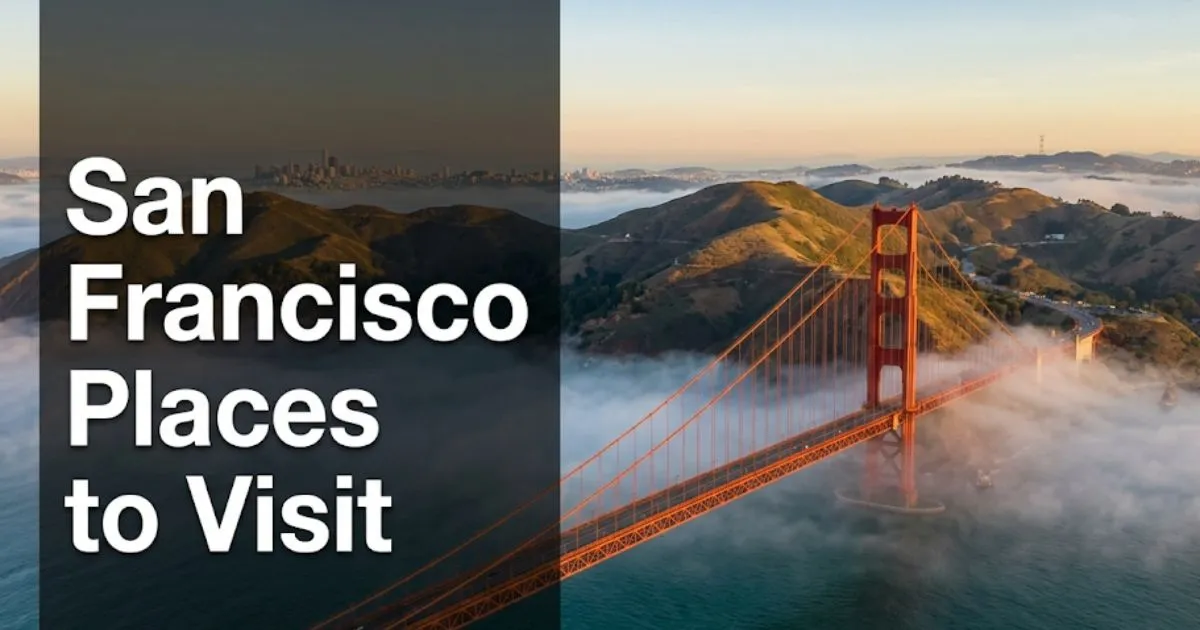
San Francisco Places to Visit: The 2026 Insider Guide

San Francisco places to visit range from genuinely world-defining landmarks to neighborhood streets that most tourists never find. This guide covers both, with honest assessments of what earns its reputation and what does not.
The city spans roughly seven miles by seven miles but contains twelve distinct neighborhoods with entirely different characters. The San Francisco Travel Association reports the city welcomed over 24 million visitors in recent years, yet most follow the same three-block tourist circuit.
This guide covers every major attraction, the best neighborhoods by traveler type, a 3-day itinerary framework, honest seasonal guidance, and the logistics most travel content ignores. Use it to build an actual trip, not a highlight reel.
San Francisco Places to Visit: What Makes This City Different
San Francisco places to visit reward travelers who understand the city’s geography before they arrive. The city divides into distinct microclimates, radically different neighborhood cultures, and terrain that varies from flat waterfront to 300-foot hills within walking distance.
This is not a city you can experience adequately by staying in one neighborhood. The difference between the Mission District at noon and the Outer Sunset at noon is the difference between two entirely separate cities.
The fog is real. The hills are real. The transit system is functional but requires learning. Travelers who understand these three facts enjoy San Francisco thoroughly. Travelers who don’t spend their trip cold, lost, and frustrated at Fisherman’s Wharf.
Insider Tip:
- The city’s microclimate geography means Dolores Park in the Mission can be 72 degrees and sunny while Ocean Beach sits under dense fog simultaneously.
- Most visitors dress for California warmth. Bring a layer regardless of the season.
- Solo travelers find San Francisco unusually easy to navigate alone due to compact, walkable neighborhoods connected by functional public transit.
Top Places to Visit in San Francisco
The top places to visit in San Francisco include the Golden Gate Bridge, Alcatraz Island, the Ferry Building Marketplace, Golden Gate Park, the de Young Museum, and the Mission District’s food corridor along 24th Street.
That list is accurate. The sequence in which you visit, and when during the day you go, changes the experience dramatically.
| Attraction | Best For | Cost Range | Booking Required | Best Time to Go |
|---|---|---|---|---|
| Golden Gate Bridge (walk) | All profiles | Free | No | After 11am (fog clears) |
| Alcatraz Island | History lovers, adults | $40-$50 per adult approx. | Yes, 4-8 weeks ahead | First morning ferry |
| Ferry Building Marketplace | Foodies, couples | Free entry, food varies | No | Saturday morning |
| de Young Museum | Culture seekers | $15-$25 approx. | No | Weekday morning |
| California Academy of Sciences | Families | $30-$45 approx. per adult | Weekends recommended | Early opening |
| Dolores Park | Solo, couples, locals | Free | No | Sunny weekend afternoon |
| Marin Headlands overlook | Couples, photographers | Free | No | After noon for clear views |
Families with children will find the California Academy of Sciences and Exploratorium (Pier 15) the most genuinely engaging attractions. Both have hands-on elements that hold children’s interest far longer than bridge walks or historic island tours.
Budget travelers can experience the Golden Gate Bridge walk, Dolores Park, the Ferry Building’s free public market hall, and multiple Golden Gate Park attractions without spending on admission.
Best Places to Visit San Francisco for a First Trip
The best places to visit in San Francisco on a first trip are the Golden Gate Bridge, at least one inner neighborhood (Mission or North Beach), Golden Gate Park, and the Ferry Building. Alcatraz is worth adding if you book in advance.
The mistake most first-timers make is spending too much time at Fisherman’s Wharf. It is a functioning working waterfront that became entirely tourist-oriented decades ago. The sourdough and crab are real. The “experience” of the wharf is chain restaurants and gift shops.
3-Day San Francisco Itinerary Framework:
Day 1: Waterfront and Landmarks
- Arrive early at the Ferry Building Marketplace for coffee and pastry from Acme Bread Company
- Walk the Embarcadero north toward Pier 39 for bay views (skip the shops)
- Take the historic F-line streetcar or walk to Fisherman’s Wharf for clam chowder in sourdough from Boudin Bakery — one experience, then move on
- Afternoon walk or bike across the Golden Gate Bridge (bike rentals available near Fort Mason)
- Sunset at Crissy Field or the Marin Headlands lookout for the bridge from across the water
Day 2: Neighborhoods and Culture
- Morning at the Mission District: breakfast at La Lengua on 24th Street, then La Palma Mexicatessen for fresh tortillas
- Walk 24th Street east and Dolores Street north through Dolores Park
- Afternoon: de Young Museum in Golden Gate Park, followed by the Japanese Tea Garden next door
- Evening: North Beach for dinner at Tosca Café, then a drink at Vesuvio Saloon on Columbus Avenue
Day 3: Island or Day Trip
- Alcatraz morning tour (pre-booked) or BART to Sausalito for the ferry back across the bay
- Afternoon in Chinatown or Japantown Peace Plaza
- Final evening in the Castro or Haight-Ashbury
San Francisco Neighborhoods to Visit
San Francisco’s neighborhoods are the real attraction. Each one has a distinct character that a single day’s exploration cannot fully cover.
| Neighborhood | Character | Best For | Signature Experience |
|---|---|---|---|
| Mission District | Latino culture, murals, food | Foodies, couples, solo travelers | 24th Street taqueria corridor, Dolores Park |
| North Beach | Italian-American, Beat Generation | Literary travelers, couples | City Lights Bookstore, Vesuvio, Tosca Café |
| Haight-Ashbury | 1960s counterculture, vintage shops | History-curious, solo travelers | Upper Haight boutiques, Buena Vista Park |
| Outer Sunset | Surfer-local, fog-wrapped, authentic | Experienced repeat visitors | Irving Street cafés, Ocean Beach |
| Castro | LGBTQ+ history and community | LGBTQ+ travelers, all profiles | Castro Theatre, Harvey Milk Plaza |
| Chinatown | Dense, commercial, historic | First-timers, families | Grant Avenue, Waverly Place temples |
| Japantown | Quieter, cultural, authentic | Couples, culture seekers | Japan Center, Kinokuniya bookstore |
| Nob Hill | Elegant, steep, historic | Couples, seniors (cable car access) | Grace Cathedral, Top of the Mark view |
The San Francisco Travel Association identifies the Mission District as the city’s most concentrated food destination, with the highest density of James Beard-recognized chefs and legacy taquerias in any single neighborhood.
Seniors and accessibility travelers should note that neighborhoods like Nob Hill and Telegraph Hill involve significant grade changes. The Castro, Mission, and Chinatown are flatter and more manageable. Cable Cars provide accessible transport to Nob Hill and Fisherman’s Wharf.
Cool Places to Visit in San Francisco Beyond the Tourist Trail
The most rewarding places to visit in San Francisco for experienced travelers include the Outer Sunset’s Irving Street corridor, the Lands End Labyrinth trail above the Pacific, and Fort Mason’s cultural complex on the northern waterfront.
These are not obscure. They are simply not on the standard tourist circuit.
Places Locals and Repeat Visitors Choose:
- Tartine Manufactory on Alabama Street in the Mission: the evolved version of the original Tartine Bakery, with a full restaurant and coffee program
- Lands End Trail: a 3.4-mile coastal path from the Legion of Honor museum to the ruins of the Sutro Baths, with direct Pacific Ocean views and a mosaic labyrinth art installation
- Fort Mason Center for Arts and Culture: a converted WWII military supply base now housing independent theaters, galleries, and one of the city’s best farmers’ markets (Saturday mornings, year-round)
- Clarion Alley in the Mission: a single city block of continuously updated political murals maintained by local artists — more honest and less commercial than the city’s official Balmy Alley mural tour
- Irving Street in the Outer Sunset: six blocks of neighborhood cafés, Vietnamese and Burmese restaurants, and surf shops where tourists are a rarity
- Aquatic Park Bathhouse: a 1930s Art Deco building on the waterfront near Ghirardelli Square, free to enter, with a curved beach popular with cold-water swimmers year-round
Condé Nast Traveler has identified the Outer Sunset as one of San Francisco’s most genuinely local neighborhoods for visitors seeking the city beyond its tourist geography. The fog arrives earlier here than anywhere else in the city.
Couples will find Lands End at sunset among the city’s most atmospheric experiences. Solo travelers find the Outer Sunset’s café culture, particularly along Irving Street between 7th and 9th Avenues, unusually welcoming for unhurried solo afternoons.
Key Takeaway: Plan outdoor Golden Gate Bridge and coastal activities for the afternoon, not the morning. Summer fog in San Francisco is heaviest before noon and typically clears by early afternoon in most neighborhoods.
Places to Visit in SF for First-Timers: A Practical Framework
First-timers visiting places in SF should organize their trip by neighborhood zones, not individual attractions. San Francisco’s geography means crossing the city repeatedly wastes hours better spent exploring one area deeply.
The city divides naturally into three zones for first-visit planning. The Northern Waterfront zone includes Fisherman’s Wharf, the Embarcadero, Coit Tower, and the Ferry Building. The Central Park and Culture zone covers Golden Gate Park, the Haight, and the de Young. The Southern Neighborhoods zone contains the Mission, Dolores Park, and the Castro.
First-Timer Practical Checklist:
- Purchase Alcatraz tickets at least four weeks in advance through Alcatraz Cruises (the National Park Service’s only authorized vendor)
- Load a Clipper Card for seamless Muni and BART transit — available at SFO station on arrival
- Download the SFMTA Muni app for real-time transit tracking
- Reserve Muir Woods timed-entry parking through Recreation.gov if going by car
- Plan morning activities in neighborhoods sheltered from fog (Mission, Castro, Haight) and afternoon activities near the coast and bay
- Confirm museum opening days before visiting — several major institutions close on Mondays or Tuesdays
For families with children: The Exploratorium at Pier 15 is the most genuinely engaging attraction for ages 6 and up. Budget four hours minimum. The California Academy of Sciences in Golden Gate Park suits a full day for families with children under 12.
For budget travelers: The Cable Car Turnaround at Powell and Market is free to watch. Riding the historic F-Market streetcar the full length of the Embarcadero costs a standard Muni fare and provides a more authentic transit experience than the tourist cable cars at roughly one-fifth the price.
Golden Gate Bridge and the Waterfront
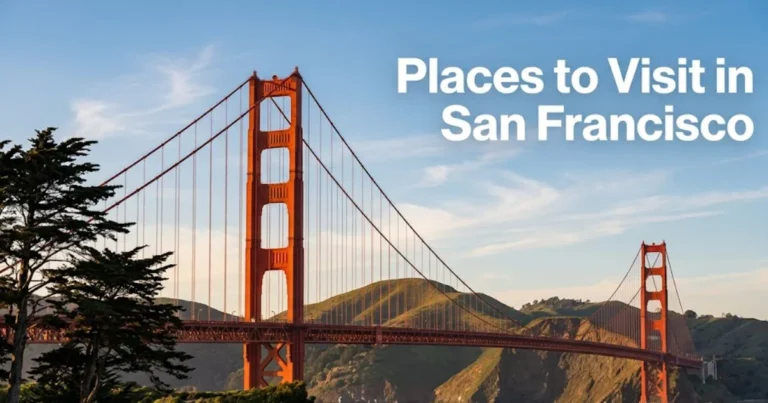
The Golden Gate Bridge is the single most visited attraction in San Francisco and earns its reputation as one of the most architecturally dramatic structures in North America. Walking or cycling across it is a genuinely worthwhile experience.
The walk is 1.7 miles one way across the bridge itself, with another mile or more of approach from most parking areas and trailheads. The full round-trip experience from the south parking area takes approximately two to three hours. Cyclists can rent bikes near Fort Mason or Fisherman’s Wharf and ride across to Sausalito for a one-way trip with a ferry return across the bay.
The fog reality: The bridge sits in one of the foggiest corridors in the city. Summer mornings frequently have zero bridge visibility. Schedule your visit for after noon during June, July, and August.
Waterfront experiences worth your time:
- Crissy Field: a restored tidal marsh with unobstructed Golden Gate Bridge views from the east side, flat and stroller-accessible, free to visit
- Fort Point National Historic Site: a Civil War-era brick fort directly beneath the bridge’s south tower, free to enter, with unique views looking up at the bridge structure
- Marin Headlands overlook: the most photographic angle of the Golden Gate Bridge is from the Marin side, reached via a 10-minute drive north through the tunnel after crossing the bridge
The tourist version of the waterfront experience is a crowded walk on the bridge and then Pier 39 for overpriced clam chowder. The local alternative is Crissy Field east, a picnic from the Ferry Building, and 20 minutes at Fort Point before driving to Marin for the overlook.
Seniors and accessibility travelers: The bridge has a fully paved pedestrian path with no stairs. The approach from the south parking plaza involves a moderate incline. Crissy Field is entirely flat and wheelchair-accessible.
According to the Golden Gate Bridge Highway and Transportation District, the pedestrian path on the east sidewalk is open daily with hours that vary by season. Verify current hours and which sidewalk is open before visiting.
Alcatraz Island: Booking, Timing, and What to Expect
Alcatraz Island requires advance ticket purchase through Alcatraz Cruises, the only National Park Service-authorized operator, and sells out four to eight weeks in advance during peak season. Do not arrive expecting same-day tickets.
The island tour genuinely earns its reputation. The audio tour narrated by former guards and inmates is one of the best self-guided audio experiences at any US historic site. The ferry ride across the bay adds genuine atmosphere.
How to Book Alcatraz Correctly:
- Go to the Alcatraz Cruises website (the official NPS-authorized vendor) directly
- Choose the Day Tour (most complete experience) or the Early Bird ferry for smaller crowds
- Book at least four weeks in advance for summer visits; six to eight weeks for July and August
- Select the first morning ferry departure for the smallest crowds on the island
- Allow four hours total: ferry crossing, island tour audio (approximately 45 minutes), self-guided exploration, and return ferry
Tour options:
- Day Tour: the standard experience, includes ferry and audio guide, runs approximately $40 to $50 per adult as of recent years (verify current pricing)
- Night Tour: operates select evenings, covers areas not open during day tours, tickets sell out faster than day tours, runs approximately $47 to $57 per adult as of recent years
- Behind the Scenes Tour: an add-on to the Day Tour covering restricted areas; advance booking required alongside the base ticket
Families with young children: Children under 5 are free. The island’s terrain involves significant walking on uneven ground and stairs. Strollers are impractical on much of the island. The experience suits children ages 8 and up most effectively.
Budget travelers: Alcatraz is one of San Francisco’s few significant paid attractions that is genuinely worth its price. Budget travelers who skip it often regret it. The Night Tour’s premium pricing is not necessary for the full Alcatraz experience.
Golden Gate Park: Activities and Attractions
Golden Gate Park is one of the largest urban parks in the United States, stretching three miles from Haight-Ashbury to Ocean Beach, and contains two world-class museums, a Japanese garden, a botanical garden, a bison paddock, and multiple lakes within its 1,017 acres.
Most visitors spend two hours at the park. Experienced visitors spend a full day.
Golden Gate Park by traveler profile:
| Activity | Best For | Cost Range | Notes |
|---|---|---|---|
| de Young Museum | Culture seekers, couples | $15-$25 approx. | Closed Mondays typically |
| California Academy of Sciences | Families, curious adults | $30-$45 approx. | Book weekend tickets in advance |
| Japanese Tea Garden | Couples, solo travelers | $8-$12 approx. | Weekday mornings are quietest |
| Conservatory of Flowers | All profiles | $8-$12 approx. | Victorian greenhouse, rain-independent |
| San Francisco Botanical Garden | Budget, seniors | Free for SF residents, fee for visitors | 55 acres, flat walking paths |
| Bison Paddock (western end) | Families, all profiles | Free | A herd of American bison, genuinely surprising |
| Stow Lake rowboat rentals | Couples, families | $20-$30 per hour approx. | Boat rental on-site |
The de Young Museum’s permanent collection of American art from colonial-era through contemporary periods is among the strongest on the West Coast. The rooftop observation tower is free with museum admission and provides 360-degree views across the park and city.
The local alternative to the California Academy of Sciences for budget travelers is the Botanical Garden, which is free for San Francisco residents and charges a modest fee for visitors. Its native plant section is one of the most comprehensive in the western United States.
Seniors and accessibility travelers: The park’s eastern half, around the museums and Japanese Tea Garden, is mostly flat and paved. The western half near Ocean Beach becomes sandier and less stroller and wheelchair-friendly.
Key Takeaway: Golden Gate Park’s bison paddock at the western end is free, genuinely surprising, and visited by almost no tourists despite being 10 minutes from the main museums. Go.
Mission District, San Francisco
The Mission District is San Francisco’s densest food neighborhood and its most culturally layered. Its core corridor runs along 24th Street between Potrero Avenue and Mission Street, with murals on nearly every alley wall and a taqueria every half block.
This is the neighborhood locals eat dinner in when they want to eat well without spending $100 per person.
Mission District food and experience guide:
- La Palma Mexicatessen (24th Street at Bryant): fresh-made tortillas, tamales, and carnitas sold by weight. A genuine neighborhood institution, not a restaurant.
- Tartine Bakery (18th Street at Guerrero): considered by multiple national food publications the finest bread bakery in the country. Arrive by 4pm for the country loaf release. Expect a line.
- Bi-Rite Creamery (18th Street, one block from Tartine): small-batch ice cream made from locally sourced dairy. The salted caramel and honey lavender flavors are worth the consistent line.
- Dandelion Chocolate (Valencia Street): a bean-to-bar chocolate factory with a café and production floor visible to visitors
- Balmy Alley: the most accessible outdoor mural gallery in the city, a single residential alley between 24th and 25th Streets with community-painted political murals spanning decades
Dolores Park (Dolores Street at 18th) is the Mission’s public living room. On any sunny weekend afternoon, the park fills with neighborhood residents, street food vendors, and people-watchers of every San Francisco stripe. It costs nothing and captures more of the city’s actual character than any paid attraction.
Couples find the 18th Street corridor between Valencia and Dolores specifically romantic in the late afternoon. Families with children will find the playground at the north end of Dolores Park well-equipped and heavily used by local families.
The tourist version of the Mission is a burrito tour. The local version adds Clarion Alley for contemporary street art, a coffee at Four Barrel’s successor cafés along Valencia, and an evening at the Mission’s independent wine bars on 20th Street.
North Beach and Chinatown, San Francisco
North Beach is San Francisco’s Italian-American neighborhood and the home of the Beat Generation literary movement. Its character is defined by Columbus Avenue, which runs diagonally through the neighborhood and connects the waterfront to the base of Coit Tower.
City Lights Bookstore (261 Columbus Avenue) is not optional. It is one of the most historically significant independent bookstores in the United States, still operating as a genuine literary bookstore with deep Beat Generation archives and a poetry room upstairs. Entry is free.
Vesuvio Saloon (255 Columbus, directly across the alley from City Lights) was the after-bookstore destination for Jack Kerouac, Allen Ginsberg, and Dylan Thomas. It functions today as an atmospheric bar that takes this history seriously without being a museum. Afternoon and early evening are the best times.
Tosca Café (242 Columbus) is one of the city’s most storied restaurants, now operated under a restaurateur who revived its classic Italian-American menu without making it nostalgic kitsch. The house cappuccino is made with whiskey, chocolate, and steamed milk. Reserve for dinner.
Chinatown begins at the Grant Avenue gate at Bush Street and is the oldest and most densely populated Chinatown in North America. Grant Avenue is the tourist side: souvenir shops and bubble tea. Waverly Place (one block west, parallel to Grant) is the locals’ side, with painted balconies and working temples that have operated continuously since the 1850s.
Coit Tower (1 Telegraph Hill Boulevard) rises above both neighborhoods and provides the most complete panoramic view of the northern waterfront. The interior murals, painted by WPA artists in the 1930s, are the most underappreciated public art in the city. Admission to the murals is free; the tower elevator has a modest fee.
For budget travelers: City Lights, Vesuvio, Chinatown’s Waverly Place, and Coit Tower’s murals are all free or near-free. A morning in North Beach costs little beyond coffee and a pastry.
Outer Sunset and Haight-Ashbury, SF
The Outer Sunset is the neighborhood San Francisco residents move to when they want to live in the city but away from tourists. Its main commercial street, Irving Street between 7th and 19th Avenues, contains some of the city’s most interesting cafés, Vietnamese and Burmese restaurants, and the kind of neighborhood shops that disappeared from more central neighborhoods twenty years ago.
This is not a neighborhood with one headline attraction. It rewards wandering, particularly on a day when the fog breaks and Ocean Beach is accessible on foot from Irving Street’s western end.
Haight-Ashbury is two distinct zones that most visitors confuse. Upper Haight (Haight Street from Masonic to Stanyan) is the historic 1967 Summer of Love corridor, now lined with vintage clothing stores, smoke shops, and a few genuine counterculture survivors. Lower Haight (Haight Street from Divisadero to Octavia) is where the neighborhood’s actual residents eat and drink, with less historical performance and more functional local businesses.
For first-timers: Upper Haight is worth one pass on foot for context. The intersection of Haight and Ashbury is genuinely the address. Then spend your time in Lower Haight or walk north into the Panhandle (the narrow park strip that leads east from Golden Gate Park) for a neighborhood pace few tourists find.
Surfers and outdoor travelers should know that Ocean Beach at the western end of the Outer Sunset is one of the most active surfing beaches in Northern California, with consistent but powerful and often dangerous shore break. Observing is rewarding; swimming is actively dangerous here due to rip currents and cold water.
Solo travelers find the Outer Sunset’s café culture specifically suited to an unhurried solo afternoon. The neighborhood moves at a pace the rest of San Francisco often does not.
According to Condé Nast Traveler, the Outer Sunset represents one of the most authentically neighborhood-scale experiences available in a major US city, specifically because its character has not been altered by tourism infrastructure.
Key Takeaway: The Outer Sunset’s Irving Street is where San Francisco actually lives. One afternoon there is worth three hours at Fisherman’s Wharf for any traveler who cares about genuine neighborhood character.
San Francisco Day Trips and Bay Area Escapes
San Francisco’s position within the Bay Area makes it one of the best-positioned US cities for day trips. Within two hours, you can reach a redwood forest, wine country, a remote ocean beach, or a ferry-accessed island.
| Day Trip | Distance/Time | Best For | Key Logistics |
|---|---|---|---|
| Muir Woods National Monument | 20 miles, ~45 min | Families, nature lovers | Advance timed-entry reservation required Mar-Nov via Recreation.gov |
| Sausalito | 8 miles via ferry | Couples, all profiles | Golden Gate Ferry from the Ferry Building |
| Angel Island State Park | Ferry from Tiburon or SF | Cyclists, history enthusiasts | Bikes recommended; ferry required |
| Napa Valley | 55 miles, ~1.5 hrs | Couples, wine travelers | Car recommended; designated driver essential |
| Point Reyes National Seashore | 40 miles, ~1.5 hrs | Hikers, wildlife watchers | No timed entry, but arrive early; cell service limited |
| Berkeley | 15 miles via BART | Foodies, culture seekers | BART from Embarcadero to Downtown Berkeley is 25 minutes |
| Santa Cruz | 75 miles, ~1.5 hrs | Beach travelers, families | Car required; beaches are warmer than San Francisco |
Muir Woods contains old-growth coastal redwoods, some over 250 feet tall. The main canyon trail is paved and wheelchair-accessible. The advance reservation system requires either a timed-entry parking pass or a shuttle reservation from the Sausalito transfer point. Walk-in access is not reliably available from March through November. Book through Recreation.gov.
The local alternative to the Muir Woods tourist experience is the Tennessee Valley Trail in the Marin Headlands, which reaches a Pacific cove in approximately 3 miles round-trip through open hillside terrain, without the redwood scale but also without the crowds.
Budget travelers should note that the Sausalito ferry and Berkeley via BART are the two most cost-effective day trips from San Francisco. Both deliver genuinely distinct experiences without car rental costs.
Free and Budget-Friendly Places in San Francisco
San Francisco is expensive but not without significant free content. The city’s public spaces, many neighborhoods, and several cultural institutions offer genuine experiences at no cost.
Free places to visit in San Francisco:
- Golden Gate Bridge walk: the pedestrian path is free; parking has a fee but transit access is free via Muni bus
- Golden Gate Park (grounds): free to enter; individual attractions within the park charge admission
- Dolores Park: free; one of the city’s most socially active public spaces
- Lands End Trail: free coastal hiking trail with Pacific Ocean and bay views
- Coit Tower murals: free to view the ground-floor WPA murals without riding the tower
- City Lights Bookstore: free to browse; no obligation to purchase
- Clarion Alley murals (Mission District): free, continuously updated street art
- Fort Point National Historic Site: free, open most weekdays and weekends
- Aquatic Park Bathhouse: free to enter this Art Deco National Historic Landmark
- Ferry Building Marketplace: free to browse; food costs vary by vendor
- Waverly Place, Chinatown: free to walk and observe the historic painted balconies and temples
Budget dining options:
- La Palma Mexicatessen (24th Street, Mission): freshly made tamales and carnitas for well under $15
- Any of the 24th Street taquerias: a super burrito feeds two people on a tight budget
- Irving Street Vietnamese restaurants in the Outer Sunset: full pho bowls and banh mi at neighborhood prices
For budget travelers specifically: The San Francisco Botanical Garden charges a modest non-resident fee but is free to San Francisco residents with ID. The de Young Museum’s observation tower is free with museum admission and free to access from the parking level on specific days.
Best Time to Visit San Francisco
The best time to visit San Francisco is September through November, when the city’s famous marine layer retreats, temperatures reach their annual warmest, and summer tourist crowds thin after Labor Day.
This is the opposite of what most people expect. San Francisco’s summer is the foggiest period of the year, not the warmest.
San Francisco seasonal guide:
| Season | Months | Weather | Crowds | Notes |
|---|---|---|---|---|
| Fall (Best) | September-November | 62-72°F, clear, sunny | Moderate, declining | Hotel rates drop after Labor Day; best outdoor conditions |
| Spring (Second Best) | April-May | 55-65°F, mixed, some fog | Moderate | Active festival calendar; Pride Weekend in June brings high prices |
| Summer (Most Visited, Worst Weather) | June-August | 55-65°F, heavy morning fog | Peak | Karl the Fog is real; dress in layers; Golden Gate Bridge often invisible before noon |
| Winter (Quietest) | December-February | 45-58°F, occasional rain | Low | Best hotel rates; fewer crowds; rain is real but not constant |
Karl the Fog is the local name for the city’s marine layer, which arrives from the Pacific through the Golden Gate corridor. It is not light mist. In June and July, it can sit all day in neighborhoods west of Twin Peaks. In September, it is largely gone before 9am most days.
The Bay to Breakers footrace in May and Pride Weekend in June both cause hotel rates to spike and should be factored into planning. Book six to eight weeks ahead for those weekends.
Families with children planning summer visits should know that San Francisco’s summer fog can make outdoor activities genuinely cold for young children, particularly near the ocean and bay. Pack a warm layer for every family member regardless of the departure city’s summer temperature.
Key Takeaway: If your San Francisco trip is flexible, target late September or October. You will get the city’s best weather, post-summer-crowd hotel rates, and outdoor activities that actually look like California.
San Francisco Practical Logistics and Transit
Getting around San Francisco without a car is entirely practical for most itineraries. The SFMTA (San Francisco Municipal Transportation Agency) operates the Muni bus network, Muni Metro light rail, historic streetcars, and the famous Cable Cars as a single integrated transit system.
Airport to city transit:
- BART (Bay Area Rapid Transit) from SFO directly to downtown takes approximately 30 minutes and costs $9 to $12 one way (verify current fares). Take it. The alternative is a $50 to $70 taxi or rideshare.
- From Oakland International Airport (OAK): BART to downtown Oakland, then transfer, approximately 45 to 60 minutes total, slightly lower fare.
In-city transit options:
| Transit Mode | Best Use | Cost Range | Notes |
|---|---|---|---|
| Muni Bus and Metro | Citywide movement | ~$3 per ride; multi-day passes available | Clipper Card recommended |
| Cable Cars | Nob Hill, Fisherman’s Wharf tourist circuit | $8 per ride approx. | Scenic; not practical for regular transit |
| Historic F-Market Streetcar | Embarcadero to Castro | Standard Muni fare | Better scenic value than Cable Car at fraction of price |
| BART | Airport, Berkeley, Oakland | Fare by distance | Not extensive within San Francisco itself |
| Bicycle | Waterfront, Golden Gate Park, Mission | $15-$40 daily rental approx. | Excellent on flat routes; hills challenge most visitors |
| Rideshare | Late night, luggage, hills | $15-$40 per trip typical | Parking surge pricing in tourist zones |
Parking reality: Driving in San Francisco is not recommended for first-timers. Garage parking runs $30 to $60 per day in tourist areas. Street parking enforcement is aggressive. Many tourist zones have 1-hour limits or residential permit requirements. If you rent a car, plan to park it at your hotel for the first two days and use transit.
For seniors and accessibility travelers: The Muni system has accessible buses on most major routes. Cable Cars are not wheelchair accessible. The F-Market streetcar has accessible boarding at most stops.
San Francisco Safety and Practical Tips for Visitors
Safety and Practical Warnings for San Francisco Visitors
San Francisco has specific safety and logistical realities that no tourism board mentions but that affect your trip meaningfully.
Key safety and practical facts every visitor should know:
- The Tenderloin district (roughly between Taylor, Turk, Hyde, and Market streets) has a concentrated open drug market and high street-crime rate. Travelers staying near Union Square sometimes wander into the Tenderloin without realizing it. Be aware of the boundary.
- Petty theft from vehicles is common citywide, including tourist parking areas. Never leave valuables visible in a parked car. Not even for five minutes.
- Pickpocket risk is elevated in crowded tourist zones: Fisherman’s Wharf, Chinatown on weekends, and Cable Car boarding areas at Powell and Market.
- Ocean Beach and most Pacific-facing beaches in San Francisco are not swimming beaches. Rip currents are powerful and consistent. Drowning deaths occur every year. Do not swim at Ocean Beach.
- Cold water temperatures (typically 50 to 58°F year-round) make even brief immersion dangerous without a wetsuit.
- The hills are real. Climbing from the waterfront to Nob Hill or Telegraph Hill is physically demanding. Travelers with limited mobility should use Cable Cars or transit rather than attempting the grade on foot.
- Fog and wind near the coast create genuine cold-weather conditions even in July. A 55-degree, wind-driven fog at Ocean Beach feels colder than that temperature suggests.
- Cell service is unreliable in the western neighborhoods (Outer Sunset, Outer Richmond) and on trails at Lands End and Marin Headlands. Download offline maps before leaving your accommodation.
For emergencies in Golden Gate National Recreation Area (which includes Marin Headlands, Fort Point, Alcatraz, and Lands End), contact the National Park Service Golden Gate ranger dispatch.
Frequently Asked Questions About San Francisco Places to Visit
What are the best places to visit in San Francisco for first-timers?
First-timers should prioritize the Golden Gate Bridge walk, Alcatraz Island (booked in advance), the Ferry Building Marketplace, and at least one real neighborhood such as the Mission District or North Beach.
Skip spending more than two hours at Fisherman’s Wharf. It is entirely oriented toward tourists and does not represent the city’s actual character.
Add Dolores Park on any sunny afternoon and the de Young Museum for a full cultural day inside Golden Gate Park.
How far in advance do I need to book Alcatraz tickets?
Book Alcatraz tickets at least four weeks in advance for visits between April and October.
For July and August, six to eight weeks ahead is the safer target, as the most popular morning ferry departures sell out that far in advance.
Tickets are available only through Alcatraz Cruises, the National Park Service’s authorized vendor, not at the ferry terminal on the day of your visit.
Is summer really foggy in San Francisco?
Yes. San Francisco’s summer marine layer, locally called Karl the Fog, is heaviest from June through August.
Morning fog in June and July can last until early afternoon, particularly near the coast, the Golden Gate Bridge, and neighborhoods west of Twin Peaks.
September is the first month when fog reliably burns off before 10am most days, which is one reason fall is genuinely the city’s best season for visitors.
What neighborhoods should I stay in when visiting San Francisco?
The Mission District suits travelers who prioritize walkable dining, neighborhood character, and easy transit access. Union Square suits first-timers who want proximity to major transit hubs and downtown attractions.
North Beach suits travelers who want to walk to Chinatown, Coit Tower, and the waterfront. The Castro suits LGBTQ+ travelers and anyone who wants a lively, neighborhood-scale experience outside the tourist center.
Avoid booking accommodation in the Tenderloin solely on the basis of lower room rates. The neighborhood’s street conditions affect quality of life meaningfully for visitors.
What is the best time of year to visit San Francisco?
The best time to visit San Francisco is September through November.
Fall brings the city’s warmest and clearest weather, post-summer crowds, and lower hotel rates than the peak June through August period.
April through May is the second-best window: mild temperatures, an active events calendar, and lower crowds than summer — though Pride Weekend in late June causes a sharp price spike that should be planned around.
How do I get around San Francisco without a car?
BART connects SFO airport to downtown in approximately 30 minutes. Within the city, Muni buses, Muni Metro light rail, and the historic F-Market streetcar cover most destinations tourists need.
A Clipper Card loaded with credit at the SFO BART station gives you access to all transit modes at standard fares.
Cable Cars are scenic but expensive per ride and primarily useful for the Nob Hill and Fisherman’s Wharf circuit. The F-Market streetcar runs the same waterfront corridor at a fraction of the Cable Car fare.
Plan Your San Francisco Trip with This in Mind
Start with Alcatraz. Book it the day you confirm your travel dates. Everything else in San Francisco can be adjusted on the fly. Alcatraz cannot.
The single biggest improvement you can make to a San Francisco itinerary is scheduling outdoor coastal activities for the afternoon and reserving your mornings for Mission District breakfasts, museum openings, and neighborhood walks in the fog-sheltered eastern neighborhoods.
Travel conditions, pricing, museum hours, Muir Woods timed-entry requirements, and Alcatraz ticket availability all change. Verify key logistics directly with the San Francisco Travel Association, the National Park Service, and individual venues before your departure date.
San Francisco rewards travelers who move beyond the waterfront tourist circuit. The city’s most memorable experiences, from Tartine’s afternoon bread to Lands End at dusk to an Irving Street afternoon in the Outer Sunset, are consistently available to anyone willing to follow the locals’ geography rather than the tourist map.