Things to Do in Ecuador: The 2026 Traveler’s Guide

Ecuador packs four completely distinct ecosystems into a country smaller than Nevada. The things to do in Ecuador range from snorkeling with sea lions in the Galápagos to hiking beside active volcanoes in the Andes.
The country sits at the intersection of the Amazon basin, the Andes highlands, the Pacific coast, and one of the world’s most significant island wildlife systems. According to the Ministerio de Turismo del Ecuador, the country hosts more than 1,600 bird species, more per square mile than any other nation.
This guide covers every major region with specific named places, honest cost context, and the practical logistics that other Ecuador content ignores. You will leave this article knowing exactly what to do, where to go first, and what to skip.
Things to Do in Ecuador: A Regional Overview
Ecuador is the most geographically concentrated destination in South America. You can move from Andean highlands to Pacific beaches to Amazon jungle within a single day of travel.
The country divides naturally into four travel regions. The Sierra covers the Andean highlands and runs the length of the country, anchored by Quito and Cuenca. The Costa encompasses the Pacific lowlands and coastline. The Oriente is the Amazonian jungle east of the Andes. Los Galápagos is the island group 600 miles offshore, sitting in a league of its own.
Each region requires different logistics and suits different traveler profiles. Bundling all four into a single trip is achievable in two weeks but requires intentional routing.
Ecuador uses the US dollar, which eliminates currency complications for American travelers. This makes budget management straightforward in a way that neighboring Peru and Colombia do not offer.
Most visitors underestimate the altitude. Quito sits at 9,350 feet above sea level. Arriving without an acclimatization plan affects the first two days of almost every highland itinerary.
| Region | Primary Appeal | Best For | Altitude Note |
|---|---|---|---|
| Sierra (Andes) | Volcanoes, colonial cities, markets | Adventure, culture | High altitude; adjustment needed |
| Costa (Pacific Coast) | Beaches, surfing, seafood | Beach travelers, surfers | Sea level; no adjustment needed |
| Oriente (Amazon) | Jungle lodges, wildlife, rivers | Nature, wildlife | Low elevation; heat and humidity |
| Galápagos Islands | Wildlife, snorkeling, conservation | All profiles | Sea level; advance booking essential |
Insider Tip:
- Fly into Guayaquil if you want to start with the coast or Galápagos, avoiding altitude shock entirely
- Fly into Quito (UIO) if the Andes and Otavalo are your first priority, then plan two rest days before hiking
- Budget travelers gain the most by concentrating on the Sierra and Oriente, where costs are lowest
Top Things to Do in Ecuador
The top things to do in Ecuador, ranked by traveler consensus and experiential quality, include visiting the Galápagos Islands, hiking the Quilotoa Crater, exploring Quito’s Old Town, and overnighting in an Amazon jungle lodge.
Beyond those headline experiences, the Otavalo artisan market at Plaza de los Ponchos operates every Saturday and is one of the largest and most authentic indigenous markets in South America. The Baños de Agua Santa adventure corridor offers everything from zip-lining above the Pastaza River gorge to soaking in thermal pools beneath an active stratovolcano.
National Geographic Traveler has identified the Galápagos as one of the top wildlife destinations on the planet. But the Ecuador mainland delivers experiences that rival it for a fraction of the cost.
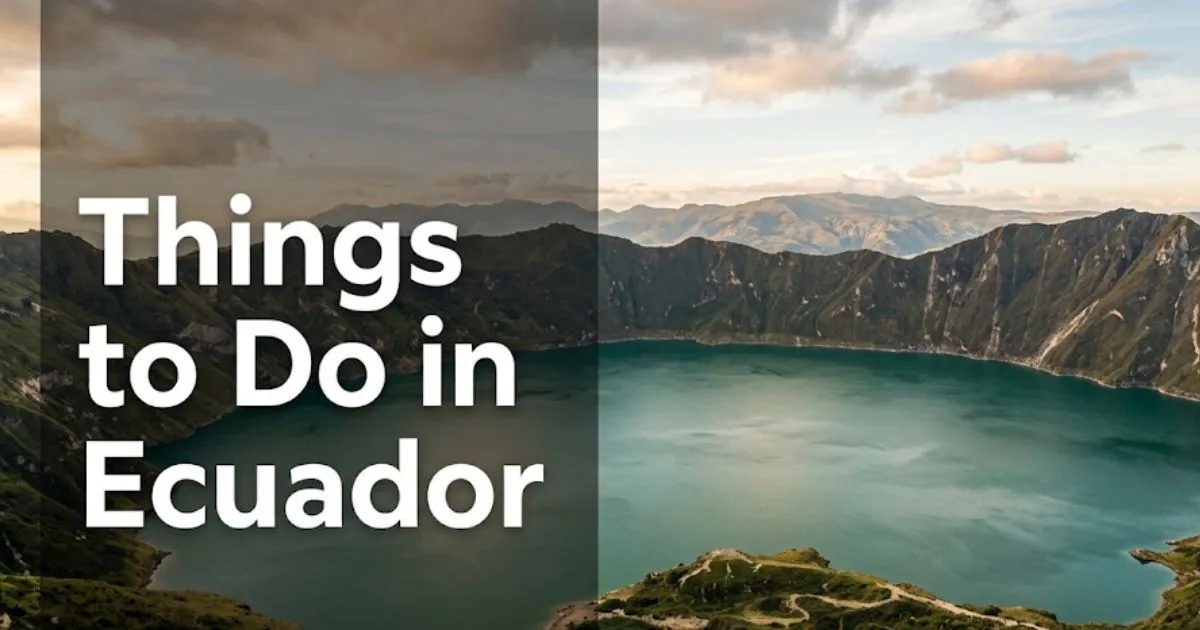
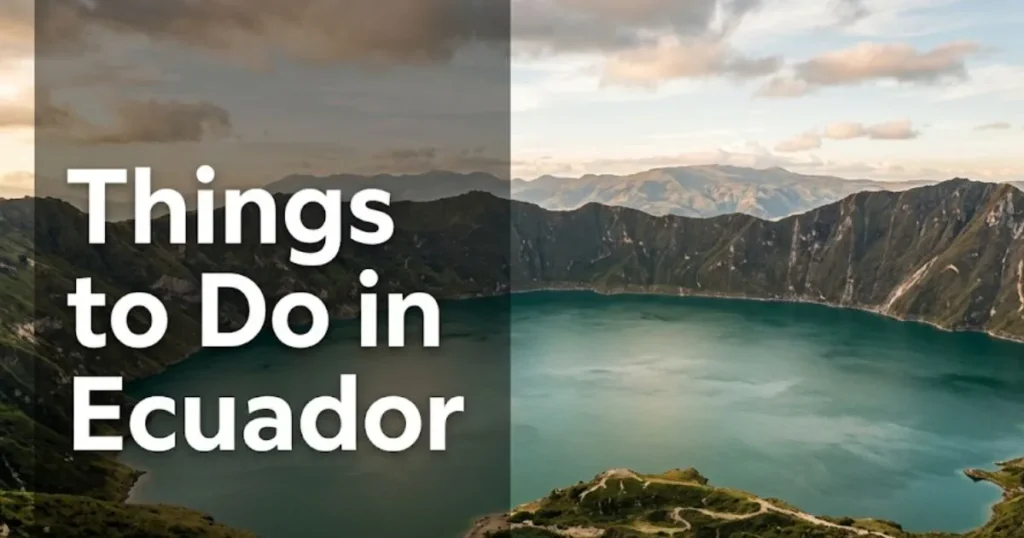
The Quilotoa Crater Lake sits at 12,841 feet. Its turquoise water inside a collapsed volcanic caldera is genuinely one of the most visually arresting landscapes in South America. This is a place that earns its reputation.
For budget travelers, the mainland Ecuador circuit (Quito, Otavalo, Quilotoa, Baños, Cuenca) runs roughly $40 to $70 per day including accommodation, food, and transport. The Galápagos requires a separate budget of $150 to $400 per day depending on cruise type.
Couples will find the combination of Quito’s colonial architecture at night and the highland countryside by day genuinely romantic. The Galápagos sunrise from a liveaboard deck is one of the most intimate experiences available to travelers in this hemisphere.
Suggested 2-Week Ecuador Itinerary Framework:
- Day 1 to 2: Arrive Quito, acclimatize, explore Old Town gently
- Day 3: Day trip to Otavalo market and Cuicocha Crater Lake
- Day 4: Cotopaxi National Park day trip or overnight
- Day 5: Travel to Baños via the highland road
- Day 6: Adventure day in Baños (swing, rafting, waterfall route)
- Day 7: Travel south to Cuenca; afternoon Old Town walk
- Day 8: Explore Cuenca, Ingapirca ruins day trip option
- Day 9: Fly from Cuenca or return to Quito, fly to Galápagos (Baltra or San Cristóbal)
- Day 10 to 13: Galápagos Islands exploration by day tour or liveaboard
- Day 14: Return flight from Galápagos via Guayaquil or Quito
Things to Do in Quito Ecuador
The best things to do in Quito center on El Centro Histórico, one of Latin America’s best-preserved colonial old towns and a UNESCO World Heritage Site since 1978.
La Ronda street is the Old Town’s most atmospheric pedestrian corridor. Narrow, colonial, and lantern-lit by evening, it concentrates artisan shops, traditional bars serving canelazo (hot cinnamon and aguardiente), and live folk music on weekends. Most visitors only see the Plaza Grande and the Cathedral. La Ronda is where Quito actually feels lived-in and local.
The Teleférico Quito cable car ascends from roughly 10,236 feet to 13,287 feet on the flank of Pichincha volcano. On a clear day, it frames views of the entire city and surrounding volcano corridor that no ground-level experience matches. Rides cost approximately $8 to $10 per adult as of recent visits; verify current pricing before going.
Families with children will find the Teleférico genuinely engaging at any age. The top station has walking trails at altitude; children under 10 may feel winded quickly. Keep the summit visit brief on arrival day.
The Mitad del Mundo monument complex, 14 miles north of central Quito near San Antonio de Pichincha, sits on the equatorial line. It is honestly more of a tourist infrastructure destination than a profound experience. The smaller nearby Museo Intiñan offers a more genuinely interactive equatorial science experience and is often preferred by repeat visitors.
Insider Tip:
- Attend Sunday mass at the Basílica del Voto Nacional for interior access without entry fees
- The viewpoint at Parque Itchimbia above Old Town is free and consistently less crowded than the Teleférico
- Solo travelers: La Mariscal nightlife district is lively but has a higher theft rate after midnight; keep valuables secured
Quito Historic Center and Old Town
Quito’s Historic Center is the best-preserved Spanish colonial old town in the Americas. The UNESCO World Heritage Committee first recognized it in 1978, making it one of the earliest urban heritage sites globally.
The concentration of churches, convents, and plazas within a walkable grid is genuinely dense. The Iglesia de la Compañía de Jesús on García Moreno street is considered the most ornate Baroque church in Latin America. Its interior, covered in more than seven tons of gold leaf, takes roughly 45 minutes to genuinely absorb. Admission runs approximately $3 to $5 per person; confirm current pricing at the entrance.
Couples will find the Old Town most atmospheric in the early morning before tour groups arrive and in the evening after 6 p.m. when natural light warms the stone facades. The midday period between 11 a.m. and 2 p.m. is the most crowded.
Seniors and accessibility travelers should note that Old Town Quito is built on uneven cobblestone throughout. Steep streets connect upper and lower districts. Mobility aids work on the main plaza areas but struggle on many side streets. A taxi within the Old Town ($2 to $4 for short hops) solves most mobility challenges.
The Mercado Central on Pichincha street near Old Town is the authentic alternative to the restaurant-heavy tourist zone. Locals eat here daily. The ground-floor food court serves traditional Quito breakfasts (eggs, bread, juice, coffee) for under $3 and lunch plates (soup plus a main) for approximately $2 to $4.
Insider Tip:
- The rooftop bar at Hotel Plaza Grande on Plaza Grande offers the best elevated view of the Cathedral without the Teleférico trip
- Book the Convento de San Francisco free guided tour on Saturday mornings through the church office directly
- Photography is best before 9 a.m. when tour buses have not yet arrived at the main plaza
Key Takeaway: Quito’s Old Town is most rewarding before 9 a.m. and after 6 p.m.; the midday tourist rush at Plaza Grande underdelivers for the time investment.
Things to Do in the Galápagos Islands
The Galápagos Islands deliver the rarest thing in modern travel: genuinely fearless wildlife in a fully intact ecosystem. Animals here have no instinctive fear of humans, making close encounters with sea lions, marine iguanas, blue-footed boobies, and giant tortoises routine rather than exceptional.
Parque Nacional Galápagos administers the islands under strict conservation rules. All visitors must pay a park entrance fee, approximately $100 per adult as of recent years (verify current amount before travel). Most visitor sites require an authorized naturalist guide. This is not optional; it is enforced.
The main islands accessible as day-tour bases are Santa Cruz, Isabela, San Cristóbal, and Fernandina. Puerto Ayora on Santa Cruz is the largest settlement and the logistical hub for day-tour boats. The giant tortoise reserve at the Santa Cruz Highlands is a 20-minute taxi ride from Puerto Ayora and delivers genuinely extraordinary tortoise access for free once inside.
For budget travelers, a land-based strategy using Puerto Ayora as a base and booking day tours locally costs approximately $80 to $150 per day total. Last-minute day-tour spaces open regularly. For premium travelers, liveaboard cruises covering multiple islands cost $200 to $500 per person per night and must be booked 3 to 6 months in advance for high season.
Families with children over age 8 handle Galápagos day tours well. The wildlife is inherently engaging and requires no technical skill. Snorkeling with sea lions at Playa Gardner on Española Island is the single activity most consistently rated transformative by families.
The Galápagos Conservancy reports that visitor numbers are managed through a permit system. Book boat tours and naturalist-guided site visits well in advance for July, August, and December travel.
| Island | Key Experience | Best For | Advance Booking Needed |
|---|---|---|---|
| Santa Cruz | Giant tortoises, Charles Darwin Research Station | All profiles | No, base island |
| Isabela | Marine iguanas, Alcedo volcano | Active hikers | Yes, tours fill up |
| San Cristóbal | Sea lion colony at Playa de Los Lobos | Families, snorkelers | Moderate lead time |
| Española | Blue-footed boobies, albatross colony | Wildlife photographers | 2 to 4 months ahead |
| Fernandina | Flightless cormorants, pristine lava fields | Serious wildlife travelers | Liveaboard access only |
Adventure Activities in Ecuador
Ecuador is one of South America’s most concentrated adventure destinations. Within a single week, a traveler can white-water raft the Toachi River, mountain bike from Cotopaxi base camp, zip-line over the Pastaza River canyon, and surf at Montañita beach.
Baños de Agua Santa is the undisputed adventure hub of the Ecuadorian highlands. Located in the Tungurahua Province where the Andes drop into the Amazon foothills, it concentrates rafting, canyoning, zip-lining, paragliding, and mountain biking within a 10-kilometer radius. Ruta de las Cascadas (Route of the Waterfalls) is a 17-kilometer downhill bike route passing five major waterfalls, including Pailón del Diablo, a 230-foot cascade that is one of Ecuador’s most photographed sites.
Active travelers and adventure couples will find Baños the single most reward-per-day destination in mainland Ecuador. A full adventure day (rafting plus bike route plus thermal pools) costs approximately $40 to $70 per person through local operators.
Cotopaxi volcano offers summit attempts for experienced mountaineers (reaching approximately 19,347 feet) and stunning day hikes to the Refugio José Ribas at approximately 15,750 feet for less technical hikers. The national park entrance requires registration; summit attempts require a licensed high-altitude guide. Verify park status before planning, as volcanic activity has caused periodic closures.
Solo travelers will find Baños particularly well-suited. The adventure tourism infrastructure is strong, operators are accustomed to solo bookings, and the town’s compact layout makes it easy to connect with other travelers at guesthouses and tour agencies.
Insider Tip:
- Book Cotopaxi summit attempts through operators certified by the Federación Ecuatoriana de Andinismo for safety compliance
- Avoid Baños on long Ecuadorian holiday weekends; the town fills with domestic tourists and operator quality drops as demand spikes
- The Casa del Árbol treehouse swing above Baños (the “Swing at the End of the World”) is accessed via a 30-minute uphill walk or short taxi; go early to avoid crowds
Key Takeaway: Baños delivers more adventure variety per day than any other Ecuador mainland destination; plan at least two full days there to do it justice.
Things to Do in Cuenca Ecuador
Cuenca is Ecuador’s third-largest city and, for many experienced South America travelers, the country’s most livable and aesthetically satisfying urban destination. Its colonial architecture, genuine café culture, and walkable riverside setting at 8,400 feet make it a natural counterpoint to Quito’s intensity.
The Historic Centre of Santa Ana de los Ríos de Cuenca is another UNESCO World Heritage Site, recognized in 1999. Four rivers define the city’s layout: the Tomebamba, Yanuncay, Tarqui, and Machángara. The Pumapungo Archaeological Museum on the banks of the Tomebamba is free to enter and contains one of the most important collections of pre-Columbian Andean artifacts in Ecuador, including pieces from the Cañari and Inca cultures.
Cuenca’s famous Panama hats are not from Panama. They are woven in the villages surrounding Cuenca, particularly in Chordeleg and Sígsig, and have been since the 19th century. The misattribution became permanent when US President Theodore Roosevelt was photographed wearing one during the Panama Canal construction. Authentic hand-woven fino or superfino hats are sold at Casa del Sombrero on the main plaza and at workshops in the surrounding villages.
Seniors and accessibility travelers find Cuenca more manageable than Quito. The altitude is lower, the terrain is gentler, and the colonial center is more compact. Cobblestones remain on many streets, but the main promenades along the Tomebamba riverbank are paved and flat.
Budget travelers benefit from Cuenca’s strong café and restaurant competition. The Mercado 10 de Agosto near the city center serves full traditional lunches (soup, main, juice) for approximately $2 to $3, making it one of the best budget dining experiences in Ecuador.
Insider Tip:
- The Mirador de Turi viewpoint above the city offers a full panorama of Cuenca’s terra-cotta rooftops; reach it by taxi ($3 to $5 each way) rather than on foot
- Cuenca’s Thursday and Saturday markets at Plaza Rotary sell produce, textiles, and food alongside Otavalo-level crafts without Otavalo’s tourist pricing
- Couples find Cuenca’s riverbank promenade along Calle Larga most atmospheric at dusk
Things to Do in Baños Ecuador
Baños de Agua Santa delivers the most concentrated adventure-per-hour ratio of any town in Ecuador. It sits at the base of the active Tungurahua volcano at 5,955 feet and functions as the gateway between the Andes highlands and the Amazon lowlands.
The Ruta de las Cascadas is the definitive Baños experience. The route descends 17 kilometers east toward Puyo, passing five waterfalls of increasing scale. Most travelers rent a bike ($8 to $12 for the day) at the trailhead and coast downhill with the option to take a chiva bus back. Pailón del Diablo, 12 kilometers from town at the Río Verde confluence, is the most powerful cascade on the route. A wooden suspension bridge delivers the full-force view; expect to get wet.
Thermal baths are a second anchor activity. The Complejo de Baños hot spring pools at the base of Tungurahua draw both locals and tourists, particularly on weekend evenings. Entry costs approximately $3 to $6 per person; hours shift seasonally so verify in advance.
The swing at Casa del Árbol sits on the flank of Tungurahua at roughly 9,842 feet. The treehouse meteorological station here was built to monitor volcanic activity. The famous rope swing over the valley became a viral travel photograph. It remains one of Ecuador’s most-replicated images, but in person, with clear weather and a Tungurahua eruption plume visible in the background, it earns its reputation.
Budget travelers can cover a full Baños experience (waterfall route, thermal pools, and one guided activity) for $25 to $40 per day, making it one of the most cost-effective adventure destinations in South America.
Families with older children (ages 10 and up) handle the waterfall bike route well. Younger children may find the downhill terrain difficult to manage independently. Most operators provide tandem bikes or allow children to ride in chiva buses along sections of the route.
Key Takeaway: Baños is best visited midweek; weekend domestic tourism crowds degrade the waterfall route experience and push operator prices up.
Otavalo Indigenous Market and Crafts
The Otavalo artisan market at Plaza de los Ponchos is the largest and most historically rooted indigenous craft market in South America. It operates every day but reaches its full scale every Saturday, when vendors from the surrounding Imbabura Province communities fill the entire plaza and surrounding streets.
The Otavalo people have been trading textiles in this region since before Spanish colonization. Today they sell hand-woven tapestries, embroidered blouses, leather goods, carved wood, silver jewelry, and traditional clothing from the communities of Ilumán, Peguche, and Agato. These are not mass-produced souvenirs; much of what is sold here is made in the household workshops of the vendors.
Otavalo sits 65 miles north of Quito on the Panamericana Norte highway. Bus service from Quito’s Carcelen terminal runs frequently and costs approximately $2 to $3 each way. Taxis and shared rides with drivers typically cost $25 to $40 each way from Quito. The drive takes approximately 2 to 2.5 hours each way.
Most tour-organized Otavalo visits treat it as a single-destination day trip. The local alternative is to include Cuicocha Crater Lake (a 9-mile circumference lake inside a volcanic caldera in Cotacachi Ecological Reserve) on the same day. The two combine naturally: market in the morning, crater hike in the afternoon.
Budget travelers should know that initial market prices are set high for negotiation. Prices typically settle at 30 to 50 percent below the opening ask. Arriving early (by 8 a.m.) before tour buses means less crowding and sellers more willing to negotiate.
Solo travelers will find Otavalo easy and safe to navigate independently. The market is well-organized, English is spoken by most vendors, and the town itself is compact and walkable.
Insider Tip:
- Visit the Peguche waterfall and artisan weaving workshops on the edge of town for genuine behind-the-scenes textile production, free to access on a self-guided walk
- Saturday morning at 7 a.m. is when the animal market opens one kilometer from Plaza de los Ponchos; it is an entirely different, local-facing experience
- The weaving cooperative at Tahuantinsuyo in Agato operates open workshops and sells directly at fair prices without negotiation games
Mindo Cloud Forest Ecuador
Mindo is a village of fewer than 4,000 people sitting in a cloud forest corridor at approximately 4,500 feet, two hours west of Quito. It is one of the world’s premier bird watching destinations, with more than 500 species recorded within the Mindo-Nambillo Protected Forest.
The combination of altitude, cloud moisture, and position on the western Andes slope creates a microhabitat that concentrates species found nowhere else in Ecuador. Tanagers, hummingbirds, toucans, antpittas, and the Andean cock-of-the-rock are reliably seen. The birdwatching is best at dawn (5 a.m. to 9 a.m.) before cloud cover thickens.
Serious birders rate Mindo among the top five accessible birding sites in the Western Hemisphere. The Sachatamia Lodge hummingbird feeders attract up to 14 species simultaneously, which even non-birders find genuinely captivating. Lodge stays with guided birding run approximately $80 to $200 per night per person including meals and guiding.
Beyond birds, Mindo Canopy Adventure offers zip-line circuits through the cloud forest canopy, and the area’s rivers support tubing and gentle whitewater. The butterfly farm at Mariposas de Mindo is a legitimate ecological facility rather than a tourist gimmick, housing 25 species in enclosed gardens with release cycles worth witnessing.
Couples find Mindo an ideal two-night side trip from Quito. The pace is slow, the landscape is consistently atmospheric, and the cloud forest at dawn has a quality of light that is unlike anything else in Ecuador.
Budget travelers can stay in Mindo guesthouses for $20 to $45 per night and self-guide to many birdwatching spots using the network of community trails. Guided specialist birding tours add significant value if species identification matters to you.
Ecuador Amazon Rainforest Tours
The Ecuadorian Amazon, known locally as El Oriente, is the most accessible entry point into the Amazon basin in all of South America. From Quito, the Napo River corridor and the wildlife reserves around Tena, Coca, and the border of Yasuni National Park are reachable within a day of travel.
The best-organized Amazon experience in Ecuador is a multi-night lodge stay in the Cuyabeno Wildlife Reserve or on the rivers feeding Yasuni National Park. Cuyabeno is more accessible and slightly more affordable. Yasuni sits deeper in the basin and offers higher wildlife density, but access requires longer river travel from Coca.
Lodges within the Cuyabeno system typically cost $80 to $200 per person per night and include meals, guided excursions, and boat transport. Common wildlife on guided excursions includes pink river dolphins, black caiman, anaconda, more than 500 bird species, and multiple primate species. Sightings are not guaranteed; responsible operators will state this honestly.
According to the Ministerio de Turismo del Ecuador, Yasuni National Park protects one of the highest concentrations of biodiversity per hectare on Earth. Operating a lodge or tour there requires certification; ask specifically about operator certifications before booking.
Families with children over 12 handle Amazon lodge stays well. Younger children may find the evening and early-morning excursion schedule and bug exposure difficult to manage. Seniors with moderate fitness handle lodge stays well as most excursions are flat-terrain river or walking tours. Bold warning: bring DEET-grade insect repellent and consult a travel health clinic about malaria prophylaxis at least 4 to 6 weeks before departure.
The local alternative to the standard packaged lodge stays: river community homestay programs through operators like Napo Wildlife Center (Kichwa community-owned) deliver an equivalent wildlife experience with the direct community benefit that large lodge operators cannot match.
Key Takeaway: Book Amazon lodge stays at least 2 to 3 months in advance; peak capacity is limited and the best lodges fill fast for July through September.
Best Hikes and Volcanoes in Ecuador
Ecuador’s Avenue of the Volcanoes, the Interandean corridor named by Alexander von Humboldt in 1802, runs the length of the country between two parallel Andean ranges. It contains more than 30 volcanic peaks, including several of the highest in the Western Hemisphere.
Cotopaxi at 19,347 feet is the world’s highest active volcano with a maintained trail system. A non-technical day hike to the Refugio José Ribas at approximately 15,750 feet is achievable by fit hikers with acclimatization. The summit requires technical ice and snow gear, crampons, and a certified guide. Day hikers need park entrance registration and a licensed guide for the upper trail; verify current park status before travel as volcanic activity has closed the park intermittently.
Quilotoa Crater Lake at 12,841 feet is the most visually dramatic non-technical hike in Ecuador. The standard loop follows the crater rim for 14 kilometers (approximately 4 to 5 hours) with views into a lake whose color shifts between turquoise and green depending on cloud cover and time of day. The trailhead village of Quilotoa is 3 to 4 hours from Quito by bus via Latacunga.
Chimborazo at 20,564 feet holds the distinction of being the farthest point from Earth’s core (due to equatorial bulge), technically farther from the center than Everest. The base hike to the first refuge at approximately 15,750 feet is accessible to acclimatized hikers. The full summit requires certified guides and technical equipment.
Active travelers and adventure couples will find the volcano corridor genuinely addictive once they understand the scale of what is accessible. Budget approximately $30 to $80 per person per day for guided hiking in the highlands including transport and guide fees.
Seniors and accessibility travelers should note that all highland volcano hikes involve significant elevation and variable terrain. The drive-to viewpoints at Cotopaxi’s main gate and Chimborazo’s lower access road give non-hiking travelers meaningful volcano access without trail demands.
| Volcano/Hike | Elevation | Difficulty | Guide Required | Best Season |
|---|---|---|---|---|
| Cotopaxi (Refugio day hike) | 15,750 ft | Moderate to hard | Yes | June to September |
| Quilotoa Crater Rim Loop | 12,841 ft | Moderate | No, self-guided option | June to August |
| Chimborazo (First Refuge) | 15,750 ft | Moderate to hard | Recommended | June to September |
| Rucu Pichincha (from Teleférico) | 15,413 ft | Moderate | No, but guide advised | June to September |
| Ilinizas Norte | 16,818 ft | Hard | Yes, certified guide | June to September |
Ecuador Beaches and Coastal Towns
Ecuador’s Pacific coast is genuinely underrated within the broader South America beach circuit but consistently outclassed by the country’s own Galápagos and highland experiences. The coast works best as a rest-and-recovery segment between intensive highland and Amazon legs.
Montañita is Ecuador’s surf capital. Located on the Santa Elena Peninsula, it draws a consistent swell from the South Pacific and supports an international surf community year-round. The beach runs about 2 kilometers and the town behind it is compact, party-oriented, and extremely budget-friendly. Solo travelers and young independent travelers find it natural and easy. Families with children will find the nightlife-heavy atmosphere less suited to early bedtimes.
Canoa is the low-key, low-crowds alternative to Montañita. A wide-beach town in Manabí Province that was heavily damaged in the 2016 earthquake and has rebuilt with a cleaner, quieter character. Consistent beginner surf breaks, hammock-friendly guesthouses, and an almost entirely local clientele make it the local-preferred alternative to Montañita’s tourist saturation.
Salinas is Ecuador’s most developed coastal resort town. On the Santa Elena Peninsula, it offers hotel infrastructure, calm-water swimming, and a seafood restaurant strip that draws Guayaquil weekenders. It suits travelers who want beach comfort without a surf scene.
Atacames, in Esmeraldas Province in the north, has the widest beach strip and the most energetic domestic tourism scene. It is intensely local-facing on weekends and runs at a completely different frequency from Montañita. For travelers wanting to experience Ecuadorian beach culture rather than the expat surf scene, Atacames delivers that honestly.
Budget travelers will find the Ecuadorian coast among South America’s most affordable beach options. Guesthouse accommodation runs $15 to $45 per night in most coastal towns outside high domestic season (December to January and long holiday weekends).
Ecuador Food and Local Cuisine
Ecuadorian food is one of the most consistently underestimated culinary traditions in South America. The national table divides cleanly between Andean highland cuisine, coastal cuisine, and Amazonian jungle food, and each is distinct enough to constitute a separate culinary experience.
In Quito and the highlands, the foundational dishes include llapingachos (pan-fried potato and cheese cakes served with fried egg and chorizo), seco de pollo (slow-braised chicken in naranjilla citrus sauce), and hornado (slow-roasted whole pig, carved at market stalls on Saturdays). Cuy (roasted guinea pig) is the ceremonial protein of the Andean highlands, served at festivals and specialized restaurants in Quito and Cuenca. It tastes closer to rabbit than chicken. Expect to pay approximately $15 to $25 for a full cuy portion.
On the coast, the anchor dish is encebollado: a rich fish and yuca soup topped with pickled red onions and served with tostadas. It is traditionally eaten as breakfast and is genuinely one of the most satisfying morning dishes in South America. Find it at market stalls in Guayaquil’s Mercado Surquillo area and in any coastal town by 7 a.m.
Budget travelers should eat primarily at mercados (public markets) rather than tourist-facing restaurants. Lunch plates at Ecuadorian markets (soup plus a main plus juice) typically cost $2 to $4 and represent the most honest version of the regional cooking.
The tourist-oriented restaurants in Quito’s La Mariscal district and around Plaza Grande serve adequate food at inflated prices. The Mercado Central de Quito on Chile and Pichincha streets serves the same dishes (better executed, more honest portions) for a third of the cost.
Insider Tip:
- Order caldo de patas (slow-cooked beef trotter soup) at any highland market for a properly restorative breakfast at altitude
- Chicha morada and fresh naranjilla juice are the non-alcoholic drinks most worth seeking out
- In Cuenca, the bakeries near Parque Calderón open by 6 a.m. and sell pan de yema (egg-yolk bread rolls) that pair with the local coffee ritual
Key Takeaway: Eat at public markets for every lunch in Ecuador; the quality exceeds tourist restaurants and the cost is a fraction of the price.
Best Time to Visit Ecuador
The best time to visit Ecuador depends entirely on which region you are prioritizing, because the country’s four distinct geographic zones have contradictory seasonal patterns.
For the Andean highlands (Quito, Cotopaxi, Quilotoa, Cuenca, Baños): June through September is the dry season. Skies are clearest for volcano views, trail conditions are best, and highland rain is minimal. October through May brings regular afternoon rain; mornings are often clear but clouds build by noon. The wettest months in the highlands are March and April.
For the Galápagos Islands: June through December brings the cooler garúa season, driven by the Humboldt Current. Water visibility is excellent for snorkeling and diving. January through May is the warm season with calmer seas, warmer water, and baby wildlife on the islands (sea lion pups, hatchling iguanas). Both seasons offer genuine wildlife access; the warm season is better for snorkeling comfort, the cool season for clarity.
For the Pacific coast: December through April is warm and sunny with consistent surf. May through November is the cooler, cloudier garúa season; the coast is quieter and cheaper but less appealing for beach activities.
For the Amazon (Oriente): Rain falls year-round. June through September sees slightly lower rainfall and better jungle trail conditions. River levels are higher in the wet season (November through May), which actually improves navigation for lodge access.
According to Quito Tourism, the city’s peak domestic travel season is during Ecuadorian national holidays: Carnival (February or March), Holy Week, Fiestas de Quito in early December, and New Year’s. Hotel prices rise 30 to 60 percent during these periods.
Families with children planning a Galápagos trip should target January through April for warmer swimming conditions. Adventure hikers targeting Cotopaxi should plan for June through August for maximum summit-attempt weather windows.
| Region | Best Months | Avoid If Possible | Key Reason |
|---|---|---|---|
| Quito/Highlands | June to September | March to April | Dry season, clear volcano views |
| Galápagos (snorkeling) | June to December | N/A (both seasons good) | Best visibility in garúa season |
| Galápagos (swimming) | January to May | N/A (both work) | Warmer water in warm season |
| Pacific Coast (beach) | December to April | May to November | Sunny and warm season |
| Amazon (Oriente) | June to September | N/A (rain year-round) | Slightly drier, better trails |
Ecuador Travel Tips and Practical Logistics
The single most important Ecuador travel tip is to plan your first 48 hours in Quito around altitude adjustment rather than activity. Quito sits at 9,350 feet. Travelers arriving from sea level will feel the difference immediately.
Altitude adjustment protocol for Quito:
- Arrive in the afternoon and check into your hotel; rest rather than sightseeing
- Drink two liters of water on arrival day; avoid alcohol for the first 24 hours
- Eat light meals; heavy protein is harder to digest at altitude in the first 24 hours
- Take the first full day for gentle Old Town walking only; no Teleférico, no vigorous hikes
- Consult your physician before travel about acetazolamide (Diamox) if you have a history of altitude sensitivity
- By day 3, most travelers feel sufficiently acclimatized for moderate activity
Currency: Ecuador uses the US dollar. ATMs are widely available in Quito, Cuenca, and Guayaquil. Carry some cash for markets, rural transport, and small guesthouses that do not accept cards.
Safety: The US Department of State rates Ecuador as Level 2 (Exercise Increased Caution) as of recent advisories. Petty theft is the primary concern in crowded tourist zones. Keep phones out of sight in markets. Use registered taxis or app-based services (InDriver and Cabify operate in Quito and Guayaquil).
Transportation: Internal flights on LATAM, Avianca, and smaller carriers connect Quito (UIO) to Guayaquil (GYE), Cuenca (CUE), and Galápagos airports. Inter-city buses are reliable, frequent, and extremely affordable; the Quito to Cuenca bus takes approximately 8 to 10 hours.
Visa: US citizens do not require a visa for stays up to 90 days. Confirm current entry requirements with the Ecuadorian Consulate or the US Department of State before travel, as policies are subject to change.
Tap water is not safe to drink. Use bottled or filtered water throughout Ecuador, including for brushing teeth in rural areas.
Seniors and accessibility travelers should note that most highland towns have significant cobblestone infrastructure. Plan transportation that minimizes long walking distances on arrival. Medical facilities in Quito and Cuenca are adequate for most travel health needs; rural areas have limited medical access.
Safety and Practical Warnings for Ecuador
Altitude sickness is the most underestimated risk for travelers arriving in Ecuador’s highlands. Quito at 9,350 feet sits higher than any city in the continental United States.
Key safety and practical facts every visitor should know:
- Altitude: Symptoms of acute mountain sickness include headache, nausea, fatigue, and insomnia. Do not attempt vigorous hiking or physical activity within the first 24 hours of arriving in Quito or any high-altitude destination
- Petty theft: Pickpocketing concentrates in markets (Otavalo, Mercado Central Quito), bus terminals, and the La Mariscal nightlife district of Quito after dark; use a money belt or internal security pocket
- Taxi safety: Use only registered taxis or app-based services (InDriver, Cabify) in Quito; “express kidnappings” involving unofficial taxis have been reported, though primarily in Guayaquil
- Water: Do not drink tap water anywhere in Ecuador; bottled or filtered water is standard practice
- Sun exposure: The equatorial sun at high altitude burns significantly faster than at sea level; SPF 50 and a sun hat are essential at Cotopaxi, Quilotoa, and the Galápagos
- Volcanic activity: Cotopaxi and Tungurahua have both experienced eruptive periods; check the Instituto Geofísico de la Escuela Politécnica Nacional activity reports before visiting either volcano zone
- Wildlife guidelines (Galápagos): Stay 6 feet from all wildlife; touching animals carries a $500 fine; naturalist guides enforce this strictly
- Swimming safety: Pacific coast beaches at Montañita and Atacames have rip currents; swim only in flagged zones and heed local warnings
Emergency contact in Ecuador: 911 is the national emergency number. The US Embassy in Quito (+593-2-398-5000) provides emergency citizen services 24 hours.
Frequently Asked Questions About Things to Do in Ecuador
What are the best things to do in Ecuador for first-time visitors?
First-time visitors to Ecuador should prioritize Quito’s UNESCO-listed Old Town, a day trip to the Otavalo artisan market at Plaza de los Ponchos, the Quilotoa Crater Lake hike, at least one night in Baños de Agua Santa, and if budget allows, three to four days in the Galápagos Islands.
These five experiences cover Ecuador’s cultural, adventure, and wildlife dimensions without requiring a complex or expensive routing.
The Old Town, Otavalo, and Quilotoa can all be done from Quito as a 3-day cluster, keeping logistics simple for arrivals.
How many days do you need in Ecuador to see the highlights?
Ten to fourteen days covers Ecuador’s main highlights without feeling rushed.
A 10-day trip handles Quito, Otavalo, one or two Andean activities, Baños, and Cuenca comfortably.
Adding the Galápagos requires at least 3 to 4 additional days and a separate internal flight; 14 days is the realistic minimum for combining the mainland circuit with a meaningful Galápagos visit.
Is Ecuador safe for tourists in 2026?
Ecuador is classified as Level 2 (Exercise Increased Caution) by the US Department of State, meaning travelers should be alert but the country remains a viable and heavily visited destination.
The primary risks are petty theft in urban markets and bus terminals, not violent crime against tourists in most tourist zones.
Avoid displaying valuables in crowded areas, use registered taxis or app-based services, and stay in well-reviewed accommodations; the vast majority of Ecuador travelers complete their trips without incident.
Do I need a visa to visit Ecuador from the United States?
US citizens do not need a visa to enter Ecuador for stays up to 90 days.
A valid US passport is required; verify that your passport has at least six months of validity beyond your return date.
Confirm current entry requirements with the Ecuadorian Consulate or the US Department of State before departure, as policies can change.
How much does a trip to the Galápagos Islands cost?
A land-based Galápagos trip using Puerto Ayora on Santa Cruz Island as a base and booking day tours locally costs approximately $100 to $200 per person per day, including accommodation, meals, the park entrance fee, and day-tour boats.
A liveaboard cruise covering multiple islands ranges from $200 to $500 per person per night and must be booked 3 to 6 months in advance for peak season travel in July, August, and December.
The Galápagos National Park entrance fee alone runs approximately $100 per adult; verify the current amount before travel as fees are subject to revision.
What is the best time of year to visit Ecuador?
The best time to visit Ecuador’s highlands and Quito is June through September, the dry season when volcano views are clearest and trail conditions are best.
For the Galápagos, June through December offers the best snorkeling visibility, while January through May brings warmer water and baby wildlife.
Ecuador’s Pacific coast is best from December through April; there is no single best month for the whole country because each region follows its own seasonal pattern.
Plan Your Ecuador Trip with Confidence
Ecuador rewards travelers who plan in two parts: the mainland circuit and, separately, the Galápagos decision. The mainland (Quito, Otavalo, Baños, Cuenca, Mindo) can be built into a flexible 7 to 10 day itinerary with minimal advance booking beyond accommodation. The Galápagos requires a separate booking timeline of 3 to 6 months for peak season.
Book your Galápagos boat tours and Amazon lodge stays first. Those fill fastest and constrain everything else. Then build your highland itinerary around the dates on either side.
Travel conditions, national park status, Galápagos entry fees, and internal flight schedules change regularly. Verify current logistics directly with the Ministerio de Turismo del Ecuador, the Galápagos National Park, and your chosen operators before departure. The traveler who spends 30 minutes confirming logistics before leaving home saves days of disruption on the road.