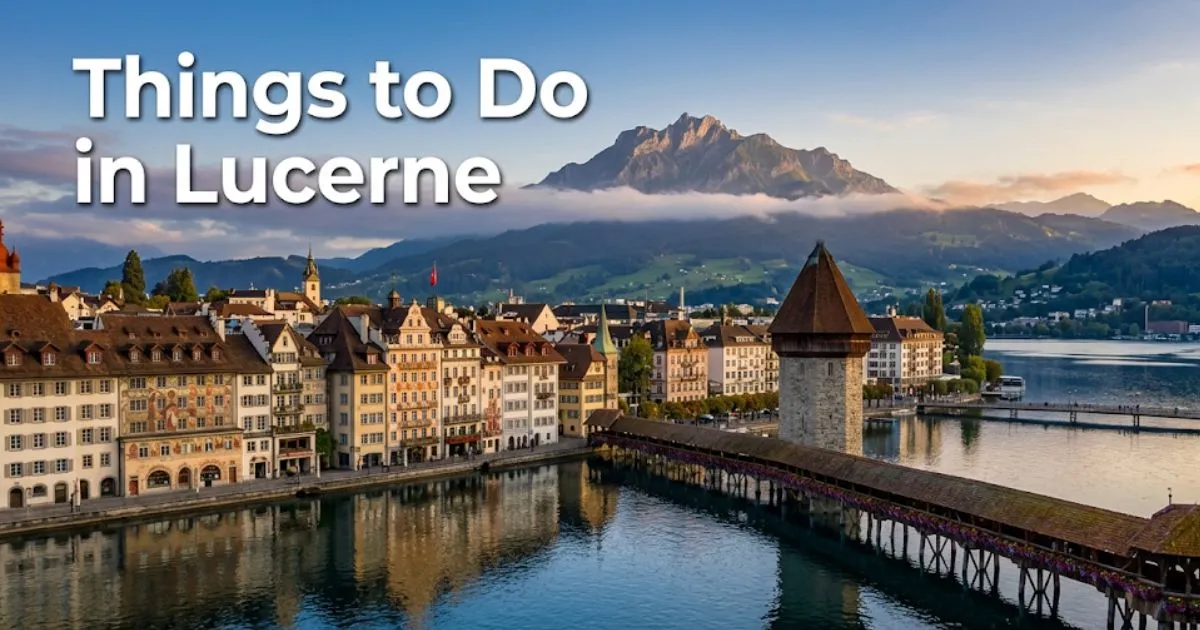
16 Best Things to Do in Lucerne, Switzerland (2026)

Lucerne delivers the most concentrated Swiss experience of any city in the country. One compact Old Town, one glass-clear lake, and two mountain summits sit within an hour of each other.
The city attracts over 9 million visitors annually according to Luzern Tourismus. Most stay fewer than six hours and miss the actual best parts.
This guide covers exactly what to do in Lucerne, what to skip, where locals eat, and how to plan around crowds, weather, and your specific travel style.
Things to Do in Lucerne Switzerland: The Essential Overview
Lucerne packs its best attractions into a walkable footprint that rewards at least two full days. One day gets you the postcard photos but misses the mountain experiences that define the destination.
The city splits naturally into four experience zones. The medieval Old Town covers the north bank of the Reuss River with cobblestone squares and covered bridges.
Lake Lucerne stretches south toward the Alpine foothills with boat connections to mountain railways. Mount Pilatus and Mount Rigi rise to the south and east as accessible summit experiences.
[Luzern Tourismus] reports that 70% of visitors arrive as day-trippers from Zurich. The remaining 30% who stay overnight report significantly higher satisfaction scores for their Lucerne experience.
Insider Tip:
- Purchase the Tell Pass if staying two or more days: it covers all mountain transport, lake boats, and city museums for one flat price
- Book mountain excursions for early morning departures: summit views are clearest before 10:00 AM and crowds build sharply by 11:00 AM
- Solo travelers benefit most from the Tell Pass since the cost per person for individual mountain tickets adds up quickly without the pass
Lucerne Old Town Walking Tour: Where to Actually Walk
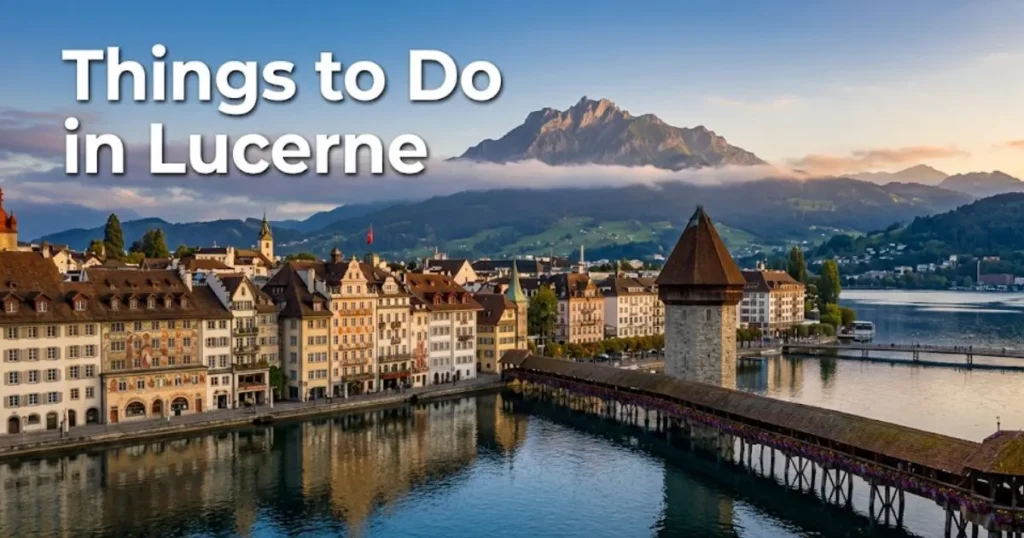
Lucerne’s Old Town rewards aimless wandering through car-free cobblestone alleys more than any fixed route. Start at Weinmarkt square where medieval guild houses display elaborate painted facades.
Walk west toward Hirschenplatz and then north to Franziskanerplatz where the Gothic Franciscan church anchors a quiet square most tour groups skip. The entire route covers less than a kilometer.
Cobblestones are uneven and become genuinely slippery in rain. Wear shoes with solid tread regardless of season.
Families with strollers will find this route physically demanding. The cobblestones rattle even the sturdiest stroller wheels and several alleyways narrow to widths that require folding the stroller.
Couples should walk this route after 5:00 PM when day-trippers depart and the squares empty out. The painted facades catch golden evening light that photographers prize.
| Area | Best For | Time Needed | Crowd Level |
|---|---|---|---|
| Weinmarkt to Hirschenplatz | Photography, architecture | 30 minutes | Moderate |
| Franziskanerplatz | Quiet break, historic church | 20 minutes | Low |
| Musegg Wall path | Views, active walkers | 45 minutes | Low |
| Chapel Bridge area | Iconic photos, first visit | 15 minutes | High |
Key Takeaway: The Old Town’s best squares sit two blocks north of the river and receive a fraction of the Chapel Bridge crowds.
Chapel Bridge Lucerne: The Icon and Its Quieter Neighbor
The Kapellbrücke (Chapel Bridge) is Lucerne’s defining landmark, a covered wooden footbridge built in 1333 that angles across the Reuss River. Its interior roof panels display 17th-century paintings depicting Lucerne’s history.
Arrive before 8:00 AM for photos without crowds. By 10:00 AM the bridge fills with tour groups moving at a shuffle pace.
The bridge connects the Old Town north bank to the south bank near the train station. It is free to cross at any hour and illuminated after dark.
Couples seeking romantic photos should visit at sunrise when the water reflects the bridge and Water Tower without boat traffic disrupting the surface. Solo travelers will find the bridge safe at all hours.
A 1993 fire destroyed much of the original structure. The current bridge is a faithful reconstruction completed in 1994.
Local Alternative: Cross the Spreuer Bridge (Spreuerbrücke) downstream instead. It is older than Chapel Bridge in parts, features a series of 45 Dance of Death paintings inside the roof panels, and receives perhaps 5% of the foot traffic Chapel Bridge sees daily.
Lake Lucerne Boat Tours: The Lake That Defines the City
Lake Lucerne ( Vierwaldstättersee ) shapes every dimension of the city. The lake stretches 38 kilometers into the Alpine foothills and boat services connect Lucerne to mountain railway stations at Alpnachstad, Vitznau, and Weggis.
A standard one-hour lake cruise costs approximately CHF 25-35 per adult. Full lake traverses to Flüelen at the southern end take roughly three hours each direction.
The Gotthard Panorama Express combines a lake steamer from Lucerne to Flüelen with a scenic train over the historic Gotthard route. This is a full-day experience requiring advance reservation.
Families should choose the one-hour circular cruise option. Young children stay engaged watching other boats and lakeside villages appear and disappear.
Seniors will appreciate the comfortable seating and accessible boarding at the main pier directly across from the train station. Lake conditions are typically calm except during föhn wind events.
Insider Tip:
- Board on the upper deck port side for the best mountain views on southbound departures
- The 09:15 AM departure is typically the quietest morning boat service
- Budget travelers: the Tell Pass includes unlimited lake boat travel, making the one-hour cruise effectively free for pass holders
Mount Pilatus Lucerne: The Golden Round Trip Experience
Mount Pilatus delivers Lucerne’s most dramatic mountain experience via the world’s steepest cogwheel railway climbing a 48% gradient to the Pilatus Kulm summit at 2,128 meters. The Golden Round Trip packages boat, cogwheel, and aerial cableway into one ticket.
Budget approximately CHF 72-110 per adult for the complete Golden Round Trip depending on season and pass discounts. The experience requires five to six hours total from Lucerne and back.
The classic route departs Lucerne by boat to Alpnachstad, ascends via cogwheel railway to the summit, crosses the top on foot, then descends via aerial cableway to Kriens where a bus connects back to Lucerne. Reverse this direction in afternoon to catch different light conditions.
This excursion does not work for families with children under five. The cogwheel railway’s steep grade and the summit’s exposure with sudden drop-offs create genuine safety concerns for toddlers.
Active seniors with good mobility will handle the summit viewing platforms and short summit walking paths without difficulty. Anyone with vertigo should avoid the viewing platform extension that projects over the cliff face.
The cogwheel railway operates May through November only. Verify current schedules with Pilatus-Bahnen AG before departing.
| Feature | Mount Pilatus | Mount Rigi |
|---|---|---|
| Summit elevation | 2,128 meters | 1,798 meters |
| Transport type | Cogwheel + cable car | Cogwheel only |
| Operating season | May to November | Year-round |
| Round trip cost (adult) | CHF 72-110 | CHF 60-80 |
| Summit experience | Dramatic, exposed, rocky | Gentle, grassy, rolling |
| Crowd level | High | Moderate |
| Best for | Thrill-seekers, photographers | Families, seniors, picnickers |
Key Takeaway: Mount Pilatus rewards those who prioritize drama and engineering spectacle. Mount Rigi rewards those who prioritize views, comfort, and year-round access.
Mount Rigi Lucerne: The Local’s Mountain Choice
Mount Rigi consistently delivers better panoramic views than Pilatus despite its lower summit elevation of 1,798 meters. The mountain’s position completely surrounded by water creates a 360-degree Alpine panorama visible from the summit.
Access Rigi via boat to Vitznau then cogwheel railway to Rigi Kulm. The round trip costs approximately CHF 60-80 per adult and takes five hours door to door from Lucerne.
The summit area offers wide, gently sloping walking paths suitable for all fitness levels. Families with children of any age can manage the terrain comfortably.
Seniors and accessibility travelers will find Rigi far more accommodating than Pilatus. The summit plateau is flat and spacious with multiple rest areas and restaurant facilities.
Visit on a clear weekday morning for the best experience. Rigi’s summit panorama stretches from the Black Forest in Germany to the Bernese Alps on cloudless days.
Local Alternative: Ascend via Weggis instead of Vitznau for a quieter route. The boat docks at Weggis where you walk 10 minutes to the cable car station for a mid-mountain connection to the cogwheel railway at Rigi Kaltbad.
Lion Monument Lucerne: The Overrated Icon and Where to Go Instead
The Lion Monument (Löwendenkmal) is Lucerne’s most visited free attraction. Mark Twain called it “the most mournful and moving piece of stone in the world.”
It is also a 10-minute stop that feels underwhelming to many visitors who have seen it hyped in every Lucerne guide. The dying lion carved into a sandstone cliff face commemorates Swiss Guards killed during the French Revolution.
Arrive before 9:00 AM or after 5:00 PM to avoid the tour bus crowds that fill the small plaza mid-day. The monument sits in a shaded alcove that photographs poorly in direct midday sunlight.
Local Alternative: Walk three minutes farther to the Glacier Garden (Gletschergarten) next door. This geological site features glacial potholes dating to the last Ice Age, a mirror maze, and a viewing tower with Old Town and lake panoramas.
The Glacier Garden admission costs approximately CHF 15-18 per adult. It occupies the same complex as the Lion Monument and receives a quarter of the visitor volume.
Families with children genuinely enjoy the mirror maze. Budget travelers can skip both and instead walk the free Musegg Wall path that runs along the Old Town’s northern edge with nine medieval towers still standing.
Swiss Transport Museum Lucerne: Switzerland’s Best Indoor Attraction
The Swiss Museum of Transport (Verkehrshaus der Schweiz) is Switzerland’s most visited museum for good reason. It houses actual aircraft including a Swissair DC-3, full-size locomotives, automobiles spanning a century, and an IMAX theater.
Plan at least three hours for a meaningful visit. The museum campus stretches across multiple buildings and outdoor exhibition areas along the lakefront.
Admission runs approximately CHF 32-36 per adult with separate pricing for the IMAX theater and Swiss Chocolate Adventure add-on experiences. The Tell Pass includes museum admission.
Families with children of any age will find this the single best activity in Lucerne. Interactive exhibits let kids operate signals, sit in cockpits, and build model bridges.
Solo travelers interested in engineering and design should not skip this museum thinking it is only for families. The collection quality and presentation standard equal any transport museum in Europe.
[Verkehrshaus der Schweiz] identifies the Arena exhibition hall as the newest major addition featuring virtual reality and simulator experiences that require separate booking.
Insider Tip:
- Weekday mornings are quietest; Swiss school groups typically arrive after 10:00 AM
- The lakeside café offers better food than the main cafeteria at similar prices
- Seniors: the museum is fully wheelchair accessible with elevators and ramps throughout
Key Takeaway: The Transport Museum justifies half a day even on a tight Lucerne itinerary, especially for families and anyone facing a rainy afternoon.
Where to Eat in Lucerne: The Local Dining Reality
Lucerne’s best meals happen away from the riverfront terraces where menus appear in six languages and prices rise by 30%. The local dining scene centers on traditional Swiss restaurants in the Old Town’s interior streets and a cluster of casual spots near the train station.
Wirtshaus Galliker on Schützenstrasse serves the most authentic Lucerne dining experience in the city. The family-run restaurant has operated since 1856 and serves Luzerner Chügelipastete (veal and mushroom vol-au-vent in cream sauce) that locals consider definitive.
Reservations are essential for dinner at Galliker. The restaurant closes Sundays and Mondays and takes a two-week summer holiday typically in July.
Sternen Grill near the train station represents the affordable end of Lucerne dining. This outdoor grill stand serves bratwurst with crusty bread and mustard for approximately CHF 8-10 and attracts a genuine mix of locals and budget-conscious travelers.
Buvette wine bar on the Reuss riverbank offers Lucerne’s best casual evening experience. Small-production Swiss wines by the glass pair with cheese plates on a terrace facing the water.
| Restaurant | Dish to Order | Cost Range (per person) | Best For |
|---|---|---|---|
| Wirtshaus Galliker | Luzerner Chügelipastete | CHF 35-55 | Authentic Swiss dinner |
| Sternen Grill | Bratwurst with bread | CHF 8-12 | Quick budget lunch |
| Buvette | Swiss cheese plate with wine | CHF 20-35 | Evening drinks, couples |
| Confiserie Bachmann | Luxemburgerli (mini macarons) | CHF 8-15 | Coffee and sweets break |
Budget travelers should know that Coop and Migros supermarkets both have excellent prepared food sections. A picnic lunch assembled from grocery store purchases eaten at Inseli Park by the lake costs a fraction of restaurant dining and delivers the same view.
Best Time to Visit Lucerne: The Seasonal Reality
The best time to visit Lucerne is late May through early June and September through mid-October. These windows deliver comfortable daytime temperatures, functional mountain transport, and crowd levels roughly half of July and August peaks.
July and August bring the highest visitor numbers according to [Luzern Tourismus] arrival data. Hotel rates rise 25-40% above shoulder season pricing and mountain summit restaurants require advance reservations.
Summer afternoons frequently produce thunderstorms over the Alps that shut down mountain transport without warning. Always check the summit webcam before departing on a mountain excursion between June and August.
Winter months from December through February offer the lowest accommodation prices but reduced mountain access. The Pilatus cogwheel railway closes entirely and Lake Lucerne boat services run limited skeletal schedules.
The Lucerne Fasnacht (Carnival) in February or March transforms the Old Town into one of Switzerland’s most intense street festivals. Accommodation sells out months in advance and anyone not attending Fasnacht should avoid Lucerne during these dates entirely.
Christmas markets operate from late November through December 23rd at Franziskanerplatz and the train station plaza. These are charming but smaller than Zurich’s markets and get genuinely crowded on Friday and Saturday evenings.
Key Takeaway: September delivers the single best balance of weather, access, and crowd levels for most Lucerne visitors.
Lucerne Summer Activities: Lake Life and Mountain Mornings
Summer in Lucerne revolves around Lake Lucerne and early-morning mountain excursions before afternoon clouds roll in. The Seebad open-air swimming platforms in the lake offer the most distinctly local summer experience.
The Seebad at the National Hotel near the Old Town charges approximately CHF 7-10 for entry. It provides changing rooms, a small café, and direct lake access with mountain views from the swimming platform.
Water temperatures rarely exceed 20°C even in August. This is genuinely cold swimming by American standards and surprises first-time visitors expecting warm Alpine lake conditions.
Mountain excursions should depart by 7:30 AM in summer months. Summit visibility is typically clearest before 10:00 AM and afternoon thunderstorms arrive with enough regularity that experienced guides plan around them.
The Lucerne Festival runs from August through September and brings world-class classical music performances to the KKL Luzern concert hall on the lake. Tickets sell out for headline performances months in advance.
[Switzerland Tourism] identifies the August 1 National Day celebrations in Lucerne as one of Switzerland’s best, with fireworks over Lake Lucerne visible from the entire lakefront. Arrive at Inseli Park by 7:00 PM for viewing position.
Solo travelers will find Lucerne summer social life limited compared to Zurich. Couples will find the lakeside evening atmosphere among the best in Switzerland.
Lucerne Winter Activities: Christmas Markets and Mountain Snow
Winter in Lucerne means Christmas markets, lower prices, and Mount Rigi transformed into a snowy summit accessible year-round. The Lucerne Christmas Market at Franziskanerplatz operates late November through December 23rd.
Expect mulled wine (Glühwein), handmade ornaments, and fondue stalls in the square. The market is compact but genuinely atmospheric in the medieval setting.
Mount Rigi becomes a winter hiking and sledding destination from December through March. The cogwheel railway continues operating year-round and summit snow creates a completely different experience from summer visits.
Winter visibility can be exceptional on clear January days. The cold air carries less moisture and Alpine panoramas from Rigi’s summit stretch farther in winter than summer.
The Mount Titlis excursion from Lucerne via Engelberg provides Lucerne’s best winter snow experience. The Titlis Rotair revolving cable car reaches 3,020 meters with a glacier cave and year-round snow activities.
Daylight hours shrink to roughly 8:30 AM to 4:30 PM in December and January. Plan all outdoor and mountain activities within this window.
Budget travelers benefit from winter hotel rates roughly 30-40% below summer peaks. The tradeoff is reduced boat services and the closure of the Pilatus cogwheel railway entirely from November through April.
Lucerne Rainy Day Activities: When the Alps Disappear
Rain is common in Lucerne across all seasons and mountain excursions become pointless when clouds obscure the summits entirely. The city offers solid indoor alternatives that actually reward the time.
The Swiss Museum of Transport is the obvious primary rainy day option and genuinely fills four hours. The IMAX theater and Swiss Chocolate Adventure add-on experiences extend the visit further.
The Rosengart Collection (Sammlung Rosengart) houses Lucerne’s best art museum with an exceptional Paul Klee collection and significant Picasso works. It occupies a former bank building near the train station and takes roughly 90 minutes to view.
The Bourbaki Panorama is a 112-meter circular painting depicting French soldiers interned in Switzerland after the 1870 Franco-Prussian War. It is a unique artifact that takes 30-45 minutes to experience fully.
The Jesuit Church (Jesuitenkirche) along the river offers free entry and interior Baroque architecture worth a 20-minute visit. It sits adjacent to the Old Town and requires no advance planning.
[Luzern Tourismus] recommends the KKL Luzern culture center’s exhibition schedule for rotating art and design shows on the lakefront. Current exhibitions change seasonally so verify programming before visiting.
Families should prioritize the Transport Museum on rainy days. Couples will find the Rosengart Collection the most satisfying indoor experience for art-focused travelers.
Key Takeaway: Lucerne’s indoor attractions genuinely match outdoor options in quality, but most visitors never plan for them until rain arrives.
Getting From Zurich to Lucerne: The Train Journey
Getting from Zurich to Lucerne requires exactly one hour by direct train with departures every 30 minutes throughout the day. The SBB Swiss Federal Railways operates this route and no advance reservation is required for standard trains.
Trains depart from Zurich Hauptbahnhof (main station) and arrive at Luzern Bahnhof directly on the lakefront in central Lucerne. The station sits a three-minute walk from Chapel Bridge.
A standard second-class one-way ticket costs approximately CHF 25-30. The Swiss Travel Pass covers this route entirely.
From Zurich Airport (ZRH) the journey requires 65-70 minutes with one transfer at Zurich Hauptbahnhof. Factor an additional 15 minutes for navigating between airport terminals and the train platform.
The last direct train back to Zurich typically departs Lucerne around 23:35. Verify current schedules with SBB before planning late evening returns.
Insider Tip:
- Sit on the left side of the train facing Zurich to Lucerne for the best lake views approaching Lucerne in the final 10 minutes
- Buy tickets via the SBB Mobile app rather than queuing at station machines
- Budget travelers: Supersaver tickets booked online in advance cost approximately 40% less but lock you into a specific train
How Many Days Do You Need in Lucerne: The Honest Answer
Two full days is the minimum Lucerne deserves. One day means you photograph Chapel Bridge, glance at the Lion Monument, and leave before experiencing either mountain summit that defines the destination.
Day 1: Morning Old Town walk through Weinmarkt and Hirschenplatz while streets are empty. Cross Chapel Bridge before 8:30 AM. Afternoon Mount Rigi round trip departing by noon. Evening dinner at Wirtshaus Galliker followed by drinks at Buvette.
Day 2: Early morning Mount Pilatus Golden Round Trip departing by 7:30 AM. Return to Lucerne by early afternoon. Spend remaining hours at the Swiss Transport Museum or Rosengart Collection depending on interest. Final evening lake cruise on the 17:00 departure.
Three days allows adding the Bürgenstock excursion with the Hammetschwand Lift, Europe’s highest outdoor elevator, and a proper morning at the Seebad swimming platforms.
Solo travelers should budget two full days minimum. Families with young children might stretch to three days to accommodate slower pacing and the Transport Museum’s demands.
One day is only acceptable if Lucerne is a transit stop on a longer Swiss itinerary with mountain experiences scheduled elsewhere.
| Days | What You Can Do | Who This Works For |
|---|---|---|
| 1 day | Chapel Bridge, Lion Monument, quick lunch | Transit travelers, very limited |
| 2 days | Above plus one mountain summit, proper dinner | Most visitors, recommended minimum |
| 3 days | Above plus second summit, museum, lake cruise | Families, thorough travelers |
| 4+ days | Full region including Bürgenstock, Andermatt day trip | Slow travelers, mountain enthusiasts |
Key Takeaway: Two days plus the Tell Pass is the single combination that delivers the Lucerne experience most visitors imagine when they book Switzerland.
Is Lucerne Worth Visiting: The Honest Verdict
Lucerne is worth visiting specifically because no other Swiss city combines a compact medieval Old Town, direct lake swimming access, and two mountain summits within an hour’s reach. That combination is genuinely rare.
The city does not suit travelers seeking urban nightlife, budget dining, or cutting-edge contemporary culture. Zurich performs better on all three counts.
Lucerne excels for couples wanting romantic settings without remote isolation. The lake, the bridges, the mountain sunsets, and the walkable Old Town deliver this consistently.
Families with school-aged children benefit from the Transport Museum, boat cruises, and mountain railways that feel adventurous without being genuinely dangerous. Lucerne is one of Switzerland’s most family-functional cities.
Solo travelers will find the city safe and navigable but socially quiet after 22:00. The tradeoff is exceptional photography conditions and the freedom to move at a fast pace through mountain and lake experiences.
[Luzern Tourismus] visitor surveys indicate that satisfaction correlates strongly with length of stay. The city’s highest satisfaction scores come from visitors staying two or more nights.
The honest assessment: if your Switzerland itinerary already includes the Jungfrau region or Zermatt for mountain experiences, Lucerne may feel somewhat redundant for mountain excursions while remaining fully worthwhile for the Old Town, lake setting, and transport convenience alone.
Frequently Asked Questions About Lucerne
How many days do you need in Lucerne?
Two full days is the minimum for a meaningful Lucerne visit.
One day allows only the Old Town, Chapel Bridge, and Lion Monument without a mountain excursion.
Three days lets you experience both mountain summits, the Transport Museum, and the lake properly.
Is Lucerne worth visiting compared to other Swiss cities?
Lucerne is worth visiting for its unique combination of a walkable medieval Old Town, lake swimming access, and two mountain summits within one hour.
Zurich offers better dining and nightlife but lacks mountain access directly from the city.
Bern has comparable medieval architecture but no lake, while Interlaken has mountain access but no historic Old Town.
What is the best time of year to visit Lucerne?
The best time to visit Lucerne is late May through early June and September through mid-October.
These shoulder season windows deliver comfortable temperatures, functional mountain transport, and moderate crowd levels.
July and August bring peak crowds and frequent afternoon thunderstorms that disrupt mountain excursions.
How do I get from Zurich Airport to Lucerne?
Take a direct train from Zurich Hauptbahnhof to Luzern Bahnhof in exactly one hour.
Trains depart every 30 minutes and the journey from Zurich Airport requires one transfer at Zurich Hauptbahnhof with a total travel time of 65 to 70 minutes.
The Swiss Travel Pass covers this route entirely and no advance seat reservation is needed for standard trains.
Which mountain is better, Mount Pilatus or Mount Rigi?
Mount Rigi delivers better panoramic views and is more accessible for families and seniors with gentle summit paths and year-round operation.
Mount Pilatus offers a more dramatic mountain experience with the world’s steepest cogwheel railway and an exposed summit at higher elevation.
Choose Rigi for comfort and views or Pilatus for drama and engineering spectacle.
Do I need a Swiss Travel Pass for Lucerne?
You do not need a Swiss Travel Pass for Lucerne but the Tell Pass offers better value if staying two or more days.
The Tell Pass covers all mountain transport, lake boats, and city museums within the Lucerne region for one flat price.
The Swiss Travel Pass covers the train journey from Zurich and other Swiss cities but does not include mountain transport discounts as comprehensively as the Tell Pass.
Lucerne earns its reputation when you give it enough time. Two days and the Tell Pass unlock the city most day-trippers never see.
Book accommodation in the Old Town or near the train station. Book mountain excursions for early morning departures. Verify summit conditions before committing to any mountain trip.
Train schedules, boat timetables, mountain transport operating dates, restaurant hours, admission prices, and seasonal availability change. Confirm current conditions directly with SBB, Pilatus-Bahnen, Rigi Bahnen, and Luzern Tourismus before departure.
Two days in Lucerne done right will be the part of your Switzerland trip you remember most clearly