
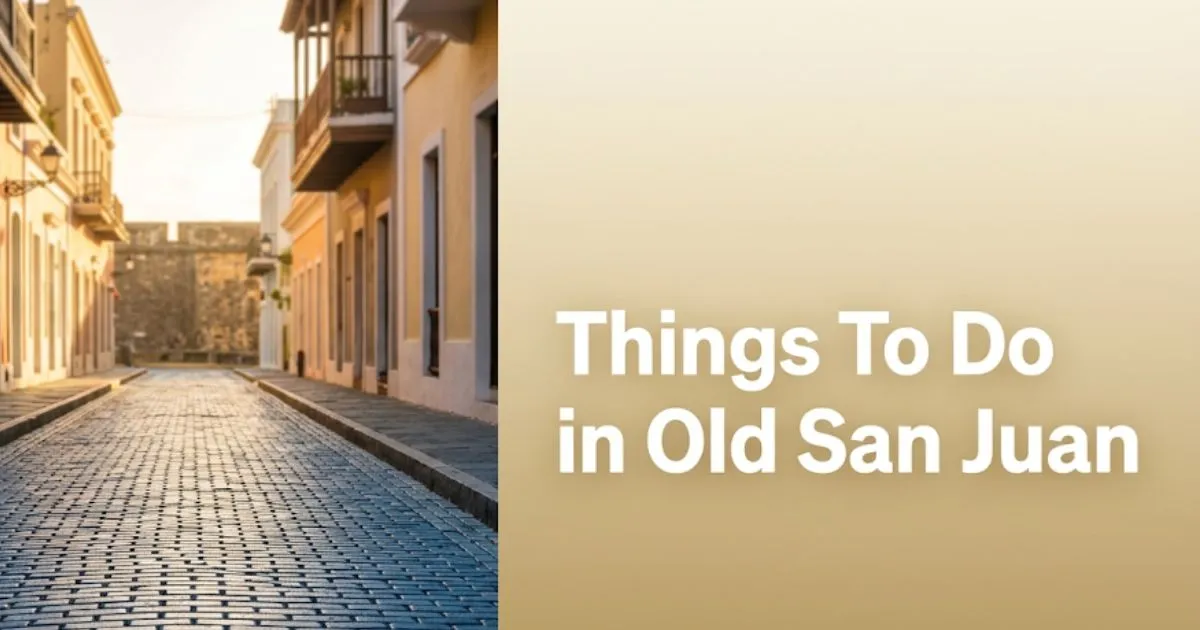
Best Things To Do in Old San Juan, Puerto Rico 2026

The best things to do in Old San Juan sit within a 7-square-block area of the most historically intact Spanish colonial city in the Americas. Plan for at least two full days to see it honestly.
Old San Juan has been a fortified city since 1521. The San Juan National Historic Site, managed by the National Park Service, contains two of the most significant 16th-century military fortifications in the Western Hemisphere.
This guide covers every major attraction, the honest food and nightlife scene, practical logistics, traveler profile guidance, and a one-day itinerary you can actually follow. No filler. No cruise ship brochure copy.
Things To Do in Old San Juan: What Makes This City Different
Old San Juan is genuinely unlike any other city in the United States or its territories. It combines European colonial architecture, Caribbean food culture, and active military history on a compact peninsula jutting into the Atlantic Ocean.
The city sits on a small island connected to the Puerto Rico mainland by three bridges. Every street within the historic district is paved with adoquines, blue-gray cobblestones originally shipped as ballast from Spain.
Those cobblestones define the experience. They create atmosphere. They also punish impractical footwear.
Unlike Havana or Cartagena, Old San Juan is fully American in practical terms. No currency exchange, no entry requirements for US citizens, and English is widely spoken.
The city’s character is Puerto Rican, not generically Caribbean. Food, music, art, and street culture here reflect a distinct identity that is neither mainland American nor stereotypically tropical tourist.
Insider Tip:
- The most photographed view of El Morro is from the grassy esplanade on the Atlantic side, not from the main fort entrance.
- The blue cobblestones are most photogenic in the early morning light before 8am.
- For couples, the Paseo de la Princesa at sunset is one of the most genuinely romantic urban walks in any Caribbean city.
Best Things To Do in Old San Juan Right Now
The best things to do in Old San Juan in 2026 include visiting both military forts, walking the Paseo de la Princesa, exploring Calle Fortaleza’s independent shops and bars, and eating mofongo at a locally owned restaurant away from the cruise ship corridor.
| Activity | Best For | Cost Range | Time Needed | Insider Note |
|---|---|---|---|---|
| El Morro (Castillo San Felipe del Morro) | All profiles | Moderate admission | 2 to 3 hours | Arrive before 9:30am or after 3pm |
| Castillo San Cristóbal | History enthusiasts | Moderate admission | 1.5 to 2 hours | Less crowded than El Morro on most days |
| Paseo de la Princesa | Couples, solo travelers | Free | 30 to 60 minutes | Best at golden hour or early morning |
| Calle San Sebastián nightlife | Solo travelers, couples | Varies by venue | Evening | More local crowd than Calle del Cristo bars |
| Old San Juan food tour | Food travelers, couples | $60 to $100 per person approx. | 3 to 4 hours | Book independent operators, not cruise line tours |
| Casa Blanca Museum | History enthusiasts, seniors | Low admission | 1 hour | Largely missed by cruise ship visitors |
| Condado beach (short taxi) | Families, beach travelers | Free beach access | Half day | Better swimming than city-adjacent beaches |
| Museo de Las Américas | Culture travelers, solo | Low to moderate | 1.5 hours | Located inside historic Ballajá Barracks |
According to the Puerto Rico Tourism Company, Old San Juan is the island’s most visited destination. Peak cruise congestion typically occurs Tuesday through Thursday mornings from November through April.
Budget travelers can spend an entire rewarding day in Old San Juan spending very little. The Paseo de la Princesa, Plaza de Armas, Plaza de San José, and city wall walks are entirely free.
Old San Juan Walking Tour: The Right Route on Foot
The best self-guided walking tour of Old San Juan starts at the Paseo de la Princesa and ends at Castillo San Felipe del Morro, covering the city’s full historical and cultural range in roughly 4 to 5 hours.
Most visitors make the mistake of starting at El Morro and walking back. Starting at Paseo de la Princesa means you walk with the geography rather than against it.
The recommended walking sequence:
- Begin at the Paseo de la Princesa gate near the cruise ship piers. Walk the full promenade along the bay wall. Stop at the La Rogativa bronze sculpture, one of the city’s most significant public artworks.
- Enter the city walls via the San Juan Gate, the only surviving original entrance through the fortification walls.
- Walk uphill along Calle Recinto del Oeste toward La Fortaleza. The Governor’s mansion facade is visible from the street even when tours are unavailable.
- Turn onto Calle del Cristo heading north. Browse the shops and look for the Capilla del Cristo, a tiny chapel at the street’s southern end overlooking the bay.
- Cross Plaza de Armas, the city’s main historic square and a genuine gathering point for locals, not just tourists.
- Continue north on Calle San Francisco to Plaza de San José and the statue of Juan Ponce de León.
- Walk through the Ballajá Barracks to reach the esplanade fronting El Morro.
- Arrive at Castillo San Felipe del Morro and allow 2 full hours.
Seniors and accessibility travelers: The route from Paseo de la Princesa uphill to La Fortaleza involves sustained steep climbing on uneven stone. The Old San Juan Trolley (La Trocha) offers free service on select routes and covers much of the same territory with significantly less physical demand. Verify current trolley routes before departure, as service schedules have varied.
Castillo San Felipe del Morro: What To Know Before You Go
Castillo San Felipe del Morro, known locally as El Morro, is the most visited attraction in Puerto Rico and one of the most significant Spanish colonial fortifications in the Americas. Construction began in 1539.
The fort sits on a 140-foot-high promontory at the northwestern tip of the Old San Juan peninsula. The views across the Atlantic are genuinely exceptional by any standard.
The National Park Service manages El Morro as part of the San Juan National Historic Site. Admission covers both El Morro and Castillo San Cristóbal on the same day.
Key facts before visiting:
- Admission runs approximately $10 per adult in recent years. Free for children 15 and under. Verify current rates directly with the National Park Service before visiting.
- Typically open daily. Hours have generally run from 9am to 5pm, with last entry before closing. Confirm hours before arrival, as they are subject to seasonal adjustment.
- No timed-entry reservation system currently required. Walk-in access available, but peak hours see significant crowds.
- The esplanade (green lawn area) outside the fort is free to access and is a popular kite-flying area on windy afternoons.
The honest crowd reality: Between 10am and 2pm on cruise ship days, El Morro can be genuinely difficult to enjoy. The narrow passageways fill with tour groups. Arrive before 9:30am or after 3pm for a qualitatively different experience.
Families with children: The esplanade is excellent for young children. Kite vendors sell basic kites on-site. The fort’s interior involves stairs and uneven surfaces.
Insider Tip:
- The lighthouse at the top of El Morro is not always accessible to the public. Check current status on arrival.
- The six-level fort has multiple exterior lookout points. Most visitors only reach the upper levels. Explore the lower batteries for genuinely crowd-free views.
Castillo San Cristóbal: The Fort Most Visitors Underestimate
Castillo San Cristóbal is the largest fortification built by Spain in the Americas and, despite being more architecturally complex than El Morro, consistently draws fewer visitors. That makes it the better fort for an unhurried experience.
San Cristóbal sits at the northeastern corner of Old San Juan, overlooking the Atlantic. Its construction covered nearly a century, from 1634 through the early 18th century.
The fort’s tunnel system, moat, and series of independent defensive layers are more sophisticated than El Morro’s design. Military history enthusiasts consistently rate it more interesting than its more famous neighbor.
Admission is covered by the same combined San Juan National Historic Site ticket that includes El Morro. Verify pricing and hours with the National Park Service before visiting, as they are subject to change.
The fort’s El Garrita del Diablo sentry box, perched over the Atlantic at the fort’s northern edge, is one of the most iconic images in Puerto Rican visual culture. The drop below is genuinely vertiginous.
Solo travelers and history enthusiasts will find San Cristóbal especially rewarding. It takes longer to explore fully than El Morro and rewards visitors who read the interpretive panels carefully.
Practical note: San Cristóbal is located on the eastern side of the city, about a 15-minute walk from El Morro along the city walls. Walking the Paseo del Morro (the trail along the city walls between the two forts) is one of the best free activities in Old San Juan and avoids the interior city streets entirely.
Key Takeaway: Visit El Morro before 9:30am or after 3pm to avoid cruise ship crowds. San Cristóbal is less congested and more architecturally complex. Most visitors who skip San Cristóbal regret it.
Old San Juan Historic Sites and Culture Beyond the Forts
Old San Juan’s historic depth extends well beyond its two famous forts. The Cathedral of San Juan Bautista, dating to 1521, is the oldest cathedral in continuous use in the Americas under US jurisdiction. The tomb of Juan Ponce de León is inside.
Entry to the cathedral is free. Modest dress is appropriate, and mass schedules mean certain times of day are not ideal for casual visiting. Check locally before arriving.
Casa Blanca, the oldest continuously occupied European residence in the Americas, served as home to the Ponce de León family for more than 250 years. It now operates as a museum of colonial domestic life.
Admission is low and the crowds are minimal. It is one of the most historically significant buildings in the entire Western Hemisphere and is largely bypassed by cruise ship tour itineraries.
The Museo de Las Américas, housed inside the historic Ballajá Barracks adjacent to El Morro’s esplanade, covers the cultural history of the Americas from pre-colonial times through the present. Admission is moderate.
Budget travelers should note that the museum, Casa Blanca, and the cathedral together provide a full afternoon of cultural depth for minimal cost. None of these require advance booking.
According to the National Park Service, the San Juan National Historic Site includes not just the two forts but the full city wall system. Walking the complete wall circuit is free and takes approximately 90 minutes.
Accessibility note: Casa Blanca and the cathedral involve some steps and uneven surfaces. The museum at Ballajá Barracks has better accessibility infrastructure. Verify specific accessibility features before visiting.
Old San Juan Neighborhoods and Street Art Worth Exploring
Old San Juan’s street culture is most visible along Calle Fortaleza, Calle del Cristo, and the side streets connecting Plaza de Armas to Plaza de San José. These blocks hold the city’s independent boutiques, local art galleries, and the best concentration of street murals.
Calle del Cristo is the city’s most tourist-oriented commercial strip. It has genuine charm but also the highest concentration of souvenir shops and tourist-facing restaurants.
For a more local experience, Calle San Sebastián runs parallel and carries a different energy. This is where you find smaller bars, independent coffee shops, and the street culture that locals actually use.
The San Sebastián Street Festival (SanSe), typically held in mid-January, transforms these streets into one of Puerto Rico’s largest celebrations of music, food, and visual art. If your 2026 visit aligns with this period, verify exact dates through the Puerto Rico Tourism Company well in advance.
Street murals are concentrated around the streets north of Plaza de San José and in the blocks between Calle Norzagaray and the city walls. The work ranges from commissioned public art to independent muralism.
Photography-focused travelers should know the best light on Calle Fortaleza’s colorful facades hits in the early morning (before 8:30am) when the street is largely empty. Midday light flattens the colors.
Insider Tip:
- Walk Calle Norzagaray along the Atlantic-facing city wall for unobstructed views and almost no tourist foot traffic.
- The stairways connecting Norzagaray down to the lower city streets are some of the most photogenic architectural details in Old San Juan.
- The Callejón de las Monjas (Nuns’ Alley) near the Cathedral is a rarely photographed narrow passage worth finding.
Old San Juan Restaurants and Food: Where To Actually Eat
The best food in Old San Juan is not found at the most photographed restaurants on Calle del Cristo. It is found in the local spots on side streets and in the blocks around Plaza del Quinto Centenario.
Mofongo, the city’s signature dish of mashed plantains with various protein additions, varies enormously by restaurant. The quality gap between the best versions and the tourist-area versions is significant.
Marmalade on Calle Fortaleza is one of the most consistently praised fine dining restaurants in Old San Juan. The menu reflects a farm-to-table approach rare in the Caribbean. Budget $60 to $100 per person including drinks.
For local-scale dining, Señor Paleta and the food stalls around Plaza de Armas serve the kind of everyday Puerto Rican cooking that gives you more authentic context than any formal restaurant tour.
El Jibarito on Calle Sol has been a neighborhood institution for decades. It is not a secret. But unlike the restaurants directly on the cruise ship tourist corridor, it serves a consistent local clientele alongside visitors.
Budget travelers should note that the bakeries and small cafes along Calle San Francisco serve coffee and pastries at local prices. A full breakfast costs under $10 at spots that are not on the tourist dining map.
Families with children: Restaurants along Calle del Cristo are the most child-accommodating in terms of menu variety and pace. Side-street spots tend toward slower, more leisurely service that young children may not tolerate well.
According to Condé Nast Traveler’s Puerto Rico coverage, Old San Juan’s dining scene has expanded significantly since 2020, with new independent restaurants opening on formerly overlooked side streets between Calle del Cristo and Calle San Francisco.
Key Takeaway: Skip lunch on Calle del Cristo on cruise ship days. The side streets one block west, particularly Calle San Francisco and Calle Sol, have equivalent quality at lower prices and significantly fewer crowds.
Old San Juan Rum Bars and Nightlife Scene
Old San Juan’s nightlife centers on Calle San Sebastián and the blocks immediately surrounding it. This is where the city’s bars, live music venues, and late-night restaurants concentrate after 9pm.
Rum is the defining spirit of Puerto Rican drinking culture. Local bars stock Don Q and Ron del Barrilito alongside Bacardí. These are not interchangeable products. A good bartender at any serious rum bar will walk you through the differences.
La Factoria on Calle San Sebastián is consistently cited as one of the best bars in Puerto Rico. It is a labyrinthine bar with multiple rooms, each with its own cocktail menu and atmosphere. Arrive before 10pm if you prefer a quieter experience.
Barrachina on Calle Fortaleza claims to be the birthplace of the piña colada. The claim is contested (El Caribe Hilton in Condado also claims it), and the drinks are priced for tourists. It is more historically interesting than drinking-quality interesting.
La Taberna Lúpulo serves a craft beer selection that is genuinely impressive by Caribbean standards. It draws a local crowd and is a reliable indicator of where non-tourist Old San Juan nightlife actually happens.
Solo travelers will find Calle San Sebastián bar culture genuinely welcoming. The neighborhood has a social, open-table culture where striking up conversation with other travelers or locals is normal.
The nightlife area is concentrated enough that walking between venues is easy and safe within the lit tourist corridor. Avoid wandering north toward the city wall area near La Perla after dark.
Insider Tip:
- The bars on Calle San Sebastián fill significantly after 10pm on weekends. If you prefer conversation over crowd-surfing, Thursday evenings offer the best balance of energy and accessibility.
Old San Juan Beaches and Outdoor Activities
Old San Juan does not have a true swimming beach within its historic district. Playa del Escambrón, a small public beach immediately east of the city on the Puerta de Tierra stretch, is the closest option with calm water and basic facilities.
For genuinely good Caribbean beach swimming, the nearest quality options require a short taxi or rideshare to Condado (approximately 10 to 15 minutes east) or further to Isla Verde and Luquillo Beach (45 to 60 minutes by car).
The Paseo del Morro trail along the Atlantic-facing city wall is the best outdoor activity within Old San Juan itself. The path runs from the area near El Morro toward the northeastern city walls and provides consistent Atlantic views.
Kite flying on the El Morro esplanade is a legitimate Old San Juan activity, not a tourist gimmick. On windy afternoons, locals join visitors on the vast green lawn outside the fort.
For day trips from Old San Juan, El Yunque National Forest (approximately 45 minutes by car) is the only tropical rainforest in the US National Forest System. Verify trail conditions and entry requirements with the US Forest Service before visiting, as timed-entry systems have been in use in recent years.
Families with children will find Playa del Escambrón the most practical beach option. It has calmer water than the Atlantic-facing areas, and restroom facilities are available on-site.
Budget travelers: All beaches in Puerto Rico are public by law. There is no paid beach access. Parking at Condado can be competitive on weekends.
Old San Juan With Kids: What Works and What Doesn’t
Old San Juan genuinely works for families with children who are old enough to walk comfortably and handle historical sites with some patience. It is a difficult destination for families with infants or toddlers in strollers.
The cobblestone streets are the primary challenge. They are uneven, steep in sections, and wet cobblestones become slippery. Standard strollers are very difficult to maneuver. A structured baby carrier is the practical alternative for families with infants.
What works well for kids:
- The El Morro esplanade kite-flying area. Wide, grassy, and genuinely fun for children of all ages.
- The fort interiors at both El Morro and San Cristóbal. Children respond well to the scale of the fortifications and the ocean views.
- Plaza de Armas for casual breaks. The plaza has seating, food carts, and open space.
- The Old San Juan Trolley as a rest-and-see option between sites.
What underdelivers for children:
- Museum interiors including Museo de Las Américas and Casa Blanca. Informative for adults and older teenagers. Young children typically lose interest within 20 minutes.
- Long restaurant meals at the upscale end of the dining spectrum. Service pacing does not suit young children.
Families should plan activities in the morning before heat and crowds peak. Both forts are best with children before 11am.
Practical tip: Sunscreen, water, and comfortable walking shoes for children are non-negotiable. Heat and physical exertion combine quickly on cobblestone uphill routes.
Key Takeaway: Old San Juan is best for families with children aged 6 and up. The cobblestone terrain is genuinely difficult for strollers, and the fort visits work best before 11am before peak heat and cruise crowds arrive.
Old San Juan for Couples and Romance
Old San Juan is one of the most romantically atmospheric cities in the Caribbean, and it earns that without any promotional effort. The combination of colonial architecture, Atlantic sea views, and a genuine local food and bar culture creates an environment that feels intimate rather than manufactured.
The Paseo de la Princesa at golden hour is the city’s single most romantic walk. The promenade runs along the base of the ancient city walls above the bay, and the light in the late afternoon reflects off the water in a way that is difficult to replicate anywhere else in the US.
El Convento Hotel on Calle del Cristo, a converted 17th-century Carmelite convent, is the most atmospheric hotel in Old San Juan for couples. Rates reflect its landmark status. Book well in advance for peak season and festival weekends.
Dinner at Marmalade on Calle Fortaleza suits couples who want genuine culinary ambition in an intimate setting. The tasting menu format encourages lingering.
For a more local romantic evening, an early dinner at a side-street restaurant followed by drinks at La Factoria and a walk along Calle Norzagaray by the city wall at night is a sequence that experienced repeat visitors consistently prefer to the standard tourist-corridor evening.
Couples who visit during the San Sebastián Street Festival (SanSe) in January will find the city at its most festive and most spontaneously romantic. The street festival energy is genuinely celebratory rather than commercial.
Honest note: Old San Juan on a high-season cruise ship day can feel crowded and impersonal by 11am. Plan the most romantic moments for early morning or evening.
Old San Juan Solo Travel and Budget Tips
Old San Juan is an excellent solo travel destination. It is compact enough to navigate completely independently, safe within the historic district during daylight hours and in the restaurant and bar corridor after dark, and genuinely social at the bar and cafe level.
The budget floor for Old San Juan is genuinely low if you prioritize correctly. Both forts on a combined ticket, all public plazas and walking routes, the Paseo de la Princesa, and the beach at Playa del Escambrón together cost approximately the price of one mid-range dinner.
Free and low-cost activities for budget travelers:
- Walking the complete city wall circuit (Paseo del Morro and Paseo de la Princesa combined)
- Plaza de Armas and Plaza de San José people-watching
- Calle Norzagaray Atlantic wall views
- Cathedral of San Juan Bautista (free entry, modest dress required)
- El Morro esplanade kite area (free, outside the paid fort entrance)
- Playa del Escambrón beach (free public access)
Solo travelers should know that Old San Juan has a strong café culture along Calle San Francisco and around Plaza de Armas. Solo dining carries no social awkwardness. Bar culture on Calle San Sebastián is open and conversational by nature.
Safety for solo travelers: The historic district is broadly safe for solo travel during the day and in the established bar and restaurant corridors at night. The La Perla neighborhood directly adjacent to the city walls on the northern Atlantic side is not recommended for solo tourist wandering, particularly after dark.
Budget accommodation exists in guesthouses and small hotels on streets away from the prime tourist corridor. Rates are significantly lower than El Convento or the boutique hotels on Calle Fortaleza.
Best Time To Visit Old San Juan
The best time to visit Old San Juan is mid-January through April. These months offer the driest weather, the most comfortable temperatures (typically mid-70s to low 80s Fahrenheit), and the lowest hurricane risk of any time of year.
February is particularly strong. The San Sebastián Street Festival (SanSe) typically runs in mid-January and draws enormous local crowds, which makes it genuinely festive. Book accommodations months in advance if your visit aligns with SanSe.
| Time Period | Weather | Crowds | Cost Level | Notes |
|---|---|---|---|---|
| January to April | Dry, 75-82°F | High (cruise season) | Higher hotel rates | Best overall conditions |
| May to June | Warm, some rain | Moderate | Mid-range | Shoulder season value |
| July to August | Hot, humid | Moderate | Lower | Hurricane watch begins |
| September to October | Hottest, wettest | Lowest | Lowest rates | Active hurricane season |
| November to December | Cooling, drier | Increasing | Mid to high | Holiday season crowds build |
The worst time to visit is September through October. This is the statistical peak of Atlantic hurricane season. Travel insurance is strongly advisable if visiting during this period.
Budget travelers will find the best rates in May, June, and November, outside of hurricane peak season and before the full holiday rate surge.
Cruise ship congestion is heaviest from November through April, particularly Tuesday through Thursday. If your trip falls in this window, plan major attraction visits for early morning or late afternoon.
According to the Puerto Rico Tourism Company, the island receives the majority of its annual visitors between December and April, making this simultaneously the best weather window and the most competitive period for accommodation pricing.
How To Get Around Old San Juan
Old San Juan is primarily a walking destination. Its entire historic district covers approximately 7 city blocks and can be crossed on foot in under 20 minutes at a comfortable pace.
Getting from the airport to Old San Juan:
Luis Muñoz Marín International Airport (SJU) is approximately 8 to 12 miles from Old San Juan. Rideshare apps (Uber and local equivalents) are widely available. Taxi service is also reliable. Travel time varies from 20 to 45 minutes depending on traffic. No direct public transit connection runs airport-to-Old San Juan without transfers.
Getting around within Old San Juan:
The Old San Juan Trolley (La Trocha) provides free service on select routes through the historic district. Verify current route maps and schedules before relying on it, as service coverage has changed periodically.
Walking is the default. Most hotels, restaurants, forts, and plazas are within a 15-minute walk of each other.
Parking reality: Parking in Old San Juan is genuinely difficult and frustrating. Street parking is limited. Parking garages exist but fill quickly on cruise ship days. If staying overnight in a hotel within the historic district, confirm whether the hotel has parking before booking. Most repeat visitors recommend arriving without a car if staying within Old San Juan.
Day trip logistics: For El Yunque National Forest, Luquillo Beach, or other island destinations, a rental car is the most practical option. Pick up at the airport on arrival and drop off before checking into an Old San Juan hotel.
For Casa Bacardí in Cataño, the water taxi from the Old San Juan ferry terminal is the simplest route. It operates on a regular schedule; verify current timing locally.
Accessibility travelers: The Trolley is the most accessible transport option within the district. Many streets are not wheelchair-accessible due to cobblestone surfaces and steep grades.
One Day in Old San Juan: A Practical Itinerary
One full day in Old San Juan can cover the two main forts, the historic walking route, the best local food stops, and a sunset view without feeling rushed if you start early.
The honest prerequisite: This itinerary requires comfortable walking shoes. Not sandals. Not dress shoes. Closed-toe shoes with grip, because wet cobblestones are genuinely slippery.
One-Day Old San Juan Itinerary:
- 7:30am: Arrive at the Paseo de la Princesa. Walk the full promenade before the crowds arrive. Stop at the La Rogativa sculpture and San Juan Gate. This 30-minute walk sets the entire historical and visual context for the day.
- 8:15am: Walk uphill via Calle Recinto del Oeste to La Fortaleza. The Governor’s mansion exterior is visible from the street. Continue up to Calle del Cristo for an early coffee at one of the small cafes near the Capilla del Cristo.
- 9:00am: Enter Castillo San Felipe del Morro at or just after opening. Spend 90 minutes inside before the cruise ship visitors arrive in volume. The lower battery levels are least crowded.
- 11:00am: Walk the Paseo del Morro city wall trail east toward Castillo San Cristóbal. Allow 30 to 40 minutes for the walk itself. This is one of the best free activities in the city.
- 11:45am: Explore Castillo San Cristóbal. The tunnel system and El Garrita del Diablo sentry box are the highlights. Allow 90 minutes.
- 1:30pm: Lunch at El Jibarito on Calle Sol or at one of the cafes along Calle San Francisco. Avoid the busy tourist-corridor restaurants at this hour.
- 3:00pm: Walk through Plaza de Armas and Plaza de San José. Browse Calle Fortaleza boutiques. Visit the Museo de Las Américas if cultural depth is a priority.
- 5:00pm: Return to the Paseo de la Princesa for the golden hour light on the bay walls. This is the best photography light of the day.
- 7:00pm: Dinner at a Calle San Sebastián restaurant followed by drinks at La Factoria.
Traveler profile adjustments:
- Families with young children: Cut the second fort and replace the afternoon with the El Morro esplanade and Playa del Escambrón beach.
- Seniors: Use the Old San Juan Trolley between the two fort areas. Skip the Paseo del Morro wall trail if footing is a concern.
- Budget travelers: Both forts, all walking routes, plazas, and the beach require minimal spending. Focus dining on local-scale spots on Calle Sol and Calle San Francisco.
Key Takeaway: Start the one-day itinerary before 8am. The two-hour window between 7:30am and 9:30am is the most valuable in Old San Juan because the city is genuinely quiet before cruise passengers arrive.
Safety and Practical Warnings for Old San Juan
Old San Juan is broadly safe within its historic district but requires specific awareness about terrain, heat, and neighborhood boundaries.
Key safety and practical facts every visitor should know:
- Cobblestone terrain is a genuine fall risk when wet. Rain makes adoquines slippery. Wear shoes with grip regardless of the forecast.
- La Perla, the neighborhood immediately outside the city walls on the Atlantic side, is not recommended for tourist wandering. It is a residential community with its own dynamics that are not suited to casual sightseeing. Respect this boundary.
- Sun exposure is intense year-round. Midday hours between 11am and 2pm involve direct tropical sun with significant UV intensity. Sunscreen, hats, and water are not optional precautions.
- Cruise ship congestion is a practical hazard. When three or more ships dock simultaneously (check port schedules online before your visit), key streets around Calle del Cristo and the forts become densely crowded by 10am. This affects restaurant wait times, site enjoyment, and walking pace significantly.
- Rideshare apps operate reliably in Old San Juan. Use them for late-night travel back to hotels outside the historic district rather than relying on informal transportation.
- Medical facilities: Puerto Rico has full hospital infrastructure. The nearest major hospital to Old San Juan is Centro Médico in Río Piedras. Emergency services operate at US standards.
The Puerto Rico Emergency Management Bureau is the primary local authority for weather-related emergencies, especially during hurricane season. Monitor the National Hurricane Center if visiting from August through October.
Frequently Asked Questions About Things To Do in Old San Juan
What are the best things to do in Old San Juan for one day?
The best one-day plan for Old San Juan starts with the Paseo de la Princesa at 7:30am, followed by El Morro before 9:30am, a walk along the city walls to Castillo San Cristóbal, lunch on Calle Sol, and an evening on Calle San Sebastián.
Starting early is the single most important planning decision you can make for a one-day visit.
Arriving mid-morning puts you directly into cruise ship crowd peak hours at both major forts.
Is Old San Juan worth visiting?
Old San Juan is genuinely worth visiting for travelers interested in colonial history, Caribbean food culture, and walkable urban exploration.
It is the most historically intact Spanish colonial city in the Americas under US jurisdiction and requires no passport or currency exchange for US citizens.
It is less suited to travelers primarily seeking beach time, as the best Caribbean beaches require a short drive or taxi outside the historic district.
How much does it cost to get into El Morro in 2026?
El Morro (Castillo San Felipe del Morro) admission is managed by the National Park Service and in recent years has run approximately $10 per adult, with free entry for children 15 and under.
The ticket covers both El Morro and Castillo San Cristóbal on the same day.
Verify current pricing directly with the National Park Service or at the site entrance before visiting, as fees are subject to adjustment.
What is the best time of year to visit Old San Juan?
The best time to visit Old San Juan is mid-January through April, when the dry season brings comfortable temperatures and minimal hurricane risk.
February combines excellent weather with the possibility of experiencing the San Sebastián Street Festival (SanSe), one of Puerto Rico’s largest cultural events.
September and October represent the worst timing due to peak Atlantic hurricane season, highest humidity, and heaviest rainfall.
Is Old San Juan walkable?
Old San Juan is highly walkable in terms of distance. Its entire historic district spans approximately 7 city blocks and can be crossed in under 20 minutes.
The terrain challenge is the cobblestone streets, which are uneven, steep in sections, and slippery when wet.
Travelers with mobility limitations, strollers, or significant joint concerns should use the free Old San Juan Trolley service on select routes as a terrain-friendly alternative.
Is Old San Juan safe for tourists?
Old San Juan is broadly safe for tourists within the historic district during the day and in the established restaurant and bar corridor on Calle San Sebastián at night.
The La Perla neighborhood directly adjacent to the northern city walls is not recommended for tourist wandering at any time.
Use rideshare apps for travel outside the historic district after dark and stay within the well-lit commercial streets of the historic core in the evening.
Old San Juan rewards travelers who arrive with two full days, a willingness to start early, and an interest in finding the city’s character beyond its most photographed attraction. The forts are the headline. The Paseo de la Princesa at golden hour, the rum bars on Calle San Sebastián, and a slow breakfast on Calle San Francisco are where the actual experience lives.
Book El Convento or any high-demand accommodation months in advance for peak season. Verify National Park Service admission fees and trolley routes directly before arrival, as both are subject to periodic changes.
All operating hours, admission prices, festival dates, and seasonal service schedules referenced in this guide are subject to change. Confirm key logistics with the Puerto Rico Tourism Company, the National Park Service, and individual venues before departure. Your trip is better when you verify the details yourself.