16 Best Day Trips Near Denver, CO in 2026 (Local Picks)

Denver is a city whose greatest assets lie an hour west of downtown.
The real draw is a fast escape to authentic mountain towns and alpine trails.
Colorado’s Front Range sees over 300 days of sunshine annually.
That statistic, however, can vanish quickly above 10,000 feet of elevation.
This guide cuts through the tourism board lists.
It provides a practical, logistics-first plan for your 2026 day trips.
We cover timed-entry permits, altitude, and where locals actually go.
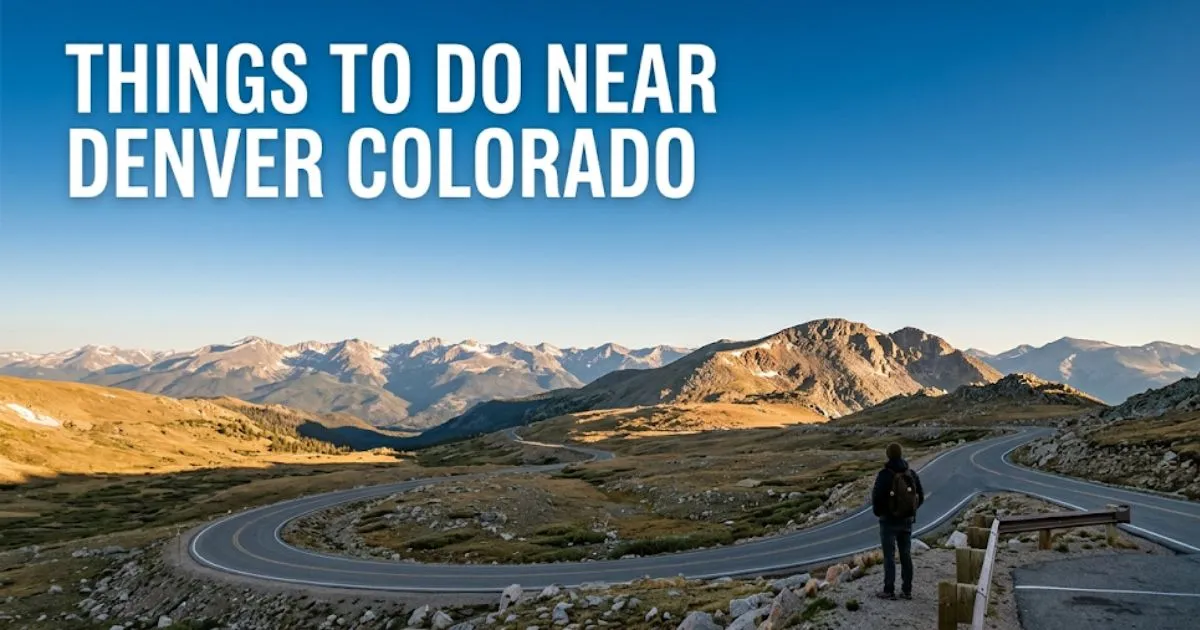
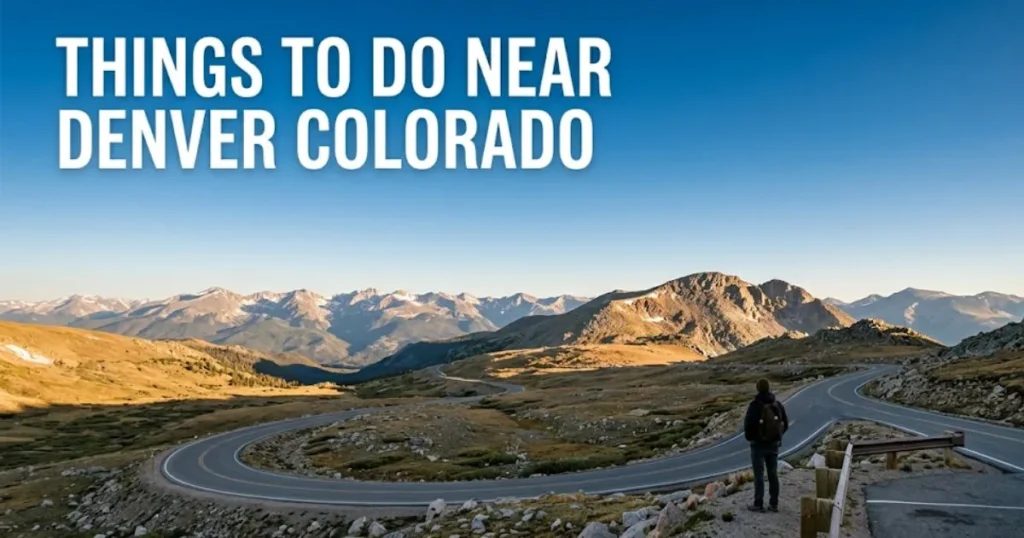
things to do near denver colorado
The best things to do near Denver are drive-up alpine summits and historic mining towns.
You need a car and an early-morning start to outrun the crowds.
Your core radius is a two-hour drive west on the I-70 mountain corridor.
This zone includes iconic national park land and overlooked county open spaces.
Denver-based travelers fall into two main camps.
Some want a packed, active hiking itinerary.
Others prefer a scenic drive with a leisurely lunch in a mountain town.
| Activity Style | Best For | Drive Time | Key 2026 Consideration |
|---|---|---|---|
| High-Alpine Hiking | Active Travelers | 60-120 min | Altitude, lightning, timed-entry permits |
| Mountain Town Stroll | Leisure Seekers | 30-90 min | I-70 traffic, seasonal closures |
| Scenic Byway Drive | Photographers | 2-4 hrs roundtrip | Road status, especially above treeline |
| Hot Springs Soak | Relaxation | 45-120 min | Reservations often required, towels not always provided |
The most common visitor mistake is failing to plan for the altitude.
The city sits at 5,280 feet.
The top of a nearby scenic byway can soar past 14,000 feet.
Hydration is non-negotiable before and during any mountain excursion.
Your body will feel the effects of thinner air faster than you expect.
day trips from denver
A successful Denver day trip is a logistics equation first and foremost.
It balances a 6:00 AM departure with a flexible afternoon itinerary.
The Interstate 70 mountain corridor is the main artery for your plans.
By 7:00 AM on a summer Saturday, westbound traffic near Floyd Hill is already heavy.
Return eastbound between 2:00 PM and 5:00 PM on Sunday is often a parking lot.
Insider Tip:
- Reframe your schedule. Leave Denver on a Saturday at 5:30 AM.
- Return from the mountains before 1:00 PM or well after 7:00 PM.
- Sunday traffic is the worst. Plan a closer, urban day trip instead.
- A Tuesday through Thursday trip provides a radically different, crowd-free experience.
Treat the drive as part of the adventure rather than a commute.
The scenery from I-70, carved through Clear Creek Canyon, is a stunning start.
What you pack matters more for a day trip here than elsewhere.
A morning in Denver can be 70 degrees and sunny.
The top of a nearby pass can be a windy 45 degrees with sleet.
Pack a day bag with water, high-SPF sunscreen, and multiple layers.
Always include a rain shell, even under a clear morning sky.
Afternoon thunderstorms in the high country arrive like clockwork in July and August.
mountain towns near denver
Colorado’s mountain towns are not created equal for a day tripper.
Each offers a distinct vibe, from gritty and historic to polished and resort-like.
Your choice defines the entire day’s rhythm.
Some suit a quick coffee and walk.
Others demand a full day of exploration, shopping, and a nice dinner.
For a first-time visitor seeking the “classic” Colorado mountain town, choose Breckenridge.
Its Main Street is a beautifully preserved historic district with a free gondola ride.
The BreckConnect Gondola whisks you from town to the base of Peak 8 for panoramic views.
For a closer, more low-key alternative, choose Idaho Springs.
It is a mere 32 miles from Denver on the less-congested stretch of I-70.
You get an unpretentious main street, a famous local pizza joint, and a waterfall.
For a quiet, high-country escape, point your car toward Nederland.
This former mining town up Boulder Canyon feels worlds away from the Front Range.
It serves as the gateway to the stunning Indian Peaks Wilderness.
| Mountain Town | Drive Time from Denver | Best For | Town Vibe | Avoid |
|---|---|---|---|---|
| Idaho Springs | 35 min | Families, quick trip | Gritty, historic, unpretentious | Expecting luxury |
| Georgetown | 45 min | Train lovers, history buffs | Well-preserved silver mining boomtown | Weekends in summer |
| Nederland | 50 min | Solitude seekers | Quiet, quirky, high-altitude gateway | Chain stores |
| Boulder | 40 min | Foodies, urban hikers | Energetic college town, outdoor chic | Car-free visitors |
| Breckenridge | 1 hr 40 min | First-timers, shoppers | Polished, lively, iconic | Budget travelers |
| Estes Park | 1 hr 30 min | RMNP visitors, families | Gateway tourist hub, elk everywhere | Those avoiding crowds |
Idaho Springs runs on a less tourist-trap economy than other stops.
It is where locals stop for a post-hike beer at Westbound & Down Brewing Co.
Couples enjoy a casual, unplanned stroll here more than a rigid Breckenridge itinerary.
Seniors will find Georgetown a flat, walkable stretch of history.
The Georgetown Loop Railroad is an excellent seated activity for all ages.
Budget travelers can enjoy a picnic by the lake in Georgetown with zero entry cost.
rocky mountain national park day trip
A Rocky Mountain National Park day trip in 2026 requires a timed-entry reservation.
The National Park Service runs two separate permit systems for the peak season.
This is not a suggestion. It is an entry gate enforcement rule.
Without the correct permit, you will be turned away at the Beaver Meadows or Fall River entrance.
To understand the 2026 system, break it into two parts.
Part one is access to the main park, including the Bear Lake Road corridor.
Part two is access to the “rest of the park,” which excludes the Bear Lake zone.
2026 Timed-Entry Reservation Strategy:
- Identify your target zone. Bear Lake Road is the most popular and restrictive area.
- Know the booking window. Permits are released on Recreation.gov on a rolling basis starting in early summer. A block is released the night before at 7:00 PM MT for next-day entry.
- Secure the Bear Lake permit first. This corridor leads to Emerald Lake, Dream Lake, and Alberta Falls.
- If you fail to get it, do not despair. Book the “rest of the park” permit. This grants access to the stunning Trail Ridge Road and the less-crowded Wild Basin area.
- Arrive before your 2-hour entry window. You must pass the gate during this window, but can stay all day.
Solo travelers and couples who strike out on the Bear Lake permit should target the Wild Basin entrance.
The hike to Ouzel Falls is a spectacular, less-trafficked alternative.
Families often prefer the gentle, accessible stroll around Sprague Lake on the main corridor.
Trail Ridge Road is the park’s defining experience.
It is closed from late October through late May.
Driving its length from Estes Park to Grand Lake is a full day by itself.
Altitude impacts every activity here.
The Alpine Visitor Center sits at 11,796 feet.
Short, flat walks here will feel exhausting for the first day or two.
Insider Tip:
- Park at the Estes Park Visitor Center and use the free Hiker Shuttle to bypass parking chaos at trailheads.
- The shuttle is a stress-reliever for families and seniors who want to avoid circling full lots.
things to do within 2 hours of me
When Denver locals ask, “What’s within 2 hours of me?,” they want a low-friction escape.
They are filtering for an activity that maximizes experience and minimizes planning.
Your first filter should be the local classic: Red Rocks Park.
It is a 20-minute drive from downtown and is free to enter during the day.
You can hike the Trading Post Trail through towering sandstone monoliths when no concert is in session.
Your second filter is a high-reward mountain drive.
The Peak to Peak Scenic Byway is the most accessible route from Denver.
It runs 55 miles from Central City to Estes Park with constant views of the Continental Divide.
This byway is an ideal outing for a couple seeking a romantic drive.
It lacks the brutal steep grades and heavy truck traffic of I-70.
In late September, this road becomes a primary artery for leaf-peeping.
Budget travelers get enormous value from packing a cooler and driving this route.
The only cost is fuel and a potential small fee for a state park pull-off.
Seniors will appreciate the smooth pavement and plentiful scenic overlooks with guardrails.
The hidden cost of this proximity is weekend crowding.
A “quick trip” up a nearby canyon like Clear Creek can become a traffic standstill by 10:00 AM.
Treat a Saturday excursion like a weekday commute and depart by 6:30 AM to secure your solitude.
red rocks park and amphitheatre hiking
Red Rocks is two separate experiences in one location.
It is a world-famous concert venue by night and a free, stunning city park by morning.
Hiking here when the stage is quiet is a cherished local ritual.
The park opens one hour before sunrise, and the morning light on the rocks is perfect.
The best route for a morning visitor is the Trading Post Trail, a 1.4-mile loop.
This trail weaves through massive red rock formations named for their shapes.
You will pass the iconic Ship Rock and Creation Rock without the ticketed crowds.
The path is uneven in places, making it poor for strollers but excellent for solo hikers.
For a more strenuous workout, climb the amphitheater stairs themselves.
The venue seats are accessible until mid-afternoon on non-concert days.
A couple or solo traveler can get a memorable workout running the rows of wooden benches.
Insider Tip:
- Check the official concert calendar before visiting, even for a morning hike.
- A show date means the venue closes entirely by early afternoon for soundcheck.
- The Trading Post Trail remains open behind the venue often, but parking becomes impossible.
Families should target the Upper North Lot for the easiest access to the Trading Post Trail.
The museum inside the Visitor Center is free and worth a quick walkthrough for music history buffs.
Avoid this entire area on a summer concert day if you are not attending the show.
boulder colorado day trip from denver
Boulder is not a mountain town. It is a sophisticated city at the mountains’ front door.
A day trip here is about blending culinary excellence with immediate trail access.
Your touchstone is the Pearl Street Mall, a vibrant four-block pedestrian promenade.
It is packed with buskers, local boutiques, and high-quality independent restaurants.
Unlike a generic outdoor mall, Pearl Street feels genuinely central to Boulder’s identity.
For the iconic hike, head to Chautauqua Park at the base of the Flatirons.
This trailhead is the most popular in Colorado for a reason.
The 1.5-mile hike to the Royal Arch is a steep, rewarding morning objective.
Parking at Chautauqua is the single biggest frustration here.
The small lot fills by 6:30 AM on a nice summer weekend.
Use the city’s free Park-to-Park shuttle from downtown Boulder to avoid the mess.
Foodies should plan a meal at Frasca Food and Wine or the more casual Pizzeria Locale.
Boulder has a higher concentration of excellent dining than Denver on a per-capita basis.
A solo traveler will find the extensive counter-service gourmet options especially welcoming.
Budget travelers will find the real value in Boulder’s free open spaces.
Mount Sanitas offers a rugged loop hike with city views right from town.
Couples seeking a less intense stroll should try the paved Boulder Creek Path, which spans miles along the water.
scenic drives near denver
The best scenic drive near Denver without a reservation system is the Peak to Peak Highway.
It is a publicly accessible state highway, not a controlled federal park road.
This means zero timed-entry permits and a guaranteed entry point from Estes Park south to I-70.
The route begins in the quirky gambling town of Central City.
From there, the 55-mile road traces the foothills of the Continental Divide.
The constant, unobstructed views of the Indian Peaks make it superior to the I-70 corridor.
Your key pull-offs are the Chapel on the Rock and the overlook at Lily Mountain.
The chapel is a stunning stone Catholic mission sitting directly beneath Mount Meeker.
It is one of the most photographed landmarks in the state and sits just off the main highway.
Fall is when this drive transforms from beautiful to legendary.
The aspen groves near Brainard Lake turn a brilliant gold typically in late September.
The timing of peak color varies by elevation and year, so check local 2026 fall foliage trackers.
A drive to Guanella Pass is the insider alternative to the more commercial routes.
This dirt and paved road climbs from Georgetown to the south end of the park system.
It tops out above timberline with a direct view into the Mount Blue Sky massif.
All high-altitude scenic drives share one non-negotiable rule.
Check the road status on the CDOT (Colorado Department of Transportation) website before leaving.
These roads can close for snow in any month and have zero services at the summit.
mount evans scenic byway
The Mount Blue Sky Scenic Byway (formerly Mount Evans) is the highest paved road in North America.
It terminates at 14,130 feet, a genuinely disorienting altitude for a day trip.
In 2026, a timed-entry reservation is mandatory to drive the final segment past Echo Lake.
This road is not a casual drive. It is an exposed, guardrail-free climb.
The pavement is narrow, with steep drop-offs that will terrify nervous drivers.
The reward is a summit experience accessible by car that normally requires a major mountaineering effort.
Your 2026 reservation strategy is different from Rocky Mountain National Park.
Permits are released in blocks for the full summer season on Recreation.gov.
You must book a specific date and time to pass the gate at Echo Lake.
Before You Drive Mount Blue Sky in 2026:
- Secure the reservation first. This system sells out quickly for July and August dates.
- Plan to arrive early, but not too early. The alpine road is prone to morning ice, even in July. A 9:00 AM start time is safer than a 7:00 AM one.
- Check the weather at the Summit Lake zone. Lightning is a lethal, daily afternoon threat.
- Know the physical symptoms. Breathing will be labored. Mild headache and dizziness are very common.
The best hike from this road starts at Summit Lake, not the very top.
The Chicago Lakes Trail descends into a glacial basin of shocking beauty.
Couples and photographers will find the reflection of the summit in the alpine lakes to be the real money shot.
Budget travelers can drive the road’s lower, free section to Echo Lake without a reservation.
This is a lovely subalpine lake with a flat, accessible trail loop around its perimeter.
Seniors who find the high summit too risky will still get a spectacular mountain experience right here.
hot springs near denver
Soaking in a geothermal pool is the perfect counterpoint to a strenuous hike.
The best hot springs near Denver for a day trip is Indian Hot Springs in Idaho Springs.
It is a quick 35-minute drive and offers both cave pools and outdoor jacuzzis.
This facility is historic and leans toward the “no-frills” side.
Do not expect an opulent spa; expect genuine, hot mineral water in a slightly rustic setting.
The geo-thermal caves are a genuinely unique, steamy underground soaking experience.
For a more upscale and scenic soak, a couple should drive further to Hot Sulphur Springs Resort.
This is a two-hour drive but offers 22 pools of varying temperatures along the Colorado River.
It is a natural winter day trip because the hot water contrasts dramatically with the cold, snowy air.
Reservations are strongly recommended for any commercial hot spring on a weekend.
Many have moved to timed-entry slots to prevent overcrowding.
A solo traveler can often find a last-weekday opening that a couple on a weekend cannot.
An important rule: heavy drinking and high-altitude soaking are a dangerous combination.
The heat from the water amplifies the dehydration already caused by the altitude.
Drink a bottle of water for every 20 minutes you spend in the hottest pools.
The free, wild alternative is a soak at Penny Hot Springs near Carbondale.
This requires a much longer drive and is an extremely limited, unsupervised spot.
It is a local’s spot and strictly adheres to a “pack it in, pack it out” ethic.
best hikes near denver
The “best” hike is the one that matches your altitude tolerance and time budget.
Filtering hikes by distance from your car is the Denver local’s method.
The highest-convenience, high-reward hike is St. Mary’s Glacier.
This trail, located a 10-minute drive from Idaho Springs, climbs quickly above timberline.
A one-mile hike delivers you to a permanent snowfield and a stunning alpine lake.
It is short enough for a half-day trip but steep enough to get your heart rate up.
For a classic Rocky Mountain creek walk, choose Maxwell Falls near Evergreen.
This is a lower-elevation, 4-mile loop through a dense pine forest with multiple cascades.
It is the best option for families with young children who need a reliable, shady trail.
Eldorado Canyon State Park south of Boulder is a must for serious hikers.
The Rattlesnake Gulch Trail climbs to the ruins of an old hotel with jaw-dropping views.
This is a short, very steep hike that requires sturdy shoes and a head for heights.
Hiking here requires an honest personal assessment of your group’s limits.
The sun is brutal, the air is thin, and the afternoon storms are life-threatening.
A solo hiker must leave a detailed itinerary with someone and never rely on a mobile phone signal.
The single best local tip is to start your hike at sunrise and be below treeline by noon.
This cadence lets you enjoy the clearest skies and avoid the lightning danger.
That “relaxing” 2:00 PM summit you see tourists attempting is a severe risk in July.
where to see fall colors near denver
Colorado’s aspen display is a precise, elevation-dependent window of gold.
The best accessible area near Denver is Guanella Pass, between Georgetown and Grant.
This 22-mile road climbs through thick aspen groves that erupt in color around late September.
The timing of peak color is a fiercely tracked local obsession.
The general window for the Front Range is the last two weeks of September.
Exact dates change annually, so follow 2026 fall color trackers from Colorado’s news stations.
For a less-crowded experience, skip the weekend on Guanella Pass.
Arrive on a Monday morning in late September.
A solo driver or a couple will find pull-offs and solitude that do not exist on a Saturday.
Kenosha Pass on U.S. Highway 285 is another classic, accessible color drive.
It offers a vast, panoramic expanse of yellow and orange aspen on the valley floor.
The parking areas here fill up before sunrise on weekends.
The single most walkable leaf-peeping spot is the Betty Ford Alpine Gardens in Vail.
This is a longer day trip, but the gardens are the highest botanical garden in the world.
Families and seniors will find the paved paths and stunning fall backdrop to be perfect and safe.
Boreas Pass, a dirt road south of Breckenridge, provides a unique color perspective.
It allows you to drive directly through dense aspen tunnels.
A high-clearance vehicle is not strictly required but is strongly preferred for this route.
relaxing things to do near denver
A relaxing Denver day trip minimizes the variables of driving and altitude.
The first rule is to prioritize a destination with a walkable core over a trailhead.
Evergreen is the answer for a quintessential, low-effort mountain escape.
This town is only a 45-minute drive from Denver, using Highway 74 instead of I-70.
Park your car at Evergreen Lake and walk the flat 1.3-mile loop around its perimeter.
You can rent a paddleboard in summer or simply sit on the historic lake house deck.
The town’s main strip is compact and lined with local breweries and a famous bread bakery.
Lariat Lodge Brewing has a sunny patio that feels like a true local’s backyard.
A couple or solo traveler can spend four hours here without any sense of rush.
Golden is the other top choice for a relaxed, car-light day.
Drive 20 minutes, park once near Washington Avenue, and walk.
The Clear Creek Trail is a paved path that runs through town along its rushing namesake creek.
The creek path is the most accessible, easy stroll near Denver.
It is fully wheelchair and stroller accessible, passing right under the city’s iconic Welcome Arch.
You can pull up a patio chair at Golden Mill afterward and watch the tubers float by in summer.
Combine a morning in Golden with a drive up Lookout Mountain for the view.
The hairpin-turn road climbs to Buffalo Bill’s Grave and a panoramic view of Denver.
This route is short, paved, and perfect for seniors who want a scenic drive without the high-alpine exposure.
gold mine tours near denver
The historic mining economy built the towns you now visit for leisure.
Argo Gold Mill and Tunnel in Idaho Springs is the premier hard-rock mining tour.
It sits directly on I-70 and offers an immersive, 75-minute guided underground walk.
This tour is one of the best bad-weather backup plans near Denver.
It operates year-round and the temperature inside the tunnel is a constant, chilly 50 degrees.
Families with kids find the hands-on gold panning station outside to be a surprise hit.
In Georgetown, the Capital Prize Gold Mine tour takes you 1,000 feet into a mountain.
This is a narrower, more authentic and intimate tour than the larger Argo complex.
Solo travelers looking for an unfiltered history lesson prefer this operation.
The Mollie Kathleen Gold Mine in Cripple Creek is a different beast.
It requires a long day trip south of Colorado Springs, roughly a two-hour drive from Denver.
Its defining feature is a vertical shaft descent 1,000 feet underground in a genuine miner’s cage.
This descent is an immediate “no” for anyone with claustrophobia or severe mobility issues.
The cage is tight, loud, and jarring.
For those who can manage it, the tour guide’s real-world mining stories are unforgettable.
All mine tours share one key safety note: they are not suitable for people with cardiac issues or pacemakers.
The high altitude of the towns above ground is already a physical stressor.
The added tight, cool, and sometimes startling underground environment demands a basic level of fitness.
denver altitude sickness prevention
Acute Mountain Sickness is the single biggest trip-wrecker for Denver visitors.
It hits regardless of your age or fitness level, often on the first or second day.
The key prevention is hydration, not fitness.
You should start drinking extra water 24 hours before you fly into Denver.
The city’s dry, high-desert air dehydrates you faster than a humid climate.
Electrolyte tablets or packets added to your water work far better than plain water alone.
The “one day in the city” rule is your best defense before a mountain trip.
Spend your first full day exploring lower-elevation Denver or Golden.
Do not fly from sea level and drive straight up to a 12,000-foot trailhead.
Symptoms to watch for include a pounding headache, nausea, and dizziness.
If these hit, your day trip is over. Drive down in elevation immediately.
There is no macho way to power through it; the cure is going lower.
Alcohol is the great accelerator of altitude sickness.
A single beer in Denver impacts you like two or three at sea level.
Avoid any alcohol in your first 24 hours at this elevation.
The Mount Blue Sky summit demands a special warning: do not sit there idling in your car.
Even with the engine running, carbon monoxide can leak, and the altitude is already starving you of oxygen.
Park, take your photos, walk briefly, and descend to Echo Lake to truly rest and breathe.
unique things to do around denver
Beyond the standard trailhead, Denver’s orbit contains truly singular activities.
The National Center for Atmospheric Research (NCAR) in Boulder is a free, architectural marvel.
Designed by I.M. Pei, it sits on a mesa with views to the Continental Divide.
The visitor center here is free and offers a shockingly engaging look at climate science.
A couple or a solo intellectual will find this a far more rewarding stop than another crowded brewery patio.
The trailhead behind NCAR also connects to the Flatirons without the chaos of Chautauqua parking.
Caribou Ranch Open Space near Nederland is a local secret with deep music history.
It was a famous recording studio that hosted John Lennon and Elton John in the 1970s.
The studio building is gone, but the restored caretaker’s cabin and interpretive signs honor its legacy.
The gentle, flat trail here is perfect for families and seniors who want a high-country feel with zero strenuous effort.
You walk through a meadow of wildflowers in July and August with the Continental Divide as your backdrop.
The silence and isolation here are the polar opposite of a packed Estes Park boardwalk.
For a true oddity, drive east of Denver to the Plains Conservation Center.
It features a recreated homestead village and an authentic sod house on a vast prairie.
This trip is flat, accessible, and a striking contrast to the alpine trips you just finished.
Solo travelers and families burnt out on driving will find this an easy, enlightening loop walk.
It highlights the short-grass prairie ecosystem that makes up Colorado’s other, less-photographed half.
A sunset here, with the mountains 30 miles west turning pink, is just as memorable as any alpine view.
Key Takeaway
Mount Blue Sky demands a reservation. Hydrate before arrival. Descend immediately if a headache starts.
Frequently Asked Questions About Things to Do Near Denver
What is the absolute best day trip from Denver?
The best day trip from Denver is the drive up Trail Ridge Road in Rocky Mountain National Park.
It requires a timed-entry reservation, but it is a genuinely singular alpine experience.
The road tops out above treeline at 12,183 feet with tundra views stretching to Wyoming.
Do I need a reservation for Rocky Mountain National Park in 2026?
Yes. Rocky Mountain National Park requires a timed-entry reservation during the peak summer season.
You must book a specific entry window on Recreation.gov for either the Bear Lake Road corridor or the rest of the park.
A limited number of next-day tickets are released the evening prior at 7:00 PM Mountain Time.
Is driving to the mountains from Denver difficult?
The drive on Interstate 70 is paved and well-maintained, but it is a steep mountain corridor.
Heavy weekend traffic and sudden snowstorms even in summer are the main difficulties.
The high-altitude scenic byways, like Mount Blue Sky, are narrow roads with sheer drop-offs and no guardrails.
What can I do near Denver without a car?
You can take the RTD light rail’s W line to Golden and walk the paved Clear Creek Trail.
The Bustang state bus service connects Denver Union Station to Idaho Springs and Breckenridge for a day trip.
A car-free trip limits you to the urban foothills but still provides a genuine mountain town experience.
How can I prevent altitude sickness in Denver?
Start drinking extra water with electrolytes 24 hours before you arrive at Denver’s elevation.
Spend your first full day at the city’s lower elevation of 5,280 feet before venturing higher.
Do not drink any alcohol on your first day, and descend immediately if a headache or nausea develops.
Are there things to do near Denver when it rains or snows?
Yes. The Argo Gold Mill and Tunnel in Idaho Springs is an excellent year-round underground tour.
The National Center for Atmospheric Research in Boulder offers a free, stunning indoor architectural experience.
You can also soak in the geo-thermal cave pools at Indian Hot Springs, which feels especially moody in bad weather.
Denver’s best quality is this rapid escape hatch into the Continental Divide.
You now have the blueprint to navigate the 2026 timed-entry systems and avoid the tourist traffic.
Your single most important next step is to open Recreation.gov immediately.
Cross-reference your dates against the Rocky Mountain National Park and Mount Blue Sky permit release windows.
Verify every road status on the Colorado Department of Transportation website before you depart.
The mountain rules are simple: book the permits, pack the water, and start your engine before sunrise.