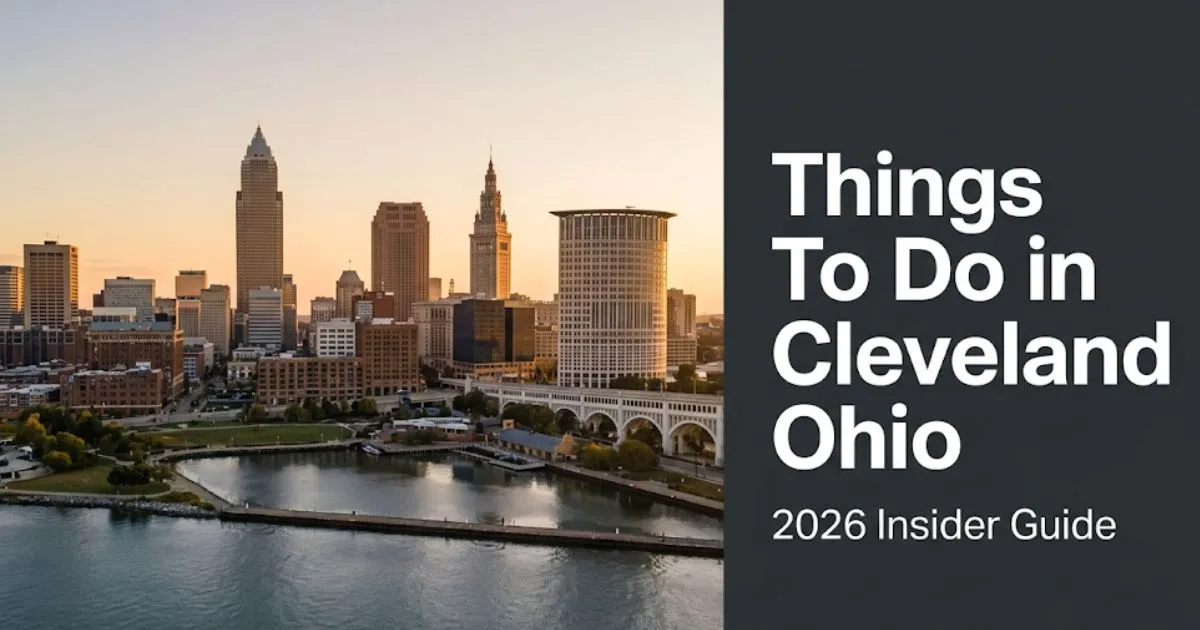
Things To Do in Cleveland Ohio: 2026 Insider Guide

Cleveland’s reputation has lagged behind its reality for a decade. The things to do in Cleveland Ohio now include one of America’s strongest museum complexes, a neighborhood dining scene that consistently surprises first-time visitors, and a national park reachable within 30 minutes of downtown.
Destination Cleveland reports the city draws over 19 million visitors annually. Most see only the waterfront corridor and leave without discovering what makes the city genuinely worth the trip.
This guide covers every major experience, neighborhood, outdoor option, dining district, and practical logistics detail you need. It also tells you honestly what to skip, what to prioritize, and when to come.
Things To Do in Cleveland Ohio: The Essential Overview
Cleveland offers more genuine cultural depth per dollar than almost any mid-sized American city.
The Rock and Roll Hall of Fame, the Cleveland Museum of Art with its free general admission, Cuyahoga Valley National Park, and the neighborhood corridors of Ohio City and Tremont form the backbone of a strong two-to-three day visit.
Think of Cleveland like a smaller version of Chicago’s cultural infrastructure, priced closer to Pittsburgh. The institutions are genuinely world-caliber. The crowd pressure is significantly lower than either city.
Destination Cleveland identifies University Circle as one of the most concentrated museum districts in the United States. That claim holds up. Walking distance from each other, the Cleveland Museum of Art, the Cleveland Museum of Natural History, and the Cleveland Botanical Garden deliver a full day of programming without a car.
The waterfront gets most of the tourism brochure attention. The neighborhoods get most of the local energy.
Insider Tip:
- Skip renting a car for your first two days. Use RTA’s HealthLine along Euclid Avenue and rideshare for neighborhood evenings.
- Book Rock and Roll Hall of Fame tickets online in advance, especially on summer weekends.
- For solo travelers, Ohio City offers the best combination of walkable dining, bars, and street-level neighborhood character.
What Makes Cleveland Worth Visiting in 2026
Cleveland is worth visiting in 2026 because it combines genuine institutional excellence with a food and neighborhood scene that still feels local rather than tourist-optimized.
The city’s museum complex at University Circle is frequently compared favorably to Chicago’s Museum Campus. The Cleveland Orchestra at Severance Music Center holds a reputation among classical music professionals as one of the finest orchestras in the world.
For budget-conscious travelers, Cleveland’s free-to-enter Cleveland Museum of Art alone justifies the trip. No major coastal city offers that caliber of collection at no admission charge.
The food scene in Ohio City has matured significantly. The area around West 25th Street now runs from morning market culture at West Side Market through evening restaurants that have earned national recognition.
According to Ohio Tourism, Northeast Ohio’s tourism infrastructure has seen sustained reinvestment since 2018. The result is a city that feels more polished than its reputation suggests without having lost its working-class grain.
For couples, the combination of a Cleveland Orchestra performance at Severance and dinner in Tremont creates an evening that competes with anything a larger city offers, at roughly half the cost.
| Experience | Best For | Cost Range | Time Needed | Insider Note |
|---|---|---|---|---|
| Rock and Roll Hall of Fame | Music enthusiasts, families | $25-$30/adult approx. | 3 to 4 hours | Buy online to skip lines |
| Cleveland Museum of Art | All profiles | Free general admission | 2 to 4 hours | Free parking in adjacent garage |
| West Side Market | Budget travelers, foodies | Free entry, market prices | 1 to 2 hours | Saturday morning is peak; go early |
| Cleveland Orchestra at Severance | Couples, arts travelers | $30 to $120+ | 2 to 3 hours | Rush tickets sometimes available day-of |
| Cuyahoga Valley National Park | Families, outdoor enthusiasts | Free entry | Half to full day | Brandywine Falls trail is easiest |
| Ohio City dining corridor | All profiles | $15 to $60 per person | 2 to 3 hours | Market Garden Brewery for local beer |
Best Neighborhoods to Explore in Cleveland
Cleveland’s best neighborhoods for visitors are Ohio City, Tremont, Gordon Square Arts District, Little Italy, and University Circle, each with a distinct character and a different reason to visit.
Ohio City, anchored by West Side Market on West 25th Street, functions as Cleveland’s most complete neighborhood for a day-visit. It has the market, independent restaurants, craft breweries, and coffee shops within a walkable radius.
Tremont, directly south of Ohio City, runs quieter and more residential but carries some of Cleveland’s strongest independent dining. Lincoln Park anchors the neighborhood’s center. The restaurant density along Professor Avenue and Literary Road rewards an evening walk.
Gordon Square Arts District along Detroit Avenue is where independent theater, vintage retail, and neighborhood bars concentrate. The Cleveland Public Theatre anchors it as a cultural district.
Little Italy, near University Circle, offers a concentrated block of Italian restaurants and bakeries along Mayfield Road. It is more tourist-oriented than Tremont but genuinely pleasant for a lunch stop between museum visits.
Insider Tip:
- Tremont is best for couples seeking a quieter dinner neighborhood with less crowd pressure than Ohio City.
- Gordon Square suits solo travelers who want neighborhood bars with local regulars rather than tourism-facing venues.
- Families will find University Circle the most practical base, with multiple major museums within a 10-minute walk.
Key Takeaway: Ohio City handles your daytime market-and-brunch needs. Tremont handles your serious dinner night. Gordon Square handles your local bar night.
Rock and Roll Hall of Fame Cleveland
The Rock and Roll Hall of Fame is Cleveland’s single most visited attraction and genuinely earns its place as a first-stop destination for music enthusiasts.
The I.M. Pei-designed building on the Lake Erie waterfront houses a collection of artifacts, interactive exhibits, and rotating installations spanning the full arc of rock, soul, R&B, and hip-hop history. The permanent collection alone takes three to four hours to cover properly.
Admission runs approximately $25 to $30 per adult at recent pricing, with reduced rates for children and seniors. Verify current pricing directly with the Rock Hall before visiting, as rates have adjusted in recent years.
According to the Rock and Roll Hall of Fame’s own visitor guidance, weekday morning visits see the lowest crowd levels. Summer Saturday afternoons can feel genuinely congested in the lobby and main gallery floors.
The local alternative to spending a full day at the Rock Hall is the Beachland Ballroom in Waterloo Arts District on Waterloo Road. It is a working music venue that has hosted both national touring acts and local Cleveland artists since the early 2000s. The building itself is a converted Croatian ballroom with genuine musical history.
For families: children engaged with music history genuinely connect with the interactive sections. Children under 10 who are not specifically interested in music history may lose interest in the documentary and artifact-heavy exhibits within 90 minutes.
Seniors and accessibility travelers: the Rock Hall is fully wheelchair accessible with elevator access to all floors.
West Side Market and Ohio City Cleveland
West Side Market is Cleveland’s most authentic public market experience and the best single morning activity in the city.
The 1912 building at the corner of West 25th Street and Lorain Avenue houses more than 100 vendors selling fresh produce, artisan meats, international prepared foods, baked goods, and specialty groceries. Entry is free. The experience costs whatever you choose to spend at individual stalls.
Saturday mornings draw the largest crowds, with locals shopping for the week alongside visitors. Arrive before 10 a.m. to navigate the main arcade without fighting the midday rush.
Ohio City’s surrounding blocks have matured into one of the region’s stronger independent dining and drinking corridors. Market Garden Brewery on West 25th Street produces some of Ohio’s most respected craft beer and serves a full food menu in a large, well-run space.
Collision Bend Brewing Company on the Cuyahoga River at Carter Road offers a riverfront location that works particularly well for couples on a warm afternoon.
For budget travelers: West Side Market alone can serve as a complete, very affordable lunch. Pierogies, gyros, fresh bread, and tamales run well under $15 per person for a satisfying midday meal.
Insider Tip:
- West Side Market is closed Sundays and Wednesdays. Verify current hours before building your itinerary around it.
- The produce arcade on the exterior is less crowded than the interior meat and prepared food stalls.
- Tremont is a 10-minute walk south if you want to extend an Ohio City morning into a neighborhood afternoon.
Cleveland Museum of Art and Playhouse Square
The Cleveland Museum of Art on East Boulevard in University Circle offers free general admission to its permanent collection, making it one of the most accessible major art museums in the United States.
The permanent collection covers more than 61,000 works spanning 6,000 years across every major cultural tradition. The medieval European armor collection, Egyptian antiquities, and Asian art galleries are particularly strong. Special exhibitions carry separate admission fees, typically in the $15 to $20 range.
Playhouse Square on Euclid Avenue in downtown Cleveland is the second-largest performing arts complex in the United States outside of New York City’s Lincoln Center. Its restored historic theaters present Broadway touring productions, Cleveland Orchestra performances in the resident Allen Theatre, and comedy and music programming year-round.
For couples, a Playhouse Square evening is one of Cleveland’s strongest date experiences. The restored chandelier on the exterior of the theater district is visible at night from blocks away.
According to Playhouse Square’s programming schedule, Broadway touring productions typically run October through May, with summer months featuring concerts and special programming. Book specific show tickets well in advance for popular touring productions.
For seniors: the Cleveland Museum of Art is flat-floored and fully wheelchair accessible throughout. Playhouse Square theaters have accessible seating sections; request these specifically when booking.
For budget travelers: the Cleveland Museum of Art’s free admission makes a three-to-four hour visit essentially cost-free outside dining.
Key Takeaway: Build your first Cleveland morning around West Side Market and Ohio City. Save University Circle and the art museum for your second day.
Outdoor Things To Do in Cleveland
Cleveland’s outdoor activity options range from urban lakefront access at Edgewater Park to one of the largest urban park systems in the United States through the Cleveland Metroparks.
Edgewater Park on the Lake Erie shoreline offers a genuine beach experience, a fishing pier, a boat launch, and wide open lawn space with downtown skyline views. The park is free to enter. Summer weekends draw large local crowds. Water temperature in Lake Erie peaks in July and August but rarely reaches the warmth of Atlantic or Gulf coast beaches.
The Cleveland Metroparks system covers more than 25,000 acres across 18 reservations ringing the greater Cleveland area. The Garfield Park Reservation, Rocky River Reservation, and Bedford Reservation each offer trail systems for hiking and cycling at no cost.
For families: Cleveland Metroparks Zoo in the Brookside Reservation covers more than 165 acres with Australian Adventure, African Savanna, and RainForest exhibit areas. Admission runs approximately $15 to $20 per person at recent rates; verify current pricing before visiting.
For solo travelers and active visitors, the Ohio and Erie Canal Towpath Trail runs from the Flats in Cleveland south through Cuyahoga Valley National Park. The Cleveland segment offers accessible flat riding and walking with river scenery.
Insider Tip:
- Edgewater Beach in summer requires early arrival on weekends. The parking lot fills by midmorning.
- The Metroparks system is genuinely underused by visitors who focus only on the waterfront and downtown.
- September is the best outdoor month in Cleveland: mild temperatures, low humidity, and far smaller crowds than July.
Cuyahoga Valley National Park From Cleveland
Cuyahoga Valley National Park is Cleveland’s most significant natural attraction and one of the most visited national parks in the United States, receiving over 3 million visitors annually.
Located approximately 20 to 30 minutes south of downtown Cleveland by car, CVNP covers 33,000 acres of the Cuyahoga River valley between Cleveland and Akron. The park’s signature attraction is Brandywine Falls, a 65-foot waterfall accessible via a short, stroller-friendly boardwalk trail from the Brandywine Falls parking area.
The Ohio and Erie Canal Towpath Trail runs 20 miles through the park and connects to the Cleveland urban trail network. The trail is flat, well-maintained, and accessible for cyclists and walkers of most fitness levels.
The National Park Service reports that spring (April through May) brings peak waterfall volume at Brandywine Falls and vibrant forest canopy. Fall foliage typically peaks in mid to late October, making that window the most visually rewarding for hiking.
For families: CVNP’s Cuyahoga Valley Scenic Railroad operates seasonal excursions through the park valley. Children respond particularly well to the train component paired with a short Brandywine Falls walk.
For seniors and accessibility travelers: Brandywine Falls boardwalk is paved and accessible. Many trail sections elsewhere in the park involve uneven terrain and elevation change.
Park entry is free. Parking at major trailheads including Brandywine Falls can fill completely on fall weekends by 10 a.m. Arrive before 9 a.m. for reliable parking access.
Key Takeaway: Cuyahoga Valley National Park is a separate half-day or full-day commitment. Do not try to combine it with a downtown Cleveland morning on the same day.
Free Things To Do in Cleveland Ohio
Cleveland offers more genuinely free experiences than most comparably sized American cities.
The strongest free experiences in Cleveland include the Cleveland Museum of Art’s permanent collection, Edgewater Park and all 18 Cleveland Metroparks reservations, the Ohio and Erie Canal Towpath Trail, West Side Market (free entry, market purchases optional), Lincoln Park in Tremont, and the exterior public spaces of University Circle.
Free activities for specific traveler profiles:
- Budget travelers: The Cleveland Museum of Art’s permanent collection is legitimately one of the best free cultural experiences in the Midwest. Spend a full morning there before paying for anything else.
- Families: Cleveland Metroparks trails and Edgewater Park deliver full outdoor days at no cost. The Towpath Trail is stroller-accessible in its flat sections.
- Solo travelers: Gordon Square Arts District along Detroit Avenue rewards an afternoon of walking, window shopping, and browsing independent bookshops without spending beyond a coffee or a beer.
According to Destination Cleveland, the city’s arts and culture funding model has historically prioritized broad public access. The result is a museum campus where the flagship institution charges no general admission.
The USS Cod Submarine Memorial on North Marginal Road near the Rock Hall charges a modest entry fee (verify current pricing) but warrants mention as an unusual and undervisited attraction that history-focused travelers consistently rate highly.
Insider Tip:
- Free parking is available in the Cleveland Museum of Art’s adjacent garage during museum hours.
- Cleveland Metroparks trail maps are available free at all reservation entrances and online through the Metroparks official website.
Things To Do in Cleveland With Kids
Cleveland works well for families with children, primarily because its major kid-friendly attractions are genuinely engaging rather than superficially designed for children.
The Cleveland Metroparks Zoo is one of the anchor family experiences. Its African Savanna and Australian Adventure sections hold children’s attention across a wide age range. Budget two to three hours minimum for a satisfying visit.
Great Lakes Science Center on North Coast Harbor adjacent to the Rock Hall offers hands-on STEM exhibits specifically designed for school-age children. The center houses an Omnimax Theater for science documentary screenings. Admission runs in the $12 to $18 per person range at recent pricing; verify before visiting.
Cuyahoga Valley Scenic Railroad excursions through Cuyahoga Valley National Park work reliably well for children aged 4 and up. The combination of a train ride with a short Brandywine Falls walk gives young children two distinct experiences in one half-day outing.
For families staying downtown: the Rock and Roll Hall of Fame’s interactive elements work best for children aged 10 and above with genuine music interest. Younger children may find the exhibit-heavy format less engaging than active science or outdoor experiences.
Stroller access note: The Cleveland Museum of Art, Great Lakes Science Center, Rock Hall, and Zoo are all stroller-accessible. CVNP’s Brandywine Falls boardwalk is also stroller-accessible. Rocky River Reservation trails vary; check the Metroparks trail-specific accessibility notes before planning.
Insider Tip:
- Schedule zoo visits for weekday mornings. Summer weekend afternoons at the zoo are genuinely crowded.
- The Cleveland Museum of Natural History, directly adjacent to the Cleveland Museum of Art in University Circle, has dedicated children’s discovery programming that rivals the Science Center for younger visitors.
Things To Do in Cleveland for Couples
Cleveland delivers a stronger couples experience than its reputation suggests, with a genuine arts scene, serious dining, and neighborhood atmosphere that feels local rather than tourist-packaged.
The strongest romantic evening in Cleveland runs as follows: drinks in Tremont at Prosperity Social Club on Starkweather Avenue, dinner at one of the Professor Avenue corridor restaurants, and a short walk through Lincoln Park after dinner.
The Cleveland Orchestra at Severance Music Center on Euclid Heights Boulevard in University Circle provides one of the most reliably impressive date experiences in any Midwest city. The concert hall itself is architecturally beautiful. Rush tickets are sometimes available day-of at reduced rates; check the Orchestra’s official website.
For daytime couples activities: a late morning at West Side Market followed by lunch at Ohio City restaurants, then an afternoon walk along the Cuyahoga River near Collision Bend Brewing, delivers a full day without tourist infrastructure.
The Tremont Arts and Cultural Festival (held seasonally in summer, verify 2026 dates directly) transforms Lincoln Park into an outdoor gallery and performance space that couples consistently cite as a highlight of summer Cleveland visits.
Insider Tip:
- Avoid the East 4th Street restaurant corridor on Friday and Saturday nights if you prefer an intimate atmosphere. It runs loud and crowded on weekends.
- Tremont’s Lola Bistro, associated with Cleveland-raised chef Michael Symon, is a reliable splurge dinner option with a reservation strongly recommended on weekends.
Key Takeaway: For couples, one evening at Severance Music Center for a Cleveland Orchestra performance is worth more time investment than any other single Cleveland experience.
Things To Do in Cleveland at Night
Cleveland’s nighttime options concentrate most strongly in Ohio City, Tremont, Gordon Square, and the Waterloo Arts District, with each neighborhood offering a distinctly different atmosphere.
Ohio City runs liveliest. The stretch of West 25th Street from the Market to Lorain Avenue has bar density, late kitchen hours at several restaurants, and weekend energy that continues well past midnight.
Gordon Square along Detroit Avenue offers a different version of the same evening: smaller bars with more local regulars, live music at Cleveland Public Theatre and nearby venues, and a neighborhood feel that rewards walking between spots.
The Beachland Ballroom on Waterloo Road in the Waterloo Arts District is Cleveland’s most credible independent music venue for catching touring acts and local artists. Capacity is small enough that even sold-out shows feel intimate. Check their booking calendar directly for 2026 programming.
Nighttown jazz club on Cedar Road in the Cedar-Fairmount neighborhood is Cleveland’s best jazz venue. It books both national touring acts and regional artists. The room is genuinely atmospheric.
For solo travelers at night: Ohio City and Gordon Square are the safest and most navigable neighborhoods for solo evening exploration. Both areas have active street-level foot traffic through later evening hours on weekends.
According to local Cleveland arts coverage, the Grog Shop on Coventry Road in Cleveland Heights books some of Northeast Ohio’s strongest independent and touring rock programming. It sits slightly outside the downtown corridor but is worth a rideshare for a targeted show.
Things To Do in Cleveland in Winter
Winter in Cleveland is genuine. Lake Erie’s lake-effect snow pattern makes November through February the most logistically challenging season for a visit, but it does not make Cleveland unvisitable.
The indoor attractions become the clearest argument for a winter trip. The Cleveland Museum of Art, Cleveland Museum of Natural History, Great Lakes Science Center, Playhouse Square theater season, and Cleveland Orchestra at Severance all run at full programming depth from November through April.
Playhouse Square presents its strongest Broadway touring lineup during the winter months. Several major touring productions run their Cleveland engagement between November and March. Book specific show tickets well in advance.
Winter hotel rates in Cleveland drop significantly from summer peaks. The combination of lower accommodation costs and the city’s strongest indoor programming calendar makes a winter weekend trip genuinely cost-efficient for travelers willing to dress appropriately.
Insider Tip:
- Pack waterproof footwear for any winter Cleveland visit. Sidewalks in all neighborhoods can be icy from late November onward.
- The Cleveland Metroparks Rocky River Reservation offers accessible snowshoeing and cross-country skiing when snow conditions allow. Rental equipment is available on-site; verify availability before visiting.
- Outdoor activities at Edgewater Park and Cuyahoga Valley National Park remain open in winter but require proper gear. CVNP’s Brandywine Falls is visually striking in ice conditions but boardwalk surfaces can be slippery.
For seniors: winter Cleveland is manageable with smart planning. Focus on the University Circle museum cluster on arrival day, allowing indoor-only movement between major institutions.
Key Takeaway: Winter Cleveland is best experienced as a cultural city trip, not an outdoor one. The museum and performing arts calendar genuinely justifies the visit, especially when hotel rates drop below summer levels.
Best Restaurants and Food in Cleveland
Cleveland’s food reputation has improved dramatically over the past decade, with the strongest concentration of quality restaurants running through Ohio City, Tremont, and University Circle.
West Side Market functions as the city’s food foundation. The 100-plus vendors provide the best single-stop overview of Cleveland’s multicultural food culture, with Polish, Hungarian, Slovenian, Puerto Rican, and Vietnamese prepared food vendors all represented in the main arcade.
Lola Bistro on East 4th Street, the flagship restaurant of Cleveland-born chef Michael Symon, remains one of the most recognized names in Cleveland dining. The menu focuses on seasonal American cuisine. Reservations are strongly recommended on weekends.
For more local and less celebrity-adjacent dining, Tremont delivers the city’s best neighborhood restaurant density. Restaurant Dante on Professor Avenue and multiple independently operated spots along Literary Road serve serious food to primarily local clientele.
Market Garden Brewery on West 25th Street in Ohio City produces well-regarded lagers and ales and serves a food menu that pairs properly with the beer program. It is one of the few spaces in Cleveland that works equally well for a casual solo lunch and a group evening.
Insider Tip:
- East 4th Street, despite its name recognition, has become primarily a venue strip and sports-adjacent bar district. For a genuine dinner experience, Tremont consistently outperforms it.
- For the best single affordable meal in the city, arrive at West Side Market by 9 a.m. on a Tuesday or Thursday, avoid the Saturday rush, and assemble a breakfast from three or four different vendors.
Day Trips From Cleveland Ohio
The best day trips from Cleveland reach Cuyahoga Valley National Park to the south, Sandusky and Cedar Point to the west, and the Western Reserve small towns to the east and southeast.
Cuyahoga Valley National Park is technically a day trip from downtown, but covers enough ground to justify its own visit day without combining it with other Cleveland activities. See the dedicated section above for specifics.
Sandusky, Ohio, located approximately 60 miles west of Cleveland on the Lake Erie shore, is home to Cedar Point amusement park, consistently ranked among the premier roller coaster destinations in the world. The drive runs approximately one hour on U.S. Route 2. Cedar Point operates seasonally, typically May through October; verify 2026 operating dates directly. Admission runs in the $65 to $90 range at recent rates; advance purchase online typically saves meaningful money.
Akron, directly south of CVNP, is 40 miles and approximately 45 minutes from downtown Cleveland. The Stan Hywet Hall and Gardens in Akron is one of the largest private historic homes in the United States and warrants a half-day visit for architecture and garden enthusiasts.
Ashtabula County to the east offers the Covered Bridge Scenic Byway, a mapped driving route connecting 17 historic covered bridges through rural Northeast Ohio. It works best as a fall foliage drive in mid to late October.
For families: Cedar Point is the dominant day trip option and genuinely earns its reputation as a destination-quality amusement park. Allow a full day. Book online in advance to save on gate pricing.
Getting Around Cleveland and Practical Logistics
Getting around Cleveland requires a combination of the Greater Cleveland RTA transit system, rideshare, and selective car rental, depending on which neighborhoods and attractions you prioritize.
From Cleveland Hopkins International Airport (CLE): The RTA Red Line connects directly from CLE to downtown Cleveland’s Tower City station. The trip takes approximately 20 to 25 minutes and costs a fraction of rideshare pricing. This is the most efficient arrival strategy for travelers staying downtown.
Within downtown and University Circle: The RTA HealthLine runs along Euclid Avenue connecting downtown to University Circle. It covers the corridor between Public Square and East 105th Street efficiently. Frequency is reliable during daytime hours.
For neighborhood evenings in Ohio City, Tremont, and Gordon Square: Rideshare is the most practical option. These neighborhoods are 10 to 20 minutes from downtown by Uber or Lyft. RTA bus service connects them but runs less frequently in evenings.
For Cuyahoga Valley National Park: A car is the most practical option. The park is not efficiently served by public transit for visitors without significant time flexibility.
Parking: Downtown Cleveland parking garages are affordable by major city standards. The Cleveland Museum of Art garage is free during museum hours. Ohio City street parking is available but fills on weekend evenings.
Insider Tip:
- The RTA Red Line airport connection makes car rental unnecessary for visitors whose itinerary stays within downtown, University Circle, and the inner neighborhoods.
- If your trip includes Cedar Point or Cuyahoga Valley National Park, book a rental car specifically for those day-trip days rather than keeping a car for your entire stay.
Safety note: Downtown Cleveland is safer than its historical reputation suggests in 2026, but walking alone at night between major attractions along Euclid Avenue east of East 30th Street involves stretches with limited foot traffic. Use rideshare after dark for travel between neighborhoods.
Suggested Weekend Itinerary: 2 Days in Cleveland
Day 1: The Neighborhoods and the Market
- Arrive at West Side Market by 9 a.m. on Saturday. Eat breakfast from market vendors. Budget one to two hours.
- Walk the Ohio City corridor on West 25th Street. Browse independent shops, stop at Market Garden Brewery for a midday beer if timing allows.
- Rideshare or walk south to Tremont. Walk Lincoln Park and the Professor Avenue restaurant block.
- Early evening drinks at Prosperity Social Club on Starkweather Avenue in Tremont.
- Dinner at a Tremont restaurant on Professor Avenue or Literary Road. Reserve in advance for weekend evenings.
Day 2: Museums, the Rock Hall, and the Waterfront
- Morning at Cleveland Museum of Art in University Circle. Allow two to three hours for the permanent collection.
- Walk to Cleveland Museum of Natural History directly adjacent. Budget 90 minutes with children, less without.
- Lunch in Little Italy along Mayfield Road. Multiple Italian restaurants and bakeries accessible within a short walk from University Circle.
- Rideshare to the waterfront. Visit the Rock and Roll Hall of Fame. Allow three to four hours.
- Evening walk along North Coast Harbor waterfront. End the evening in Gordon Square along Detroit Avenue for local bars and the neighborhood atmosphere.
Safety and Practical Warnings for Cleveland
Cleveland’s most important practical safety consideration is the gap between its improved urban core and certain areas between major attractions.
Key safety and practical facts every visitor should know:
- Downtown Cleveland after dark: Walking east along Euclid Avenue beyond East 30th Street at night involves blocks with limited foot traffic. Use rideshare for evening travel between neighborhoods rather than walking unfamiliar routes alone.
- Lake Erie wind chill: The waterfront area around the Rock Hall and North Coast Harbor channels Lake Erie wind, particularly in spring and fall. Dress with an extra layer beyond what the temperature alone suggests.
- Lake effect snow: November through February driving conditions in greater Cleveland can deteriorate rapidly. Check weather forecasts before driving to Cuyahoga Valley National Park or on day trips to Sandusky or Ashtabula County.
- CVNP trail conditions: Cuyahoga Valley National Park trails become muddy and slippery after rain in spring and fall. Waterproof footwear is strongly recommended for any trail hiking beyond the Brandywine Falls boardwalk.
- Edgewater Park parking: The main parking lot fills completely on summer weekend mornings. Arriving after 10 a.m. on a July or August Saturday means a significant walk from overflow areas.
Destination Cleveland’s visitor services team can be reached for current safety guidance and event scheduling updates through their official website.
Frequently Asked Questions About Things To Do in Cleveland Ohio
What are the best things to do in Cleveland Ohio for first-time visitors?
First-time visitors to Cleveland Ohio should prioritize the Rock and Roll Hall of Fame, West Side Market, and the Cleveland Museum of Art for their first day.
The second day works best organized around Cuyahoga Valley National Park or a deeper neighborhood exploration of Ohio City and Tremont.
These four experiences give first-time visitors genuine coverage of what distinguishes Cleveland from comparable Midwest cities.
Is Cleveland Ohio worth visiting in 2026?
Cleveland is genuinely worth visiting in 2026, particularly for travelers who value cultural institutions, serious food, and outdoor parks at below-average major-city pricing.
The Cleveland Museum of Art with free general admission, Cuyahoga Valley National Park with free entry, and a neighborhood dining scene that has matured significantly over the past decade make the case clearly.
Travelers expecting a resort-style lakefront destination or a walkable city center in every direction may find the experience uneven.
How many days do you need to see Cleveland Ohio?
Two full days covers Cleveland’s core experiences for most travelers.
A first-time visitor can address the Rock Hall, West Side Market, the Cleveland Museum of Art, at least one neighborhood evening in Ohio City or Tremont, and a waterfront walk within two days.
Three days allows the addition of Cuyahoga Valley National Park as a dedicated half-day or full-day outing without compressing other experiences.
What is the best neighborhood to stay in Cleveland?
Downtown Cleveland near the waterfront or the Ohio City neighborhood are the two most practical base areas for most visitors.
Downtown provides direct proximity to the Rock Hall, Great Lakes Science Center, and easy RTA Red Line airport access.
Ohio City places visitors within walking distance of West Side Market and the neighborhood’s restaurant and bar corridor, with rideshare access to all other major areas.
What are the best free things to do in Cleveland Ohio?
The best free things to do in Cleveland Ohio include the Cleveland Museum of Art permanent collection, all Cleveland Metroparks reservations and trails, Edgewater Park, West Side Market entry, Cuyahoga Valley National Park, and walking the neighborhood corridors of Tremont and Gordon Square.
The Cleveland Museum of Art alone provides a full three-to-four hour cultural experience at no admission charge.
These free options allow a budget traveler to build a strong two-day itinerary spending very little on entry fees.
What is the best time of year to visit Cleveland Ohio?
The best time to visit Cleveland Ohio is late April through early June or September through early October.
Temperatures are mild, Lake Erie outdoor access is open, and crowd levels at major attractions are lower than summer peaks.
July and August bring the warmest lake temperatures and the highest hotel rates. November through March delivers the strongest indoor cultural programming at the lowest accommodation prices, but requires preparation for genuine winter conditions.
Plan Your Cleveland Trip With Confidence
Start with the two-day itinerary structure in this guide. Book Rock and Roll Hall of Fame tickets online before you arrive and make a dinner reservation in Tremont for your second evening. These two advance steps remove the most common friction points.
The Cleveland Museum of Art, Cuyahoga Valley National Park, and the Cleveland Metroparks system cost nothing to enter. Build your paid-activity budget around the Rock Hall and any Playhouse Square or Cleveland Orchestra programming you want to catch.
Travel conditions, admission prices, operating hours, and event schedules change. Verify key logistics directly with Destination Cleveland, individual venue websites, and the National Park Service before departure.
Cleveland rewards preparation and punishes assumptions built on the city’s old reputation. Arrive with a real plan and you will find a city that consistently outperforms what most travelers expect.