Things to Do on Mackinac Island: 2026 Complete Guide

The best things to do on Mackinac Island are not what you find on Main Street. They are on the interior bluff trails, in the early morning before day-tripper ferries arrive, and inside a fort that genuinely shaped North American history.
Mackinac Island is one of the only places in the continental United States where no private motorized vehicles are permitted. According to the Mackinac Island Tourism Bureau, the island hosts over 900,000 visitors annually in an area just under 4 square miles.
This guide covers everything: ferry logistics, honest activity rankings, traveler profile-specific guidance, a one-day itinerary, a two-day framework, and exactly what to skip.
Things to Do on Mackinac Island: What the Island Actually Delivers
Things to do on Mackinac Island span cycling a historic car-free highway, exploring a fully restored British-era fort, and eating fudge that has been made on the same blocks for over 130 years.
The island sits in the Straits of Mackinac, between Michigan’s Upper and Lower Peninsulas, in Lake Huron. It covers approximately 3.8 square miles and has a year-round population of roughly 500 residents.
What makes it genuinely distinctive is the ban on private motorized vehicles. Every visitor arrives by ferry and travels by bicycle, horse-drawn carriage, or foot.
That constraint creates an experience unlike standard American tourism. The sounds are different: hooves on pavement, bicycle chains, Lake Huron wind.
Mackinac Island State Park covers roughly 80% of the island’s land area. That means most of what looks like private Michigan Up North scenery is actually publicly accessible parkland.
| Experience Category | What It Delivers | Best For | Approximate Cost |
|---|---|---|---|
| Perimeter cycling on M-185 | 8-mile car-free loop, lake views | All profiles | $35-$55/day rental |
| Fort Mackinac | Fully restored 1780s British fort | History enthusiasts, families | ~$15-18/adult |
| Interior bluff trails | Arch Rock, Skull Cave, Sugar Loaf | Active travelers, couples | Free (park access) |
| Carriage tours | Narrated island overview | Seniors, first-timers | ~$35-45/adult |
| Fudge shops on Main St | Island-made fudge since 1880s | Everyone | $10-20/pound |
| Kayaking, Straits of Mackinac | Paddling with Mackinac Bridge views | Active adults, couples | ~$20-35/hour |
Best Things to Do in Mackinac Island for First-Time Visitors
The best things to do in Mackinac Island for a first visit are cycling the 8-mile M-185 perimeter loop, touring Fort Mackinac, and exploring at least one interior bluff trail.
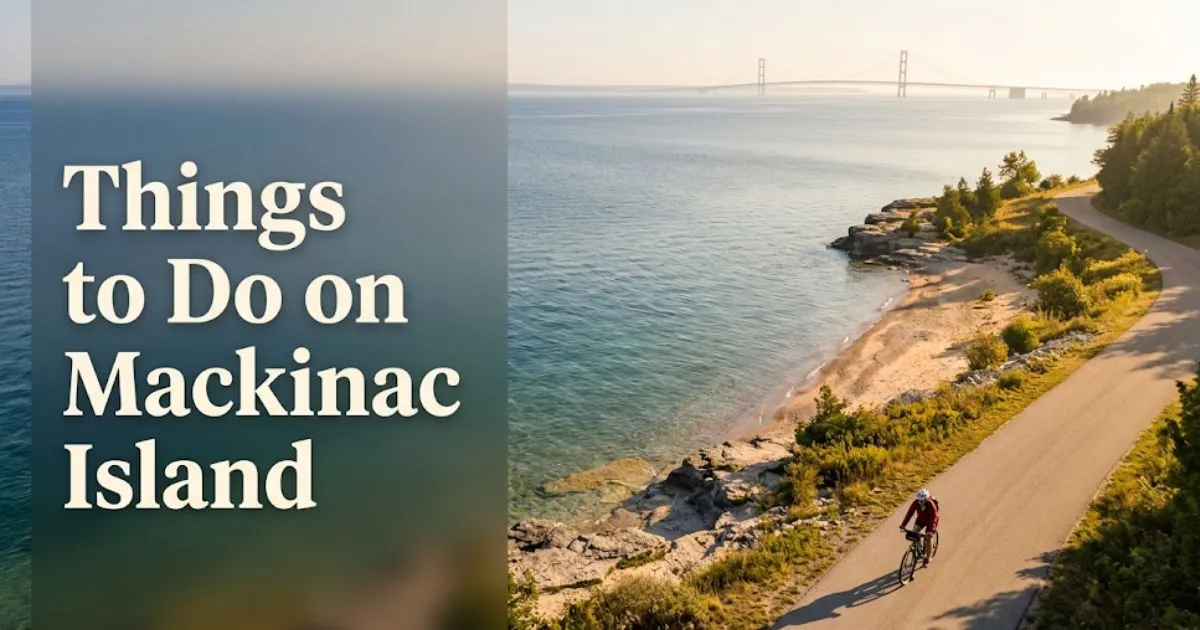
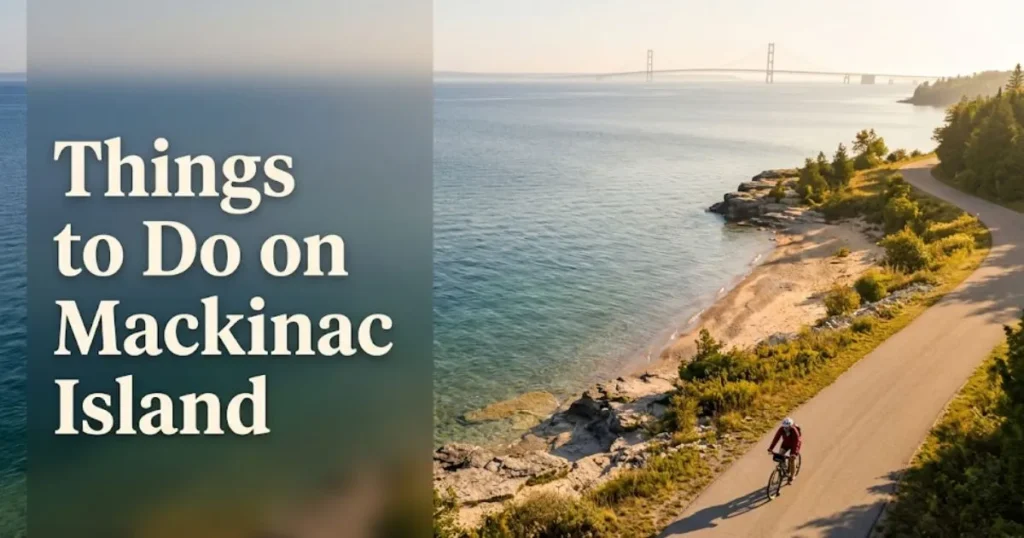
M-185 is the only US state highway with no motorized vehicles permitted. The loop follows the island’s shoreline, passing the Governor’s Summer Residence, British Landing, and sustained Lake Huron views throughout.
Fort Mackinac stands on a limestone bluff above downtown. It is one of the best-preserved 18th-century forts in North America, with 14 original buildings and a full program of costumed historical demonstrations.
Arch Rock sits 146 feet above Lake Huron and is accessible via the interior trail system or a short uphill path from the perimeter road. It is the island’s most photographed natural formation.
Insider Tip:
- Take the first ferry of the day and head directly to the interior trail system before 10am
- The bluff overlook at Arch Rock sees its lowest visitor counts before 9:30am on any given summer morning
- Solo travelers benefit most from the early start, as the trails feel genuinely remote and quiet before day-tripper crowds build
What Is Mackinac Island Known For (And What That Means for Your Trip)
Mackinac Island is known for three things above all: its car-free status, its fudge-making tradition, and Fort Mackinac. Understanding what each actually delivers in person shapes every good trip here.
The car-free status is real and has genuine experiential impact. The island operates at a different pace than any mainland destination.
The fudge tradition dates to the 1880s. Ryba’s and Murdick’s are the two oldest continuous fudge operations on the island, and watching fudge pulled and worked on marble slabs is a genuine spectacle.
Fort Mackinac is more than a landmark. It is an operating historic site managed by Mackinaw State Historic Parks (part of the Michigan Department of Natural Resources), with period-accurate demonstrations and cannon firings on a seasonal schedule.
What the island is also known for, though less prominently, is the Grand Hotel. Its 660-foot porch is the longest in the world. Non-guests pay an access fee to enter the hotel grounds; verify the current rate before visiting.
Couples will find the Grand Hotel grounds genuinely romantic in the early evening light. The fee is modest and the porch views over the Straits justify it.
Budget travelers should note: the Grand Hotel grounds fee, Fort Mackinac admission, ferry costs, and bike rental combine into a meaningful daily spend. Plan accordingly.
How to Get to Mackinac Island by Ferry
Getting to Mackinac Island requires a ferry crossing from either Mackinaw City (Lower Peninsula) or St. Ignace (Upper Peninsula). Three ferry companies operate the route: Shepler’s Mackinac Island Ferry, Star Line Mackinac Island Ferry, and Arnold Line.
All three companies offer service from Mackinaw City. Arnold Line additionally operates from St. Ignace. Crossing time runs approximately 16 to 20 minutes.
Round-trip adult fares run approximately $30 to $32 per adult as of recent seasons. Children’s fares are typically lower; verify current rates directly with each company before booking.
Advance reservations are strongly recommended for peak summer weekends, particularly July 4th through mid-August. Walk-on capacity exists but lines for same-day boarding can exceed 45 minutes at peak times.
To book your ferry efficiently in 2026:
- Decide your departure city: Mackinaw City is more accessible from Lower Michigan; St. Ignace if arriving from the Upper Peninsula via I-75
- Compare departure times across Shepler’s, Star Line, and Arnold Line for your travel dates
- Book round-trip tickets at least 2 to 3 weeks in advance for July and August travel
- Note your return ferry time and set a phone alarm: missing the last ferry means an unplanned overnight stay
- Park your vehicle at paid lots near the ferry docks in Mackinaw City; rates vary by proximity to the dock
Seniors and travelers with mobility limitations should note: loading and unloading ferries involves stepping between the dock and boat. This requires balance and reasonable mobility. Contact the ferry company in advance if mobility assistance is needed.
Key Takeaway: Book your ferry round-trip in advance for any summer weekend visit. Missing the last departure is the single most common Mackinac Island logistical error.
Outdoor Things to Do in Mackinac Island Michigan: Cycling, Hiking, and Kayaking
Outdoor things to do in Mackinac Island Michigan include cycling the 8-mile M-185 perimeter, hiking the interior Mackinac Island State Park trail system, and kayaking the Straits with views of the Mackinac Bridge.
The perimeter road loop is genuinely manageable for most adult cyclists. It takes approximately 1.5 to 2.5 hours at a relaxed pace with stops.
Multiple bicycle rental shops operate near the ferry docks. Expect to pay approximately $10 to $15 per hour or $35 to $55 for a full day rental. Tandem bikes and multi-speed bikes are available at most shops.
The interior trail system is where experienced visitors spend their time. Trails connect Arch Rock, Skull Cave, Sugar Loaf Rock, the British Landing Nature Center, and a network of forested bluff paths that most day-trippers never reach.
Kayak rentals and guided tours operate from the island’s waterfront. Paddling the Straits with the Mackinac Bridge visible in the distance is one of the most distinctive Great Lakes outdoor experiences available.
Families with children under 7 should be cautious with interior trails. Some segments are rocky and uneven. The perimeter road is the safer option for young cyclists.
Active couples consistently rate the interior trail loop over the perimeter road as the stronger experience. It takes approximately 3 to 4 hours at a hiking pace and covers terrain that feels genuinely removed from the tourist corridor.
| Outdoor Activity | Difficulty | Time Required | Cost Range | Best Profile |
|---|---|---|---|---|
| M-185 perimeter cycle | Easy | 1.5-2.5 hours | $35-55 rental | All profiles |
| Interior trail system | Moderate | 3-4 hours | Free (park) | Active adults, couples |
| Arch Rock overlook | Easy-Moderate | 45-60 minutes | Free | All profiles |
| Kayaking, Straits | Moderate | 1-3 hours | $20-35/hour | Active adults |
| British Landing walk | Easy | 1-1.5 hours | Free | Seniors, families |
Fort Mackinac and Historic Sites: The History Worth Your Time
Fort Mackinac is the single most substantive cultural attraction on Mackinac Island, offering a fully restored 1780s British military installation with 14 original structures and live historical programming.
The fort sits on a limestone bluff at the south end of the island, directly above downtown. The views of the Straits from the fort’s ramparts alone justify the admission cost.
Costumed interpreters demonstrate period military life throughout the day. Cannon and musket firings on the scheduled demonstration calendar are genuinely impressive for both children and adults.
Mackinaw State Historic Parks operates Fort Mackinac along with several supporting historic sites across the island, including the Indian Dormitory, the Mission Church of 1829, and the Beaumont Memorial. Admission to Fort Mackinac typically includes access to these additional sites; confirm the current bundled ticket structure before visiting.
The Surrey Hills Museum near downtown houses an extensive collection of horse-drawn vehicles. It is free with Fort Mackinac admission and takes approximately 30 to 45 minutes.
Families will find Fort Mackinac genuinely engaging for children ages 7 and up. The hands-on demonstrations, working period equipment, and cannon firings hold children’s attention far better than passive museum displays.
History enthusiasts should allocate at least 2.5 hours for the fort itself. The interpretive program is well above average for a state-operated historic site.
Insider Tip:
- The cannon firing schedule is posted at the fort entrance; plan your arrival to catch one
- The rampart walk offers the best elevated view of the Straits and the Mackinac Bridge
- Arrive at fort opening rather than midday: crowds thin significantly in the first hour and last hour of daily operation
Key Takeaway: Fort Mackinac is the island’s most consistently rewarding paid attraction. Two and a half hours is the minimum to do it justice; arrive at opening to avoid midday crowds.
Mackinac Island Fudge and Dining: Where to Eat and What to Skip
Mackinac Island fudge is a genuine culinary tradition, not simply a tourist gimmick. Murdick’s Original Fudge has been operating on the island since 1887, making it one of the oldest continuously operating fudge shops in the United States.
Ryba’s Fudge Shops is the island’s other major legacy operation. Both Murdick’s and Ryba’s make their fudge in-store on marble slabs, and watching the process is worth the stop regardless of whether you buy.
The local alternative: skip the Main Street fudge row during midday peak and visit in the late afternoon, when counter lines are shorter and you can watch the fudge-making process without crowds pressing behind you.
For actual meals, Woods Restaurant at Woodfill Cottage is the island’s most distinctive dining experience. It sits in a historic 1901 cottage in a wooded setting away from the waterfront strip, with a menu focused on regionally sourced ingredients.
The Mustang Lounge on Astor Street is the honest local’s pick for food. It is unpretentious, priced below the waterfront restaurants, and consistently packed with island workers and repeat visitors who know it.
Budget travelers should note: waterfront restaurants on Main Street carry a significant premium. The Mustang Lounge provides better value and a more genuine island atmosphere.
Couples seeking a proper dinner will find Woods Restaurant provides the most atmospheric setting on the island. Reservations are strongly recommended; book well in advance for summer weekends.
| Dining Option | Type | Price Range | Best For | Insider Note |
|---|---|---|---|---|
| Murdick’s Original Fudge | Fudge / sweet | $10-20/lb | Everyone | Watch the marble slab process |
| Ryba’s Fudge Shops | Fudge / sweet | $10-20/lb | Everyone | Multiple island locations |
| Woods Restaurant | Fine dining | $60-100/person | Couples, adults | Reserve weeks ahead in summer |
| Mustang Lounge | Casual bar / food | $15-25/person | Solo, budget travelers | Best local atmosphere |
| Grand Hotel dining | Upscale | $70-100+/person | Couples, special occasions | Non-guests pay entry fee |
Unusual Things to Do on Mackinac Island
The most unusual things to do on Mackinac Island involve experiences most visitors never discover: exploring Skull Cave, visiting the Mackinac Island Butterfly House and Insectarium, and cycling the remote north-shore approaches via the interior road network.
Skull Cave is a small limestone cavern in the island’s interior, accessible via the state park trail system. It has a documented history connected to the 1763 Pontiac’s War, when a British trader reportedly sheltered here during a Native attack on the fort.
The Butterfly House and Insectarium on McGulpin Street keeps approximately 40 tropical butterfly species in a warm, immersive greenhouse environment. It is genuinely unexpected in a Midwest destination and holds children’s attention well.
The Governor’s Summer Residence is Michigan’s official gubernatorial summer home. Exterior grounds are viewable from the perimeter road, and guided tours of the grounds run on a seasonal schedule. Verify the 2026 tour schedule with the Mackinac Island Tourism Bureau directly.
Cycling the island’s interior road network rather than just M-185 is the single most underused option for active visitors. Roads like Garrison Road and Annex Road access terrain and viewpoints that the perimeter loop never reaches.
Solo travelers will find the interior roads genuinely peaceful before 10am. The forested trail segments between rock formations feel removed from tourist activity in a way that the Main Street corridor never does.
Families will get the most unexpected delight from the Butterfly House. It is consistently cited by repeat visitors as the activity their children remember most vividly.
Key Takeaway: The Butterfly House and Skull Cave are the two most underused attractions on the island. Both require less than an hour and deliver experiences no competitor guide bothers to recommend specifically.
Mackinac Island Activities for Families
Mackinac Island activities for families work best for children ages 7 and up, with the perimeter bike loop, Fort Mackinac demonstrations, and the Butterfly House providing the strongest family programming.
Children under 7 can enjoy the perimeter road on small bikes or child seats. The interior trail system involves uneven terrain and steeper sections that require parental judgment on a child-by-child basis.
Fort Mackinac’s cannon firings and musket demonstrations are the single most consistently effective family activity on the island. The demonstrations run on a published schedule; plan arrival to catch one near the start of your fort visit.
Bicycle rental shops near the ferry docks offer children’s bikes, tagalong bikes, and child seats. Confirm availability before the trip, especially for peak summer weekends when inventory is tighter.
The Butterfly House runs approximately 45 to 60 minutes and is genuinely immersive for children. Hundreds of free-flying tropical butterflies in an enclosed greenhouse environment creates an experience that holds young attention well.
Families should plan arrival on the first morning ferry and leave the island no later than the early-to-mid afternoon return. Children’s energy flags in the island heat, and the late afternoon crowd surges on Main Street create difficult stroller navigation.
Stroller practicality: Strollers work on the paved perimeter road and on downtown sidewalks. Interior trails are generally incompatible with standard strollers.
Insider Tip:
- Pack lunch rather than relying on waterfront restaurants during the midday peak
- The picnic areas at British Landing on the island’s north shore offer shade and lake views without crowds
- Younger children (under 5) often find carriage tours more manageable than cycling, as the pace and narration keep their attention
Mackinac Island for Couples and Romantic Experiences
Mackinac Island for couples delivers one of the most genuinely romantic domestic travel experiences in the Midwest. The car-free atmosphere, bluff-top views, historic architecture, and lake-edge cycling create an environment that feels deliberately unhurried.
The Grand Hotel’s 660-foot front porch at sunset is the obvious romantic experience. Non-guests pay an access fee; the porch view over the Straits and the distant Mackinac Bridge is worth it for a single evening visit.
The local alternative: Mission Point Resort’s grounds and bluff-side lawn are open to the public at no charge and provide essentially equivalent Straits views in a quieter setting. It sits at the island’s eastern tip with unobstructed water views on three sides.
Cycling M-185 together at dawn, before the first commercial ferry arrives, is an experience available only to island overnight guests. Staying on the island rather than day-tripping dramatically changes the romantic quality of the visit.
Woods Restaurant provides the strongest couples dining experience. The 1901 cottage setting, wooded approach, and regional menu create an atmosphere the waterfront restaurants cannot match.
A late-afternoon horse-drawn carriage tour for two, taken after the midday crowds have thinned, is the most accessible romantic experience for couples who prefer not to cycle. Mackinac Island Carriage Tours offers private and shared carriage options.
According to Travel + Leisure, Mackinac Island consistently ranks among the most romantic domestic destinations for couples seeking a non-resort, historically grounded experience.
Mackinac Island for Seniors and Travelers with Accessibility Needs
Mackinac Island for seniors and travelers with limited mobility requires honest advance planning. The island’s car-free infrastructure is distinctive, but it also means that wheelchair users and those who cannot cycle face a narrower range of options than any promotional material will state directly.
Horse-drawn carriage tours operated by Mackinac Island Carriage Tours are the most accessible activity on the island. Narrated tours cover the perimeter road and select interior roads. Carriage boarding assistance is available; contact the company in advance to confirm accessibility provisions.
The paved perimeter road (M-185) is accessible to wheelchair users and those with mobility aids on the flat sections. The downtown Main Street area is paved and navigable. Interior trails are unpaved and generally not accessible for mobility devices.
Fort Mackinac presents a genuine challenge. The fort sits on a bluff above downtown, and access involves uphill grades. A tram service has historically operated to assist visitors; verify its 2026 availability directly with Mackinaw State Historic Parks before visiting.
Electric-assist bicycle rentals are available at some island bike shops and may suit seniors who want to cycle but need assistance on grades. Confirm availability with rental operators in advance.
Medical infrastructure: Mackinac Island has a small medical clinic. For serious medical needs, transport to the mainland is required. Travelers with significant health conditions should factor this into their planning.
Insider Tip:
- Book the earliest carriage tour departure available to avoid midday heat
- The waterfront area near the ferry docks and Main Street covers most key experiences without requiring hills
- Confirm all accessibility provisions directly with operators before departure; general tourism materials significantly underrepresent the physical demands
Key Takeaway: Seniors and mobility-limited travelers can have a genuinely rewarding Mackinac Island visit centered on carriage tours and the flat waterfront zone. The interior trails and Fort Mackinac access require advance verification of accessibility provisions.
Best Time to Visit Mackinac Island
The best time to visit Mackinac Island is mid-September through mid-October for smaller crowds and fall foliage, or late May through mid-June for the Lilac Festival season with full services and moderate visitor volumes.
Peak summer (July 4th through mid-August) brings the highest visitor counts. Main Street day-tripper congestion between 10am and 5pm is genuine and affects access to restaurants, bike shops, and ferry boarding.
The Mackinac Island Lilac Festival runs annually in mid-June. It draws visitors for approximately 10 days of carriage parades, horse shows, and lilac-themed events. The island’s lilac collection, planted extensively in the 19th century, blooms throughout the festival period.
Fall visits (mid-September through mid-October) offer the island’s most underrated conditions. Foliage on the interior bluff trails peaks in early to mid-October. Ferry service continues but at reduced frequency; verify the fall schedule before booking.
November through April sees most attractions closed and ferry service significantly reduced. The island has a small year-round resident community, but visitor infrastructure is largely shut down.
| Time Period | Crowd Level | Key Experience | What to Watch For |
|---|---|---|---|
| Late May-mid June | Moderate | Lilac Festival, full service | Book ferry in advance |
| July-mid August | Peak (highest) | All attractions open | 10am-5pm Main St congestion |
| Mid-Aug-Labor Day | High | Summer peak continues | Reserve accommodations early |
| September-Oct | Low-Moderate | Fall foliage, cycling | Reduced ferry schedule |
| November-April | Very low | Limited; mostly closed | Most attractions closed |
According to the Mackinac Island Tourism Bureau, late September through early October provides the most favorable combination of open attractions and reduced visitor volume for travelers who want a quieter experience.
Mackinac Island One Day Itinerary
A single day on Mackinac Island is enough to experience its core appeal, but only if you structure the day around the ferry schedule and avoid spending peak hours on Main Street.
The critical constraint: day-trip crowds arrive on mid-morning ferries and leave on mid-to-late afternoon ferries. Your window for a quieter experience is the first two hours after the earliest ferry and the final hour before your return departure.
One-day Mackinac Island itinerary:
- Board the first morning ferry from Mackinaw City. Arrive approximately 7:30 to 8:00am (verify current first departure time with your chosen ferry company)
- Rent a bicycle immediately at a shop near the dock before lines build
- Cycle west on M-185 toward British Landing. This is the less-crowded direction in the morning
- Stop at British Landing for lake views and a short walk to the British Landing Nature Center (typically open seasonally; verify hours)
- Continue the full M-185 loop counterclockwise, completing the 8-mile circuit by approximately 10:30 to 11am
- Return bicycles and walk uphill to Fort Mackinac. Arrive before the midday crowd peak
- Allow 2 to 2.5 hours at the fort, including at least one cannon or musket demonstration
- Descend to Main Street for a fudge stop at Murdick’s or Ryba’s in mid-afternoon, when lines are shorter than at midday
- Walk to Arch Rock via the interior path (approximately 20 to 30 minutes from downtown) for the bluff overlook
- Return to the ferry dock for an early-to-mid evening departure. Check your booked return time and arrive 20 minutes early
Solo travelers can complete this itinerary efficiently. Families with young children should remove the Arch Rock leg and replace it with rest time or the Butterfly House.
Mackinac Island Two-Day Weekend Itinerary
A two-day Mackinac Island weekend itinerary unlocks the island’s most genuinely distinctive experiences: the interior trail system, an overnight stay away from the day-tripper crowds, and the early morning perimeter road before any ferry has arrived.
Staying overnight transforms the experience. The island’s atmosphere after the last day ferry departs is almost startlingly quiet. The carriage sounds and bicycle traffic thin dramatically by 7pm.
Weekend Mackinac Island itinerary:
Day 1:
- Arrive on an early afternoon ferry. Check in to your accommodation (options range from the Iroquois Hotel on the waterfront to Mission Point Resort on the eastern bluff)
- Take a narrated carriage tour with Mackinac Island Carriage Tours for a full island overview: approximately 1.5 to 2 hours
- Explore Fort Mackinac in the late afternoon; the fort is typically less crowded after 3pm
- Dinner at Woods Restaurant. Reserve this before the trip; summer availability fills weeks in advance
- Evening walk along the waterfront after day-tripper ferries have departed. The island after 7pm belongs almost entirely to overnight guests
Day 2:
- Cycle the full M-185 perimeter loop before 9am. The experience before day-trippers arrive is categorically different from midday cycling
- Transition to the interior trail system: hike to Arch Rock, continue to Skull Cave, then connect through to Sugar Loaf Rock
- Stop at the Butterfly House before midday crowds arrive. Budget 45 to 60 minutes
- Lunch at the Mustang Lounge on Astor Street
- Final fudge purchase at Murdick’s before boarding your afternoon or early evening return ferry
Couples are the profile most rewarded by the overnight format. The evening quiet and early morning atmosphere are the island’s most romantic hours.
What to Skip on Mackinac Island: The Honest Overrated Assessment
The single most overrated experience on Mackinac Island is the crowded midday Main Street corridor, where most day-trippers spend the majority of their limited island time.
Main Street between approximately 11am and 4pm on peak summer days becomes genuinely congested. Horse-drawn vehicles, cyclists, pedestrians, and vendor traffic create a friction that works against the relaxed island atmosphere that Mackinac’s reputation promises.
The Grand Hotel interior and dining rooms deserve honest assessment. Non-guests pay an access fee to enter the hotel grounds. The famous 660-foot porch is real and worth seeing once. But the interior of the hotel, while historically atmospheric, does not justify the premium dining prices for most visitors who are not hotel guests.
The local alternative to the Grand Hotel porch: Mission Point Resort’s bluff-side grounds and eastern-tip lawn are publicly accessible at no charge. The Straits views are comparable and the atmosphere is significantly less crowded.
The fudge shop row on Main Street is not overrated as a concept. The fudge is genuine. But the dozen-plus shops are not all equivalent. Murdick’s and Ryba’s are the ones with genuine history and in-store production. The others are primarily retail outlets.
Carriage tours get high marks from first-time visitors. For active travelers who can cycle, the carriage tour covers the same geography as M-185 at a slower pace. If you can ride, ride.
According to Fodor’s Travel, the interior trail system is the aspect of Mackinac Island most consistently underutilized by first-time visitors. The carriage tour is the comfortable default. The trails are the genuine discovery.
Key Takeaway: Spend your peak midday hours inside Fort Mackinac or on the interior trails. Leave the Main Street corridor for early morning or late afternoon when crowds thin and the island shows its actual character.
Mackinac Island Budget Tips and Cost Overview
A Mackinac Island trip runs approximately $80 to $130 per adult for a day trip when including ferry, bicycle rental, and Fort Mackinac admission. Overnight stays, carriage tours, and restaurant dining add significantly to this baseline.
The biggest budget variable is accommodation. Mackinac Island hotel rates during peak summer range from approximately $200 to $600 per night depending on property and timing. Mission Point Resort and the Iroquois Hotel represent the upper range. Smaller inn and cottage options exist at lower price points; verify 2026 rates directly with properties.
Free and low-cost experiences are genuinely available:
- Interior trail hiking including Arch Rock, Skull Cave, and Sugar Loaf: free with Mackinac Island State Park access
- British Landing walk and nature area: free
- Governor’s Summer Residence exterior viewing from the perimeter road: free
- Mission Church of 1829 exterior: free
- Downtown Main Street walking and fudge shop browsing: free to enter
- Waterfront views from the ferry dock area: free
Budget travelers should consider a mid-week visit in late May or September, when ferry loads are lower, accommodation rates drop, and the island’s core experiences remain fully accessible.
| Cost Item | Approximate Range | Notes |
|---|---|---|
| Ferry round trip (adult) | $30-32 | Verify 2026 rates with ferry companies |
| Bicycle rental (full day) | $35-55 | Multiple shops near ferry docks |
| Fort Mackinac admission | $15-18/adult | Bundled site access typical |
| Carriage tour | $35-45/adult | Mackinac Island Carriage Tours |
| Fudge | $10-20/pound | Murdick’s, Ryba’s recommended |
| Casual dining | $15-25/person | Mustang Lounge, casual waterfront |
| Upscale dining | $60-100+/person | Woods Restaurant |
| Overnight accommodation | $200-600+/night | Wide range by property and season |
Solo travelers pay full ferry and rental costs without splitting. A solo day trip budget of approximately $100 to $140 is realistic for the core island experience without accommodation.
Safety and Practical Warnings for Mackinac Island
The primary practical risk on Mackinac Island is missing your return ferry, which forces an unplanned overnight stay on an island with limited same-day accommodation availability.
Key safety and practical facts every visitor should know:
- Set a phone alarm for your return ferry departure time, at minimum 30 minutes before scheduled departure. The ferry does not wait.
- Interior trails involve rocky, uneven terrain. Closed-toe shoes or hiking footwear are strongly recommended. Flip-flops are a genuine injury risk on bluff-trail sections.
- The island has no traffic signals and no motorized vehicles, but horse-drawn carriage encounters on narrow interior roads require awareness. Give carriages the right of way.
- Sun exposure on the M-185 perimeter loop is significant. Shade is limited for extended stretches. Apply sunscreen before cycling and carry water.
- The island’s only medical facility is a small clinic. For serious medical emergencies, transport to the mainland is required. Factor this into planning for travelers with significant health conditions.
- Cell service on the island is generally adequate in the downtown and waterfront area. Interior trails and the north shore may have reduced coverage depending on carrier.
- Children on bicycles should wear helmets. Several rental shops provide them; confirm availability when booking.
- Bicycle theft is rare but bike locks are a practical precaution if leaving your rental unattended for extended periods.
The Mackinac Island Tourism Bureau maintains current emergency contact and island services information at their official website. Verify medical and emergency service information directly before your visit if you have specific health concerns.
Frequently Asked Questions About Things to Do on Mackinac Island
How do you get to Mackinac Island?
You reach Mackinac Island exclusively by ferry from Mackinaw City or St. Ignace on the Michigan mainland.
Three ferry companies operate the route: Shepler’s Mackinac Island Ferry, Star Line Mackinac Island Ferry, and Arnold Line.
The crossing takes approximately 16 to 20 minutes, and round-trip adult fares run approximately $30 to $32 per adult; verify 2026 rates directly with each company before booking.
Is Mackinac Island worth visiting for just one day?
One day on Mackinac Island is enough to cycle M-185, visit Fort Mackinac, and experience the fudge shops if you structure your visit efficiently around the ferry schedule.
The key is arriving on the first morning ferry and spending peak midday hours inside Fort Mackinac rather than on the congested Main Street corridor.
Overnight stays are worth it for the early morning atmosphere before day-tripper ferries arrive, which is when the island is at its most distinctive.
What is the best time of year to visit Mackinac Island?
The best time to visit Mackinac Island is mid-September through mid-October for the combination of fall foliage, reduced crowds, and continued ferry and attraction service.
Late May through mid-June offers the Lilac Festival experience with moderate visitor volumes and full seasonal services.
Peak summer (July through mid-August) brings all attractions open at maximum capacity but also the highest crowd levels and Main Street congestion from approximately 10am to 5pm daily.
Can you bring a car to Mackinac Island?
No private motorized vehicles are permitted on Mackinac Island under any circumstances.
Travel on the island is exclusively by bicycle, horse-drawn carriage, or foot; this is not a seasonal restriction but a permanent policy in place since 1898.
Park your vehicle at paid parking lots near the ferry docks in Mackinaw City or St. Ignace before boarding.
How much does a trip to Mackinac Island cost?
A day trip to Mackinac Island runs approximately $80 to $130 per adult when including round-trip ferry fare, bicycle rental, and Fort Mackinac admission.
Adding a carriage tour, restaurant meals, and fudge purchases brings the realistic daily spend to $130 to $200 per adult.
Overnight stays add accommodation costs ranging from approximately $200 to $600 per night depending on property and season; verify 2026 rates directly with your chosen hotel or inn.
What are the most unusual things to do on Mackinac Island?
The most unusual things to do on Mackinac Island are visiting Skull Cave (a historically documented limestone cavern connected to the 1763 Pontiac’s War), exploring the Butterfly House and Insectarium with its 40-plus tropical butterfly species, and cycling the interior road network via Garrison Road and Annex Road rather than just the perimeter M-185.
These experiences are available to every visitor but are consistently overlooked in favor of the Main Street fudge corridor.
The Governor’s Summer Residence grounds tour, when available, is another experience that no other US state offers in this format; verify the 2026 tour schedule with the Mackinac Island Tourism Bureau.
Plan Your Mackinac Island Trip with Confidence
Book your ferry first. Everything else on Mackinac Island can be figured out on arrival, but the ferry is the binding constraint on your entire day.
For the strongest experience regardless of travel group, take the first morning departure, head directly to M-185 or the interior trails before crowds build, and save Fort Mackinac for mid-morning. Reserve Woods Restaurant well ahead of your travel date if you’re staying overnight.
All prices, ferry schedules, attraction hours, and seasonal availability in this guide reflect recent-year conditions and are subject to change. Verify all logistics directly with the Mackinac Island Tourism Bureau, individual ferry companies, and attraction operators before your 2026 visit. The island rewards travelers who show up with a real plan.