Things To Do in Malaga, Spain: The 2026 Local Guide

Málaga is the things to do in Malaga conversation that most travelers get completely wrong. They spend two days ticking off the Picasso Museum and a beach, then leave without touching the city’s Moorish fortress circuit, its world-class contemporary art scene, or its genuine tapas culture.
According to Turismo de Málaga, the city receives over one million international visitors annually and holds more museums per square kilometer than any other Andalusian city. That concentration of culture in a compact, walkable historic core is what makes it genuinely unusual on Spain’s southern coast.
This guide covers 16 specific angles of the Málaga experience. It includes two suggested itinerary days, honest seasonal guidance, cost ranges, and profile-specific notes for solo travelers, couples, families, budget travelers, and seniors.
Things To Do in Malaga: The City’s Essential Character
The best things to do in Malaga split into three distinct categories: Moorish heritage, world-class contemporary art, and authentic Andalusian street life.
Málaga is not a resort city. It sits on the Costa del Sol, but its identity is rooted in Andalusian history, a 2,800-year-old port past, and a modern creative culture that produced Picasso and continues producing internationally recognized contemporary art.
The historic center, called Centro Histórico, is compact enough to cross on foot in 20 minutes. Its layered density means Roman ruins sit directly beside a 16th-century cathedral, three steps from a Picasso-era wine bar.
The city rewards slow exploration. Three to five days gives you a genuine reading of its character. Anything under two days means skimming the surface.
Insider Tip:
- The single most impactful choice for a Málaga trip is starting at the Alcazaba at 9:00 AM before tour groups arrive
- The second choice is eating dinner at 9:30 PM local time, which is when the tapas bars genuinely come alive
- Solo travelers benefit most from timing dinner at the bar, where single seats are always available and conversation with staff is standard practice
Top Things To Do in Malaga Spain: A 2-Day Itinerary Framework
The top things to do in Malaga Spain are best organized into a two-day structure that separates the historic core from the beach neighborhoods and contemporary culture.
Day 1: The Historic Core
- 9:00 AM: Enter the Alcazaba de Málaga before the crowds arrive. Allow 90 minutes.
- 10:30 AM: Walk the exterior path up to Castillo de Gibralfaro. Allow 30 to 45 minutes for views and ramparts.
- 12:00 PM: Descend to the Roman Theatre of Málaga (free, outdoor). Five-minute walk from the Alcazaba.
- 12:30 PM: Lunch break at Atarazanas Market. Buy a plate of fried fish from the market stalls. Budget approximately €6 to €10 per person.
- 2:00 PM: Rest. Midday heat from May through September makes this non-negotiable.
- 5:00 PM: Museo Picasso Málaga. Allow two full hours. Do not rush this.
- 7:30 PM: Walk Calle Larios, Málaga’s pedestrian shopping boulevard, toward the port.
- 9:30 PM: Tapas dinner at Taberna El Pimpi on Calle Granada. Order the Málaga wine and cold cuts.
Day 2: Neighborhoods, Beach, and Contemporary Art
- 10:00 AM: Soho arts district walking tour. Start at Plaza de la Merced and walk south toward Calle Tomás Heredia.
- 12:00 PM: Carmen Thyssen Museum Málaga. Budget €10 to €14 per adult, verify current pricing.
- 2:00 PM: Rest or lunch in El Perchel neighborhood, away from tourist crowds.
- 5:00 PM: Take bus or taxi to Pedregalejo beach. Swim and walk the beachside promenade.
- 8:00 PM: Dinner at a chiringuito in El Palo neighborhood. Order espeto de sardinas, the regional grilled sardine skewer.
What is Malaga Known For
Málaga is known internationally as the birthplace of Pablo Picasso, but its genuine identity encompasses Moorish fortress architecture, 2,800 years of port city history, and an Andalusian tapas culture that rivals Seville’s.
The city holds the birthplace of Picasso on Plaza de la Merced, the Museo Picasso Málaga in a 16th-century palace, and the Fundación Picasso museum in the building where he was born. That concentration of Picasso heritage in one walkable zone is unique in the world.
Beyond Picasso, Málaga has developed one of Spain’s most ambitious contemporary art circuits. The Centre Pompidou Málaga, a satellite of the Paris original, opened in the port area and brought a serious international art identity to complement the historic collections.
The city’s food identity centers on pescaíto frito (fried fish), espeto de sardinas, boquerones en vinagre, and Málaga sweet wine. These are not tourist constructions. They are active daily habits of the local population.
| What Málaga Is Known For | Specific Location | Best For |
|---|---|---|
| Picasso heritage | Plaza de la Merced and Calle Granada | Culture travelers and art enthusiasts |
| Moorish fortress architecture | Alcazaba and Gibralfaro | History-focused visitors |
| Atarazanas Market food culture | Calle Atarazanas, Centro | Budget travelers and food travelers |
| Contemporary art circuit | Muelle Uno (Centre Pompidou) and Soho | Contemporary art enthusiasts |
| Espeto de sardinas beach culture | Pedregalejo and El Palo | Food travelers and couples |
| Málaga sweet wine tradition | Antigua Casa de Guardia, Alameda | Couples and solo travelers |
Best Neighborhoods in Malaga
The best neighborhoods in Málaga for visitors are Centro Histórico, Soho, Pedregalejo, and El Palo, each offering a distinctly different version of the city.
Centro Histórico is the logical base for first-time visitors. It contains the cathedral, Alcazaba entrance, Picasso Museum, Atarazanas Market, Calle Larios, and the main tapas corridor on Calle Granada, all within a 15-minute walking radius.
Soho, directly south of the historic center near the port, is Málaga’s contemporary arts district. The streets between Calle Córdoba and Calle Trinidad are covered in large-scale commissioned murals from international street artists. It has a noticeably younger, local-facing energy compared to the tourist-heavy center.
Pedregalejo and El Palo, sitting four to six kilometers east of the center along the coast, are where Málaga residents actually spend their beach days. The promenade running through both neighborhoods is lined with chiringuitos serving fresh espeto de sardinas over open fires on the beach.
| Neighborhood | Character | Best For | Walk from Center |
|---|---|---|---|
| Centro Histórico | Historic, tourist-facing, dense | First-time visitors, museum circuit | Base neighborhood |
| Soho | Contemporary art, local-facing | Solo travelers, couples, art enthusiasts | 10-minute walk south |
| Muelle Uno | Waterfront, modern, upscale | Couples, families, evening dining | 12-minute walk southwest |
| Pedregalejo | Residential, beach-authentic | Local beach experience, food travelers | 25-minute bus ride east |
| El Palo | Quieter, authentic fishing neighborhood | Seniors, budget travelers, authentic Spain | 30-minute bus ride east |
Seniors and accessibility travelers note: Centro Histórico’s cobblestone streets are uneven in sections. The flatter modern waterfront at Muelle Uno is significantly more accessible and mobility-aid friendly.
Key Takeaway: Stay in Centro Histórico for logistics but spend at least one full afternoon in Pedregalejo to access the version of Málaga that locals actually inhabit.
Alcazaba and Gibralfaro Castle Malaga
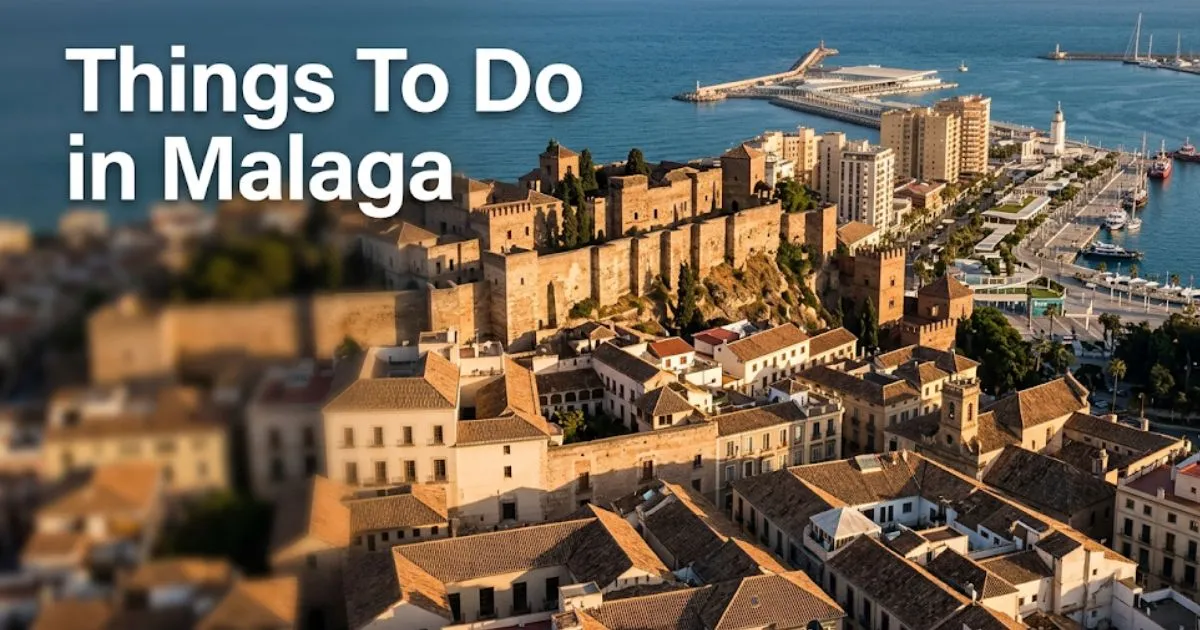
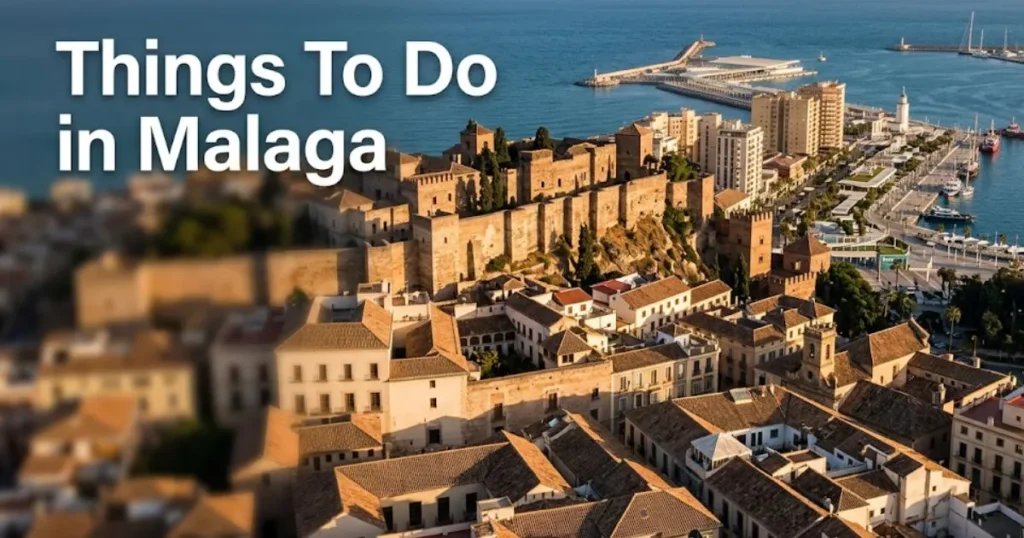
The Alcazaba de Málaga is the city’s defining landmark, a remarkably preserved 11th-century Moorish palace-fortress built on the site of an earlier Phoenician settlement.
Admission runs approximately €3.50 to €5.50 per adult for the Alcazaba and approximately €2.20 to €3.50 for Gibralfaro, with a combined ticket available. Verify current pricing directly with Turismo de Málaga before visiting. A free admission window typically applies on certain Sunday afternoon hours; confirm the current schedule with the official city tourism board.
The Alcazaba interior contains a sequence of palace courtyards, horseshoe arched gates, and garden terraces that rise in stages up the hillside. The views over the port and city open fully at the upper palace level. Allow 75 to 90 minutes minimum to experience it properly, not the 30-minute pass-through most tours allow.
Castillo de Gibralfaro sits further up the hill and requires a separate climb of approximately 20 to 30 minutes from the Alcazaba. The castle walls offer the best panoramic view of Málaga’s coastline available on foot.
Families with children note: The path between Alcazaba and Gibralfaro involves sustained uphill walking on uneven stone paths. It is manageable for children over approximately eight years old but is not stroller-friendly in sections. Check with the site directly about accessibility routes.
The most common tourist mistake at this site is visiting both in the same morning with no time buffer. Each needs its own half-day block to be genuinely appreciated.
Insider Tip:
- Arrive at the Alcazaba at 9:00 AM on weekdays in shoulder season. Tour groups typically arrive from 10:30 AM onward.
- The short walk from the Alcazaba base to the nearby outdoor Roman Theatre of Málaga is free and takes five minutes. Do not skip it.
- Budget travelers can view the Alcazaba exterior gardens and walls from the adjacent park path at no cost.
Picasso Museum Malaga
The Museo Picasso Málaga is one of Spain’s most significant single-artist museums, housed in the 16th-century Palacio de Buenavista on Calle San Agustín, three blocks from the Alcazaba.
Admission runs approximately €9 to €12 per adult for the permanent collection, with temporary exhibition supplements. Verify current pricing directly with the museum. The collection spans over 200 works across Picasso’s full career, from early Málaga-period pieces through Cubism and his late surrealist phase.
The museum is not a greatest-hits display. It holds pieces that illuminate Picasso’s process, including early academic drawings that show technical mastery before his radical formal experimentation began. This is what separates it from Picasso exhibitions in Paris or New York.
Couples and culture-focused travelers will find the layout intuitive for a self-guided visit. The audio guide is worth the additional cost. Budget approximately two full hours; trying to absorb it in 60 minutes is the single most common visitor mistake at this site.
The Fundación Picasso on Plaza de la Merced, in the actual building where Picasso was born in 1881, is the local alternative for visitors who have already done the main museum. It is smaller, cheaper, and more intimate. It holds personal effects, family photographs, and period documents alongside a small number of works.
| Experience | Location | Admission Range | Time Required | Best For |
|---|---|---|---|---|
| Picasso Museum permanent collection | Calle San Agustín | Approx. €9 to €12 | 2 hours minimum | Art enthusiasts, couples, culture travelers |
| Temporary exhibitions (supplement) | Same building | Variable | 45 to 60 minutes extra | Dedicated Picasso scholars |
| Fundación Picasso birthplace | Plaza de la Merced | Approx. €3 to €5 | 45 to 60 minutes | Repeat visitors, budget travelers |
| Picasso Walking Route (self-guided) | Centro Histórico streets | Free | 60 to 90 minutes | Budget travelers, solo travelers |
Atarazanas Market Malaga
Atarazanas Market, officially the Mercado Central de Atarazanas, is Málaga’s central covered food market and one of the most genuinely local market experiences in Andalusia.
The building itself is worth noting: a 14th-century Nasrid-period gateway, the original entrance to the city’s Moorish shipyard, was incorporated into the 19th-century iron-and-glass market hall. The stained-glass window panels at the far end of the hall depict Málaga’s coastline and are among the city’s most underappreciated architectural details.
The market is active Monday through Saturday, typically from early morning through early afternoon. Hours vary by stall; verify current operating times before planning a specific visit. Sunday closures are standard, but verify directly.
Fresh fish and shellfish stalls dominate the interior, surrounded by fruit, vegetable, meat, and prepared food vendors. The prepared food counters near the market’s perimeter offer the best budget lunch in the city center, approximately €5 to €10 for a plate of fried fish with bread.
Budget travelers note: Buying a market lunch here and eating at the standing counters or on the adjacent plaza is the single best value meal in the Centro Histórico zone. Restaurant meals around the market perimeter are markedly more expensive and aimed primarily at tourists.
Insider Tip:
- Go between 10:00 AM and 12:00 PM on weekday mornings for the best atmosphere and freshest product selection.
- The bar counter at the market’s central bar area serves Málaga sweet wine by the glass for approximately €1.50 to €2.50. Order it with a small plate of boquerones (fresh anchovies in vinegar).
- Families with young children will find the market stalls genuinely engaging for children interested in fresh seafood, but the narrow interior aisles can be tight with strollers during peak hours.
Key Takeaway: Atarazanas Market is the single best free cultural experience in Málaga’s city center. Visit before noon on a weekday. Budget €10 for lunch and two glasses of wine at the bar.
Soho Malaga Street Art District
Soho Málaga is the city’s designated arts district, running through the streets south of the historic center between Calle Córdoba, Calle Tomás Heredia, and the waterfront edge.
The district’s street art program, initiated in the early 2010s under the name Málaga Arte Urbano (MAUS), commissioned large-scale murals from internationally recognized artists across building facades throughout the neighborhood. The result is one of Spain’s most concentrated open-air contemporary art collections.
Specific murals worth finding: the towering face portrait on the corner of Calle Casas de Campos, the geometric mural series running along Calle Trinidad, and the rotating gallery-wall projects near Calle Córdoba 18. The district changes as new murals are added and older ones are occasionally repainted.
The Centre Pompidou Málaga, located at the adjacent Muelle Uno waterfront area, opened as a 5-year partnership with the Paris Pompidou Centre and has been extended. It holds rotating exhibitions from the Pompidou collection in a purpose-designed glass pavilion. Admission runs approximately €7 to €9 per adult; verify current pricing and exhibition schedule before visiting.
Solo travelers find Soho the most naturally navigable neighborhood for independent exploration. The streets are safe, the bars and cafes facing the murals are genuinely local-facing, and the area rewards slow walking without a specific agenda.
Couples note: The evening light on the Soho murals from approximately 6:00 PM to 8:00 PM during spring and fall months is worth timing specifically. The golden late-afternoon angle on the building-scale paintings changes the visual experience entirely.
Malaga Tapas and Food Scene
Málaga’s tapas culture operates on a system that experienced Spain travelers know and first-timers consistently miss: in many traditional bars, ordering a drink automatically comes with a small free tapa.
This system is not universal across all bars and has become less consistent as tourist-oriented establishments have replaced it with paid tapas menus. The bars where it survives reliably are the older, traditional establishments in neighborhoods like El Perchel and along Calle Granada in the historic center.
Taberna El Pimpi on Calle Granada is the city’s most atmospheric wine-bar institution, housed in a 17th-century building with outdoor terrace seating on a pedestrian lane. It serves Málaga sweet wine, cold meats, and cheese. It is not a secret, but it earns its reputation honestly. Expect a wait for outdoor tables on weekend evenings.
Antigua Casa de Guardia on Alameda Principal is Málaga’s oldest bar, open since 1840. It serves Málaga wine directly from barrels marked on a chalkboard, poured by staff who have worked there for decades. Order the Pajarete, a fortified Málaga wine with a raisin sweetness, for approximately €1.50 to €2.50 a glass.
The local alternative to the tourist tapas circuit: El Perchel neighborhood, west of the historic center, hosts working-class taverns where tapas prices run approximately 30 to 40 percent lower and the free-tapa-with-drink system is still the norm. It is a 10-minute walk from the Atarazanas Market.
Budget travelers can construct a full tapas dinner for approximately €15 to €25 per person by working the drink-plus-tapa system across three or four traditional bars in El Perchel or the lower Calle Granada zone.
Pedregalejo and El Palo Beach Malaga
Pedregalejo is where Málaga’s local population actually spends summer evenings, a residential beach neighborhood four kilometers east of the city center that most package tourists never reach.
The beach itself is narrower and less groomed than Malagueta Beach near the city center, but the promenade running the length of Pedregalejo and continuing into El Palo is lined with traditional chiringuitos grilling espeto de sardinas over wood fires directly on the beach. This is not a tourist show. It is a daily culinary practice that has existed for generations on this stretch of coast.
Order espeto de sardinas and a glass of chilled Málaga white wine at any chiringuito along the Paseo Marítimo del Pedregalejo. Budget approximately €8 to €15 for a plate of sardines. Go between 8:00 PM and 10:00 PM for the most authentic evening atmosphere.
Getting there: EMT bus line 11 runs from Málaga city center to Pedregalejo and El Palo. Journey time is approximately 20 to 25 minutes. A taxi costs approximately €8 to €12 one-way; verify current rates. Confirm bus route numbers and schedules directly with EMT Málaga before travel, as routes adjust seasonally.
Families with children note: The shallow entry of Pedregalejo’s beaches and the low-wave Mediterranean conditions make this a calm swimming environment for younger children. The chiringuito culture is family-inclusive at lunch and early evening hours.
Malagueta Beach, immediately east of the city center, is the obvious tourist default. It is fine but crowded from June through August. Pedregalejo delivers the same Mediterranean water with a genuinely local surrounding.
Key Takeaway: Skip Malagueta Beach in summer. Take EMT bus 11 to Pedregalejo instead. The sardine espeto dinners alone justify the 25-minute ride east.
Caminito del Rey From Malaga
Caminito del Rey is a restored mountain gorge walkway 50 kilometers north of Málaga, one of the most dramatic outdoor experiences in Andalusia.
The route follows a narrow path along the sheer rock walls of the El Chorro gorge, including sections on restored boardwalks bolted directly to vertical cliff faces at heights of up to 100 meters. The round-trip walking distance is approximately 7 to 8 kilometers. Allow a full day including transport from Málaga.
Advance booking is mandatory. Same-day or walk-in tickets are not available in spring or fall peak periods. Book through the official Caminito del Rey website weeks or months in advance depending on your travel dates. Admission runs approximately €10 per adult for self-guided access; guided options cost more. Verify current pricing and age or fitness restrictions directly with the operator before booking, as requirements can change.
Getting there from Málaga: The most practical option is the Cercanías train from Málaga María Zambrano station toward Álora, disembarking at El Chorro station. Journey time is approximately 50 to 60 minutes. A shuttle system operates between the train station and the gorge entrance; confirm current shuttle schedules with the operator at time of booking.
Seniors and accessibility travelers note: This experience involves sustained walking on uneven terrain, exposed boardwalk sections at significant height, and a one-way route that requires either a return shuttle or prearranged pickup. It is not appropriate for significant mobility limitations or severe acrophobia. The operator provides current fitness and age guidance; check this directly before booking.
Couples who are both physically comfortable with heights will find this the single most memorable day trip from Málaga. The gorge scenery is unlike anything else accessible from a Spanish coastal city.
Free Things To Do in Malaga
Free things to do in Malaga include the Roman Theatre, the Soho street art walk, the Gibralfaro exterior path, the Atarazanas Market browsing, and the Muelle Uno waterfront promenade.
According to Turismo de Málaga, the city’s historic center walking circuit passes more than 20 significant architectural and historical sites that require no admission. The Roman Theatre, discovered in 1951 during construction of a nearby building, sits directly below the Alcazaba entrance and is fully viewable from the street.
Free activities that genuinely earn their place on any Málaga itinerary:
- Walking the Calle Larios pedestrian boulevard and the old Mercado square
- Exploring the Soho Málaga mural circuit between Calle Córdoba and the waterfront
- Viewing the exterior and gardens of the Alcazaba from the public park pathway below
- Walking the Muelle Uno waterfront promenade and the Palmeral de las Sorpresas garden area at the port
- Visiting Plaza de la Merced, where Picasso’s birthplace marker and a seated Picasso statue create a genuine public square of historic significance
- Attending Sunday Mass at the Catedral de la Encarnación (free entry during services; timed admission fee applies outside service hours, verify schedule)
- Walking the Pedregalejo promenade at sunset
Budget travelers note: A full first day in Málaga can be structured almost entirely around free experiences. The paid admission circuit (Alcazaba, Picasso Museum, Carmen Thyssen Museum) is best concentrated on day two when your orientation is already established.
Things To Do in Malaga With Kids
Things to do in Malaga with kids are strongest in the outdoor and beach categories, more limited in the museum circuit, and genuinely well-served by the waterfront and market experiences.
The Muelle Uno waterfront area is the most family-practical zone in Málaga. The wide, flat promenade is fully accessible, the open-air terraces accommodate families comfortably, and the adjacent Palmeral de las Sorpresas garden walk with its fiber-optic light canopy is reliably engaging for children after dark.
The Atarazanas Market morning visit is one of the best family activities in the city center. Children respond to the fish, seafood, and produce displays in a way they rarely do to museums. Keep visits to 30 to 45 minutes maximum for young children.
Bioparc Fuengirola, a wildlife park 25 kilometers southwest of Málaga via Cercanías train, is the strongest dedicated family attraction in the Costa del Sol area. It is more rigorously designed and substantially better maintained than standard zoo infrastructure. Budget a half day. Verify current admission pricing and hours directly before visiting.
For beach days with children, Pedregalejo is calmer and more manageable than Malagueta. The shallower beach entry and lower tourist density make it more comfortable for families with young children.
Families with children under six note honestly: The Alcazaba and Picasso Museum both involve sustained walking through spaces with no meaningful child-directed programming. Both lose the interest of children under approximately seven within 20 minutes. They are genuinely better visits for children aged 10 and older.
Key Takeaway: Build a family Málaga day around Atarazanas Market morning, Muelle Uno waterfront afternoon, and a Pedregalejo beach evening. Save the museums for parents who have older children or a second adults-only day.
Day Trips From Malaga
The three strongest day trips from Málaga are Ronda, Nerja with Frigiliana, and Caminito del Rey, each offering a completely distinct experience from the city itself.
Ronda sits 100 kilometers west of Málaga, perched on a dramatic gorge cleft by the Tajo de Ronda ravine. The city’s Puente Nuevo bridge, spanning 120 meters above the gorge floor, is one of the most photographed structures in Andalusia. Getting there: direct buses run from Málaga bus station (Estación de Autobuses de Málaga) approximately every two hours. Journey time is approximately 1 hour 45 minutes to 2 hours. Verify current schedules with the ALSA bus operator.
Nerja is a whitewashed coastal town 52 kilometers east of Málaga. Its Balcón de Europa clifftop promenade and the Nerja Caves (Cuevas de Nerja) make it the strongest beach-plus-culture day trip on the Costa del Sol. The caves contain Paleolithic cave paintings and a geological formation of significant scale. Advance booking for Nerja Caves is recommended in summer. Frigiliana, a 10-minute drive or taxi ride uphill from Nerja, is a Moorish hilltop village with whitewashed streets that rewards an additional two to three hours.
Caminito del Rey deserves its own section above but appears here as a day trip context note: it requires a full day, advance booking, and physical preparation. Do not attempt it as a casual afternoon add-on.
| Day Trip | Distance | Transport | Time | Best For |
|---|---|---|---|---|
| Ronda | 100 km | ALSA bus | 1 hr 45 min | Couples, architecture, history |
| Nerja + Frigiliana | 52 km | Bus or rental | 1 hr | Families, beach travelers |
| Caminito del Rey | 50 km | Train + shuttle | 50 min | Active travelers, couples |
| Granada | 120 km | Renfe or bus | 1.5 to 2 hrs | Culture travelers, first-time Andalusia visitors |
| Seville | 200 km | Renfe AVE | 2 hrs | Multi-day extension, not a day trip |
Best Time To Visit Malaga Spain
The best time to visit Málaga, Spain, is April through early June or September through mid-October, when temperatures sit in the mid-60s°F to low-80s°F and crowds are substantially lower than peak summer.
Spring Málaga is the most balanced version of the city. The outdoor tapas terraces are active, the Alcazaba gardens are flowering, the beaches are swimmable from late May, and hotel rates sit significantly below August peak levels. Semana Santa, the Holy Week processions in the week before Easter, transforms the city center with some of Spain’s most elaborate processional culture. Hotel availability during Semana Santa compresses quickly; book at least three to four months in advance if your dates overlap.
Feria de Málaga, the city’s annual summer fair, typically runs for ten days in mid-August. It is a genuine cultural event with a full fairground on the outskirts, nightly street celebrations in the center, and a significant spike in hotel pricing and city-wide crowds. It is worth experiencing if you specifically want this festival atmosphere. Avoid it if your goal is a relaxed city cultural visit.
July and August are the worst months for casual Málaga tourism. Beach temperatures reach 95°F and above. Malagueta Beach is overcrowded daily. City museums are at maximum tourist density. Hotel rates are at peak. The locals themselves largely retreat to Pedregalejo and El Palo in the evenings to escape the center’s tourist saturation.
January and February offer genuine quiet and mild coastal temperatures averaging in the low-to-mid-50s°F. Some attractions operate reduced winter hours; verify before visiting. Budget travelers note: January hotel rates in Málaga drop to some of their lowest annual levels, often 40 to 60 percent below August pricing.
Seniors and accessibility travelers: Spring and fall are the optimal visiting periods for physical comfort. Summer heat carries genuine health risk for older travelers, especially given the sustained outdoor walking requirements of the Alcazaba and Gibralfaro circuit.
Malaga Practical Travel Tips
Getting to Málaga from the US involves flying into Málaga-Costa del Sol Airport (AGP), located approximately 8 kilometers southwest of the city center.
The fastest and cheapest route from the airport to the city center is the Cercanías train Line C1, departing from the airport terminal directly to Málaga Centro-Alameda and Málaga María Zambrano stations. Journey time is approximately 12 minutes. Cost runs approximately €1.80 per person as of recent years; verify current fares directly with Renfe before travel. Taxis from the airport cost approximately €20 to €30 depending on destination and traffic; verify current regulated rates.
Getting around Málaga’s historic center is best done on foot. The EMT Málaga city bus system covers the wider urban area including the bus lines to Pedregalejo and El Palo. Taxis and app-based rides are available throughout the city. Bicycle rental is available through multiple operators near the port area; the flat coastal promenade is well-suited to cycling.
Pickpocket risk is genuine in Málaga’s most crowded zones. Keep bags front-facing and phones inside pockets on Calle Larios, around the Alcazaba entrance, and at the port. This is standard Andalusian city awareness, not an alarm. Bold safety note: use front-clip or cross-body bags in crowded market and monument areas.
Most tapas bars and restaurants do not begin evening service until 8:30 PM or 9:00 PM local time. Arriving at 7:00 PM looking for dinner will result in finding empty restaurants with limited kitchen availability. Adjust your dining clock to local rhythm on day one.
Solo travelers note: Málaga is widely considered one of Spain’s safer and more navigationally straightforward city destinations for solo female and male travelers. The historic center is well-lit, the tapas bar culture is inherently social, and English proficiency among hospitality staff is high.
| Practical Logistics | Detail | Cost Range (Verify Before Travel) |
|---|---|---|
| Airport to center (train) | Cercanías Line C1, ~12 min | Approx. €1.80 per person |
| Airport to center (taxi) | ~20 min depending on traffic | Approx. €20 to €30 |
| City bus (EMT) | Covers full urban area | Approx. €1.30 to €1.50 per journey |
| Alcazaba admission | Combined ticket with Gibralfaro | Approx. €5 to €9 combined |
| Picasso Museum admission | Permanent collection | Approx. €9 to €12 per adult |
| Caminito del Rey | Advance booking required | Approx. €10 per adult self-guided |
| Chiringuito dinner (espeto) | Pedregalejo or El Palo | Approx. €15 to €25 per person |
Safety and Practical Warnings for Málaga
The primary practical risks in Málaga are summer heat exposure, pickpocketing in tourist-dense zones, and the physical demands of the Alcazaba-to-Gibralfaro circuit in warm weather.
Key safety and practical facts every visitor should know:
- Summer heat above 95°F from July through August requires scheduling all outdoor site visits before noon or after 5:00 PM. Midday exposure at the Alcazaba or Gibralfaro can cause heat exhaustion, particularly for seniors and children.
- Pickpocketing is concentrated on Calle Larios, at the Alcazaba entrance queue, and around the port area. Use front-zip bags or cross-body packs. Do not carry your full wallet in a back pocket.
- Caminito del Rey has genuine height exposure. The boardwalk sections are safe and maintained but are fixed to cliff faces above 100 meters. Visitors with severe acrophobia or significant balance issues should assess the operator’s current route description carefully before booking.
- Cobblestone streets throughout the historic center create mobility challenges for wheelchairs, mobility walkers, and strollers. The waterfront Muelle Uno promenade and the Palmeral de las Sorpresas are the most accessible flat-surface walking routes.
- Tap water in Málaga is safe to drink but has a notable mineral taste that some visitors find unpleasant. Bottled water is widely available at very low cost.
- Spanish emergency services: Dial 112 for all emergencies (equivalent to 911). The main public hospital in Málaga is Hospital Regional Universitario de Málaga, located approximately 2 kilometers northwest of the historic center.
Frequently Asked Questions About Things To Do in Malaga
What are the best things to do in Málaga for first-time visitors?
The best things to do in Málaga for first-time visitors are the Alcazaba fortress, the Museo Picasso Málaga, the Atarazanas Market, and an evening in the tapas bars along Calle Granada.
Add a half-day at Pedregalejo beach for the espeto de sardinas experience and walk the Soho street art district for a complete first-visit overview.
Three full days gives you enough time to cover these experiences without rushing any of them.
How many days do you need in Málaga to see the main attractions?
Two full days covers Málaga’s essential attractions at a comfortable pace.
Three to four days lets you add Caminito del Rey, a day trip to Ronda or Nerja, and deeper exploration of Pedregalejo and El Palo.
One day is genuinely insufficient for anything beyond the Alcazaba and a tapas walk.
Is Málaga worth visiting, or should I go to Seville or Granada instead?
Málaga is worth visiting in its own right and is not a lesser substitute for Seville or Granada.
It offers a more manageable scale, a genuine beach-and-culture combination, and one of Spain’s strongest art museum circuits in a compact walkable historic center.
Travelers who want grand cathedral architecture and full flamenco culture as their primary experience are better served by Seville; those prioritizing Alhambra Palace go to Granada. Málaga serves the traveler who wants Moorish heritage, contemporary art, beach access, and Andalusian food culture in one city.
What is the best time to visit Málaga, Spain?
The best time to visit Málaga is April through early June or September through mid-October.
Temperatures are comfortable, beaches are swimmable from late May, crowds are lower than peak summer, and hotel rates drop significantly from August highs.
July and August bring extreme heat above 95°F, maximum tourist density, and overcrowded beaches; these months are best avoided unless your visit specifically targets the Feria de Málaga festival in mid-August.
Are there free things to do in Málaga?
Yes. Málaga offers a substantial free activity circuit including the Roman Theatre, the Soho street art walk, the Muelle Uno waterfront promenade, and the Plaza de la Merced Picasso birthplace marker.
Several museums offer free or reduced admission on Sunday afternoons; verify current free-admission schedules directly with Turismo de Málaga before your visit.
A full first day in Málaga can be built almost entirely around free experiences before the paid museum circuit on day two.
Is Málaga safe for solo travelers?
Málaga is considered one of Spain’s more solo-travel-friendly cities, with a well-lit historic center, a strong solo-dining tapas bar culture, and high English proficiency among hospitality staff.
The primary safety awareness for solo travelers involves pickpocketing in crowded tourist zones including Calle Larios and the port area.
Solo female travelers consistently report Málaga as comfortable and navigationally straightforward; standard urban awareness applies, particularly after midnight in the nightlife zones around Plaza de la Constitución.
Plan Your Málaga Trip With Confidence
Málaga rewards travelers who treat it as a serious destination, not a Costa del Sol add-on. Book the Alcazaba for a 9:00 AM entry, the Picasso Museum for a separate afternoon, and Caminito del Rey weeks in advance if your dates fall in spring or fall.
The single most important logistics step before departure: verify Caminito del Rey ticket availability and museum free-admission schedules directly with Turismo de Málaga, since both change seasonally. All pricing, hours, and entry requirements in this guide reflect general recent patterns and should be confirmed with official sources before travel.
Málaga’s best version is found in the early mornings at the Alcazaba, the late evenings along Calle Granada, and the chiringuito dinners in Pedregalejo at 9:00 PM with a glass of cold Málaga white wine. That is the city worth planning for.