The Best Places to Visit in Argentina for 2026 Travel

Argentina’s best places to visit span over 2.7 million square kilometers. Choosing the right ones for your specific trip requires more than a list of famous names.
The country holds two UNESCO World Heritage sites, three of South America’s most visited national parks, and one of the world’s top wine regions. According to INPROTUR, Argentina’s national tourism promotion body, international arrivals have been growing consistently through the mid-2020s.
This guide covers every major destination with specific logistics, honest seasonal guidance, and clear guidance on which regions suit which travelers. Use it to build a trip that actually works.
Places to Visit in Argentina: How to Choose Your Regions
The best places to visit in Argentina depend entirely on your timeframe, physical fitness level, and travel priorities.
Argentina’s geography works against the “see everything” approach. Buenos Aires sits at the country’s northeast base. Patagonia stretches over 1,000 miles to the south. Iguazú Falls sits in the subtropical north. Mendoza lies in the Andean foothills to the west.
Trying to cover all four in under two weeks means spending more time in airports than in places. The most effective Argentina itineraries commit to two or three regions and go deep.
The table below shows how major destinations compare across the factors that matter most for trip planning in 2026:
| Destination | Best For | Cost Tier | Best Season | Physical Demand |
|---|---|---|---|---|
| Buenos Aires | Culture, food, nightlife | Budget to mid-range | Oct-Nov, Mar-Apr | Low |
| El Calafate / Perito Moreno | Glacier experiences | Mid-range to premium | Nov-Feb | Low to moderate |
| El Chaltén | Serious trekking | Mid-range | Nov-Mar | High |
| Mendoza | Wine, food, Andean scenery | Budget to mid-range | Feb-Apr, Sep-Nov | Low to moderate |
| Salta | Culture, colonial history | Budget | Apr-Oct | Low to moderate |
| Bariloche | Alpine scenery, skiing | Mid-range | Nov-Mar (summer), Jun-Sep (ski) | Moderate |
| Iguazú Falls | Waterfall spectacle | Mid-range | Apr-Sep | Low |
| Ushuaia | End of the world scenery | Premium | Nov-Mar | Moderate |
| Península Valdés | Wildlife watching | Mid-range | Jun-Dec (species dependent) | Low |
Budget travelers will find Buenos Aires, Salta, and Mendoza offer the strongest value. Luxury travelers should direct premium spending toward Patagonia lodges and Mendoza wine estates. Families will find Iguazú Falls, Buenos Aires, and Bariloche most manageable logistically.
Best Places to Visit in Argentina: The Full Regional Breakdown
Argentina’s strongest destinations fall into six distinct travel zones. Each zone has a clear identity, a distinct audience, and honest practical realities that most travel guides gloss over.
Insider Tip:
- Book Aerolíneas Argentinas or low-cost carrier Flybondi domestic legs at least 60 to 90 days out for peak season travel
- The Argentine peso situation changes regularly; carry US dollars as a backup and verify current exchange guidance with your bank before departure
- Solo travelers and couples will find the Buenos Aires-plus-one-region formula delivers the strongest experience per day spent
The six travel zones are: Buenos Aires and surroundings; Patagonia (El Calafate and El Chaltén); the Andean northwest (Salta and Jujuy); wine country (Mendoza); the Lake District (Bariloche and Villa La Angostura); and the subtropical north (Iguazú Falls).
Each is covered in its own section below.
Buenos Aires Neighborhoods to Visit
Buenos Aires rewards travelers who leave the tourist circuit and move through its barrios at street level.
The city’s character varies block by block. San Telmo is the colonial south, built for the elite before yellow fever pushed them north. Palermo is the sprawling cultural north, divided informally into Palermo Soho (boutiques and restaurants) and Palermo Hollywood (film industry and bars). Recoleta is the city’s most architecturally formal district, home to the famous cemetery and the Museo Nacional de Bellas Artes.
La Boca is the neighborhood most aggressively marketed to tourists. The painted houses on Caminito are genuinely photogenic. But the area is small, crowded, and not representative of how porteños actually live.
Belgrano and Colegiales are where Buenos Aires residents actually live, shop, and eat. Neither appears on most tourist maps.
Couples will find the restaurant culture of Palermo Hollywood and evening tango shows in San Telmo deliver genuine romantic atmosphere. Solo travelers should know Buenos Aires has one of South America’s best independent hostel networks; the social infrastructure for solo travelers is strong.
Budget travelers should know that Buenos Aires is one of the more affordable major cities in South America for US dollar holders. A full day of museums, markets, and excellent food does not require premium spending.
Insider Tip:
- Skip the tourist tango shows in San Telmo; attend a milonga instead at places like Club Gricel on La Rioja street, where locals dance nightly and entry runs a fraction of the show price
- The Mercado de San Telmo is more interesting on weekday mornings before tour groups arrive
- The Subte (Buenos Aires metro) runs throughout central districts; avoid taxis in peak traffic; Uber operates in the city
San Telmo and Recoleta: Culture and History
San Telmo is Buenos Aires’ oldest surviving barrio and the city’s most layered cultural district.
Its Sunday market along Defensa Street runs the full length of the neighborhood. Antiques, leather goods, and live street tango performances fill the street from early morning through late afternoon. The Mercado de San Telmo on the corner of Defensa and Carlos Calvo is the indoor market, open daily, with food stalls and antique dealers operating under a 19th-century iron roof.
Recoleta Cemetery is the one genuinely unmissable attraction in Buenos Aires. It functions less like a cemetery and more like an open-air architectural museum of mausoleums. The grave of Eva Perón is well-signed within the grounds. Entry is free to enter; verify current opening hours before visiting.
The Museo Nacional de Bellas Artes sits directly adjacent to the cemetery. It holds the strongest Latin American art collection in the country and entry is free of charge under current policy; verify before visiting in 2026.
Seniors and accessibility travelers should note that both Recoleta Cemetery and the Bellas Artes museum are well-maintained with paved paths. San Telmo’s cobblestone streets are uneven and challenging for mobility aids.
Families with children will find the Sunday market entertaining for kids in short bursts. The Bellas Artes museum is better suited to older children with genuine interest in art.
According to Fodor’s Travel, San Telmo and Recoleta together represent the strongest two-neighborhood combination for a first visit to Buenos Aires. Most experienced repeat visitors add Palermo and skip La Boca entirely on return trips.
Insider Tip:
- Recoleta Cemetery gets crowded after 11 AM; arrive at opening to walk it without tour groups
- The neighborhood café scene around Avenida Alvear in Recoleta is where old Buenos Aires money still takes afternoon coffee
Patagonia Argentina Travel
Patagonia is the reason many travelers put Argentina on their list in the first place. It is also the region most likely to defeat poorly planned itineraries.
Argentine Patagonia covers a territory roughly the size of Texas. The region’s two primary bases for travelers are El Calafate, the gateway to Perito Moreno Glacier, and El Chaltén, the trekking capital of the Fitz Roy massif. They are connected by a paved road approximately 220 kilometers long, passable by rental car or daily bus service.
Patagonia’s weather is genuinely extreme. Wind speeds on exposed terrain regularly exceed 80 kilometers per hour. Temperatures can drop 20 degrees Celsius in an hour. This is not hyperbole; it is practical safety information every visitor needs before packing.
Solo travelers will find Patagonia’s infrastructure oriented toward independent travelers. El Chaltén in particular runs on a self-guided trekking model where trails are free of charge to access and well-signed. Families with children under 10 will find the distances, unpredictable weather, and physical demands genuinely challenging.
The cost reality of Patagonia is higher than any other Argentine region. Accommodation in El Calafate and El Chaltén during peak season (November through February) runs mid-range at minimum. Budget options exist but book out months in advance.
Insider Tip:
- The most visited time in Patagonia is January; November and March deliver similar conditions with fewer crowds and slightly lower prices
- El Chaltén has no ATMs that reliably serve foreign cards; carry sufficient Argentine pesos or USD before arriving
Key Takeaway: Buenos Aires and Patagonia are the two most essential Argentina destinations, but they require careful planning as two separate trips within one trip, not a single continuous loop.
Perito Moreno Glacier and Los Glaciares National Park
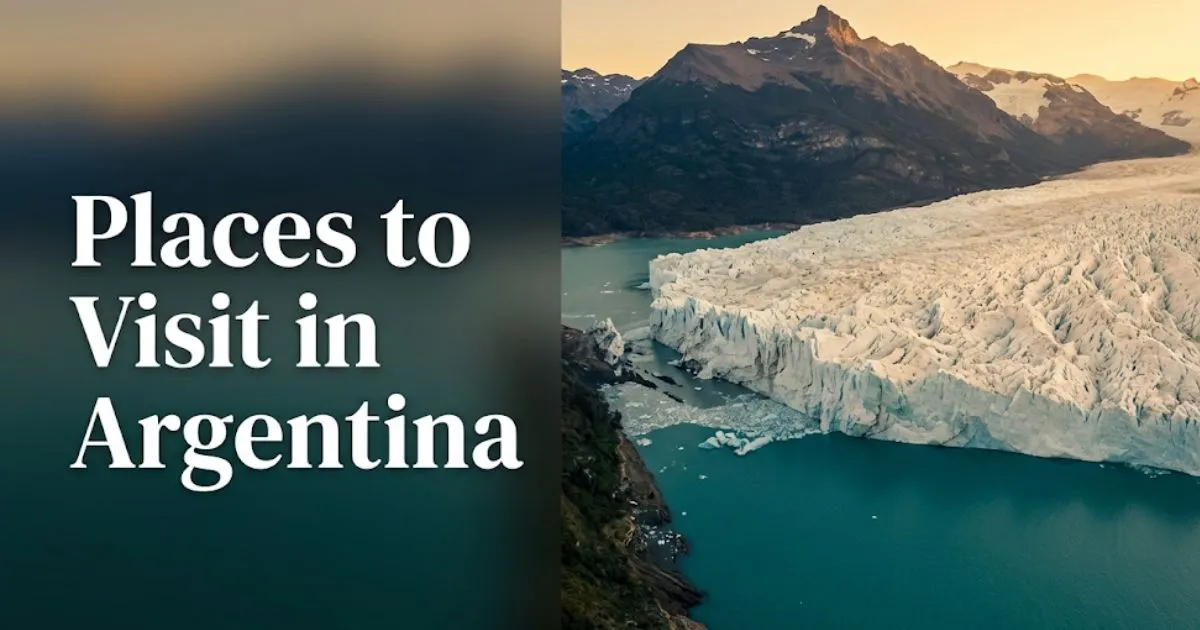
Perito Moreno Glacier is one of the few glaciers in the world that is neither retreating nor advancing, making it a genuinely anomalous natural feature worth the journey.
The glacier sits within Los Glaciares National Park, a UNESCO World Heritage Site administered by the Argentine National Parks Administration (APN). Entry to the park requires a fee; verify current rates with APN before visiting in 2026. The viewing walkways are managed by structured timed-entry systems during peak season; advance booking is required and fills weeks out in November through February.
The glacier’s face stands approximately 60 meters above the water at its tallest points. Calving events, where massive ice columns collapse into Lago Argentino, occur throughout the day and require no special timing to witness.
Boat tours that approach the glacier face from the water are available through licensed operators in El Calafate. These provide a different perspective than the walkways and typically run approximately two hours. Book in advance for peak season dates.
Seniors and accessibility travelers should know that the viewing walkways at Perito Moreno include stairs but also have accessible ramp sections. The lower platforms are accessible without stair navigation. Verify current accessibility layout with the park administration before your visit.
To book a peak-season visit to Perito Moreno correctly:
- Reserve your park entry ticket through the APN official booking system at least 30 days in advance
- Book your El Calafate accommodation before your flights; options fill faster than flights
- Arrange transfer from El Calafate to the park via licensed operator or rental car (approximately 80 kilometers on paved road)
- Plan to arrive at the park when it opens; afternoon light on the glacier face is superior for photography but crowds peak midday
- Allow a full day; the walkways alone take two to three hours to cover properly
El Chaltén Hiking and Trekking
El Chaltén is Argentina’s premier trekking destination and one of the top hiking bases in all of South America.
The town sits at the northern end of Los Glaciares National Park, 220 kilometers north of El Calafate by paved road. Its entire economy runs on trekking. The Fitz Roy massif (officially Cerro Chaltén) and Cerro Torre are the two headline peaks visible from multiple day trails, none of which require permits for standard day hikes.
The Laguna de los Tres trail is the most demanding and most rewarding day hike in the park. It climbs approximately 800 meters over roughly 11 kilometers to a glacial lake directly beneath the Fitz Roy face. Total round trip runs 23 kilometers. The final ascent is steep and scrambling on loose rock.
The Laguna Torre trail is less demanding and equally beautiful. It leads to a glacial lake beneath Cerro Torre in approximately three to four hours one-way.
Budget travelers should note that day hiking in El Chaltén’s national park section is free of charge. The cost of the trip is accommodation and transportation, not park access.
Solo travelers are extremely well-accommodated in El Chaltén. The town has a strong hostel culture, trail information is freely available at the park entrance, and the ranger station provides daily weather and trail condition updates.
Multi-day circuits including the Huemul Circuit require advance planning, technical gear, and experience with backcountry navigation. These are not appropriate for casual hikers.
Insider Tip:
- The Fitz Roy summit is almost never cloud-free; the best clear-sky windows occur in early morning and late afternoon, not midday
- November is the shoulder season with fewer hikers on the Laguna de los Tres trail; trail conditions are good from mid-October onward
Mendoza Argentina Wine Country
Mendoza is Argentina’s wine capital and one of the most rewarding wine regions in the world for independent travelers.
The city of Mendoza sits at the base of the Andes at approximately 750 meters elevation. Its wine estates spread across three primary sub-regions: Luján de Cuyo to the south of the city, Maipú to the east, and the Valle de Uco approximately 100 kilometers south. Malbec is the anchor grape across all three, but Torrontés (primarily from the northwest, sold throughout Mendoza) and Cabernet Sauvignon are worth tracking.
Wine tasting fees at Mendoza estates range from free entry-level tastings to premium guided experiences at properties like Zuccardi Valle de Uco and Achaval Ferrer. Most premium estates require advance reservations; walk-in availability at smaller Maipú bodegas is common on weekday mornings.
The Maipú wine route is the most accessible for budget travelers. A bicycle rental from the town of Maipú (reachable by bus from central Mendoza) covers four to six small bodegas in a single afternoon. This is how informed visitors do Mendoza without a tour group or a private car.
Couples will find Mendoza’s combination of world-caliber restaurant dining, mountain backdrop scenery, and cellar-door tasting experiences genuinely romantic. The Valle de Uco in particular, with its high-altitude vineyards and boutique lodges, delivers premium experiences.
According to INPROTUR, Mendoza’s Vendimia Festival (Wine Harvest Festival) in late February and early March is Argentina’s largest annual festival, drawing over 300,000 visitors. Book accommodation six months in advance if visiting during Vendimia season.
Insider Tip:
- Skip the Mendoza city wine bars on the main plaza; they cater entirely to tourists and charge tourist prices
- The Valle de Uco sub-region produces Mendoza’s most critically acclaimed current wines but requires a car or private transfer; factor this into planning
Key Takeaway: Mendoza’s Maipú sub-region is the strongest value wine experience in Argentina; the Valle de Uco delivers the country’s most internationally recognized current wines but costs and logistics are significantly higher.
Salta and Northwest Argentina
Salta is the most complete city in northwest Argentina and the natural base for exploring the country’s most dramatically colored landscapes.
The city holds a well-preserved colonial center around Plaza 9 de Julio with genuinely beautiful 18th-century architecture. The MAAM (Museo de Arqueología de Alta Montaña) on the plaza holds three Inca child mummies discovered on Llullaillaco volcano, one of the most significant pre-Columbian archaeological discoveries of the 20th century. Entry fees apply; verify current rates before visiting.
Salta is also the gateway to Cafayate, Argentina’s secondary wine region known specifically for Torrontés white wine. The drive south from Salta to Cafayate through the Quebrada de las Conchas is one of the most scenic road journeys in the country, with red sandstone formations rising from the valley floor along a two-hour route on Ruta Nacional 68.
Budget travelers will find Salta the most affordable base in this guide. Accommodation, food, and day tours all run significantly cheaper than Buenos Aires or Patagonia.
Altitude is the practical concern in the northwest. Salta city sits at approximately 1,190 meters, manageable for most travelers. Day trips north toward Purmamarca and the Quebrada de Humahuaca climb to over 3,400 meters. Allow 24 to 48 hours for altitude acclimatization before strenuous activity above 3,000 meters.
Families with children will find Salta more manageable than Patagonia. The MAAM museum’s archaeological exhibits are genuinely engaging for older children. The Cafayate day trip is appropriate for all ages.
Insider Tip:
- The train journey on the Tren a las Nubes (Train to the Clouds) from Salta into the Puna deserves its reputation as one of South America’s great train experiences; book well in advance for peak season dates
Quebrada de Humahuaca
The Quebrada de Humahuaca is a UNESCO World Heritage Site north of Jujuy city and one of the most visually distinctive landscapes in all of Argentina.
The quebrada (gorge) runs approximately 155 kilometers along the Río Grande valley floor, lined with multicolored rock formations in ochre, red, purple, and green. The Cerro de los Siete Colores (Hill of Seven Colors) above the village of Purmamarca is the most photographed point in the region. The colors are most vivid in morning light before midday shadows flatten the texture.
The villages of Tilcara, Purmamarca, and Humahuaca are the three main stops along the route. Tilcara holds the best practical base with the strongest accommodation and restaurant options. The Pucará de Tilcara, a pre-Inca fortified settlement on a hill above town, is a genuinely significant archaeological site.
Altitude sickness is the primary practical risk in the Quebrada. The valley floor at Purmamarca sits at approximately 2,325 meters. Tilcara is at 2,461 meters. Travelers coming directly from Buenos Aires at sea level should plan a night in Salta or Jujuy first.
Seniors and accessibility travelers should know that Purmamarca and Tilcara are walkable at slow pace but involve uneven stone surfaces. The Pucará de Tilcara involves a steep uphill walk unsuitable for limited mobility.
According to UNESCO, the Quebrada de Humahuaca was inscribed as a World Heritage Site in 2003, recognized for its 10,000-year history of human settlement along this high-altitude trade route. No single attraction in Argentina carries more archaeological and cultural layering per kilometer.
Insider Tip:
- The Purmamarca market operates daily but is most active on weekend mornings before tour buses arrive from Jujuy; arrive by 8 AM for the least crowded experience
Bariloche and the Argentine Lake District
Bariloche is the Alpine town that Patagonia’s more accessible northwest edge built for itself, and it genuinely earns its reputation as the Lake District’s base.
The town of San Carlos de Bariloche sits on the southern shore of Lake Nahuel Huapi within Nahuel Huapi National Park. The town has a Swiss-influenced architectural character driven by 19th-century European immigration to the region. The chocolate shops and fondue restaurants reflect this heritage practically and deliciously.
Nahuel Huapi National Park surrounds the town on three sides. Day hikes range from the accessible Cerro Campanario (reachable by chairlift) to the demanding Cerro López circuit. The Circuito Chico, a 60-kilometer scenic road loop north of town, covers the lake’s most beautiful viewpoints by car or bicycle.
For skiing and winter travel, the Cerro Catedral ski area outside Bariloche is the largest resort in South America. The ski season runs approximately June through September. This makes Bariloche one of the few Argentina destinations with two distinct peak seasons.
Families will find Bariloche among the most logistically friendly destinations in Argentina. The town is compact, the national park day hikes range from easy to demanding, and the lake setting provides obvious visual entertainment for children.
Budget travelers should know Bariloche’s chocolate and craft beer scene provides inexpensive local entertainment. Restaurant costs run slightly higher than Salta but below Buenos Aires premium dining.
Insider Tip:
- Villa La Angostura, 80 kilometers north of Bariloche on the lake’s northern shore, offers the same lake and mountain setting with one-fifth the visitor volume; base there if you are visiting in peak January season
Key Takeaway: Bariloche gives you Patagonian scenery, national park access, and a functional town infrastructure in one place; it is the most logistically forgiving entry point into Argentine Patagonia for first-time visitors.
Iguazú Falls Argentina
Iguazú Falls on the Argentine side of the border is one of the genuinely undisputed natural spectacles on Earth, and the Argentine park provides the more immersive of the two national park experiences (the Brazilian side offers the wider panoramic view).
The falls system spans nearly three kilometers of the Iguazú River along the Argentina-Brazil border in Misiones Province. The Argentine side of Iguazú National Park puts visitors directly on the falls through a network of elevated catwalks. The Garganta del Diablo (Devil’s Throat) is the centerpiece: a U-shaped canyon where 14 falls converge in a continuous wall of water roughly 80 meters tall.
Access to the Argentine side requires purchasing a park entrance ticket; verify current pricing with the Argentine National Parks Administration before your 2026 visit. The park is typically open daily with seasonal hours; verify before visiting. A small train runs from the visitor center to the Garganta del Diablo platform; arrive early as queues build by midmorning.
Families will find Iguazú Falls among the most successful Argentina destinations for children of any age. The visual spectacle requires no attention span. The walkway infrastructure is stroller-accessible in most sections.
Budget travelers should factor in that the town of Puerto Iguazú (Argentine side) has genuinely affordable accommodation options compared to Brazilian side Foz do Iguaçu hotels. Staying on the Argentine side saves money.
The falls are most powerful between June and August when river flow peaks. January and February bring extreme heat and humidity alongside peak visitor numbers. April through June represents the optimal balance of flow, temperature, and crowd management.
Insider Tip:
- Visiting both the Argentine and Brazilian sides requires crossing the international border; US passport holders can cross without advance visa arrangements for both countries as of current policy; verify this before 2026 travel
Ushuaia and Tierra del Fuego
Ushuaia markets itself as “the end of the world” and delivers on that specific promise: it is the southernmost city in the world.
The city sits on the Beagle Channel at the southern tip of Isla Grande de Tierra del Fuego, backed by the Martial Mountains and fronting the water where Argentina and Chile’s territorial waters meet. The landscape is genuinely dramatic. The town itself is a functional port city without much architectural distinction; the experience is entirely about the surrounding wilderness.
Tierra del Fuego National Park begins at the city’s western edge. Day hikes include the Senda Costera coastal trail (flat, highly accessible, genuinely beautiful) and the more demanding trails around Laguna Esmeralda (a glacial lake accessible via a muddy four-hour round trip trail). Park entry fees apply; verify current rates with the National Parks Administration.
The Beagle Channel boat excursions are the most popular activity from Ushuaia. These half-day trips cover sea lion colonies, cormorant nesting sites, and Lighthouse of the End of the World at Isla de los Estados viewpoints. Multiple licensed operators run these from the Ushuaia waterfront; book the day before or upon arrival for most of the year.
Ushuaia is premium-priced by Argentine standards. Its geographic isolation drives up food and accommodation costs. Budget travelers should treat Ushuaia as a three-to-four-day focused experience, not a week-long base.
Seniors and accessibility travelers will find the Senda Costera trail in Tierra del Fuego National Park among the most accessible long-distance natural trails in Argentine Patagonia. It is mostly flat and runs along the water.
Insider Tip:
- Ushuaia is the primary embarkation point for Antarctic expedition cruises; if Antarctica is on your agenda, Ushuaia is where that journey begins; book Antarctic expeditions 12 to 18 months in advance
Península Valdés Wildlife Watching
Península Valdés is Argentina’s premier wildlife destination and one of the most productive wildlife watching locations in the Southern Hemisphere.
The peninsula juts into the Atlantic Ocean from the Patagonian coast of Chubut Province, approximately 1,400 kilometers south of Buenos Aires. It holds UNESCO World Heritage status specifically for its marine wildlife concentration. Southern right whales gather in the protected bays of Golfo San José and Golfo Nuevo from June through December to breed and nurse calves. Orca (killer whale) strandings, where orca deliberately beach themselves to hunt elephant seal pups, occur predictably at Punta Norte from February through April.
Puerto Madryn is the coastal city and practical base, approximately 65 kilometers south of the peninsula. It has the strongest accommodation infrastructure, multiple tour operator options, and direct bus connections from Buenos Aires (approximately 18 hours) and Puerto Madryn’s El Tehuelche Airport (with connections via Buenos Aires).
Wildlife timing is the essential planning variable. Southern right whales are present June through December with peak nursing activity in October and November. Orca hunting sequences at Punta Norte occur predictably in March and April. Magellanic penguins at Punta Tombo (slightly south of the peninsula, approximately 180 kilometers from Puerto Madryn) are present September through March.
Couples who specifically value wildlife experiences will find Península Valdés among the most rewarding destinations in Argentina. The combination of whale watching, penguin colonies, and orca behavior is not replicated anywhere else on the continent.
According to UNESCO, Península Valdés was inscribed in 1999 specifically for the conservation of its exceptional marine mammal populations.
Insider Tip:
- The orca stranding behavior at Punta Norte is timed-activity dependent; park rangers track seal pup movements and can advise on the most productive viewing windows for that specific day
Key Takeaway: Península Valdés offers wildlife experiences with no direct equivalent elsewhere in South America; the timing of your visit relative to specific species cycles determines the value of the trip entirely.
Best Time to Visit Argentina
The best time to visit Argentina depends entirely on which region you are prioritizing, because the country spans nearly 4,000 kilometers from north to south.
Buenos Aires is best in spring (October and November) and autumn (March and April). Temperatures are comfortable, the city’s outdoor culture is fully active, and hotel rates are below summer peak. January and February bring extreme heat and humidity, and many Buenos Aires residents leave the city entirely during these weeks.
Patagonia (El Calafate, El Chaltén, Ushuaia) runs on austral summer timing. November through March is the only reliably accessible window for most activities. January is the warmest but also the windiest and most crowded. November and March offer better trail conditions relative to visitor volume.
Mendoza peaks twice. The wine harvest runs February through April, with the Vendimia Festival in late February or early March. Autumn brings harvest tourism. Spring (September through November) offers pleasant temperatures and vines in growth.
Salta and the Northwest is best in the dry season from April through October. The wet season (November through March) brings heavy rains that can flood the quebrada routes.
Iguazú Falls is most powerful from June through August. Heat and humidity peak in January and February. April through June is the practical optimal window for combined water volume and tolerable temperatures.
| Region | Best Months | Avoid | Reason |
|---|---|---|---|
| Buenos Aires | Oct-Nov, Mar-Apr | Jan-Feb | Heat, humidity, local vacation exodus |
| Patagonia | Nov-Mar | Apr-Oct | Most trails and services closed outside austral summer |
| Mendoza | Feb-Apr, Sep-Nov | Dec-Jan | Extreme heat in summer, harvest season is Feb-Apr |
| Salta/Northwest | Apr-Oct | Nov-Mar | Wet season floods routes |
| Iguazú | Apr-Jun | Jan-Feb | Peak river flow, tolerable heat |
| Bariloche (summer) | Nov-Mar | Apr-May | Off-season shoulder with limited services |
| Bariloche (ski) | Jun-Sep | Oct | Best snow coverage Jun-Sep |
| Península Valdés | Jun-Dec (whales), Mar-Apr (orca) | May | Wildlife cycles drive the calendar |
Seniors and accessibility travelers planning multi-region Argentina trips should target October through November as the single best travel window. Buenos Aires, Mendoza, Iguazú, and Patagonia are all in acceptable seasonal condition simultaneously.
Argentina Travel Logistics and Planning
Getting around Argentina efficiently requires understanding that the country’s scale demands a flying-and-basing strategy, not a road trip model.
The primary international gateway is Ezeiza International Airport (EZE), approximately 35 kilometers southwest of Buenos Aires. A second Buenos Aires airport, Aeroparque Jorge Newbery (AEP), handles domestic flights and some regional international routes. Both are connected to the city by remis (private car services) and bus. Verify current Uber availability in Buenos Aires before travel in 2026.
Aerolíneas Argentinas is the primary carrier for domestic routes connecting Buenos Aires to El Calafate (FTE), Bariloche (BRC), Iguazú (IGR), Salta (SLA), and Mendoza (MDZ). Low-cost carriers Flybondi and JetSMART Argentina compete on several of these routes at lower price points. Book domestic flights well in advance for November through February peak season travel.
A suggested 14-day Argentina framework for first-time visitors:
- Days 1 to 4: Buenos Aires (San Telmo, Recoleta, Palermo, a milonga, one day trip to Tigre Delta)
- Days 5 to 6: Fly Buenos Aires to Mendoza; Maipú bike and wine day, Luján de Cuyo estate
- Days 7 to 9: Fly Mendoza to El Calafate; Perito Moreno Glacier full day, Los Glaciares day
- Days 10 to 12: Bus or rental car to El Chaltén; Laguna de los Tres day hike, Laguna Torre day hike
- Day 13: Bus back to El Calafate; fly El Calafate to Buenos Aires
- Day 14: Buenos Aires buffer day for late departures or flights home
This 14-day structure omits Salta, Iguazú, Bariloche, and Ushuaia. That is correct prioritization, not an oversight. First-time visitors who add more than one or two of those destinations to this framework end up rushing.
Budget travelers should know that Argentine inter-city bus travel is excellent and dramatically cheaper than flying. Buenos Aires to Mendoza by overnight bus takes approximately 13 to 14 hours; the bus is comfortable and the overnight journey saves a hotel night. Buenos Aires to Salta runs approximately 22 hours.
Safety consideration: Argentina’s currency situation has been volatile. Always verify current exchange rates and practical payment logistics with your bank and consulate before travel in 2026. US dollars have historically been valuable as a backup payment instrument but regulations change frequently.
Insider Tip:
- Argentine domestic flights frequently experience delays; build buffer days into your itinerary around any timed commitments like glacier bookings or multi-day hiking starts
- The Argentine National Parks Administration (APN) manages booking for most major protected areas; set up an account and monitor availability for Perito Moreno 60 to 90 days before your travel dates
Safety and Practical Warnings for Argentina Travel
Argentina is a genuinely safe travel destination for most visitors, but specific regions carry specific practical risks that matter.
Key safety and practical facts every visitor should know:
- Buenos Aires pickpocket risk: La Boca, Congreso, and crowded public markets have active opportunistic theft; keep phones and cameras secured in these zones
- Altitude sickness in the northwest: Travelers ascending from Buenos Aires to Purmamarca or Tilcara without acclimatization risk acute mountain sickness; allow 48 hours at moderate altitude before going higher than 3,000 meters
- Patagonian weather: Weather on exposed trails in El Chaltén and Tierra del Fuego can shift from clear to violently windy and wet within 30 minutes; carry full rain gear even on clear-sky mornings
- UV exposure in Patagonia: The ozone layer over southern Patagonia is thinner than at equivalent northern latitudes; UV index regularly reaches extreme levels even on cloudy days; SPF 50 plus physical sun protection is mandatory
- Limited cell service: Patagonia has effectively no cellular coverage outside of El Calafate and El Chaltén town centers; download offline maps before leaving town
- Currency and payment: Credit card acceptance has expanded in Argentina but remains inconsistent in smaller towns and markets; carry Argentine pesos and USD as backups
- Road safety on Ruta 40: Self-driving Ruta Nacional 40 in Patagonia involves long stretches of gravel road, extreme crosswind conditions, and fuel stations separated by 150-plus kilometers; this is not a route for inexperienced drivers
The US Embassy in Buenos Aires maintains current travel advisory and safety information for US citizens. Check the US State Department Argentina travel advisory page for the most current guidance before departure in 2026.
Frequently Asked Questions About Places to Visit in Argentina
What are the best places to visit in Argentina for first-time visitors?
The best places to visit in Argentina for first-time visitors are Buenos Aires, the Perito Moreno Glacier in El Calafate, and Mendoza wine country.
These three destinations deliver Argentina’s three most distinct travel identities: urban culture, Patagonian wilderness, and wine country, without requiring an overwhelming number of internal flights.
A 10 to 14-day itinerary structured around this trio gives first-time visitors a genuinely representative Argentina experience.
How many days do you need to see Argentina properly?
Fourteen to twenty-one days is the minimum to visit two or three Argentine regions without feeling rushed.
Argentina’s geographic scale means that travel between destinations consumes real time; Buenos Aires to El Calafate is a three-hour flight, and each region warrants at least three to four nights.
Travelers with only seven to ten days should commit entirely to Buenos Aires and one other region rather than attempting a multi-region circuit.
Is Argentina safe for tourists in 2026?
Argentina is generally safe for tourists, with Buenos Aires presenting the typical urban pickpocket risks common to major South American cities.
The most common safety issues for travelers are opportunistic theft in crowded tourist zones, altitude sickness in the northwest, and Patagonian weather exposure on exposed trails.
Check the current US State Department Argentina travel advisory before departure; conditions and advisory levels change and the 2026 guidance should be verified directly before travel.
What is the best time of year to visit Argentina?
The best time to visit Argentina overall is October through November for multi-region trips, when Buenos Aires, Mendoza, and Patagonia are all in their respective spring seasons.
Patagonia’s only viable travel window is November through March; the northwest is best April through October; Iguazú peaks April through June for water volume.
No single month is perfect for all regions simultaneously; structure your itinerary around the specific destinations you are prioritizing.
How do you get around Argentina between major destinations?
Internal flights on Aerolíneas Argentinas, Flybondi, or JetSMART Argentina are the practical choice for connections between Buenos Aires and Patagonia, Iguazú, or Mendoza.
Long-distance buses on Argentina’s excellent intercity network are a legitimate and comfortable alternative for Buenos Aires to Mendoza or Buenos Aires to Salta, where overnight travel saves a hotel night.
Rental cars make sense within specific regions (Mendoza wine routes, Patagonia between El Calafate and El Chaltén) but are not practical for inter-regional travel given Argentina’s distances.
Do you need to book Argentina’s national parks in advance?
Los Glaciares National Park, including the Perito Moreno Glacier walkways, requires advance booking through the Argentine National Parks Administration (APN) website during peak season from November through February.
Iguazú National Park entry tickets are also available online in advance; buying online avoids queues and guarantees access on your chosen date.
El Chaltén’s day hiking trails within the national park sector do not currently require advance permits, but this policy should be verified with APN before your 2026 visit as regulations change.
Planning Your Argentina Trip
Argentina genuinely rewards the traveler who chooses depth over width. A trip built around two or three well-chosen regions, planned with realistic travel-time buffers, delivers more than a seven-destination sprint.
The single most important booking step is securing your Patagonia accommodations and Perito Moreno entry tickets well in advance of peak season. Everything else can flex. Those two cannot.
Travel conditions in Argentina, including domestic flight schedules, national park entry systems, currency regulations, and visa requirements, change regularly. Verify all key logistics directly with INPROTUR, the Argentine National Parks Administration, and your airline before your 2026 departure date.
Argentina’s scale is its greatest asset and its most common trip-planning trap. Know your pace, commit to your regions, and this country will consistently exceed your expectations.