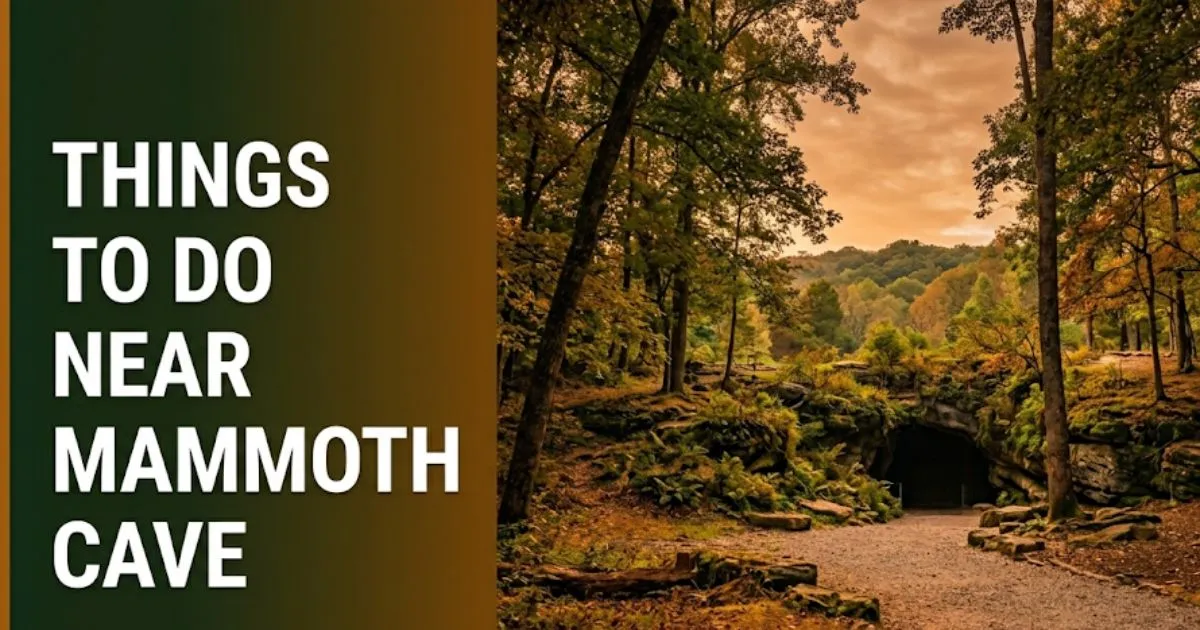
All the Best Things to Do Near Mammoth Cave in 2026

The best things to do near Mammoth Cave stretch well beyond the world’s longest known cave system. South-central Kentucky’s karst plateau delivers ranger-led underground tours, Green River paddling, and small-town stops that turn a single-day visit into a full weekend.
Mammoth Cave National Park holds dual designations as a UNESCO World Heritage Site and a World Biosphere Reserve. Those aren’t honorary titles. They reflect a cave system with more than 420 miles of mapped passages and a surface terrain unlike anywhere else in the American Southeast.
This guide covers cave tours, hiking trails, nearby towns, paddling routes, and practical logistics. It also names what is genuinely worth your time and what is tourist infrastructure.
Things to Do Near Mammoth Cave
The area around Mammoth Cave offers far more than a single underground tour. Within a 30-mile radius of the park, travelers can explore a second cave system at Lost River Cave in Bowling Green, stay overnight in a historic motor court, and paddle 25 miles of Green River corridor.
Cave City and Horse Cave anchor the immediate visitor zone along US Highway 31W. Both towns sit within ten minutes of the park’s main entrance and provide the area’s primary dining and lodging options outside the park itself.
Bowling Green, 30 miles south via I-65, adds genuine dining depth and cultural attractions. The National Corvette Museum is there, and it genuinely earns visitor time beyond its novelty.
The surrounding region is best understood as a rural destination. Cell service inside the park is minimal and absent underground.
Insider Tip:
- Download offline maps for the park before arrival. Google Maps loses signal near the Visitor Center.
- Bring layered clothing even in July. The cave holds at a constant 54 degrees Fahrenheit regardless of surface temperature.
- Solo travelers will find the park easy to navigate independently. The Visitor Center staff are genuinely helpful and provide good real-time tour availability updates.
Things to Do in Mammoth Cave National Park
Mammoth Cave National Park’s primary draw is ranger-led cave tours, but the surface terrain deserves equal time. The park covers approximately 54,000 acres of karst landscape, including sinkholes, springs, and river bluffs.
The National Park Service operates all cave tours through recreation.gov reservations. The park does not charge a separate entrance fee, but individual cave tours carry their own fees.
| Activity | Location | Best For | Time Required |
|---|---|---|---|
| Ranger-led cave tour | Underground, multiple entrances | All profiles | 1.5 to 4 hours |
| Heritage Trail hike | Surface, near Visitor Center | Families, seniors | 30 to 60 minutes |
| Green River picnic area | Green River Bluffs | Couples, families | 1 to 2 hours |
| Cedar Sink Trail | Surface, western park | Experienced hikers | 2 to 3 hours |
| Ranger programs | Visitor Center amphitheater | Families, history | 30 to 60 minutes |
According to the National Park Service, Mammoth Cave is the longest known cave system on Earth, with more than 420 mapped miles. Less than a fraction of that total is open to visitors at any given time.
Families with young children should confirm age minimums before booking. Several tours have minimum age requirements of 5 or older.
Mammoth Cave National Park Tours
The most important decision at Mammoth Cave is choosing the right cave tour. The options range from a gentle 1.25-mile walk to a physically demanding crawl through tight passages.
Here is how the primary tours compare in 2026. Verify current pricing and availability at recreation.gov before booking, as fees and schedules change seasonally.
| Tour Name | Duration | Distance | Difficulty | Best For | Fee Range (approx.) |
|---|---|---|---|---|---|
| Historic Tour | 2 hours | 2 miles | Moderate | Most visitors | $15 to $20 adult |
| Domes and Dripstones | 1.5 hours | 0.75 miles | Easy-Moderate | Families, first-timers | $15 to $20 adult |
| Frozen Niagara Tour | 1.25 hours | 0.25 miles | Easy | Seniors, accessibility | $10 to $15 adult |
| Wild Cave Tour | 4 to 6 hours | 3 to 5 miles | Strenuous | Fit adults only | $50 to $65 adult |
| Violet City Lantern Tour | 3 hours | 3 miles | Moderate | History, atmosphere | $20 to $30 adult |
| Introduction to Caving | 2 hours | 0.5 miles | Easy-Moderate | Families, beginners | $15 to $20 adult |
The Historic Tour is the right first choice for most visitors. It covers the cave’s most significant passages, including Mammoth Dome and Methodist Church, with strong historical narration about the enslaved people who guided visitors through the cave before the Civil War.
Book tours at least two weeks in advance from May through August. Summer weekends often sell out within days of reservation windows opening.
Insider Tip:
- The Violet City Lantern Tour is the most atmospheric and least crowded of the standard tours. Experienced repeat visitors consistently rate it above the Historic Tour for ambiance.
- Seniors and travelers with mobility limitations should choose the Frozen Niagara Tour specifically. It covers the most visually dramatic cave formations with the least physical demand.
- The Wild Cave Tour requires a fitness screening and specific clothing. Participants must be able to crawl through a 9-by-24-inch test slot. This is not a judgment. It is a safety requirement.
Key Takeaway: Book your cave tour at recreation.gov before you book your hotel. Peak summer dates sell out weeks in advance, and the cave tour is the entire reason you are making this drive.
Hiking Near Mammoth Cave
Hiking near Mammoth Cave covers both the park’s surface trails and the wider karst terrain. The park maintains more than 70 miles of surface trails, ranging from paved accessible paths to rugged backcountry routes.
Cedar Sink Trail is the most geologically distinctive hike in the park. The 2.5-mile round trip descends into a collapsed karst sinkhole where a seasonal stream disappears underground. It takes two to three hours and involves some steep sections.
Big Hollow Trail runs 3.5 miles through hardwood forest and offers the best chances of seeing white-tailed deer and wild turkeys on the surface terrain. It connects with the Collie Ridge Trail for a longer backcountry loop.
The Heritage Trail near the Visitor Center is paved and accessible, running 0.5 miles along the Green River bluffs. It genuinely works for strollers and walkers with mobility aids.
Echo River Spring Trail is a 1-mile out-and-back to a karst spring outlet near the Green River. Spring and early summer show the highest water flow. It is largely flat and underused relative to its payoff.
Seniors and accessibility travelers should note that surface terrain outside the paved Heritage Trail is uneven karst ground. Good walking shoes are not optional here. Trail conditions vary seasonally, and some trails close after significant rainfall.
Insider Tip:
- First Creek Lake Trail is a 3-mile loop around a small backcountry lake. It sees a fraction of Heritage Trail traffic and rewards the extra mile.
- Download the NPS Mammoth Cave app for offline trail maps. Cell service drops entirely in the park’s western backcountry areas.
Things to Do in Cave City, Kentucky
Cave City sits one mile from the park’s main entrance and serves as the primary commercial strip for Mammoth Cave visitors. It is honest roadside America: motor courts, cave-themed attractions, and restaurants built for road-trip crowds.
Kentucky Down Under is a wildlife park and cave experience on the north edge of Cave City. It focuses on Australian animals alongside cave tours of Onyx Cave. With children, it is a genuine half-day stop. Adults without children may find it brief.
Wigwam Village No. 2 is a historic motor court on US 31W where the guest rooms are shaped like concrete wigwams. It opened in 1937 and still operates as lodging today. It is a genuine piece of American roadside architectural history and genuinely worth a slow drive-by or an overnight if the novelty appeals to you.
Cave City’s dining options are limited but functional. Sahara Steakhouse, a local institution on Mammoth Cave Road, has served the visitor crowd for decades. It is not a culinary destination. It is reliable, affordable, and the most consistent dinner option within walking distance of several Cave City motels.
Budget travelers will find Cave City’s motor court lodging the most affordable overnight option near the park. Rates at independent motels typically run lower than national chains along the same stretch.
Lost River Cave and Nearby Attractions
Lost River Cave in Bowling Green is the most underrated cave experience in the Mammoth Cave region. The cave features the longest known underground river in the United States, accessible via a guided boat tour through a naturally formed cave entrance.
The boat tour runs approximately 45 minutes and operates year-round, weather permitting. Tickets run approximately $20 to $30 per adult based on recent pricing; verify current rates directly with Lost River Cave before visiting.
The attraction also includes a blue hole spring, butterfly habitat, and above-ground trail system. With children, the boat tour is significantly more accessible than most Mammoth Cave underground tours because it involves no strenuous walking.
| Attraction | Location | Type | Best For | Approx. Cost |
|---|---|---|---|---|
| Lost River Cave boat tour | Bowling Green | Guided cave tour | Families, all profiles | $20-$30 adult |
| National Corvette Museum | Bowling Green | Museum | Car enthusiasts, families | $20-$25 adult |
| American Cave Museum | Horse Cave | Museum | History, geology | $10-$15 adult |
| Wigwam Village No. 2 | Cave City | Historic site | Roadside history | Free to view |
| Kentucky Down Under | Cave City | Wildlife and cave | Families with children | $20-$30 adult |
According to the Kentucky Department of Tourism, the Mammoth Cave region attracts more than half a million visitors annually. Many never venture the 30 miles south to Bowling Green, which means Lost River Cave stays comparatively uncrowded even on summer weekends.
Key Takeaway: If cave tours at Mammoth Cave are sold out, Lost River Cave in Bowling Green is not a consolation prize. It is a legitimately different underground experience worth visiting on its own terms.
Things to Do in Horse Cave, Kentucky
Horse Cave is a small town on I-65 between Cave City and Bowling Green. It is easy to drive past without stopping. That would be a mistake if you have any interest in the history of American caving.
The American Cave Museum on Main Street in Horse Cave sits directly above an active cave system open for walking tours. The museum documents cave ecosystems, bat biology, and the history of cave exploration in Kentucky. It is small but genuinely substantive. A 90-minute visit covers it thoroughly.
Horse Cave’s downtown is a short main street with a handful of local businesses. It is not a dining destination. For meals, Cave City or Bowling Green serve better.
Hidden Cave beneath the town was historically used by local residents and remains a local landmark. Access is through the American Cave Museum. It is the best example in the region of how karst geography shapes community life above and below ground.
Accessibility travelers should note the American Cave Museum’s cave sections involve steps. Contact the museum directly before visiting to confirm current accessibility options.
Green River Canoeing and Kayaking at Mammoth Cave
The Green River corridor through Mammoth Cave National Park is one of the most biologically diverse river systems in North America. It supports more than 150 fish species and 70 freshwater mussel species, making it a living science resource as much as a recreation corridor.
Canoeing and kayaking on the Green River within the park covers approximately 25 miles of river accessible from multiple put-in points. The river moves slowly here. It suits beginner and intermediate paddlers.
The NPS does not operate rental equipment within the park. Outfitters near Cave City and Brownsville offer canoe and kayak rentals with shuttle service. Confirm current outfitter availability before your trip, as small outfitters change seasonally.
The Green River Ferry (also called the Houchin Ferry) crosses the river on a cable-assisted flat-deck ferry within the park. It is free, operates on limited seasonal hours, and is a genuine piece of working transportation history worth experiencing. Check current operating hours with the NPS Visitor Center.
Insider Tip:
- The stretch of river between the Mammoth Cave Ferry crossing and Houchin Ferry Road sees the least kayak traffic. Plan for four to six hours on the river for this section.
- Summer water levels can be low. Call the Visitor Center or check NPS.gov current conditions before planning a full-day paddle.
- Families with children under 10 may find the river’s pace too slow for sustained interest. The ferry crossing alone, however, is a 10-minute experience kids genuinely enjoy.
Mammoth Cave With Kids and Families
Mammoth Cave National Park is one of the most family-appropriate national parks in the eastern United States. The caves are cool, dramatic, and accessible. Most children ages 5 and older genuinely engage with the underground experience.
The Domes and Dripstones Tour is the strongest first cave tour choice for families. It covers the most visually impressive formations, including Frozen Niagara and Crystal Lake, on a route that does not overwhelm young children with distance. The tour runs approximately 1.5 hours.
The Junior Ranger Program is available at the Visitor Center and gives children structured activity books that correspond to park features. Rangers validate completed booklets and award badges. It genuinely structures a visit for children ages 5 through 12.
| Activity | Age Suitability | Duration | Cost |
|---|---|---|---|
| Domes and Dripstones Tour | 5 and up | 1.5 hours | $15-$20 adult, reduced child rate |
| Junior Ranger Program | 5-12 | Self-paced | Free |
| Heritage Trail walk | All ages | 30-60 min | Free |
| Green River Ferry | All ages | 10 minutes | Free |
| First Creek Lake Trail | 6 and up | 2-3 hours | Free |
Some cave tours have minimum age requirements of 5, 6, or older depending on the tour type. Confirm exact age minimums at recreation.gov when booking.
Budget note: The park has no entrance fee. Cave tour fees represent the primary family expense. Factor in two to three tours across a weekend visit when planning your total budget.
Key Takeaway: Book the Domes and Dripstones Tour for kids first and the Historic Tour for the adults’ evening session. Running both tours on the same day is feasible and gives children a complete cave picture without the longer distance of the Historic route.
Mammoth Cave for Seniors and Accessibility
The Frozen Niagara Tour is the only fully accessible cave tour at Mammoth Cave National Park. It covers 0.25 miles on a paved route and is specifically designed for visitors with limited mobility. It is not a lesser version of the cave experience. Frozen Niagara is among the most visually dramatic cave sections in the entire system.
The Heritage Trail surface path is paved and level. It runs 0.5 miles from the Visitor Center to the historic cave entrance area and provides genuine access to the park’s most photographed above-ground viewpoints.
The Mammoth Cave Hotel is on park grounds and is accessible by car from the Visitor Center parking area. Several rooms are ADA-accessible. Confirm specific room availability directly with the hotel when booking.
| Experience | Physical Demand | Accessibility Level | Notes |
|---|---|---|---|
| Frozen Niagara Tour | Minimal | Fully ADA accessible | Best cave option for mobility aids |
| Heritage Trail | Very low | Paved, flat | Wheelchair and walker-friendly |
| Visitor Center | None | Fully accessible | Exhibits, ranger talks, film |
| Domes and Dripstones Tour | Moderate | Steps required | Not suitable for mobility aids |
| Historic Tour | Moderate-high | Steps, uneven terrain | Not suitable for mobility aids |
Seniors should be aware that cave temperatures hold at 54 degrees Fahrenheit regardless of the surface season. A light jacket or fleece is not optional, even in July.
According to the National Park Service, accessible tour options are offered on a consistent schedule throughout the year. However, specific accessible tour departure times vary by season, so verify timing at recreation.gov.
Mammoth Cave Day Trip from Nashville and Louisville
Mammoth Cave National Park sits almost exactly between Nashville and Louisville on the I-65 corridor. Both cities are approximately 85 to 95 miles from the park entrance.
From Nashville: Take I-65 North to Exit 48 at Cave City. Total drive time runs 90 minutes under normal traffic conditions. Nashville travelers frequently combine Mammoth Cave with a stop at the National Corvette Museum in Bowling Green on the return leg, adding 30 minutes to the day.
From Louisville: Take I-65 South to Exit 48. Drive time is approximately 90 minutes. Louisville travelers often stop in Elizabethtown or Hodgenville on the return, where Lincoln’s birthplace at Abraham Lincoln Birthplace National Historical Park adds a half-day of context to a Kentucky road trip.
A pure day trip from either city is achievable but tight. One cave tour and a surface trail hike fills a day comfortably. Two cave tours plus surface exploration requires an overnight.
Insider Tip:
- Driving from Nashville, leave by 8:00 a.m. to reach the Visitor Center before the parking lot fills on summer weekends.
- From Louisville, mid-week visits are dramatically less crowded than weekend trips.
- Bowling Green travelers have the shortest drive, approximately 30 miles via I-65. A Bowling Green day trip is realistic for a single cave tour plus Lost River Cave.
Weekend Itinerary for Mammoth Cave
A two-day Mammoth Cave weekend works best if you book your cave tours before you book anything else.
Day 1:
- Arrive at the Mammoth Cave Visitor Center by 9:00 a.m. Collect your Junior Ranger booklet if traveling with children.
- Take the Historic Tour at 9:30 a.m. or your earliest reserved slot. Allow two hours underground.
- Eat lunch at the Mammoth Cave Hotel dining room or drive to Cave City for Sahara Steakhouse.
- After lunch, walk the Heritage Trail to the historic entrance area. Allow 45 minutes.
- Drive to the Green River Ferry crossing. Take the ferry. Walk the Echo River Spring Trail on the north side. Allow 90 minutes total.
- Return to Cave City or your lodging. Dinner in Cave City or drive 30 minutes to Bowling Green for better dining options.
Day 2:
- Return to the park for your second cave tour. The Violet City Lantern Tour for adults or the Domes and Dripstones Tour for families with children is the right choice.
- After the tour, hike Cedar Sink Trail or First Creek Lake Trail. Cedar Sink requires 2.5 hours. First Creek Lake requires 3 hours. Choose based on your energy level.
- Drive to Bowling Green for lunch. Mellow Mushroom on Campbell Lane or 440 Main downtown are reliable lunch options.
- Visit Lost River Cave for the boat tour in the early afternoon. Allow 2 hours total with parking and trail walking.
- Head home via I-65 or continue south to Nashville for a dinner stop.
Key Takeaway: The single biggest weekend mistake at Mammoth Cave is booking only one cave tour. The park’s different tour routes cover completely different geological zones. Two tours is the minimum to understand what you are actually seeing.
Barren River Lake and Glasgow, Kentucky Activities
Barren River Lake State Resort Park sits 20 miles southeast of Mammoth Cave near Glasgow. It is the most significant recreational resource near the park that most Mammoth Cave visitors never reach.
The lake covers approximately 10,000 acres and supports fishing, powerboating, swimming at the resort beach, and 30 miles of hiking trails through hardwood forest. Barren River Lake Resort operates a full-service lodge with cabins, a restaurant, a marina, and an 18-hole golf course.
Glasgow, the Barren County seat, offers better dining than Cave City or Horse Cave and a more genuine small-town Kentucky experience. Bucks Restaurant on South Green Street has been the local lunch standard for years. For dinner, Dixon’s Chili is the regional institution everyone from Glasgow knows.
The Barren River corridor hosts seasonal fishing tournaments and waterfowl hunting seasons. Outdoor travelers who combine Mammoth Cave with Barren River Lake get a fuller picture of south-central Kentucky’s outdoor landscape.
Budget travelers should note that Barren River Lake State Resort Park charges modest fees for beach access and boat launches. Kentucky State Parks lodge rates typically run below comparable private resort pricing. Verify current rates with the Kentucky State Parks reservation system.
Camping and Lodging Near Mammoth Cave
Mammoth Cave Hotel is the only lodging inside the park boundary. It operates on park grounds adjacent to the Visitor Center and offers a limited number of hotel-style rooms and cottages.
Reservations at the hotel book quickly for summer and fall weekends. The on-site dining room serves breakfast, lunch, and dinner, which makes it the most convenient option for visitors without a car for evening dining excursions. Quality is functional, not culinary. Plan accordingly.
The park maintains three developed campgrounds: Headquarters Campground (near the Visitor Center, with hookups), Houchin Ferry Campground (more remote, tent-only, river access), and Maple Springs Group Campground (reservation-only for groups). Backcountry camping is available with a free permit from the Visitor Center.
| Lodging Option | Location | Type | Notes |
|---|---|---|---|
| Mammoth Cave Hotel | On park grounds | Hotel and cottages | Book early for summer |
| Headquarters Campground | Near Visitor Center | RV and tent | Electric hookups available |
| Houchin Ferry Campground | North of Green River | Tent-only | Remote, river access |
| Cave City motels | Cave City, 1 mile | Various | Budget-friendly, no frills |
| Barren River Lake Resort | Glasgow, 20 miles | Full-service lodge | Best non-park lodging |
Cave City motels along US 31W offer the widest range of budget-friendly options. Quality varies significantly. Read recent reviews before booking specific properties.
Insider Tip:
- Houchin Ferry Campground is the best camping choice for anyone who wants genuine solitude. It sees a fraction of the Headquarters Campground traffic and has direct Green River access.
- Families with young children will find Headquarters Campground more practical for night walks to the Visitor Center for evening ranger programs.
Best Time to Visit Mammoth Cave
The best time to visit Mammoth Cave National Park is April through May or September through October. Spring brings wildflowers on the surface trails and moderate temperatures. Fall delivers color foliage and the thinnest crowd levels of any active season.
Summer, specifically July and August, is when most visitors arrive and when the experience is most compromised. Cave tour reservations sell out weeks in advance. The Visitor Center parking lot fills by 10:00 a.m. on weekend days. Surface temperatures above 90 degrees Fahrenheit contrast sharply with the 54-degree cave, creating rapid temperature transitions that some visitors find disorienting.
| Month | Surface Temp Range | Cave Temp | Crowd Level | Tour Availability |
|---|---|---|---|---|
| January-February | 25-45°F | 54°F | Very low | Limited tours |
| March-April | 45-65°F | 54°F | Low-moderate | Full schedule |
| May-June | 65-80°F | 54°F | Moderate-high | Book 2 weeks ahead |
| July-August | 80-90°F | 54°F | Peak | Book 3-4 weeks ahead |
| September-October | 55-75°F | 54°F | Moderate | Book 1-2 weeks ahead |
| November-December | 35-55°F | 54°F | Low | Reduced schedule |
Winter visits are possible and have a genuine advantage: crowds are minimal and cave formations look identical year-round. The cave’s constant 54 degrees actually feels warm relative to winter surface temperatures. The primary limitation is reduced tour schedules from November through February.
Seasonal note for families: Spring break in late March and early April brings a crowd spike. Book tours in the January reservation window if you plan a spring break visit.
Practical Logistics for Mammoth Cave National Park
Getting there: The park entrance is at Exit 48 off I-65, then approximately 8 miles west on KY-70. GPS navigation to “Mammoth Cave Visitor Center” is reliable to the parking area.
Parking: The main Visitor Center lot fills by late morning on summer weekends. Arrive before 9:00 a.m. or use overflow parking and the shuttle. The park operates a free shuttle from the overflow lot to the Visitor Center.
Fees: The park currently charges no general entrance fee. Individual cave tour fees apply and vary by tour type. Verify current fee structure at recreation.gov.
Reservations: All cave tours require advance booking through recreation.gov. Walk-up availability exists but is unreliable from May through August. Same-day cancellations occasionally open slots; check the app in the morning if you arrive without a reservation.
Cell service: Signal is weak throughout the park and absent underground. Download the NPS Mammoth Cave app offline before arrival.
What to bring:
- Layers: a light jacket or fleece for every cave visit, every month
- Closed-toe shoes with grip: cave floors are sometimes wet
- Water: no water is available inside the cave
- Headlamp: not required but useful on the Violet City Lantern Tour
- Snacks: the Visitor Center has limited food options
Safety and Practical Warnings for Mammoth Cave National Park
The primary practical risk at Mammoth Cave is thermal shock from moving between 90-degree summer heat and a 54-degree cave without appropriate clothing.
Key safety and practical facts every visitor should know:
- Bring layers for every cave visit. The temperature differential between summer surface heat and cave interior can reach 35 degrees. Children are especially susceptible to rapid chilling.
- Wear closed-toe shoes with grip. Cave floors contain wet sections. Sandals and flip-flops are prohibited on cave tours and genuinely create slip hazards.
- Do not touch cave formations. Body oil from skin contact permanently damages formations that took thousands of years to develop.
- Stay on marked trails on the surface. Karst sinkholes are genuine fall hazards. They are not always visible from a distance, especially in leaf litter during fall and winter.
- Tell someone your plans before backcountry hiking. Cell service is absent. Emergency communication in the backcountry depends on finding a ranger or returning to the Visitor Center.
- The Wild Cave Tour has a physical fitness screening. Do not attempt to bring a child or mobility-limited visitor into this tour without confirming eligibility first.
For park emergencies, contact the National Park Service law enforcement at the Mammoth Cave Visitor Center or call the Edmonson County Sheriff’s Office for emergencies outside the park boundary.
Frequently Asked Questions About Things to Do Near Mammoth Cave
What are the best things to do near Mammoth Cave for a weekend trip?
A Mammoth Cave weekend should include at least two cave tours, one surface hike, and a stop at Lost River Cave in Bowling Green.
The Historic Tour and the Violet City Lantern Tour cover different routes and different historical narratives. Cedar Sink Trail is the most geologically rewarding surface hike.
Lost River Cave adds a boat tour through a separate underground river system that most visitors skip and genuinely should not.
Which Mammoth Cave tour should I book first?
First-time visitors should book the Historic Tour as their primary cave experience.
It covers the cave’s most significant passages, its longest continuous route on standard tours, and the strongest historical narrative about the cave’s enslaved guides and early tourism history.
Add the Domes and Dripstones Tour if traveling with children, or the Violet City Lantern Tour if you want the most atmospheric underground experience available.
Is Mammoth Cave free to visit?
Mammoth Cave National Park does not charge a general entrance fee to access park grounds, trails, the Visitor Center, or picnic areas.
Individual cave tours carry separate fees that run approximately $10 to $65 per adult depending on the tour type.
Verify current fee structure at recreation.gov before your trip, as fees can change between seasons.
How far is Mammoth Cave from Nashville and Louisville?
Mammoth Cave National Park is approximately 85 to 95 miles from both Nashville and Louisville via I-65.
Drive time from either city runs approximately 90 minutes under normal traffic conditions.
The park sits almost exactly at the midpoint of the I-65 corridor, making it equally accessible as a day trip from both cities.
What can kids do at Mammoth Cave National Park?
Children ages 5 and older can participate in ranger-led cave tours, with the Domes and Dripstones Tour being the best first choice for families.
The Junior Ranger Program at the Visitor Center provides structured activity booklets that children complete during their visit and exchange for a badge.
The Heritage Trail, the Green River Ferry, and the First Creek Lake Trail all work well for children as surface activities between cave tours.
What should I pack for a Mammoth Cave cave tour?
Bring a light jacket or fleece for every cave tour regardless of the season, because the cave maintains a constant 54 degrees Fahrenheit year-round.
Wear closed-toe shoes with non-slip soles. Sandals and flip-flops are prohibited on all cave tours.
Carry water and any snacks you need before entering. Nothing is available inside the cave, and some tours run up to two hours underground.
Planning Your Mammoth Cave Visit in 2026
Start with your cave tour reservations at recreation.gov. Everything else in south-central Kentucky is flexible. The cave tours are not. Peak season dates sell out weeks in advance.
A two-night stay gives you the most complete experience: two cave tours, a full surface hiking day, and time to drive to Bowling Green for Lost River Cave and a real dinner. A single overnight is realistic if you are day-tripping from Nashville or Louisville with one cave tour as your goal.
Conditions, tour schedules, fees, and access information change seasonally. Verify your specific tour bookings, parking details, and any trail conditions directly at NPS.gov and recreation.gov before your departure date.
Mammoth Cave rewards the visitor who comes with a specific plan. Book your tours, pack your layers, and give the surface terrain as much time as the cave itself