Best Things to Do in Yellowstone National Park 2026

The best things to do in Yellowstone National Park span five distinct geographic zones across 2.2 million acres of volcanic wilderness. Planning your visit by zone, not by attraction checklist, is the difference between a genuinely rewarding trip and an exhausting day of traffic jams and full parking lots.
Yellowstone National Park protects more than half of the world’s active geothermal features. It also holds one of the densest concentrations of megafauna in the contiguous United States, including grizzly bears, gray wolves, and bison herds that regularly number in the thousands.
This guide covers the specific activities, zones, seasonal realities, and traveler-profile considerations you need. You can start planning your actual itinerary the moment you finish reading.
Things to Do in Yellowstone National Park: Understanding the Park’s Zones
The most practical way to approach things to do in Yellowstone National Park is by understanding its five distinct geographic regions, each with a different character.
The park’s Grand Loop Road is a figure-8 route approximately 142 miles long. It connects the five primary visitor zones: Geyser Country (Upper, Midway, and Lower Geyser Basins near Old Faithful), Mammoth Country (the northwest, anchored by Mammoth Hot Springs and Gardiner), Roosevelt Country (the northeast, including the Lamar Valley corridor), Canyon Country (the park’s geographic center, site of the Grand Canyon of the Yellowstone), and Lake Country (the southeast, centered on Yellowstone Lake).
Each zone requires a separate half-day to full-day block. Attempting the entire Grand Loop in a single day is physically possible in terms of driving distance. It is experientially hollow and logistically brutal in summer.
For solo travelers and couples: All five zones are accessible by personal vehicle. Roosevelt Country’s Lamar Valley corridor, however, rewards visitors who drive it multiple times at different hours. Dawn and dusk are prime wildlife windows.
| Zone | Primary Draw | Best Traveler Profile | Crowd Level (Summer) |
|---|---|---|---|
| Geyser Country | Old Faithful, Grand Prismatic | All types | Very High |
| Mammoth Country | Terraces, hot springs, Boiling River | Families, seniors | Moderate |
| Roosevelt Country | Lamar Valley wildlife, Tower Fall | Wildlife enthusiasts, solos | Lower |
| Canyon Country | Grand Canyon of Yellowstone, waterfalls | All types | High |
| Lake Country | Yellowstone Lake, West Thumb Geyser Basin | Families, anglers | Moderate |
Insider Tip:
- Arriving at any zone trailhead or feature parking area before 8 AM dramatically reduces time spent circling for a space.
- The Northeast Entrance Road from Cooke City through Lamar Valley is the least congested entry corridor in the entire park.
- Seniors and visitors with mobility concerns will find the Mammoth Hot Springs zone the most accessible, with relatively flat boardwalk loops near paved parking.
Top Things to Do in Yellowstone for First-Time Visitors
First-time visitors to Yellowstone should prioritize Old Faithful, the Grand Canyon of the Yellowstone, and Lamar Valley as their three anchor experiences. Everything else builds from there.
Old Faithful in the Upper Geyser Basin erupts approximately every 44 to 125 minutes, with the National Park Service posting predictions at the visitor center. The eruption itself lasts 1.5 to 5 minutes. The viewing area holds several thousand people simultaneously in peak summer, which is worth anticipating.
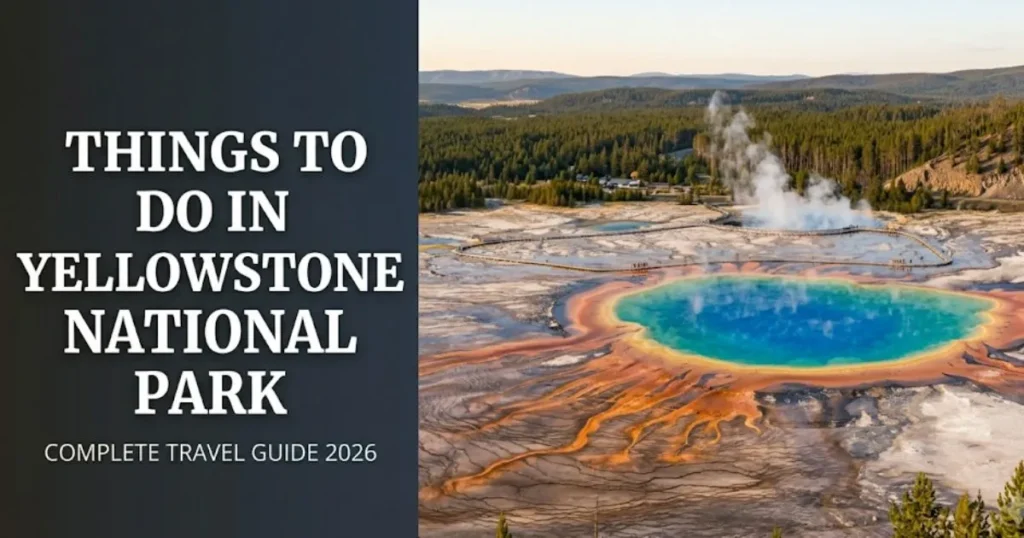
The Grand Prismatic Overlook Trail offers a significantly better view of the park’s most photographed thermal feature than the boardwalk directly adjacent to the spring. The overlook trail is a 1.6-mile round trip from the Fairy Falls trailhead. The boardwalk view is largely steam and pavement.
Lamar Valley on the park’s northeast corridor is where the park’s restored wolf packs are most consistently spotted. Dawn and dusk visits in October through early November offer particularly high probability of wolf sightings. Summers bring bison herds so large they regularly stop traffic.
For first-timers choosing just three days: Day 1 in Geyser Country, Day 2 in Roosevelt Country and Canyon Country, Day 3 in Mammoth Country or Lake Country depending on interest.
According to the National Park Service, Yellowstone receives more than 4 million visits annually in recent years, with the heaviest concentration between late June and mid-August.
Insider Tip:
- The boardwalk directly at Grand Prismatic Spring is often obscured by steam. The overlook trail gives a clear aerial perspective showing the full rainbow color pattern.
- First-time visitors frequently underestimate driving times. Canyon Village to Old Faithful takes approximately 50 minutes without summer traffic delays. Budget 90 minutes in July.
Unique Things to Do in Yellowstone Beyond Old Faithful
The most unique things to do in Yellowstone are found in the areas that require slightly more effort to reach than the park’s front-page attractions.
Firehole Lake Drive is a 3-mile one-way loop in the Lower Geyser Basin, typically skipped by visitors rushing toward Old Faithful. Great Fountain Geyser on this loop is one of the park’s most spectacular erupting features, shooting water 75 to 200 feet high. Eruption intervals are roughly 9 to 15 hours, and the NPS posts predicted windows at the Old Faithful Visitor Education Center.
Norris Geyser Basin is the hottest and most geologically volatile thermal basin in the park. Steamboat Geyser, the world’s tallest active geyser, erupts here. Its eruptions are irregular and unpredictable, making a sighting a genuine piece of luck. The basin’s otherworldly landscape of milky blue pools, roaring fumaroles, and acidic mud pots is substantially less crowded than the Upper Geyser Basin.
The Bechler Wilderness in the park’s remote southwest corner receives a fraction of Yellowstone’s visitor traffic. It requires a longer approach drive and some backcountry planning. For experienced hikers, it offers thermal springs in a backcountry river setting that no other zone in the park replicates.
For budget travelers: Both Firehole Lake Drive and Norris Geyser Basin are included in the standard park entrance. No additional fees apply. They represent the best free alternatives to the park’s most marketed attractions.
Insider Tip:
- Great Fountain Geyser on Firehole Lake Drive is Yellowstone’s most undervisited major geyser. Arrive at least 30 minutes before the predicted window.
- Norris Geyser Basin splits into two distinct loops: Porcelain Basin (more open, brighter colors) and Back Basin (forested, more steam features). Both merit separate walks.
Key Takeaway: Split your Yellowstone visit by zone, not by attraction list. One zone per day is the framework that experienced park visitors consistently recommend.
Wildlife Watching in Yellowstone: Lamar Valley and Hayden Valley
Wildlife watching in Yellowstone is most productive in Lamar Valley for wolves and bears and in Hayden Valley for bison, bears, and waterbirds, particularly in the early morning and at dusk.
Lamar Valley, accessible along the Northeast Entrance Road, is often called “America’s Serengeti” by NPS rangers and naturalists. Bison herds here can number in the thousands during summer. Gray wolves from the park’s recovered packs are seen regularly, particularly from late September through early November. Grizzly bears frequent the valley’s meadows in spring and fall.
Hayden Valley, roughly centered in the park on the Grand Loop Road between Canyon Village and Fishing Bridge, offers open meadow terrain where bison, elk, coyotes, grizzlies, and trumpeter swans are regularly visible from roadside pullouts. The Yellowstone River runs through it. Osprey nesting is reliably visible from the valley’s bridges.
For wildlife photography enthusiasts: A spotting scope or 400mm or longer telephoto lens is standard equipment for serious wolf and bear viewing. Keeping the required 100-yard minimum distance from bears and wolves is both a safety requirement and a legal one.
Families with children find Hayden Valley bison viewing highly accessible. Multiple wide pullouts allow vehicle-based viewing, which keeps young children safe from the minimum-distance requirement enforcement.
The peak wildlife season for wolf activity runs late September through November and again in late winter (February through March for visitors accessing the park via snowcoach). Summer offers bison and bear activity but fewer wolf sightings.
Insider Tip:
- Serious wildlife watchers follow the “wolf watcher” community in Lamar Valley at dawn. A dedicated group of long-term volunteers with spotting scopes often helps visitors locate wolf packs. They are a genuinely helpful resource.
- Hayden Valley’s bison jams in July can delay the Canyon to Fishing Bridge drive by 30 to 60 minutes. Budget time accordingly.
Best Geothermal Features and Geysers in Yellowstone
Yellowstone’s geothermal features are best experienced at Old Faithful, Grand Prismatic Spring, Norris Geyser Basin, and Mammoth Hot Springs terraces. Each represents a fundamentally different type of thermal geology.
Old Faithful is not Yellowstone’s largest or tallest geyser, but it is the most predictable major geyser on earth. The NPS visitor education center at Old Faithful posts eruption predictions accurate to within 10 minutes. A dedicated group of visitors camps the benches for the eruption and disperses within minutes. Arriving 20 minutes before a predicted eruption and staying 20 minutes after gives a reasonable viewing window.
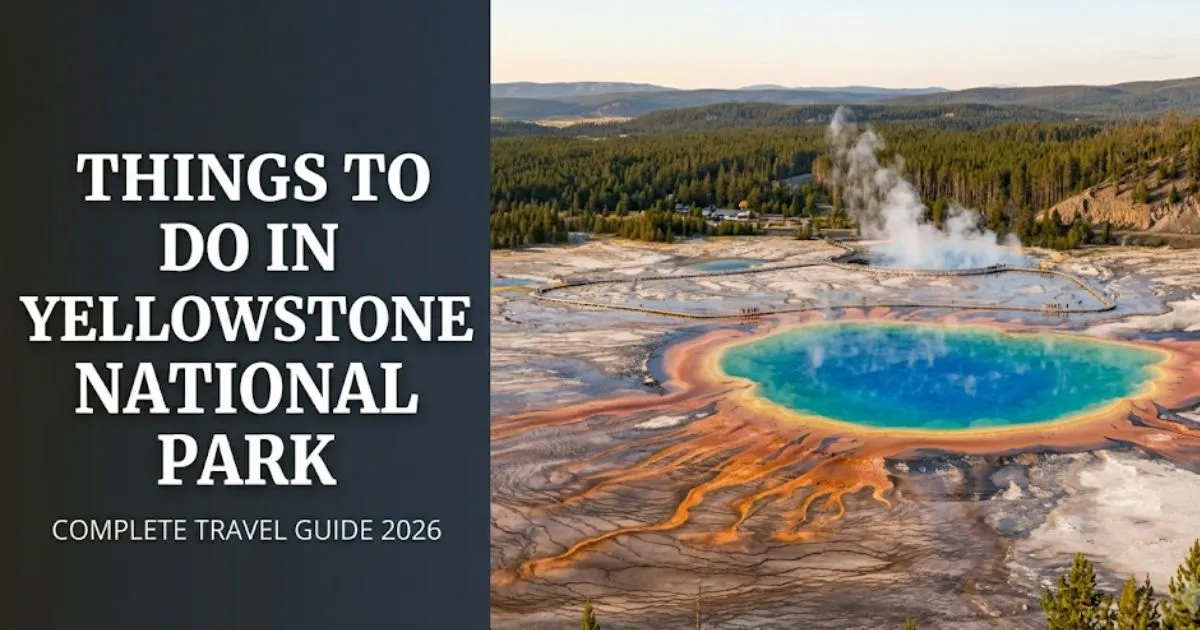
Grand Prismatic Spring is the park’s largest hot spring and one of the largest on earth. Its vivid concentric color rings (deep blue center grading through green, yellow, and orange to rust-red at the outer edges) are produced by thermophilic bacteria that thrive at different temperature zones. The best view is from the Grand Prismatic Overlook Trail, not the boardwalk below.
Mammoth Hot Springs in the park’s northern zone features travertine terraces built by calcium carbonate-rich water. The formations change continuously as new vents open and old ones dry. Palette Spring and Canary Spring on the lower terrace boardwalk are particularly active. The upper terrace boardwalk loop is accessible by vehicle or on foot.
For seniors and accessibility travelers: The lower terrace boardwalk at Mammoth Hot Springs is relatively flat and wheelchair accessible for most of its length. The upper terrace is vehicle-accessible via a one-way loop road. Verify current boardwalk conditions with the NPS before visiting, as thermal activity can temporarily close sections.
Insider Tip:
- Morning light at Grand Prismatic Spring creates the clearest color photography conditions. The overlook trail faces east, giving front-lit morning shots of the spring’s full color spectrum.
- Norris Geyser Basin changes more rapidly than any other basin in the park. Features that were dormant in prior years sometimes reactivate dramatically. Check NPS condition reports before your visit.
Key Takeaway: Grand Prismatic Spring’s overlook trail delivers a genuinely different and superior experience to its boardwalk. It is a 1.6-mile round trip that most first-time visitors skip and most repeat visitors make a priority.
Best Hikes in Yellowstone National Park
The best hikes in Yellowstone range from the 1.6-mile Grand Prismatic Overlook Trail to the strenuous 10-mile round-trip summit of Mount Washburn, which delivers the widest aerial view of the park’s caldera available on foot.
Fairy Falls Trail (approximately 5 miles round trip from the Fairy Falls trailhead near Midway Geyser Basin) combines a visit to the park’s tallest accessible waterfall with the added option of scrambling a short rise for an aerial view of Grand Prismatic Spring. It is the most efficient hike in the park for visitors wanting to cover multiple significant features in one trip.
Mystic Falls Trail (approximately 2.6 miles round trip from the Biscuit Basin boardwalk) is among the most underused hikes in Geyser Country. It ends at a 70-foot waterfall and continues, for those who extend it, to a ridgeline with views across the Upper Geyser Basin. Most day visitors at Old Faithful never find it.
Mount Washburn (approximately 10 miles round trip from the Dunraven Pass trailhead) rises to 10,243 feet. The summit fire lookout building is staffed by rangers who answer questions. The panoramic views on clear days extend across the caldera, the Teton Range, and into the Absaroka Mountains. Bighorn sheep are regularly seen near the summit.
For families with children: The Storm Point Trail (2.3 miles round trip near Yellowstone Lake) is flat, accessible, and consistently delivers bison and waterfowl sightings. It is one of the genuinely child-appropriate hikes that experienced park visitors recommend specifically for families.
For solo hikers: Any off-boardwalk trail requires bear spray. Carry it accessible, not buried in a pack. Rental is available at several park village locations.
Insider Tip:
- The Dunraven Pass road (between Tower Junction and Canyon Village) closes in winter and sometimes into late spring due to snow. Verify its status before building a Mount Washburn day around it.
- The Mystic Falls ridgeline extension adds only 0.5 miles but rewards with one of the Upper Geyser Basin’s best aerial perspectives. Almost no one does it.
Grand Canyon of the Yellowstone and Waterfall Experiences
The Grand Canyon of the Yellowstone is one of the most visually dramatic canyon landscapes in the American West, with yellow and orange canyon walls dropping 800 to 1,200 feet to the Yellowstone River below.
Upper Falls (109 feet) and Lower Falls (308 feet, nearly twice the height of Niagara Falls) are both viewable from multiple overlook points on the canyon’s North Rim and South Rim drives. The Artist Point overlook on the South Rim is the park’s most photographed canyon viewpoint. It is also its most crowded. Arrive before 9 AM or after 5 PM for a less compressed experience.
The North Rim Trail between Inspiration Point and Grandview Point covers approximately 2.3 miles one-way and offers a sequence of canyon perspectives unavailable from vehicle pullouts. Uncle Tom’s Trail on the South Rim descends approximately 500 feet via switchbacks and stairs to a platform close to the base of Lower Falls. It is the only way to view the falls from below the canyon rim, and it earns the physical effort.
For families with children: Uncle Tom’s Trail requires significant stair descent and ascent. Children who are comfortable with steep stairs handle it well. Strollers are not appropriate. The South Rim Drive vehicle pullouts offer accessible canyon views for families who cannot manage the stairs.
For seniors and accessibility travelers: Artist Point overlook is paved and relatively level from the parking area. The North Rim’s Brink of the Upper Falls viewpoint requires a short but steep paved descent. The canyon’s most dramatic viewpoints involve some physical demand.
Insider Tip:
- Lower Falls appears most powerful in late May and early June when snowmelt peaks. By August the volume is noticeably reduced, though still impressive.
- The North Rim Trail is significantly less crowded than South Rim Drive vehicle pullouts. Most visitors park at Artist Point and go no further.
Scenic Drives in Yellowstone National Park
Yellowstone’s most rewarding scenic drive is the full Grand Loop Road, a 142-mile figure-8 circuit that connects all five park zones. Experienced visitors break it into two separate half-loop drives over at least two days.
The Lamar Valley Road (Northeast Entrance Road from Tower Junction to the Northeast Entrance near Cooke City) is the park’s single most wildlife-productive driving route. Dawn and dusk drives in any season regularly produce bison sightings. Wolves and bears appear along this corridor more consistently than anywhere else in the park accessible by standard vehicle.
Firehole Lake Drive is a 3-mile one-way loop in the Lower Geyser Basin that most visitors skip in their rush to Old Faithful. Great Fountain Geyser and White Dome Geyser both front directly onto this road. It is the only place in the park where you can view a major geyser from your vehicle.
Mammoth to Tower Junction passes through the park’s sagebrush flats where pronghorn antelope and elk are regularly spotted roadside. The road also passes the petrified tree area near Tower Junction, an often-skipped curiosity that stands alone outside the main visitor flow.
For road trip travelers: The approach via the Beartooth Highway (US Route 212) from Red Lodge, Montana to the Northeast Entrance is one of the most dramatically scenic mountain roads in the continental United States. It is typically open from late May through mid-October and closes for winter. Verify current status before routing your drive.
| Scenic Drive | Distance | Primary Highlight | Best Time |
|---|---|---|---|
| Lamar Valley Road | ~29 miles one way | Wolf and bison watching | Dawn, dusk |
| Firehole Lake Drive | 3 miles one way | Great Fountain Geyser | Morning |
| Grand Loop (north half) | ~70 miles | Mammoth, Roosevelt, Canyon | Full day |
| Grand Loop (south half) | ~72 miles | Geyser Country, Lake Country | Full day |
| Beartooth Highway approach | ~64 miles | Mountain summit views | Late May to Oct |
Key Takeaway: The Lamar Valley Road at dawn is the single highest-probability wildlife experience in the park. Drive it before breakfast every day you are in the northeast quadrant.
Things to Do in Yellowstone in Summer
Summer in Yellowstone (late June through August) offers full park access, all roads open, and all visitor facilities operating. It also delivers the park’s highest crowd levels, most expensive lodging, most competitive parking, and most challenging wildlife jam delays.
The practical reality of peak summer: Grand Prismatic Spring’s parking lot on Firehole Lake Drive fills by 8 AM on busy summer days. The Old Faithful viewing area holds thousands simultaneously during eruption windows. The Grand Canyon of the Yellowstone South Rim Drive backs up at Artist Point regularly. These are not edge cases. They are standard summer conditions.
The early morning strategy is the most effective summer tool: Arriving at any major feature by 7 AM delivers a qualitatively different experience from arriving at 10 AM. The park’s lighting at dawn is also dramatically better for photography.
For families: Summer is genuinely the most family-friendly season for Yellowstone. All roads are open, all facilities are operating, Junior Ranger programs run daily, and temperatures are typically mild to warm (50s to 80s Fahrenheit at most elevations). The heat is rarely oppressive at Yellowstone’s altitude.
For budget travelers: Summer lodging inside the park books out months in advance and prices reflect peak demand. Camping in the park (Canyon Campground, Grant Village Campground, and others) provides a significantly lower-cost base. Sites also fill quickly; reserve through Recreation.gov as early as possible.
According to the Wyoming Office of Tourism, Yellowstone and the surrounding region see the majority of their annual visitation in July and August, making advance reservation for lodging, some campgrounds, and guided experiences especially important for 2026 visits.
Insider Tip:
- The Firehole Swimming Area on Firehole Canyon Drive is a legitimate park-managed swimming area in a geothermally warmed river stretch. It is free, considerably less crowded than the main thermal basins, and genuinely pleasant on a warm summer afternoon. Check current open status with the NPS before visiting, as it has experienced periodic closures.
Things to Do in Yellowstone in Winter
Winter in Yellowstone (mid-December through mid-March) delivers a fundamentally different park experience: most roads closed to private vehicles, snowcoach and snowmobile access only to the interior, dramatically lower crowds, and geothermal features at their most visually dramatic against snow and steam.
The park’s winter access is limited but structured. The only roads open to private vehicles year-round are the North Entrance Road (Gardiner to Mammoth Hot Springs and Tower Junction) and the Northeast Entrance Road to Cooke City (Cooke City itself is accessible from the North but not through the Northeast Entrance from Red Lodge in winter). All other interior roads require snowcoach or snowmobile access operated by licensed concessioners.
Snowcoach tours from West Yellowstone, Gardiner, and Flagg Ranch (south entrance) offer guided day trips to Old Faithful and Norris Geyser Basin with naturalist narration. These are the most practical winter access option for most visitors. Book well in advance; winter tours from quality operators like those affiliated with Yellowstone Forever fill quickly.
Cross-country skiing and snowshoeing are available on unplowed park roads and designated trails from Mammoth Hot Springs. The trail system from Mammoth is accessible without snowcoach transport and offers wolf and bison sightings at a quieter scale than summer.
For wildlife enthusiasts: Winter is among the best seasons for wolf watching in Lamar Valley. Wolves are more active in open terrain, bison congregate near geothermal ground that stays snow-free, and the landscape’s open visibility makes spotting far easier than summer’s green canopy allows.
For families with children: Winter Yellowstone requires genuine cold-weather preparation. Temperatures regularly drop below zero Fahrenheit overnight and in early morning. Layering and insulated gear are not optional. Young children should be comfortable with extended outdoor cold before this trip is planned.
Insider Tip:
- The Lamar Valley Road (Tower Junction toward Cooke City) remains open to private vehicles year-round and is among the world’s best accessible winter wolf-watching locations. No snowcoach needed for this corridor.
Fun Things to Do in Yellowstone for Families
Yellowstone’s most family-friendly activities are Old Faithful eruption watching, the Junior Ranger program, accessible boardwalk loops at Mammoth Hot Springs, and bison viewing from roadside pullouts in Hayden Valley.
The Junior Ranger Program, operated by the National Park Service, is free and structured for children roughly ages 4 through 12. Kids complete age-appropriate activity booklets available at any visitor center and are sworn in as Junior Rangers by a park ranger upon completion. It is one of the genuinely effective park programs for keeping children engaged across multiple park days.
Mammoth Hot Springs terraces are among the park’s most accessible major features for families. The lower terrace boardwalk is largely flat and stroller-accessible for most of its length. The colorful travertine formations at Palette Spring and Canary Spring are visually striking enough to hold children’s attention without requiring long explanations of geology.
Hayden Valley bison viewing from vehicle pullouts requires zero hiking and delivers wildlife sightings significant enough that children consistently react strongly. Bison in the 1,000-to-2,000-pound range grazing 50 yards from a parked vehicle is a different experience from any zoo.
For families with children under 6: The boardwalk loops at the Upper and Lower Geyser Basins (including the geyser basin walk from Old Faithful visitor center) are the safest and most manageable experiences. Keep young children strictly on boardwalks. Thermal crust adjacent to boardwalks appears solid and is not.
Storm Point Trail (2.3 miles round trip, flat terrain near Indian Pond on Yellowstone Lake’s north shore) is the best short hike for families. It reliably delivers bison sightings within the first half-mile and ends at a rocky lakeshore point with clear views across Yellowstone Lake.
Insider Tip:
- The free Junior Ranger booklet can be started before entering the park. Download it in advance from the NPS website and have children begin working on it during the drive in. Park rangers at visitor centers take the swearing-in ceremony seriously, which makes it meaningful for children.
Key Takeaway: The Junior Ranger program is the single most effective family engagement tool in the park. It gives children a structured reason to observe and learn rather than simply wait for adults to finish looking at things.
Free and Low-Cost Things to Do in Yellowstone
After paying the park entrance fee (approximately $35 per vehicle for a 7-day pass, or covered by the America the Beautiful Annual Pass at approximately $80), the vast majority of Yellowstone’s activities cost nothing additional.
Free activities include: all boardwalk loops at every geyser basin, all wildlife viewing from roadside pullouts, all hiking on maintained trails, the Junior Ranger program, all ranger-led talks and walks (offered daily at major visitor centers in summer, verify schedule), the park’s visitor centers and museums (the Albright Visitor Center at Mammoth Hot Springs has a particularly good museum on park history and wildlife recovery).
Activities that carry additional costs:
- Horseback riding through park concessioners: approximately $45 to $80 per person per hour as of recent years. Offered at Mammoth Hot Springs and Roosevelt Lodge corrals. Verify current availability and pricing with Xanterra Parks and Resorts.
- Guided fishing: Yellowstone fishing requires a separate park fishing permit beyond the entrance fee. Guided fly-fishing on the Firehole River or Gibbon River is available through licensed outfitters. Verify current permit requirements and costs directly with the NPS.
- Snowcoach tours: Winter access to the park interior runs approximately $100 to $200+ per person depending on length and operator. Book directly with licensed Yellowstone concessioners.
For budget travelers: The America the Beautiful Annual Pass represents excellent value if you plan to visit more than one federal recreation area within 12 months. A single family vehicle’s Yellowstone 7-day pass is approximately $35. The Annual Pass at approximately $80 covers unlimited entry to all 400+ NPS sites for a full year.
Insider Tip:
- Free ranger-led programs are among the park’s most underused resources. Evening programs at Canyon Lodge Amphitheater and Old Faithful Visitor Education Center are well-produced and informative. Check current schedules at any visitor center upon arrival.
Things to Do Near Yellowstone National Park
The most significant destination near Yellowstone is Grand Teton National Park, located directly south with its southern boundary beginning approximately 7 miles from Yellowstone’s south entrance. Many visitors combine both parks in one trip.
Grand Teton National Park offers dramatically different scenery from Yellowstone: the jagged Teton Range rising directly from the Snake River valley with no significant foothills obscuring the mountain face. The most productive single Grand Teton day activity for a visitor coming from Yellowstone is the Signal Mountain Summit Road (a 5-mile paved road to a summit viewpoint) combined with a cruise on Jackson Lake and a drive through Antelope Flats for bison and pronghorn.
Jackson Hole, Wyoming (approximately 60 miles south of Yellowstone’s south entrance and adjacent to Grand Teton) functions as the primary full-service base for southern Yellowstone and Teton visitors. It offers far more dining and lodging variety than the park’s internal villages, at a wide range of price points.
Cody, Wyoming (approximately 52 miles east of Yellowstone’s East Entrance via US Route 20) is the nearest full-service town to the park’s east side. The Buffalo Bill Center of the West in Cody houses five distinct museums including the Draper Natural History Museum and the Plains Indian Museum. It is a full-day stop for historically and culturally oriented travelers.
Gardiner, Montana (at the North Entrance) and West Yellowstone, Montana (at the West Entrance) are the two smallest gateway communities with the most direct access to specific park zones.
For road trip travelers: The combined Yellowstone and Grand Teton loop, entering through the North Entrance at Gardiner and exiting through the South Entrance to Jackson, is one of the great American road trip itineraries. It covers roughly 400 miles of driving across 5 to 7 days and requires no backtracking if routed directionally.
How Many Days Do You Need for Yellowstone?
Most visitors need a minimum of 3 days to cover Yellowstone National Park’s primary zones without feeling rushed. Five days allows for a thorough, relaxed experience of all five zones plus one day near Grand Teton.
The zone-by-day framework that experienced park visitors consistently use:
- Day 1: Geyser Country. Old Faithful eruption, Grand Prismatic Overlook Trail via Fairy Falls trailhead, Norris Geyser Basin in the afternoon. Base in West Yellowstone or Old Faithful area lodging.
- Day 2: Roosevelt Country. Lamar Valley at dawn for wildlife. Tower Fall. Petrified Tree. Afternoon drive back toward Canyon Village.
- Day 3: Canyon Country. Grand Canyon of the Yellowstone, both North Rim and South Rim. Uncle Tom’s Trail. Hayden Valley bison viewing on the drive south toward Fishing Bridge.
- Day 4 (optional): Lake Country. West Thumb Geyser Basin. Yellowstone Lake shoreline. Storm Point Trail.
- Day 5 (optional): Mammoth Country. Mammoth Hot Springs terraces. Boiling River (verify current access). Albright Visitor Center museum.
For families with children: Three days is a reasonable minimum if the itinerary is built around accessible activities (boardwalks, vehicle-based wildlife viewing, Junior Ranger program). A fifth day adds breathing room that genuinely improves the family experience.
For solo hikers: A 5 to 7 day visit allows incorporation of one or two longer hikes (Mount Washburn, Bechler area) alongside the primary zone experiences.
Lodging inside the park books out 6 to 12 months in advance for peak summer dates. If internal lodging is not available, gateway town lodging in Gardiner, West Yellowstone, Jackson, or Cody is the practical alternative.
Key Takeaway: Book Yellowstone’s internal lodging at least 6 months before your peak-summer visit date. The Old Faithful Inn and Canyon Lodge in particular are fully reserved months out. Do not leave this step for late.
Yellowstone Itinerary for First-Time Visitors
A well-structured Yellowstone itinerary for first-time visitors is built around one zone per day, early morning starts, and afternoon flexibility rather than rigid hourly scheduling.
3-Day First-Timer Itinerary:
Day 1: Geyser Country
- Arrive at the Fairy Falls trailhead by 7:30 AM. Hike to the Grand Prismatic Overlook before crowds build.
- Walk down to the Midway Geyser Basin boardwalk for close-range Grand Prismatic Spring viewing.
- Drive to Old Faithful. Check eruption prediction at the visitor center. Allow 90 minutes in the Upper Geyser Basin area.
- Afternoon: Drive Firehole Lake Drive. Note Great Fountain Geyser prediction window. Stop at White Dome Geyser.
- Evening: Norris Geyser Basin. Walk both Porcelain and Back Basin loops. Plan for 90 minutes.
Day 2: Roosevelt Country and Canyon Country
- Drive Lamar Valley Road at dawn (depart by 6 AM). Stop at every pullout. Scan for wildlife.
- Tower Fall overlook. Short trail to base viewpoint (note: stairs required).
- Drive Grand Loop south to Canyon Village by midday.
- South Rim Drive: Artist Point overlook and Uncle Tom’s Trail.
- North Rim Trail: walk from Inspiration Point to Grandview Point.
- Hayden Valley at dusk. Drive slowly. Watch for bison jams.
Day 3: Mammoth Country
- Mammoth Hot Springs lower terrace boardwalk: arrive by 8 AM.
- Upper terrace loop via vehicle.
- Albright Visitor Center and museum.
- Drive Mammoth to Tower Junction for pronghorn and elk spotting.
- Optional afternoon: Boiling River thermal soak (verify current swimming access status with NPS before planning around this).
General rules for all three days:
- Start every day before 8 AM. No exceptions.
- Carry bear spray on any trail that leaves the boardwalk.
- Download NPS Yellowstone app for geyser predictions and road conditions before entering areas with no cell service.
Safety and Practical Warnings for Yellowstone Visitors
Yellowstone’s thermal features represent a genuine physical danger that the park’s boardwalk and signage system cannot fully mitigate. People have been severely burned and killed by leaving designated paths near thermal features.
Key safety and practical facts every visitor should know:
- Stay on boardwalks near all thermal features without exception. Thermal crust appears solid and can give way without warning over boiling water just inches beneath.
- Maintain minimum safe distances from wildlife at all times: 25 yards minimum from bison and elk; 100 yards minimum from bears and wolves. These are legal requirements enforced by rangers.
- Carry bear spray on any off-boardwalk hike. It must be accessible immediately, not stored in a pack. Rentals are available inside the park.
- Cell service is extremely limited throughout most of the park. Download offline maps and the NPS Yellowstone app before entering low-signal areas.
- Altitude ranges from approximately 5,300 feet to over 11,000 feet. Altitude-related symptoms (headache, fatigue, shortness of breath) are common for visitors arriving from sea level. Hydrate well, pace activity on Day 1, and ascend gradually.
- Do not approach or attempt to feed any wildlife. Bison have gored park visitors. Grizzly bears are a genuine hazard in backcountry areas.
- Boiling River and all thermal water contact areas: Some thermal water contact areas within the park have experienced periodic closures due to safety conditions. Verify current access status directly with the NPS before including any thermal water experience in your itinerary.
- Summer afternoon thunderstorms are common above treeline. Anyone hiking Mount Washburn or similar exposed terrain should be off high ground by 1 PM.
NPS Emergency Services within the park can be reached by contacting any ranger station or visitor center. The park dispatch number is posted at all entrance stations and visitor centers. Save it before you lose cell signal.
Frequently Asked Questions About Things to Do in Yellowstone National Park
What is the most popular thing to do in Yellowstone National Park?
Watching Old Faithful erupt is the most popular single activity in Yellowstone National Park.
The geyser erupts approximately every 44 to 125 minutes and the National Park Service posts eruption predictions at the Old Faithful Visitor Education Center.
The viewing area accommodates thousands of visitors simultaneously during peak summer, so arriving 20 to 30 minutes before the predicted eruption window is the standard approach.
How many days do you need to see Yellowstone National Park?
A minimum of 3 days is needed to visit Yellowstone’s primary zones without feeling rushed.
Five days allows a thorough, relaxed experience of all five zones and is the length most experienced park visitors recommend for first-time visitors.
Anything less than 2 full days means choosing one or two zones and accepting that you are visiting a fraction of the park.
What is the best time of year to visit Yellowstone?
The best time to visit Yellowstone is late September through early October or late May through early June.
These shoulder periods offer lower crowds, full road access (in late September through October before winter closures), comfortable hiking temperatures, and excellent wildlife activity.
July and August offer full park access but also the park’s highest crowd levels, most competitive parking, and most expensive lodging.
Are there free things to do in Yellowstone National Park?
After paying the park entrance fee, the vast majority of Yellowstone’s activities are free, including all boardwalk loops, all hiking trails, all wildlife viewing, and all ranger-led programs.
The Junior Ranger program is free at any visitor center, and daily ranger talks and evening interpretive programs carry no additional cost.
The America the Beautiful Annual Pass at approximately $80 covers the entrance fee for a full vehicle for one year and represents strong value for visitors to multiple federal recreation areas.
Is Yellowstone National Park good for families with young children?
Yellowstone is genuinely well-suited for families with children ages 5 and older who can walk moderate distances on flat boardwalks.
The Junior Ranger program, accessible boardwalks at Mammoth Hot Springs, Old Faithful eruption watching, and bison viewing from vehicle pullouts in Hayden Valley are all age-appropriate family highlights.
Children under 5 can participate but require close supervision near all thermal features, as boardwalk edges border genuinely dangerous thermal ground.
What should I do on my first day at Yellowstone National Park?
Start your first day in Geyser Country, arriving at the Fairy Falls trailhead by 7:30 AM for the Grand Prismatic Overlook Trail before crowds build.
Follow with the Old Faithful Upper Geyser Basin loop and an afternoon drive through Firehole Lake Drive to Great Fountain Geyser, then end at Norris Geyser Basin before closing time.
This sequence covers the park’s most significant geothermal features in one full day with manageable driving distances and a natural progression from south to north through Geyser Country.
Plan Your 2026 Yellowstone Visit Now
Yellowstone rewards the visitors who plan with specificity and realistic expectations. Booking internal lodging at least 6 months before your peak-summer travel date is the single most important logistical step you can take.
Verify timed-entry permit requirements, road construction schedules, and any trail or thermal area closures directly with the National Park Service at nps.gov/yell before your departure date. All hours, fees, access conditions, and program schedules are subject to change, and conditions in 2026 should be confirmed with official sources.
Your Yellowstone trip becomes an entirely different experience when you structure it by zone rather than by checklist. One zone per day, early morning starts, and bear spray in hand on every trail. That framework is what separates a genuinely rewarding visit from a frustrating day of parking lot circles and crowded boardwalks.