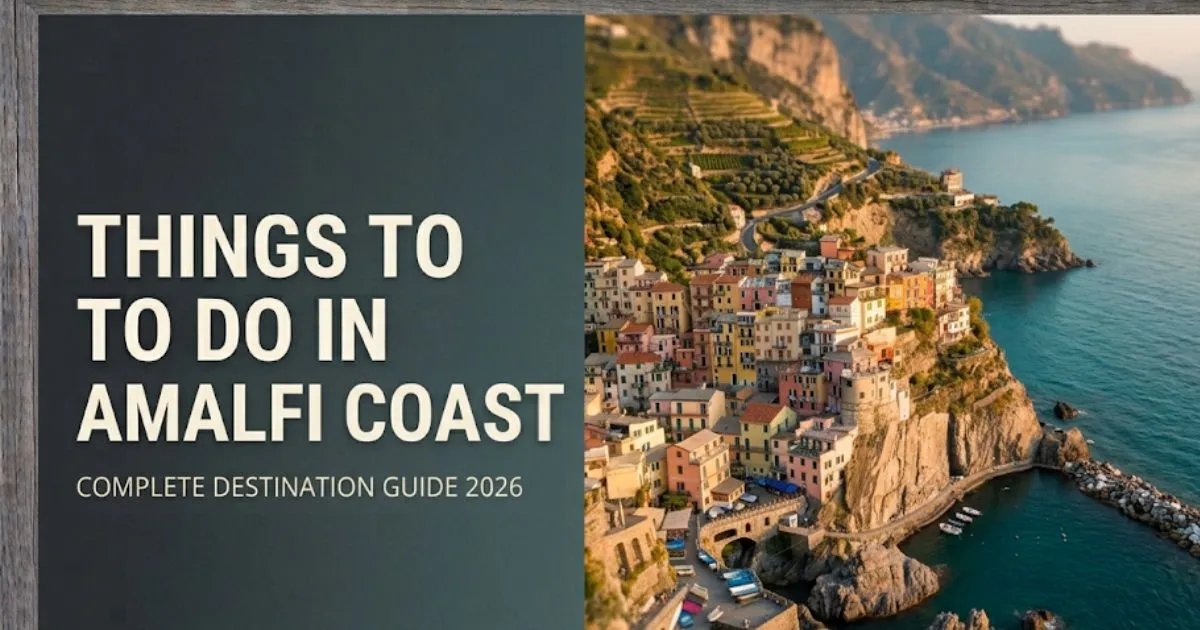
Things To Do in Amalfi Coast: The Complete 2026 Guide

The Amalfi Coast packs more genuinely spectacular things to do in amalfi coast into 50 kilometers of clifftop villages than almost any comparable stretch of European coastline. The challenge is not finding things to do — it is knowing which ones are worth your limited time and which ones are tourist infrastructure dressed up as authentic experience.
The UNESCO World Heritage Site designation earned in 1997 applies to the entire cultural and natural landscape, not just one viewpoint or one town. According to Agenzia Campania Turismo, the regional tourism authority, the coast draws over four million visitors annually, concentrated almost entirely into a 12-week summer window.
This guide covers specific activities, honest town comparisons, seasonal trade-offs, and transportation realities. It is built for US travelers planning a 2026 trip who want practical, specific, and genuinely useful intelligence.
Things to Do in Amalfi Coast: The Essential Overview
The Amalfi Coast offers five distinct categories of experience: cliff hiking, beach swimming, cultural town exploration, boat tours, and food-focused activities. Each category requires a different planning approach and suits different traveler profiles.
The coast is not one destination. It is a chain of towns, each with its own character, crowd level, price point, and terrain challenge.
Positano is the most photographed and most expensive. Ravello is the cultural and musical heart. Amalfi town is the historical and logistical center. Praiano is where experienced repeat visitors base themselves to avoid the worst crowds. Cetara is where locals eat.
Planning your Amalfi Coast visit well means choosing a base town strategically, not just booking the first available room in Positano because it appears on every Instagram feed.
The honest reality: summer crowds from July through August transform this coastline into a logistical struggle. The roads gridlock. The beaches pack wall to wall. The ferries sell out.
Arrive in May, early June, September, or October. The coast reveals itself completely differently during those months.
Insider Tip:
- Book ferry tickets online at least 48 hours ahead during June and September shoulder periods
- The first ferry of the day (typically departing Salerno around 7:30am) travels with local workers, not tourists
- Solo travelers find the public ferry system far more social and practical than any private transfer at three times the cost
Amalfi Coast Towns to Visit (and How to Choose Your Base)
The most consequential decision you will make for your Amalfi Coast trip is where to base yourself. This choice determines your transportation difficulty, your daily cost, your crowd experience, and your access to the best of the coast.
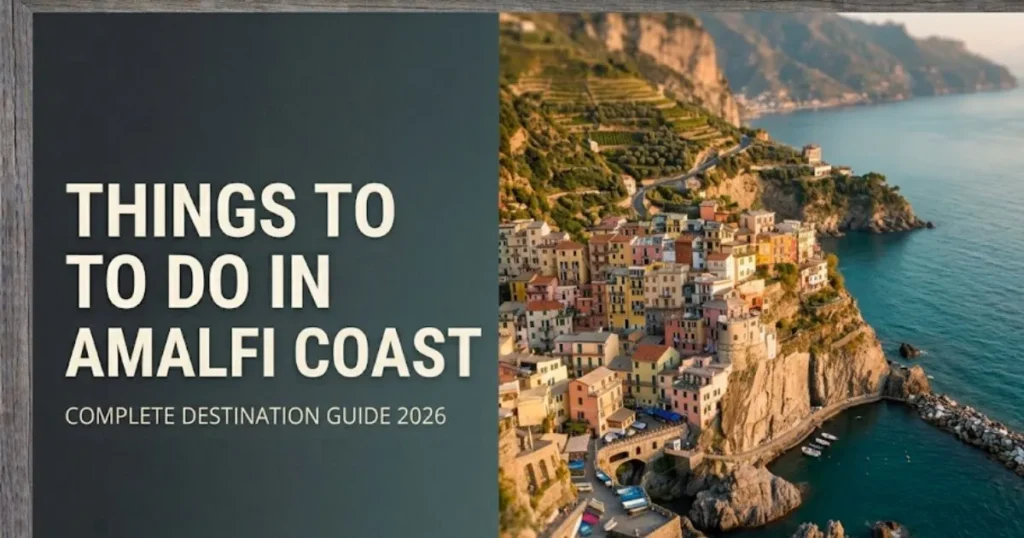
Here is the honest comparison:
| Town | Best For | Crowd Level | Cost Tier | Terrain Challenge | What Makes It Distinct |
|---|---|---|---|---|---|
| Positano | Couples, luxury travelers | Extreme July-Aug | Premium | High (hundreds of steps) | Most photogenic facades; best beach club scene |
| Amalfi town | First-timers, cultural travelers | High | Mid-premium | Moderate | Cathedral, ferry hub, historical center |
| Ravello | Couples, cultural travelers, seniors | Lower | Premium | Low (hillside town, less steep than Positano) | Gardens, classical music, elevated views |
| Praiano | Experienced travelers, couples | Low | Mid-range | Moderate | Quiet, local-feeling, midpoint location |
| Cetara | Budget travelers, food travelers | Very low | Budget-mid | Low | Working fishing village; colatura di alici; authentic dining |
| Maiori | Families, budget travelers | Moderate | Budget | Low | Longest sandy beach on the coast; flat seafront |
| Atrani | Solo travelers, budget travelers | Very low | Budget | Low | Smallest municipality in Italy; piazza directly on beach |
Families with children will find Maiori and Minori considerably more practical than Positano. Strollers are nearly impossible on Positano’s stepped streets.
Budget travelers should look immediately at Atrani, a five-minute walk from Amalfi town’s ferry dock with a direct beach piazza and dramatically lower accommodation prices.
Seniors and travelers with mobility considerations will find Ravello’s hillside streets more manageable than Positano’s vertical descent. Ravello’s main streets are paved and more even underfoot.
According to ENIT, the Italian National Tourist Board, Praiano consistently receives higher satisfaction scores from repeat visitors than Positano, despite being far less famous. This gap between reputation and resident experience is worth taking seriously.
Best Time to Visit the Amalfi Coast
The best time to visit the Amalfi Coast is May through early June or September through October. These months offer warm temperatures, swimmable sea water, and dramatically lower crowds than the peak summer period.
Here is the month-by-month honest breakdown:
- May: Ideal. Wildflowers on the trails. Temperatures around 20 to 24°C. Sea water reaching swimnable temperature (around 20°C). Accommodation prices 30 to 40% below August peaks. Most restaurants and hotels are open.
- Early June: Still good. Crowds building but manageable. Schools have not fully broken up in most European countries.
- July and August: Avoid unless crowd tolerance is genuinely high. Roads gridlock. Beaches pack solid. Temperatures hit 32 to 38°C on cliff trails. Ferry queues are long. Prices are at absolute peak.
- September: The local favorite. Sea water is warmest of the year (around 25°C). European school holidays have ended. Crowds drop significantly after the first week. Weather remains reliable.
- October: Good for cultural travelers and hikers. Swimming still possible in early October. Some beach clubs close mid-month. Weather becomes less predictable in the second half.
- November through March: Many restaurants and hotels close entirely. Ferry services reduce to minimal winter schedules. Hiking trails become wet and in some sections genuinely dangerous. Not recommended for first-time visitors.
Couples targeting a romantic experience will find late September the closest the coast comes to its idealized image. Families should avoid July and August for practical crowd and heat reasons.
Key Takeaway: Book your Amalfi Coast trip for May or September. Everything is better: trails, beaches, ferries, prices, and your overall sanity.
Amalfi Coast Hiking Trails
The Path of the Gods (Sentiero degli Dei) is the Amalfi Coast’s most spectacular hiking experience, running approximately 7.5 kilometers from Bomerano (above Agerola) to Nocelle (above Positano) with uninterrupted cliff-top views of the coastline.
The trail is classified as moderate in difficulty but involves significant elevation change and rocky terrain. Allow three to four hours for the full route.
The standard direction runs east to west (Bomerano to Nocelle) with a steep descent into Positano at the end. Going west to east means ascending from Nocelle, which is substantially harder and less common.
To complete the Path of the Gods:
- Take the SITA Sud bus from Amalfi or Positano to Bomerano (confirm schedule in advance)
- Register your walk at the Bomerano trailhead information point (the Rete Escursionistica Campania manages trail conditions)
- Allow four to five hours total including the descent to Nocelle
- From Nocelle, take the local bus or walk the stepped path down to Positano
- Return to your base town by ferry or SITA bus from Positano harbor
The Valle delle Ferriere trail near Amalfi town is the genuinely local alternative to the Path of the Gods. This shaded 6-kilometer round trip through a medieval paper mill valley and lemon grove forest is far less crowded and equally beautiful in a quieter way.
Seniors and accessibility travelers: The Valle delle Ferriere trail begins gently but becomes uneven in the upper sections. The Path of the Gods is not suitable for travelers with knee or balance issues.
Insider Tip:
- Start the Path of the Gods before 8am in May through June to complete the trail before midday heat
- Carry at least two liters of water per person; there are no reliable water sources on the cliff section
- Budget travelers can do the full hike for the cost of two SITA bus tickets and a ferry back
Amalfi Coast Beaches
The Amalfi Coast’s beaches are predominantly narrow, rocky, and organized around private lido clubs requiring paid sunbed rental. Understanding this before arriving prevents significant disappointment.
Spiaggia Grande in Positano is the coast’s most famous beach. It is also its most crowded, most expensive, and least relaxing option in July and August.
Fornillo Beach, a 10-minute walk west from Spiaggia Grande along Via Positanesi d’America, is Positano’s genuine local alternative. It is smaller, less developed, and consistently preferred by visitors staying more than two nights.
Furore Fjord (Fiordo di Furore) is a narrow sea inlet with a small shingle beach accessible via steep steps from the SS163 road. It holds no beach clubs and very little shade. It is worth a visit for the dramatic scenery but not a full beach day.
Maiori beach is the longest sandy stretch on the entire coast, flat-access, significantly cheaper than Positano’s lido clubs, and practical for families with children and strollers.
Atrani has a small public beach directly on its main piazza. No paid sunbeds required. Local residents use it daily throughout summer.
| Beach | Sand or Pebble | Paid Sunbeds Required | Crowd Level | Best For |
|---|---|---|---|---|
| Spiaggia Grande, Positano | Pebble | Yes (most areas) | Extreme summer | First-timer photos |
| Fornillo, Positano | Pebble | Mixed free and paid areas | Moderate | Couples, repeat visitors |
| Furore Fjord | Pebble/rock | No | Low | Scenic stops, swimmers |
| Maiori | Sand | Yes (most areas) | Moderate | Families, budget travelers |
| Atrani | Pebble | No public area | Low | Budget travelers, locals |
Budget travelers: Public beach access exists at most towns, but requires arriving early to claim space in the free sections. Lido club rental can run approximately €20 to €45 per sunbed per day at Positano locations — verify current pricing before booking.
Amalfi Coast Boat Tours
A private or group boat tour is the single best way to see the coastline from sea level, reaching sea caves, hidden coves, and cliff faces that no road or trail accesses. This is not an optional addition — it is the experience that most clearly separates a genuinely complete Amalfi Coast visit from a rushed land-only trip.
Group boat tours depart from Amalfi harbor and Positano’s ferry dock daily from April through October. They typically cover Positano, Praiano’s sea caves, Capri’s outline from a distance, and the Grotta dello Smeraldo.
The Grotta dello Smeraldo (Emerald Grotto) near Conca dei Marini is the coast’s most accessible sea cave. Boat access from Amalfi harbor runs approximately 20 minutes each way. The cave’s green-lit water is genuine and not artificially enhanced — it results from submerged light filtering through a sea opening.
Private boat charter from Amalfi or Positano allows you to design a custom itinerary, stop at accessible swimming coves, and avoid group timing constraints. Private charters cost significantly more than group tours — budget appropriately and verify current pricing directly with operators.
To book an Amalfi Coast boat tour:
- Book at least two to three days in advance in May and September; one week ahead in June and July
- Confirm what the tour includes: swimming stops, cave entry, snorkeling equipment, lunch
- Verify departure point, since Amalfi and Positano have separate departure zones
- Check cancellation policy; weather cancellations are common in spring
- Bring sunscreen, a cover-up, and water; boats have limited shade
Couples will find a private half-day boat charter one of the most genuinely romantic experiences on the coast. Budget travelers should join a group tour, which costs a fraction of private charter rates.
Key Takeaway: A boat tour is not a luxury add-on on the Amalfi Coast — it is the perspective that makes the entire destination make sense.
Amalfi Coast Food and Restaurants
The Amalfi Coast’s culinary identity runs from the limone sfusato amalfitano, an IGP-protected lemon variety larger than a fist and intensely aromatic, to colatura di alici di Cetara, an anchovy sauce with DOP protection that has been produced in Cetara since the 13th century.
Colatura di alici is the coast’s most distinctive ingredient. It is an amber, intensely savory liquid extracted from salted anchovies after months of aging. In Cetara, it is used on pasta, grilled fish, and bruschetta. Restaurants in Positano rarely serve it. Restaurants in Cetara have built their reputations on it.
Trattoria San Pietro al Mare in Cetara and the cluster of family-run seafood restaurants on Cetara’s harbor serve colatura di alici in traditional preparations at prices well below Positano’s waterfront dining.
Sfogliatella, the ricotta-filled flaky pastry from Naples, is available throughout the coast but best purchased fresh at pastry shops in Amalfi town’s centro storico.
Limoncello tasting is marketed heavily to tourists throughout the coast. Most of what is sold in Positano shops is produced off-coast and bulk-shipped. The genuine locally produced limoncello, made from sfusato amalfitano lemons grown on the coastal terraces, is available at smaller artisan producers.
Le Grottelle restaurant in Ravello, built into a cliffside cave above the town, serves traditional Campanian cuisine in one of the coast’s most memorable settings. Reserve in advance for dinner tables on the terrace.
Budget travelers can eat well in Cetara, Atrani, and Minori at roughly half the price of comparable meals in Positano. A plate of pasta with colatura di alici in Cetara costs approximately €10 to €14. The same quality ingredient in Positano costs dramatically more purely due to location.
Positano Things to Do
Positano is the Amalfi Coast’s most visually iconic town, built vertically down a cliff face to the sea in a cascade of pastel buildings. It is also the most crowded, most expensive, and most logistically demanding of the coast’s major towns.
Via dei Mulini is Positano’s main stepped pedestrian street descending from the bus stop to the beach. It is where ceramic shops, linen boutiques, and restaurants concentrate. It is genuinely beautiful. It is also extremely narrow and shoulder-to-shoulder in summer.
Things to do in Positano specifically:
- Walk Via Positanesi d’America from Spiaggia Grande to Fornillo Beach (15 minutes, some uneven terrain)
- Visit the Chiesa di Santa Maria Assunta at the base of Via dei Mulini, with its majolica-tiled dome visible from the sea
- Browse ceramic and hand-painted linen shops on Via dei Mulini (most are family-run, not chains)
- Take a private water taxi to Li Galli islands, three small islets offshore historically associated with Homer’s Sirens
- Hike down from Nocelle after completing the Path of the Gods (best done in reverse as an arrival into Positano)
- Rent a kayak from the beach operators at Fornillo (seasonal; verify availability)
Couples will find Positano at its most romantic in early May or late September, before 9am or after 6pm, when the day-trippers have gone and the town’s genuine atmosphere surfaces.
Families with strollers should know that Positano has virtually no flat ground. The entire town navigates by steps.
The most overrated experience in Positano is the main Spiaggia Grande beach in July or August. The most underrated is a quiet dinner at Next 2 restaurant on the Via Pasitea with terrace views at dusk.
Ravello on the Amalfi Coast
Ravello sits 350 meters above the sea on a ridge above Amalfi town, offering the most elevated perspectives of the coast and a cultural depth that Positano’s beach-resort atmosphere does not match. It is also significantly less crowded than Positano on any given day of the year.
Villa Rufolo is Ravello’s most visited landmark: a 13th-century medieval villa with formal gardens that overlook the sea from a cliff-edge terrace. The composer Richard Wagner was inspired here. The Ravello Festival uses Villa Rufolo’s terrace stage for open-air classical concerts each summer, with performances running from July through September in most years.
Villa Cimbrone is Ravello’s less-visited but equally compelling alternative. Its Terrace of Infinity (Belvedere dell’Infinito) is a balustraded terrace lined with classical busts overlooking the full sweep of the coast. Conde Nast Traveler has repeatedly cited this view as one of the finest in Italy.
Entry fees to both Villa Rufolo and Villa Cimbrone run approximately €7 to €10 per adult as of recent years. Verify current pricing before visiting in 2026.
To reach Ravello from Amalfi town:
- Take the SITA Sud bus from Amalfi harbor bus stop (frequent departures; journey approximately 25 minutes)
- Alight at Ravello Piazza Duomo (the main square)
- Walk to Villa Rufolo (2 minutes from the piazza) or Villa Cimbrone (10 minutes along Via Santa Chiara)
- Allow a minimum of three hours to do both villas justice
Seniors and travelers with limited mobility will find Ravello’s main streets more manageable than Positano’s or Amalfi’s steep descents. Villa Rufolo has some uneven terrace areas; Villa Cimbrone involves a moderate walk on cobbled paths.
Key Takeaway: Ravello is where the Amalfi Coast becomes genuinely Italian rather than a coastal resort. Allocate a full day, not a quick stop.
Getting Around the Amalfi Coast
Getting around the Amalfi Coast without a car is entirely practical and, in most cases, more efficient than driving. The coast’s public transport system is operated by SITA Sud, running along the SS163 Amalfitana between Sorrento and Salerno with frequent stops at every major town.
The SS163 is a two-lane mountain road carved into cliffsides with hairpin bends, sections without guardrails, and oncoming buses requiring precise coordination to pass. Driving it in a standard rental car is achievable but genuinely demanding. Driving it with an unfamiliar vehicle, during July or August traffic, or at night requires real confidence and concentration.
Transportation options compared:
| Option | Best For | Cost Tier | Limitations |
|---|---|---|---|
| SITA Sud bus | Budget travelers, solo travelers | Very low | Can be crowded peak season; bags are cumbersome |
| Ferry | Comfortable travel between towns; scenic | Low-mid | Seasonal; limited service November-March |
| Private water taxi | Couples, luggage transfers | Premium | Not a practical daily transport option |
| Rental car | Flexibility seekers | Mid-premium | Parking nearly impossible in Positano and Amalfi town |
| Private transfer | Families, airport arrivals | Mid-premium | Fixed routes; book in advance |
Parking reality: Positano has no central public parking within walking distance of the beach. The Spiaggia Grande car park is a multi-story structure requiring a long shuttle or steep walk. Amalfi town’s parking situation is similarly difficult.
Families with luggage and young children will find a private transfer from Naples Airport to their base town the most practical arrival option. This costs significantly more than public transit but avoids the stress of bus transfers with bags and children.
Budget travelers should know the SITA Sud bus requires exact change or a ticket purchased in advance from tabacchi (tobacco) shops. Digital tickets are increasingly available via the SITA Sud app. Verify current ticketing options before travel.
3-Day Amalfi Coast Itinerary
This 3-day itinerary works best with a base in either Praiano (for experienced travelers prioritizing quiet) or Amalfi town (for first-timers prioritizing ferry access).
Day 1: Amalfi Town and Ravello
- Morning: Arrive and settle into your base. Walk to the Amalfi Cathedral (Cattedrale di Sant’Andrea), including the Cloister of Paradise (Chiostro del Paradiso) for the 13th-century marble courtyard and medieval Roman sarcophagi collection.
- Mid-morning: Take the SITA Sud bus to Ravello (25 minutes). Visit Villa Rufolo gardens.
- Lunch: Eat at a trattoria on Ravello’s main piazza.
- Afternoon: Walk to Villa Cimbrone and the Terrace of Infinity.
- Late afternoon: Return by bus to Amalfi. Walk to Atrani via the coastal path (10 minutes flat walk) for a quiet evening drink on the piazza.
- Dinner: Fresh seafood in Amalfi town’s centro storico.
Day 2: Path of the Gods Hike and Positano
- Early morning: Take the SITA Sud bus to Bomerano (change at Amalfi or depart from Positano direction; confirm current route).
- Hike: Complete the Path of the Gods west to Nocelle (3 to 4 hours). Carry 2 liters of water minimum.
- Mid-afternoon: Descend to Positano via the local bus or stepped path from Nocelle.
- Late afternoon: Walk Via dei Mulini. Visit Chiesa di Santa Maria Assunta. Rest at Fornillo Beach.
- Evening: Dinner in Positano, then ferry or bus back to base.
Day 3: Boat Tour and Cetara
- Morning: Group or private boat tour from Amalfi harbor. Include the Grotta dello Smeraldo.
- Lunch: Take the ferry to Cetara. Eat colatura di alici pasta at a harbor-front restaurant.
- Afternoon: Walk Cetara’s small harbor and fishing village streets. Browse the anchovy shops.
- Late afternoon: Return by ferry or bus to base for final evening.
Couples can substitute Day 3’s boat tour with a private charter and eliminate Cetara for a longer sea day. Families should replace the Day 2 hike with Maiori beach and a morning kayak rental, keeping terrain demands manageable for children.
Amalfi Coast for Couples
The Amalfi Coast is one of the most genuinely romantic coastal destinations in Europe, and the conditions that make it so — cliff views, sea-lit evenings, small candlelit restaurants, boat-only beaches — are entirely real when experienced outside of peak summer crowds.
The most romantic experiences specifically suited for couples:
- A private boat charter at sunrise along the full length of the coastline, with a swimming stop at an offshore sea cave
- Dinner on the terrace at Le Grottelle in Ravello, carved into the cliff with a panoramic sea view
- An evening in Atrani after the day-trippers leave, on the piazza with a carafe of local white wine and the fishing village entirely to yourselves
- Walking the coastal path from Amalfi to Atrani at dusk (10 minutes flat, lit by the setting sun on the water)
- A morning visit to Villa Cimbrone’s Terrace of Infinity before tour groups arrive (opening time; verify in 2026)
What sounds romantic but underdelivers in practice: Positano’s main beach in July. The crowd density, sunbed competition, and vendor activity make genuine connection with the place — and each other — almost impossible. Revisit in late September.
Accommodation note for couples: Hotels in Ravello and Praiano offer significantly more genuine privacy and quieter evenings than Positano’s dense resort zone. Le Sirenuse in Positano and Monastero Santa Rosa above Conca dei Marini represent the coast’s most celebrated luxury experiences, but verify availability and current rates well in advance for 2026.
Amalfi Coast for Families
The Amalfi Coast is manageable for families with children over eight years old. For families with toddlers or stroller-dependent young children, the coast’s terrain, transport, and crowding create genuine logistical difficulty.
The specific family-friendly approach:
- Base in Maiori or Minori, not Positano or Ravello. Maiori has the coast’s only long sandy beach with flat seafront walking, playground access, and significantly more affordable accommodation.
- Use ferry travel rather than the SITA bus wherever practical. Ferries are less physically demanding for children and offer sea-level views that keep young passengers engaged.
- Save the Path of the Gods for adults only or for children over 10 with genuine hiking experience and appropriate footwear.
- The Amalfi Cathedral and Cloister of Paradise engages children briefly (15 to 20 minutes) but is not a lengthy child activity.
- Kayak rental at Fornillo Beach in Positano is genuinely popular with older children and teenagers during summer months.
- The Grotta dello Smeraldo boat excursion is one of the coast’s most effective family activities: short, dramatic, visually impressive for all ages.
The honest limitation: Families expecting a flat, easy beach resort will find the Amalfi Coast’s cliff terrain, stepped streets, and narrow roads fundamentally different from destinations like Sorrento or the flat beaches of Puglia. That is not a flaw. It is a geographic reality to plan around.
Key Takeaway: Families should base themselves in Maiori, use ferries as primary transport, and save steep-town exploration for half-day excursions rather than daily life.
Amalfi Coast Budget Travel
Budget travel on the Amalfi Coast is genuinely possible, but it requires making specific strategic choices that most tourism content glosses over.
The honest budget breakdown:
- Accommodation: Stay in Atrani, Minori, or Maiori. Atrani sits five minutes from Amalfi town’s ferry dock and has guesthouses and small B&Bs at a fraction of Positano prices.
- Transport: Use SITA Sud buses exclusively. A multi-day bus pass covers the entire SS163 route between Sorrento and Salerno for a low daily cost. Ferry prices are moderate but add up daily for budget travelers.
- Beaches: Avoid paid lido clubs. Use free public beach sections in Atrani and Maiori. Arrive before 9am to claim space.
- Food: Eat at worker-oriented restaurants in Amalfi town’s back streets, not on the waterfront. Pizza, fresh pasta, and local fish are all affordable at restaurants one or two streets back from any harbor.
- Activities: The Path of the Gods costs only transport fares. The Valle delle Ferriere trail near Amalfi costs nothing to walk. Atrani’s piazza and cathedral cost nothing.
What budget travel cannot fully avoid on the Amalfi Coast: the base cost of accommodation is structurally higher than coastal alternatives in Calabria, Puglia, or the Cilento coastline south of Salerno. This is a UNESCO-designated coast with premium real estate economics. Budget accordingly.
Budget travelers who want genuine sea beauty at lower overall cost should consider spending two nights on the Amalfi Coast and one night in Paestum to the south, which offers Greek temple ruins and a long flat beach at dramatically lower prices.
Amalfi Coast Day Trips
The Amalfi Coast’s central location in southern Campania makes it an excellent base for day trips to some of Italy’s most significant sites. The three most practical options from Amalfi town or Positano:
Capri:
The island of Capri is visible from the Amalfi Coast on clear days and reachable by hydrofoil ferry from Positano in approximately 50 minutes or from Amalfi harbor in approximately 80 minutes. Capri warrants a full day. Key destinations include the Blue Grotto (Grotta Azzurra), the Faraglioni rock formations, and the hilltop town of Anacapri.
Pompeii:
The UNESCO-listed Roman city is approximately 60 to 90 minutes from Amalfi by bus and train combination (SITA Sud bus to Sorrento, then Circumvesuviana train to Pompeii Scavi station). Allow a full day minimum. Timed-entry tickets are increasingly required — book online in advance for 2026 visits.
Paestum:
Three of the best-preserved Greek temples in the world sit at Paestum, south of Salerno. Reach Paestum by taking the ferry to Salerno and then a regional train or bus south. This is the coast’s most underused day trip. The temples are genuinely dramatic and the site receives a fraction of Pompeii’s crowds.
| Day Trip | Journey Time from Amalfi | Booking Required | Best For |
|---|---|---|---|
| Capri | 50-80 min by ferry | Ferry: book ahead | Couples, scenic travelers |
| Pompeii | 60-90 min by bus and train | Pompeii entry: book ahead | History travelers, families 10+ |
| Paestum | 60-75 min by ferry and train | No advance booking typically | History travelers, budget travelers |
Budget travelers will find Paestum the most cost-efficient day trip by a significant margin. Couples will find Capri the most scenically dramatic, particularly if a private boat circumnavigation of the island is included.
Amalfi Coast Practical Tips and Safety
Safety and Practical Warnings for the Amalfi Coast
The Amalfi Coast’s physical beauty comes with specific practical risks that most tourism content underplays. Understanding these before arrival prevents the most common costly or dangerous mistakes.
Key safety and practical facts every visitor should know:
- SS163 driving hazard: The coastal road involves blind hairpin turns, oncoming tour buses, and sections without guardrails. Rental cars are not recommended for drivers without experience on narrow mountain roads. If you drive, pull fully into designated passing bays when a bus approaches.
- Trail heat risk: The Path of the Gods is exposed to full sun from approximately 9am onward in summer. Start before 7:30am in July and August or postpone the hike to September. Heatstroke risk is real on this trail.
- Water safety: Some beach entry points on the coast involve submerged rocks and irregular currents. The Guardia Costiera (Italian Coast Guard) posts warning flags at monitored beaches; respect red flag closures without exception.
- Footwear on steps: The coast’s stepped streets and coastal paths are slippery when wet. Flat, closed-toe shoes with grip are necessary. Sandals are inadequate for trail sections.
- Pickpocket risk: Positano’s Via dei Mulini and the Amalfi harbor area experience pickpocket activity during peak season. Carry minimal cash and use front-facing bags.
- Medical facilities: The nearest hospital with full emergency services is in Salerno. Positano has a local medical post, but serious emergencies require transfer. Travel insurance with medical evacuation coverage is strongly recommended.
- Sun exposure: The Mediterranean sun at altitude on cliff trails is more intense than on a flat beach. SPF 50 sunscreen, a wide-brim hat, and consistent water intake are not optional in summer.
- Ferry weather cancellations: High winds cancel ferry services with minimal notice. Build flexibility into your schedule. Have a bus route backup for every ferry day.
In genuine emergencies, contact 112 (Italy’s universal emergency number) or the Guardia Costiera at 1530 for sea emergencies.
Frequently Asked Questions About the Amalfi Coast
What are the best things to do in the Amalfi Coast for first-time visitors?
The best things to do in amalfi coast for first-time visitors are hiking the Path of the Gods, taking a boat tour from Amalfi harbor, visiting Ravello’s Villa Rufolo and Villa Cimbrone, and spending time in Amalfi town’s cathedral and Cloister of Paradise.
Add a day in Cetara for the coast’s most authentic food experience, and a morning in Atrani to see what the coast looks like when tourist infrastructure steps back.
Avoid spending all your time in Positano: it is visually spectacular but logistically exhausting, and it represents only one version of what this coastline offers.
How many days do you need on the Amalfi Coast?
Three days is the practical minimum for a meaningful Amalfi Coast experience covering the key towns, one hike, and a boat tour.
Five to six days allows genuine exploration of lesser-visited towns like Cetara, Praiano, and Vietri sul Mare, plus a full day trip to Capri or Pompeii.
One or two days is enough for a strong first impression but does not allow the coast to reveal the quieter, more genuinely Italian experiences behind the tourist-facing front.
Is the Amalfi Coast worth visiting in 2026?
Yes, the Amalfi Coast is worth visiting in 2026 if you plan around the shoulder seasons of May or September and base yourself outside of Positano’s premium zone.
The landscape, hiking, food culture, and coastal boat access are genuinely exceptional in ways that justify the trip for the right traveler.
For travelers who dislike crowds, have strict budget limits, or require flat mobility-friendly terrain, the coast in peak summer is genuinely difficult and the value proposition weakens significantly.
What is the best town to stay in on the Amalfi Coast?
The best town to stay on the Amalfi Coast depends on your traveler profile: Praiano for experienced quiet-seeking couples, Maiori for families, Atrani for budget travelers, and Ravello for cultural and luxury travelers.
Positano is the right base only if you genuinely prioritize the most iconic visual setting and can absorb its premium costs and logistical complexity.
Amalfi town works well as a first-timer base due to its central ferry connections to most points on the coast.
How do you get around the Amalfi Coast without a car?
Getting around the Amalfi Coast without a car uses two main systems: the SITA Sud bus along the SS163 and the seasonal ferry network connecting major towns from April through October.
The SITA Sud bus requires a ticket purchased in advance at tabacchi shops or via the SITA Sud app; verify current ticketing options before travel.
Ferries are the most comfortable and scenic option and are strongly recommended over buses for luggage-heavy travel days or when traveling with children.
When should you avoid visiting the Amalfi Coast?
Avoid the Amalfi Coast in July and August if you are sensitive to crowds, heat, or high costs, as these months concentrate over half the coast’s annual visitors into an eight-week period.
Also avoid November through February for a first visit: many hotels and restaurants close, ferry services reduce to minimal winter schedules, and wet conditions make hiking trails genuinely dangerous.
The worst single week on the Amalfi Coast is the Italian Ferragosto holiday period centered on August 15th, when domestic tourism peaks and the roads, beaches, and ferries reach absolute capacity.
Plan Your 2026 Amalfi Coast Trip
The Amalfi Coast genuinely earns its reputation, but only when you engage with it on its own terms. That means arriving in shoulder season, choosing a base town that matches your travel style, and building your days around ferries and trails rather than fighting the SS163 in August traffic.
Book your Path of the Gods hike and boat tour logistics before you book anything else. These two experiences require timing, transport coordination, and in the case of boat tours, advance reservation. Get those right and the rest of the trip organizes itself naturally.
All prices, ferry timetables, bus schedules, trail access conditions, and hotel and restaurant availability are subject to change. Verify all key logistics directly with operators and the Agenzia Campania Turismo before departure in 2026. The coast changes seasonally and the gap between outdated information and current reality can significantly affect your experience.
Start with the base town decision. Everything follows from there.