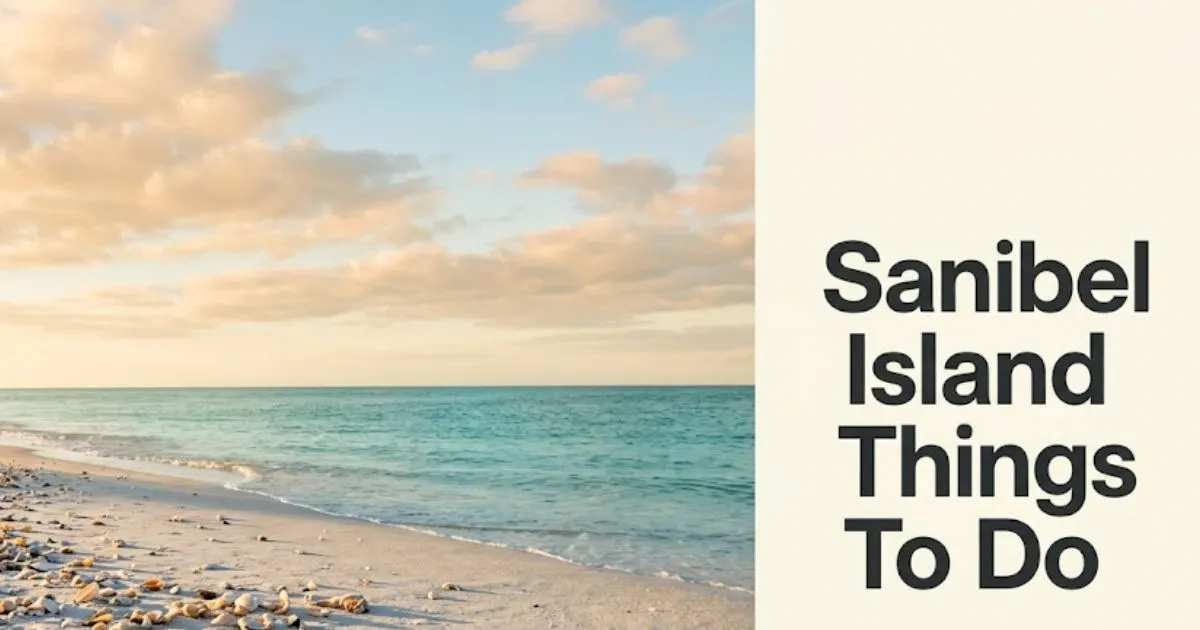
Sanibel Island Things To Do: The 2026 Insider Guide

The best sanibel island things to do start before you arrive: low tide shelling at Bowman’s Beach before 8:00 AM beats every other Gulf Coast beach experience in Florida. Sanibel is a 12-mile barrier island that turned down a bridge to the mainland until 1963, and that resistance to mass tourism still shapes every hour you spend here.
Roughly 60 percent of the island is permanently protected as wildlife refuge or conservation land. That figure, reported by the Lee County Visitor and Convention Bureau, explains why this island feels nothing like Fort Myers Beach or Naples.
This guide covers specific beaches, shelling strategy, the Wildlife Drive, kayaking routes, cycling trails, dining, and a workable two-day itinerary. It also covers what most first-timers get wrong, which saves real time and real money.
Sanibel Island Things To Do: What Makes This Gulf Coast Island Different
Sanibel Island is the top shelling destination in the Western Hemisphere, a distinction tied directly to its east-west orientation along the Gulf of Mexico. Unlike most Florida barrier islands that run north-south, Sanibel’s angle acts as a natural trap for shells drifting in from the Gulf.
The island also enforces one of the few genuine anti-development ordinances on Florida’s Gulf Coast. Building height limits, strict setback rules, and a commercial development cap mean the island looks in 2026 much like it did in 1980.
This is not a beach for pool bars and parasailing vendors. It rewards slow walkers, early risers, and travelers who know that the best encounter here might be a roseate spoonbill feeding ten feet from a gravel path.
Post-Hurricane Ian recovery has been substantial. Most major attractions, refuges, beaches, and dining establishments had reopened or rebuilt by 2024 and 2025. Verify specific business status with the Sanibel and Captiva Islands Chamber of Commerce before your trip.
Insider Tip:
- Sanibel runs almost entirely on Periwinkle Way and Tarpon Bay Road. Know both before you arrive.
- Wildlife Drive at J.N. Ding Darling closes every Friday regardless of season.
- Couples and nature-focused solo travelers rate this island highest. Nightlife seekers consistently rate it poorly.
Things To Do in Sanibel Island for First-Time Visitors
First-time visitors to Sanibel Island should prioritize three things: a morning shelling session, at least two hours on Wildlife Drive, and one meal at a genuinely local restaurant on Periwinkle Way. Everything else on the island builds from those three anchors.
The biggest mistake first-timers make is treating Sanibel like a standard Gulf Coast beach town. There are no chain restaurants on the island. There are no chain hotels in the traditional sense. There is no boardwalk.
What exists instead is a consistent, quiet, nature-oriented experience that requires you to set your own pace. Bring binoculars. Bring a mesh shell bag. Arrive before the causeway traffic builds after 9:00 AM.
According to Visit Florida, Sanibel and Captiva together attract more than one million visitors annually. The island’s infrastructure is deliberately designed for a slower throughput than that number suggests.
| First Visit Priority | What It Delivers | Best For | Time Needed |
|---|---|---|---|
| Bowman’s Beach shelling | Top shell concentration on the island | Everyone | 2 to 3 hours |
| Wildlife Drive, Ding Darling | Birding, alligators, mangrove ecosystem | Nature travelers | 2 to 4 hours |
| Lighthouse Beach sunset | Gulf views, historic lighthouse context | Couples | 1 to 2 hours |
| Over Easy Cafe breakfast | Local dining, popular with year-rounders | Solo travelers, couples | 1 hour |
| Tarpon Bay Explorers tour | Guided mangrove kayak or boat eco tour | Families, first-timers | 2 hours |
Profile note for families: First-time family visits work best with children ages 8 and older. Younger children lose interest in unstructured beach time faster than parents anticipate. Plan around the Tarpon Bay Explorers guided tour as an anchor activity.
Best Beaches on Sanibel Island
The best beach on Sanibel Island depends entirely on what you want from it. Bowman’s Beach, at the island’s quieter western end on Sanibel-Captiva Road, consistently produces the highest shell concentrations and the least crowd density outside peak morning hours.
Lighthouse Beach Park at the island’s eastern tip offers the shortest walk from the parking lot, a working historic lighthouse, and calmer water that suits wading with young children. It fills faster than Bowman’s because of its accessibility.
Gulfside City Park on Algiers Lane is the local alternative that most first-timers skip entirely. Parking is limited, the lot is easy to miss, and the beach rewards exactly because of both.
Turner Beach and Blind Pass on the western end sit at the channel between Sanibel and Captiva. The current here is stronger. The shell variety is excellent. Sunset from Turner Beach is one of the better Gulf views on the island.
| Beach | Best For | Shelling Quality | Parking | Facilities | Crowd Level |
|---|---|---|---|---|---|
| Bowman’s Beach | Shell collectors, solitude | Excellent | Paid lot, fills by 9 AM peak season | Restrooms, rinse station, picnic tables | Moderate to high mornings |
| Lighthouse Beach | Families, first-timers | Good | Paid lot | Restrooms, picnic area | High |
| Gulfside City Park | Locals, experienced visitors | Good to very good | Very limited, free | Minimal | Low to moderate |
| Turner Beach / Blind Pass | Shell variety, sunset views, snorkeling | Very good | Small free lot | None | Moderate |
| Causeway Islands | Budget access, fishing | Moderate | Free along causeway | None | Low |
Seniors and accessibility note: Bowman’s Beach has a longer walk from the parking lot across a wooden bridge. Lighthouse Beach offers the shortest distance from car to sand and is the most accessible option for travelers with mobility limitations.
Shelling on Sanibel Island
The ideal time for shelling on Sanibel is during low tide, within one hour before or after, and the best low tides for serious collecting occur before 8:00 AM. Check a Florida tide chart for your specific travel dates before booking anything.
The Florida Fish and Wildlife Conservation Commission notes that Sanibel enforces a two live shell per person per day limit. Taking live shells, meaning shells with living animals still inside, is prohibited and carries real fines.
The locally named “Sanibel Stoop” is the bent-over posture every collector adopts while scanning the waterline. It is not a joke. The serious collectors are the ones who look slightly ridiculous within the first ten minutes.
Bowman’s Beach consistently outperforms other island beaches for shell volume and variety. The western beach position and the angle of the shoreline concentrate shells driven in by Gulf currents overnight.
Species to look for: lightning whelks (Florida’s state shell), horse conchs, tulip shells, olive shells, and the rare junonia. The junonia is Sanibel’s most famous shell and finding one is genuinely uncommon. Many visitors never do.
Insider Tip:
- Bring a mesh bag or bucket, not a plastic zip bag. Mesh allows seawater to drain.
- Low pressure weather systems before your visit improve shell deposits significantly.
- The area just north of Bowman’s Beach parking lot, accessed by walking the shoreline north rather than south, is less picked-over during high-traffic morning hours.
- Seniors note: The shelling walk involves uneven wet sand. Waterproof sandals with grip soles outperform flip-flops on the wet shell beds.
J.N. Ding Darling National Wildlife Refuge
J.N. “Ding” Darling National Wildlife Refuge is one of the largest undeveloped mangrove ecosystems in the United States and the single most important nature destination on Sanibel Island. Wildlife Drive, the 4-mile one-way road through the refuge, is open to vehicles, cyclists, and walkers on all days except Friday.
The refuge is named for Jay Norwood “Ding” Darling, a Pulitzer Prize-winning political cartoonist who championed federal wildlife conservation in the 1930s. The US Fish and Wildlife Service manages the refuge, which protects more than 6,000 acres of aquatic habitat.
Wildlife Drive is best driven slowly in the early morning or late afternoon. Roseate spoonbills, great blue herons, snowy egrets, anhingas, and American alligators are consistently visible at low tide when the mudflats are exposed.
Vehicle access to Wildlife Drive carries a per-vehicle entry fee, with separate fees for cyclists and pedestrians. Rates change periodically. Verify current entry fees at the refuge visitor center or the US Fish and Wildlife Service website before your visit.
The Tarpon Bay Explorers facility, located at the end of Tarpon Bay Road within the refuge boundary, offers guided kayak tours, canoe rentals, and tram tours of the wildlife drive for visitors who prefer not to drive. This is the local alternative to self-guided driving for first-timers.
| Experience | Duration | Cost Range | Best For |
|---|---|---|---|
| Self-drive Wildlife Drive | 1 to 2 hours | Entry fee per vehicle | Independent travelers, photographers |
| Guided tram tour | 90 minutes | Paid per person | Families, seniors, first-timers |
| Guided kayak tour | 2 to 3 hours | Paid per person | Active adults, couples |
| Walking trail (Shell Mound) | 30 to 45 minutes | Included with entry | All profiles |
Profile note for families: The tram tour run by Tarpon Bay Explorers is the most family-friendly option. It provides guided interpretation that holds children’s attention better than a slow drive through the refuge.
Key Takeaway: Book the Tarpon Bay Explorers guided kayak or tram tour in advance during peak season. Walk-in availability disappears by mid-morning on weekends from November through March.
Kayaking and Water Activities on Sanibel Island
The top kayaking and water activity operator on Sanibel Island is Tarpon Bay Explorers, located at 900 Tarpon Bay Road inside the Ding Darling refuge boundary. They offer kayak rentals, guided mangrove tunnel tours, and canoe access to Tarpon Bay.
The mangrove tunnel paddling routes accessible from Tarpon Bay are among the most ecologically specific water experiences on Florida’s Gulf Coast. The tunnels are narrow, shaded, and filled with wildlife that visitors in motorized boats never see.
Paddleboarding is available through multiple rental operators along Periwinkle Way and at Tarpon Bay. The bay itself is calmer than the Gulf and better suited to first-time paddleboarders.
Gulf-side water conditions require more respect. Rip currents are present at all Gulf-facing beaches. Always swim between marked flags where lifeguards are present, and verify which beaches have current lifeguard coverage before entering the water.
Sunset cruises and shelling boat tours depart from marinas at Captiva Island, directly accessible from Sanibel’s northern end. These cover open Gulf and Pine Island Sound territory not reachable by kayak.
Insider Tip:
- The best mangrove tunnel experience starts from the Tarpon Bay launch, not from any of the beach access points.
- Morning departures before 9:00 AM avoid afternoon wind chop that makes paddling back harder.
- Solo travelers should book guided kayak tours rather than solo rentals if unfamiliar with tidal patterns in the bay. Currents shift significantly with the tide.
Sanibel Island Bike Trails and Cycling
Sanibel Island has approximately 25 miles of paved, off-road bike paths running across nearly the entire island. This is the most practical and enjoyable way to cover the island’s full length without dealing with limited parking at individual beaches.
The path network connects Lighthouse Beach on the east end to Bowman’s Beach near the western tip. The surface is smooth asphalt, mostly flat, and separated from vehicle traffic. It is one of the better cycling setups of any Gulf Coast barrier island.
Billy’s Rentals on Periwinkle Way is the island’s most established bike rental shop, offering adult bikes, tandem bikes, children’s bikes, and cycling accessories. Hourly and daily rates apply. Verify current pricing directly with the shop.
The practical logic of cycling Sanibel is simple. Parking at Bowman’s Beach fills by 9:00 AM on peak-season weekends. Cycling from your accommodation directly to Bowman’s Beach sidesteps the parking problem entirely and adds a pleasant 30 to 45-minute coastal ride.
Profile note for families: The flat, separated trail is genuinely suitable for families with children who can ride independently. The path is not suited for children on training wheels due to its length and occasional road crossings.
Insider Tip:
- Rent bikes for a full day rather than by the hour. The island rewards slow exploration, not efficient point-to-point transit.
- The section of trail along Sanibel-Captiva Road past the Wildlife Refuge entrance is one of the most scenic and least congested segments of the network.
- Bring water. There are very few places to purchase drinks along the trail outside of Periwinkle Way.
Sanibel Shell Museum
The Bailey-Matthews National Shell Museum on Sanibel-Captiva Road is the only museum in the United States dedicated entirely to shells and the creatures that make them. It houses one of the world’s largest shell collections, with specimens from every ocean on Earth.
The museum is not a children’s novelty attraction. It is a serious natural history institution with rotating exhibits, a research library, and permanent galleries covering shell biology, shell cultural history, and regional shell identification. The Florida collection is particularly strong.
Admission runs in the range of $15 to $25 per adult as of recent years, with reduced rates for children and members. Verify current pricing directly with the museum before visiting.
For shell collectors visiting Sanibel, the museum’s Florida shell identification gallery is practically useful. Knowing the difference between a lightning whelk and a tulip shell before you hit the beach improves the collecting experience materially.
The museum gift shop carries one of the better curated shell collections for purchase on the island, including ethically sourced specimens not available on the beach.
Profile note for seniors: The museum is fully climate-controlled, fully accessible, and requires no significant walking distance from the parking area. It is one of the best midday activities during the peak heat of summer months.
Insider Tip:
- Visit on a weekday morning to avoid the organized school and tour group visits that concentrate on weekend afternoons.
- The “Junonia Room” dedicated to Sanibel’s rarest shell is worth extra time if shell identification interests you.
Key Takeaway: Allocate 90 minutes minimum for the Bailey-Matthews National Shell Museum. One hour is not enough for anyone who takes the subject seriously.
Sanibel Island Restaurants and Dining
The best meal on Sanibel Island does not happen at a waterfront resort restaurant. It happens at The Lazy Flamingo on Periwinkle Way or its Captiva Road location, a low-key, cash-friendly local seafood bar that has survived on the island longer than most of the resort restaurants that have come and gone.
Doc Ford’s Rum Bar and Grille on Periwinkle Way offers the island’s most consistent mid-range dining experience. The grouper sandwich and the rum-based cocktails are the actual reasons to go. The island-themed decor is marketing. Ignore it and order the fish.
Over Easy Cafe on Periwinkle Way is the correct breakfast choice for most visitors. It is local, busy, and runs out of daily specials by 10:00 AM. Arrive before 9:00 AM on weekends or expect a wait.
Island Cow on Periwinkle Way is the island’s most consistently visited casual family restaurant. It earns its popularity with straightforward portions and a menu that works for every age. It is not a local secret. It is a local institution, which is a different thing.
Gramma Dot’s Seafood at the Sanibel Marina serves some of the freshest local catch on the island, with direct marina access and a more relaxed atmosphere than the Periwinkle strip.
Profile note for budget travelers: Sanibel dining runs higher than comparable mainland Gulf Coast options. The Lazy Flamingo is the most affordable quality option on the island for a full sit-down seafood meal.
Sanibel Island Free and Low-Cost Activities
Free and genuinely satisfying things to do on Sanibel Island require no planning beyond tide chart awareness and an early alarm. Shelling at any Gulf-facing beach is free. Walking the island bike paths costs nothing.
The Causeway Islands, the series of small connected islands along the Sanibel Causeway approach from Fort Myers, are free to access and popular with local fishermen. The views of the causeway and bay are genuinely good, and the fishing is legitimate.
Wildlife watching at J.N. Ding Darling can be done partially for free on the unpaved hiking trails, though Wildlife Drive vehicle access carries an entry fee. The Indigo Trail and the Shell Mound Trail inside the refuge require no fee and offer genuine wildlife encounter quality.
Sunrise at Lighthouse Beach Park is free. It is also one of the island’s most reliably beautiful experiences, and almost no one is there at 6:30 AM.
- Free shelling at any Gulf beach (arrive at low tide)
- Free cycling the 25-mile island trail network (bike rental cost separate)
- Free wildlife watching on the Indigo and Shell Mound trails
- Free sunrise and sunset at Lighthouse Beach and Turner Beach
- Free fishing on the Causeway Islands
- Low-cost breakfast at Over Easy Cafe or the Sanibel Farmers Market (seasonal Saturday mornings on Periwinkle Way)
Profile note for budget travelers: A full day on Sanibel is achievable for under $30 per person beyond causeway toll and food costs. The island’s nature-based activities are its best activities, and most are free or low-cost.
Key Takeaway: The Sanibel Causeway toll, parking fees at Bowman’s Beach, and a single restaurant meal represent the three largest costs for most day-trip visitors. Budget for all three before you leave Fort Myers.
Things To Do Near Sanibel Island
The most rewarding day trip from Sanibel Island is Captiva Island, directly accessible by continuing north on Sanibel-Captiva Road across the Blind Pass Bridge. Captiva is smaller, quieter, and even less commercial than Sanibel.
Cayo Costa State Park, accessible only by ferry from Pine Island or Captiva, is the definitive local alternative for experienced visitors who have already done Sanibel’s main beaches. The undeveloped barrier island has some of the best shelling and snorkeling in Southwest Florida with almost no infrastructure.
Fort Myers Beach on Estero Island south of Sanibel is a completely different experience. It is louder, more commercial, and more family-entertainment-oriented. It is useful context for understanding why Sanibel’s quietness is a deliberate design rather than a limitation.
Pine Island, north of Cape Coral via Pine Island Road, offers a genuine working waterfront community, mangrove kayaking, and access to ferry service to Cayo Costa and Cabbage Key. The Cabbage Key restaurant, reachable only by boat, is a destination in itself for sandwich culture historians.
| Destination | Distance from Sanibel | Best For | Cost Tier | Key Experience |
|---|---|---|---|---|
| Captiva Island | 20 min drive north | Couples, beach solitude | Premium | Quieter shelling, resort dining |
| Cayo Costa State Park | 45 min by ferry | Experienced nature travelers | Low to mid | Undeveloped shelling, snorkeling |
| Fort Myers Beach | 30 min drive south | Families, budget travelers | Mid | Commercial beach, pier, dining |
| Pine Island / Cabbage Key | 45 min drive north | Food and culture travelers | Mid | Working waterfront, boat-only dining |
Profile note for couples: Captiva Island is the romantic extension of a Sanibel trip. The combination of two nights on Sanibel and one night on Captiva is the itinerary that repeat visitors consistently recommend.
Sanibel Island Family Activities
Sanibel Island works well for families with children ages 8 and older. Below that age, the experience can work but requires more active planning to maintain younger children’s engagement with nature-based activities.
The best family anchor activity is the guided tram tour or guided kayak tour at Tarpon Bay Explorers. Naturalist-guided tours hold children’s attention with wildlife identification, conservation education, and the direct experience of seeing alligators or roseate spoonbills at close range.
The Bailey-Matthews National Shell Museum is genuinely engaging for children aged 6 and up. The museum’s interactive exhibits, including a shell identification touch station and regional aquarium, hold attention for 60 to 90 minutes.
Shelling with young children works best at Lighthouse Beach where the walk from the car is short and the water is shallow for wading. Bowman’s Beach requires more walking and is better suited for families with older children or teenagers.
The Sanibel Historical Village and Museum on Dunlop Road offers a calm, low-stimulation environment with historic buildings, period exhibits, and a community context that older children and history-interested parents genuinely appreciate.
Profile note for families with very young children (under 5): The island’s best activities are quiet and nature-oriented. There are no playgrounds in the sense of structured play equipment, no water parks, and no arcade-style entertainment. Plan accordingly.
Insider Tip:
- Book the Tarpon Bay Explorers tram tour at least one week in advance during December through March.
- The Island Cow on Periwinkle Way has a reliable children’s menu and high chairs. It is the default family dinner choice for good reason.
Sanibel Island for Couples
Sanibel Island is one of the strongest Gulf Coast choices for couples seeking a quiet, nature-centered beach retreat away from the resort-strip culture of destinations like Fort Myers Beach or Clearwater. The absence of commercial development is the point.
The most romantic experience on the island is a sunrise shelling walk at Bowman’s Beach, timed to low tide, followed by breakfast at Over Easy Cafe on Periwinkle Way. It requires an early wake-up and rewards immediately.
A sunset drive along Wildlife Drive at J.N. Ding Darling, timed to the last hour before the refuge closes at dusk, offers the kind of quiet intimacy that is genuinely hard to find at other Gulf Coast destinations.
The Casa Ybel Resort on West Gulf Drive and the Sundial Beach Resort and Spa on Middle Gulf Drive are the island’s two most established resort properties for couples seeking on-island accommodation. Both sit directly on the Gulf with beach access.
Extending the trip north to Captiva Island for dinner at the Captiva island dining establishments on Andy Rosse Lane adds a distinct and quieter evening complement to a Sanibel base. The 20-minute drive across the Blind Pass Bridge is part of the appeal.
Profile note for couples on a budget: The romantic experience on Sanibel does not require expensive accommodation. A vacation rental on the island’s bay side, combined with the free natural experiences, delivers everything that defines the island’s character at a lower cost point than the Gulf-front resorts.
Key Takeaway: For couples, the sunrise-to-Wildlife Drive combination on Day 1 defines Sanibel better than any resort brochure. Plan those two anchors first. Everything else fills in around them.
Best Time To Visit Sanibel Island
The best time to visit Sanibel Island is mid-November through mid-December or late March through April. Both windows offer warm temperatures, manageable crowds, and good shelling conditions without the full snowbird pricing that peaks from January through February.
December through March is peak snowbird season. Accommodations book up months in advance. Parking at Bowman’s Beach is gone by 8:30 AM on weekends. Wildlife Drive queues at the entrance. Prices are at their annual high. The island is worth it during this window, but the logistics require more planning.
May through October brings heat, humidity, frequent afternoon thunderstorms, and hurricane season risk. Water temperatures rise significantly. Jellyfish become more common in July and August. The trade-off is substantially lower accommodation prices and genuinely empty beaches.
Summer heat on Sanibel regularly pushes the heat index above 100°F from June through September. Outdoor activities should be planned before 10:00 AM and after 5:00 PM. The midday hours are genuinely uncomfortable for anyone not acclimatized to Gulf Coast humidity.
| Month | Temperature Range | Crowds | Shelling | Cost Tier | Notes |
|---|---|---|---|---|---|
| Nov to Dec (early) | Low 70s to mid-80s°F | Moderate | Excellent | Mid to high | Best value window in peak season |
| Jan to Mar | Mid-60s to low-80s°F | Very High | Excellent | Premium | Snowbird peak, book early |
| Apr to May | Mid-70s to low-90s°F | Moderate | Good | Mid | Shoulder season sweet spot |
| Jun to Aug | High 80s to mid-90s°F | Low | Variable | Budget | Heat and storm risk; empty beaches |
| Sep to Oct | Mid-80s to low-90s°F | Low to moderate | Good | Low to mid | Hurricane season active, early deals |
Profile note for budget travelers: September and October offer the island’s lowest accommodation rates and uncrowded beaches. Hurricane awareness and flexible travel insurance are non-negotiable in this window.
Getting To Sanibel Island and Getting Around
Getting to Sanibel Island from Fort Myers requires crossing the Sanibel Causeway, which carries a toll in both directions. The toll rate has historically been in the range of $6 round trip per vehicle, but verify the current rate before departure as toll structures change.
The closest major airport is Southwest Florida International Airport (RSW), approximately 20 to 25 miles from the island depending on your accommodation location. The drive from RSW to the Sanibel Causeway takes 25 to 40 minutes depending on traffic.
There is no public transit to or on Sanibel Island. Getting there requires a personal vehicle, a rental car, or a private shuttle. Rideshare services from Fort Myers reach the island, but local rideshare availability on the island itself is limited.
Getting around the island once you arrive is most efficiently done by bicycle for travelers staying on the island. The 25-mile trail network covers nearly the entire island. For day-trippers with a vehicle, the key logistics are:
- Arrive before 9:00 AM to secure parking at Bowman’s Beach or Lighthouse Beach
- Pay the causeway toll with cash or a SunPass transponder (verify current payment methods)
- Download a Florida tide chart app before leaving your accommodation
- Check the J.N. Ding Darling refuge schedule: Wildlife Drive closes every Friday
- Plan your beach, refuge, and dining stops in geographic order to minimize backtracking on Periwinkle Way and Sanibel-Captiva Road
Seniors and accessibility note: The island is navigable by car for seniors who prefer not to cycle. Parking areas at Lighthouse Beach and the Bailey-Matthews National Shell Museum offer the most accessible drop-off and parking options for travelers with mobility considerations.
Sanibel Island Itinerary for One Day or a Weekend
A one-day or weekend itinerary for Sanibel Island should be organized around two non-negotiable anchors: morning shelling at low tide and a Wildlife Drive passage at Ding Darling. Everything else supports those two experiences.
Day 1: Full Nature and Shelling Day
- Wake up before sunrise. Check the tide chart. If low tide falls before 8:00 AM, drive directly to Bowman’s Beach. If low tide is later, start with breakfast at Over Easy Cafe on Periwinkle Way.
- Spend 2 to 3 hours shelling at Bowman’s Beach. Walk north from the parking lot for less-picked terrain.
- Drive to J.N. Ding Darling National Wildlife Refuge. Enter Wildlife Drive before 11:00 AM to beat the midday sun. Budget 90 minutes for the drive.
- Stop at the Tarpon Bay Explorers facility afterward. Book a guided mangrove kayak tour if available, or simply walk the Shell Mound Trail.
- Lunch at Gramma Dot’s at the Sanibel Marina or The Lazy Flamingo on Periwinkle Way.
- Afternoon visit to the Bailey-Matthews National Shell Museum. Stay until late afternoon.
- Sunset at Turner Beach or Blind Pass. Arrive 45 minutes before posted sunset time for the best position.
Day 2: Cycling, Culture, and Captiva Extension
- Rent bikes from Billy’s Rentals on Periwinkle Way. Ride the trail west along Sanibel-Captiva Road toward Captiva Island.
- Cross the Blind Pass Bridge into Captiva. Explore the quieter beaches on Captiva’s Gulf side.
- Lunch at one of the Andy Rosse Lane restaurants in Captiva’s small village center.
- Return to Sanibel. Visit the Sanibel Historical Village and Museum on Dunlop Road.
- Late afternoon return shelling session at Gulfside City Park on Algiers Lane, the island’s quietest public beach.
- Dinner at Doc Ford’s Rum Bar and Grille. Order the grouper. Skip the frozen drinks and go for the rum-forward cocktail menu instead.
Profile note for day-trippers from Fort Myers: A single day is enough to hit the three core experiences: Bowman’s Beach shelling, Wildlife Drive, and one meal on Periwinkle Way. Leave Fort Myers by 7:30 AM.
Safety and Practical Warnings for Sanibel Island
The primary physical safety risk on Sanibel Island is rip currents at all Gulf-facing beaches. All Gulf Coast beaches in Southwest Florida carry rip current risk, and Sanibel’s beaches are no exception.
Key safety and practical facts every visitor should know:
- Never swim outside flagged areas or against posted rip current warnings. If caught in a rip current, swim parallel to shore, not directly against the current back to shore.
- Heat exposure is a genuine risk from June through September. The heat index regularly exceeds 100°F. Carry water, wear sun protection, and limit midday outdoor exposure.
- Jellyfish stings are common from late spring through early fall. Vinegar from most beach stores neutralizes the sting. Do not rub the affected area.
- Wildlife Drive closes every Friday. Plan your refuge visit on any other day of the week.
- The Sanibel Causeway can close during and after severe weather. Monitor weather forecasts during hurricane season (June through November) and have a mainland contingency plan.
- Medical facilities on the island are limited. The nearest hospital is in Fort Myers. For non-emergency care, Lee Health operates facilities accessible from the mainland.
- Shell collecting of live specimens carries fines. Know the two live shell per person per day limit before you go. The law is real and enforced.
Contact the Lee County Sheriff’s Office or dial 911 for emergencies. The US Coast Guard covers offshore marine emergencies in the surrounding Gulf and bay waters.
Frequently Asked Questions About Sanibel Island Things To Do
What is Sanibel Island best known for?
Sanibel Island is best known as the top shelling destination in the Western Hemisphere, a distinction tied to its east-west orientation that traps Gulf-drifting shells along its beaches.
The island is also known for J.N. “Ding” Darling National Wildlife Refuge, one of the largest undeveloped mangrove ecosystems in the United States.
Its deliberately restricted commercial development sets it apart from every other major Gulf Coast Florida beach destination.
When is the best time to go shelling on Sanibel Island?
The best time for shelling on Sanibel Island is within one hour of low tide, ideally before 8:00 AM on an outgoing tide.
Check a Florida tide chart for your specific travel dates. Low tides that fall at dawn produce the best shell concentrations before other collectors arrive.
Bowman’s Beach at the island’s western end consistently produces the highest shell volume at any tide.
How do you get to Sanibel Island from Fort Myers?
Getting to Sanibel Island from Fort Myers requires driving the Sanibel Causeway, which carries a round-trip toll. Verify the current toll rate before departure.
The drive from downtown Fort Myers to Sanibel takes approximately 25 to 40 minutes depending on traffic and which part of the island you’re headed to.
There is no public bus service to Sanibel. A rental car, personal vehicle, or private shuttle are the only options.
Is Sanibel Island good for families with young kids?
Sanibel Island works well for families with children ages 8 and up. For younger children, the island’s nature-based, unstructured activities require more planning to maintain engagement.
The guided tram tour at Tarpon Bay Explorers and the Bailey-Matthews National Shell Museum are the two most reliably engaging family activities for a range of ages.
There are no water parks, amusement areas, or structured play facilities on the island. That is by design, not oversight.
How much does it cost to visit Sanibel Island?
Day-trip costs include the causeway toll (historically around $6 round trip per vehicle), parking fees at major beaches, Wildlife Drive entry, and food. Budget approximately $60 to $100 per adult for a comfortable day trip.
Multi-night stays run significantly higher. Gulf-front resort accommodation runs premium rates, particularly during the snowbird season from January through March.
Budget travelers who day-trip from Fort Myers, stick to free beach activities, and eat at The Lazy Flamingo can experience the island’s best features for well under $50 per person excluding accommodation.
How long do you need to spend on Sanibel Island?
One full day covers Sanibel Island’s core experiences: morning shelling, Wildlife Drive, and a meal on Periwinkle Way.
Two days allow for a more relaxed pace, a Captiva Island extension, museum time, and a second shelling session timed to a different tide.
Three to four nights is the pace that repeat visitors settle into, with morning shell walks, afternoon refuge or kayak time, and evenings that end at sunset from Turner Beach.
Plan Your Sanibel Island Trip With Confidence
Sanibel Island rewards visitors who arrive with two things: a tide chart and low expectations for anything beyond the natural world. The shelling, the wildlife, and the morning light on those Gulf beaches are genuinely what the island is built on.
Book your first morning shelling session around the low tide window. Reserve the Tarpon Bay Explorers tour at least a week in advance if traveling between December and March. Verify current causeway toll, Wildlife Drive hours, and your specific accommodation’s post-Ian status directly with the relevant sources before you depart.
Travel conditions, prices, business hours, and Hurricane Ian recovery status across Sanibel Island continue to evolve. Confirm key logistics directly with the Sanibel and Captiva Islands Chamber of Commerce, the Lee County Visitor and Convention Bureau, and individual venues before your 2026 visit. The island is worth the research.