Best Places to Visit in Egypt: The 2026 Travel Guide

Egypt holds more UNESCO World Heritage Sites than nearly any country its size. The best places to visit in Egypt span ancient monuments, desert landscapes, and Red Sea coastline in a way no single other destination replicates.
Egypt welcomed over 14 million international tourists in recent years, according to the Egypt Tourism Authority, with those numbers continuing to rise. The country’s appeal is not generic. It is specific, layered, and earned.
This guide covers every major destination, the logistics connecting them, honest seasonal guidance, and a practical 10-day itinerary. You will finish knowing exactly where to go and in what order.
Places to Visit in Egypt: What Makes This Country Different
Egypt’s places to visit span 5,000 years of documented history across a geography that moves from Mediterranean coastline to Saharan desert to Red Sea reef in a single country.
No comparable destination packs Pharaonic temples, Ottoman bazaars, Coptic monasteries, and world-class diving into one trip. That range is Egypt’s defining characteristic.
The Egypt Tourism Authority identifies three primary travel corridors: the Nile Valley from Cairo to Aswan, the Red Sea and Sinai coast, and the Western Desert oasis circuit. Most first-time visitors touch only the first corridor. That is a reasonable starting point.
The honest reality is this: Egypt rewards those who plan beyond Cairo. The majority of the country’s most extraordinary ancient monuments are not in Cairo at all. They are in Luxor and Upper Egypt, a four-to-six hour journey south.
Key differentiator: Egypt is one of the few destinations where the most famous site (Pyramids of Giza) is not the most extraordinary site. Karnak Temple in Luxor makes a credible argument for that title.
| Destination | Primary Experience | Best Traveler Profile | Cost Tier | Best Season |
|---|---|---|---|---|
| Cairo | Urban, historical, museums | All profiles | Budget to mid-range | Oct to Apr |
| Luxor | Ancient temples, archaeology | History lovers, couples | Budget to mid-range | Oct to Apr |
| Aswan | Culture, Nubian heritage | Couples, seniors | Mid-range | Oct to Apr |
| Abu Simbel | UNESCO temples, remote | All profiles | Mid-range | Oct to Apr |
| Siwa Oasis | Desert, springs, isolation | Adventure, solo | Budget | Oct to Apr |
| White Desert | Surreal landscape, camping | Adventure, couples | Budget to mid-range | Oct to Apr |
| Hurghada | Beach, resort, snorkeling | Families, couples | Mid-range | Year-round |
| Dahab | Diving, backpacker culture | Solo, divers | Budget | Oct to May |
| Alexandria | Mediterranean, history | Couples, culture lovers | Budget to mid-range | Apr to Jun, Sep to Oct |
Egypt Places to Visit for First-Time Travelers
First-time travelers to Egypt should prioritize three destinations: Cairo, Luxor, and Aswan, connected either by flight or overnight sleeper train.
This corridor delivers the Pyramids of Giza, the Grand Egyptian Museum, Karnak Temple, the Valley of the Kings, Philae Temple, and Abu Simbel. That is an itinerary most travelers never forget.
First-time visitor sequence:
- Arrive Cairo. Allow two full days minimum for Giza Plateau and the Grand Egyptian Museum.
- Travel to Luxor by overnight train or one-hour flight. Allow two to three days for East Bank temples and West Bank monuments.
- Continue to Aswan by train or cruise. Allow one to two days including a day trip or overnight to Abu Simbel.
- Return to Cairo by flight from Aswan. Spend one final day in Islamic Cairo and Khan el-Khalili.
Budget travelers: The overnight sleeper train between Cairo, Luxor, and Aswan is significantly cheaper than flying and covers distance while you sleep.
Couples: A Nile cruise from Luxor to Aswan replaces the train with a scenic four-to-seven day river journey and is the most romantic way to connect these destinations.
Families with children: Keep pace realistic. Two major sites per day is the maximum for children under 12 in Egypt’s heat. Plan rest time after midday.
Cairo Egypt: What to See Beyond the Obvious
Cairo is Egypt’s capital and its most complex destination. It rewards patience and punishes visitors who rush through it in a single day on the way to the pyramids.
Al-Muizz Street in Islamic Cairo is the single best free experience in the city. This medieval thoroughfare is lined with Mamluk architecture, hammams, and mosques dating to the 10th century.
The Khan el-Khalili Bazaar adjacent to Al-Muizz is Egypt’s most famous market. It is genuine and commercial simultaneously. The main entrance corridor is heavily tourist-oriented. Navigate two blocks deeper into the adjacent Muski market for local spice merchants and actual Cairo daily life.
The Grand Egyptian Museum, which opened on the Giza Plateau near the pyramids, houses the complete Tutankhamun collection, previously split between storage and the old Egyptian Museum in Tahrir Square. Admission includes the main galleries. The Tutankhamun galleries carry an additional fee; verify current pricing before visiting.
Coptic Cairo, centered around the Hanging Church (Al-Muallaqah) and the nearby Ben Ezra Synagogue, is a distinct historic district that most Cairo visitors skip entirely. It represents 2,000 years of Christian and Jewish history within a predominantly Muslim city.
Insider Tip:
- The old Egyptian Museum on Tahrir Square still operates and receives far fewer visitors since the Grand Egyptian Museum opened. Its mummy collection and storage-room atmosphere are unlike any other museum experience in the country.
- Visit Al-Muizz Street after 4 PM when light softens and the street fills with Cairo residents rather than tour groups.
- Solo travelers navigating Cairo independently should use ride-hailing apps (Uber and Careem both operate in Cairo) rather than negotiating with street taxis, which commonly overcharge tourists.
Pyramids of Giza and the Giza Plateau
The Pyramids of Giza are genuinely as extraordinary as their reputation suggests, which is unusual for the world’s most famous tourist site.
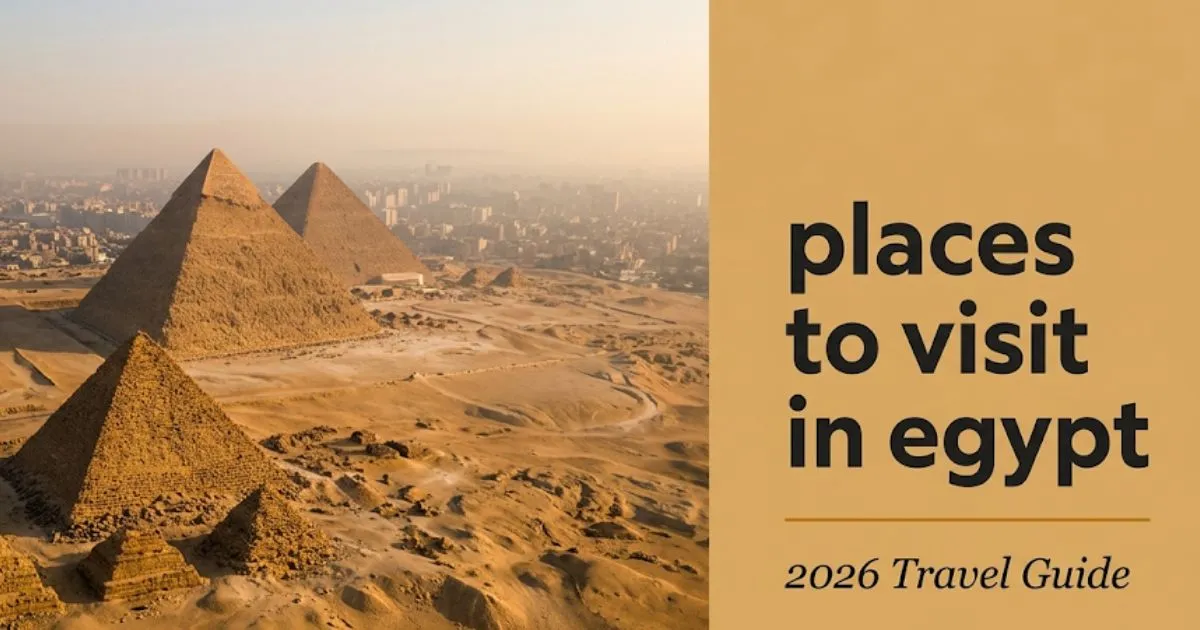
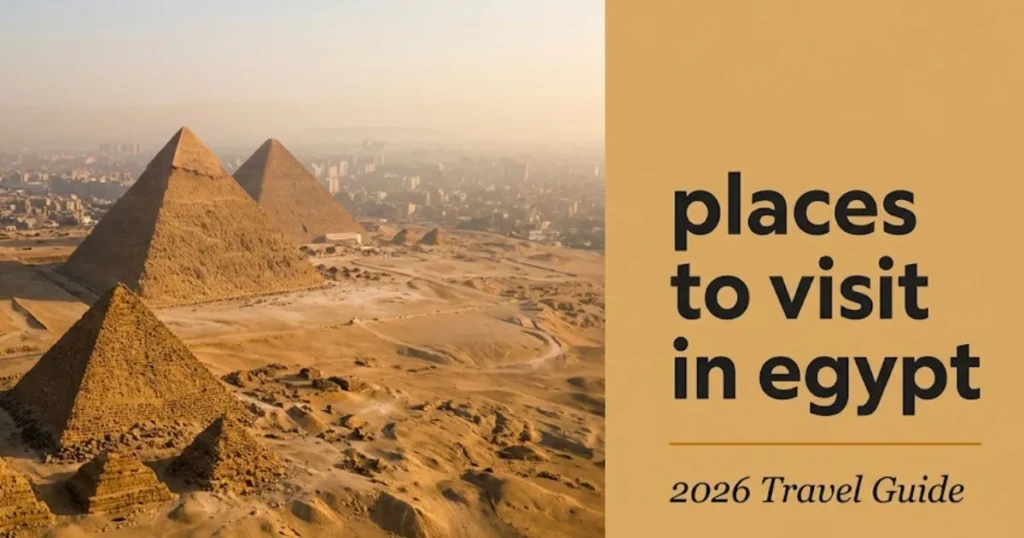
The Great Pyramid of Khufu, the Pyramid of Khafre, the Pyramid of Menkaure, and the Great Sphinx sit within the Giza Plateau, which is located roughly 15 kilometers southwest of central Cairo.
Entrance to the plateau covers exterior access to the pyramids and the Sphinx area. Interior access to the Great Pyramid requires a separate ticket. Access to the inner chambers of specific pyramids is rotated and limited; verify availability and ticketing requirements through the Egypt’s Ministry of Tourism and Antiquities before your visit.
The honest crowd assessment: The plateau is heavily visited. Morning crowds arrive with tour buses by 8 AM. Visiting at opening (typically 7 AM) gives roughly 45 to 60 minutes before organized tours arrive in volume. The Sphinx area becomes genuinely difficult to photograph without crowds by 9 AM.
The overrated experience: Camel rides at Giza. They are heavily solicited, pricing is negotiated with significant pressure, and the experience rarely matches expectations. Experienced repeat visitors skip them.
The local alternative: A felucca ride on the Nile at sunset in Aswan is a quieter, more authentic, and more serene Egypt experience than a 15-minute camel circuit at Giza.
Seniors and accessibility travelers: The plateau terrain is uneven desert sand and stone. Wheelchair access to interior pyramid chambers is not available. The exterior plateau circuit is walkable but requires sturdy footwear and shade planning.
Luxor Egypt: The World’s Greatest Open-Air Museum
Luxor, Egypt’s greatest concentration of ancient temples and monuments, sits on the east and west banks of the Nile approximately 650 kilometers south of Cairo.
Luxor Temple, directly on the Nile corniche in the city center, is illuminated at night. An evening visit, when temperatures drop and lights activate, is a genuinely superior experience to the midday tourist rush.
Karnak Temple Complex is the largest ancient religious site on Earth by footprint. The Hypostyle Hall, with its 134 massive papyrus-form columns, is the specific element most visitors underestimate in photographs. Standing inside it reframes your sense of ancient construction capability.
Karnak and Luxor Temple are on the East Bank (city side). Across the Nile lies the West Bank, home to the Valley of the Kings, Hatshepsut Temple, and the Colossi of Memnon.
According to Fodor’s Egypt Guide, budget travelers should consider hiring a bicycle on the West Bank. The flat agricultural plain between the Nile and the desert cliffs is navigable by bike. This approach covers the Colossi of Memnon, several secondary temples, and the Valley of the Kings access road at a fraction of taxi cost.
Insider Tip:
- Karnak is best visited at opening (typically 6 AM in peak season) before tour groups fill the Hypostyle Hall.
- Luxor Temple at night is one of Egypt’s most underrated experiences. Admission continues into the evening hours; verify seasonal closing times.
- Families with children under 8: the scale of Karnak is genuinely impressive to children. Allow them to pace between columns. The tactile experience of ancient stone resonates in a way photographs do not replicate.
Key Takeaway: Luxor’s West Bank and East Bank together require a minimum of two full days. Rushing it into one day is the most common Luxor planning mistake.
Valley of the Kings and the West Bank of Luxor
The Valley of the Kings, on Luxor’s West Bank, contains over 63 known royal tombs cut into the limestone cliffs of the Theban necropolis. Standard admission covers entry to three tombs.
Individual tombs require separate tickets. Tutankhamun’s tomb (KV62) carries a significant additional fee. Ramesses VI’s tomb (KV9) is among the most visually complete and is included in standard admission. Seti I’s tomb (KV17) has historically required a separate premium ticket; verify availability as access regulations change.
The Mortuary Temple of Hatshepsut at Deir el-Bahari is 15 minutes by road from the Valley of the Kings. Its three-tiered colonnaded structure set against vertical limestone cliffs is architecturally unlike anything else in Egypt.
The Colossi of Memnon, two 18-meter seated statues at the entrance to the West Bank plain, are free to view from the road. They make an efficient first stop before proceeding up the valley.
The local alternative to the Valley of the Kings main visitor circuit: The Valley of the Queens, located one kilometer south, contains the tomb of Nefertari (QV66), which has the finest painted wall decorations of any Egyptian royal tomb. Tickets are expensive (verify current pricing) and capped daily; book as far in advance as possible. Most tour groups skip it due to cost. That is precisely why it is worth the fee.
Solo travelers: The West Bank is navigable by motorcycle taxi (local term: motorbike) or bicycle hire from the Luxor ferry landing. Solo travelers using this approach avoid group tour dependency and can set their own pace through the valley.
Aswan and Abu Simbel: Upper Egypt’s Finest Hours
Aswan is Egypt’s southernmost major city and one of its most pleasant. Set on the Nile at a point where granite islands and Nubian sandstone create a more dramatic river landscape than anywhere north of it.
The Philae Temple, dedicated to the goddess Isis, sits on an island in the Nile south of Aswan. Access is by motorboat from the Shellal boat landing. The temple was relocated in the 1970s during the construction of the Aswan High Dam to save it from Lake Nasser’s rising waters. The UNESCO relocation project is one of the most significant archaeological preservation efforts of the 20th century.
Abu Simbel, 290 kilometers south of Aswan on the shores of Lake Nasser, contains two temples commissioned by Ramesses II. The larger temple features four 20-meter seated colossi of Ramesses II at its facade. Both temples were also relocated by UNESCO from their original position before the lake filled.
Getting to Abu Simbel: Most visitors fly from Aswan (approximately 45 minutes, check current EgyptAir schedules) or join a convoy drive departing before dawn (approximately three to four hours each way). The convoy system exists for security reasons; verify current convoy requirements with your accommodation or local tour operator.
Nubian villages on Elephantine Island and the West Bank near Aswan offer one of Egypt’s most genuine cultural experiences. Small motorboats cross from the Aswan corniche. Villages are colorfully painted, relaxed, and entirely different in character from the tourist-oriented Nile cities north of Aswan.
Seniors and accessibility travelers: Aswan is flatter and less physically demanding than Luxor. The Nubian village visits and Philae temple (boat access, flat interior) are manageable for travelers with limited mobility. Abu Simbel’s interior requires navigating narrow passages.
Key Takeaway: Abu Simbel justifies its own overnight stay. The site at sunrise, before the day-trip convoys arrive, is a fundamentally different experience from the midday crowd.
Nile Cruise Egypt: How to Decide If It’s Right for You
A Nile cruise between Luxor and Aswan is the most logistically elegant way to connect Upper Egypt’s major sites. Ships stop at temples along the four-to-seven day route, eliminating the need for separate transportation planning.
The cruise market splits into three tiers. Budget dahabiyyas (traditional wooden sailing vessels) sleep six to twelve passengers and move slowly by wind and current. Mid-range cruise ships carry 40 to 100 passengers and hit every major stop efficiently. Luxury ships (Sanctuary Sun Boat, Oberoi Philae) offer small-ship service with expert Egyptologist guides and genuinely superior interior spaces.
According to the Egypt Tourism Authority, the Luxor to Aswan route is the standard direction, as the wind flows south to north, making upstream sailing possible on traditional vessels. The journey can also be made Aswan to Luxor in reverse.
The Esna Lock is a canal lock the ship navigates midway through the journey. Local vendors row alongside in small boats selling textiles and spices. It is chaotic, specific to Egypt, and entirely unlike any other river cruise experience in the world.
Couples consistently rate the Nile cruise as Egypt’s most romantic experience. Watching temples emerge from the desert at dawn from a ship deck is a genuinely distinctive travel moment.
Budget travelers: A felucca voyage (traditional single-sail wooden boat) from Aswan to Kom Ombo costs a fraction of a cruise and takes two days. Accommodations are basic (sleeping on deck under stars). This option suits young, flexible travelers and not those expecting comfort.
Families with children: Longer cruises (five to seven days) are better than shorter ones for families. Children adjust to the ship quickly and the contained environment simplifies logistics.
White Desert and Siwa Oasis: Egypt Beyond the Nile
The White Desert National Park, located in the Farafra Depression approximately 500 kilometers southwest of Cairo, is one of Egypt’s most visually distinctive landscapes.
Chalk rock formations eroded into shapes resembling mushrooms, icebergs, and animals rise from a flat sandy plain. Camping overnight in the White Desert, under the chalk formations with no light pollution, is one of the most unusual sleep experiences available anywhere in the world.
Access is from Farafra town, reachable by bus from Cairo (approximately eight to nine hours) or by car. Most visitors join a two-day organized jeep tour from Cairo. This is the most logistically efficient approach and includes camping, meals, and a guide.
Siwa Oasis, 560 kilometers west of Cairo near the Libyan border, sits in a natural depression below sea level. The Cleopatra’s Pool (Ein Guba) is a natural spring pool where visitors swim. The ruins of the Temple of the Oracle, where Alexander the Great consulted the oracle in 331 BC, sit at the edge of the town.
Siwa is best visited as a dedicated side trip, not a day trip. Allow two to three nights minimum.
Solo travelers find Siwa one of Egypt’s most relaxed and safety-assured destinations. The small oasis town is walkable and bicycle-friendly. The absence of mass tourism infrastructure is a feature, not a limitation.
Budget travelers: Siwa accommodation is inexpensive by Egyptian standards. Simple guesthouses and ecolodges around the oasis are among Egypt’s best-value sleeps.
Key Takeaway: The White Desert and Siwa are best combined into a four-to-five day Western Desert loop from Cairo. Each deserves its own days rather than rushed single visits.
Alexandria Egypt: The Mediterranean Side of the Country
Alexandria, Egypt’s second city on the Mediterranean coast, is 220 kilometers northwest of Cairo and accessible by high-speed train in approximately two hours.
The city’s identity is layered: Hellenistic foundation by Alexander the Great, center of ancient Mediterranean scholarship, Ottoman port city, and contemporary Egyptian coastal metropolis. None of these identities entirely dominates the others.
The Bibliotheca Alexandrina, a modern reimagining of the ancient Library of Alexandria, opened in 2002. Its slanted disc roof and interior reading rooms make it one of the architecturally distinctive cultural institutions in the Arab world. The campus includes four museums; the Egyptian antiquities collection is particularly strong.
Kom el-Dikka, the Roman amphitheater in central Alexandria, is genuinely undervisited. It is the only Roman amphitheater known to exist in Egypt and sits within walking distance of the city center. Entry fee is modest; verify current pricing.
Montaza Palace gardens, on the eastern edge of Alexandria’s corniche, offer a free-to-enter (palace interior admission is separate; verify before visiting) public park on the sea. Alexandrians use it daily. It is one of the best places in Egypt to simply observe Egyptian daily life without a tourist context.
Couples: Alexandria’s corniche, stretching 26 kilometers along the Mediterranean, is most atmospheric in late afternoon. The seafood restaurants along Stanley Beach and Gleem Bay are a genuinely different register from Nile Valley dining.
Alexandria is honestly not Egypt’s most essential stop for a first-time visitor on a 10-day itinerary. It is an excellent addition for second-time visitors or those with 14 or more days. Its best quality is the contrast it provides to the Nile Valley’s ancient Egypt immersion.
Red Sea Coast: Hurghada and Dahab Compared
Egypt’s Red Sea coast offers two entirely different travel experiences within the same coastal geography. Hurghada and Dahab serve completely different traveler profiles.
Hurghada is a resort city on the western Red Sea coast, 300 kilometers southeast of Cairo. All-inclusive hotels, glass-bottom boat excursions, and organized snorkeling day trips define its character. The reef quality close to shore has declined over decades due to development pressure. Serious divers now travel 45 to 90 minutes offshore by boat to access better reef systems.
Dahab sits on the Sinai Peninsula’s Gulf of Aqaba coast, connected to Sharm el-Sheikh by a 90-minute drive north. It is a small, relaxed backpacker-oriented town with genuinely exceptional diving and snorkeling directly accessible from shore. The Blue Hole, a famous underwater sinkhole three kilometers north of central Dahab, is one of the world’s most recognized dive sites. It is beautiful and also genuinely dangerous for untrained divers; dive only with certified, licensed operators.
| Feature | Hurghada | Dahab |
|---|---|---|
| Vibe | Resort, organized, all-inclusive | Relaxed, backpacker, independent |
| Best for | Families, couples, non-divers | Divers, solo travelers, budget |
| Reef access | Boat required for best sites | Shore diving available |
| Cost | Mid to high | Budget to mid |
| Sinai location | No | Yes |
| Safety note | Generally stable | Verify Sinai advisories before travel |
Families: Hurghada’s all-inclusive resort model is genuinely practical for families with children. Kids’ clubs, shallow beach areas, and organized excursions remove logistical burden.
Solo budget travelers: Dahab is one of the cheapest places in the Mediterranean and Red Sea region to learn to dive. PADI open water certification courses run at a fraction of European or Caribbean pricing; verify current operator rates before booking.
Best Time to Visit Egypt
The best time to visit Egypt is October through April, when temperatures across the Nile Valley and Cairo range from the mid-60s to low 80s Fahrenheit during the day.
October and November and February through April are the two sweet spots. Christmas and New Year (late December through early January) see significant price increases and heavier tourist volume at major sites. The period between Christmas and Epiphany (January 7) is the absolute peak at Giza.
May and September are transitional months. Temperatures climb but have not yet reached summer extremes. Crowds are lighter than winter peak. Mid-range and budget travelers often find the best combination of manageable heat and lower hotel rates in these months.
June through August: Cairo and Upper Egypt routinely reach 100 to 115 degrees Fahrenheit. Outdoor temple visits before 8 AM and after 4 PM become the only practical approach. The Red Sea coast (Hurghada) and Sinai (Dahab) are hot but cooled by sea breezes. Alexandria is the most comfortable major city in summer.
According to the Egypt Tourism Authority, the Sound and Light Show at Karnak runs year-round and changes scheduling by season; verify specific show times before planning an evening around it.
Ramadan timing: Ramadan moves annually by the lunar calendar. During Ramadan, some restaurants reduce hours and certain cultural norms require visitor awareness. Egypt is generally welcoming to tourists during Ramadan, but logistics require adjustment. Check the Ramadan dates for 2026 before finalizing travel plans.
How to Get Around Egypt
Getting around Egypt requires choosing between four main transportation options, each suited to a different budget level and travel pace.
Domestic flights (EgyptAir) connect Cairo to Luxor, Aswan, Hurghada, and Sharm el-Sheikh. Flight times run 45 minutes to one hour. This is the fastest inter-city option and the only practical choice for Abu Simbel from Aswan.
The overnight sleeper train between Cairo and Luxor (approximately 10 hours) and Cairo to Aswan (approximately 14 hours) is the most budget-efficient long-distance option. Cabins accommodate two passengers. Air conditioning runs throughout. Meals are served. Book in advance through the Egyptian National Railways system or authorized agents; the system for international visitors has evolved, so verify current booking procedures before your trip date.
Nile cruises connect Luxor and Aswan over four to seven days, stopping at Edfu, Kom Ombo, and Esna en route. This is transportation and accommodation combined. For travelers whose primary interest is Upper Egypt’s temples, a cruise is the most logistically elegant solution.
Private cars with drivers are genuinely affordable by US standards and provide door-to-door flexibility. For groups of three or four travelers, a private car often rivals or beats the per-person cost of trains while offering more flexibility. Negotiate and agree on all pricing before departure.
Getting around Cairo: Cairo’s metro (three lines, currently expanding) is clean, cheap, and air-conditioned. Line 1 connects central Cairo to Giza station, from which the pyramids require a taxi or rideshare. Uber and Careem operate throughout Cairo.
Seniors and accessibility travelers: Private cars with drivers are the most practical approach for travelers with mobility considerations. Egypt’s public transportation infrastructure varies significantly in accessibility.
Egypt Travel Safety and Practical Tips
Safety and Practical Warnings for Egypt
Egypt is a generally safe destination for tourists who travel with specific awareness. The most commonly encountered problems are not violent crime but logistical friction and solicitation pressure.
Key safety and practical facts every visitor to Egypt should know:
- Giza plateau solicitation is intense. Men will approach offering camel rides, photographs with camels, and guide services. Firm, polite declining is effective. Engaging in negotiation without intent to purchase creates prolonged pressure.
- Agree on prices before accepting any service. This applies to taxis, horse carriages, feluccas, and any service where the price is not posted. This is not a suggestion. It is a practical requirement for avoiding disputes.
- The US Department of State maintains a travel advisory for Egypt. Verify the current advisory level at travel.state.gov before departure. The Sinai Peninsula outside of tourist-resort zones (Sharm el-Sheikh, Dahab) has carried elevated advisory ratings; check current conditions specifically.
- Heat and dehydration are genuine risks. At Karnak, Giza, Abu Simbel, and Valley of the Kings between April and October, temperatures become medically significant. Carry a minimum of two liters of water per person for any outdoor site visit. Schedule outdoor visits before 10 AM or after 4 PM during warm months.
- Egypt e-visa is required for US citizens. Apply through the official Egyptian e-visa portal before departure. Arrival visa options exist but the e-visa process is more reliable. Processing typically takes a few days; apply at least two weeks before travel.
- Photography rules vary by site. Some tombs prohibit cameras or charge photography fees. Verify current rules at each site rather than assuming permission.
Bold alert for all travelers: Keep digital copies of your passport, visa, and travel insurance documentation accessible offline. This is practical in any destination and especially so in Egypt where Wi-Fi reliability at archaeological sites varies.
Egypt Itinerary for First-Time Visitors
A 10-day Egypt itinerary for first-time visitors should prioritize the Nile Valley corridor above all other destinations.
10-Day Egypt First-Timer Itinerary:
- Day 1: Arrive Cairo. Transfer to hotel in central Cairo or Zamalek district. Light orientation walk along the Nile corniche. Adjust to time zone.
- Day 2: Giza Plateau and Grand Egyptian Museum. Arrive Giza at opening (7 AM). Allow three hours for the plateau. Afternoon at the Grand Egyptian Museum. Evening dinner in Zamalek or Mohandiseen neighborhoods.
- Day 3: Islamic Cairo and Khan el-Khalili. Morning: Al-Muizz Street and Coptic Cairo. Afternoon: Khan el-Khalili bazaar (deeper than the tourist corridor). Optional: Egyptian Museum on Tahrir Square if time allows.
- Day 4: Cairo to Luxor. Take the overnight sleeper train (departs Cairo evening, arrives Luxor morning) or an early morning EgyptAir flight.
- Day 5: East Bank Luxor. Morning: Karnak Temple (arrive at opening). Afternoon: Luxor Temple. Evening: Luxor Temple illuminated at night (confirm seasonal hours).
- Day 6: West Bank Luxor. Full day: Valley of the Kings (three standard-admission tombs plus separate-ticket Tutankhamun or Nefertari). Hatshepsut Temple at Deir el-Bahari. Colossi of Memnon on return.
- Day 7: Luxor to Aswan. Travel by train (approximately three hours) or continue a Nile cruise if booked. Arrive Aswan. Afternoon: Nubian village visit by motorboat from the corniche.
- Day 8: Aswan and Philae Temple. Morning: Philae Temple by motorboat. Afternoon: Aswan High Dam, Unfinished Obelisk. Sunset felucca on the Nile.
- Day 9: Abu Simbel day trip or overnight. Early morning flight or pre-dawn convoy departure. Return to Aswan for evening flight to Cairo.
- Day 10: Final Cairo day. Old Egyptian Museum on Tahrir Square (lighter crowds post-Grand Museum opening). Afternoon departure or additional Cairo neighborhood exploration.
Couples extending to 12 or 14 days: Replace the Luxor to Aswan train with a three-to-five day Nile cruise. Add one day in Alexandria or two days in Siwa Oasis on either end.
Budget travelers: The Day 4 overnight sleeper train saves a night’s accommodation cost while covering distance. This approach reduces the 10-day itinerary cost significantly without sacrificing any major site.
Frequently Asked Questions About Places to Visit in Egypt
What are the best places to visit in Egypt for first-time travelers?
The best places to visit in Egypt for first-time travelers are Cairo, Luxor, and Aswan, connected in that sequence along the Nile Valley.
Cairo covers the Pyramids of Giza and the Grand Egyptian Museum. Luxor provides Karnak Temple and the Valley of the Kings. Aswan adds Philae Temple and a day trip to Abu Simbel.
This three-city corridor delivers Egypt’s greatest concentration of ancient monuments in a logistically efficient sequence that works for most budget levels and time frames.
How many days do you need to see Egypt properly?
Ten days is the practical minimum for a first-time visit that covers Cairo, Luxor, and Aswan without rushing major sites.
Fourteen days allows the addition of a Nile cruise, a side trip to Abu Simbel with an overnight stay, and either Alexandria or Siwa Oasis.
Visitors with only six or seven days should focus exclusively on Cairo and Luxor rather than attempting the full corridor at a pace that eliminates the ability to actually absorb what they are seeing.
Is Egypt safe to visit in 2026?
Egypt is generally safe for tourists visiting Cairo, Luxor, Aswan, Hurghada, and Dahab.
The most common visitor issues are solicitation pressure and pricing disputes, not violent crime. The Sinai Peninsula outside of Sharm el-Sheikh and Dahab carries a higher security advisory.
Check the current US Department of State Egypt travel advisory at travel.state.gov before finalizing any 2026 travel plans. Conditions change and the advisory is updated regularly.
What is the best time of year to visit Egypt?
The best time to visit Egypt is October through April, when daytime temperatures across the Nile Valley are manageable for outdoor archaeological sites.
February through April offers ideal temperatures, lower Christmas-period crowds, and good light for photography at major sites.
June through August brings extreme heat (above 100 degrees Fahrenheit in Luxor and Aswan) that makes outdoor morning-to-afternoon sightseeing at temples genuinely difficult and potentially dangerous without careful planning.
How do I get from Cairo to Luxor?
The two practical options for getting from Cairo to Luxor are the overnight sleeper train (approximately 10 hours) and a direct EgyptAir flight (approximately one hour).
Budget travelers consistently prefer the sleeper train because it eliminates a night’s accommodation cost and arrives in Luxor in the morning, ready for a full sightseeing day.
Travelers prioritizing time or those with limited mobility should fly; the journey time difference is significant and EgyptAir operates multiple daily flights on this route.
Do I need a visa to visit Egypt as a US citizen?
Yes, US citizens require a visa to enter Egypt. The most reliable option is an e-visa applied for through the official Egyptian government e-visa portal before departure.
The e-visa typically processes within a few business days. Apply at least two weeks before your departure date to allow buffer time.
An on-arrival visa is also available at Cairo International Airport (CAI), but the e-visa eliminates uncertainty and is the approach most travel advisors and experienced Egypt visitors recommend for 2026 travel.
Plan Your Egypt Trip With Confidence
Egypt’s greatest destinations are best visited in sequence, not sampled randomly. Book Cairo to Luxor transport first. That single decision commits you to the itinerary structure everything else follows from.
Verify entrance fees, e-visa requirements, and domestic flight schedules directly with official Egyptian government sources and EgyptAir before departure. Prices and access regulations at major archaeological sites have changed frequently in recent years. What was accurate 12 months ago may not be accurate for your 2026 trip.
The traveler who spends time in Luxor’s Valley of the Kings at dawn, boards a felucca in Aswan at sunset, and stands inside Karnak’s Hypostyle Hall consistently describes Egypt as one of the most significant travel experiences of their life. Start with those three destinations. Everything else builds from there.